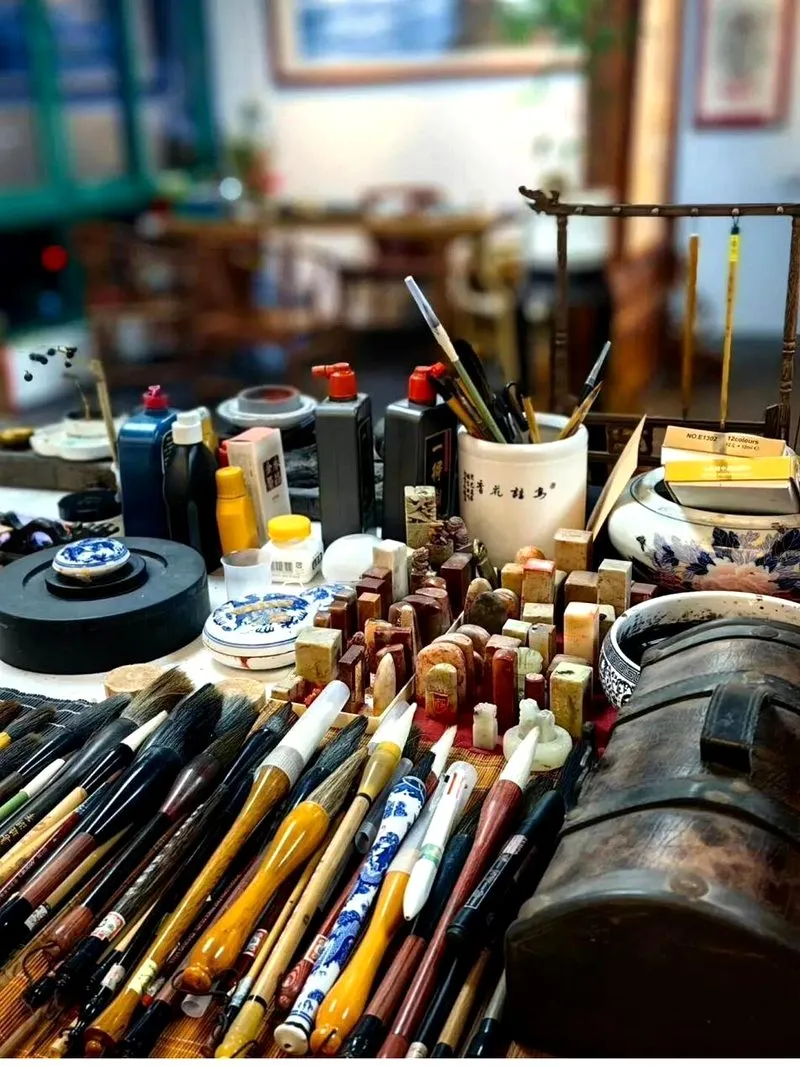
For Your Best Friend
Chinese characters for the person who has been there longer than most relatives have.
Recommended characters
乐 (Lè) — Joy
For the best friend whose year you want to name more precisely than “happy.” 乐 is not a ceremonial wish — it is the word Chinese people use for the gladness that shows up at dinner, in a text message, on a Tuesday. Given to your closest friend, it names what you actually want for them in the year ahead: not achievement, not prosperity, but the ordinary texture of a genuinely glad life.
美 (Měi) — Beauty
For the best friend whose quality is the kind you can only observe from close range and over time. 美 names what long acquaintance makes possible: the recognition that this person has become, fully and specifically, themselves. A gift of observation rather than aspiration.
忠 (Zhōng) — Loyalty
For the best friend whose loyalty has been specific and demonstrated — not the kind that responds only when things are easy, but the kind Zengzi examined himself on daily: was I faithful to this person? 忠 names the interior orientation that makes your closest friend the person you can call when things are genuinely difficult, knowing they are not just available but actually centered on your good.
福乐 (Fú Lè) — Blessing and Joy
For the best friend whose year you want to name completely — not the gladness alone (乐) or the fortunate conditions alone (福), but both together in a gift that trusts the recipient to understand the difference. 福乐 is more personal than 万事如意 (which wishes for all outcomes) and more compact than 平安喜乐: two characters, the complete double wish, for the person close enough to receive exactly what is meant.
朗 (Lǎng) — Brightness and Open Spirit
For the best friend whose openness is the thing you have leaned on longest — the 开朗 one who is frank without being harsh, bright without trying, easy to be near on the ordinary days as much as the good ones. Where 乐 names the gladness you wish them and 忠 names the loyalty you have tested, 朗 names what their company has simply been: clear and unclouded, with nothing hidden. The recognition for the closest friend whose presence has always felt like a clear day.
笑口常开 (Xiào Kǒu Cháng Kāi) — May the Laughing Mouth Stay Open
For the closest friend, given the way you would only speak to one — not a ceremonial blessing but a standing instruction: keep laughing. Where 乐 names the ordinary gladness you wish them and 朗 names the open, unclouded company they have always been, 笑口常开 names the thing itself made constant — the laughing mouth kept open through whatever the year holds. The gift that tells your oldest friend to stay exactly who they are.
淳 (Chún) — Genuine and Unadorned
For the best friend who was never anything but real with you — no performance, no version tuned for company, the same in every room. Where 忠 names the loyalty you have tested and 朗 names the open, clear disposition, 淳 names what sits under both: a nature left simple and honest, warm without motive, exactly what it appears to be. The recognition for the oldest friend whose defining quality is that there was never anything added — the person you trust precisely because they never learned to pretend.
永恒 (Yǒng Héng) — Eternal · Everlasting
For the friend who has outlasted jobs, cities, and most of your relatives — the one you expect to still be there at the end. The best-friend page names what the friendship has been — 忠 (loyalty tested), 朗 (open, clear company), 淳 (honesty to the grain) — and 永恒 names how long you mean it to run. It is usually a lover’s word, but Chinese gives it just as readily to 永恒的友谊, the friendship meant to have no end. Where 忠 names the faithfulness you have already seen proven, 永恒 wishes the bond itself past the reach of time — the rare friendship you want to place, deliberately, beyond the clock.
婉 (Wǎn) — Gentle in the Turn
For the friend whose honesty you have never once had to recover from. Two of its neighbours here prize directness — 淳 for the nature with nothing added, 朗 for the open and clear disposition — and 婉 sits deliberately across from both. It is a shaped thing, a decision about route rather than a fact about character, and the shaping costs the honesty nothing: 婉而成章, its defining classical use, means indirect yet fully formed — unmistakable in substance, oblique only in approach. Plenty of people will be blunt with you, and some of them are even right. Almost nobody works out how to be right in a form you can act on the same week.
顺遂 (Shùn Suì) — May It Go Clear, and May It Land
Everything else on this page describes the friendship or the person inside it — 永恒 the duration, 淳 the nature with nothing added to it, 乐 the mood they arrive carrying. 顺遂 is the one addressed to their circumstances instead, and it takes a best friend to send well, because the wish has a specific object: you have to know what they are actually trying to do. It is a written word rather than a spoken one. You say 一切顺利 to someone heading into an exam; you write 顺遂 when the thing is bigger than an exam and will take a couple of years. 顺 asks that the road stay clear, 遂 that it end on the thing they were actually after. Nobody but a best friend is close enough to mean both halves precisely.
欢聚一堂 (Huān Jù Yī Táng) — The Evenings That Kept Happening
The rest of this page names something about the person — 淳 the nature with nothing added, 永恒 the duration, 顺遂 the road under their feet. This one names something the two of you have done, repeatedly, for years: turned up in the same room and filled it. It is deliberately small, and deliberately plural. A long friendship is mostly not made of milestones; it is made of the count of evenings, and this is the only phrase here that says so. Note what the first character is doing: there is no 欢 a person can perform alone — 欢迎 on the way in, 欢送 on the way out, 联欢 held jointly — so the gladness in it always has a second party. Given to the person you have been gathering with since school, it credits neither of you with anything except showing up and being glad about it.
相濡以沫 (Xiāng Rú Yǐ Mò) — The Friend From the Poor Years
Nearly everything else on this page belongs to the good hours: 乐 the gladness they arrive carrying, 朗 the open company, 笑口常开 the standing instruction to keep laughing, 欢聚一堂 the count of evenings. This is the phrase for the other kind of hour. Chinese uses it most often of long marriages, but it has never been restricted to them — it is said just as naturally of friends, comrades and colleagues who carried each other through a bad stretch, and the fish in the original story were not a married couple. It comes from a scene in 《庄子》 in which the water has run out and two fish, stranded on bare ground, keep each other alive with the froth from their own mouths, a picture whose whole force is how little they have to give. 宋弘 supplies the older friendship version of the same principle — 贫贱之知不可忘, a friend known in the lean years is not to be forgotten. Given to a best friend the claim is narrow and unmistakable: not that the two of you enjoy each other, but that there was a year when things fell apart and they were what you had.
长乐未央 (Cháng Lè Wèi Yāng) — No Forecast, Just a Reading
永恒 higher up this page claims all of future time, which is the sort of thing you can only say to one or two people and mean. This phrase deliberately claims less, and the restraint is what it is for. Han usage reads 未央 as 未尽 — not used up — so the sentence is a reading taken of the present rather than a promise about what follows it: the good years the two of you are in have not run out. Where 相濡以沫 names the bad stretch you carried each other through and 欢聚一堂 counts the evenings, this one looks at the whole run and declines to total it. The phrase for the friendship that is decades old and still not, by any measure either of you would accept, winding down.
义 (Yì) — The One Who Turned Up
忠 higher up this page names faithfulness inside a bond that already exists. 义 names what had to happen before there was a bond to be faithful to: somebody decided that this person’s trouble was their business. Chinese has a verb for making that decision permanent — 结义, to swear a friendship into a tie with obligations attached — and the existence of the verb is the whole argument. Kinship needs no ceremony because it arrives on its own; a friendship that wants the same standing has to be declared into it. Not that the two of you enjoy each other’s company, and not that you go back far, but that they treated your problem as theirs at a point when nothing whatsoever obliged them to.
柔 (Róu) — Nothing Comes Back Harder
There is a specific thing you can only do with one or two people: arrive in a bad mood and have it simply stop there. 柔 is the character for that. The whole later career of the word rests on one distinction: between absorbing a force and passing it along. 忠 higher up this page credits faithfulness inside the friendship, and 淳 credits having nothing mixed in. This one credits neither loyalty nor honesty but a property closer to material science: whatever you brought them, it did not come back at you with more on it. Most people cannot do this, and nobody thanks the ones who can.
丹心 (Dān Xīn) — The Year It Was Expensive to Help
义 further up this page is about the moment somebody decided your trouble was theirs, and 忠 is about the orientation that kept them there. 丹心 is about neither decision nor orientation but evidence — literally a colour, since 丹 is cinnabar rather than any general red, and the ore was prized for holding its reading when everything around it faded. The word carries a condition of use it has never lost: 庄子 introduced the image through two men who were destroyed for their loyalty, and nobody has ever applied it to devotion that was convenient. So this is not the gift for the friend who is good company. It is for the one whose help arrived in the year it was expensive to give, who did not present it as a cost, and whose account of that year is still shorter than yours.
缘 (Yuán) — The Part Neither of You Arranged
Everything else on this page credits the friendship with something it did. 忠 names the loyalty you tested, 淳 the honesty that never had a company version, 义 the moment they decided your trouble was theirs, 丹心 the year helping you was expensive. 缘 credits nobody. It reports the one fact about a long friendship that was settled before either of you had an opinion: that you were in the same place at the same time at all. The oldest friend you have was almost certainly handed to you by a dormitory list, a desk allocation, or a job you nearly turned down. This is the character for that, and for how narrowly it could have gone the other way.
吉星高照 (Jí Xīng Gāo Zhào) — The Red You Are Not Allowed to Buy Yourself
There is one year in every twelve that comes with a gift built into it. In a 本命年 — when the animal of the year comes back around to the one your friend was born under — the custom is red: a belt, a wrist cord, socks. And in most tellings you are not supposed to buy it for yourself. It has to come from somebody else’s hands, which makes the 本命年 one of the few points in the calendar that structurally requires a second person, and puts this phrase squarely in the hands of whoever that is. 吉星高照 is the sentence for it — a year spoken of from the outset as one to take care in, answered not with a wish for anything in particular but with a report that the light above it is a good one. 相濡以沫 elsewhere on this page names a hard stretch the two of you got through together. This is for the one your friend has not entered yet, and the small, old, specific job of being the person who hands over the red.
学业有成 (Xué Yè Yǒu Chéng) — For Year Three of Something Long
For the best friend somewhere in the unglamorous middle of a long degree — the thesis year, the third of five, the stretch where the enrolment stopped being news and the end is not yet in view. What makes these four characters usable there rather than at the finish is that they name a course and not a performance: no student appears in the sentence, so nothing is being graded and nobody is being told to try harder. Handed over mid-slog by the person who has heard every version of the complaint, it says the one thing an outsider is actually in a position to assert — that the thing they are inside has a shape, that it was built to be finished, and that people finish it.
勉 (Miǎn) — Signed by Both of You
共勉 is a word in Chinese. The equivalents you would build the same way on 勤 or on 毅 are not, and the reason is that saying this one writes you into it. There is no version of 共勉 that exempts the person offering it. That makes it awkward pointed upward, which is why it belongs here rather than on a page about anyone’s boss. 义 and 丹心 elsewhere on this page credit what a friend did in a year that cost them something, and 相濡以沫 remembers the stretch when neither of you had anything left to give; each of them is looking back at a bill already paid. This one reports nothing and closes nothing. Hand it over after twenty years and it says the least presumptuous thing available: both of you are still at it, and neither of you is being marked.
笃 (Dǔ) — What the Record Would Say About the Two of You
交情甚笃 — an attachment weighed and found dense — turns up in memoirs, in prefaces, and in what gets said at funerals. It is written about two people and almost never spoken between them, so a friendship of this depth tends to go its whole length without either party putting a word to it. The character itself returns a quantity and refuses to name a quantity of what, which fits a friendship that has never once needed defining out loud. 淳 asks whether anything got mixed in along the way; this asks how much of it collected.
善缘 (Shàn Yuán) — Where This One Started
The word mostly covers minor ties: the hundred small connections a person forms and never hears about again. Which is what makes it worth handing to the one person on this page who is not minor, because every long friendship began in that pile. Somebody stayed behind after everyone else had gone, or took the seat that happened to be free, and there was nothing at the time to distinguish it from the ninety-nine that came to nothing. 笃 higher up this page weighs what has collected since; 勉 says the two of you are still at it. This one goes back further than either and says something neither can: that the beginning was not owed to anyone, and that one of you did the small unremarkable thing that made it possible.
长情 (Cháng Qíng) — After the Reason Expired
Most friendships have a reason attached at the start: a school, a job, a flat, a city. The reason ends, and almost all of them end with it. 情 in this compound is wide enough to cover 友情 outright, so nothing is being borrowed from romance here — the word is doing its ordinary work, and what it measures is how far the attachment outran its own cause. 善缘, directly above, credits whichever of you did the small unremarkable thing that got it started. This is about the stretch after the room stopped existing, when there was nothing structural left holding either of you anywhere near the other. For the friend you have no external reason to still know.
春暖花开 (Chūn Nuǎn Huā Kāi) — The Season You Can Share Outside
信 and 真 credit what held between you; 乐 names gladness as a feeling. 春暖花开 points at the shared outdoor window — warmth first, then bloom — without asking either of you to perform happiness on cue. For the best friend whose birthday gift should sound like a plan to be outside, not a report on character.
悦 (Yuè) — Ordinary Company, Already a Pleasure
乐 wishes a best friend a glad life in the ordinary week, dinner and a Tuesday included. This character turns that outward wish around. It says their presence is what pleases you, with no banquet required to justify the word. 取悦 would be the effort to produce the effect, and the effort can show. The single character assumes the pleasure has already registered, which is the honest tense for someone whose company you have stopped performing. 缘 names how the friendship started. This one is about how it feels when they are in the room.
福 (Fú) — Blessing · Good Fortune · Happiness
See 福 →爱 (Ài) — Love · Affection · Devotion
See 爱 →安 (Ān) — Peace · Safety · Tranquility
See 安 →和 (Hé) — Harmony · Balance · Togetherness
See 和 →喜 (Xǐ) — Joy · Happiness · Celebration
See 喜 →财 (Cái) — Prosperity · Abundance · Success
See 财 →瑞 (Ruì) — Good Tidings · Blessing · Promise of a Bright Year
See 瑞 →勇 (Yǒng) — Courage · Strength · Bravery
See 勇 →宁 (Níng) — Serenity · Inner Calm · Stillness
See 宁 →康 (Kāng) — Health · Well-being · Wholeness
See 康 →信 (Xìn) — Trust · Faithfulness · Integrity
See 信 →诚 (Chéng) — Sincerity · Honesty · Integrity
See 诚 →平安 (Píng Ān) — Peace · Safety · Well-being
See 平安 →安康 (Ān Kāng) — Peace · Health · Wholeness of Body and Mind
See 安康 →富贵 (Fù Guì) — Wealth · Honor · Prosperity with Standing
See 富贵 →吉祥 (Jí Xiáng) — Auspiciousness · Good Omen · The Promise of Good Things
See 吉祥 →如意 (Rú Yì) — As You Wish · Aligned with the Heart
See 如意 →喜乐 (Xǐ Lè) — Joy · Daily Gladness · The Quiet Warmth That Lasts
See 喜乐 →知足 (Zhī Zú) — Contentment · Knowing What is Enough
See 知足 →厚德 (Hòu Dé) — Deep Virtue · Generous Character · A Ground That Holds
See 厚德 →福禄 (Fú Lù) — Blessing · Prosperity · Abundance Through a Respected Place
See 福禄 →龙 (Lóng) — Dragon · Power · Auspicious Strength
See 龙 →力 (Lì) — Strength · Force · The Power to Act
See 力 →万事如意 (Wàn Shì Rú Yì) — May All Things Go As You Wish
See 万事如意 →一帆风顺 (Yī Fān Fēng Shùn) — Smooth Sailing · A Steady Wind for the Journey Ahead
See 一帆风顺 →心想事成 (Xīn Xiǎng Shì Chéng) — May Your Heart's Wishes Come True
See 心想事成 →招财进宝 (Zhāo Cái Jìn Bǎo) — Summon Wealth · Draw In Treasure
See 招财进宝 →善 (Shàn) — Goodness · Kindness · Moral Virtue
See 善 →真 (Zhēn) — Authenticity · Genuineness · True to Oneself
See 真 →青青子衿 (Qīng Qīng Zǐ Jīn) — Your Blue-Green Collar · Longing for a Cherished One
See 青青子衿 →渐入佳境 (Jiàn Rù Jiā Jìng) — Gradually Entering a Beautiful Place · Getting Better and Better
See 渐入佳境 →吉祥如意 (Jí Xiáng Rú Yì) — Auspicious · As You Wish · A Year That Unfolds Well
See 吉祥如意 →Bring a hand-brushed piece home — choose how you'd like it brushed.
-
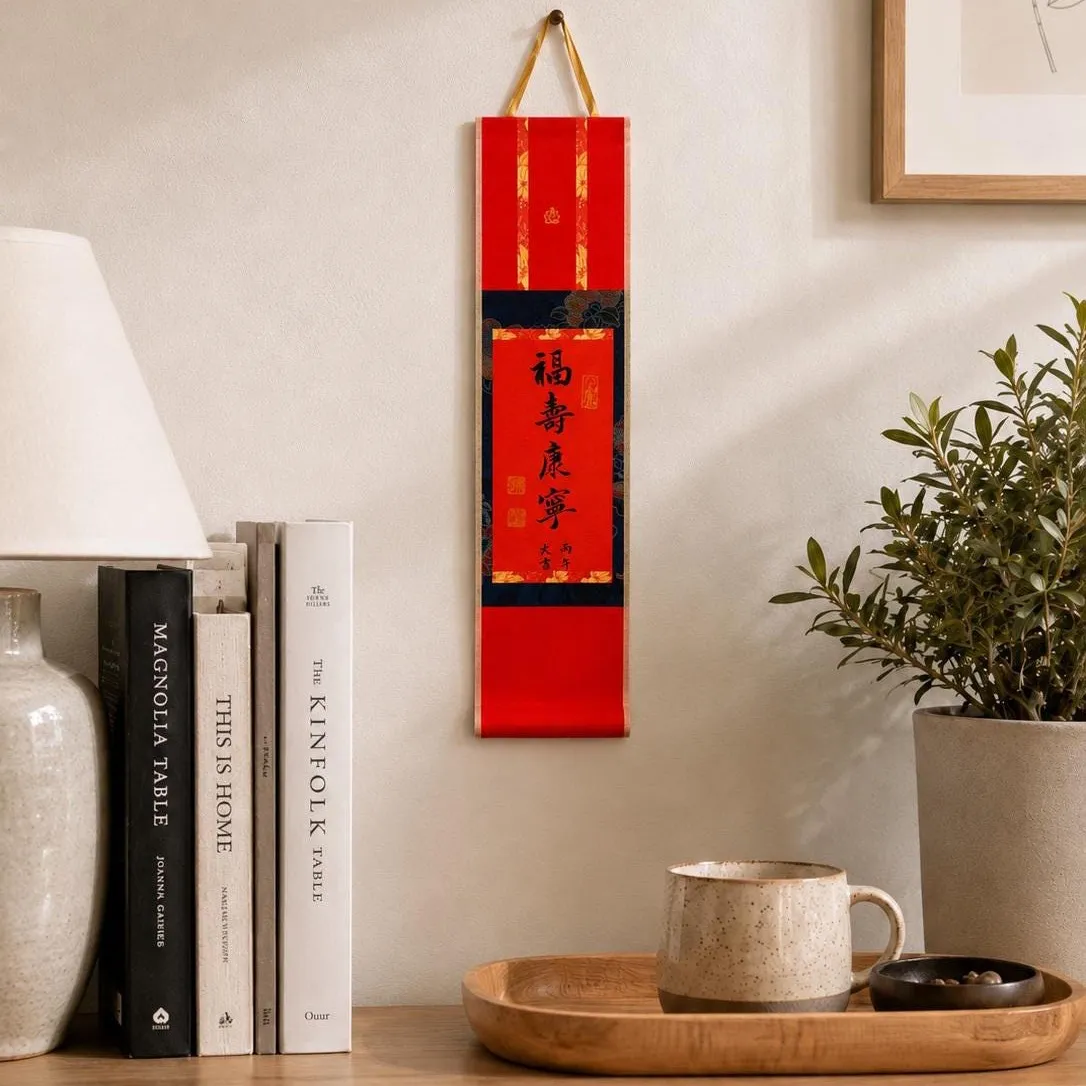
Photo shows a sample — yours will be brushed with the character you choose.
Wall Scroll — for walls & housewarmingsfrom $38→ -
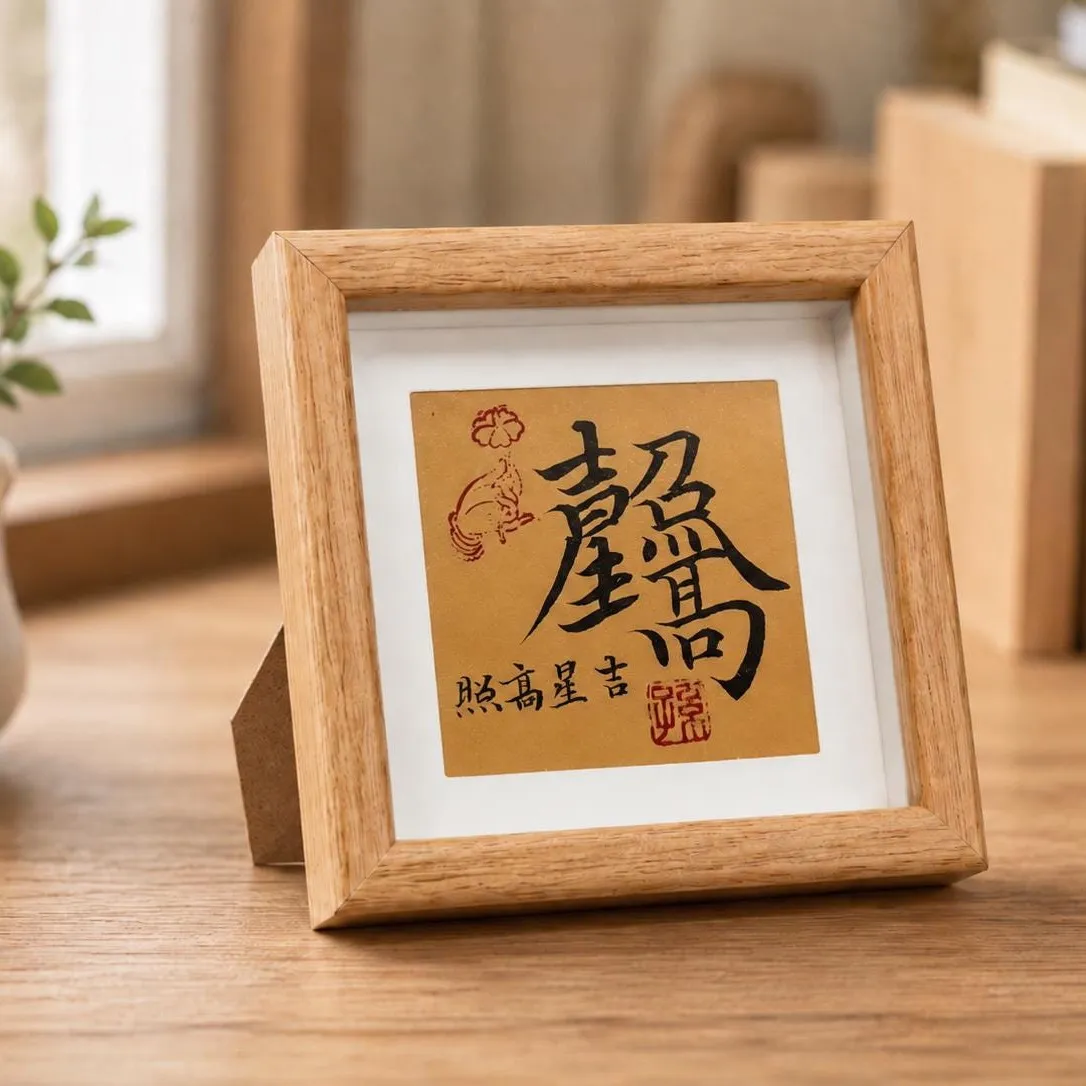
Photo shows a sample — yours will be brushed with the character you choose.
Desk Frame — for desks, studies & studiosfrom $44→ -
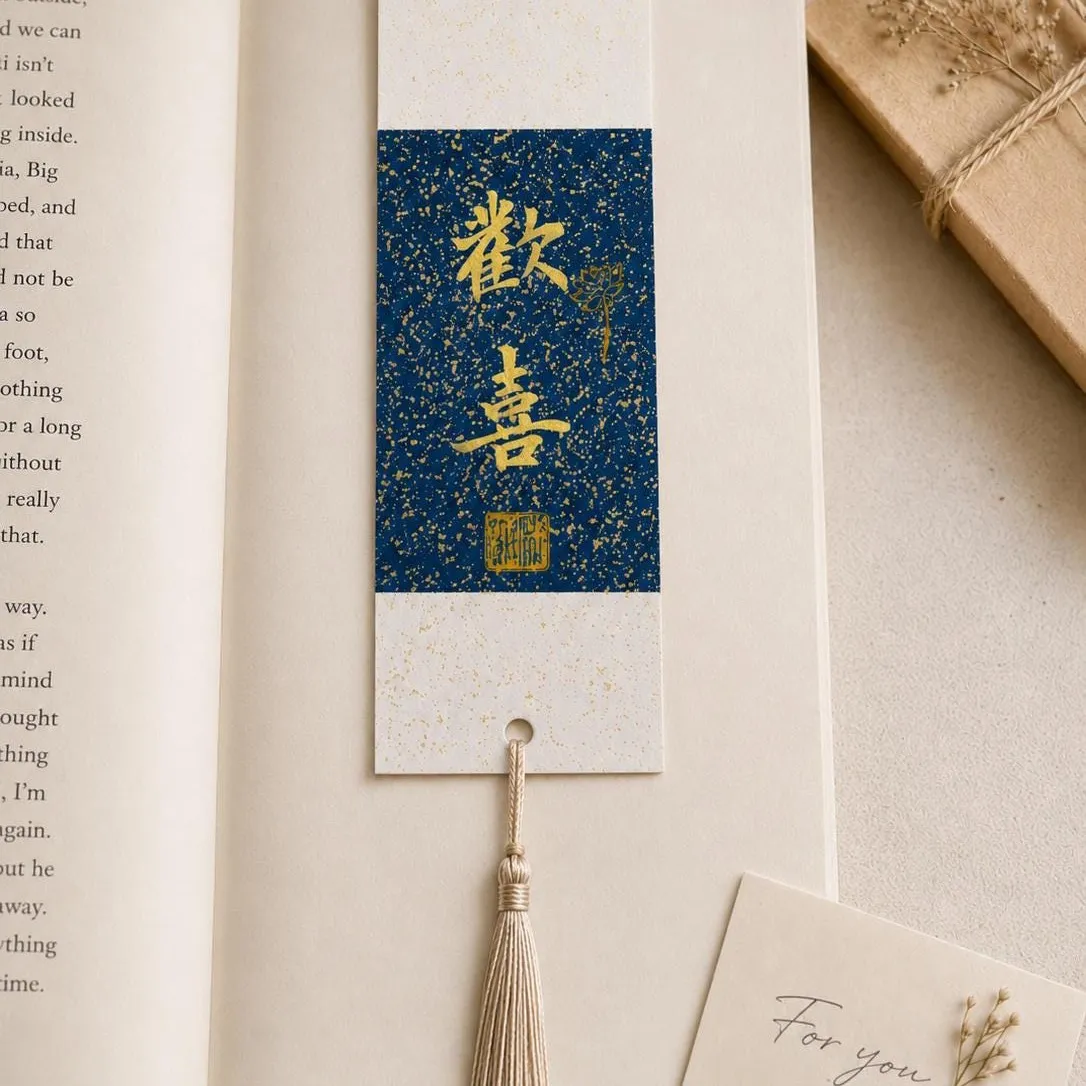
Photo shows a sample — yours will be brushed with the character you choose.
Bookmark — for readers & small thank-yousfrom $17→