勉 (miǎn) — Effort Against the Grain · Pushing On · Urging Each Other
One character, and the big element enclosing the other from below and to the left really is 免, to be let off. It is there for the sound. A reader who treats it as a clue ends up with the opposite of what the word says.
《中庸》 sorts everyone who has ever done a right thing into three groups. Some manage it easily, some do it because there is something in it for them, and some do it 勉强而行之 — by making themselves. Then the chapter refuses to rank them — 及其成功一也, the result is the result. 勉 is the character sitting in that third clause, and it is the one that carries the uphill part on its face. 勤 counts the hours and asks nothing about them. See 勤 → 毅 and 坚 pick the story up later, once difficulty has already arrived. This one is about the first shove, on a morning when nothing in the person wanted to give it. 段玉裁, annotating the 说文, got it into six characters: 自勉者,自迫也 — to keep yourself at something is to press yourself.
In modern Chinese the character mostly travels in pairs, and the pairs pull in opposite directions. 勉励 is what a teacher writes in the margin of a report; 勤勉 is what a reference says about somebody reliable; 勉强 is what you say about a pass you scraped or a smile you did not mean. All three are the same fact from different seats. The one to know is 共勉 — let us keep each other at it — which is how a Chinese writer ends a piece of advice without standing above the person receiving it, and 与君共勉 at the foot of an inscription means the giver has signed themselves onto the same line. Nobody says 共勤. 共勉 became a word of its own where the equivalents built on its neighbours never did, because pushing yourself is understood to be the sort of thing people do alongside each other.
A hand-brushed 勉 by FuBlessings is for the person who got there the hard way and has never been told that counts. For a colleague it fits the one who takes on the unglamorous piece of work nobody volunteers for, which is the part of a job that never appears in a review. For a friend it is 陶渊明’s line more than anything else — 及时当勉励,岁月不待人 — handed over as an observation you are both standing inside. For the friend of twenty years it is the reciprocal reading, since the honest version of this gift is 共勉 and always has been. Give it sideways or keep it for yourself. Downward it works from a teacher and not from a manager, and upward it does not work at all. 志 is the neighbouring character for what a person is aimed at, and this one makes no claim about direction at all. See 志 →
- 迫 — 段玉裁's word for it: pressing, applied to yourself or to somebody else
- doing the thing on a day you did not feel like doing it
- urging, whether outward or at yourself — 勉励, 自勉, 共勉
- the cost left on the record — 勉强 reports the same act from inside
- diligent 勤 counts what went in and asks nothing about how it felt going in; a naturally industrious person is fully 勤 and has never once been 勉. The appraisal compound 勤勉 needs both characters precisely because neither covers the other — one is the quantity, the other is the resistance it was pushed through.
- reluctant This is the half of the word English hears first, because 勉强 is the compound a learner meets first and it usually turns up in a complaint: 勉强及格, 勉强笑了笑. The bare character has not drifted that way. On its own it is the pushing, not the grumbling — 勉励 and 共勉 are warm words, and nobody reads a brushed 勉 as an accusation.
- determined 毅 and 坚 describe what happens after something is already under way and difficulty has shown up. This character is about the first shove, and it is renewable rather than cumulative: a person who forced themselves through yesterday starts today with no credit banked, which is the whole reason 陶渊明's line says 及时, right now, rather than once and for all.
The short arms are the point: these readings don’t reach it.

- 力 strength — 许慎 calls it a drawn sinew, and paleographers reading the oracle bones call it a digging bladeWhichever reading is right, the element is physical, which is what keeps this a word about exertion rather than about attitude. It is also the half that does not change: nearly every character built on it is about force being applied to something.
- 免 the phonetic — and, read on its own, the character for being let off免费, 免税, 罢免: exempted, waived, relieved of a post. None of that is present in 勉. The element is here for the sound alone, which makes this a useful test case — a reader who guesses at meaning from the big element will guess exactly wrong.
character
- 勉励 miǎn lì to urge someone on — the standard verb for encouragement handed down a rank or a generation
- 共勉 gòng miǎn hold each other to it — the reciprocal form, and how a writer signs advice they will not hand down from above
- 自勉 zì miǎn to press yourself — said of a line a person copies out for their own use
- 勤勉 qín miǎn hard-working and unflagging; the standard phrase in an appraisal or a reference
- 勉强 miǎn qiǎng reluctantly; barely. The same act reported from the inside, and by far the most common modern use
- 努力 nǔ lì to put in effort. A relative by sense with no character in common, and the word modern Chinese actually reaches for: 努力 reports that effort was made and stops there, while 勉 reports what it was made against
Cinnabar marks the characters 勉 actually contains. The dark row is a relative by meaning or by sound, not one shared stroke.
The Story Behind the Character
The character for making yourself do something is built on the character for being let off. 免 means exempted, excused, spared — it is the 免 of 免费 (free of charge), 免税 (duty-free), 罢免 (removed from office) — and in this character it wraps around 力, strength, down the left and along the bottom. What the pair spells is the word Chinese uses for driving yourself at work you would rather not do. The pairing is an accident of sound: 免 is there because the whole character is read close to it, and the 说文解字 says so plainly, 从力免聲. The half carrying the meaning is the two-stroke one, standing in the pocket the wrap leaves open on the right and seated on the sweep that runs along underneath it. 许慎 defines 力 as 筋也,象人筋之形 — sinew, drawn in the shape of a human tendon — and modern paleographers, working from oracle-bone forms he had never seen, read the same graph as a digging implement, the business end of a plough. Either way it is bodily, either way it is about exertion rather than about willingness, and it is the element that fixes what the character can be said of.
The gloss for the whole is a single word, and there is an argument about which word. The received text gives 彊也, the older form of 强: to make strong, to force. 段玉裁, working through the dictionary line by line and finishing in 1807, took that for a copyist's slip and restored 勥也 — to compel, with no ambiguity in it at all. Then he added the most useful sentence anybody has written about this character: 凡言勉者皆相迫之意。自勉者,自迫也。勉人者,迫人也. Everywhere the word appears it means pressing; to 自勉 is to press yourself, to 勉 somebody else is to press them. One verb, and the only thing that varies is who is on the receiving end — which is why the character ended up with both a reflexive and a reciprocal in everyday use, 自勉 and 共勉, and why the reciprocal in particular has no counterpart built on its neighbours.
That reflexive turn is why the character grew two opposite-sounding modern lives out of one root. 勉励 points outward — to urge somebody on, what a teacher does to a class or a letter does to its reader. 勉强 points inward and reports the cost: reluctantly, grudgingly, and by extension barely, as in 勉强及格, scraped a pass. Chinese never split these into separate characters, and the reason they could stay together is that they are one event seen from two positions. From outside a person pushing themselves, you are watching encouragement take effect. From inside, you are the one who did not want to.
Classical lines
- roughly 1,200 years
- c. 8th c. BCE 《诗经·小雅·十月之交》
- c. 300 BCE 《礼记·中庸》
- c. 414 CE 陶渊明《杂诗十二首·其一》
黾勉从事,不敢告劳。 I toil away at the work and do not dare admit I am tired.
The speaker is a minor official under 周幽王, whose reign ended the Western Zhou a few years later, and the line is bitter rather than proud: he is describing what is being extracted from him, not what he chose. Note that the character is not standing alone here. 黾勉 is a two-syllable word of the kind early Chinese builds out of sound rather than out of two separate senses, which is why the same word turns up written 僶俛 and 密勿 in other texts — a spelling that moves around is the standard sign of one. 谷风 uses it twice more, 黾勉同心 and 黾勉求之. Whether 勉 worked loose from the sound-word or the sound-word was built on 勉 is an argument nobody has settled — 大雅 has 勉勉我王 with no 黾 anywhere near it — but the transitive verb, the one that takes an object and can be barked as an order, is a creature of later prose.
或安而行之,或利而行之,或勉强而行之,及其成功一也。 Some do it easily, some do it for what is in it, and some do it by forcing themselves
and when it comes off, it comes off the same. — The chapter has just made the identical three-way split about knowing, then repeats it about doing, and in both halves the last clause is the point. The sentence names the person who found it hard and declines to mark them down for it. It is the most generous thing in the classical vocabulary of effort, and it is generous by arithmetic rather than by sentiment: the result is the result, and the route in is not part of it.
及时当勉励,岁月不待人。 Keep at it while the time is here; the years and the months do not wait for anybody.
These are the last two lines of a twelve-line poem, and the two directly before them are already in this library, on 盛's page: the years at full height are not issued twice, and no morning comes round again. The couplet here is the instruction that observation was setting up. It goes up on classroom walls across China as an exhortation to study, which is not quite what 陶渊明 meant — a few lines earlier he is pouring wine for the neighbours while there is still time to. What the verb carries either way is renewal. 勉励 is a thing done again, not a thing achieved.
Why This Character Matters
The two characters 勉强 mean one thing in Chinese and something close to its opposite in Japanese. In Chinese they are miǎnqiǎng: reluctant, forced, and in the weaker uses barely — 勉强能用, it will just about do; 别勉强, don't push yourself. Japanese borrowed the compound and made it 勉強, benkyō, the ordinary word for studying, on the reasoning that study is the activity you have to make yourself do. It went further in the shops — most audibly in Osaka, where haggling is a form of good manners — and 勉強します from a seller now announces a discount: I will put myself out on the price. One compound, three settled meanings, and every one of them is the same idea — somebody applying force against the direction things would otherwise go.
In Chinese the character also carries its own brake, which is unusual for a word about effort. 别勉强 and 不要勉强自己 are what you say to somebody who is overdoing it, and they are said warmly, as permission rather than reproach; 勤 and 坚 have no comparable caution built into them, and there is no way to tell a friend they are being too 勤. Turning the word on yourself is equally ordinary: 自勉 is a standard and unembarrassed thing to say about your own conduct, where 德 and 贤 describe what a person already is and cannot be claimed out loud without sounding ridiculous. The two-character forms are the ones with rules attached, and they are not the same rules. 勉励 runs downhill by default — a teacher to a class, a general secretary to a hall of graduates — and nothing about that is awkward. 共勉 is the one with a direction. It asserts that both parties are standing on the same step, so a junior offering it to a senior overclaims; downward it is the opposite of condescension, because a teacher who writes 与诸君共勉 in a leaving message has stepped off the rank rather than stood on it, which is why it is the conventional close for parting words. A brushed character has no tone of voice to soften it, so the direction to avoid outright is upward: this is not a gift for somebody senior to you. Downward it depends entirely on whether the giver has any say over the recipient's work, which is the difference between a teacher and a manager.
Say it plainly: 勉 is thinner as a tattoo than as a gift, and the reason is grammatical rather than cultural. It is a verb, and a verb hung alone leaves a Chinese reader looking for what it acts on. 德 or 静 name a condition a person can be in; 勉 names something a person does, which means a lone one on an arm reads a little like the word TRY. Where it does land is in the two-character forms — 自勉 for a motto you keep for yourself, 共勉 if the piece is shared with someone. As a gift on paper it is stronger than either, because the occasion supplies the missing object: the thing being pushed through is the year, the degree, the job you both know about. It goes wrong fastest at work: a manager brushing 勉 for somebody who reports to them reads as an instruction to pick up the pace. From a teacher at a graduation it is the conventional thing to say. Between equals, or aimed at yourself, it is one of the warmest words in the language.
Calligraphy Styles for Tattoos
- Regular script (楷书 kǎishū) Best for tattoos
勉 is 9 strokes and 半包围 rather than left-and-right: the seven strokes of 免 go down first, and the last of them, a long 竖弯钩, runs down the left and sweeps along the bottom to make a cradle. 力 is the final two strokes and stands in the pocket on the right, tall enough to reach most of the way up the box, seated on that sweep. Regular script is the only style that keeps the gap between the two of them open at small sizes. Minimum recommended size: 1.75 inches.
- Running script (行书 xíngshū) Only at scale
The 口 sitting in the middle of 免 is the problem. A running hand reduces it to a loop, and a loop that small closes up under ink, which leaves the character reading as a blur above a hook. Worth attempting at 3 inches or more, and only from a calligrapher's own brushed original rather than from a font.
Common Mistakes to Avoid
- Getting 免 insteadIntended: 勉 — with 力 standing in the pocket on the right
免 is 7 strokes and 勉 is 9, and the whole difference is the 力 written last into the pocket on the right. Two strokes against seven, and the first thing a stencil loses. The two words are not neighbours in meaning: 免 is to be let off. Count the strokes against a printed character before the needle.
- Assuming it reads as encouragement on its ownIntended: whatever you actually want it to say
A lone 勉 is read as a verb with the object missing, and a Chinese reader supplies one — usually 勉强, because that is the commonest compound. The warm readings, 勉励 and 共勉, both need a second character or a context to arrive. This is a character that works much better with something beside it.
Notes for Your Tattoo Artist
9 strokes, 半包围 structure, and the two elements are interlocked rather than set side by side. 免 goes down first and its last stroke, the 竖弯钩, is the character's spine: down the left, out along the bottom, and up into a clean hook. That sweep has to be written with commitment, because everything else hangs off it. 力 is the closing pair of strokes — 横折钩 then 撇 — set into the cradle on the right, running nearly the full height of the character and sitting well inside the sweep rather than overhanging the end of it. Two failures account for nearly all bad 勉. A 竖弯钩 cut short leaves no cradle, and the character falls apart into two unrelated pieces. A 力 written too wide crowds the 免 and the whole right side goes heavy. The 口 in the middle of 免 stays small and square; it is the first thing to close up at size. Minimum 1.75 inches.
A few characters live near "勉" but mean something quieter, sharper, or more specific. Here's how to tell them apart.
effort that had to get past something first, usually the person's own disinclination
effort measured in hours, whatever the person felt about them — the two halves of 勤勉, and the reason the compound carries both
the shove that starts a thing nobody wanted to start
the resolve that keeps it going once the difficulty has actually arrived — one is at the beginning, the other in the middle
the pushing, with no claim about what it is aimed at
the direction, with no claim about how hard it is being pursued — a person can force themselves daily toward nothing in particular
one act of forcing, which has to be performed again tomorrow
constancy that has settled into habit and stopped needing to be forced — arriving there is what retires this character
The route in was never part of the result.
- A transcript records what was finished and says nothing about what it cost. 《中庸》 does the opposite: it names the route as well as the result, and then declines to let the route count for anything. That is a more useful thing to hand a graduate than a wish for the road ahead, because most of them know which route they took, and nobody has told them it counts the same.
- 及时当勉励,岁月不待人 is the closing couplet of 陶渊明's first 杂诗, and it is the only response to a birthday's arithmetic that is actually available to the person having one. Not a wish that the years be kind. A note about what can still be done inside them, handed over on the one day the arithmetic is unavoidable.
Coworker · Friend · Best Friend · or yourself
Looking for a name? See Western names written in Chinese →
-
What does 勉 (miǎn) mean?
勉 (miǎn) is the Chinese character for effort against the grain, pushing on, urging each other. 《中庸》 sorts everyone who has ever done a right thing into three groups. Some manage it easily, some do it because there is something in it for them, and some do it 勉强而行之 — by making themselves. Then the chapter refuses to rank them — 及其成功一也, the result is the result. 勉 is the character sitting in that third clause, and it is the one that carries the uphill part on its face. 勤 counts the hours and asks nothing about them. See 勤 → 毅 and 坚 pick the story up later, once difficulty has already arrived. This one is about the first shove, on a morning when nothing in the person wanted to give it. 段玉裁, annotating the 说文, got it into six characters: 自勉者,自迫也 — to keep yourself at something is to press yourself. The two characters 勉强 mean one thing in Chinese and something close to its opposite in Japanese. In Chinese they are miǎnqiǎng: reluctant, forced, and in the weaker uses barely — 勉强能用, it will just about do; 别勉强, don't push yourself. Japanese borrowed the compound and made it 勉強, benkyō, the ordinary word for studying, on the reasoning that study is the activity you have to make yourself do. It went further in the shops — most audibly in Osaka, where haggling is a form of good manners — and 勉強します from a seller now announces a discount: I will put myself out on the price. One compound, three settled meanings, and every one of them is the same idea — somebody applying force against the direction things would otherwise go.
-
What occasions is 勉 given for?
勉 is traditionally given for Graduation, Birthday. A transcript records what was finished and says nothing about what it cost. 《中庸》 does the opposite: it names the route as well as the result, and then declines to let the route count for anything. That is a more useful thing to hand a graduate than a wish for the road ahead, because most of them know which route they took, and nobody has told them it counts the same. 及时当勉励,岁月不待人 is the closing couplet of 陶渊明's first 杂诗, and it is the only response to a birthday's arithmetic that is actually available to the person having one. Not a wish that the years be kind. A note about what can still be done inside them, handed over on the one day the arithmetic is unavoidable.
-
Is 勉 a good Chinese tattoo?
Say it plainly: 勉 is thinner as a tattoo than as a gift, and the reason is grammatical rather than cultural. It is a verb, and a verb hung alone leaves a Chinese reader looking for what it acts on. 德 or 静 name a condition a person can be in; 勉 names something a person does, which means a lone one on an arm reads a little like the word TRY. Where it does land is in the two-character forms — 自勉 for a motto you keep for yourself, 共勉 if the piece is shared with someone. As a gift on paper it is stronger than either, because the occasion supplies the missing object: the thing being pushed through is the year, the degree, the job you both know about. It goes wrong fastest at work: a manager brushing 勉 for somebody who reports to them reads as an instruction to pick up the pace. From a teacher at a graduation it is the conventional thing to say. Between equals, or aimed at yourself, it is one of the warmest words in the language.
-
Who brushes the 勉 calligraphy?
FuBlessings hand-brushes each 勉 (Miǎn) to order, in ink on rice paper — never printed, never repeated.
Bring 勉 home — choose how you'd like it brushed.
-
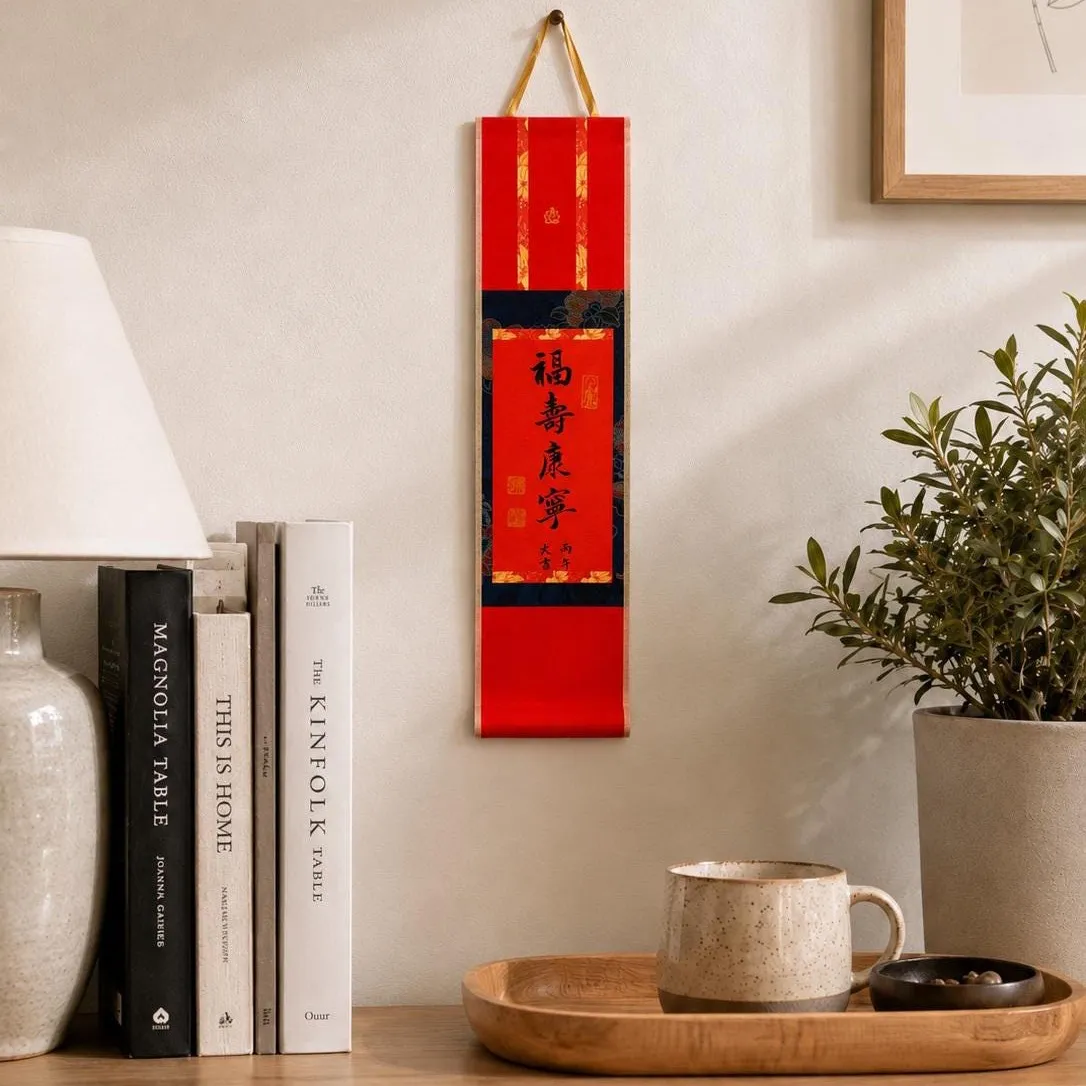
Photo shows a sample — yours will be brushed with 勉, or any character you choose.
Wall Scroll — for walls & housewarmingsfrom $38→ -
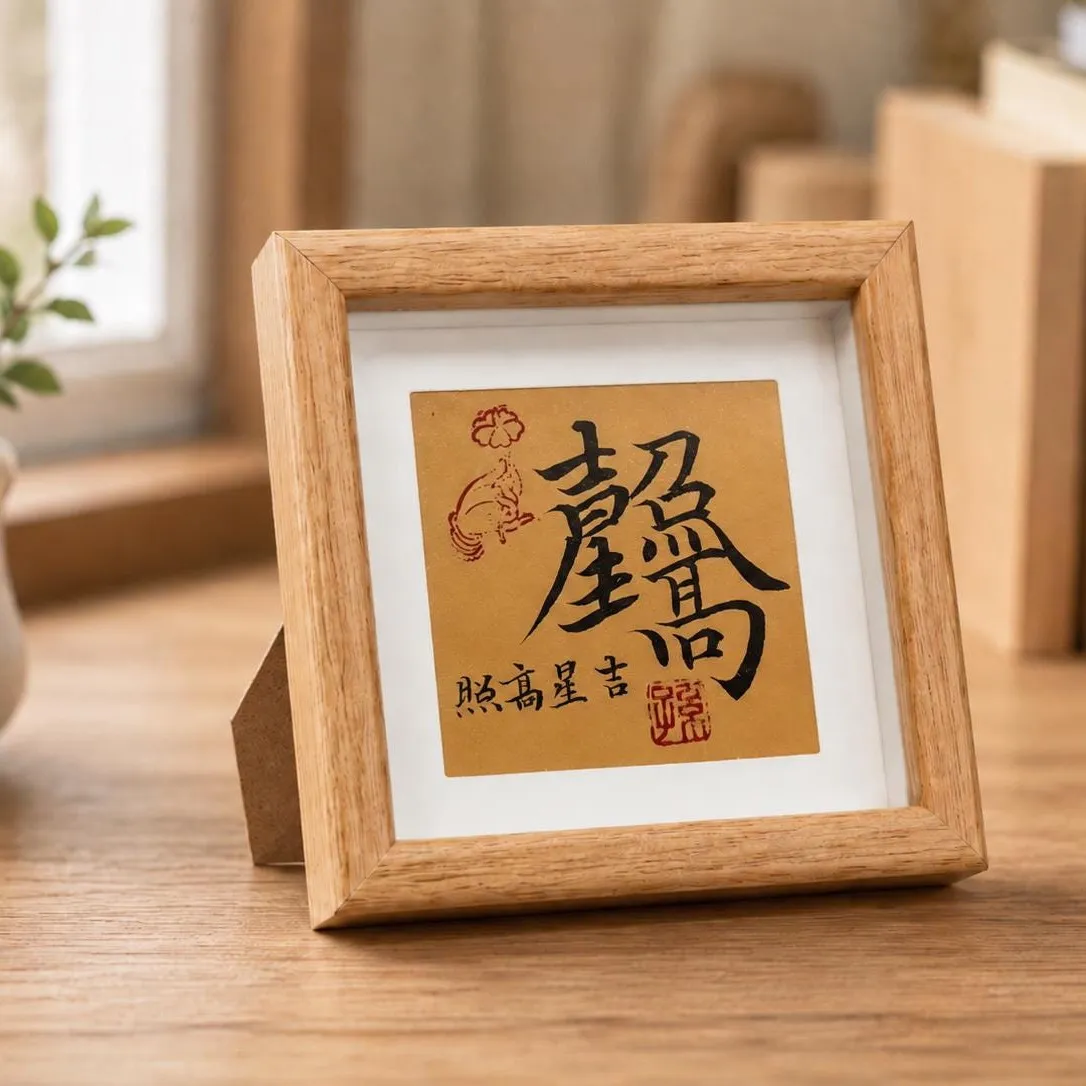
Photo shows a sample — yours will be brushed with 勉, or any character you choose.
Desk Frame — for desks, studies & studiosfrom $44→ -
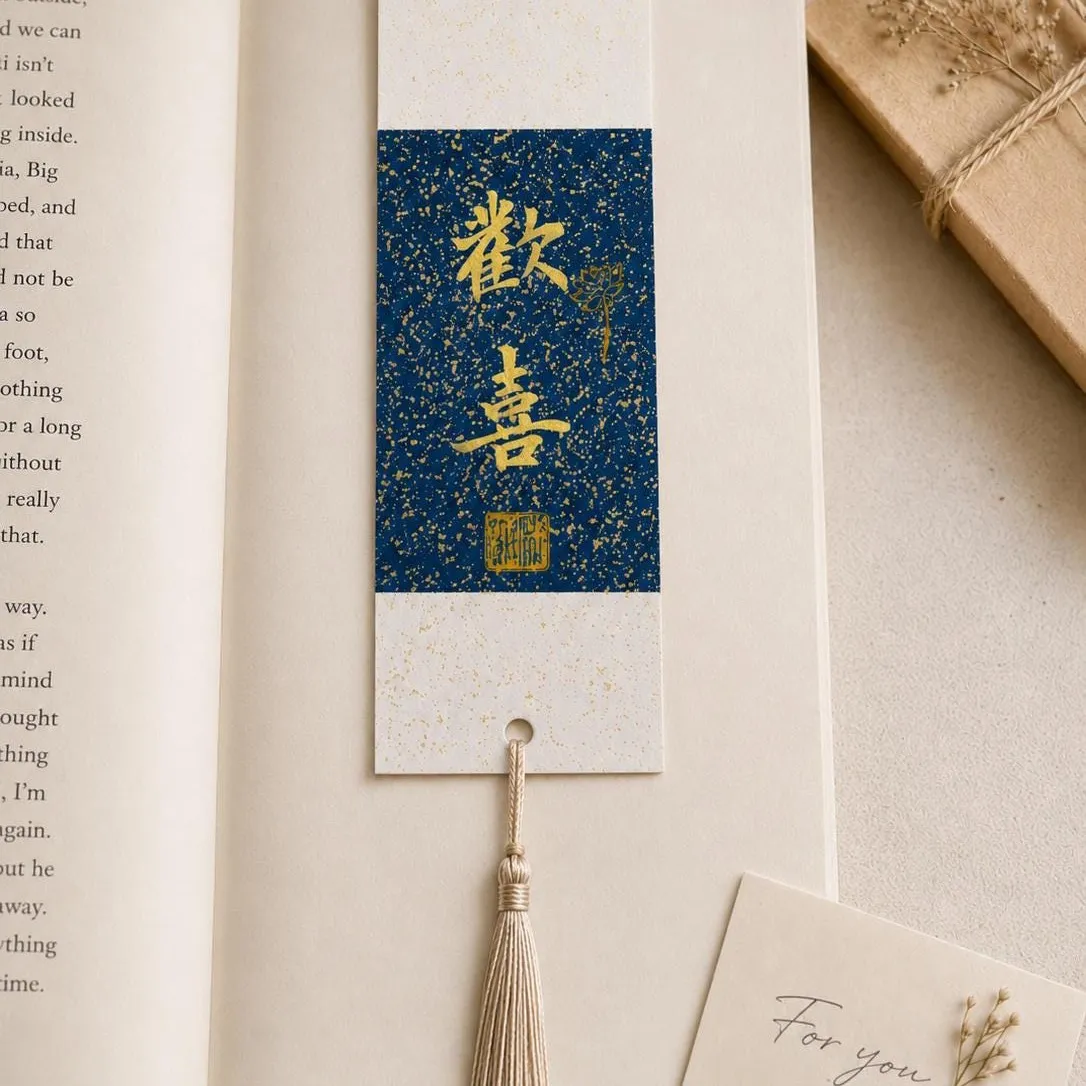
Photo shows a sample — yours will be brushed with 勉, or any character you choose.
Bookmark — for readers & small thank-yousfrom $14→
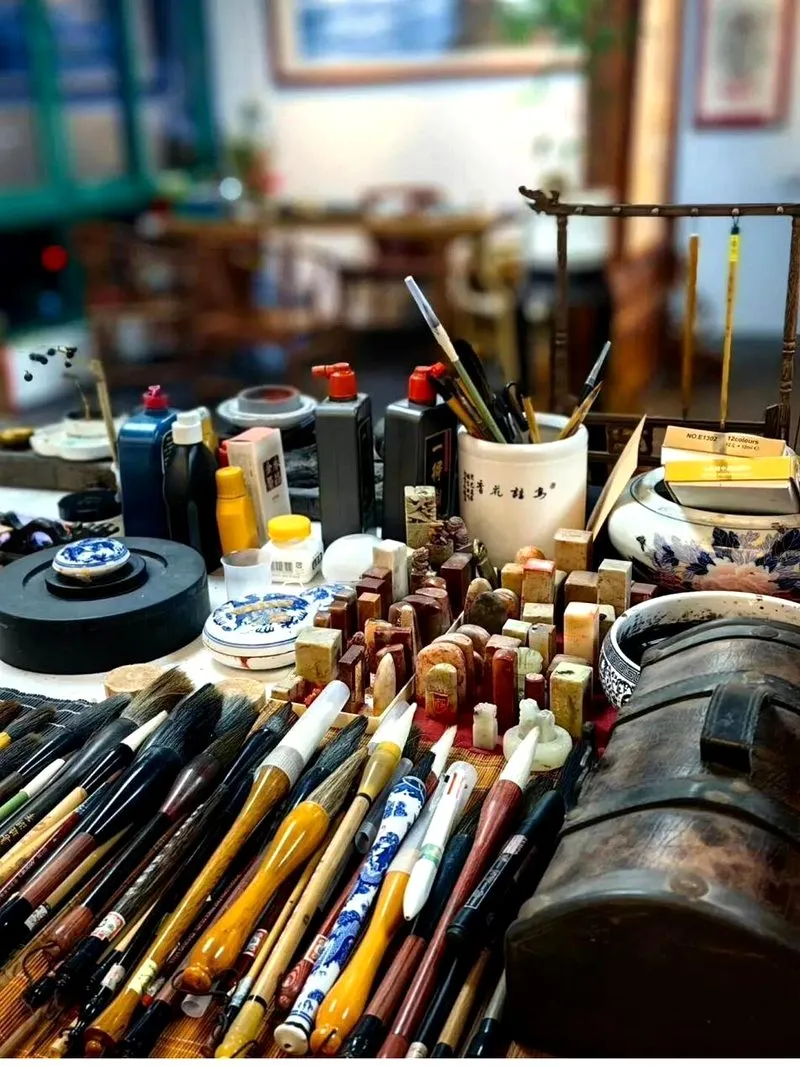
What people said after it arrived.
-
The item is fantastic. The customer service was genuine. Thanks!
— M.Verified purchase · from our Etsy shop reviews · -
They were great they gave me exactly what I asked for and then some. Thank you!!
— G.Verified purchase · from our Etsy shop reviews · -
It is well designed and customized. My daughter loves it. Amazing gift for family’s d friends
— S.Verified purchase · from our Etsy shop reviews ·
Each "勉" is hand-brushed by FuBlessings on rice paper.
See 勉 (Miǎn) on Etsy →