美 (měi) — Beauty · Elegance · Flourishing
A single character.
In English, calling someone beautiful is about how they look. In Chinese, 美 is about what they’ve become. The character’s oldest form shows a person in full ceremonial headdress — not resting quietly but standing at maximum display, fully realized. Mencius ranked 美 above mere goodness: a good person tries. A beautiful one has finished becoming, and the result is visible to everyone in the room.
美 shows up in Chinese life in places where the English word “beauty” wouldn’t fit. A meal that comes out exactly right is 美味. A satisfying life is 美满. A landscape at the moment when the light is perfect is 美景. In each case, the word doesn’t describe surface appearance — it describes completeness. The meal lacks nothing. The life has no gaps. The landscape has arrived at the moment it was always heading toward. This is why 美 on a birthday card hits differently than “beautiful” on an English one: it’s not flattery. It’s recognition.
A hand-brushed 美 by FuBlessings is a Valentine’s Day or birthday gift that says something no English word quite can. For a wife, it names what years of close attention have revealed — not youth or prettiness, which fade, but the quality of a person who has become fully herself. For a friend’s milestone birthday, it marks what the decades have produced: someone whose character has ripened into something you can see.
- beauty as completeness
- fully realized
- the quality of something at its fullest
- what years have made of a person
- pretty Too surface. Pretty is about appearance in a moment. 美 is about a person or thing having arrived at what it was becoming.
- attractive Attractive describes the effect on a viewer. 美 describes a quality in the thing itself, whether anyone is looking or not.
- gorgeous Gorgeous is loud. 美 can be quiet — Zhuangzi's mountains and rivers possess great beauty and say nothing about it.
The short arms are the point: these readings don’t reach it.
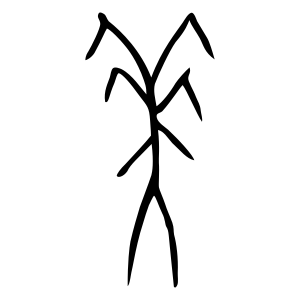
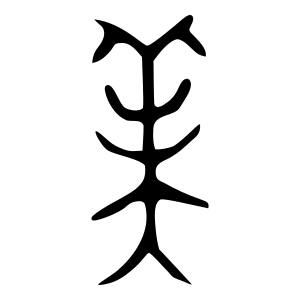
- 羊 sheep / abundanceIn the classical reading: a well-fed sheep, the mark of a household that wants for nothing. In the older oracle-bone reading: feathers or horns worn on the head — ceremonial dress, the body in full display.
- 大 large / a person standing tallThe picture of a person with arms outstretched. Underneath the headdress reading, what 美 shows is not an object but a figure at its fullest extension — adorned, upright, complete.
character
- 美丽 měi lì beautiful — the everyday word, used of people, landscapes, things
- 美满 měi mǎn beautiful and complete — the classical phrase for a marriage or life that lacks nothing
- 美好 měi hǎo fine and good — used of times, memories, the way things ought to be
- 美味 měi wèi a meal that came out exactly right — flavor at its fullness
- 完美 wán měi complete and beautiful — the standard Chinese word for perfect
The Story Behind the Character
The oldest known forms of 美 show a person standing upright with an elaborate headdress of feathers or horns — likely a dancer in ceremonial dress, or a warrior wearing the trophy of a hunt. The image is unmistakable: beauty, in its earliest Chinese conception, was not quiet or delicate. It was the full display of something at its most alive, adorned and standing tall.
China's first dictionary (Shuowen Jiezi, c. 100 CE) broke the character into 羊 (sheep) over 大 (large) and defined it simply: "美,甘也" — beauty is sweetness, the quality of something that satisfies completely. The sheep-over-large interpretation has endured for centuries: a large, well-fed sheep was the mark of abundance, and abundance that is visible and complete is beautiful. But many modern scholars believe the headdress reading is older and more accurate.
Either way, the key insight is the same: 美 in Chinese was never about prettiness or surface appeal. It described things that had reached their fullness — a feast that lacked nothing, a person whose qualities had matured into something you could see from across the room. Beauty as completion, not decoration.
Classical lines
- roughly 2,300 years
- c. 300 BCE 《孟子·尽心下》
- 1990 费孝通
One further source is quoted below without a date printed, so it stays off the rail.
充实之谓美。 To be full and complete
that is what beauty means. — Mencius ranked 美 above mere goodness in his hierarchy of human development. A good person is admirable. A beautiful one has become so fully what they are that the quality radiates outward.
天地有大美而不言。 Heaven and earth possess great beauty but say nothing about it.
Zhuangzi's observation that the most profound beauty doesn't announce itself. Mountains don't know they're beautiful. Neither do the best people.
各美其美,美人之美,美美与共,天下大同。 Appreciate your own beauty; appreciate the beauty of others; when all beauties are appreciated together, the world is in harmony.
A modern Chinese sociologist's formula for how cultures should coexist. He chose 美 as the key word — not tolerance, not agreement, but the ability to see beauty in what is different from you.
Why This Character Matters
The word for America in Chinese is 美国 — literally "beautiful country." This wasn't a compliment. When Chinese translators first needed a name for the United States in the 19th century, they chose characters that approximated the sound "Me-ri-ca," and 美 happened to match the first syllable. But the coincidence has stuck, and today "beautiful country" is how over a billion people refer to America every day. It's one of the best-known accidental namings in any language.
In Chinese aesthetics, 美 operates on a different axis than Western beauty. The classical tradition distinguishes between 华美 (ornate beauty, the kind that dazzles) and 素美 (plain beauty, the kind that grows on you). The highest form is 大美, "great beauty," which Zhuangzi described as the beauty of mountains and rivers — vast, silent, and entirely unconcerned with being admired. When you give someone 美 as a gift, you're drawing on this deeper tradition: not telling them they look good, but naming a quality in them that has arrived at fullness.
美 as a tattoo reads as 'beautiful' but can feel aspirational or self-referential — like tattooing the word 'Beautiful' on yourself in English. In Chinese, though, 美 is used more broadly than English 'beauty' — it describes landscapes (美景), food (美味), and moral goodness (美德). A Chinese person would likely read it as a general appreciation of beauty in the world rather than a statement about the wearer.
Calligraphy Styles for Tattoos
- Regular script (楷书 kǎishū) Best for tattoos
Nine strokes with a balanced, symmetric structure — 羊 (sheep/goodness) on top, 大 (great/large) on the bottom. The natural symmetry makes it one of the easier characters for tattoo artists to get right.
- Running script (行书 xíngshū) Good for larger pieces
Adds graceful flow to a character that is already about beauty. The downward movement from 羊 to 大 lends itself naturally to running script's connected strokes.
- Cursive script (草书 cǎoshū) Only with an expert calligrapher
美 works better in cursive than most characters because the strokes flow naturally downward from the top 羊 through the bottom 大. Still requires a skilled hand, but the risk of illegibility is lower than with more complex characters.
Common Mistakes to Avoid
- Writing the top component 羊 with the wrong number of horizontal strokesIntended: Beauty (美)
The top radical 羊 (sheep/lamb) has three horizontal strokes. Adding or omitting one changes the character. In sloppy handwriting, 美 can also be confused with 关 — make sure the 羊 top is clearly formed with all three horizontals.
Notes for Your Tattoo Artist
9 strokes with well-balanced symmetry — one of the easier characters for tattoo artists. The key is getting the 羊 top and 大 bottom proportions right: the horizontal strokes in 羊 must be evenly spaced, and the two diagonal strokes of 大 should extend wider than the upper portion. This gives the character its characteristic stability — beauty grounded, not floating.
A few characters live near "美" but mean something quieter, sharper, or more specific. Here's how to tell them apart.
what a person has become — fullness made visible
what a person does — moral goodness, the choices made along the way
the result — a quality matured into something whole
the foundation — being without pretense, what is actually so
美 at a birthday is recognition before it is a wish — naming what the years have already made of this person.
- 美 at a birthday is recognition before it is a wish — naming what the years have already made of this person. Most apt when the recipient's character and presence have grown into something particular enough to be worth seeing clearly, rather than simply celebrated.
- Not a substitute for 爱. 美 names what love, from close range and over time, eventually sees: a quality in the other person that is not performance, not youth, but the thing itself — accumulated, specific, and entirely theirs.
Wife · Friend · Best Friend · or yourself
美 is one of the characters we use to write Western names in Chinese. See it at work:
-
What does 美 (měi) mean?
美 (měi) is the Chinese character for beauty, elegance, flourishing. In English, calling someone beautiful is about how they look. In Chinese, 美 is about what they've become. The character's oldest form shows a person in full ceremonial headdress — not resting quietly but standing at maximum display, fully realized. Mencius ranked 美 above mere goodness: a good person tries. A beautiful one has finished becoming, and the result is visible to everyone in the room. The word for America in Chinese is 美国 — literally "beautiful country." This wasn't a compliment. When Chinese translators first needed a name for the United States in the 19th century, they chose characters that approximated the sound "Me-ri-ca," and 美 happened to match the first syllable. But the coincidence has stuck, and today "beautiful country" is how over a billion people refer to America every day. It's one of the best-known accidental namings in any language.
-
What occasions is 美 given for?
美 is traditionally given for Birthday, Valentine's Day. 美 at a birthday is recognition before it is a wish — naming what the years have already made of this person. Most apt when the recipient's character and presence have grown into something particular enough to be worth seeing clearly, rather than simply celebrated. Not a substitute for 爱. 美 names what love, from close range and over time, eventually sees: a quality in the other person that is not performance, not youth, but the thing itself — accumulated, specific, and entirely theirs.
-
Is 美 a good Chinese tattoo?
美 as a tattoo reads as 'beautiful' but can feel aspirational or self-referential — like tattooing the word 'Beautiful' on yourself in English. In Chinese, though, 美 is used more broadly than English 'beauty' — it describes landscapes (美景), food (美味), and moral goodness (美德). A Chinese person would likely read it as a general appreciation of beauty in the world rather than a statement about the wearer.
-
Who brushes the 美 calligraphy?
FuBlessings hand-brushes each 美 (Měi) to order, in ink on rice paper — never printed, never repeated.
Bring 美 home — choose how you'd like it brushed.
-
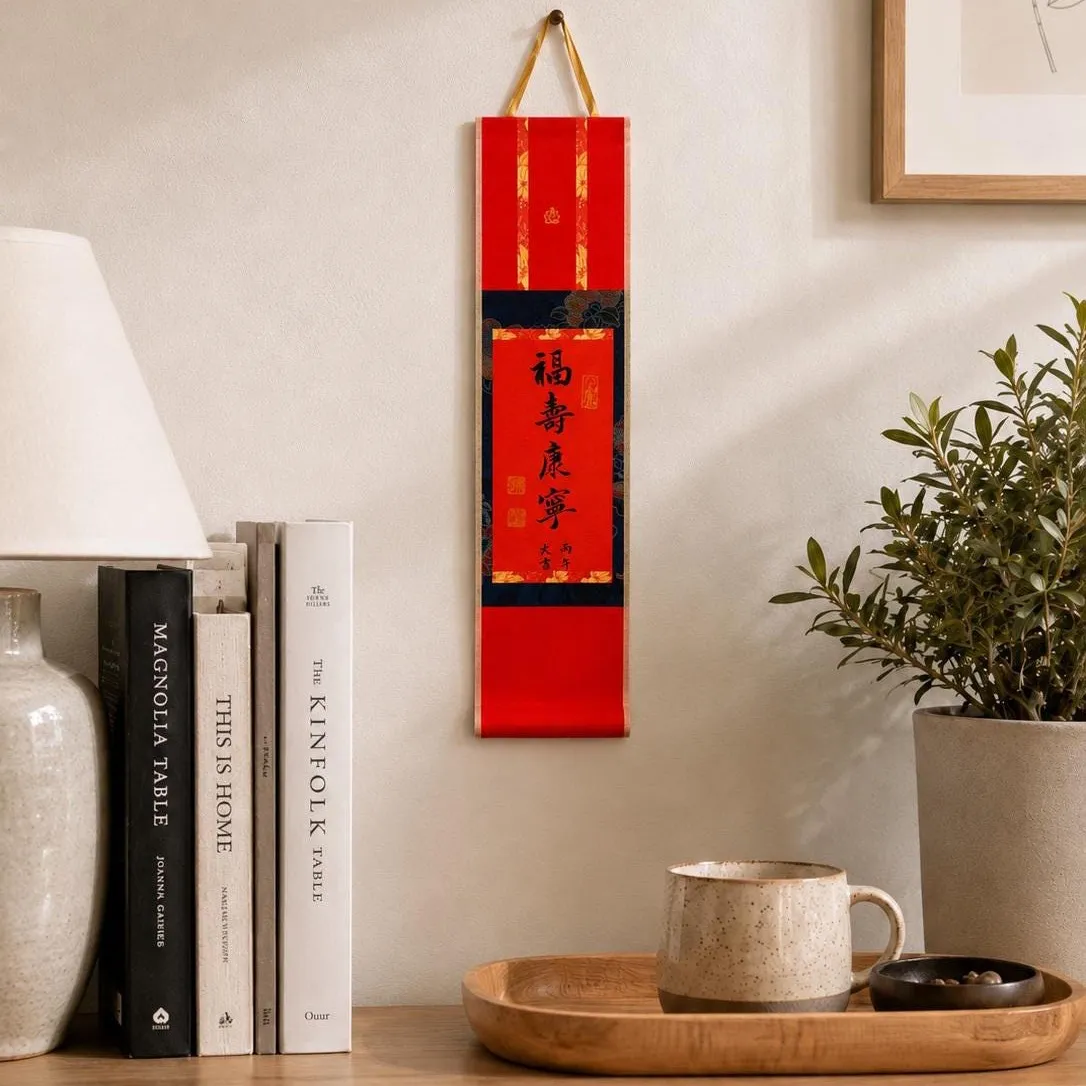
Photo shows a sample — yours will be brushed with 美, or any character you choose.
Wall Scroll — for walls & housewarmingsfrom $38→ -
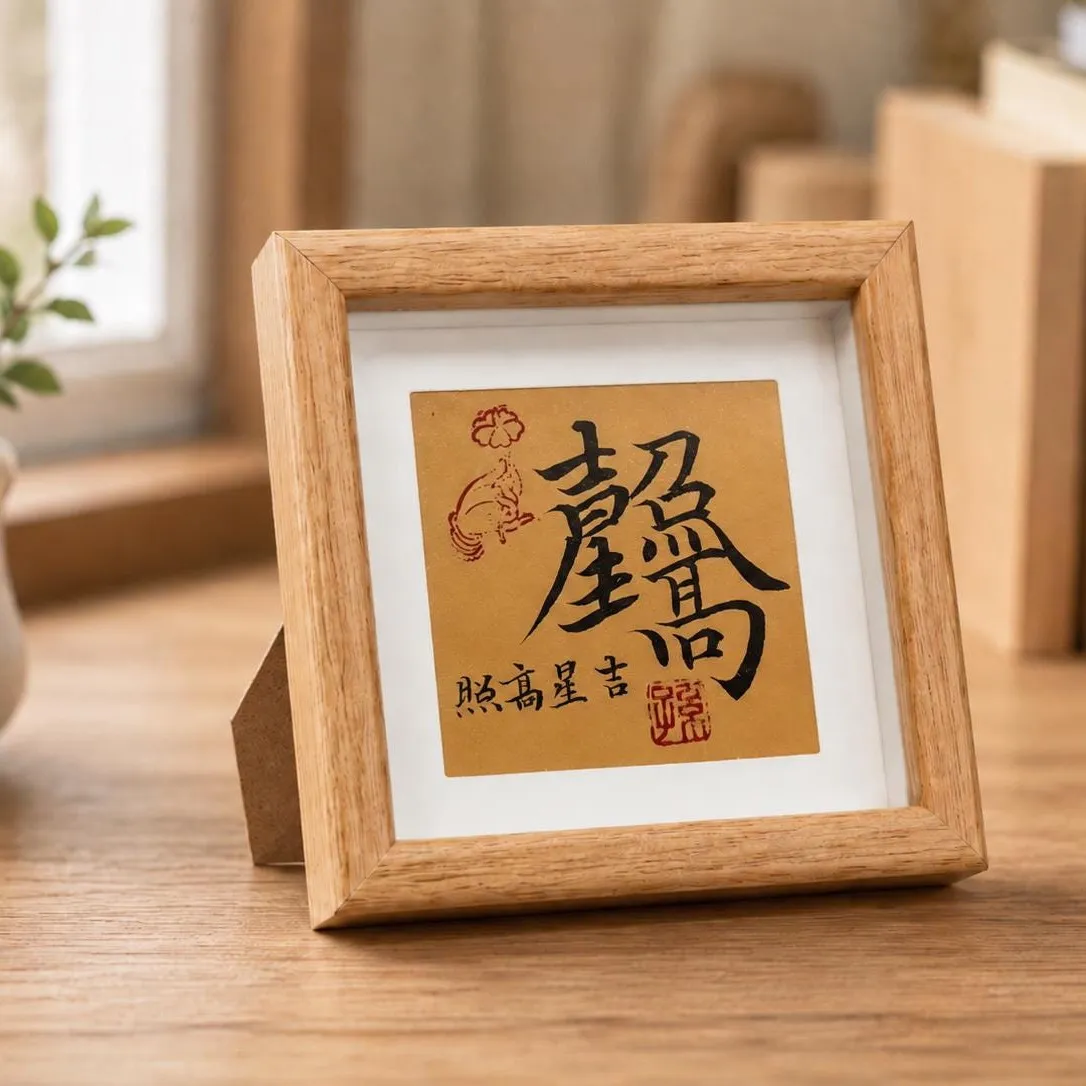
Photo shows a sample — yours will be brushed with 美, or any character you choose.
Desk Frame — for desks, studies & studiosfrom $44→ -
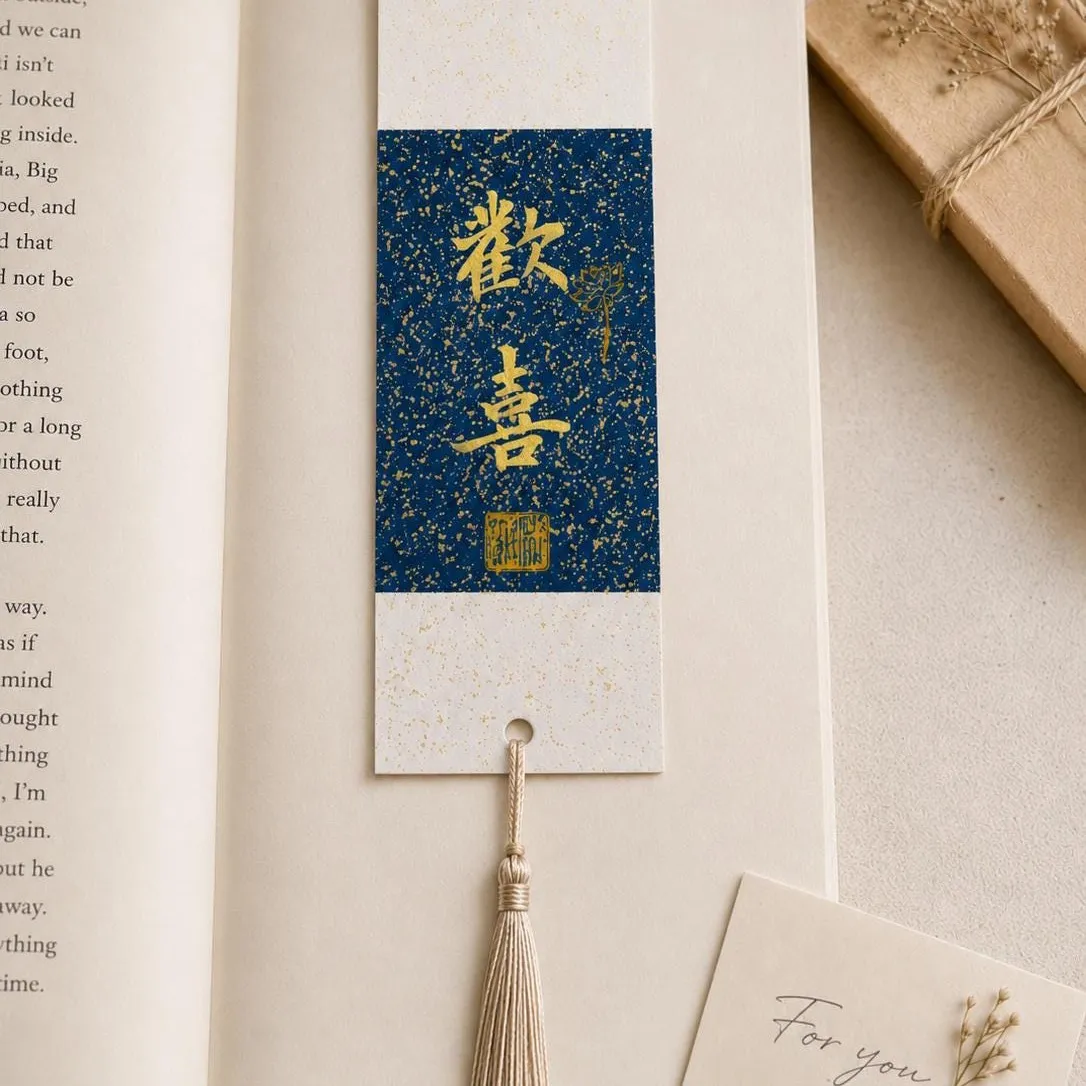
Photo shows a sample — yours will be brushed with 美, or any character you choose.
Bookmark — for readers & small thank-yousfrom $14→
What people said after it arrived.
-
The item is fantastic. The customer service was genuine. Thanks!
— M.Verified purchase · from our Etsy shop reviews · -
They were great they gave me exactly what I asked for and then some. Thank you!!
— G.Verified purchase · from our Etsy shop reviews · -
It is well designed and customized. My daughter loves it. Amazing gift for family’s d friends
— S.Verified purchase · from our Etsy shop reviews ·
Each "美" is hand-brushed by FuBlessings on rice paper.
See 美 (Měi) on Etsy →