吉星高照 (jí xīng gāo zhào) — The Auspicious Star Stands High and Shines Down
A 4-character phrase, not a single character.
The verb at the end of this phrase never says what it shines on. 照 takes an object easily in Chinese — 照人, 照我 — and 吉星高照 declines to give it one. What the phrase does specify is where the star is: 高, up, and staying there. That is the entire claim, and it is a stranger one than it looks. Confucius’s north star governs by not moving — 居其所而众星共之, it keeps its place and the rest turn toward it — and 高照 runs on the same logic, in which being overhead and staying put is itself the whole of the good news. Where 紫气东来 posts a lookout and reports something still out on the road, this one reports that nothing has to arrive, because what matters is already in position. See 吉祥 →
It reaches the door most often as a 横批 — the short horizontal board above a Spring Festival couplet, four characters wide, whose job is not to wish for anything specific but to state the household’s general condition for the year. That is a good fit for a phrase that specifies nothing. Its other home is the birthday, and particularly the 本命年, the year every twelfth when the animal of the year comes back around to the one you were born under: a year spoken of as one to take care in, marked by red that in most tellings has to come from somebody else’s hands rather than your own. People will also know the variant 福星高照, and the two are not quite the same sentence. 福星 is one office, the Fortune Star, the first of the three old men in the 福禄寿 New Year prints. 吉星 is the class — the three of 福禄寿 at minimum, and in ordinary use whichever of the good ones is over you. The first character now stands in the library on its own, where it does a different job: 吉 is an answer about one date, taken out of the almanac for the one thing you mean to do on it, and this phrase names no day at all. See 吉 →
A hand-brushed “吉星高照” by FuBlessings suits a friend, a close friend, or a grandparent at the turn of the year or on a birthday, especially one falling in a 本命年, when the custom asks for something red from another person’s hands. The almanac it came out of scored every day and hedged every one of them. This is the sentence that gives up the grid, names no day, and reports only that the light overhead is a good one and already where it needs to be.
- a good star already in position overhead
- a report on what is above someone, not on what is coming to them
- the blessing that names no blessing
- the reading taken before the year starts, and the only one that comes back good
- good luck Luck is a run of outcomes and has no location. 吉星高照 says nothing about outcomes; it describes a position in the sky and leaves what follows from it entirely open.
- blessed Being blessed implies somebody doing the blessing. This phrase names no giver — only a light and a height. The grammar is a weather report, not a transaction.
- born under a lucky star The closest English has, but it faces the wrong way in time. English uses it to explain a person's past run of fortune; 吉星高照 is said to someone about the stretch in front of them, which is why it works as a gift and the English does not.
The short arms are the point: these readings don’t reach it.
- 吉星 the beneficent star — an office in the sky that means well吉 is the oldest word in the phrase: on Shang oracle bones it is the diviner's favorable reading, the verdict that the answer was yes. 星 turns that verdict into a body with a position. In the almanac the compound is a rank rather than a name — the heading the 吉神 are listed under, against the 凶煞 in the column opposite.
- 高照 overhead, shining高 reports position rather than brightness — the star is not described as strong, only as overhead. 照 is the shining, and the phrase leaves it there.
characters
- 福星高照 fú xīng gāo zhào the Fortune Star shines high — the common variant, naming one specific star where 吉星高照 names the category
- 吉星 jí xīng the beneficent star — the technical term, still current in speech for a person or thing that turns up at the right moment
- 灾星 zāi xīng the calamity star — the opposite office in the same roster, and still a live insult
- 太岁 tài suì the counter-Jupiter — the fiction the calendar kept after it gave up on the planet, running an exact twelve; 犯太岁 is the phrase for the year a person is crosswise with it
- 福禄寿 fú lù shòu fortune, rank and long life — the three stellar figures of New Year prints, where 福星 gets a face and a beard
Cinnabar marks the characters 吉星高照 actually contains. The dark row is a relative by meaning or by sound, not one shared stroke.
The Story Behind the Character
Open a Chinese almanac to any single day and the page is a grid. One column lists what the day is fit for — 宜: travel, marriage, breaking ground, moving house. A second lists what it is not — 忌. And above both runs a roster of names, the stars and spirits reckoned to be on duty that day, sorted into two ranks: 吉神 on one side, 凶煞 on the other. The entries in those columns are named — 天德, 月德, 天喜, 三合 — and 吉星 is not one of the names. It is the rank at the head of the column, the category the good ones get sorted into. The almanac was not a rare book. For long stretches of the imperial period its printing was a state monopoly and producing one without authorization was punishable, precisely because nearly every household had a copy and everyone consulted it; by most counts it was the most widely circulated printed text in late imperial China. This phrase comes out of a table of contents, not out of a classic.
The sorting behind that table is much older, and it began as an exercise in government. Sima Qian gave the sky its earliest systematic Chinese description to survive whole in a chapter of the 《史记》 called 天官书, around 94 BCE — a title usually rendered "Treatise on the Celestial Offices," where 官 carries its ordinary sense of a post in an administration rather than anything to do with constellations. The sky in it is laid out as a civil service: a central office around the pole star, four palaces spread around it, and stars holding ranks within them. Officials in that scheme could be diligent or obstructive, and so could stars. The archetypal good one was 岁星, Jupiter, and the reason is arithmetic. It circles the sky in 11.86 years — near enough to twelve that the band it travels was cut into twelve stations and the years counted off by which station the planet stood in. Near enough, but not equal: the count slipped a whole station roughly every eighty-six years. By the Eastern Han the drift had a name, 超辰, and the system built on it had been given up. What replaced it kept the twelve and threw away the planet — a mirror-image body, 太岁, running the opposite way on an exact twelve-year beat, a fiction the calendar could rely on in the way the sky could not. 吉星 was never a vague good star. It named a kind of post in an administration that had been mapped in detail.
For a phrase brushed this often, the pedigree is startlingly thin. There is no classical source at all — no line in a classic, no poet, no locus for a commentator to point at. Chinese idiom dictionaries, which look for one as a matter of form, end up reaching forward rather than back: the 出处 they print is a twentieth-century novel, 陈残云's 《热带惊涛录》. That is some two thousand years downstream of the vocabulary the phrase is assembled from, and the gap is the most informative thing about it. These four characters never needed a book to license them. The almanac was in the house and its column headings were already in everyone's mouth, so the phrase put itself together out of ordinary speech — which is why it belongs over a doorframe rather than in an anthology.
Classical lines
- roughly 300 years
- c. 400 BCE 《论语·为政》
- c. 3rd c. BCE 《周易·系辞上》
- c. 94 BCE 《史记·天官书》
在天成象,在地成形,变化见矣。 In heaven it takes shape as images; on earth it takes shape as forms; and so change becomes visible.
The single sentence that licensed the whole practice of watching the sky for meaning. Heaven issues no instructions in this account; it produces 象, images. Everything a 吉星 was ever taken to signify rests on that one claim — that what happens overhead and what happens underfoot are the same process, shown twice.
为政以德,譬如北辰,居其所而众星共之。 Govern by character, and you are like the north star: it stays in its place, and the other stars turn toward it.
共 here is read as 拱, to face inward in homage. Confucius's image is the reason 高照 says what it does. The star he praises does nothing and goes nowhere; its entire authority is that it holds position and is high up. A star shining from overhead is not intervening in anything. It is simply, dependably, there.
天则有日月,地则有阴阳。天有五星,地有五行。 Heaven has its sun and moon; earth has its yin and yang. Heaven has the five planets; earth has the five phases.
In the concluding 太史公曰 of the 《史记·天官书》, Sima Qian matches heaven and earth item for item. The treatise's title uses 官, the word for a post in the civil administration, and it means it: the stars in this chapter hold offices and can be helpful or obstructive in them. 吉星 is a job description lifted out of that system.
Why This Character Matters
There is a rule attached to the year this phrase suits best, and it is a rule about giving. In a 本命年 — the year, every twelfth, when the animal of the year matches the animal you were born under — people wear red: a belt, a wrist cord, socks, underwear. In many regions the convention is that you are not supposed to buy it yourself — it has to come from somebody else — though practice varies enough from province to province that this is a custom rather than a rule. Where it is kept, it makes the 本命年 one of the few points in the Chinese calendar with a gift built into its structure rather than merely customary at it, and that is where 吉星高照 sits most naturally: a year framed from the outset as one to take care in, marked by an object that only counts if another person hands it over.
The variant most people will have heard is 福星高照, and the difference between the two is worth keeping straight. 福星 is one particular office — the Fortune Star, the first of the three stellar figures 福禄寿 who turn up as a trio of old men in New Year prints, and identified in some traditions with Jupiter itself. 福星高照 therefore names a specific star. 吉星高照 names the class — the dictionaries gloss it as the three of 福禄寿 taken together, and ordinary use stretches it further still, to whichever of the good ones is over you. That generality is the whole reason the phrase survives outside the almanac it came from. It commits to no star, no blessing, no quantity and no date, and it puts no obligation on the person standing underneath — which is a rarer thing in a blessing than it sounds, and most of what makes it easy to give.
A few characters live near "吉星高照" but mean something quieter, sharper, or more specific. Here's how to tell them apart.
fortune already in position, directly overhead
fortune sighted still out on the road, drifting in from the east
names no blessing at all — only a light and where it is
names five, itemized, and the door they arrive at
one sign, in one place, over one household
the entire field of favorable signs, gathered into a single word
The turn of the year is the moment the question this phrase answers actually gets asked.
- The turn of the year is the moment the question this phrase answers actually gets asked. Chinese almanacs reassign the year's roster of stars and spirits at the change of the year — which offices are over the household for the next twelve months, and which are not — so the New Year is when a household finds out what it is standing under. 吉星高照 is the answer given in advance, and it is one of the standard four characters for the 横批, the short horizontal board above the door that crowns the vertical couplet. It suits that slot for a reason: the couplet underneath does the specific wishing, and the board above it needs one general statement of condition. Where 五福临门 inventories five named blessings arriving at the threshold, 吉星高照 names nothing arriving at all. It says only that the light overhead is a good one, and that it is already in position.
- A birthday is a personal turn of the year, and every twelfth one is the 本命年 — the year whose animal matches the animal a person was born under. That twelve is a rounded number rather than an observed one; the animal round kept it after the calendar gave up on the planet it had been rounded from. A 本命年 is traditionally spoken of as a year to take care in, and the vocabulary for it stayed astronomical — 犯太岁, being crosswise with the counter-Jupiter. 吉星高照 is the same vocabulary pointed the other way, which is why it lands on a birthday with more weight than a general good wish, and why it is at the same time the least demanding thing on the table: it asks nothing whatever of the person having the birthday, and describes only what is above them.
Friend · Best Friend · Grandparent · or yourself
Looking for a name? See Western names written in Chinese →
-
What does 吉星高照 (jí xīng gāo zhào) mean?
吉星高照 (jí xīng gāo zhào) is a 4-character Chinese phrase for the auspicious star stands high and shines down. The verb at the end of this phrase never says what it shines on. 照 takes an object easily in Chinese — 照人, 照我 — and 吉星高照 declines to give it one. What the phrase does specify is where the star is: 高, up, and staying there. That is the entire claim, and it is a stranger one than it looks. Confucius's north star governs by not moving — 居其所而众星共之, it keeps its place and the rest turn toward it — and 高照 runs on the same logic, in which being overhead and staying put is itself the whole of the good news. Where 紫气东来 posts a lookout and reports something still out on the road, this one reports that nothing has to arrive, because what matters is already in position. See 吉祥 → There is a rule attached to the year this phrase suits best, and it is a rule about giving. In a 本命年 — the year, every twelfth, when the animal of the year matches the animal you were born under — people wear red: a belt, a wrist cord, socks, underwear. In many regions the convention is that you are not supposed to buy it yourself — it has to come from somebody else — though practice varies enough from province to province that this is a custom rather than a rule. Where it is kept, it makes the 本命年 one of the few points in the Chinese calendar with a gift built into its structure rather than merely customary at it, and that is where 吉星高照 sits most naturally: a year framed from the outset as one to take care in, marked by an object that only counts if another person hands it over.
-
What occasions is 吉星高照 given for?
吉星高照 is traditionally given for Chinese New Year, Birthday. The turn of the year is the moment the question this phrase answers actually gets asked. Chinese almanacs reassign the year's roster of stars and spirits at the change of the year — which offices are over the household for the next twelve months, and which are not — so the New Year is when a household finds out what it is standing under. 吉星高照 is the answer given in advance, and it is one of the standard four characters for the 横批, the short horizontal board above the door that crowns the vertical couplet. It suits that slot for a reason: the couplet underneath does the specific wishing, and the board above it needs one general statement of condition. Where 五福临门 inventories five named blessings arriving at the threshold, 吉星高照 names nothing arriving at all. It says only that the light overhead is a good one, and that it is already in position. A birthday is a personal turn of the year, and every twelfth one is the 本命年 — the year whose animal matches the animal a person was born under. That twelve is a rounded number rather than an observed one; the animal round kept it after the calendar gave up on the planet it had been rounded from. A 本命年 is traditionally spoken of as a year to take care in, and the vocabulary for it stayed astronomical — 犯太岁, being crosswise with the counter-Jupiter. 吉星高照 is the same vocabulary pointed the other way, which is why it lands on a birthday with more weight than a general good wish, and why it is at the same time the least demanding thing on the table: it asks nothing whatever of the person having the birthday, and describes only what is above them.
-
Who brushes the 吉星高照 calligraphy?
FuBlessings hand-brushes each 吉星高照 (Jí Xīng Gāo Zhào) to order, in ink on rice paper — never printed, never repeated.
Bring 吉星高照 home — choose how you'd like it brushed.
-
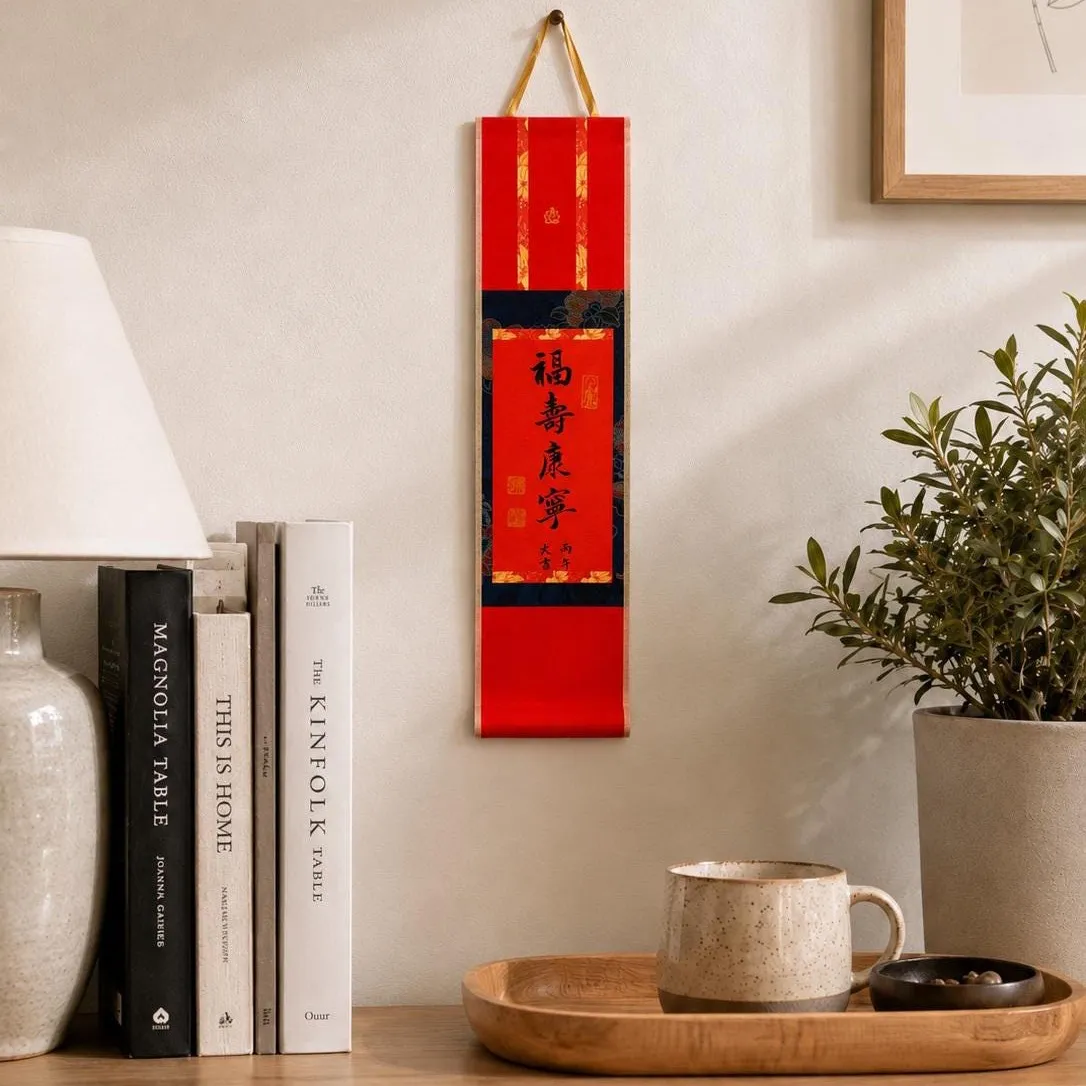
Photo shows a sample — yours will be brushed with 吉星高照, or any character you choose.
Wall Scroll — for walls & housewarmingsfrom $38→ -
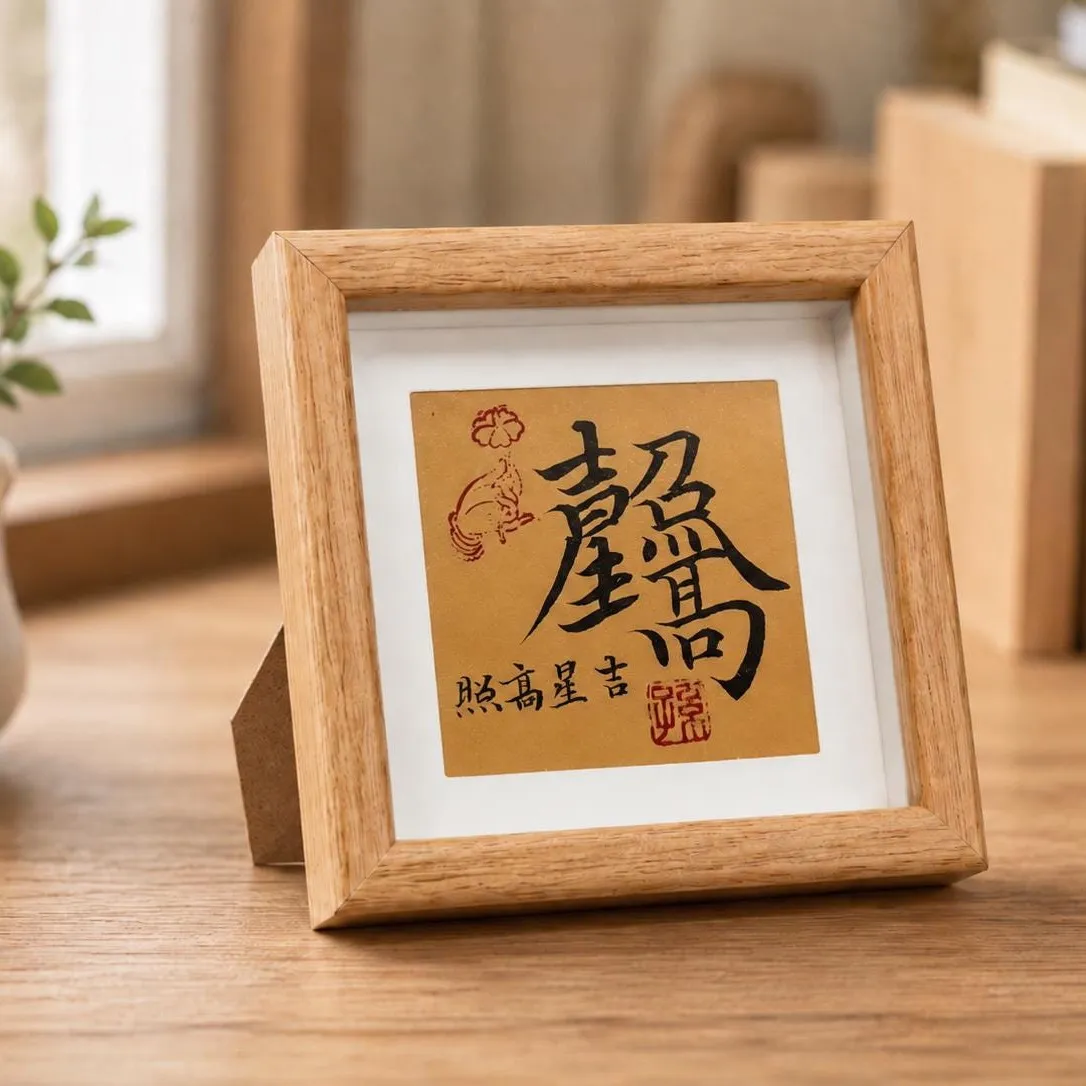
Photo shows a sample — yours will be brushed with 吉星高照, or any character you choose.
Desk Frame — for desks, studies & studiosfrom $44→ -
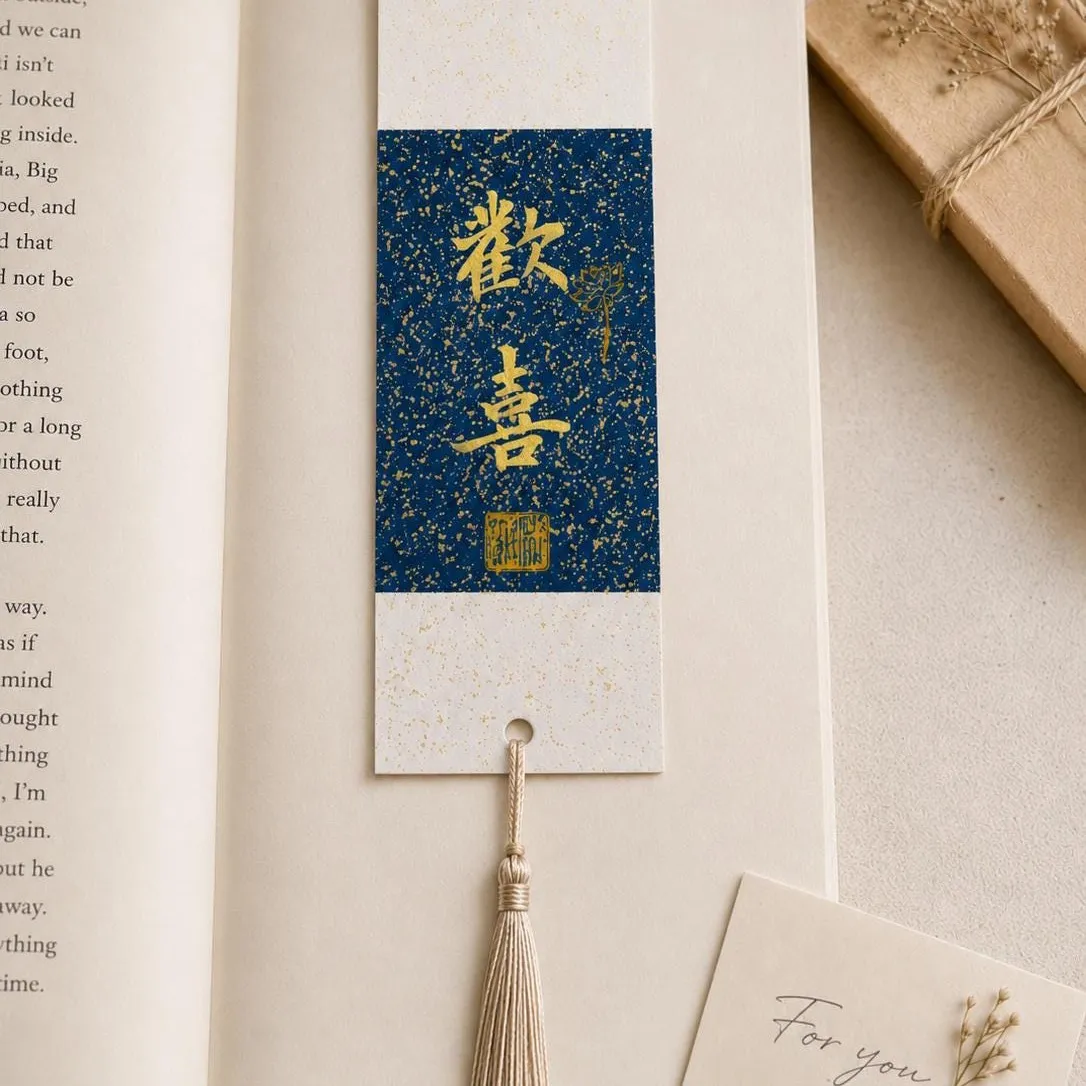
Photo shows a sample — yours will be brushed with 吉星高照, or any character you choose.
Bookmark — for readers & small thank-yousfrom $14→
What people said after it arrived.
-
The item is fantastic. The customer service was genuine. Thanks!
— M.Verified purchase · from our Etsy shop reviews · -
They were great they gave me exactly what I asked for and then some. Thank you!!
— G.Verified purchase · from our Etsy shop reviews · -
It is well designed and customized. My daughter loves it. Amazing gift for family’s d friends
— S.Verified purchase · from our Etsy shop reviews ·
Each "吉星高照" is hand-brushed by FuBlessings on rice paper.
See 吉星高照 (Jí Xīng Gāo Zhào) on Etsy →