丹心 (dān xīn) — A Red Heart · Loyalty That Only Shows at Cost
Two characters, and the first is a mineral rather than a colour word: 朱砂, cinnabar, dug out of the ground in Ba and Yue and prized for a red that does not shift.
The red in 丹心 comes out of a mine. 丹 is cinnabar, 朱砂, the ore the Shuowen files as 巴越之赤石 — the red stone of Ba and Yue — and it is the pigment still red on a lacquered coffin long after the black beside it has turned grey. So the compound is not saying that the heart is warm, or that it burns. It is saying what colour the heart would be if somebody opened it, and it picks the one red that does not fade. 忠 covers the orientation, 中 over 心, a heart pointed at something outside itself, and that orientation is real whether or not it was ever put under load. See 忠 → This word covers the evidence instead, and evidence of this kind is only ever produced at cost.
Both of the poets who fixed it in the language set it beside the written record. 陆游, 48 and back from a frontier posting where the campaign he went for was called off, wrote 千年史册耻无名,一片丹心报天子 — a thousand years of histories and the shame of being in none of them; one sheet of red heart, to repay the emperor. A century later 文天祥, a prisoner on a ship passing Lingdingyang with the war already lost, wrote the line that is still memorised in Chinese schools: 留取丹心照汗青, leave the red heart to light the 汗青. 汗青 means the histories and it is literal — green bamboo held over a fire until the sap ran out of it, sweating, so the strips would take ink and not rot. Both men are describing how they will read once they are no longer there to argue. 文天祥 was executed in 1283. That is why 一片丹心 still turns up over an obituary and effectively never at a dinner table: the word does not attach to devotion that was convenient.
A hand-brushed 丹心 by FuBlessings is for the father, husband, or oldest friend whose loyalty was assumed for years and examined once. Everybody in the family knows the year it was tested — the money, the diagnosis, the parent who came to live with them, the stretch when going would have been the easier and more defensible move. Nobody discussed it at the time, and the person concerned would still rather not. This is the piece that says the colour held, that somebody went back over it afterwards, and that the finding is now written down.
- a red heart — the colour, not the temperature
- devotion that had to cost something before it was legible
- loyalty as it will read in the record afterwards
- what was true of someone whether or not it was ever believed
- loyalty Loyalty is a standing relation and it can be perfectly comfortable — a person can be loyal for forty years and never be inconvenienced by it. 丹心 is the word reached for when the relation was doubted, unpaid, or fatal.
- devotion Devotion is an interior state, and the person holding it is the only witness. 丹心 is a claim about what would be found on inspection — it gets certified by other people, generally after the fact and generally in writing.
- sincerity 赤诚 and 诚意 cover sincerity: nothing held back in the saying. 丹心 makes no claim about what a person said. It is about what is in them once speech is no longer the medium.
- passion The red is an ore, not a temperature. Cinnabar was chosen over every other word for red precisely because it does not burn off — a heart that ran hot for a season is the thing this word excludes.
The short arms are the point: these readings don’t reach it.
- 丹 cinnabar — the red that keepsA substance, not a shade. The Shuowen gives it as the red stone of Ba and Yue, and the graph, Xu Shen says, is 采丹井, the well it was dug out of, with a mark inside for the ore. The same 丹 as 丹青 and 炼丹.
- 心 the heart, as an organThe compound is anatomical, which is why the older 赤心 lives in 推赤心置人腹中 — a heart taken out and placed in someone else. Colour claims need something with an inside.
characters
- 一片丹心 yī piàn dān xīn one sheet of red heart — the standing form; 片 is the flat-thing classifier Chinese puts in front of most 心 words (一片冰心, 一片真心)
- 碧血丹心 bì xuè dān xīn jade-green blood and a red heart — the four-character form, and the two colours belong to different things: 碧 is what the blood became, 丹 is what the heart was all along
- 赤胆忠心 chì dǎn zhōng xīn red gall and a faithful heart — the vernacular cousin, which swaps the mineral 丹 for the everyday red 赤
- 丹青 dān qīng cinnabar and azurite — the two mineral pigments, so painting, so the historical record: 名垂丹青
- 丹忱 dān chén red sincerity — the same ore on a different word for the feeling organ, and a written word rather than a spoken one
- 碧血 bì xuè jade-green blood — related by sense and by nothing else, sharing no character with the headword: it is the other half of 碧血丹心, and it comes from 苌弘, whose blood was kept three years and changed colour — the blood's mineral, where 丹 is the heart's
Cinnabar marks the characters 丹心 actually contains. The dark row is a relative by meaning or by sound, not one shared stroke.
The Story Behind the Character
The red is a mineral. 丹 is cinnabar — 朱砂, mercury sulfide — and the Shuowen glosses it as 巴越之赤石也, the red stone of Ba and Yue, naming the two regions it was mined in; the graph, in his reading, is 采丹井 — the well the ore was dug out of — with a mark inside it for the ore itself. This is the pigment that is still red on a lacquer coffin two thousand years after the black beside it has gone to grey, the red of the paste under a carved seal, and the red an emperor's brush was loaded with when he wrote in the margin of a memorial. Every other word for red in the language names an appearance. 丹 names a substance, and the property the substance is prized for is that it keeps.
心 supplies an organ rather than a feeling, and the whole logic of the compound depends on that. The plainer, earlier version of the word is 赤心, and it survives in one of the most physical idioms in the language: 推赤心置人腹中 — he takes his own red heart out and sets it in other men's bellies — said of 刘秀 in 24 CE by soldiers who had just surrendered to him and then watched him ride through their own camp with a light escort — 乘轻骑按行部陈, the text says, going along the ranks. Nothing in that sentence is interior. A heart is removed, carried, and put somewhere, and the men who describe it are the ones it was put into. 丹心 keeps the anatomy and swaps the ordinary red for the mineral one, which is what raises the register and what adds the claim about permanence.
Two poets fixed it. 陆游 wrote 一片丹心报天子 in 1173, back from a year on the Nanzheng frontier with nothing to show for it; 文天祥 wrote 留取丹心照汗青 in 1279, under guard on a ship passing Lingdingyang, having lost. Both set the word beside the written record — 史册 in the first line, 汗青 in the second — and 汗青 is not a metaphor: green bamboo was held over a fire until the sap ran out of it, sweating, so the strips would take ink and not rot. That is the tense the word lives in. It is loyalty considered from the far side, as it will read once the person is no longer available to argue for himself. 庄子 had supplied the other colour long before either of them, in the story of 苌弘 — executed in Shu, his blood kept three years and found to have turned to 碧, jade-green — and the language ended up stacking the two minerals into one phrase, 碧血丹心 — the blood that turned to jade, the heart that stayed cinnabar.
Classical lines
- roughly 1,400 years
- c. 3rd c. BCE 《庄子·杂篇·外物》
- c. 445 CE 《后汉书·光武帝纪》
- 1173 陆游《金错刀行》
人主莫不欲其臣之忠,而忠未必信,故伍员流于江,苌弘死于蜀,藏其血三年而化为碧。 No ruler fails to want his ministers loyal, and loyalty is not always believed
so Wu Zixu was thrown into the river, and Chang Hong died in Shu, and the blood they kept for three years turned to jade-green. — The passage is not a tribute but a complaint, and it is filed under the argument that external things cannot be counted on. Both men were loyal and both were destroyed anyway; the proof arrived only after they were dead, and in Chang Hong's case as a change of colour. 碧血 comes from this sentence, and the four-character 碧血丹心 pairs it with this word.
萧王推赤心置人腹中,安得不投死乎! The King of Xiao takes his own red heart out and sets it in other men's bellies
how could we not die for him? — Said among the surrendered troops of the Bronze Horse army, who had been given back their own units and then watched Liu Xiu go along their ranks with nothing but a light mounted escort. 赤心 is the plain-prose ancestor of 丹心, and the idiom is anatomical: the heart is taken out and handed over. Note also who is speaking. The line is not a claim the man made about himself; it is a reading taken by the people on the receiving end, which is the only side that can take it.
千年史册耻无名,一片丹心报天子。 A thousand years of histories, and the shame of appearing in none of them; one sheet of red heart, to repay the emperor.
陆游 was 48, lately recalled from the Nanzheng frontier where the northern campaign he had gone there for was quietly abandoned, and the poem is built around a jewelled knife he had no use for. 一片 is the classifier for something thin and flat — a leaf, a slice, a sheet — and Chinese puts it in front of most of its 心 words — 一片冰心, 一片真心, 一片苦心. What is offered is never a quantity of feeling. It is one flat thing, and this is the one of them with a colour.
Why This Character Matters
The same ore sits inside two other words, and between them they say what this one costs. 丹青 is cinnabar and azurite, the two mineral pigments, hence painting, hence the historical record — 名垂丹青, to have one's name hang in the record. 炼丹 is the elixir work, the heating of cinnabar and mercury that more than one Tang emperor is thought to have died of. One ore, and it names both the pigment that outlasts the object it was painted on and the medicine that killed the men who took it for permanence. A word for devotion built on that ore is not making a comfortable promise.
In use today 丹心 is high register and almost entirely written. It appears on memorials, in the headline over an obituary for someone who spent themselves on a public thing, and in the fixed forms 一片丹心 and 碧血丹心; nobody says it across a dinner table, and 忠心 or 真心 is what ordinary speech reaches for instead. It also has a direction. Every classical object of 丹心 is above the person offering it — a ruler, a dynasty, a cause — which is why the word does not transfer to a private life on its own; something has to be argued. What does transfer is the condition of use. The word is not applied to devotion that was easy, rewarded, or in anyone's interest — 庄子 introduced the image by way of two men who were killed for it, and every canonical user since has been on the losing side of something. That restriction is doing the work when the phrase is handed to a person rather than to a country. It says the loyalty was real at a point when being loyal was the expensive option, and that somebody has since gone back and checked.
A few characters live near "丹心" but mean something quieter, sharper, or more specific. Here's how to tell them apart.
the colour that would be found on opening it — evidence, and evidence of this kind costs the owner something
the orientation itself — 中 over 心, a heart pointed outward, real whether or not anything tested it
concerns what is inside a person when they are no longer speaking for themselves
concerns speech — words and the thing they describe kept in line with each other
the constancy of the colour once the tie exists
the decision that made the tie in the first place, which nothing obliged
measured by what a single test found, and one test is enough
measured by duration — the pattern that keeps returning across years
The colour nobody in the house had occasion to check until the year that checked it.
- Most of what gets handed to a father on the day credits something that was visible while he was doing it — the work, the firmness, the years. 丹心 credits the part that was not visible, and says so in its own structure: the colour is the colour the heart would be if it were opened, which is to say the colour nobody in the house ever had occasion to check. The classical users of the word were all writing about a state, and what carries across to a father is the direction of the reading rather than the object: somebody else does it, later, from the outside. On the day, that somebody is his child.
- An anniversary is a count of years, and years are the wrong instrument for this. 丹心 is not measured in duration — 恒 and 永恒 already cover the stretch, and a long marriage can be long for many reasons. What this one names is a colour that held under a single test, and one test is the whole sample size — a marriage does not need a second bad year to know what the first one found. The word belongs to whichever of the two came through it reading the same as they went in, and the only qualified witness is the other one.
Dad · Husband · Best Friend · or yourself
Looking for a name? See Western names written in Chinese →
-
What does 丹心 (dān xīn) mean?
丹心 (dān xīn) is a two-character Chinese word for a red heart, loyalty that only shows at cost. The red in 丹心 comes out of a mine. 丹 is cinnabar, 朱砂, the ore the Shuowen files as 巴越之赤石 — the red stone of Ba and Yue — and it is the pigment still red on a lacquered coffin long after the black beside it has turned grey. So the compound is not saying that the heart is warm, or that it burns. It is saying what colour the heart would be if somebody opened it, and it picks the one red that does not fade. 忠 covers the orientation, 中 over 心, a heart pointed at something outside itself, and that orientation is real whether or not it was ever put under load. See 忠 → This word covers the evidence instead, and evidence of this kind is only ever produced at cost. The same ore sits inside two other words, and between them they say what this one costs. 丹青 is cinnabar and azurite, the two mineral pigments, hence painting, hence the historical record — 名垂丹青, to have one's name hang in the record. 炼丹 is the elixir work, the heating of cinnabar and mercury that more than one Tang emperor is thought to have died of. One ore, and it names both the pigment that outlasts the object it was painted on and the medicine that killed the men who took it for permanence. A word for devotion built on that ore is not making a comfortable promise.
-
What occasions is 丹心 given for?
丹心 is traditionally given for Father's Day, Anniversary. Most of what gets handed to a father on the day credits something that was visible while he was doing it — the work, the firmness, the years. 丹心 credits the part that was not visible, and says so in its own structure: the colour is the colour the heart would be if it were opened, which is to say the colour nobody in the house ever had occasion to check. The classical users of the word were all writing about a state, and what carries across to a father is the direction of the reading rather than the object: somebody else does it, later, from the outside. On the day, that somebody is his child. An anniversary is a count of years, and years are the wrong instrument for this. 丹心 is not measured in duration — 恒 and 永恒 already cover the stretch, and a long marriage can be long for many reasons. What this one names is a colour that held under a single test, and one test is the whole sample size — a marriage does not need a second bad year to know what the first one found. The word belongs to whichever of the two came through it reading the same as they went in, and the only qualified witness is the other one.
-
Who brushes the 丹心 calligraphy?
FuBlessings hand-brushes each 丹心 (Dān Xīn) to order, in ink on rice paper — never printed, never repeated.
Bring 丹心 home — choose how you'd like it brushed.
-
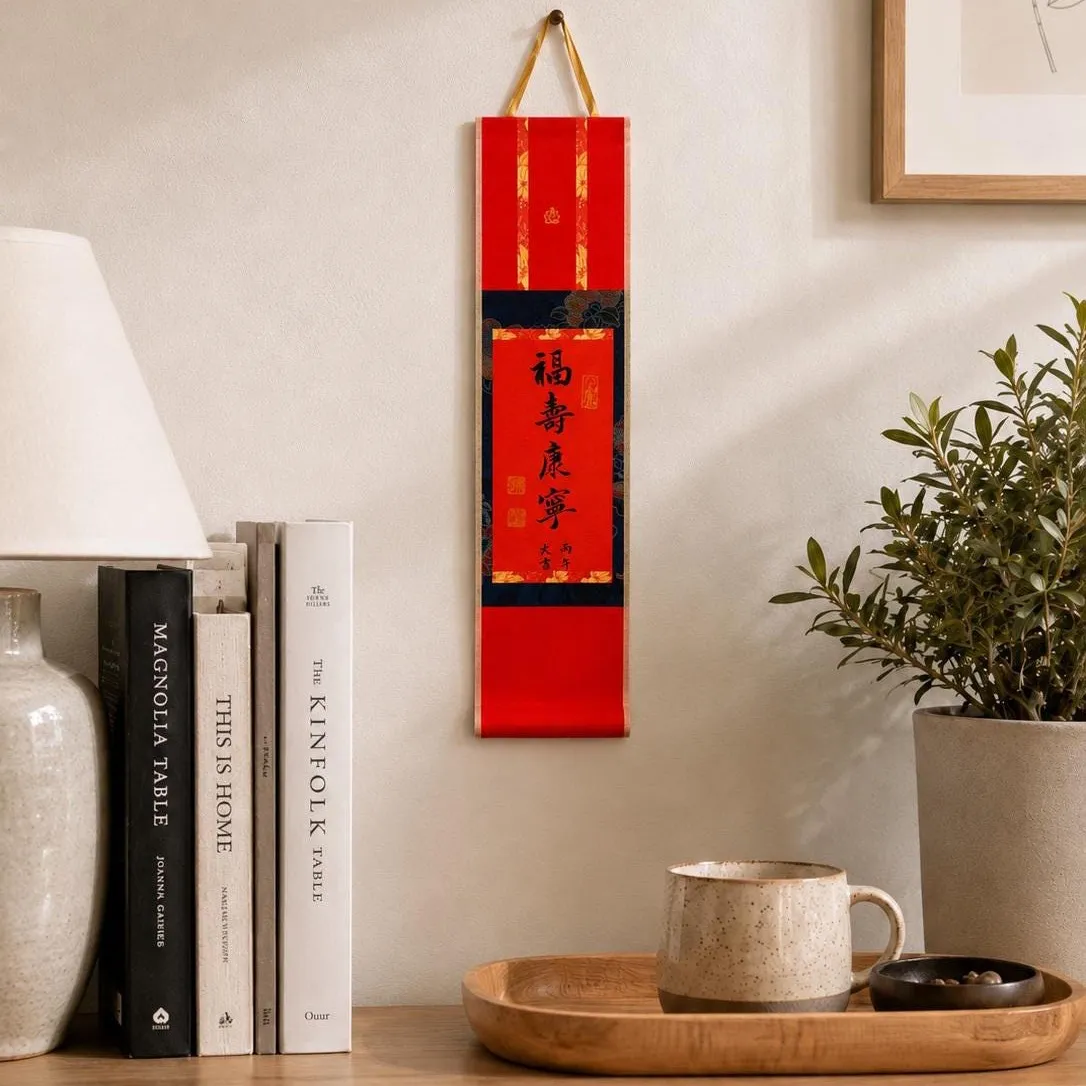
Photo shows a sample — yours will be brushed with 丹心, or any character you choose.
Wall Scroll — for walls & housewarmingsfrom $38→ -
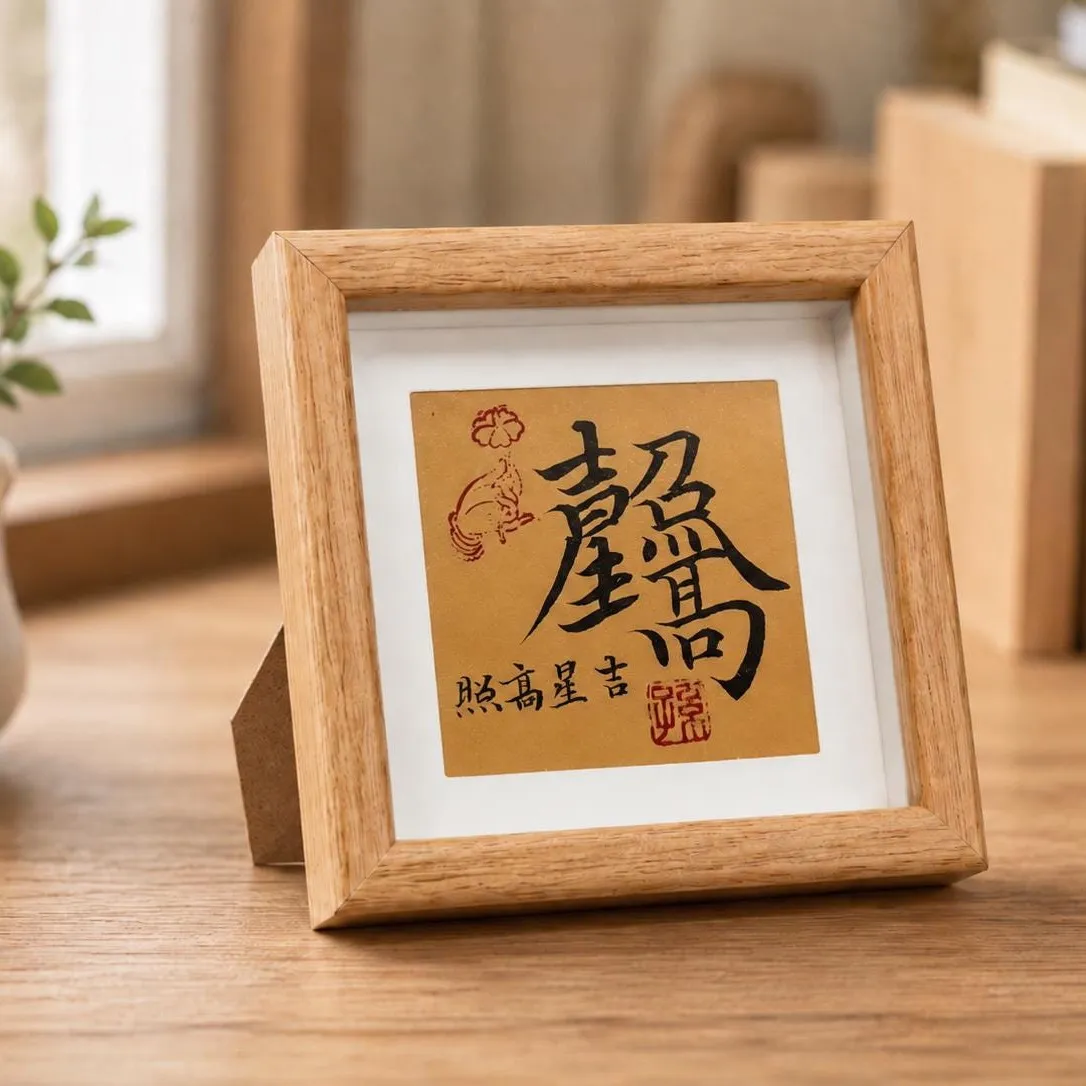
Photo shows a sample — yours will be brushed with 丹心, or any character you choose.
Desk Frame — for desks, studies & studiosfrom $44→ -
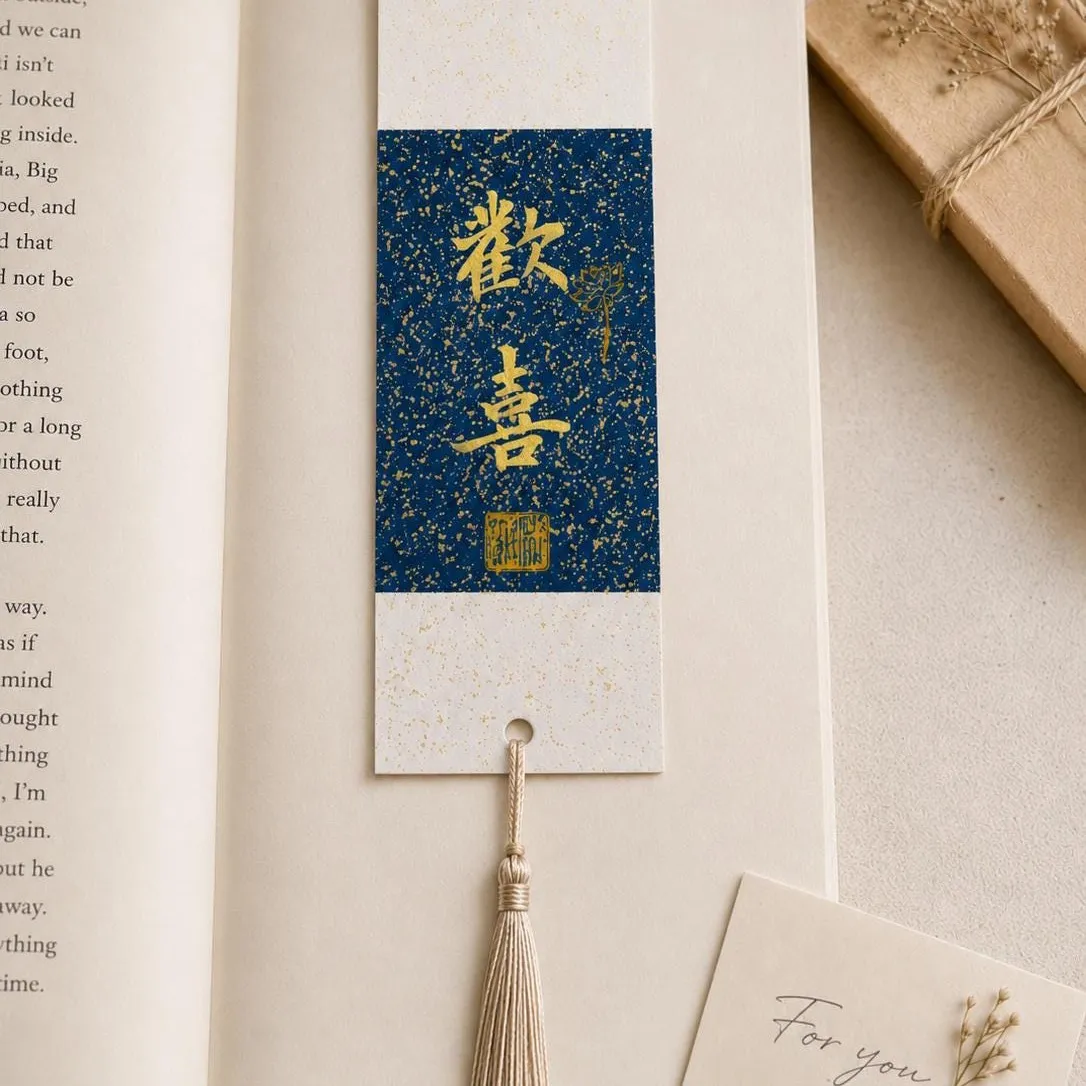
Photo shows a sample — yours will be brushed with 丹心, or any character you choose.
Bookmark — for readers & small thank-yousfrom $14→
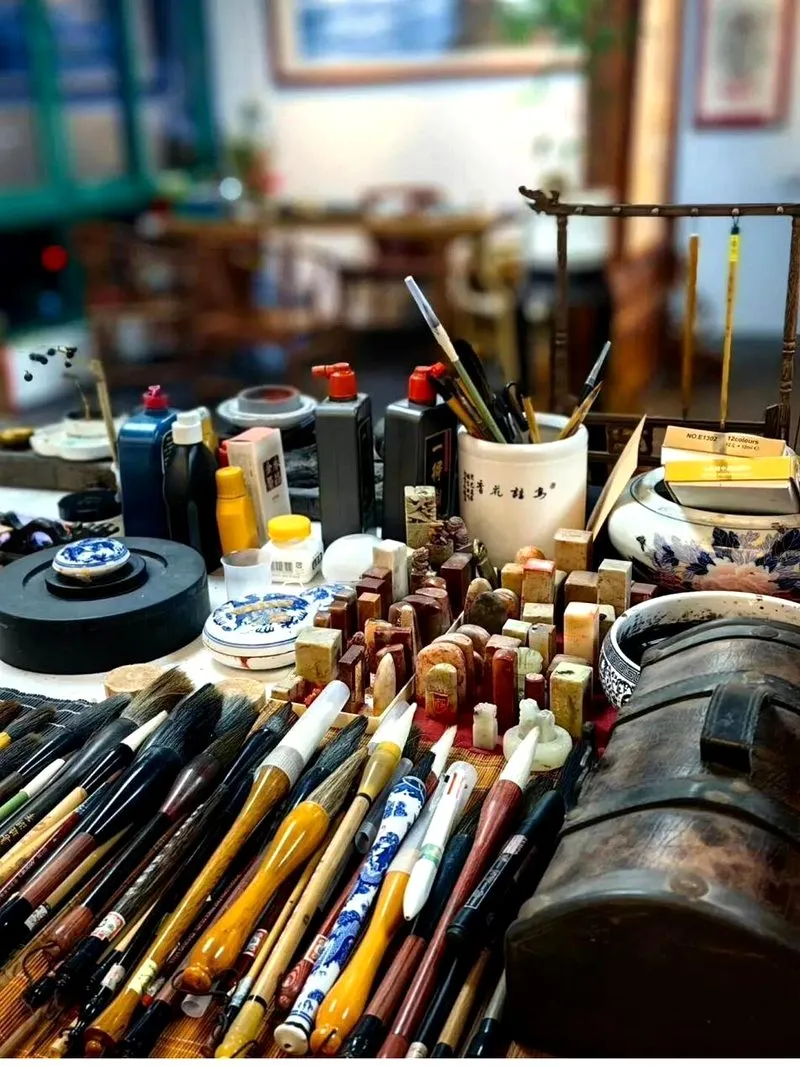
What people said after it arrived.
-
The item is fantastic. The customer service was genuine. Thanks!
— M.Verified purchase · from our Etsy shop reviews · -
They were great they gave me exactly what I asked for and then some. Thank you!!
— G.Verified purchase · from our Etsy shop reviews · -
It is well designed and customized. My daughter loves it. Amazing gift for family’s d friends
— S.Verified purchase · from our Etsy shop reviews ·
Each "丹心" is hand-brushed by FuBlessings on rice paper.
See 丹心 (Dān Xīn) on Etsy →