悦 (yuè) — Heart's Gladness · Pleasure That Lands
A single character.
In 《孟子·告子上》 the same verb is tried on two organs. Principle and rightness please the heart the way grass-fed and grain-fed meat please the mouth. 朱熹 takes 刍 as the grass-eaters, cattle and sheep, and 豢 as the grain-eaters, dogs and pigs. The received sentence writes this character both times. See 喜 → is the drum and the shouting mouth, happiness that fills a room. See 乐 → is joy whose oldest picture is a stringed instrument, and the page for it already notes that this character carries 心. The Analects’ opening keeps the two gladnesses in neighboring sentences. Study practiced on time is 说, the older graph of this word. A friend arriving from far away is 乐. The heart’s report and the tune can sit in one chapter. They are different gifts.
Chinese kept the heart’s report and built a small vocabulary on it. 喜悦 (xǐ yuè) is a public occasion felt inwardly. 悦纳 (yuè nà) is the formal yes, the pleasure of accepting, still printed in 敬请悦纳. 心悦诚服 (xīn yuè chéng fú) is that yes when it has become a yielding, which 《尔雅》 already allowed by glossing the word as 服. 取悦 (qǔ yuè) is a different verb, the attempt to please someone, and the attempt can fail or show. 和颜悦色 (hé yán yuè sè) is the face after the heart has agreed. 生日快乐 still reaches for See 乐 →, not for this character. A birthday can wish a year glad and, separately, say that a particular person is a pleasure. The second sentence is the one written with the heart.
A hand-brushed 悦 by Artist Lina Sun is for a pleasure that has already registered. For a friend it is the gladness of their company, held apart from the margin of their help and from a wish for their whole year. For a best friend it is ordinary presence that pleases, with no banquet required to justify the word. For a new couple it is each being pleased by the other, smaller than a wedding room and earlier than any claim about decades. On a birthday it does not add a year. On Valentine’s Day it does not borrow a moon. In a house that already knows which pleasure is meant, the one character is enough.
- gladness that registers in the heart — 我心则说 when the person is met, 我心不说 when they are not
- being pleased by a practice or a person — 不亦说乎 on study, the Mencius line on principle pleasing the heart
- pleasing someone, the interpersonal direction — 悦纳 is their yes, 徐锴's 使悦怿 is the effect on them
- the pleasure that is also being won over — 《尔雅》 glosses the word as 服, and 心悦诚服 keeps both halves
- a celebration That is 喜. Its graph is a drum over a mouth, and its occasions are weddings, births, and news that wants witnesses. This character can be felt with nobody else in the room, or between two people, without a performance.
- joy from a tune That is 乐. The Shuowen files it as the name of instruments, and the graph has no heart radical. 生日快乐 and 新年快乐 wish that kind of gladness onto a year. This character is the heart's own report.
- speech 说 is the older graph, and in modern Mandarin shuō means to speak and shuì means to persuade. The pleased reading yuè was written onto the heart so it would stop sharing a character with talk. Inking 说 does not ink this word.
- love 爱 names the bond. This character names a pleasure, which can be taken in a friend, a partner, a practice, or a gift accepted. 取悦 is the attempt to please someone. It does not, by itself, say the two people belong to each other.
The short arms are the point: these readings don’t reach it.
- 忄 heart, written on the sideThree strokes, written first. Left dot, right dot, then the vertical. It is 心 moved to the side. 《说文》 has no entry for this character under the heart radical. The Han book still files the pleased sense on 说. The heart is the later filing, so the pleasure would not be read as talk.
- 兑 phonetic, and 许慎's 说Seven strokes, written after the heart. Top is 丷 (dot, then 撇), then 口 (vertical, 横折, horizontal), then 儿 (撇, 竖弯钩). 《说文》 defines 兑 as 说. 段玉裁, following the 兑 hexagram's 彖, reads that as the pleased sense and not as sound alone. The traditional right half is 兌. The heading uses simplified 兑.
character
- 喜悦 xǐ yuè delight — a public occasion felt as this inward pleasure
- 悦纳 yuè nà to accept with pleasure — the formal yes in 敬请悦纳
- 心悦诚服 xīn yuè chéng fú the heart pleased and genuinely won over — 《尔雅》's 乐 and 服 in one phrase
- 取悦 qǔ yuè to try to please someone — the attempt, which is a different verb from the pleasure
- 和颜悦色 hé yán yuè sè a pleased countenance — the face after the heart has agreed
- 音乐 yīn yuè a dark row by sound. Music, the other yuè, is written 乐. Same Mandarin syllable, no character shared with 悦.
Cinnabar marks the characters 悦 actually contains. The dark row is a relative by meaning or by sound, not one shared stroke.
The Story Behind the Character
The Han dictionary has a speech entry where this pleasure lives, and no heart entry for it. 许慎's text, in the speech section, is 说,释也。从言、兑。一曰谈说. The two fanqie in the 大徐本, 失爇切 and 弋雪切, are 徐铉's, taken from 《唐韵》, and they are not part of the Han definition. 失爇切 is the modern shuō. 弋雪切 is yuè. 徐锴's 《说文解字系传》 prints 从言,兑声, and his note says 说之亦使悦怿也: to explain someone, or to persuade them, is also to leave them pleased. 段玉裁 will not let 释 sit as mere commentary. He writes 说释即悦怿。说悦、释怿皆古今字。许书无悦怿二字也. The opening-up he is reading is why the gloss can be gladness. He suspects the four characters 一曰谈说 were added later, to peel a second reading off a word that had been one. He does not claim the Han book already contained this heart graph.
The right-hand side carried the pleasure before a heart was written to keep it. 《说文》 defines 兑 as 说, and 段玉裁 notes that this follows 《周易》. The 彖 on the 兑 hexagram says 兑,说也. The phonetic was already being read as the pleased sense, on a graph that could also mean talk. 段 assigns 弋雪切, yuè, to that pleased reading, and he parks 失爇切, shuō, on the talk gloss he thinks was added. 《康熙字典》 records 毛氏 on the split: the old character was shared with 论说, and a later hand made 悦 to separate them. The traditional form is 悅. The heading uses 悦, heart at the side, 兑 simplified. A reader who meets the heart no longer has to decide whether the word is talk.
《尔雅·释诂》 files the word twice, in consecutive entries. With 喜 and 愉 it is 乐也. The next entry, with 怿 and 愉 again, is 服也. 郭璞's note on the second is 皆谓喜而服从, pleased and won over. 邢昺's subcommentary on the first calls it 心乐 and cites 《诗经·小雅·都人士》, 我心不说, adding that 悦 and 说 are the same reading. The Mao commentary on 《召南·草虫》 glosses that same 说 as 服 where the line ends 我心则说. The poem has been waiting for the person. The heart's report, once they are met, is also a yielding. 乐 is the joy whose graph has no heart. 喜 is the drum and the mouth. This character is the gladness that was moved onto 心, including the gladness of being won over.
Classical lines
- roughly 400 years
- c. 8th–7th c. BCE 《诗经·小雅·都人士》
- c. 5th–4th c. BCE 《论语·学而》
- c. 300 BCE 《孟子·告子上》
学而时习之,不亦说乎? To study, and then to practice it at the due times
is that not a pleasure? — The received text writes 说, not the heart graph. 朱熹 prints 说、悦同. The next sentence of the same opening changes words: a friend arriving from far away is 乐. This line stays with the practice that pleases, on the graph the Han dictionary still filed under speech. The heart form is what a later hand wrote so the pleasure would keep its own character.
故理义之悦我心,犹刍豢之悦我口。 So principle and rightness please my heart the way grass-fed and grain-fed meat please my mouth.
朱熹 glosses 刍 as what eats grass, cattle and sheep, and 豢 as what eats grain, dogs and pigs. The received sentence writes this character, twice, and both times the subject is an organ. The heart's pleasure is set beside the mouth's. The comparison is appetite, not a room and not a tune.
我不见兮,我心不说。 I do not see them, and my heart is not pleased.
From the second stanza, after the capital man in a sedge-leaf hat and the lady whose hair is thick and straight. The graph is still 说. 邢昺's subcommentary on 《尔雅》 cites the line for the gloss 心乐, and notes that 悦 and 说 are the same reading. The pleasure is the heart's report on a person, here by their absence.
Why This Character Matters
敬请悦纳 is still how a formal note hands a gift or a manuscript over. The phrase asks the receiver to accept it with pleasure. The pleasure is this character, and the accepting is 纳. Letter-writers use it when the point is the other person's yes. 《康熙字典》 also lists the graph as a surname and names 悦绾 from the 《后燕录》, so one reader in a crowd may try a family name before trying 喜悦.
What gets brushed when the feeling has to be confessed at more than one character is usually a compound. 喜悦 pairs a public occasion with this inward pleasure. 心悦诚服 joins the two 《尔雅》 glosses, pleased and won over, and it is heavy for a mild day. 取悦 names the attempt to produce the effect, which can sound calculated. 和颜悦色 is the face once the heart has agreed. A household that already shares the story will read one graph as the pleasure they mean. A stranger may guess among a surname, a missing 喜, and the other yuè, which is 音乐. The tattoo notes are for that guess.
No bad-luck reading attaches to the graph. 《康熙字典》 lists it as a surname and names 悦绾, so one reader may try a family name first. The more common guess is that a second character was left off. 喜悦 is the guess when the wearer seems to mean a feeling that started at a celebration. 取悦 is the guess when they seem to mean trying to please someone. The syllable yuè is also 乐 in 音乐, music, and 月 in 花好月圆, the moon. Neither of those graphs is this one. The single character is legible. It names a pleasure that landed in a heart. It does not name a wedding, a tune, or a romance. Two characters close the question. One character belongs where the pleasure is already known.
Calligraphy Styles for Tattoos
- Regular script (楷书 kǎishū) Best for tattoos
Ten strokes in the simplified form, left and right. 忄 is three strokes and must stay three: two short dots and a vertical. 兑 is seven, and the 口 has to stay open. Regular script keeps the side heart from turning into the speech radical 讠. Minimum recommended size: 1.5 inches.
- Clerical script (隶书 lìshū) Worth considering
The Han clerical hand is wide, which gives 忄 and 兑 a gap so the heart is not read as 讠. The 竖弯钩 of 儿 can take a slow flare. Work from a calligrapher's original. A font will square the 口 and park the heart against it like a stamp.
- Running script (行书 xíngshū) Only above 2 inches
Running script can follow the pleasure without losing the word, but the 口 and the two dots of 忄 are what close up first. Below 2 inches the side starts to look like 讠, and the character becomes 说.
Common Mistakes to Avoid
- Writing 说, with the speech radical 讠Intended: 悦 — 忄 beside 兑, the heart form of the pleasure
说 is the older graph. In modern Mandarin it reads shuō, to speak, or shuì, to persuade. The pleased sense was given 心 so it would not stay inside talk. A design read as speech has changed the word. The side of 说 is two strokes, a dot and a 横折提. The side of 悦 is three.
- A lone 兑, with no heartIntended: 悦 — the heart plus 兑
兑 (duì) is exchange, and it is the name of a trigram and a hexagram. 《说文》 defines it as 说, which is why it sits inside this character, but alone it is not yuè. A tattoo of the right half only is a different word.
- Mixing 悅 and 悦, or stacking 心 underneath as 恱Intended: Either simplified 悦 or traditional 悅, heart on the side
The heading is the simplified graph, ten strokes by the modern count. Traditional 悅 writes 兌 on the right. Kangxi counts that form as 11 because it files the radical as 心, four strokes, even when the heart is written as 忄, three. The visible difference to choose is the top of the right half, 八 in 兌 against 丷 in 兑, not an extra stroke invented to hit the number 11. Kangxi also records 恱, heart underneath, as a variant. That stack is not the form to ink.
Notes for Your Tattoo Artist
Ten strokes in simplified 悦, and the balance is the three-stroke heart against 兑. Stroke order is 点, 点, 竖, then 点, 撇, 竖, 横折, 横, 撇, 竖弯钩. The vertical of 忄 should run the full height of the right half, with the two dots clearly on either side of it, or the radical collapses toward 讠 and the word becomes 说. The 口 must stay a room, not a filled square. The last stroke, the 竖弯钩, needs enough width that 儿 is not a single descending line. If traditional 悅 is chosen instead, agree that before the stencil: the top of 兌 is 八, not the dot-and-撇 of 兑, and do not add an eleventh visible stroke just because Kangxi's radical count says 11. Vary the dots. Three identical specks will look printed. Minimum 1.5 inches. Above 2 inches if the hand is running script.
A few characters live near "悦" but mean something quieter, sharper, or more specific. Here's how to tell them apart.
gladness that registers in a heart, inward or between two people
celebration built from a drum and a mouth — a wedding, a birth, a room
pleasure filed under the heart, including the pleasure of pleasing someone
joy whose oldest graph is a stringed instrument, with no heart radical
A birthday is already adding up years.
- A birthday is already adding up years. 乐 wishes the felt texture of the year ahead, which is why it sits inside 生日快乐. This character does not describe the year. It describes a heart: that the person is pleased, or that you are pleased by them. 喜 would turn the day into an event with a drum in it. 恩 looks back at favors bestowed. A friend at any age and a couple in a first year are both eligible, because the reading needs someone who landed as a pleasure, not a round number on a cake.
- February is stocked with declarations. 美 observes a quality. 琴瑟 names shared playing. 花好月圆 sets a full moon around the pair, and that moon is yuè, the same Mandarin syllable as this character and a different word. 悦 is the heart's report that one person is pleased by the other. 敬请悦纳 is how a formal note asks someone to accept a gift with that pleasure. A card in the single character says the pleasure is already the case. It does not ask the evening to become a wedding, and it does not borrow the moon.
Friend · Best Friend · New Couple · or yourself
Looking for a name? See Western names written in Chinese →
-
What does 悦 (yuè) mean?
悦 (yuè) is the Chinese character for heart's gladness, pleasure that lands. In 《孟子·告子上》 the same verb is tried on two organs. Principle and rightness please the heart the way grass-fed and grain-fed meat please the mouth. 朱熹 takes 刍 as the grass-eaters, cattle and sheep, and 豢 as the grain-eaters, dogs and pigs. The received sentence writes this character both times. See 喜 → is the drum and the shouting mouth, happiness that fills a room. See 乐 → is joy whose oldest picture is a stringed instrument, and the page for it already notes that this character carries 心. The Analects' opening keeps the two gladnesses in neighboring sentences. Study practiced on time is 说, the older graph of this word. A friend arriving from far away is 乐. The heart's report and the tune can sit in one chapter. They are different gifts. What gets brushed when the feeling has to be confessed at more than one character is usually a compound. 喜悦 pairs a public occasion with this inward pleasure. 心悦诚服 joins the two 《尔雅》 glosses, pleased and won over, and it is heavy for a mild day. 取悦 names the attempt to produce the effect, which can sound calculated. 和颜悦色 is the face once the heart has agreed. A household that already shares the story will read one graph as the pleasure they mean. A stranger may guess among a surname, a missing 喜, and the other yuè, which is 音乐. The tattoo notes are for that guess.
-
What occasions is 悦 given for?
悦 is traditionally given for Birthday, Valentine's Day. A birthday is already adding up years. 乐 wishes the felt texture of the year ahead, which is why it sits inside 生日快乐. This character does not describe the year. It describes a heart: that the person is pleased, or that you are pleased by them. 喜 would turn the day into an event with a drum in it. 恩 looks back at favors bestowed. A friend at any age and a couple in a first year are both eligible, because the reading needs someone who landed as a pleasure, not a round number on a cake. February is stocked with declarations. 美 observes a quality. 琴瑟 names shared playing. 花好月圆 sets a full moon around the pair, and that moon is yuè, the same Mandarin syllable as this character and a different word. 悦 is the heart's report that one person is pleased by the other. 敬请悦纳 is how a formal note asks someone to accept a gift with that pleasure. A card in the single character says the pleasure is already the case. It does not ask the evening to become a wedding, and it does not borrow the moon.
-
Is 悦 a good Chinese tattoo?
No bad-luck reading attaches to the graph. 《康熙字典》 lists it as a surname and names 悦绾, so one reader may try a family name first. The more common guess is that a second character was left off. 喜悦 is the guess when the wearer seems to mean a feeling that started at a celebration. 取悦 is the guess when they seem to mean trying to please someone. The syllable yuè is also 乐 in 音乐, music, and 月 in 花好月圆, the moon. Neither of those graphs is this one. The single character is legible. It names a pleasure that landed in a heart. It does not name a wedding, a tune, or a romance. Two characters close the question. One character belongs where the pleasure is already known.
-
Who brushes the 悦 calligraphy?
Each 悦 (Yuè) is hand-brushed to order by Artist Lina Sun in ink on rice paper — never printed, never repeated.
Bring 悦 home — choose how you'd like it brushed.
-
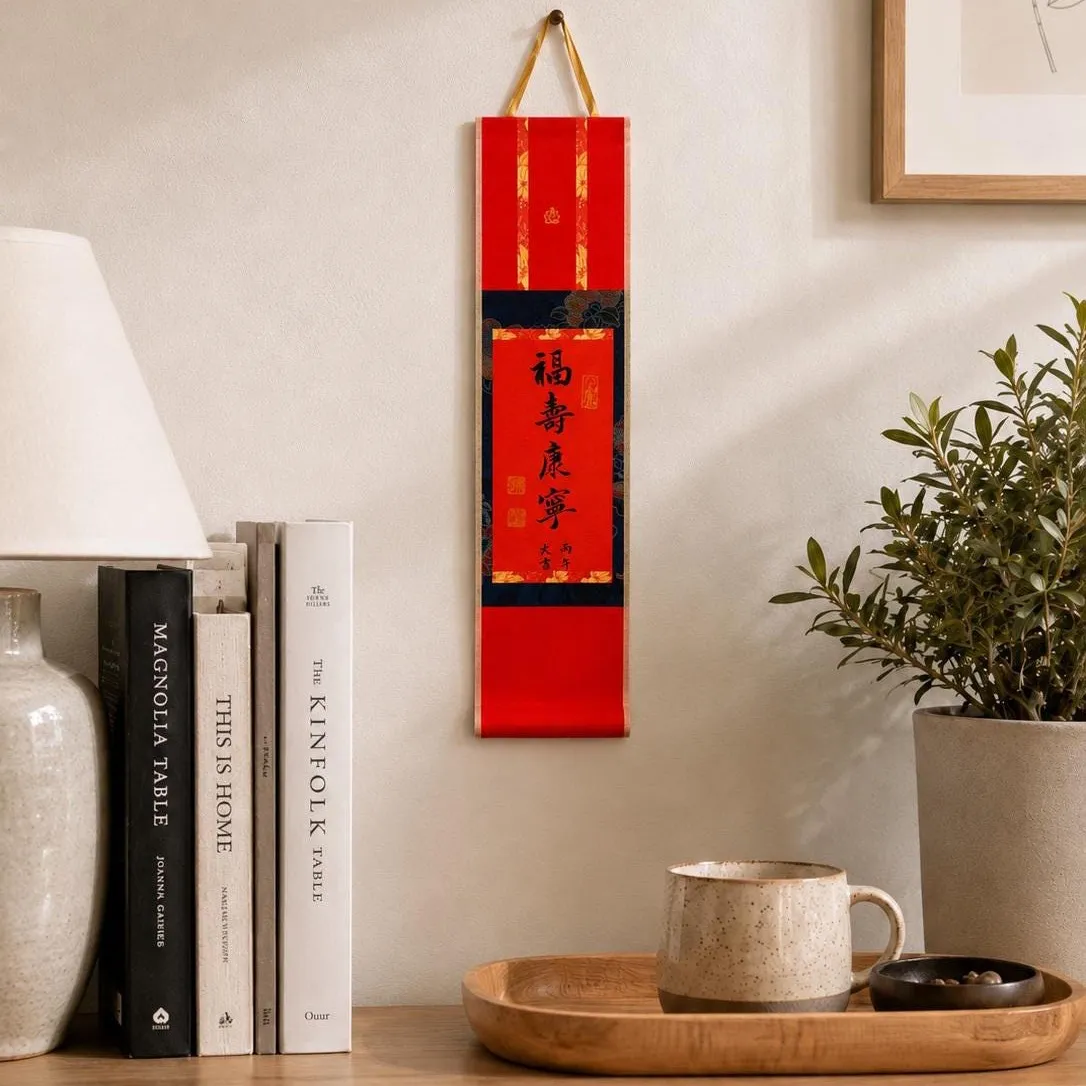
Photo shows a sample — yours will be brushed with 悦, or any character you choose.
Wall Scroll — for walls & housewarmingsfrom $38→ -
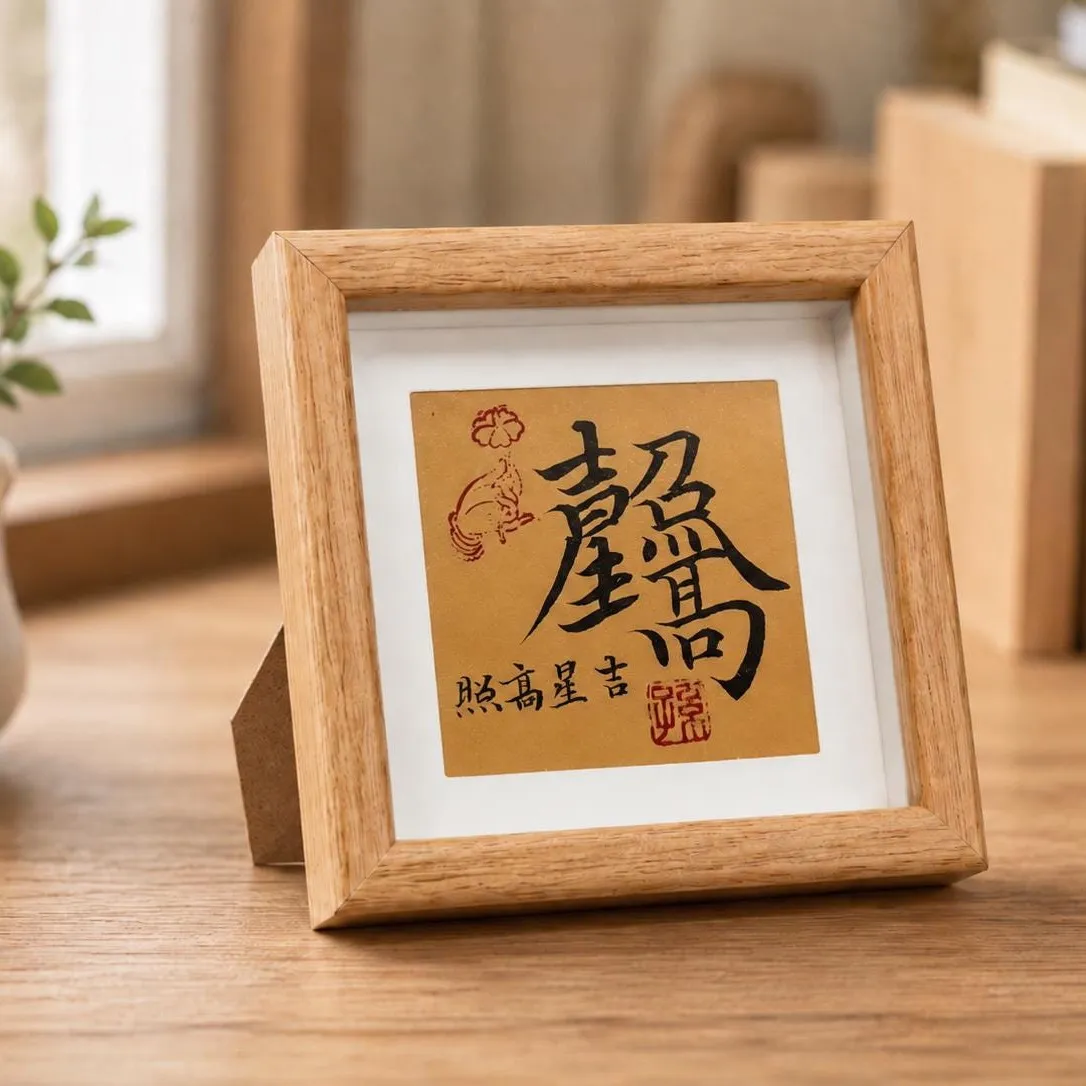
Photo shows a sample — yours will be brushed with 悦, or any character you choose.
Desk Frame — for desks, studies & studiosfrom $44→ -
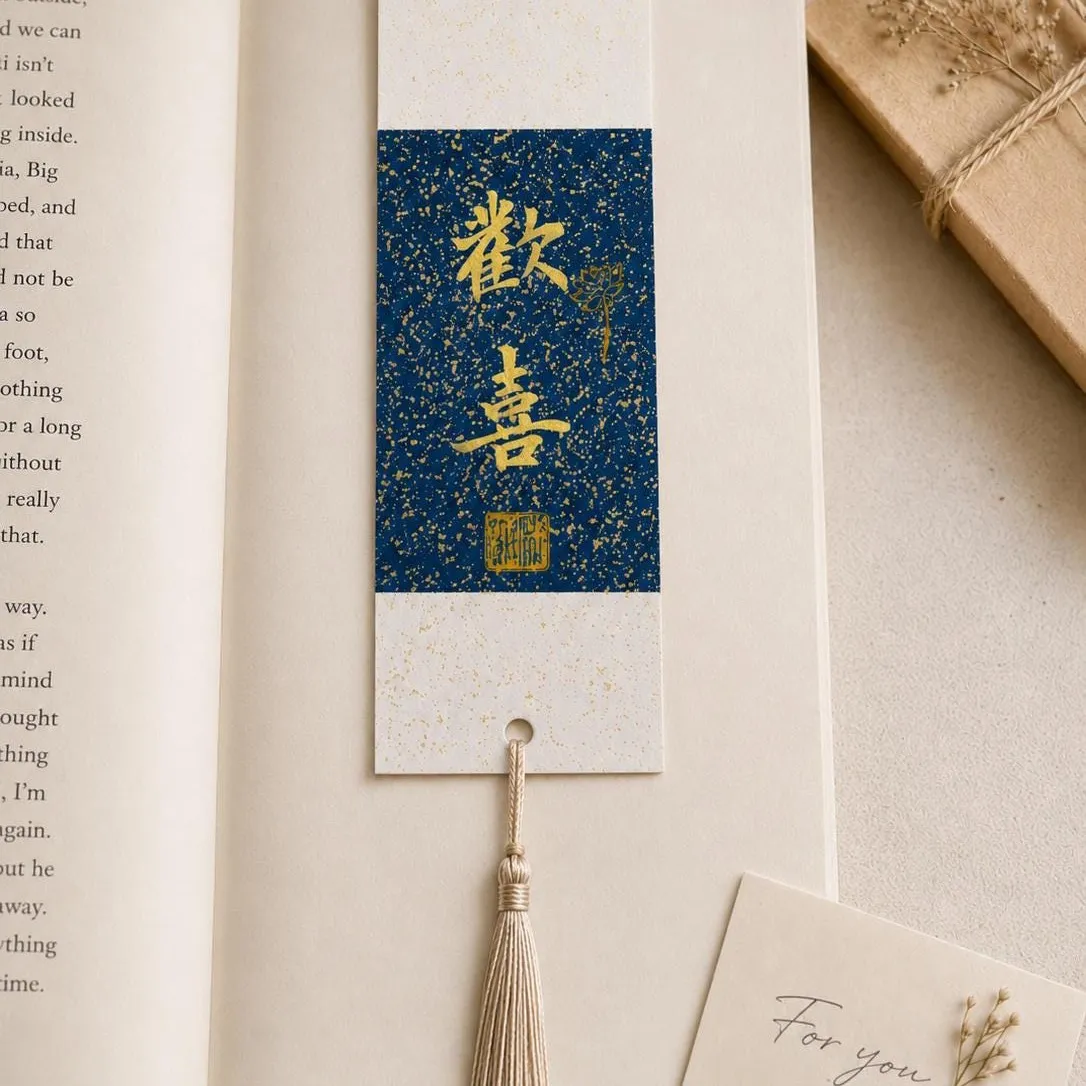
Photo shows a sample — yours will be brushed with 悦, or any character you choose.
Bookmark — for readers & small thank-yousfrom $17→
What people said after it arrived.
-
The item is fantastic. The customer service was genuine. Thanks!
— M.Verified purchase · from our Etsy shop reviews · -
They were great they gave me exactly what I asked for and then some. Thank you!!
— G.Verified purchase · from our Etsy shop reviews · -
It is well designed and customized. My daughter loves it. Amazing gift for family’s d friends
— S.Verified purchase · from our Etsy shop reviews ·
Each "悦" is hand-brushed by Artist Lina Sun on rice paper.
See 悦 (Yuè) on Etsy →