笑口常开 (xiào kǒu cháng kāi) — May the Laughing Mouth Stay Open · Lasting Good Cheer
A 4-character phrase, not a single character.
Most blessings for happiness name the feeling — 乐 for inward gladness, 喜乐 for joy and delight, 福乐 for fortune felt as a glad life. 笑口常开 names the feeling made visible and made to last: not the joy in a person but the laughing mouth that stays open, joy you can see and joy that does not close. It is the most outward of the happiness phrases and the most stubborn — where 乐 can be quiet and private, 笑口常开 asks for cheer that shows on the face and holds there through whatever the year brings.
The phrase comes down from the Laughing Buddha’s temple couplet — 大肚能容…笑口常开…, a great belly that holds what the world cannot and a mouth that laughs all the same — and it has kept that temperament wherever it has gone. On Spring Festival couplets it stretches to 笑口常开迎百福, the open mouth meeting a hundred blessings as they arrive. Given to an elder it leans on the folk line 笑一笑,十年少, one laugh and ten years younger, so that the wish for a glad face becomes a wish for a long and well-kept life. Given to a friend it is gentler still — an instruction more than a blessing, telling someone you love to stay exactly as glad as they are.
A hand-brushed “笑口常开” by Artist Lina Sun carries the four characters in ink — a wish for the laughing mouth to stay open through the year ahead, for joy kept visible rather than merely felt. For the grandparent whose laugh you want to hear for many more birthdays, the friend whose good cheer has carried you, or the home you hope enters the new year already glad, it names the simplest and most durable thing one person can wish another: keep laughing.
The Story Behind the Character
Walk into the first hall of almost any Chinese Buddhist temple and the figure that greets you is laughing. He is 弥勒佛 (Mílèfó) in his folk form — the round-bellied, bare-chested monk the West calls the Laughing Buddha, modeled on 布袋和尚, the wandering Cloth-Bag Monk of tenth-century Zhejiang. Flanking him, on the pillars of the Maitreya hall, hangs the couplet that fixed the phrase in the language: 大肚能容,容天下难容之事;笑口常开,笑世间可笑之人 — a great belly that can hold what the world cannot, a laughing mouth that stays open, laughing at the world's laughable people. 笑口常开 is the second line of that couplet, and the temple is where most Chinese first read it.
The four characters divide cleanly into two halves. 笑口 (xiào kǒu) is the laughing mouth — 笑, the figure of a person doubled over in mirth, and 口, the simple square of an open mouth. 常开 (cháng kāi) is the predicate: 常, constantly or as a rule, and 开, to open. The whole reads not "laugh sometimes" but "the mouth stays open as a settled condition" — joy as a steady state rather than a passing fit. The image is older than the temple couplet. 《庄子》counts the open-mouthed laugh as the rarest thing in a human life, and Tang poets kept returning to it: 杜牧 sighed that 尘世难逢开口笑, a hearty laugh is hard to come by in the dusty world, while 白居易 turned it into advice — 不开口笑是痴人, the one who never opens his mouth to laugh is a fool. 笑口常开 answers all three: it wishes the rare thing made constant.
What folk usage added to the temple image was a quiet claim about the body. The proverb 笑一笑,十年少 — one laugh, ten years younger — paired the open mouth with long life, and 笑口常开 inherited that reading. Spoken as a blessing it asks for more than a cheerful mood; it asks for the kind of constitutional gladness that is supposed to keep a person well. By the Ming and Qing the phrase had left the temple pillar and entered New Year couplets and birthday scrolls, where it has stayed — a wish for the laughing mouth to remain open through whatever the year brings.
Classical lines
- roughly 1,100 years
- c. 3rd c. BCE 《庄子·盗跖》
- c. 845 杜牧《九日齐山登高》
One further source is quoted below without a date printed, so it stays off the rail.
其中开口而笑者,一月之中不过四五日而已矣。 Of the days a person truly opens the mouth to laugh, in a whole month there are no more than four or five.
Zhuangzi's bleak arithmetic of a lifetime, set against illness, loss, and worry. It is the locus classicus of the open-mouthed laugh as something scarce and precious — the very scarcity the blessing 笑口常开 sets out to overturn.
尘世难逢开口笑,菊花须插满头归。 A hearty laugh is hard to come by in this dusty world
so fill your head with chrysanthemums and go home. — Du Mu on a festival hilltop, taking Zhuangzi's scarcity as a reason to seize the laughter while it is here. The line made 开口笑 a byword for joy snatched against the odds.
随富随贫且欢乐,不开口笑是痴人。 Rich or poor, just be glad
the one who never opens his mouth to laugh is a fool. — Bai Juyi turns the old lament into plain counsel: gladness is a choice available in any circumstance. Read beside 笑口常开, it is the same wish in the imperative — keep the mouth open, whatever the year holds.
Why This Character Matters
The phrase travels as a face before it travels as writing. The Laughing Buddha — 弥勒佛 in the temple, the round figure rubbed shiny on countless shop counters and dashboards — is 笑口常开 rendered in clay and bronze, and his couplet (大肚能容…笑口常开…) is among the most quoted in Chinese Buddhism, painted at 北京潭柘寺, 杭州灵隐寺, and Maitreya halls across the country. To wish someone 笑口常开 is, in a quiet way, to wish them the monk's temperament: a belly wide enough to hold what cannot be changed and a mouth that laughs anyway.
As writing, 笑口常开 belongs to the cheer end of the blessing vocabulary, where it often pairs with 福 — the New Year couplet 笑口常开迎百福 reads the open mouth as the thing a hundred blessings come to meet. It is most given to elders, on the strength of the folk line 笑一笑,十年少, which makes a glad face a kind of medicine; and to close friends, where it is less a ceremonial wish than an affectionate instruction — stay the way you are, keep laughing. Unlike the prosperity phrases, it asks for nothing the recipient must achieve, only for the disposition that makes the rest worth having.
笑口常开 wishes a quality the years are supposed to bring and often take away — the readiness to laugh, kept intact.
- 笑口常开 wishes a quality the years are supposed to bring and often take away — the readiness to laugh, kept intact. Where 乐 names the inward gladness of a good year and 福乐 pairs fortune with joy, 笑口常开 names joy made visible and continuous: the laughing mouth that stays open. It carries a quiet longevity reading through the folk line 笑一笑,十年少 (one laugh, ten years younger), which is why it is a favorite birthday wish for an elder — a wish not only for more years but for years still glad enough to laugh through.
- 笑口常开 is one of the cheer phrases of the Spring Festival couplet, often extended to 笑口常开迎百福 — keep the laughing mouth open and a hundred blessings come to meet it. Where 万事如意 wishes that everything go as hoped and 步步高升 wishes advancement, 笑口常开 wishes the disposition that makes a good year felt: the household entering the new year already glad, the face already open. It is the blessing that asks not for outcomes but for the mood to receive them in.
Friend · Best Friend · Grandparent · or yourself
Looking for a name? See Western names written in Chinese →
-
What does 笑口常开 (xiào kǒu cháng kāi) mean?
笑口常开 (xiào kǒu cháng kāi) is a 4-character Chinese phrase for may the laughing mouth stay open, lasting good cheer. Most blessings for happiness name the feeling — 乐 for inward gladness, 喜乐 for joy and delight, 福乐 for fortune felt as a glad life. 笑口常开 names the feeling made visible and made to last: not the joy in a person but the laughing mouth that stays open, joy you can see and joy that does not close. It is the most outward of the happiness phrases and the most stubborn — where 乐 can be quiet and private, 笑口常开 asks for cheer that shows on the face and holds there through whatever the year brings. The phrase travels as a face before it travels as writing. The Laughing Buddha — 弥勒佛 in the temple, the round figure rubbed shiny on countless shop counters and dashboards — is 笑口常开 rendered in clay and bronze, and his couplet (大肚能容…笑口常开…) is among the most quoted in Chinese Buddhism, painted at 北京潭柘寺, 杭州灵隐寺, and Maitreya halls across the country. To wish someone 笑口常开 is, in a quiet way, to wish them the monk's temperament: a belly wide enough to hold what cannot be changed and a mouth that laughs anyway.
-
What occasions is 笑口常开 given for?
笑口常开 is traditionally given for Birthday, Chinese New Year. 笑口常开 wishes a quality the years are supposed to bring and often take away — the readiness to laugh, kept intact. Where 乐 names the inward gladness of a good year and 福乐 pairs fortune with joy, 笑口常开 names joy made visible and continuous: the laughing mouth that stays open. It carries a quiet longevity reading through the folk line 笑一笑,十年少 (one laugh, ten years younger), which is why it is a favorite birthday wish for an elder — a wish not only for more years but for years still glad enough to laugh through. 笑口常开 is one of the cheer phrases of the Spring Festival couplet, often extended to 笑口常开迎百福 — keep the laughing mouth open and a hundred blessings come to meet it. Where 万事如意 wishes that everything go as hoped and 步步高升 wishes advancement, 笑口常开 wishes the disposition that makes a good year felt: the household entering the new year already glad, the face already open. It is the blessing that asks not for outcomes but for the mood to receive them in.
-
Who brushes the 笑口常开 calligraphy?
Each 笑口常开 (Xiào Kǒu Cháng Kāi) is hand-brushed to order by Artist Lina Sun in ink on rice paper — never printed, never repeated.
Bring 笑口常开 home — choose how you'd like it brushed.
-
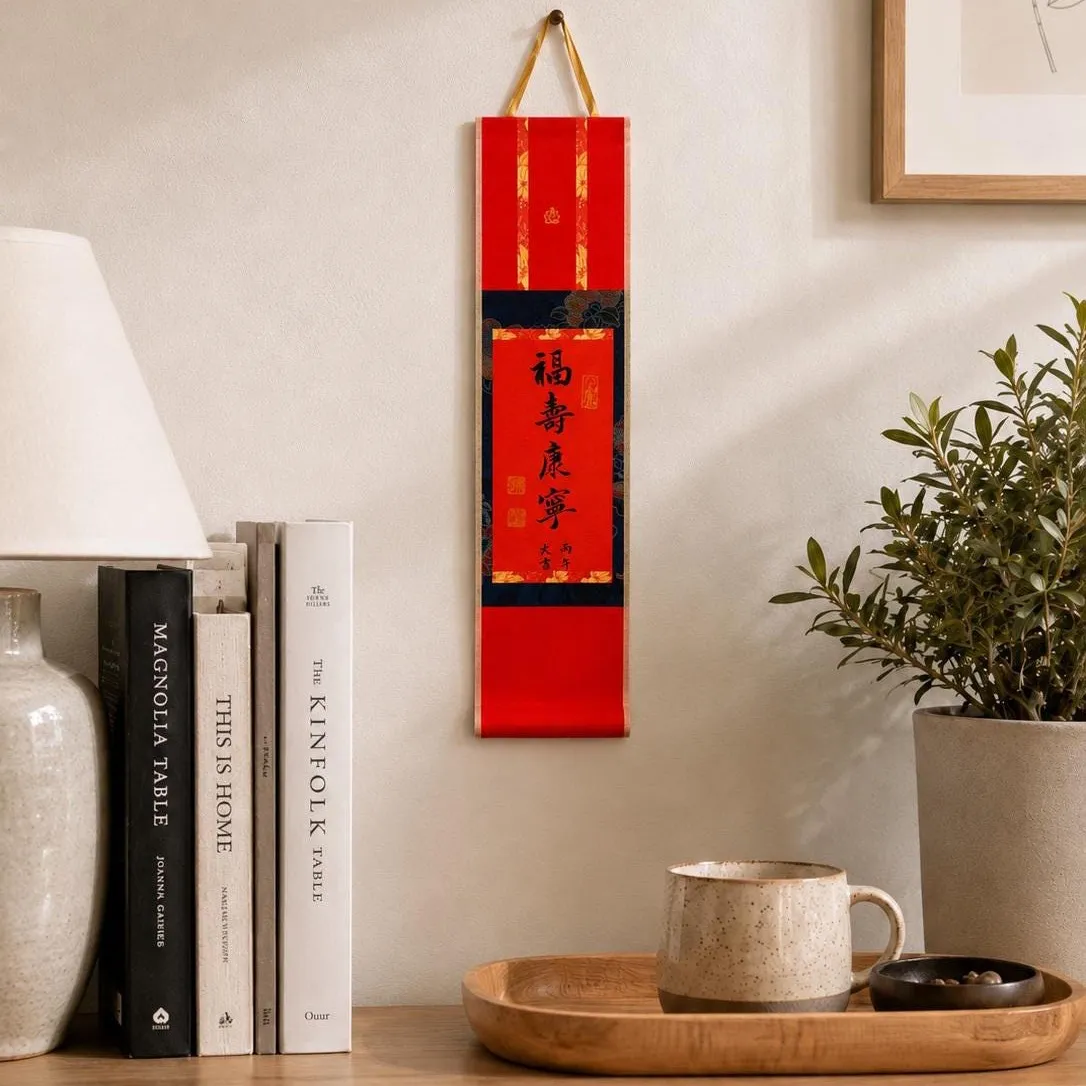
Photo shows a sample — yours will be brushed with 笑口常开, or any character you choose.
Wall Scroll — for walls & housewarmingsfrom $38→ -
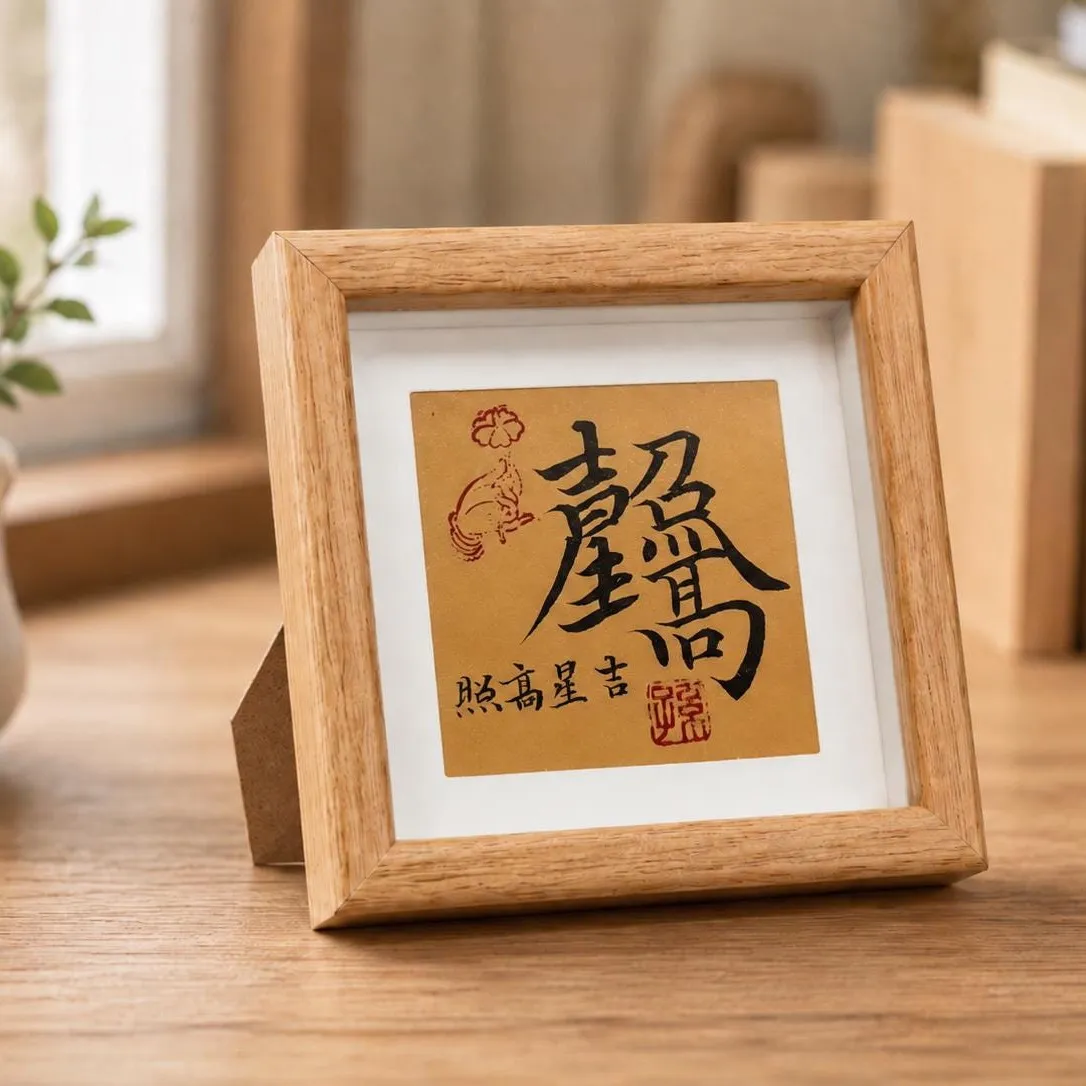
Photo shows a sample — yours will be brushed with 笑口常开, or any character you choose.
Desk Frame — for desks, studies & studiosfrom $44→ -
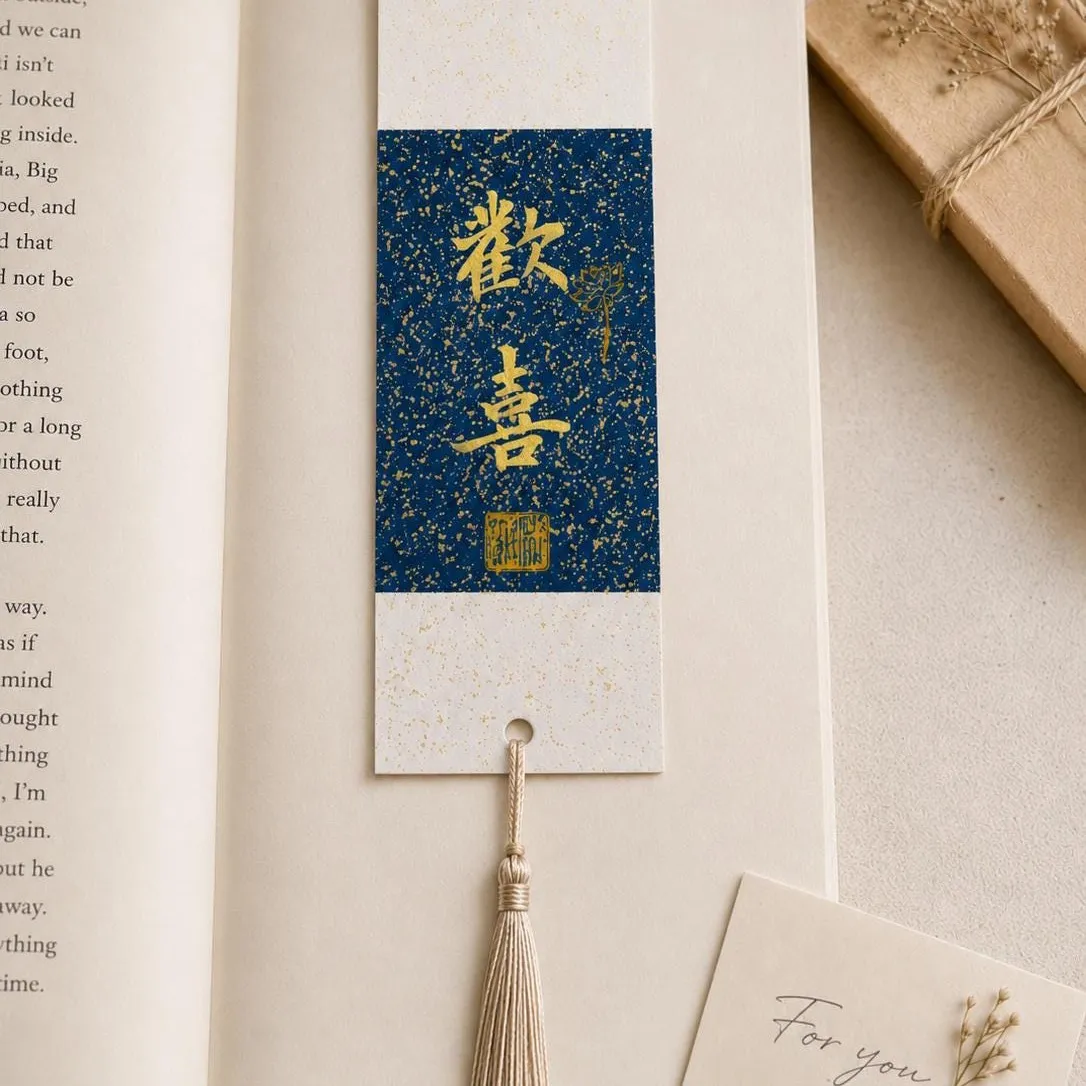
Photo shows a sample — yours will be brushed with 笑口常开, or any character you choose.
Bookmark — for readers & small thank-yousfrom $17→
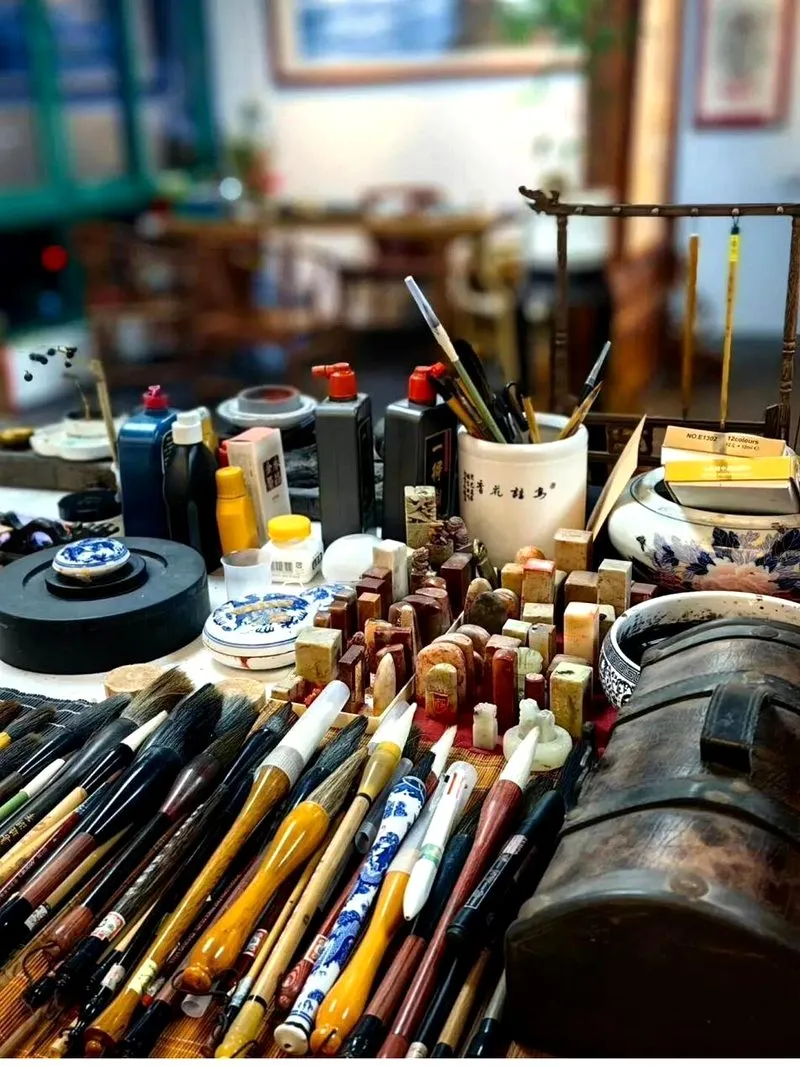
What people said after it arrived.
-
The item is fantastic. The customer service was genuine. Thanks!
— M.Verified purchase · from our Etsy shop reviews · -
They were great they gave me exactly what I asked for and then some. Thank you!!
— G.Verified purchase · from our Etsy shop reviews · -
It is well designed and customized. My daughter loves it. Amazing gift for family’s d friends
— S.Verified purchase · from our Etsy shop reviews ·
Each "笑口常开" is hand-brushed by Artist Lina Sun on rice paper.
See 笑口常开 (Xiào Kǒu Cháng Kāi) on Etsy →