缘 (yuán) — Affinity · The Edge Two Lives Ran Along · Why You Met at All
One character, and its left half is 纟, silk thread: 缘 begins as the band sewn along a garment's edge, not as a word about fate.
说文解字 gives 缘 three characters of definition, and none of them is about people: 衣純也, the trim on a garment. The band of silk sewn along the edge of a robe, where the cloth stops. Everything the word does later is that edge, moved somewhere else. An edge is a thing you can travel along, so 缘 became a verb of following — 缘溪行, to go along the stream. What you travel along is what accounts for where you arrive, so it became because. And when two lives are said to have 缘, the claim is still geometric rather than providential: for some stretch, these two ran alongside each other. Which is why the word settles only afterwards. Chinese does have forward-facing uses — 广结善缘, go and form good connections widely, and 愿你遇到有缘人, may you meet the person you turn out to have had 缘 with — but look at what each one actually asks for. Neither asserts that a 缘 is in place. The first asks you to build conditions; the second asks that somebody arrive who can afterwards be described this way. The verdict is never available in advance, which is the reason 有缘无分 is sayable at all: the meeting conceded, everything after it withheld.
The place the word comes closest to being an act rather than a reading is a wedding. 喜结良缘 is on the banner and the invitation, and it does two things the word mostly resists: it treats 缘 as something that can be tied, and it grades it. 广结善缘 does both, more quietly. The honest thing to say is that 姻缘 is the one branch where 缘 genuinely reaches past the meeting and takes in the union itself — the boundary is real, and worth naming rather than arguing away. Even there the fixed phrase runs the old direction: 天赐良缘 has the 良缘 already given before anybody arrives at the ceremony, which leaves 结 ratifying rather than creating. Everywhere else the quantities are counted from the far end. 一面之缘 puts a number on it, and the number cannot be counted until the meeting is over. 有缘千里来相会 is said when two people who had no business being in the same place turn out to be in it, and it is said of the guests at that wedding as easily as of the pair at the front.
A hand-brushed 缘 by FuBlessings is a gift about a beginning rather than a future. For a couple it names the half of the wedding nobody vows: the run of near-misses that had to go exactly as it went before either of them was in the room. For a friend it is more specific still — most of the people anyone loves best were handed over by a seating chart, a dormitory list, or a job almost not taken, and this is the character for that fact. Of all the improbable things a person can be thanked for, the least deliberate is having turned up at all.
- the trim sewn along a garment's edge — the character's first job
- to go along something: a stream, a wall, a tree
- because of, by reason of
- the conditions that had to be in place alongside a cause — 因缘
- the connection two people turn out to have had — 缘分
- fate Chinese keeps 命 for what was allotted, and the two are different sizes of claim. 命 is about a whole allotment; 缘 is about one contact and will not be extended past it, which is why the sentence splits cleanly in two — 有缘无分, the first half granted and the second refused.
- coincidence A coincidence is finished the moment it is noticed, and the word comes with a shrug in it. 缘 carries none — the tone of 有缘 is recognition. It is also measured out, which a coincidence never is: 一面之缘 is one meeting's worth, said of somebody met once and still remembered.
- chemistry That is a report on how two people are together once they have met. 缘 makes no claim whatever about how it went — 有缘无分 is precisely the case where it went nowhere. It reports the contact, and stops there.
The short arms are the point: these readings don’t reach it.

- 纟 twisted silk — the thread element, and the reason this word starts in a workshop说文解字 files 缘 under 糸 and defines it 衣純也, the band sewn along a garment's edge. The 礼记 chapter on the 深衣 sets that band at a Chinese inch and a half and rules on its colour by whether the wearer's parents are living. The thread element is still sitting on the left of a character people now use for how two people met.
- 彖 the sound element — 彖 (tuàn) giving 缘 (yuán)说文 records it as sound only, 彖聲, and goes no further with it. The same element heads the 彖传, one of the commentaries attached to the 周易, but that is a life it leads elsewhere. Inside this character it carries the reading and no meaning at all.
character
- 缘分 yuán fèn the portion of connection two people turn out to have had — 分 is an allotted share, and shares are counted afterwards
- 有缘无分 yǒu yuán wú fèn the meeting happened and nothing followed — the phrase that shows how little 缘 was ever claiming
- 因缘 yīn yuán the seed and everything that had to run alongside it — the pair Buddhist translators settled on
- 随缘 suí yuán to go with whatever the conditions turn out to be — said on deciding to stop forcing something
- 广结善缘 guǎng jié shàn yuán form good connections widely — the one common forward-facing use, and it asks for conditions to be built rather than claiming a connection exists
- 化缘 huà yuán a monk's alms round — the verb counts what is handed over as a connection formed rather than a payment asked for
- 边缘 biān yuán the edge, the margin — the textile sense of the character, still in daily use
- 赤绳 chì shéng the red cord the 月下老人 story ties ankles with — 红线 in living speech, 赤绳 in the Tang text. A relative by sense and not by spelling: it shares no character with 缘 and does the same job in a picture
Cinnabar marks the characters 缘 actually contains. The dark row is a relative by meaning or by sound, not one shared stroke.
The Story Behind the Character
《礼记·深衣》 legislates a hem. The 深衣 was the plain full-length robe a gentleman wore when he was not in court dress, and the chapter setting out how to cut one spends a clause on the band sewn around its edges — a Chinese inch and a half wide at the sleeve-opening, at the hem, at the border. Then it does something a tailoring rule has no obvious business doing. It assigns that band a colour according to whether the wearer's parents are alive: 具父母、大父母,衣纯以缋 — with parents and grandparents living, the edging is embroidered; 具父母,衣纯以青, with parents living, it is blue-green; 如孤子,衣纯以素, and for a young man whose father is dead — 孤 is fatherless, not parentless — plain undyed silk. Anyone in the room could read a stranger's losses off the edge of his coat. 说文解字 (c. 100 CE) gives the character for that band three characters of definition — 緣,衣純也 — and files it under 糸, twisted silk, with 彖 supplying the sound. 缘 begins as sewing: the strip that runs along the line where the cloth stops.
An edge is a thing you can follow, and 段玉裁, whose commentary on the 说文 was completed in 1807, put the hinge in one clause: 緣者,沿其邊而飾之也 — to 缘 is to run along the border and trim it. That is the character's second life. 陶渊明 opens 桃花源记 by putting a fisherman on a stream — 缘溪行,忘路之远近, he went along the stream and lost track of how far he had come. 孟子, declining to flatter 齐宣王, tells him that pursuing what he wants by his current methods is 缘木而求鱼, going up a tree after fish. In both, 缘 has stopped being a thing and become a way of moving: alongside. Neither use points at destiny or at anything like it. The word is describing contact — one line held against another for a stretch, and then not.
Two further steps carried it to where a modern reader meets it. The first was grammatical: what you travel along is also what accounts for where you end up, so 缘 came to mean because. 苏轼 wrote the most quoted instance of it on a monastery wall in 1084 — 只缘身在此山中, only because I am inside this mountain. The second was Buddhist. Translators working on the doctrine of dependent arising needed a pair of terms, and took 因 for the seed and 缘 for everything that has to run alongside the seed — soil, rain, light, the season — before it becomes anything at all; 因缘 has been the standard compound ever since. 段玉裁 traces that step himself, in the same note: 緣之義引申爲因緣、夤緣 — the sense of 缘 extends outward into 因缘, and into 夤缘 (yín yuán), climbing by attaching yourself to something. Three destinations, one edge. 缘分 is the last of the family to arrive, and its second half is what limits it. 分 is a portion, an allotted share. What two people are said to have is a quantity of alongside-ness, and quantities get counted after the fact.
Classical lines
- roughly 1,400 years
- c. 300 BCE 《孟子·梁惠王上》
- c. 421 CE 陶渊明《桃花源记》
- 1084 苏轼《题西林壁》
以若所为,求若所欲,犹缘木而求鱼也。 To do what you are doing in pursuit of what you want is like climbing a tree to look for fish.
孟子 has just manoeuvred 齐宣王 into admitting what he actually wants, which is territory, and this is the reply. The king asks whether it is really as bad as that. 孟子 tells him it is worse: 缘木求鱼,虽不得鱼,无后灾 — climb a tree after fish and you get no fish, but nothing bad follows. What the character is doing here is plain and physical — to go along a surface — and this is the oldest working sense of 缘.
缘溪行,忘路之远近。 He went on along the stream, and lost track of how far he had come.
The second sentence of the most famous accident in Chinese literature. The fisherman is not looking for anything; he follows a watercourse because it is there, stops attending to distance, and arrives at a place no one is ever able to find again. 缘 is the verb for what he does with the stream, and the story is an account of what that verb is capable of.
不识庐山真面目,只缘身在此山中。 I cannot make out the true face of Lu Shan
only because I am inside this mountain. — 苏轼 wrote it on a wall at the end of a walking trip through the range, and it is the point where 缘 completes its move from a preposition to a reason: what a thing runs alongside is what explains it. The line is quoted in China for any case where being inside something is precisely why it cannot be seen.
Why This Character Matters
The best-known story about 缘 is not a love story. It is about a man who tried to have his wife killed. 李复言's 《续玄怪录》, written in the ninth century, sends a young man named 韦固 to 宋城, where he finds an old man reading by moonlight with a sack at his side. The sack holds red cords. The old man explains that the cords tie the ankles of two people who will marry however far apart they are born, and that 韦固's is already tied — to the three-year-old daughter, so he says, of an old woman selling vegetables in the market. Insulted, 韦固 sends a servant to stab the child. Fourteen years later he marries the adopted daughter of a prefect; she is beautiful, and she wears a flower ornament between her brows that she never takes off, because there is a scar underneath it. The magistrate who heard the story renamed the inn 定婚店, the Inn Where Marriages Are Settled, and the old man became 月下老人, the Old Man Under the Moon, whose shrines still stand in Hangzhou and Taipei with requests for a red cord left at them. The shape of the story is worth more than its machinery: nobody in it can act on the information. 韦固 is told his 缘 in advance, and the telling changes nothing except the scar.
In ordinary speech the word can be worked at but not claimed. 广结善缘 — form good connections widely — is an instruction, and it asks for conditions rather than for a verdict. A monk on his alms round is not said to beg; the verb is 化缘, which treats what the householder hands over as a connection formed rather than a payment made. 随缘 — go with whatever the conditions turn out to be — is what a person says when they have decided to stop forcing something. And the phrase that shows the limit best is 有缘无分: the meeting happened, and nothing followed. A word that meant fate could not say that sentence, because it concedes half of an outcome and withholds the other half. Even the parting formula runs the same way. Two people who cannot schedule a next meeting say 有缘再见, which sounds like a promise and is not one — it hands the whole question over to whatever turns out, later, to have been the case.
缘 is a common single-character subject in Chinese homes, teahouses and framed shop art, and it reads as thoughtful rather than decorative. A Chinese speaker will read it as 缘分 and will usually want to know who it refers to — the character implies a second person even when only one is wearing it. It also carries a Buddhist association through 随缘 and 化缘, which most people read as calm rather than devotional.
Calligraphy Styles for Tattoos
- Regular script (楷书 kǎishū) Best for tattoos
缘 is 12 strokes in the simplified form, left-right, with the narrow thread radical 纟 against a much wider 彖. Regular script keeps that width difference legible, which is the whole readability problem with this character.
- Running script (行书 xíngshū) Good for tattoos
Running script suits the word — the right side has three descending strokes at its base that flow well. Keep the thread radical distinct from the first stroke of 彖 or the two halves merge into one shape at 2 inches.
- Cursive script (草书 cǎoshū) Larger pieces only
Cursive 缘 loses the internal structure of 彖 almost entirely and becomes hard to tell from other 纟 characters. Worth it at 3+ inches with a calligrapher who writes cursive regularly, and not otherwise.
Common Mistakes to Avoid
- Confusing 缘 with 绿 (lǜ, green)Intended: 缘, with 彖 on the right
Both characters put the thread radical 纟 on the left, and at small sizes the right sides are the thing telling them apart: 绿 has 录, 缘 has 彖. A tattoo meant to say affinity and reading as the colour green is a live risk. Check the right half against a printed reference, not a rendering.
- Setting 緣 beside simplified characters, or 缘 beside traditional onesIntended: one system throughout the whole design
缘 and 緣 are both correct; what reads as an error to a Chinese viewer is a piece that mixes the two systems inside one design. The mismatch is easy to introduce by accident, because the two forms differ only in the left radical — 纟 against 糸 — while the right-hand 彖 is identical in both, so a headword copied from one source will sit unnoticed beside a phrase copied from another.
Notes for Your Tattoo Artist
12 strokes simplified, 15 in the traditional 緣. Left-right composition: the thread radical 纟 stays narrow, and 彖 takes roughly two-thirds of the width. 彖 sets a short 彑 over a 豕-shaped base whose descending strokes need even spacing — crowd them and the right side turns into a smudge at small sizes. Minimum size: 2 inches.
A few characters live near "缘" but mean something quieter, sharper, or more specific. Here's how to tell them apart.
the fact of the meeting, and no claim at all about what either person did next
what one of them does about it afterwards — staying, and going on staying
a reading that becomes available only once the contact has happened — even 愿你遇到有缘人 asks for somebody who can afterwards be described this way
a reading taken in advance, on a date, so that something can be scheduled onto it
two lines that ran alongside each other — it takes two, and says nothing about obstruction
one line going through unobstructed — an errand, a year, a journey, and one person can own it
It grants the meeting and refuses everything after it, which is why a wedding can say it without promising anything.
- 喜结良缘 is the line on the wedding banner, and the word it hangs on is the one part of the day that is not a promise. Everything else said at a wedding points forward — 百年好合, 白头偕老, the hundred years and the white hair. 缘 points the other way, at the sequence that had to run before these two were ever in the same room: the posting that came through, the friend who cancelled, the queue that was long enough. A wedding is the one afternoon a family will sit and hear that sequence told out loud, usually badly, usually twice. This is the character for it — not the years being asked for, but the odds already spent.
- The difficulty with a Valentine's gift is finding something the year has not already said. 缘 says the thing that gets said once and then not again: that the two of you meeting was arranged by neither of you. Chinese keeps a phrase for the case that goes the other way — 有缘无分, the meeting happened and nothing came of it — and it is common enough in speech that 有缘 on its own stays modest: it claims the meeting and declines to claim the rest. For the person you would have missed by a week.
Best Friend · Friend · New Couple · or yourself
Looking for a name? See Western names written in Chinese →
-
What does 缘 (yuán) mean?
缘 (yuán) is the Chinese character for affinity, the edge two lives ran along, why you met at all. 说文解字 gives 缘 three characters of definition, and none of them is about people: 衣純也, the trim on a garment. The band of silk sewn along the edge of a robe, where the cloth stops. Everything the word does later is that edge, moved somewhere else. An edge is a thing you can travel along, so 缘 became a verb of following — 缘溪行, to go along the stream. What you travel along is what accounts for where you arrive, so it became because. And when two lives are said to have 缘, the claim is still geometric rather than providential: for some stretch, these two ran alongside each other. Which is why the word settles only afterwards. Chinese does have forward-facing uses — 广结善缘, go and form good connections widely, and 愿你遇到有缘人, may you meet the person you turn out to have had 缘 with — but look at what each one actually asks for. Neither asserts that a 缘 is in place. The first asks you to build conditions; the second asks that somebody arrive who can afterwards be described this way. The verdict is never available in advance, which is the reason 有缘无分 is sayable at all: the meeting conceded, everything after it withheld. The best-known story about 缘 is not a love story. It is about a man who tried to have his wife killed. 李复言's 《续玄怪录》, written in the ninth century, sends a young man named 韦固 to 宋城, where he finds an old man reading by moonlight with a sack at his side. The sack holds red cords. The old man explains that the cords tie the ankles of two people who will marry however far apart they are born, and that 韦固's is already tied — to the three-year-old daughter, so he says, of an old woman selling vegetables in the market. Insulted, 韦固 sends a servant to stab the child. Fourteen years later he marries the adopted daughter of a prefect; she is beautiful, and she wears a flower ornament between her brows that she never takes off, because there is a scar underneath it. The magistrate who heard the story renamed the inn 定婚店, the Inn Where Marriages Are Settled, and the old man became 月下老人, the Old Man Under the Moon, whose shrines still stand in Hangzhou and Taipei with requests for a red cord left at them. The shape of the story is worth more than its machinery: nobody in it can act on the information. 韦固 is told his 缘 in advance, and the telling changes nothing except the scar.
-
What occasions is 缘 given for?
缘 is traditionally given for Wedding, Valentine's Day. 喜结良缘 is the line on the wedding banner, and the word it hangs on is the one part of the day that is not a promise. Everything else said at a wedding points forward — 百年好合, 白头偕老, the hundred years and the white hair. 缘 points the other way, at the sequence that had to run before these two were ever in the same room: the posting that came through, the friend who cancelled, the queue that was long enough. A wedding is the one afternoon a family will sit and hear that sequence told out loud, usually badly, usually twice. This is the character for it — not the years being asked for, but the odds already spent. The difficulty with a Valentine's gift is finding something the year has not already said. 缘 says the thing that gets said once and then not again: that the two of you meeting was arranged by neither of you. Chinese keeps a phrase for the case that goes the other way — 有缘无分, the meeting happened and nothing came of it — and it is common enough in speech that 有缘 on its own stays modest: it claims the meeting and declines to claim the rest. For the person you would have missed by a week.
-
Is 缘 a good Chinese tattoo?
缘 is a common single-character subject in Chinese homes, teahouses and framed shop art, and it reads as thoughtful rather than decorative. A Chinese speaker will read it as 缘分 and will usually want to know who it refers to — the character implies a second person even when only one is wearing it. It also carries a Buddhist association through 随缘 and 化缘, which most people read as calm rather than devotional.
-
Who brushes the 缘 calligraphy?
FuBlessings hand-brushes each 缘 (Yuán) to order, in ink on rice paper — never printed, never repeated.
Bring 缘 home — choose how you'd like it brushed.
-
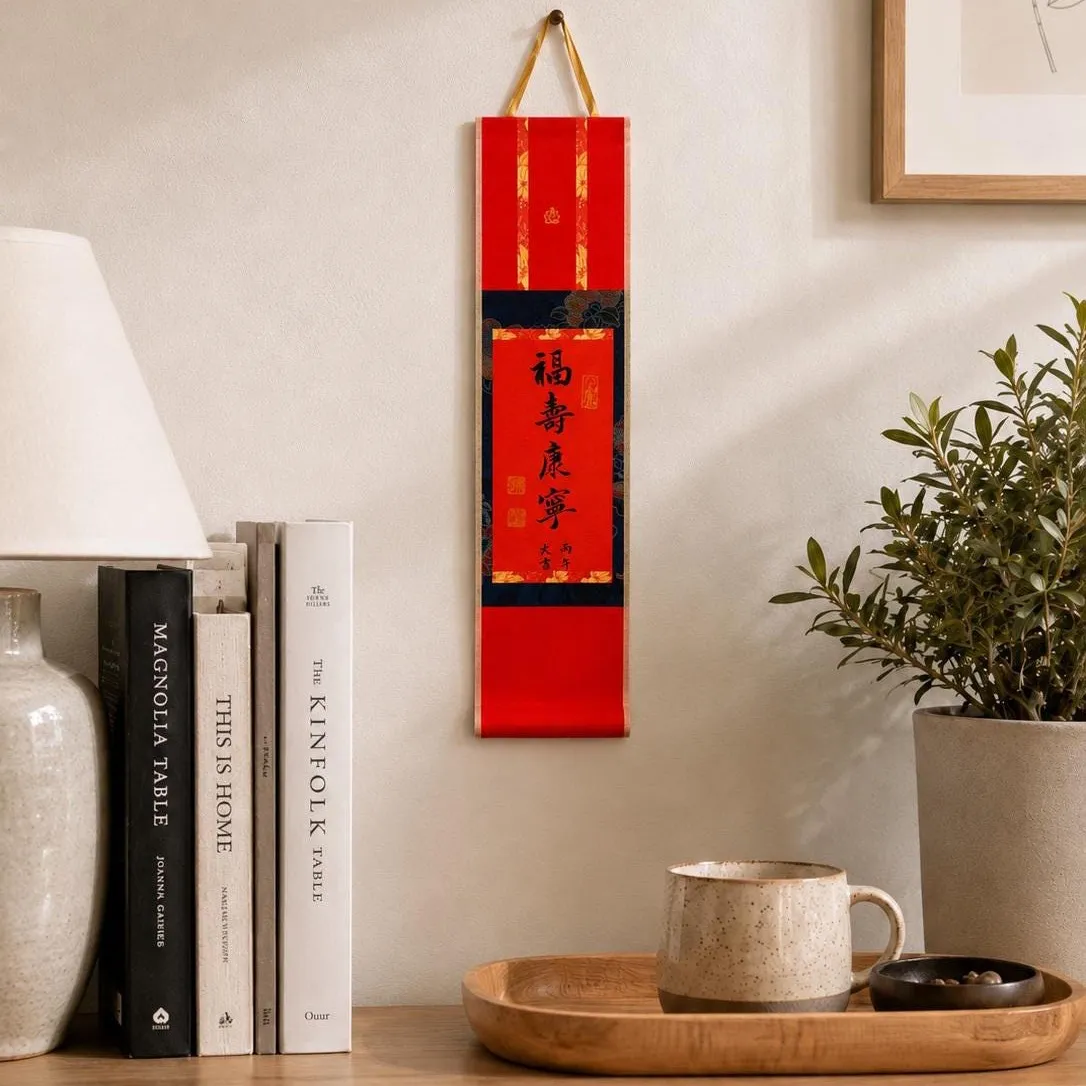
Photo shows a sample — yours will be brushed with 缘, or any character you choose.
Wall Scroll — for walls & housewarmingsfrom $38→ -
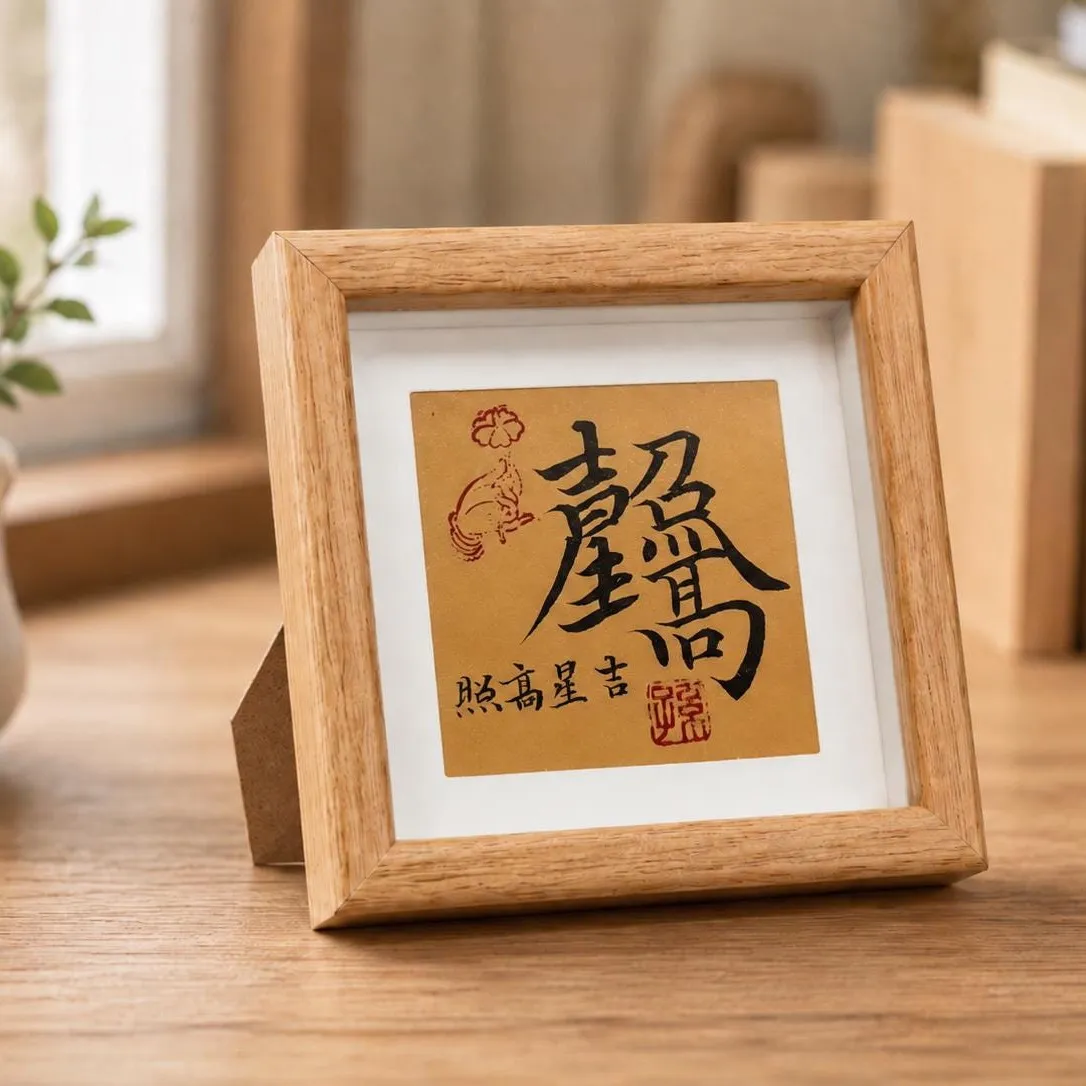
Photo shows a sample — yours will be brushed with 缘, or any character you choose.
Desk Frame — for desks, studies & studiosfrom $44→ -
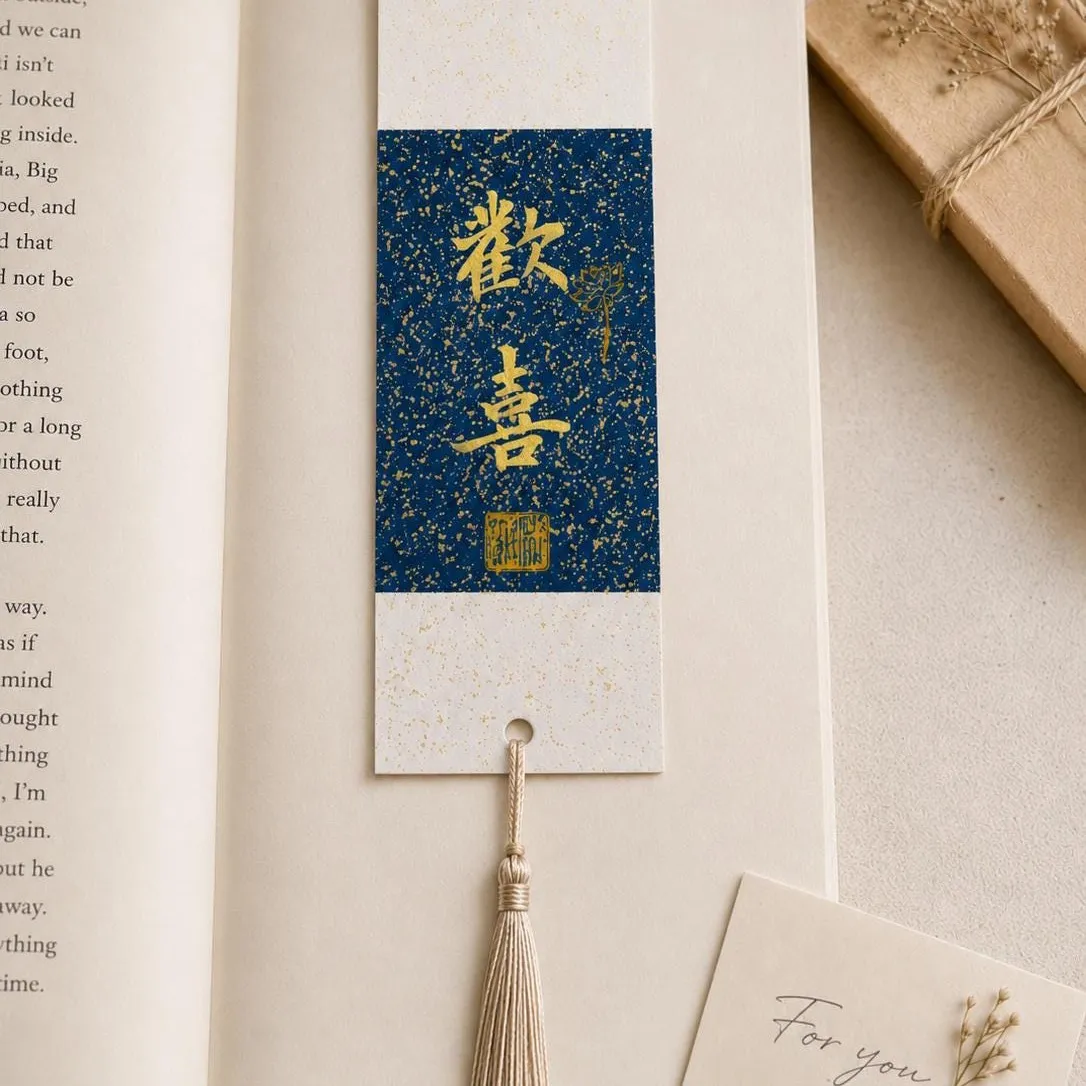
Photo shows a sample — yours will be brushed with 缘, or any character you choose.
Bookmark — for readers & small thank-yousfrom $14→
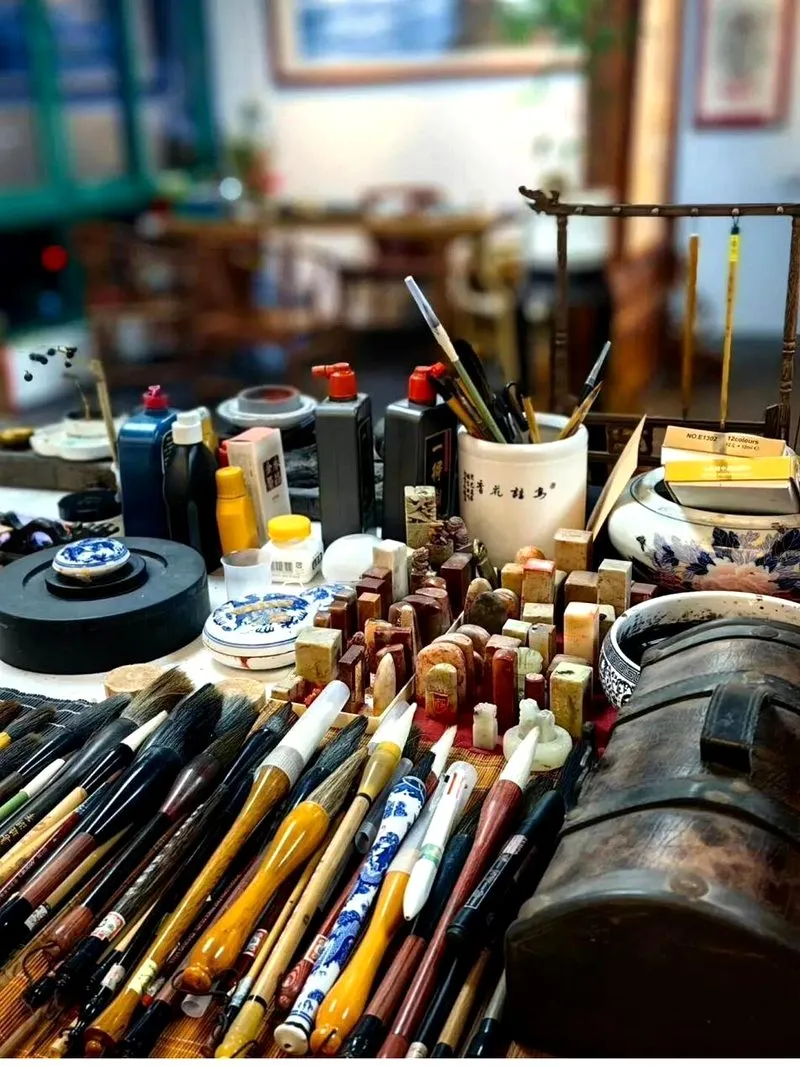
What people said after it arrived.
-
The item is fantastic. The customer service was genuine. Thanks!
— M.Verified purchase · from our Etsy shop reviews · -
They were great they gave me exactly what I asked for and then some. Thank you!!
— G.Verified purchase · from our Etsy shop reviews · -
It is well designed and customized. My daughter loves it. Amazing gift for family’s d friends
— S.Verified purchase · from our Etsy shop reviews ·
Each "缘" is hand-brushed by FuBlessings on rice paper.
See 缘 (Yuán) on Etsy →