乐 (lè) — Joy · Happiness · Delight
A single character.
乐 is the most direct character for the felt quality of joy — not 福’s wholeness or 安’s undisturbed calm, but something more immediate: the experience of gladness itself. What distinguishes it in the Chinese blessing vocabulary is its dual nature: as both joy (lè) and music (yuè), the character holds two things together that classical Chinese thought never fully separated. To be joyful, in the oldest available sense, was to be someone who had been reached by sound.
生日快乐 is the phrase Chinese people say when they arrive at your door, light the candles, and gather around the table — the most common birthday wish in the language, and one of the most frequently spoken sentences in Chinese overall. At the Lunar New Year, 新年快乐 goes out in messages, in red envelopes, at doorways. 乐 does not wait for grand occasions or philosophical contexts — it moves through everyday language in compounds (乐观, 乐趣, 欢乐) that carry little of the ceremonial weight of 福 or 寿. Mencius noticed this when he told a king that music enjoyed alone was lesser music: real 乐 spreads.
A hand-brushed 乐 by FuBlessings is the gift for a friend whose year you want to be not prosperous in the abstract but specifically, concretely glad — at dinner, at the turn of the year, in the ordinary moments worth paying attention to. Given at a birthday or at the New Year, it names what you actually hope for them, before the hoping gets more complicated.
- joy
- happiness
- delight
- gladness
- fun Fun is light and passing. 乐 runs deeper — Confucius placed 乐之 (taking joy in something) above merely loving it, as the summit of genuine engagement.
- pleasure Pleasure can be purely private and sensory. 乐 spreads — Mencius noted that joy enjoyed alone is lesser than joy shared with everyone.
- contentment Contentment is quiet and inward, a settled calm. 乐 is more active and felt — gladness that arrives, often from outside, through music, company, or a good occasion.
The short arms are the point: these readings don’t reach it.
- 乐 (simplified whole) an abbreviated formThe simplified 乐 is a shorthand reduction of the traditional 樂 and does not split into separate meaning-parts on its own. Its five strokes are a stylized contraction of the older character rather than a person-plus-radical build.
- 幺 (in traditional 樂) silk threadsIn the traditional form 樂, the upper element pictures silk strings — the doubled 幺 of thread. This is the source of the character's first meaning: a stringed instrument.
- 木 (in traditional 樂) woodThe wood radical at the base of traditional 樂 — the wooden frame the strings were stretched across. Strings over wood: the instrument first, the joy of hearing it second.
character
- 快乐 kuài lè happy — the everyday word for joy, as in 生日快乐, happy birthday
- 欢乐 huān lè merriment — lively, shared joy at a gathering or celebration
- 乐观 lè guān optimism — literally a joyful way of seeing things
- 乐趣 lè qù delight and pleasure — the enjoyment found in an activity
- 音乐 yīn yuè music — literally sound-joy, the character's older reading (yuè)
The Story Behind the Character
The earliest form of 乐, inscribed on Shang dynasty oracle bones, shows not an emotion but an instrument: silk strings stretched across a wooden frame — a prototype of the qin zither. Music came first. Joy was the consequence.
The Shuowen Jiezi (c. 100 CE) records 乐 under its musical definition — "the collective name for all five notes and eight timbres" — but acknowledges immediately what everyone already knew: 五声令人乐, "the five tones make people joyful." The two meanings had merged so early in Chinese linguistic history that the dictionary accepted both as belonging to the same word. This was not a coincidence of pronunciation. In classical Chinese thought, music was the mechanism by which joy reliably arrived — heard before it was named, felt before it was expressed.
What the character preserved through its simplifications is the idea that joy has an external origin. 乐 contains no heart radical (心), unlike most emotional characters (愉, 悦, 恼). Its gladness does not begin inside — something was played, something was heard, and then joy followed. That understanding of joy as something that enters from the outside — through sound, through company, through the right occasion — persists in how Chinese speakers still use the word. 生日快乐, 新年快乐: the joy is wished, sent outward, expected to arrive.
Classical lines
- about a century
- c. 400 BCE 《论语·雍也》
- c. 400 BCE 《论语·学而》
- c. 300 BCE 《孟子·梁惠王下》
知之者不如好之者,好之者不如乐之者。 Those who understand something are not equal to those who love it; those who love it are not equal to those who take joy in it.
Confucius placing 乐 at the apex of engagement: knowledge is the starting point, love is better, but genuine delight in the work is the summit. The verse is often quoted in classrooms; it belongs equally in workshops and kitchens.
有朋自远方来,不亦乐乎? When a friend arrives from a distant place
is that not joyful? — The opening of Confucius's collected teachings begins not with a principle but a question about where joy lives. His answer: in the arrival of a friend, not in any doctrine.
独乐乐,不如众乐乐。 The joy of music enjoyed alone is not the equal of music enjoyed with everyone.
Mencius, advising a king who had withdrawn to his gardens while the people went without. His point was political, but the observation has lasted: joy contracted into private pleasure is a diminished thing.
Why This Character Matters
生日快乐 (shēngrì kuàilè) is one of the first full sentences most Mandarin learners acquire, and for good reason: 乐 is the most frequent happiness character in everyday Chinese speech. Where 福 appears at thresholds and 喜 appears at banquets, 乐 shows up everywhere — in 乐观 (optimism, literally "joyful view"), 乐趣 (pleasure and delight), 音乐 (music, literally "sound joy"), even 可乐 (cola, the transliteration chosen precisely because it also means "may you be glad"). It is the character that slipped out of ceremony and into the ordinary day.
The classical pairing 礼乐 (lǐ yuè) — ritual and music — was not incidental. In Confucian political thought, ritual (礼) structured the order of society; music (乐) generated the emotions that made that order desirable. A civilization with ritual but without music would be technically correct but joyless — 乐 was the part that made formality worth sustaining. That framing — joy not as a reward but as a condition, without which even proper conduct loses its point — is encoded in the character's oldest context and has never quite disappeared.
乐 reads to a Chinese eye as warm and upbeat — it is the 乐 of 快乐 (happy) and a common element in given names. As a tattoo it signals a cheerful, joy-forward outlook, lighter and more everyday than weighty virtue characters. Because the simplified form is so clean and few-stroked, it looks modern and approachable; the calligraphy quality is what separates an elegant 乐 from a plain one. Note it also reads as yuè (music), a second layer some wearers like.
Calligraphy Styles for Tattoos
- Regular script (楷书 kǎishū) Best for tattoos
The simplified 乐 is just 5 strokes with an open, balanced shape, which makes it very tattoo-friendly. Regular script keeps the central vertical and the two outer points clean. Works well even at smaller sizes; minimum 1 inch.
- Running script (行书 xíngshū) Excellent for tattoos
Running script suits 乐's meaning — light, flowing, glad — and the low stroke count means it stays legible even under 2 inches. One of the characters where a brushed, energetic style reads especially well.
- Cursive script (草书 cǎoshū) Good for larger pieces
Cursive 乐 can be graceful and expressive, echoing the character's link to music. At 2.5+ inches a skilled calligrapher can give it real movement; below that the open shape risks collapsing.
Common Mistakes to Avoid
- Mixing the simplified 乐 with strokes from the traditional 樂Intended: Either the simplified 乐 (5 strokes) or the traditional 樂 (15 strokes), not a blend
The simplified and traditional forms look completely different — 乐 is a compact contraction, while 樂 shows silk threads over wood. Borrowing pieces from both creates a character that exists in neither system. Choose one form before the stencil is drawn.
- Flattening the central downward stroke so the character loses its balanceIntended: 乐 with a firm vertical anchoring the two side strokes
The simplified 乐 hangs on its central downward stroke, with the short strokes balanced on either side. If that vertical is weak or off-center, the open shape tips and the character looks unsteady — there are too few strokes to absorb the error.
Notes for Your Tattoo Artist
5 strokes (simplified) or 15 strokes (traditional 樂). The simplified form is unusually tattoo-friendly thanks to its low stroke count and open, symmetrical shape. The whole character balances on its central downward stroke, so keep that vertical firm and centered with the side strokes evenly weighted. The most common error is an off-center or limp central stroke, which tips the balance. Suits small placements down to about 1 inch.
A few characters live near "乐" but mean something quieter, sharper, or more specific. Here's how to tell them apart.
the ongoing felt texture of gladness — joy as a daily quality
joy tied to a specific happy event — a wedding, a birth, good news
the immediate experience of being glad — how a day actually feels
a whole good life with nothing important missing — the conditions, not the feeling
the bright, felt gladness itself
harmony — the smooth accord between people that makes gladness easy
At a birthday, 乐 names the felt quality of what you wish for rather than the inventory.
- At a birthday, 乐 names the felt quality of what you wish for rather than the inventory. Not achievements or outcomes, but the texture of the year ahead — that it be genuinely glad, in the ordinary daily way that matters more than the ceremonial one. Most apt for a close friend or companion whose year you can actually picture.
- 新年快乐 is the most common New Year greeting in the language — 乐 is what the year should feel like throughout, not just at its threshold. Where 福 wishes a whole good life and 万事如意 wishes for all outcomes, 乐 names the texture: that the year be daily, concretely glad.
Friend · Best Friend · New Couple · or yourself
乐 is one of the characters we use to write Western names in Chinese. See it at work:
-
What does 乐 (lè) mean?
乐 (lè) is the Chinese character for joy, happiness, delight. 乐 is the most direct character for the felt quality of joy — not 福's wholeness or 安's undisturbed calm, but something more immediate: the experience of gladness itself. What distinguishes it in the Chinese blessing vocabulary is its dual nature: as both joy (lè) and music (yuè), the character holds two things together that classical Chinese thought never fully separated. To be joyful, in the oldest available sense, was to be someone who had been reached by sound. 生日快乐 (shēngrì kuàilè) is one of the first full sentences most Mandarin learners acquire, and for good reason: 乐 is the most frequent happiness character in everyday Chinese speech. Where 福 appears at thresholds and 喜 appears at banquets, 乐 shows up everywhere — in 乐观 (optimism, literally "joyful view"), 乐趣 (pleasure and delight), 音乐 (music, literally "sound joy"), even 可乐 (cola, the transliteration chosen precisely because it also means "may you be glad"). It is the character that slipped out of ceremony and into the ordinary day.
-
What occasions is 乐 given for?
乐 is traditionally given for Birthday, Chinese New Year. At a birthday, 乐 names the felt quality of what you wish for rather than the inventory. Not achievements or outcomes, but the texture of the year ahead — that it be genuinely glad, in the ordinary daily way that matters more than the ceremonial one. Most apt for a close friend or companion whose year you can actually picture. 新年快乐 is the most common New Year greeting in the language — 乐 is what the year should feel like throughout, not just at its threshold. Where 福 wishes a whole good life and 万事如意 wishes for all outcomes, 乐 names the texture: that the year be daily, concretely glad.
-
Is 乐 a good Chinese tattoo?
乐 reads to a Chinese eye as warm and upbeat — it is the 乐 of 快乐 (happy) and a common element in given names. As a tattoo it signals a cheerful, joy-forward outlook, lighter and more everyday than weighty virtue characters. Because the simplified form is so clean and few-stroked, it looks modern and approachable; the calligraphy quality is what separates an elegant 乐 from a plain one. Note it also reads as yuè (music), a second layer some wearers like.
-
Who brushes the 乐 calligraphy?
FuBlessings hand-brushes each 乐 (Lè) to order, in ink on rice paper — never printed, never repeated.
Bring 乐 home — choose how you'd like it brushed.
-
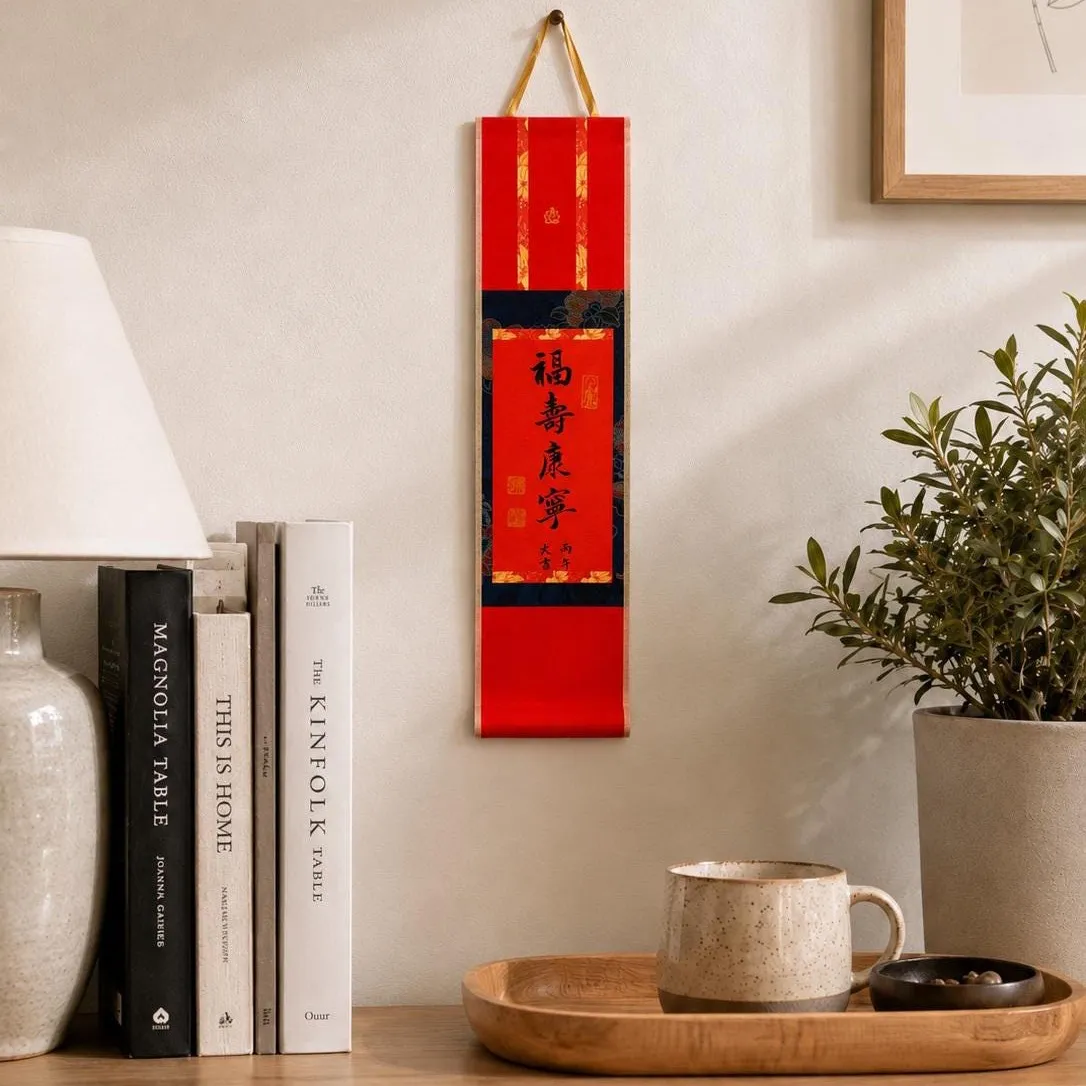
Photo shows a sample — yours will be brushed with 乐, or any character you choose.
Wall Scroll — for walls & housewarmingsfrom $38→ -
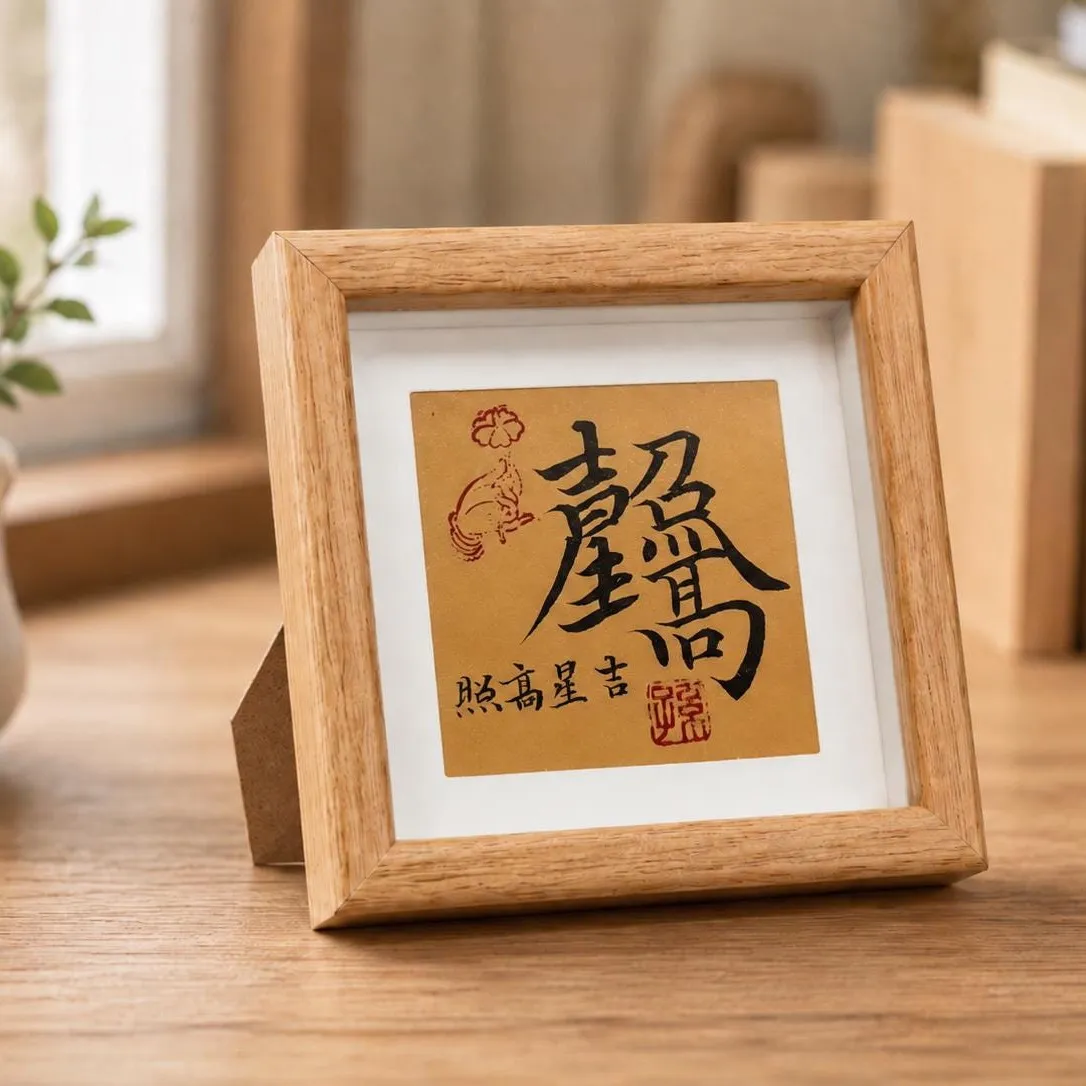
Photo shows a sample — yours will be brushed with 乐, or any character you choose.
Desk Frame — for desks, studies & studiosfrom $44→ -
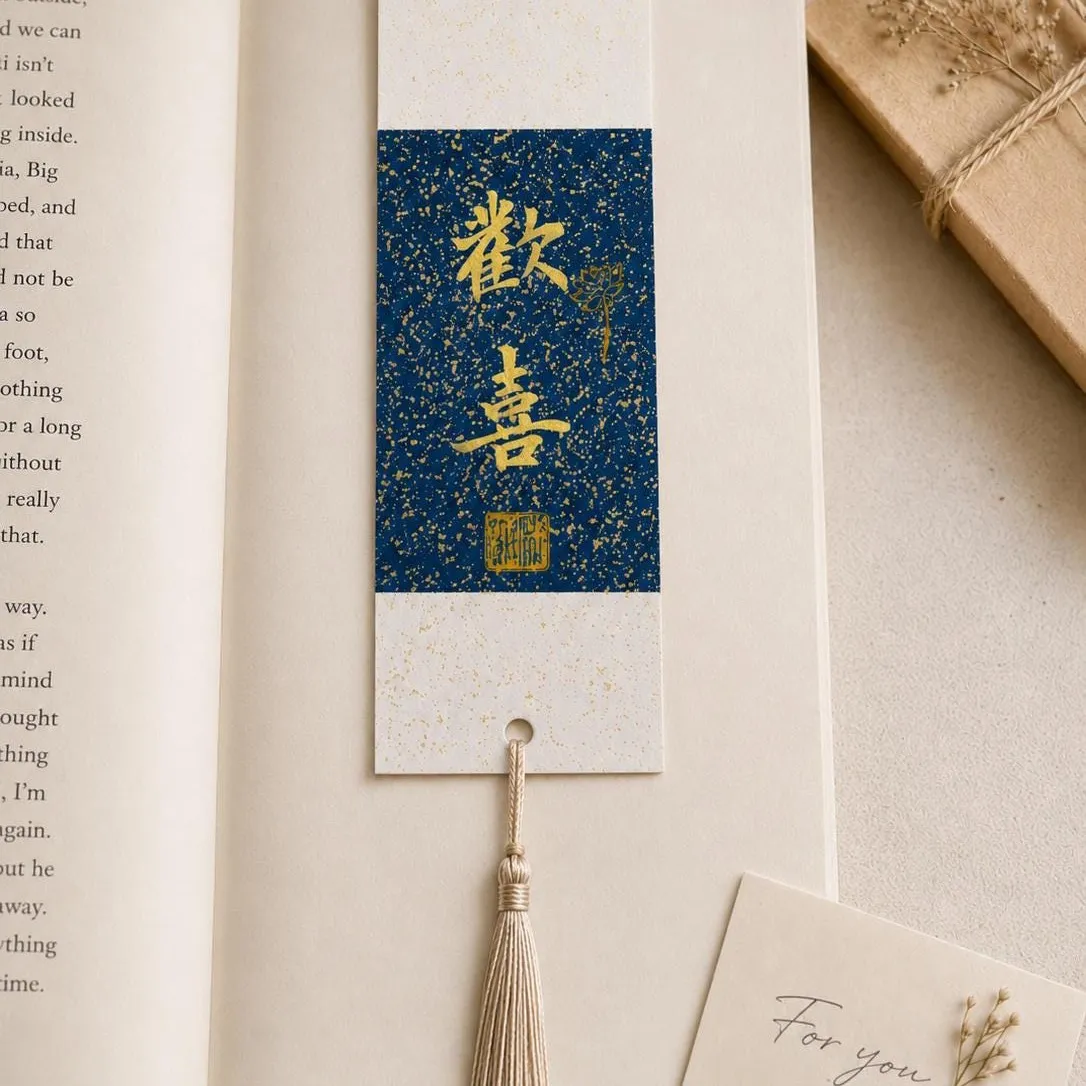
Photo shows a sample — yours will be brushed with 乐, or any character you choose.
Bookmark — for readers & small thank-yousfrom $14→

What people said after it arrived.
-
The item is fantastic. The customer service was genuine. Thanks!
— M.Verified purchase · from our Etsy shop reviews · -
They were great they gave me exactly what I asked for and then some. Thank you!!
— G.Verified purchase · from our Etsy shop reviews · -
It is well designed and customized. My daughter loves it. Amazing gift for family’s d friends
— S.Verified purchase · from our Etsy shop reviews ·
Each "乐" is hand-brushed by FuBlessings on rice paper.
See 乐 (Lè) on Etsy →