喜 (xǐ) — Joy · Happiness · Celebration
A single character.
Three thousand years ago, someone scratched a picture of a drum and a shouting mouth into bone. That’s 喜 at its origin — not a quiet feeling, but a noise. This is the Chinese character for the kind of happiness that can’t stay inside: the joy that demands a room, a crowd, a celebration.
You’ve probably seen 喜 without knowing it. At Chinese weddings, it appears doubled — 囍 — two joy characters fused into one, printed on every surface from the invitation envelopes to the candy boxes. A new baby gets announced with “报喜” (reporting joy). Good exam results are “喜讯” (joyful news). In every case, 喜 is happiness that insists on being shared. It has no private mode.
A hand-brushed 喜 by Artist Lina Sun is the gift that turns a celebration into a keepsake — for the couple whose wedding deserves more than a registry item, the friend whose engagement just changed everything, or the anniversary that proves joy can be a long-term condition.
- joy
- celebration
- happy occasion
- shared delight
- happiness Too internal. 喜 is happiness that performs itself — a wedding, a birth, news that empties a room into a hug. The private kind is closer to 乐.
- pleasure Too small. 喜 is the joy of an event, not a sensation. It marks a moment that changes the temperature of a room.
- fun Too casual. 喜 carries weight — the joy of things that matter, not the joy of an afternoon.
The short arms are the point: these readings don’t reach it.
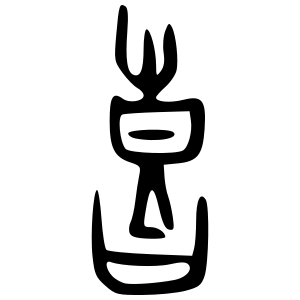
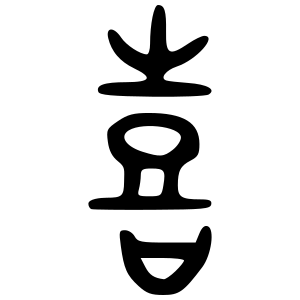
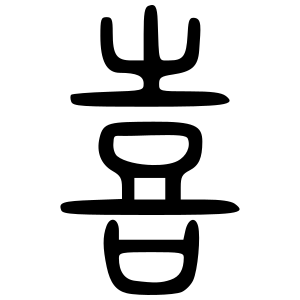
- 壴 a drum on a standThe oldest forms of 喜 show a drum mounted upright on a wooden frame. The drum is the sound of public gathering — what people beat to announce something worth attention.
- 口 a mouthA mouth placed beneath the drum: someone singing, shouting, or cheering over the beat. The character is built around noise — joy that asks to be heard.
character
- 喜事 xǐ shì a happy event — typically a wedding or birth
- 喜悦 xǐ yuè delight — the felt experience of 喜
- 惊喜 jīng xǐ surprise joy — happiness that arrives without warning
- 恭喜 gōng xǐ congratulations — literally, respectfully sharing in someone's 喜
- 双喜 shuāng xǐ double happiness — the 囍 of weddings, joy multiplied by being shared
The Story Behind the Character
The oldest version of 喜 on oracle bones (甲骨文) shows a drum on a stand with a mouth beneath it — a picture of someone singing or shouting over the beat of a drum. This wasn't quiet contentment. It was noise, celebration, the kind of happiness that fills a room and demands an audience.
Through bronze inscriptions and later scripts, the drum simplified into 壴 (zhù, a drum on a stand) and the mouth below became 口 (kǒu). China's first dictionary (说文解字, c. 100 CE) defined it plainly: "喜,樂也" — joy, delight. But the drum stayed in the character's bones, and so did the implication: 喜 is happiness that is performed, shared, and public.
This matters because the language already had other names for happiness. 乐 (lè) is pleasure, the feeling itself. 福 (fú) is blessing from above. But 喜 is specifically the joy that happens between people — at a wedding, at a birth announcement, at the moment good news arrives and the room erupts. It was never a solitary emotion.
Classical lines
人逢喜事精神爽,月到中秋分外明。 When happy events come, a person's spirit lifts; when the mid-autumn moon arrives, it shines with special brightness.
A folk proverb comparing human joy to the year's fullest moon: both are ordinary things made extraordinary by timing.
既见君子,云胡不喜? Now that I have seen the one I love
how could I not be glad? — Three thousand years old, and the joy is the same kind 喜 still names: the gladness that arrives with a person, too sudden and too full to keep inside. The line ends on 喜 itself.
Why This Character Matters
At Chinese weddings, 喜 is everywhere — but almost never alone. It appears in its doubled form, 囍, two joy characters fused side by side. This "double happiness" shows up on red paper cutouts pasted to doors, printed on invitation envelopes, embroidered onto bedding, and stamped in gold on candy boxes. The doubling isn't decorative — it means joy multiplied by being shared between two people, then radiating outward to everyone present.
Beyond weddings, 喜 marks any event the Chinese consider worth celebrating publicly. A new baby is announced with "报喜" (bàoxǐ, reporting joy). Good exam results are a "喜讯" (xǐxùn, joyful news). When something lucky happens unexpectedly, it's a "惊喜" (jīngxǐ, surprise joy). The thread connecting all these uses is that 喜 is never private — it's the happiness that calls for witnesses, red decorations, and noise.
喜 is one of the most visually recognizable characters in Chinese culture — every Chinese person has seen it thousands of times at weddings, on red decorations, and in New Year displays. As a tattoo, it reads as cheerful and festive but very common. The double-happiness 囍 version would be specifically associated with marriage. Either way, a native speaker would find it familiar and positive, never offensive.
Calligraphy Styles for Tattoos
- Regular script (楷书 kǎishū) Best for tattoos
喜 has 12 strokes in a distinctive vertically stacked structure — 壴 (drum) on top and 口 (mouth) below. Regular script makes each horizontal stroke distinct and keeps the symmetry that gives 喜 its visual impact.
- Running script (行书 xíngshū) Good for larger pieces
Running script adds celebratory energy to 喜, but the many horizontal strokes can blur together at smaller sizes. At 3+ inches, the character gains a festive, handwritten quality that suits its meaning.
- Cursive script (草书 cǎoshū) Only with an expert calligrapher
Cursive 喜 compresses the stacked structure dramatically and is very difficult to read without training. However, the double-happiness form 囍 in semi-cursive can be visually striking for wedding-themed tattoos.
Common Mistakes to Avoid
- Uneven horizontal strokes making the character look lopsidedIntended: 喜 with balanced, evenly spaced horizontals
喜 has multiple horizontal strokes that must be evenly spaced and similar in length for the character to look right. Uneven spacing is the single most common error — it makes 喜 look like it was drawn by someone who doesn't read Chinese.
- Confusing the single 喜 with the double-happiness 囍 (or vice versa)Intended: Either 喜 (joy) or 囍 (double happiness for weddings)
喜 is a single character meaning joy. 囍 is two 喜 fused side by side, used specifically for weddings. Getting 囍 when you wanted general joy, or 喜 when you wanted the wedding symbol, is a meaningful mix-up. Know which one you're asking for.
Notes for Your Tattoo Artist
12 strokes. The character is tall and nearly symmetrical around its vertical axis — maintaining that symmetry is the primary challenge. The horizontal strokes must be evenly spaced, like rungs of a ladder. Minimum size 2 inches. The bottom 口 should be slightly wider than the top drum component to give visual stability.
A few characters live near "喜" but mean something quieter, sharper, or more specific. Here's how to tell them apart.
joy from a specific event — loud, public, time-stamped
the celebration triggered by a relationship — the wedding, the announcement
The most traditional moment for "喜" — especially in its doubled form 囍, the symbol of joy multiplied by being shared.
- The most traditional moment for "喜" — especially in its doubled form 囍, the symbol of joy multiplied by being shared.
- EngagementA meaningful gift to mark the beginning of a new life together — joy at its earliest, brightest moment.
- Years into a marriage, "喜" is a quiet way to honor the joy that has stayed.
- For the friend or family member whose New Year you want to be lighter than last year's. 喜 is the wish for celebration itself — many small joys, many shared moments.
- For the person whose presence is itself a celebration. 喜 names the joy that comes from being together — the warmth that spills over and must be shared.
- For someone whose presence in your life is itself a celebration.
Wife · Husband · Best Friend · New Couple · Coworker · Family · or yourself
Looking for a name? See Western names written in Chinese →
-
What does 喜 (xǐ) mean?
喜 (xǐ) is the Chinese character for joy, happiness, celebration. Three thousand years ago, someone scratched a picture of a drum and a shouting mouth into bone. That's 喜 at its origin — not a quiet feeling, but a noise. This is the Chinese character for the kind of happiness that can't stay inside: the joy that demands a room, a crowd, a celebration. At Chinese weddings, 喜 is everywhere — but almost never alone. It appears in its doubled form, 囍, two joy characters fused side by side. This "double happiness" shows up on red paper cutouts pasted to doors, printed on invitation envelopes, embroidered onto bedding, and stamped in gold on candy boxes. The doubling isn't decorative — it means joy multiplied by being shared between two people, then radiating outward to everyone present.
-
What occasions is 喜 given for?
喜 is traditionally given for Wedding, Engagement, Anniversary, Chinese New Year, Valentine's Day, Birthday. The most traditional moment for "喜" — especially in its doubled form 囍, the symbol of joy multiplied by being shared. A meaningful gift to mark the beginning of a new life together — joy at its earliest, brightest moment.
-
Is 喜 a good Chinese tattoo?
喜 is one of the most visually recognizable characters in Chinese culture — every Chinese person has seen it thousands of times at weddings, on red decorations, and in New Year displays. As a tattoo, it reads as cheerful and festive but very common. The double-happiness 囍 version would be specifically associated with marriage. Either way, a native speaker would find it familiar and positive, never offensive.
-
Who brushes the 喜 calligraphy?
Each 喜 (Xǐ) is hand-brushed to order by Artist Lina Sun in ink on rice paper — never printed, never repeated.
Bring 喜 home — choose how you'd like it brushed.
-
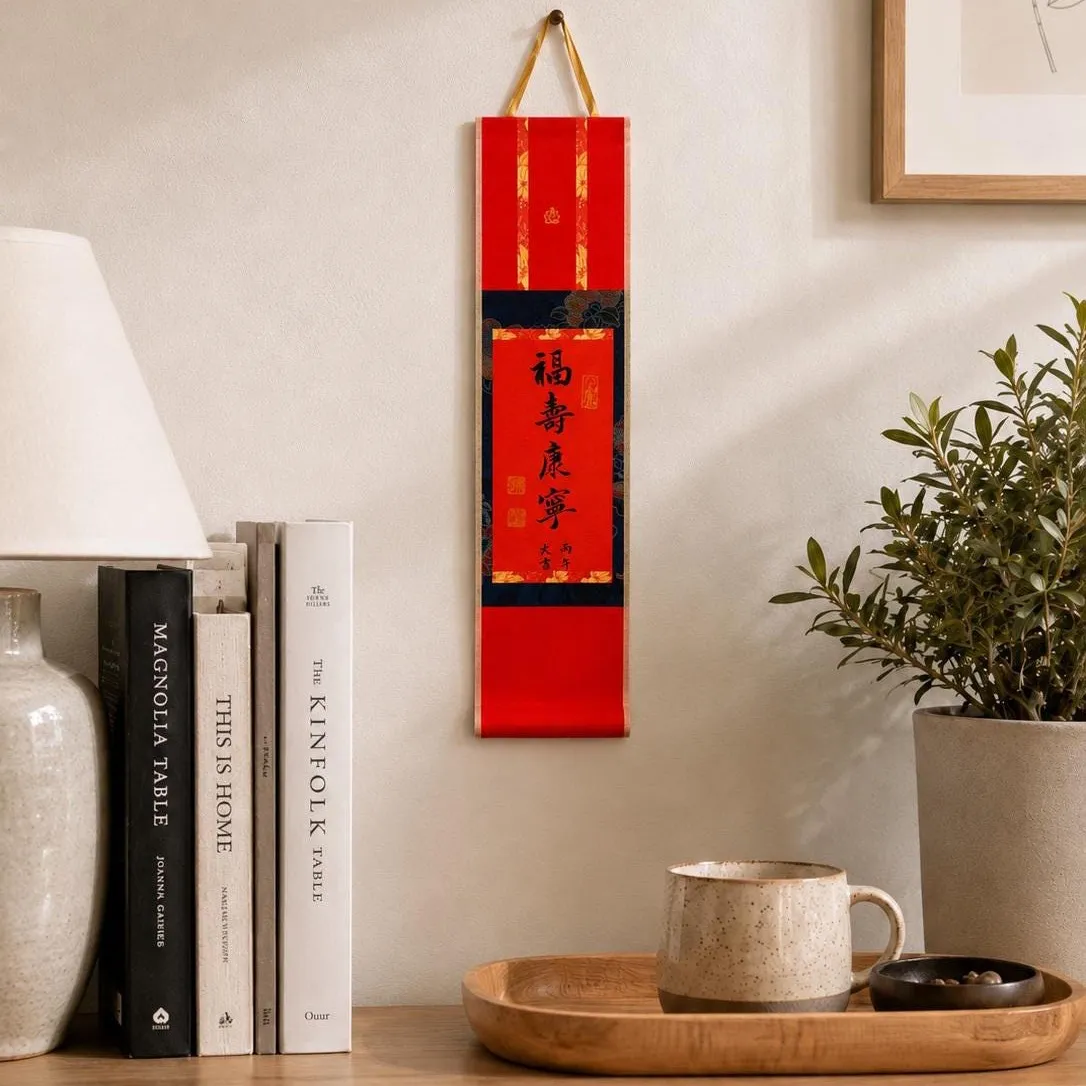
Photo shows a sample — yours will be brushed with 喜, or any character you choose.
Wall Scroll — for walls & housewarmingsfrom $38→ -
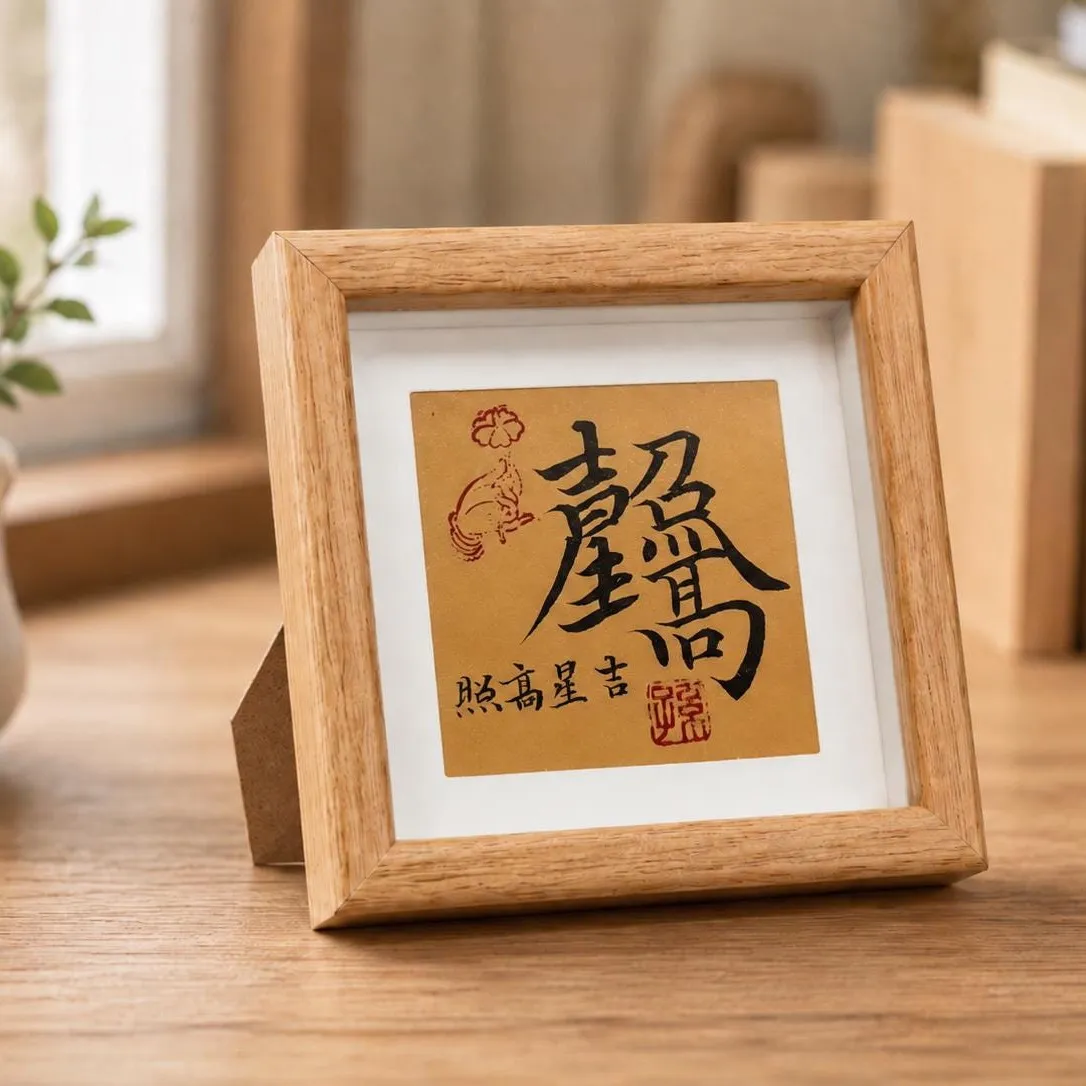
Photo shows a sample — yours will be brushed with 喜, or any character you choose.
Desk Frame — for desks, studies & studiosfrom $44→ -
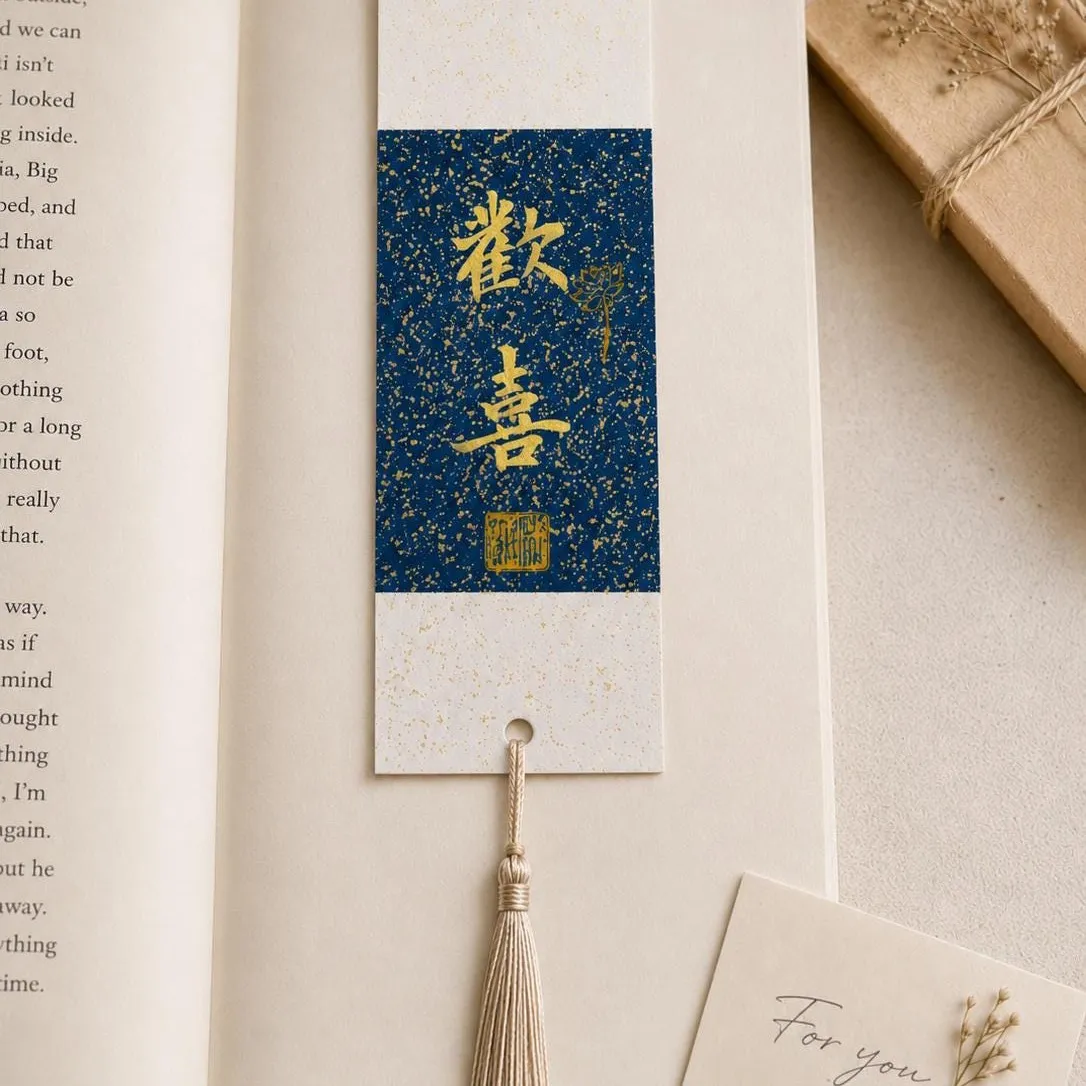
Photo shows a sample — yours will be brushed with 喜, or any character you choose.
Bookmark — for readers & small thank-yousfrom $17→
What people said after it arrived.
-
The item is fantastic. The customer service was genuine. Thanks!
— M.Verified purchase · from our Etsy shop reviews · -
They were great they gave me exactly what I asked for and then some. Thank you!!
— G.Verified purchase · from our Etsy shop reviews · -
It is well designed and customized. My daughter loves it. Amazing gift for family’s d friends
— S.Verified purchase · from our Etsy shop reviews ·
Each "喜" is hand-brushed by Artist Lina Sun on rice paper.
See 喜 (Xǐ) on Etsy →