吉祥 (jí xiáng) — Auspiciousness · Good Omen · The Promise of Good Things
A two-character word, not a single character.
吉祥 is the oldest and broadest blessing in Chinese culture — the word that contains all other blessings within it. 福 names fortune specifically; 寿 names longevity specifically; 安 names peace specifically. 吉祥 names the entire field of favorable conditions at once. Its two characters trace back to the divination altars of the Shang dynasty, where 吉 was the oracle’s favorable verdict and 祥 was the evidence from the sacrificial offering that confirmed it. To declare something 吉祥 was originally a technical pronouncement: the signs have been read, the spirits have been consulted, and the answer is yes. Split apart, the two halves still do different jobs: 吉 is the answer given, and 祥 is the sign it was read from. See 吉 → · See 祥 →
Over three thousand years, 吉祥 absorbed into itself an entire visual vocabulary. Chinese artisans developed a system of 吉祥图案 (auspicious patterns) where animals, plants, and objects encode specific blessings through homophones: a bat (蝠, fú) represents fortune (福, fú), a fish (鱼, yú) represents surplus (余, yú), a vase (瓶, píng) represents peace (平, píng). These are not loose associations — they are precise substitution codes that educated Chinese viewers read as fluently as text. A painting of five bats circling a peach is a complete sentence: 五福捧寿, “the Five Blessings surround longevity.” This system explains why 吉祥 appears on every category of Chinese celebratory object, from New Year couplets to wedding embroidery to business-opening banners — it is the meta-blessing that authorizes and contains every specific wish.
A hand-brushed “吉祥” by FuBlessings is a gift for any beginning — a new year, a new home, a new business, a new chapter. It carries three thousand years of accumulated meaning in two characters, and it says the most generous thing a blessing can say: whatever good thing you need, may the signs point toward it arriving.
- auspiciousness
- favorable signs
- the field of good things arriving
- the meta-blessing
- luck Too random. 吉祥 is not chance — it is the recognition that conditions are favorable, read from accumulated signs.
- happy Too emotional. 吉祥 names a state of the world, not a feeling — the signs say yes, and what follows from that.
The short arms are the point: these readings don’t reach it.
- 吉 auspicious / the favorable verdictA weapon above a mouth — the diviner's reading that the spirits approved. Originally a technical term: the oracle's 'yes.' Names the favorable sign before it has manifested.
- 祥 good omen / confirming evidenceAn altar (示) beside a sheep (羊) — the sacrificial animal whose condition revealed divine favor. Names the visible proof: the sign in the world that confirms the spirits' approval.
characters
- 吉祥如意 jí xiáng rú yì auspicious and aligned — favorable signs meeting personal fulfillment
- 万事吉祥 wàn shì jí xiáng may ten thousand matters be auspicious — the broadest possible scope
- 龙凤呈祥 lóng fèng chéng xiáng dragon and phoenix present auspiciousness — the wedding image
- 大吉大利 dà jí dà lì great auspice, great benefit — the boisterous New Year version
- 吉祥安康 jí xiáng ān kāng auspicious signs and wellness — the broad elder blessing
The Story Behind the Character
吉祥 is among the oldest blessing compounds in Chinese, and its two characters trace back to entirely different domains of early Chinese life. 吉 (auspicious, lucky) appears on Shang dynasty oracle bones (c. 1200 BCE) as a pictograph of a weapon placed above a mouth — the diviner's favorable reading, the verdict that the spirits approved of what was being asked. It was, in origin, a technical term: the oracle's "yes." 祥 (omen, auspicious sign) contains the radical 示 (altar, spiritual sign) beside 羊 (sheep) — the animal offered at the altar, whose condition revealed whether the gods were pleased. A healthy sacrificial sheep was itself the proof of good fortune.
Together, the two characters fused the oracle's verdict with the altar's evidence. 吉祥 did not mean "good luck" in the modern casual sense. It meant: the signs have been read, the offering has been examined, and the outcome is favorable. The compound carried institutional weight — it was the language of court diviners and ritual specialists before it became the language of New Year greetings and red envelopes.
By the Han dynasty, 吉祥 had migrated from the divination altar to everyday life, absorbing into itself a vast catalogue of visual symbols: the deer (禄, prosperity), the crane (longevity), the bat (福, fortune), the peach (immortality), the pine (endurance). To call something 吉祥 was to declare it a carrier of good fortune — not by magic, but by cultural consensus built over centuries of accumulated meaning.
Classical lines
- roughly 300 years
- c. 600 BCE 《尚书·伊训》
- c. 300 BCE 《庄子·人间世》
One further source is quoted below without a date printed, so it stays off the rail.
吉祥止止。 Auspiciousness settles where it settles.
Zhuangzi's terse observation: good fortune is not chased. It arrives at the place that has made itself ready.
作善降之百祥,作不善降之百殃。 Those who do good receive a hundred blessings; those who do ill receive a hundred calamities.
The Book of Documents establishing the moral logic behind 祥: auspiciousness is not random. It is the response to conduct.
龙凤呈祥。 The dragon and phoenix present auspiciousness.
The most iconic 吉祥 image in Chinese culture: the dragon (yang, emperor, groom) and phoenix (yin, empress, bride) together signal the arrival of the most favorable possible conditions.
Why This Character Matters
The 吉祥 system is not just a pair of characters — it is an entire visual language. Over centuries, Chinese artisans developed an elaborate catalogue of 吉祥图案 (auspicious patterns) where everyday objects and animals encode specific blessings through homophones and visual puns. A bat (蝠, fú) represents fortune (福, fú) because the words sound identical. A vase (瓶, píng) represents peace (平, píng). A fish (鱼, yú) represents surplus (余, yú). These are not loose associations — they are precise substitution codes, and educated Chinese viewers read them as fluently as text. A painting of five bats circling a peach is not nature art. It is a sentence: 五福捧寿, "the Five Blessings surround longevity."
This visual vocabulary explains why 吉祥 appears on virtually every category of Chinese celebratory object — from wedding embroidery to business-opening banners, from New Year couplets to birthday tableware. It is the umbrella term that contains all specific blessings within it. Where 福 names fortune specifically, and 寿 names longevity specifically, 吉祥 names the entire field of favorable conditions — the meta-blessing that says: whatever good thing you need, may the signs point toward it arriving.
A few characters live near "吉祥" but mean something quieter, sharper, or more specific. Here's how to tell them apart.
the field of favorable signs — auspice as a state of conditions
a specific auspicious omen — a particular manifestation, like a unicorn or rare cloud
signs pointing toward good things — the precondition, the favorable verdict
joyful event — the specific happy occasion (wedding, birth, good news)
the meta-blessing — favorable signs across every domain at once
吉祥 is the umbrella greeting of the new year — the inscription on red envelopes, the language of couplets pasted to doorframes.
- 吉祥 is the umbrella greeting of the new year — the inscription on red envelopes, the language of couplets pasted to doorframes. To give 吉祥 is to wish the whole field of good things at once.
- For a new marriage, 吉祥 is the wish that the union itself carries good fortune — that the home being built is one good things will find their way into.
- New HomeHung in an entranceway, 吉祥 is the traditional welcome — a wish that the threshold of the new home opens onto only good omens.
- Business Opening吉祥 is the classical inscription for a shop's opening day — the wish that the venture begins under a favorable sign and continues that way.
Family · Friend · Best Friend · New Couple · New Homeowner · Coworker · or yourself
Looking for a name? See Western names written in Chinese →
-
What does 吉祥 (jí xiáng) mean?
吉祥 (jí xiáng) is a two-character Chinese word for auspiciousness, good omen, the promise of good things. 吉祥 is the oldest and broadest blessing in Chinese culture — the word that contains all other blessings within it. 福 names fortune specifically; 寿 names longevity specifically; 安 names peace specifically. 吉祥 names the entire field of favorable conditions at once. Its two characters trace back to the divination altars of the Shang dynasty, where 吉 was the oracle's favorable verdict and 祥 was the evidence from the sacrificial offering that confirmed it. To declare something 吉祥 was originally a technical pronouncement: the signs have been read, the spirits have been consulted, and the answer is yes. Split apart, the two halves still do different jobs: 吉 is the answer given, and 祥 is the sign it was read from. See 吉 → · See 祥 → The 吉祥 system is not just a pair of characters — it is an entire visual language. Over centuries, Chinese artisans developed an elaborate catalogue of 吉祥图案 (auspicious patterns) where everyday objects and animals encode specific blessings through homophones and visual puns. A bat (蝠, fú) represents fortune (福, fú) because the words sound identical. A vase (瓶, píng) represents peace (平, píng). A fish (鱼, yú) represents surplus (余, yú). These are not loose associations — they are precise substitution codes, and educated Chinese viewers read them as fluently as text. A painting of five bats circling a peach is not nature art. It is a sentence: 五福捧寿, "the Five Blessings surround longevity."
-
What occasions is 吉祥 given for?
吉祥 is traditionally given for Chinese New Year, Wedding, New Home, Business Opening. 吉祥 is the umbrella greeting of the new year — the inscription on red envelopes, the language of couplets pasted to doorframes. To give 吉祥 is to wish the whole field of good things at once. For a new marriage, 吉祥 is the wish that the union itself carries good fortune — that the home being built is one good things will find their way into.
-
Who brushes the 吉祥 calligraphy?
FuBlessings hand-brushes each 吉祥 (Jí Xiáng) to order, in ink on rice paper — never printed, never repeated.
Bring 吉祥 home — choose how you'd like it brushed.
-
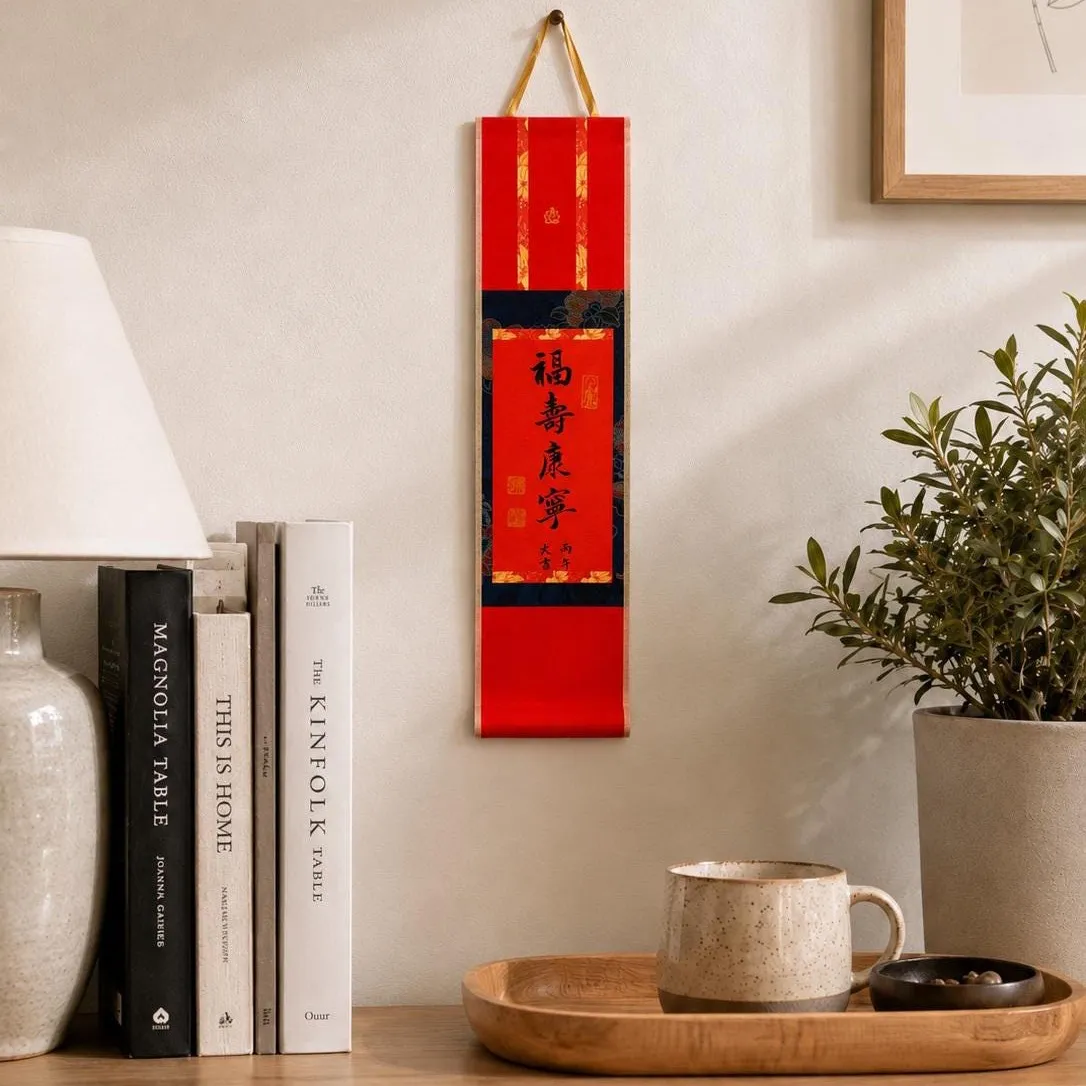
Photo shows a sample — yours will be brushed with 吉祥, or any character you choose.
Wall Scroll — for walls & housewarmingsfrom $38→ -
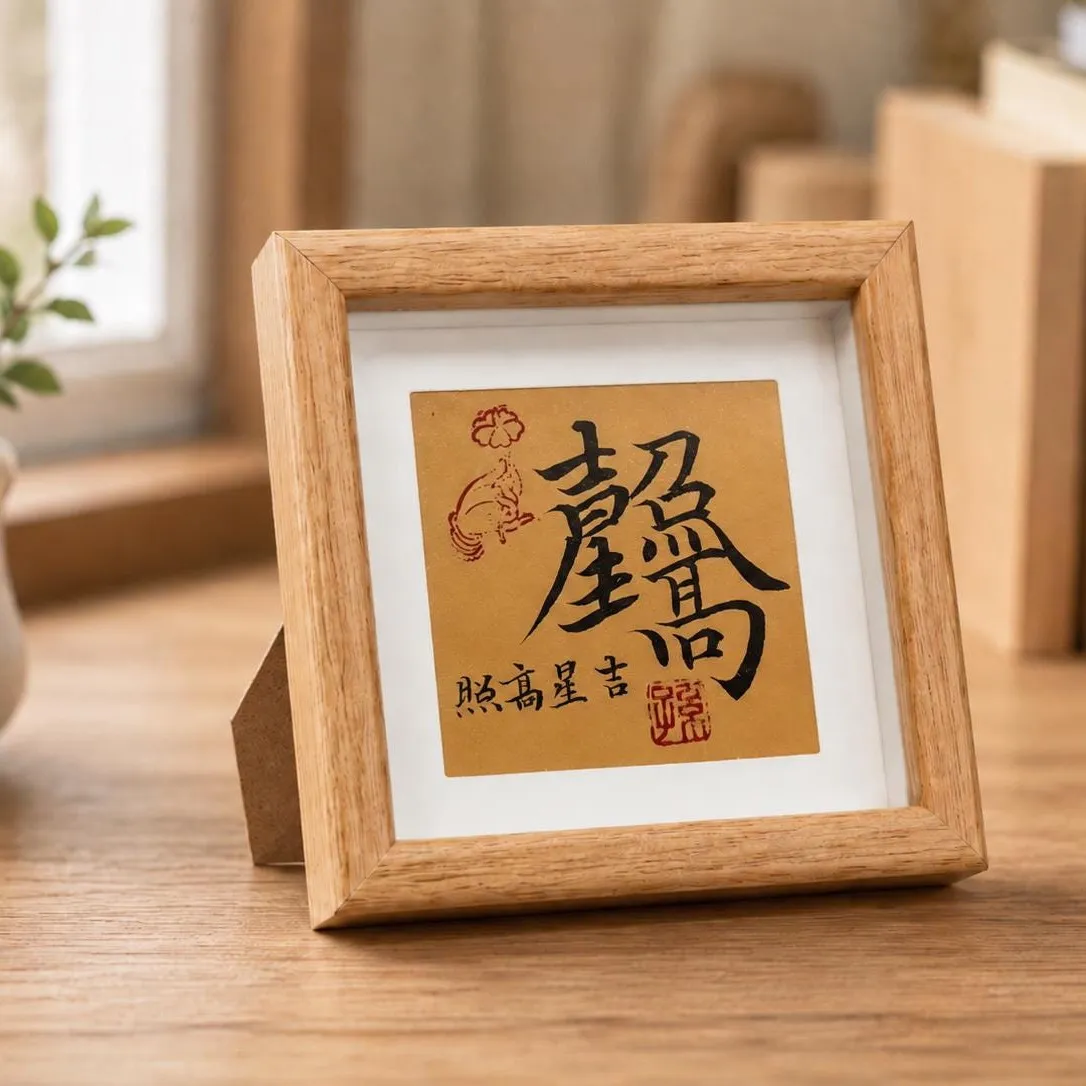
Photo shows a sample — yours will be brushed with 吉祥, or any character you choose.
Desk Frame — for desks, studies & studiosfrom $44→ -
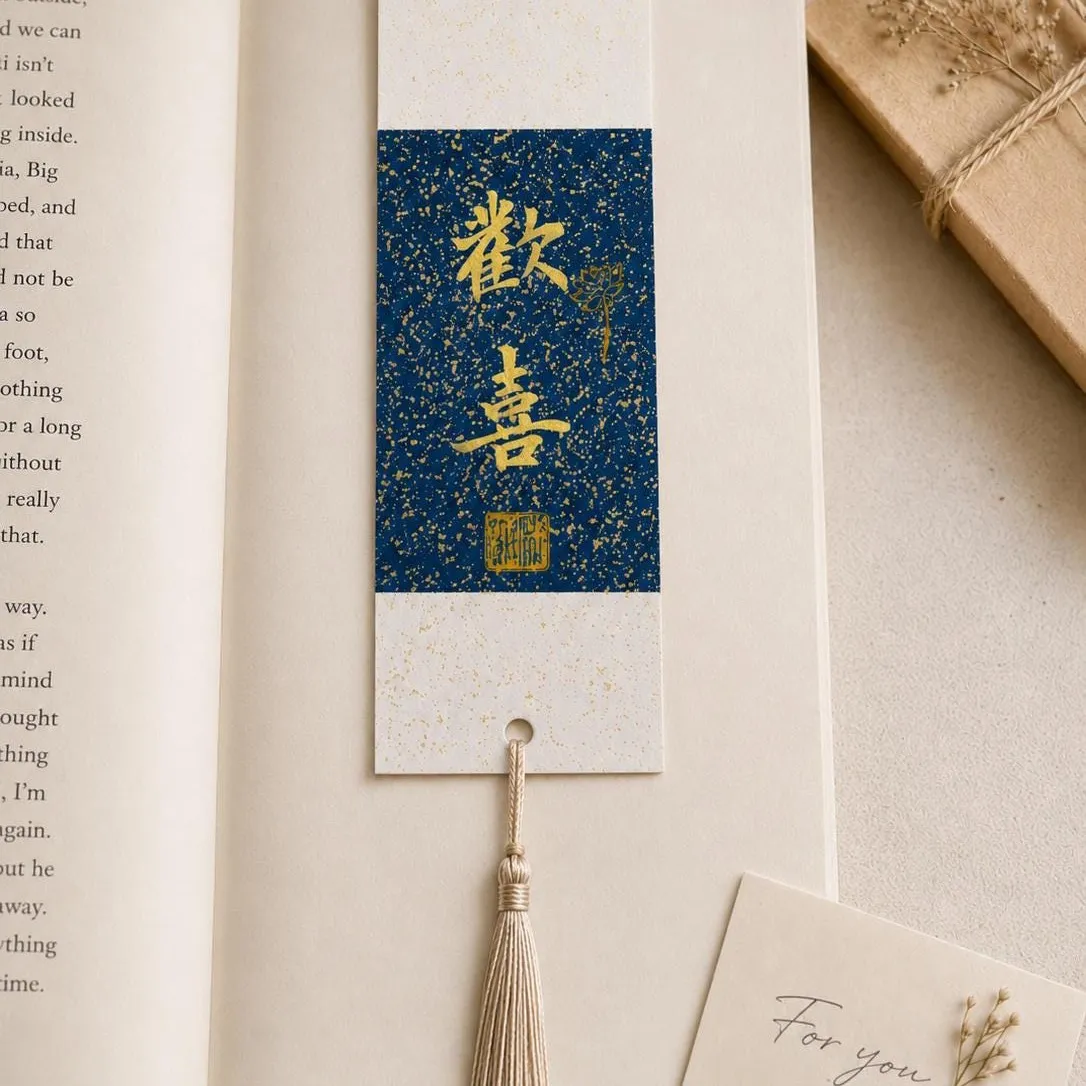
Photo shows a sample — yours will be brushed with 吉祥, or any character you choose.
Bookmark — for readers & small thank-yousfrom $14→
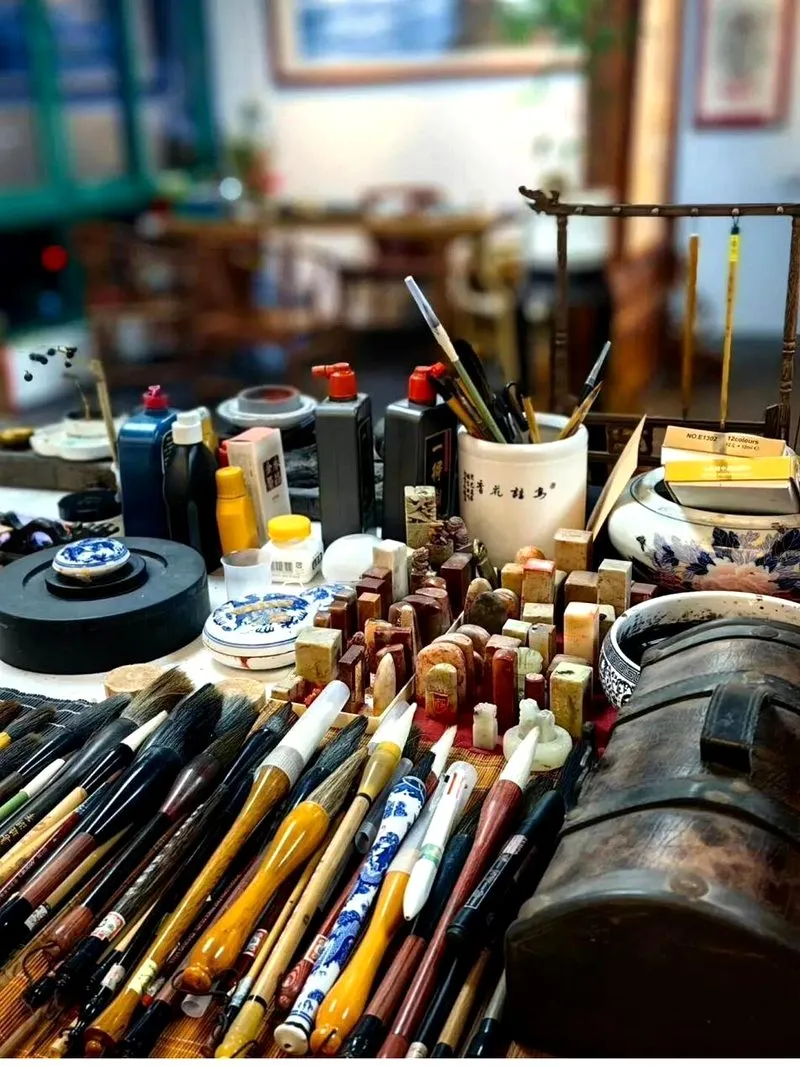
What people said after it arrived.
-
The item is fantastic. The customer service was genuine. Thanks!
— M.Verified purchase · from our Etsy shop reviews · -
They were great they gave me exactly what I asked for and then some. Thank you!!
— G.Verified purchase · from our Etsy shop reviews · -
It is well designed and customized. My daughter loves it. Amazing gift for family’s d friends
— S.Verified purchase · from our Etsy shop reviews ·
Each "吉祥" is hand-brushed by FuBlessings on rice paper.
See 吉祥 (Jí Xiáng) on Etsy →