力 (lì) — Strength · Force · The Power to Act
A single character.
力 is the simplest picture in Chinese writing of what it looks like to decide to do something. Two strokes: a forearm, a muscle under tension, the ground being pushed against. Three thousand years of Chinese culture have taken that image and expanded it into nearly every context where force is applied — physical, moral, creative, political. But the character itself never changed. It is still the arm, still the flex, still the push.
In Chinese homes and classrooms, 力 lives inside the most common encouragement one person gives another: 努力 — work hard, keep applying force. It is the word Chinese parents say to their children before exams, before competitions, before anything that matters. Not “be strong.” Not “be brave.” Exert 力 — the thing your body knows how to do.
For a gift, 力 works because it meets people where effort actually lives: in the specific, daily, repeated decision to push. Not inspiration. Not potential. The force that is already in you, waiting to be applied.
A hand-brushed 力 by FuBlessings is that recognition in ink — for someone who has done the hard thing, or is about to.
- force applied
- the capacity to act
- effort in motion
- what makes things possible
- power Power suggests authority over others. 力 is about what you can do — not what others must accept.
- strength Strength is a state. 力 is an action — force already in motion. The character shows a muscle flexed, not a body at rest.
- energy Energy is diffuse, potential. 力 is directed — it points somewhere, pushes against something.
The short arms are the point: these readings don’t reach it.
- 力 applied force力 is a single pictograph, not a combination of parts — it is itself one of the building-block radicals of Chinese writing. The oracle-bone form shows either a forearm with a tensed muscle or a plow biting into earth; both readings land on the same idea. The whole character is the picture: effort concentrated against something that resists.
character
- 力量 lì liàng inner force, moral strength — the kind of power that holds things together from the inside
- 努力 nǔ lì to work hard — literally to exert 力, the most common word for sustained effort
- 力气 lì qi physical strength — the kind you feel in your arms when you carry something heavy
- 全力 quán lì with full force — giving everything you have to something
- 女力 nǚ lì girl power — 女 (woman) + 力 (force), the phrase that launched a thousand tattoos
The Story Behind the Character
力 is one of the oldest and simplest characters in Chinese writing. Oracle bone inscriptions from 3,200 years ago show a shape that looks like a forearm with a tensed muscle — or, in some interpretations, a plow. Both readings led to the same place: the concentrated application of human effort to resistant material.
Shuowen Jiezi, China's first dictionary (c. 100 CE), defines 力 as "筋也" — it is the sinew, the cord of muscle that connects bone to action. Not the desire to act. Not the idea of acting. The physical capacity itself.
Over three thousand years, 力 expanded far beyond the physical. 力量 came to mean moral force. 全力 came to mean giving everything you have. 努力 — "effort exerted" — became the standard word for trying hard. And 力 became the character embedded in a hundred compounds for any kind of push, any kind of pressure, any kind of strength applied in any direction.
But the character itself never lost the original image. Two strokes. A forearm. A muscle under tension. The simplest picture of what it looks like when a person decides to do something.
Classical lines
力恶其不出于身也,不必为己。 People hate to see strength left unused
but they do not exert it only for themselves. — From the Book of Rites' vision of the Great Harmony (大同). 力 here is not muscle for personal gain but capacity owed to the world: the measure of strength is whether it gets spent.
千里之行,始于足下。 A journey of a thousand miles begins with a single step.
Laozi's famous reminder that 力 does not require being a great force from the start. It requires a single application of force, and then another.
有志者,事竟成。 Where there is will, there is a way
literally: those with will, their things finally get done. The character 力 is implicit in every syllable.
Why This Character Matters
In Chinese culture, 力 carries a specific moral weight that "strength" in English doesn't quite capture. The compound 努力 — literally "exerting 力" — is the standard Chinese word for hard work, and it is one of the most common things Chinese parents say to their children: 要努力. Work hard. Apply force. Keep going.
This is not motivational poster language in China. It is a genuine value, rooted in a culture that has historically been less interested in talent (天赋, given by heaven) and more interested in sustained effort (努力, applied by will). The phrase 勤能补拙 — diligence can compensate for dullness — is one of the most repeated aphorisms in Chinese classrooms. 力 is at the heart of it.
The character also appears in some of China's most powerful political slogans — 力量, the force of the collective — and in its most intimate moments. A mother encouraging a child: 加油, 你有力量. Add fuel, you have strength. In Chinese, strength is never only personal. It is also what you are given by the people who believe in you.
力 is simple and direct — a good tattoo character precisely because it doesn't try to be deep. Chinese people generally respect the choice. The risk is that two strokes leave no room for error. A slightly wrong angle and it reads as 刀 (knife).
Calligraphy Styles for Tattoos
- Regular script (楷书 kǎishū) Best for tattoos
Only two strokes, so every line matters. The downward stroke must be decisive and the hook at the bottom must curve cleanly. Poor execution is immediately obvious.
- Seal script (篆书 zhuànshū) Good for a distinctive look
The oracle-bone form of 力 looks like a plow or a flexed arm. More visually interesting than the modern form and less likely to look generic.
Common Mistakes to Avoid
- Confusing 力 (lì, strength) with 刀 (dāo, knife)Intended: Power or inner strength
力 and 刀 look similar to non-readers — both are two strokes with a hook. But 刀 means knife or blade, which sends a very different message. Triple-check the reference.
Notes for Your Tattoo Artist
Two strokes means every millimeter counts. Practice the character at tattoo size before the session. The hook at the bottom left should curve inward, not outward — outward turns it into a different radical.
A few characters live near "力" but mean something quieter, sharper, or more specific. Here's how to tell them apart.
the force behind every action — capacity, sinew, the push itself
the force directed toward fear — courage specifically, not strength in general
what the body can do — applied force, physical and moral
what the mind commits to — will, intention, the direction before the push
the basic unit of force — the push itself
force that has been built up over time — the state of being strong, not just strong enough
Real people who chose "力" — tattooed, collected, or carried with them.
- Cher Grammy and Oscar-winning singer and actress力 (lì) — power / forceCher got a single 力 tattooed on her right upper arm in 1983 — making her one of the first Western celebrities to tattoo a Chinese character. At the time, Chinese character tattoos were nearly unheard of in the West. She was decades ahead of the trend. The character she chose, meaning power or force, is one of the oldest and most visually direct in Chinese writing.
- Mel C (Melanie Chisholm) Spice Girls member, 'Sporty Spice'女力 (nǚ lì) — Girl PowerMel C tattooed 女力 on her right shoulder at the height of Spice Girls fame — two characters that translate directly as "girl power": 女 (woman) + 力 (force). The tattoo became iconic and her mother got the same one. It helped turn Chinese character tattoos into a mainstream Western phenomenon in the late 1990s. 力 was the character at the heart of it.
For someone stepping into a world that will test them.
- For someone stepping into a world that will test them. 力 is the wish that they have what it takes — not just the degree, but the force behind it.
- Especially for a milestone birthday — a fortieth, a fiftieth, a moment when someone is taking stock of what they've built and deciding what comes next. 力 says: you still have it.
- The word 力气 (physical strength) is often the first thing Chinese children associate with their fathers — the one who carries things, fixes things, shows up. 力 is that association, simplified to a single stroke.
- Chinese has a phrase, 力量, that means inner strength, moral force, the capacity to hold things together. For the parent who has been that kind of force — quietly, for years — 力 names it.
Dad · Husband · Friend · Best Friend · Boss · Coworker · Grandparent · Mom · Wife · or yourself
力 is one of the characters we use to write Western names in Chinese. See it at work:
-
What does 力 (lì) mean?
力 (lì) is the Chinese character for strength, force, the power to act. 力 is the simplest picture in Chinese writing of what it looks like to decide to do something. Two strokes: a forearm, a muscle under tension, the ground being pushed against. Three thousand years of Chinese culture have taken that image and expanded it into nearly every context where force is applied — physical, moral, creative, political. But the character itself never changed. It is still the arm, still the flex, still the push. In Chinese culture, 力 carries a specific moral weight that "strength" in English doesn't quite capture. The compound 努力 — literally "exerting 力" — is the standard Chinese word for hard work, and it is one of the most common things Chinese parents say to their children: 要努力. Work hard. Apply force. Keep going.
-
What occasions is 力 given for?
力 is traditionally given for Graduation, Birthday, Father's Day, Mother's Day. For someone stepping into a world that will test them. 力 is the wish that they have what it takes — not just the degree, but the force behind it. Especially for a milestone birthday — a fortieth, a fiftieth, a moment when someone is taking stock of what they've built and deciding what comes next. 力 says: you still have it.
-
Is 力 a good Chinese tattoo?
力 is simple and direct — a good tattoo character precisely because it doesn't try to be deep. Chinese people generally respect the choice. The risk is that two strokes leave no room for error. A slightly wrong angle and it reads as 刀 (knife).
-
Who brushes the 力 calligraphy?
FuBlessings hand-brushes each 力 (Lì) to order, in ink on rice paper — never printed, never repeated.
Bring 力 home — choose how you'd like it brushed.
-
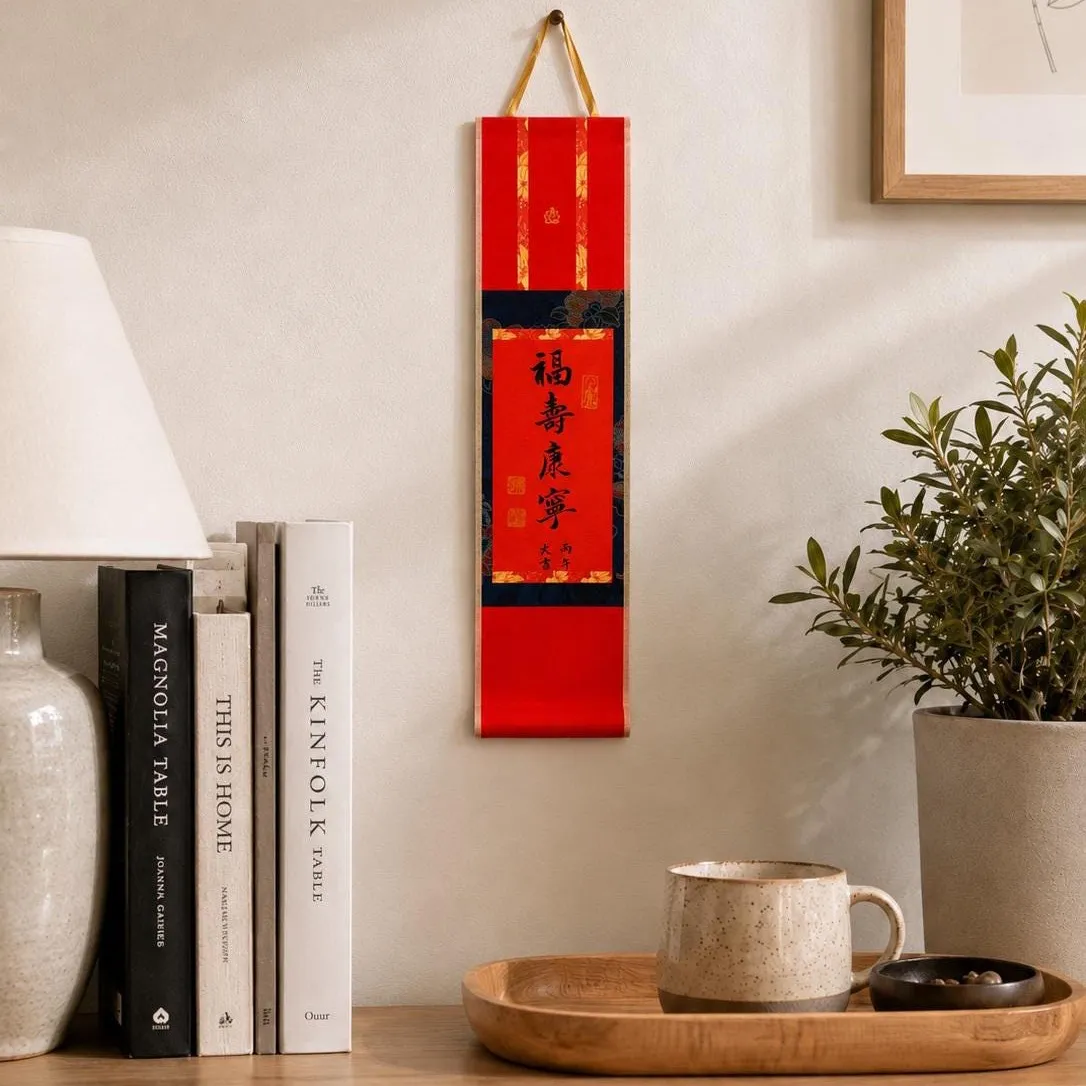
Photo shows a sample — yours will be brushed with 力, or any character you choose.
Wall Scroll — for walls & housewarmingsfrom $38→ -
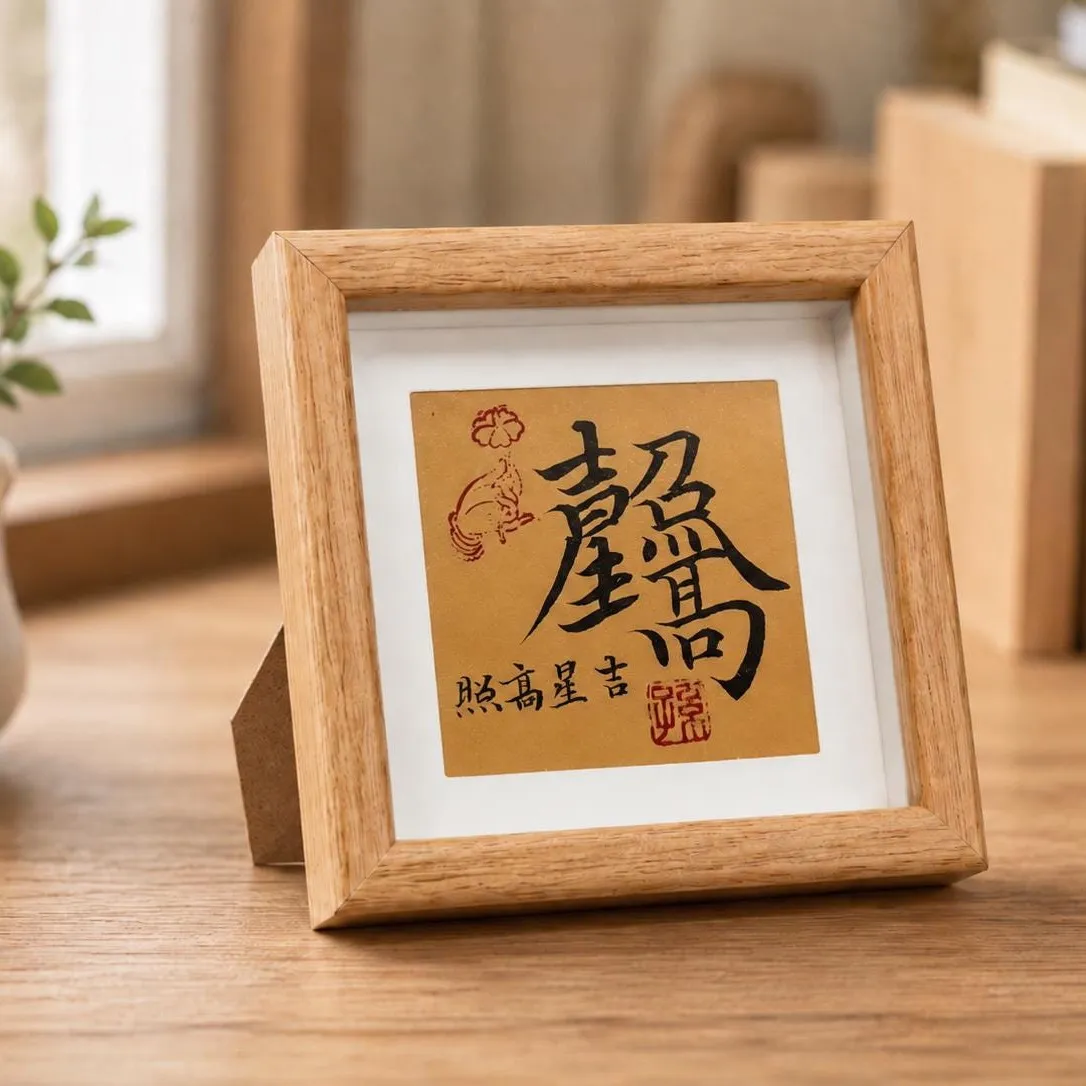
Photo shows a sample — yours will be brushed with 力, or any character you choose.
Desk Frame — for desks, studies & studiosfrom $44→ -
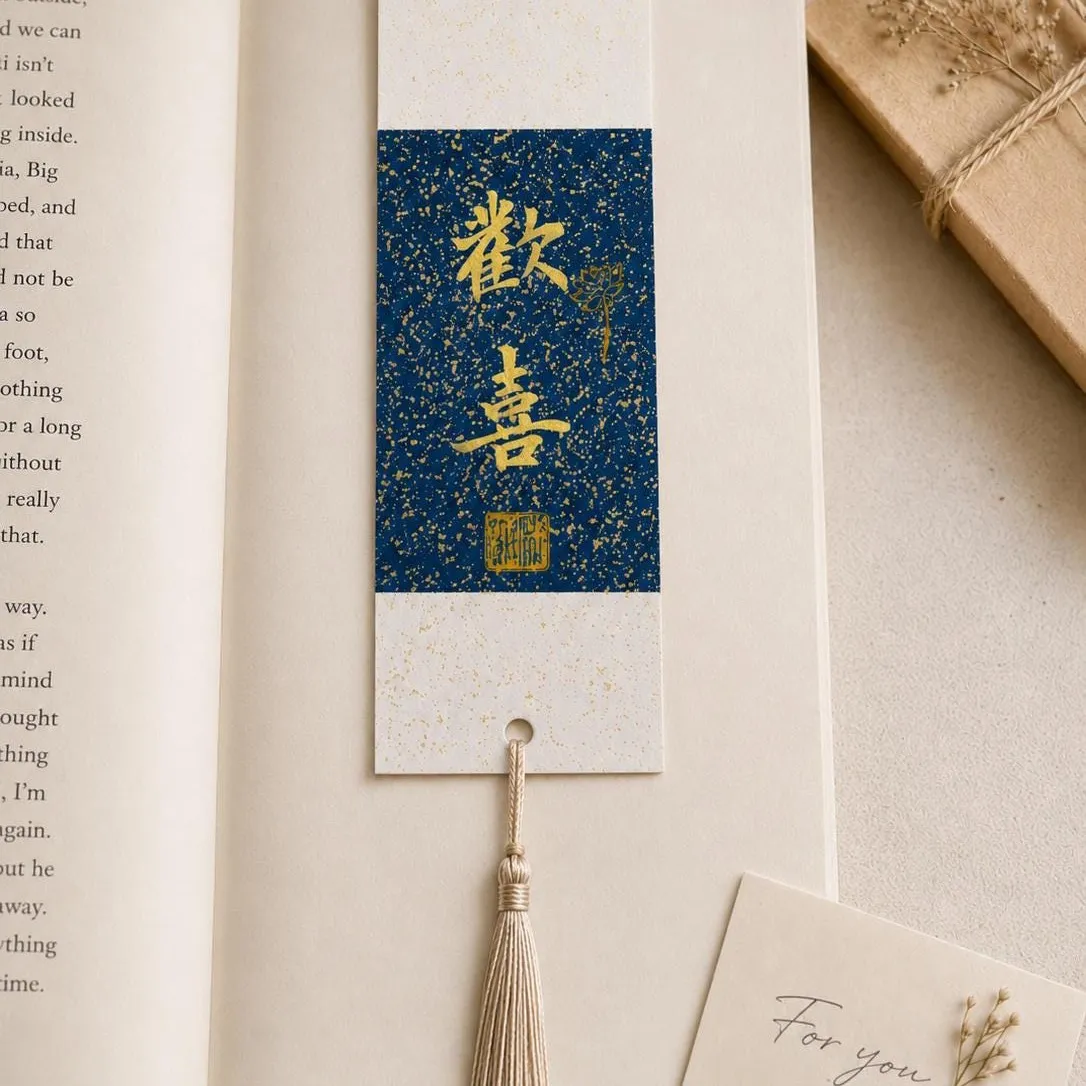
Photo shows a sample — yours will be brushed with 力, or any character you choose.
Bookmark — for readers & small thank-yousfrom $14→
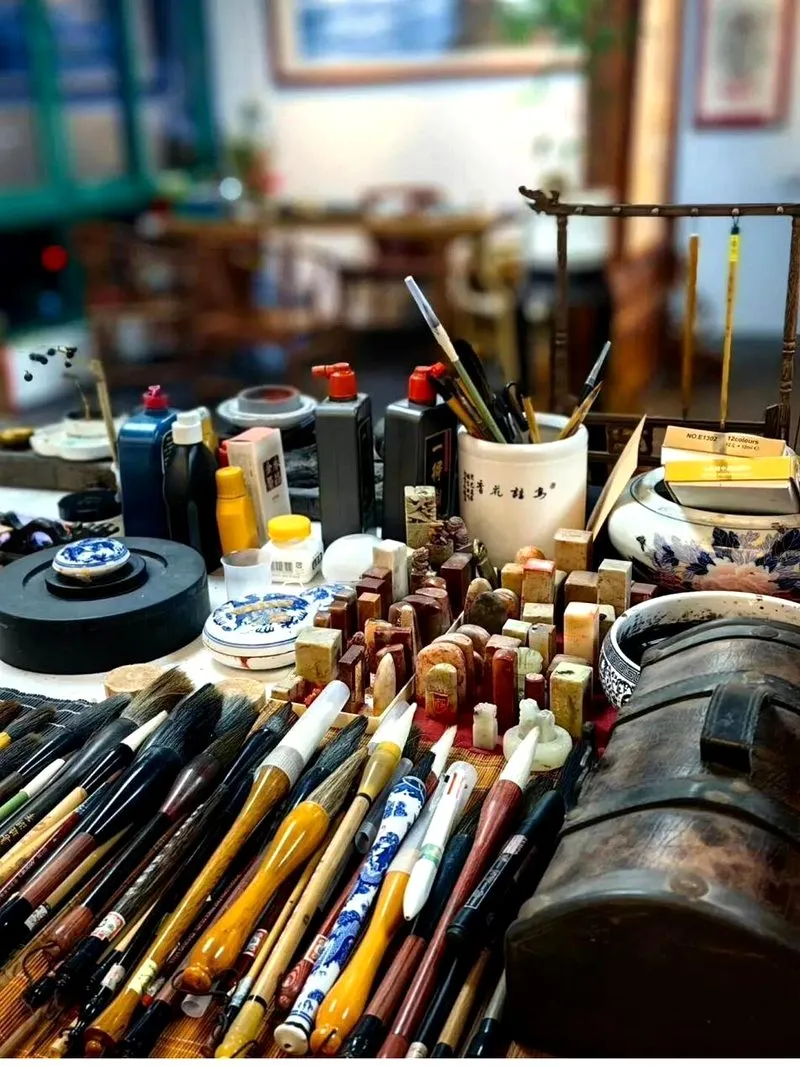
What people said after it arrived.
-
The item is fantastic. The customer service was genuine. Thanks!
— M.Verified purchase · from our Etsy shop reviews · -
They were great they gave me exactly what I asked for and then some. Thank you!!
— G.Verified purchase · from our Etsy shop reviews · -
It is well designed and customized. My daughter loves it. Amazing gift for family’s d friends
— S.Verified purchase · from our Etsy shop reviews ·
Each "力" is hand-brushed by FuBlessings on rice paper.
See 力 (Lì) on Etsy →