Ji Xiang Ru Yi (吉祥如意): Auspicious · As You Wish · A Year That Unfolds Well
A 4-character phrase, not a single character.
吉祥如意 is the most universally given of the four-character blessings — and the most trusting. Where 福寿安康 specifies exactly what it wishes for (fortune, longevity, peace, health) and 阖家欢乐 names exactly who it addresses (the whole family), 吉祥如意 makes no assumptions at all. It says only: may conditions be favorable, and may what you find in them match what you were hoping for. The first half (吉祥) covers the external — the luck, the timing, the alignment of circumstances. The second half (如意) covers the internal — the wish that the recipient’s own desires are met. It blesses both the world and the person in it, and it trusts the recipient to define what “well” means for their own life. Inside that first half, 吉 is the favorable answer and 祥 is the sign it was read from. See 吉 → · See 祥 →
The phrase appears everywhere during Chinese New Year: on red envelopes (红包), on the couplets (春联) pasted above doorways, in the greetings exchanged between friends, neighbors, and colleagues. It is the standard inscription for business openings, where the owner hangs 吉祥如意 above the entrance to set the tone for the venture. It is the default inscription on wedding gifts between friends — less formal than 百年好合 (a hundred years of harmony), warmer than 万事如意 (may all affairs go well). Its versatility comes from its openness: it fits any occasion because it names no particular one.
A hand-brushed “吉祥如意” by FuBlessings is the gift for the person whose specific hopes you may not know but whose happiness you want to bless — for a new year, a new home, a new chapter, or the friend whose life you wish would unfold exactly the way they are quietly hoping.
- auspicious and as you wish
- favorable conditions plus personal fulfillment
- the year unfolding well in every register
- good luck Too narrow. 吉祥 is alignment with favorable conditions, not random chance. And 如意 names internal satisfaction, which luck does not.
- best wishes Too vague. 吉祥如意 has a specific structure: external favorability plus internal fulfillment, in that order.
The short arms are the point: these readings don’t reach it.
- 吉祥 external favorabilityThe cosmic half. 吉 was originally the favorable crack in an oracle bone; 祥 the auspicious signs that precede good events. Together: alignment with the conditions that govern outcomes.
- 如意 internal fulfillment, as you wishThe personal half. 如 (according to) + 意 (intention). Borrowed from the name of the curved jade scepter Buddhist monks and emperors carried as a symbol of fulfilled intention.
characters
- 吉祥 jí xiáng auspicious — alignment with favorable cosmic conditions
- 如意 rú yì as you wish — fulfillment of personal intention; also a ceremonial scepter
- 万事如意 wàn shì rú yì may all things go as you wish — the broader cousin
- 如意宝珠 rú yì bǎo zhū the wish-fulfilling jewel — Buddhist origin of the 如意 concept
The Story Behind the Character
吉祥如意 is actually two long-established phrases joined at the seam. 吉祥 (jí xiáng) appears as a compound in texts dating to the Western Zhou dynasty (c. 1000 BCE), where 吉 meant a favorable divination result — the crack in the oracle bone pointing the right way — and 祥 originally referred to the auspicious signs that precede good events: a propitious cloud formation, an unusual bird sighting, a dream that matched reality. Together, 吉祥 described the state of being under favorable cosmic conditions — not luck exactly, but alignment with the forces that govern outcomes.
如意 (rú yì) has a more tangible origin. The 如意 was originally a physical object — a curved scepter, usually made of jade, bone, or wood, that Buddhist monks used as a back-scratcher and lecture pointer. Its name literally means "as you wish" — 如 (as, according to) + 意 (intention, wish). By the Tang dynasty, the scepter had evolved into a purely ceremonial gift exchanged between officials and between families, always carrying the same message: may things go the way you hope. The object gave its name to the concept, and the concept outlasted the object.
The fusion of 吉祥 and 如意 into a single four-character phrase happened through Buddhist liturgy and folk religion. Temple inscriptions paired the cosmic favorability of 吉祥 with the personal fulfillment of 如意, producing a blessing that covers both external conditions and internal desires: may the world be favorable, and may what you find in it match what you were looking for. The phrase became universal precisely because it makes no assumptions about what the recipient wants — it simply blesses whatever that is.
Classical lines
- roughly 1,400 years
- c. 700 BCE 《诗经·小雅·伐木》
- c. 700 CE 敦煌写本祈愿文
One further source is quoted below without a date printed, so it stays off the rail.
神之听之,终和且平。 When the spirits hear this, the outcome will be harmonious and smooth.
A Bronze Age prayer for things to unfold well, the same open-ended wish 如意 carries.
曾孙寿考,受天之祜。 May the descendants live long, receiving the blessing sent down from Heaven.
祜 means Heaven's favor; the line names the external half of 吉祥 directly: not luck contrived but conditions that fall right, the cosmos turned toward the household.
万事如意大吉祥。 Ten thousand things as one wishes, great auspiciousness throughout.
A thousand-year-old prayer found in the Dunhuang caves, showing 吉祥如意 already in use as a standard blessing.
Why This Character Matters
The 如意 scepter — the physical object that gave half this phrase its name — can still be seen in the Palace Museum (故宫) in Beijing, where the Qing imperial collection holds over three thousand of them. Emperors exchanged 如意 scepters the way Western monarchs exchanged swords: as tokens of favor, alliance, and hope. The Qianlong Emperor reportedly gave jade 如意 scepters to his mother on every birthday, each one more elaborate than the last. The object vanished from daily use after the fall of the dynasty, but the phrase it named survived intact — a wish that outlived the thing it was named after.
In contemporary Chinese life, 吉祥如意 is the most versatile of the four-character blessings. It appears on red envelopes at weddings and New Year, on the opening-day banners of new businesses, on the cards tucked into gifts between friends, and on the couplets pasted above doorways during 春节. Its power is precisely its openness: unlike 福寿安康 (which specifies blessing, longevity, peace, and health) or 阖家欢乐 (which specifies family joy), 吉祥如意 names no particular outcome. It trusts the recipient to know what they want, and blesses whatever that is.
A few characters live near "吉祥如意" but mean something quieter, sharper, or more specific. Here's how to tell them apart.
external favorability plus internal fulfillment — both halves of the wish
only the internal half — that your specific intentions are met
the complete blessing — conditions plus personal satisfaction
only the external half — that the cosmic conditions are favorable
trusts the recipient broadly — favorable conditions, fulfilled wishes
names ten thousand specific matters going right — outcomes, not conditions
吉祥如意 is one of the most-spoken phrases of the Chinese New Year — exchanged between friends, written on red envelopes, hung above doorways during 春节.
- 吉祥如意 is one of the most-spoken phrases of the Chinese New Year — exchanged between friends, written on red envelopes, hung above doorways during 春节. A wish that the year arrives both lucky and aligned with what the recipient hopes for.
- New HomeHung in an entranceway, 吉祥如意 is the traditional welcome — a wish that the new home opens onto good omens, in the form the household most quietly hopes for.
- A classical inscription for a new marriage — the wish that the union itself carries good fortune, and that the life being built unfolds the way the couple are hoping.
- Business OpeningFor a new shop, studio, or office, 吉祥如意 sets the tone: may the venture begin under a favorable sign, and may it go the way you actually want it to.
Family · Friend · Best Friend · Coworker · Boss · New Couple · New Homeowner · or yourself
Looking for a name? See Western names written in Chinese →
-
What does 吉祥如意 (jí xiáng rú yì) mean?
Jí xiáng rú yì (吉祥如意) means “auspicious and as you wish.” 吉祥 names externally favorable conditions; 如意 names that what one wishes for is fulfilled. See 吉祥 and 如意.
-
What occasions is 吉祥如意 given for?
吉祥如意 is traditionally given for Chinese New Year, New Home, Wedding, Business Opening. 吉祥如意 is one of the most-spoken phrases of the Chinese New Year — exchanged between friends, written on red envelopes, hung above doorways during 春节. A wish that the year arrives both lucky and aligned with what the recipient hopes for. Hung in an entranceway, 吉祥如意 is the traditional welcome — a wish that the new home opens onto good omens, in the form the household most quietly hopes for.
-
Who brushes the 吉祥如意 calligraphy?
FuBlessings hand-brushes each 吉祥如意 (Jí Xiáng Rú Yì) to order, in ink on rice paper — never printed, never repeated.
Bring 吉祥如意 home — choose how you'd like it brushed.
-
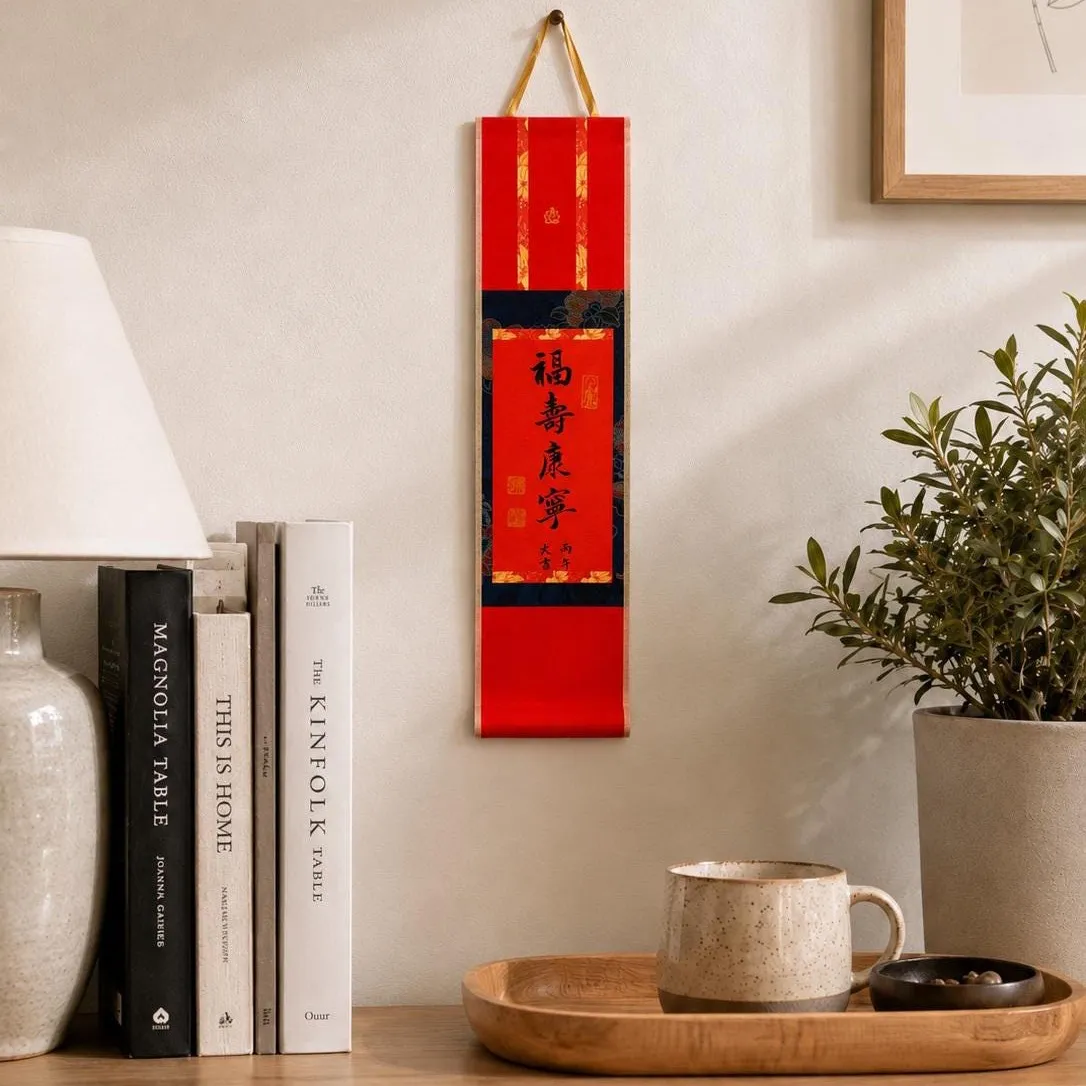
Photo shows a sample — yours will be brushed with 吉祥如意, or any character you choose.
Wall Scroll — for walls & housewarmingsfrom $38→ -
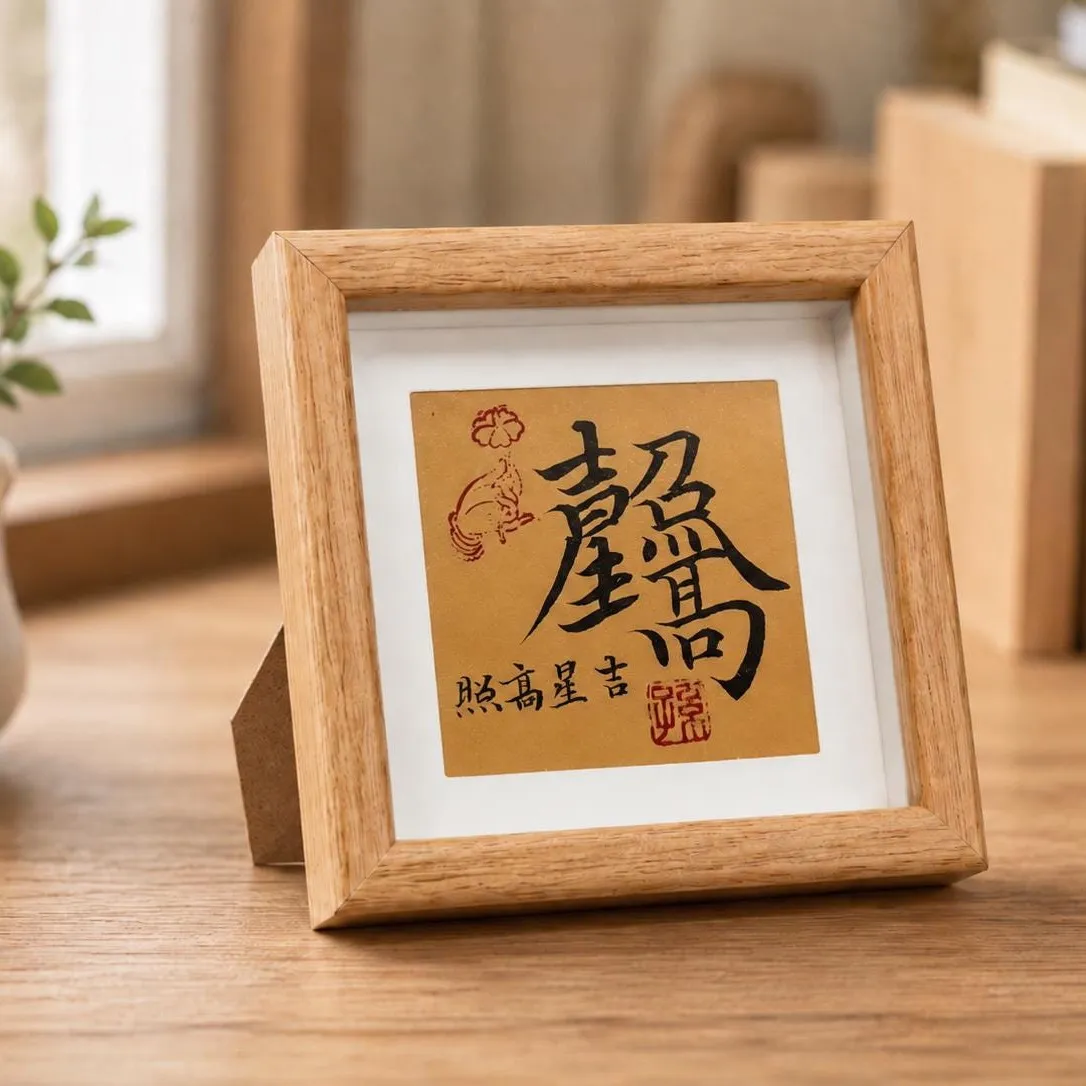
Photo shows a sample — yours will be brushed with 吉祥如意, or any character you choose.
Desk Frame — for desks, studies & studiosfrom $44→ -
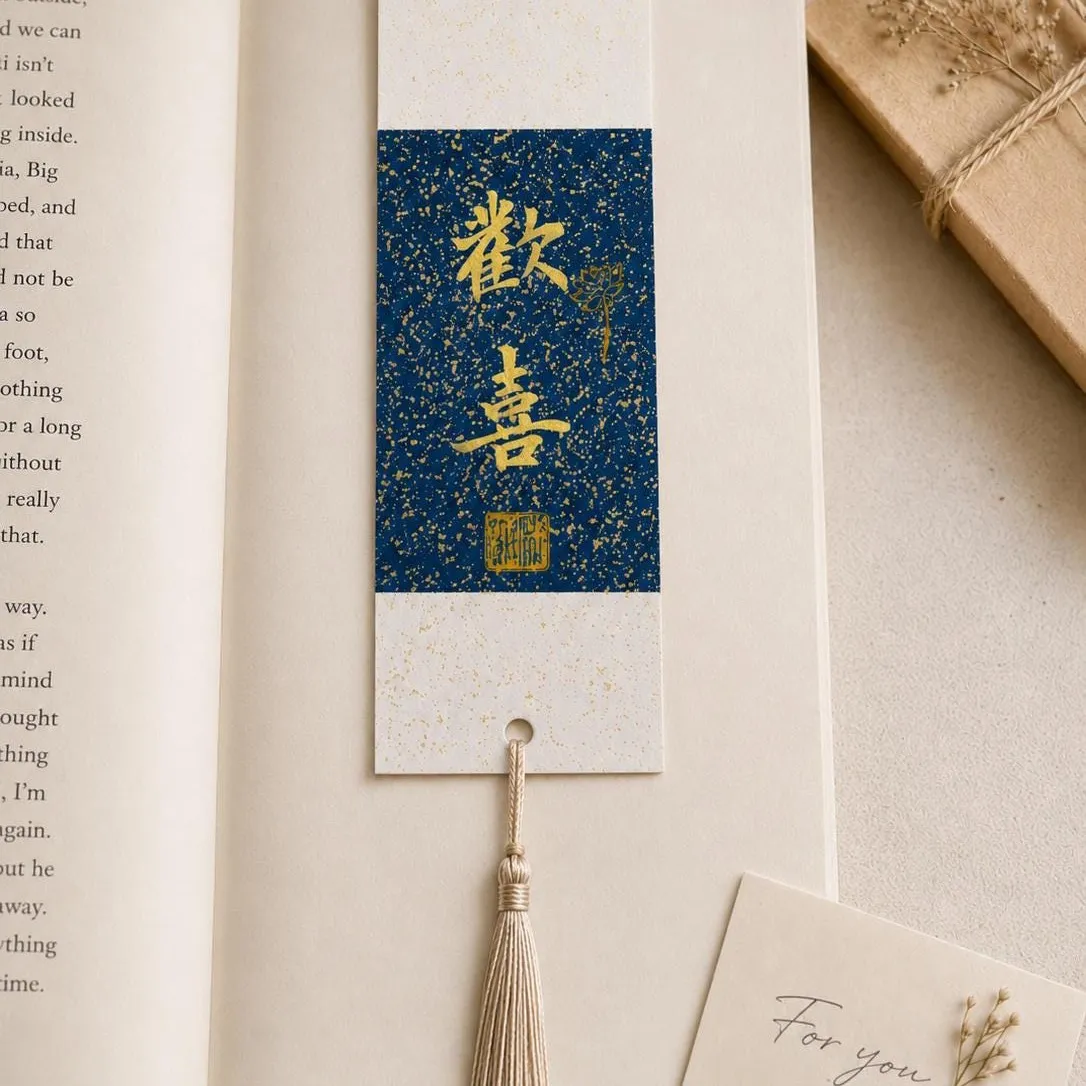
Photo shows a sample — yours will be brushed with 吉祥如意, or any character you choose.
Bookmark — for readers & small thank-yousfrom $14→
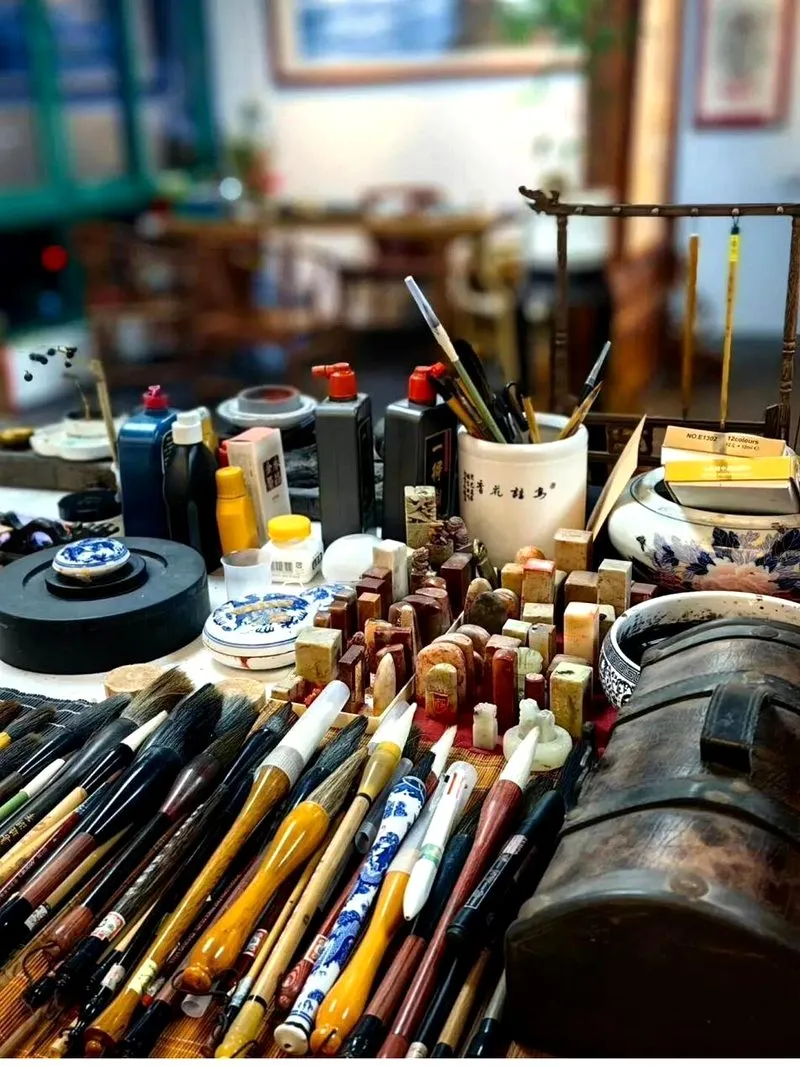
What people said after it arrived.
-
The item is fantastic. The customer service was genuine. Thanks!
— M.Verified purchase · from our Etsy shop reviews · -
They were great they gave me exactly what I asked for and then some. Thank you!!
— G.Verified purchase · from our Etsy shop reviews · -
It is well designed and customized. My daughter loves it. Amazing gift for family’s d friends
— S.Verified purchase · from our Etsy shop reviews ·
Each "吉祥如意" is hand-brushed by FuBlessings on rice paper.
See 吉祥如意 (Jí Xiáng Rú Yì) on Etsy →