青青子衿 (qīng qīng zǐ jīn) — Your Blue-Green Collar · Longing for a Cherished One
A 4-character phrase, not a single character.
青青子衿 is the opening line of one of the oldest love poems in the Chinese language — a four-character phrase that has carried nearly three thousand years of longing without losing any of its weight. The original speaker, in a poem from the Book of Songs, does not say “I miss you.” The voice — traditionally read as a woman pining for a lover, though the older Mao Preface reads it as a satire of schools fallen into disuse — says something more specific and more devastating: I see the blue-green of your collar in my mind, and it will not leave. The longing is not abstract — it is fixed on a single detail of clothing, a color, the way fabric falls at someone’s neck. That specificity is what makes the poem survive: anyone who has ever missed someone knows that grief arrives not as a concept but as a detail.
The phrase took on a second life when the warlord-poet Cao Cao quoted it in his “Short Song Style” around 208 CE, redirecting the longing from a lover to the brilliant minds he desperately sought. In Cao Cao’s hands, 青青子衿 proved that the hunger for a great intellect feels indistinguishable from the hunger for a beloved — the same sleeplessness, the same fixation, the same inability to let go. The two readings have coexisted for eighteen centuries, and neither has displaced the other. The phrase belongs to both the woman at the city gate and the ruler at his desk.
A hand-brushed “青青子衿” by FuBlessings is for the person you cannot stop thinking about — the partner whose absence fills a room, the friend whose mind you miss like a physical presence, the scholar whose brilliance you long to be near. It carries nearly three thousand years of proof that this kind of longing never goes out of date.
- longing fixed on a single detail of the absent person
- the ache of missing someone's specific presence
- intellectual and romantic yearning, inseparable
- I miss you Too direct. 青青子衿 never names the emotion — it names the collar, and lets the longing be inferred from the fixation. The indirectness is the art.
- nostalgia Wrong temporality. Nostalgia looks backward at a time that is over. 青青子衿 is present-tense longing — the speaker is actively waiting, not remembering.
The short arms are the point: these readings don’t reach it.
- 青青 blue-green, vivid, the color that fills the mind青 names the blue-green spectrum that Chinese does not split into blue and green. Doubled as 青青, it becomes sensory and insistent — the color the speaker cannot stop seeing, the detail that will not fade.
- 子衿 your collar, the garment of the one longed for子 is the respectful second-person pronoun — 'you' spoken with regard. 衿 is the collar or lapel of a robe. In the Zhou dynasty, a 青 collar marked a scholar. Together: 'your scholar's collar' — the synecdoche that makes the longing specific.
characters
- 子衿 zǐ jīn your collar — the synecdoche for the whole absent person, and by extension for scholars
- 悠悠我心 yōu yōu wǒ xīn long, long is my heart's longing — the second half of the original couplet, the emotional counterweight to the visual detail
- 短歌行 duǎn gē xíng Short Song Style — Cao Cao's poem that gave 青青子衿 its second life as a call for talent
- 求贤若渴 qiú xián ruò kě to seek the worthy as if dying of thirst — the four-character idiom that captures Cao Cao's use of the phrase
Cinnabar marks the characters 青青子衿 actually contains. The dark row is a relative by meaning or by sound, not one shared stroke.
The Story Behind the Character
青青子衿 is the opening line of a poem from the Shijing (《诗经》, the Book of Songs), the oldest collection of Chinese poetry, compiled around 600 BCE from songs that may date back centuries earlier. The full opening couplet reads: 青青子衿,悠悠我心 — "Blue-green is your collar; long, long is my heart's longing." The poem belongs to the Zheng Feng (郑风, Airs of Zheng) section, traditionally associated with the state of Zheng in what is now Henan province.
The speaker is someone — traditionally read as a woman — who waits by the city gate for a person who does not come. The longing is not abstract: it fixes on a single physical detail, the 子衿 (zǐ jīn), the collar of the beloved's robe. In the Zhou dynasty, a blue-green (青) collar indicated a scholar or student at the state academy. The speaker does not say "I miss you" — she says "I see the blue-green of your collar in my mind's eye, and it will not leave." This is longing made specific through a detail of clothing, a technique that gives the poem its famous intimacy.
The phrase took on a second life when Cao Cao (曹操, 155–220 CE) quoted it in his poem "Duange Xing" (《短歌行》, "Short Song Style"), one of the most celebrated poems in all of Chinese literature. In Cao Cao's hands, the longing was redirected: he was not pining for a lover but for talented advisors and scholars who might join his cause. 青青子衿,悠悠我心 became the signature expression of a leader who desired brilliance the way others desired love — with the same urgency, the same inability to stop thinking about it.
This double heritage gives 青青子衿 an unusual range. It is simultaneously one of the oldest love poems in the Chinese language and one of the most famous expressions of intellectual yearning. The blue-green collar belongs to both the missed lover and the sought-after mind.
Classical lines
青青子衿,悠悠我心。纵我不往,子宁不嗣音? Blue-green is your collar; long, long is my heart's longing. Even if I do not go to you, will you not send word?
The original poem: a person waiting, longing fixed on one detail of the absent beloved's clothing, ending with a reproach that is also a plea.
青青子衿,悠悠我心。但为君故,沉吟至今。 Blue-green is your collar; long, long is my heart's longing. It is for you that I have pondered to this day.
Cao Cao quoting the Shijing to express not romantic love but the ache of a ruler seeking brilliant minds.
呦呦鹿鸣,食野之苹。我有嘉宾,鼓瑟吹笙。 Deer call to deer, feeding on the meadow grass. I have honored guests
strike the zither, blow the pipes. — The companion poem Cao Cao also quoted in the same 'Short Song Style,' expressing the joy of receiving the talented ones 青青子衿 longs for.
Why This Character Matters
The Shijing poem from which 青青子衿 comes is one of the most frequently taught texts in Chinese education. Schoolchildren encounter it early, and the phrase carries a specific classroom resonance — it sounds like classical-literature class, like recitation, like the first encounter with the idea that longing can be nearly three thousand years old and still feel immediate. The detail that makes the poem unforgettable is the collar: the speaker does not describe a face or a voice but a piece of clothing, and that specificity is what gives the line its power. Missing someone is abstract; missing the exact shade of blue-green on their collar is concrete, involuntary, and impossible to argue with.
Cao Cao's repurposing of the line in "Short Song Style" is itself a cultural landmark. The poem was composed around 208 CE, during the turbulent late Eastern Han period, when Cao Cao was consolidating power and desperately needed advisors. By quoting the Shijing love poem to describe his hunger for talent, Cao Cao accomplished something that Chinese literary tradition considers a feat of genius: he proved that the intensity of intellectual longing is indistinguishable from the intensity of romantic longing. The two readings have coexisted ever since, and neither can fully displace the other. When you hear 青青子衿, you hear both the woman at the gate and the warlord at his desk.
A few characters live near "青青子衿" but mean something quieter, sharper, or more specific. Here's how to tell them apart.
longing expressed through a specific visual detail — indirect, literary, layered with history
love stated directly — universal, modern, unambiguous
the heart dwelling on an absent person — longing without resolution
the heart's wish crossing into fulfillment — longing with a built-in promise
longing that contains knowledge — to miss someone's collar is to know them intimately
knowledge as recognition and understanding — intellectual, not aching
青青子衿 is the oldest Chinese expression of longing for a specific person — not a vague sentiment but a fixation on one detail (the collar of their robe) that stands for the whole of who they are.
- A Gift for Someone You Miss青青子衿 is the oldest Chinese expression of longing for a specific person — not a vague sentiment but a fixation on one detail (the collar of their robe) that stands for the whole of who they are. For someone far away, this phrase says: I remember exactly what you look like.
- A Gift for a Scholar or StudentBecause Cao Cao repurposed the phrase as a call for talented people, 青青子衿 carries a double layer — personal longing and intellectual admiration. For a scholar, it says: your mind is what I miss and seek.
- Anniversary or Valentine's DayThe original poem is a love poem — a woman waiting by the city gate, pacing, unable to eat, thinking of nothing but the blue-green collar of the man she longs for. As a gift, 青青子衿 carries nearly three thousand years of that ache.
- The 子衿 — the blue-green scholar's collar — was the uniform of classical students. For a graduate, the phrase honors their identity as a person of learning while carrying the warmth of personal attachment.
Partner · Friend · Best Friend · Mentor · Self · Teacher · or yourself
Looking for a name? See Western names written in Chinese →
-
What does 青青子衿 (qīng qīng zǐ jīn) mean?
青青子衿 (qīng qīng zǐ jīn) is a 4-character Chinese phrase for your blue-green collar, longing for a cherished one. 青青子衿 is the opening line of one of the oldest love poems in the Chinese language — a four-character phrase that has carried nearly three thousand years of longing without losing any of its weight. The original speaker, in a poem from the Book of Songs, does not say "I miss you." The voice — traditionally read as a woman pining for a lover, though the older Mao Preface reads it as a satire of schools fallen into disuse — says something more specific and more devastating: I see the blue-green of your collar in my mind, and it will not leave. The longing is not abstract — it is fixed on a single detail of clothing, a color, the way fabric falls at someone's neck. That specificity is what makes the poem survive: anyone who has ever missed someone knows that grief arrives not as a concept but as a detail. The Shijing poem from which 青青子衿 comes is one of the most frequently taught texts in Chinese education. Schoolchildren encounter it early, and the phrase carries a specific classroom resonance — it sounds like classical-literature class, like recitation, like the first encounter with the idea that longing can be nearly three thousand years old and still feel immediate. The detail that makes the poem unforgettable is the collar: the speaker does not describe a face or a voice but a piece of clothing, and that specificity is what gives the line its power. Missing someone is abstract; missing the exact shade of blue-green on their collar is concrete, involuntary, and impossible to argue with.
-
What occasions is 青青子衿 given for?
青青子衿 is traditionally given for A Gift for Someone You Miss, A Gift for a Scholar or Student, Anniversary or Valentine's Day, Graduation. 青青子衿 is the oldest Chinese expression of longing for a specific person — not a vague sentiment but a fixation on one detail (the collar of their robe) that stands for the whole of who they are. For someone far away, this phrase says: I remember exactly what you look like. Because Cao Cao repurposed the phrase as a call for talented people, 青青子衿 carries a double layer — personal longing and intellectual admiration. For a scholar, it says: your mind is what I miss and seek.
-
Who brushes the 青青子衿 calligraphy?
FuBlessings hand-brushes each 青青子衿 (Qīng Qīng Zǐ Jīn) to order, in ink on rice paper — never printed, never repeated.
Bring 青青子衿 home — choose how you'd like it brushed.
-
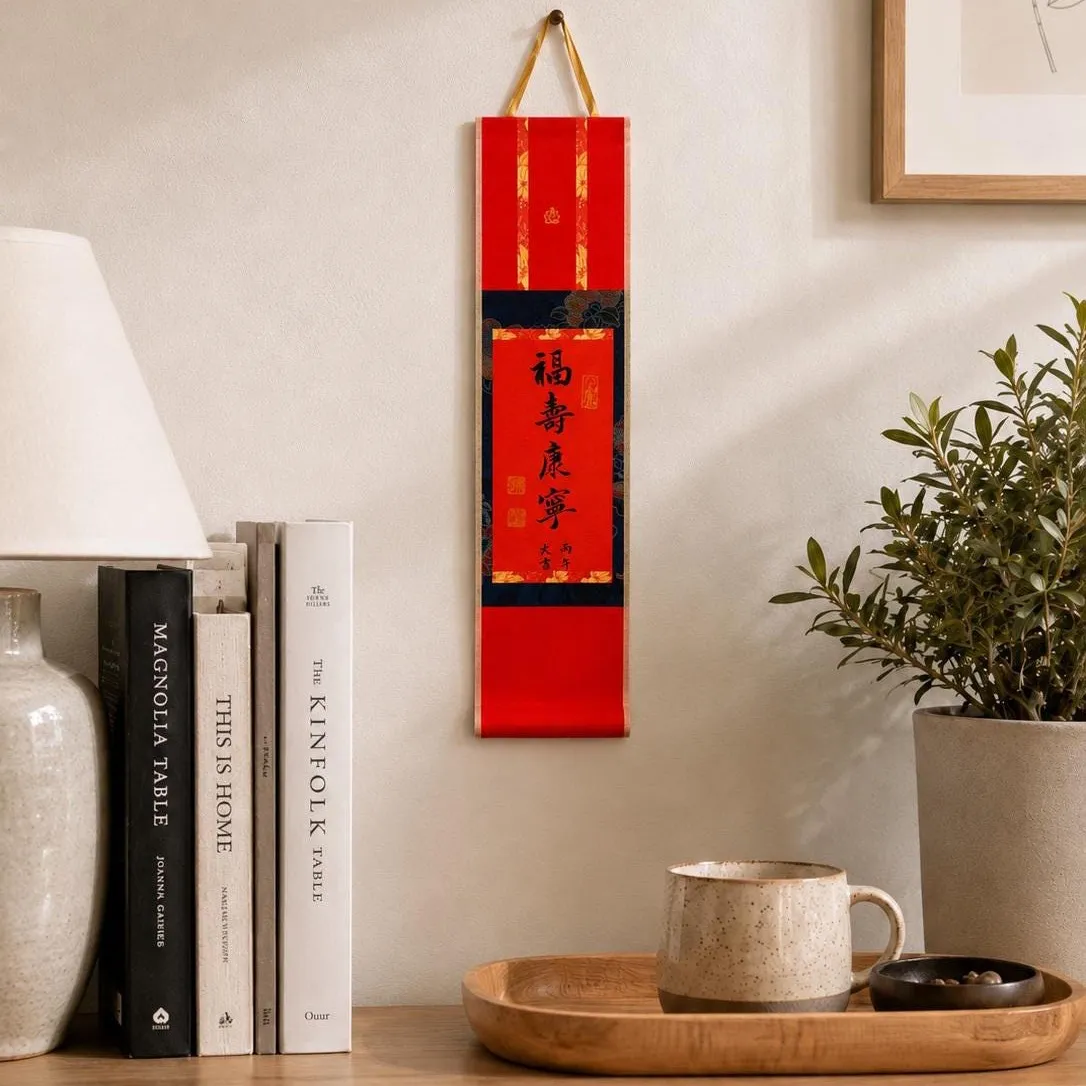
Photo shows a sample — yours will be brushed with 青青子衿, or any character you choose.
Wall Scroll — for walls & housewarmingsfrom $38→ -
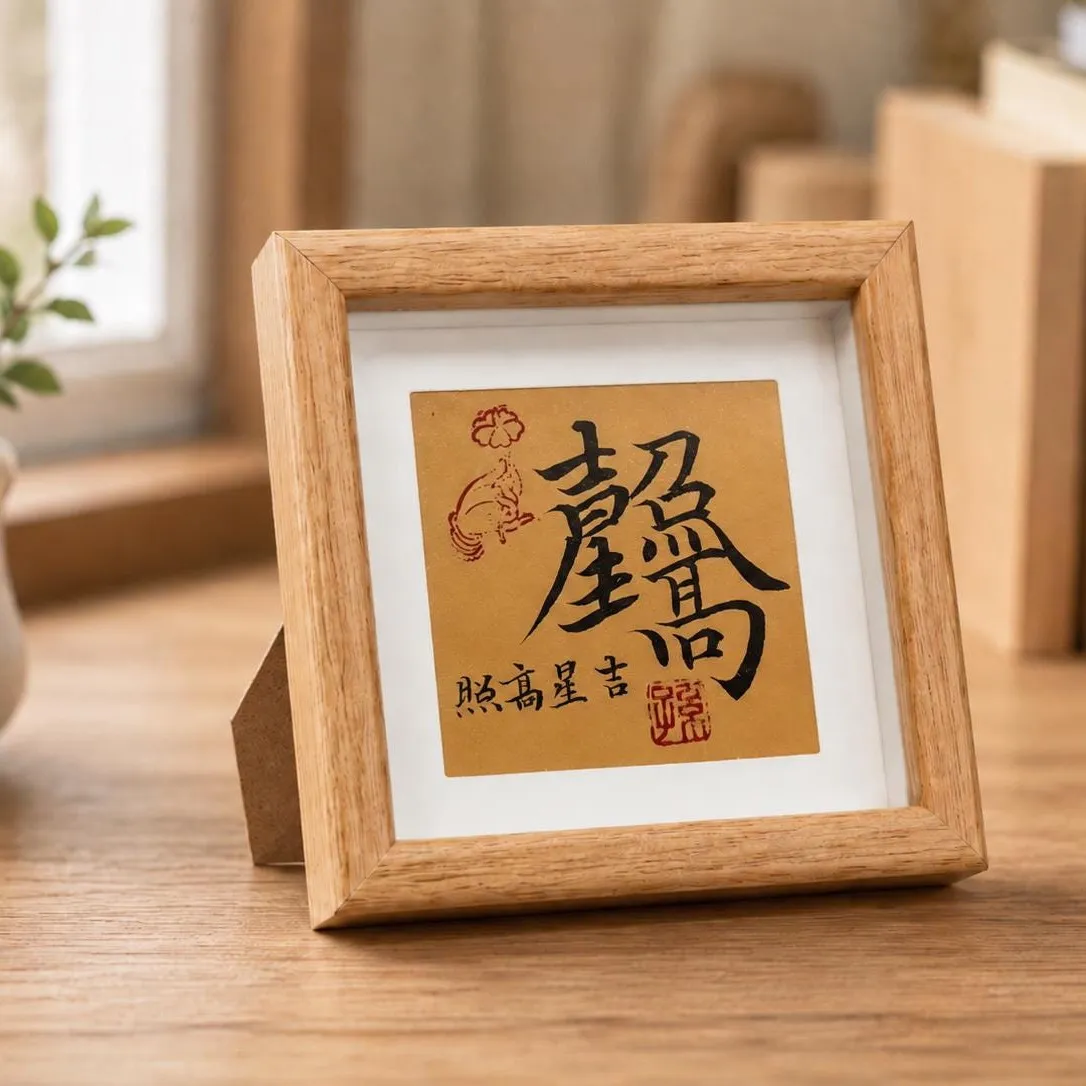
Photo shows a sample — yours will be brushed with 青青子衿, or any character you choose.
Desk Frame — for desks, studies & studiosfrom $44→ -
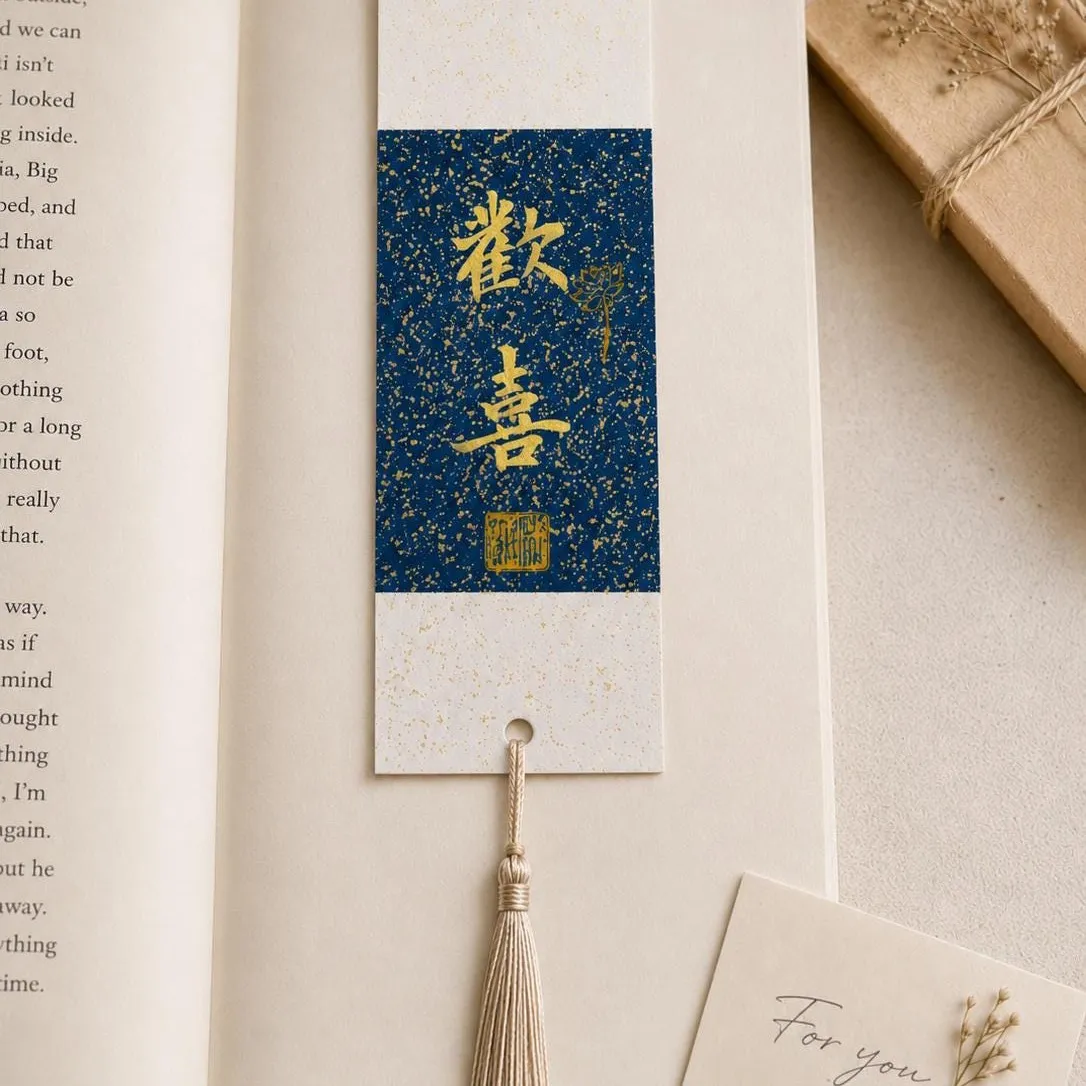
Photo shows a sample — yours will be brushed with 青青子衿, or any character you choose.
Bookmark — for readers & small thank-yousfrom $14→
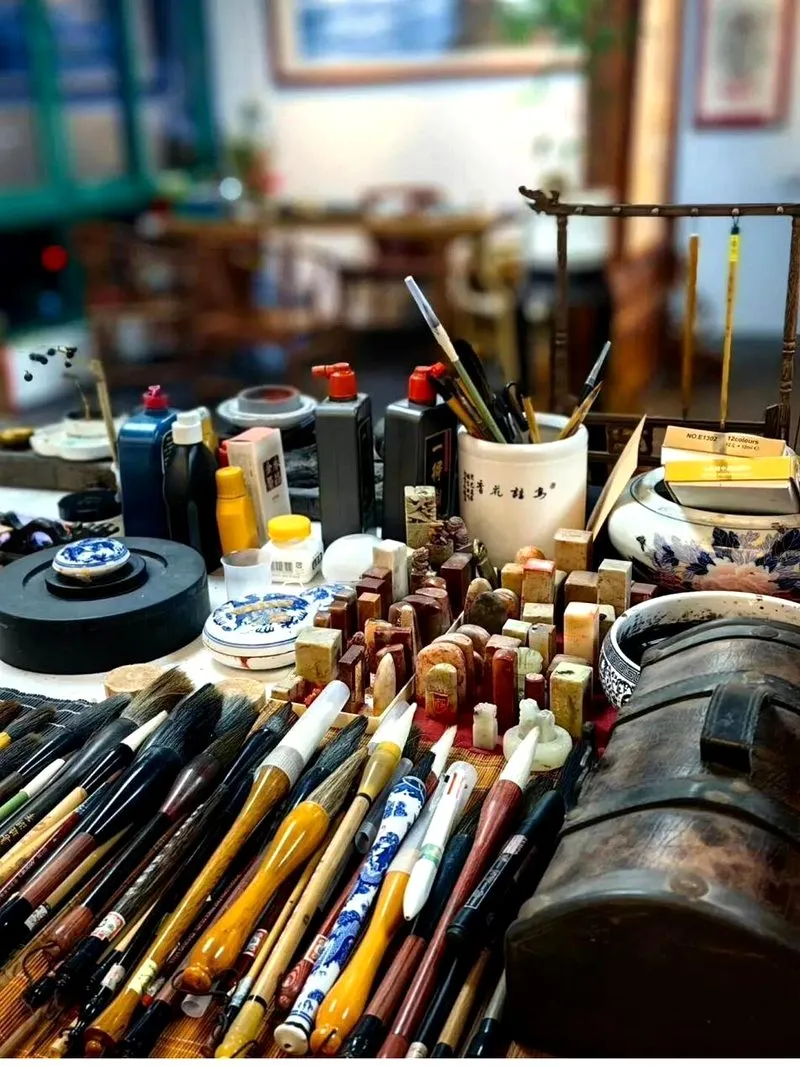
What people said after it arrived.
-
The item is fantastic. The customer service was genuine. Thanks!
— M.Verified purchase · from our Etsy shop reviews · -
They were great they gave me exactly what I asked for and then some. Thank you!!
— G.Verified purchase · from our Etsy shop reviews · -
It is well designed and customized. My daughter loves it. Amazing gift for family’s d friends
— S.Verified purchase · from our Etsy shop reviews ·
Each "青青子衿" is hand-brushed by FuBlessings on rice paper.
See 青青子衿 (Qīng Qīng Zǐ Jīn) on Etsy →