财 (cái) — Prosperity · Abundance · Success
A single character.
财 is the character Chinese culture refuses to be shy about. Where Western etiquette dances around money, Chinese tradition puts it on the front door, shouts it at New Year, and names a god after it. The logic is simple: wealth is what lets you feed your family, host your friends, and help the people who helped you. Being direct about wanting it is being direct about wanting to be generous.
The character shows up everywhere commerce happens in Chinese life. It hangs in gold letters behind the cash register of a new restaurant. It rides inside red envelopes at Lunar New Year. It appears on the banners of opening-day celebrations when a business cuts its ribbon. Sima Qian, China’s greatest historian, wrote twenty-one centuries ago that the whole world comes and goes for profit — and he meant it as an observation, not a complaint.
A hand-brushed 财 by Artist Lina Sun is the gift for someone building something — a new business, a new career, a new chapter. It does not whisper. It says plainly: may your work find its reward, may your effort come back to you, and may you have enough to be generous with the people you care about.
- wealth
- the material means to be generous
- earned prosperity
- abundance that circulates
- money Too flat. Money is the unit; 财 is what money makes possible — the dinners hosted, the family supported, the friends helped through a hard year.
- fortune Too lucky. Fortune is what falls into your lap. 财 is what you build — the Confucian classics insist on the difference.
- riches Too static. Riches are a state. 财 is a flow — wealth in Chinese economic thought had to circulate to stay healthy, like water that goes bad when dammed.
The short arms are the point: these readings don’t reach it.
- 贝 shell, currencyOn the left, the radical for cowrie shell — the earliest Chinese money. Every character with 贝 is economic: 贵 (expensive), 贷 (to lend), 贫 (poor), 购 (to buy). 财 belongs to this family without apology.
- 才 talent, a sprouting shootOn the right, a pictograph of a seedling pushing through soil — the original meaning was "just emerging." Wealth, in this reading, is not a pile to sit on. It is a living thing that needs to grow.
character
- 财富 cái fù wealth — the standard modern word, the total store of value
- 发财 fā cái to get rich — the verb at the heart of 恭喜发财, the New Year greeting
- 财运 cái yùn fortune in money matters — the favorable wind in your financial sails
- 理财 lǐ cái to manage wealth — money as something requiring skill and discipline
- 招财 zhāo cái to draw in wealth — the wish on every shop's red couplet at New Year
- 财神 cái shén the God of Wealth — welcomed with firecrackers on the fifth day of Lunar New Year
The Story Behind the Character
The character 财 is built from two parts that tell a blunt story: 贝 (bèi, shell) on the left and 才 (cái, talent or just emerging) on the right. The shell radical is the giveaway. In Bronze Age China, cowrie shells were currency — they were portable, countable, and beautiful enough that people trusted them as a store of value. Every character that carries 贝 is about something economic: 贵 (expensive), 贷 (to lend), 贫 (poor), 购 (to buy). 财 belongs to this family. It has always been about material wealth.
China's first dictionary (Shuowen Jiezi, c. 100 CE) defined 财 plainly: 人所宝也 — "what people treasure." No euphemism, no philosophical softening. The right-hand component 才 added a nuance: 才 means "just beginning to sprout," like a seedling pushing through soil. Wealth, in this earliest reading, was not a pile to sit on. It was a living thing, something that needed to grow.
That growth metaphor stuck. In classical Chinese economic thought, 财 was understood as something that must circulate to remain healthy — hoarded wealth was considered as unnatural as dammed water. The phrase 生财有道 ("there is a proper way to generate wealth") from the Confucian classic Great Learning made the point explicit: wealth earned through fair means multiplies; wealth seized through greed collapses.
Classical lines
- roughly 1,300 years
- c. 500 BCE 《大学》
- c. 90 BCE 司马迁《史记·货殖列传》
- c. 752 CE 李白《将进酒》
天下熙熙,皆为利来;天下攘攘,皆为利往。 The whole bustling world comes for profit; the whole rushing world goes for profit.
Sima Qian, China's greatest historian, opening his chapter on economics with the bluntest observation in classical literature.
生财有大道:生之者众,食之者寡,为之者疾,用之者舒,则财恒足矣。 The great principle of wealth: many produce, few consume, work is swift, spending is slow
then wealth will always be sufficient. — The Confucian formula for prosperity, written twenty-five centuries ago. It still appears in Chinese business manuals.
千金散尽还复来。 A thousand gold coins scattered
they will come back again. — Li Bai, already drunk, telling his friends to stop worrying about money. The most recklessly confident line in Chinese poetry.
Why This Character Matters
During Chinese New Year, the phrase heard more than any other is 恭喜发财 — "Congratulations, may you get rich." Westerners sometimes find it startlingly direct, but in Chinese culture there is no awkwardness about wishing someone wealth openly. Money means the ability to take care of your family, host generous meals, and help friends in trouble. Wishing someone 财 is not crass — it is wishing them the means to be good to the people around them.
The god of wealth, 财神 (Cáishén), is one of the most popular deities in Chinese folk religion. On the fifth day of the Lunar New Year, firecrackers explode before dawn to welcome him. Shops and restaurants display his image year-round, often flanked by the phrase 招财进宝 ("attract wealth, bring in treasure"). But Chinese tradition also draws a sharp line between earned prosperity and unearned luck. The character 财 carries an implicit expectation of effort — it appears in the phrase 理财 ("managing wealth") and 财务 ("financial affairs"), words that treat money as something requiring skill, discipline, and stewardship.
A Chinese person seeing 财 as a tattoo would find it surprisingly direct — it literally means money and wealth. It's like tattooing the word 'Rich' in English. Not offensive, but eyebrow-raising. During Chinese New Year this character is everywhere and perfectly natural, but as a permanent tattoo it reads as very blunt. Most Chinese people would choose a more poetic character.
Calligraphy Styles for Tattoos
- Regular script (楷书 kǎishū) Best for tattoos
财 is 7 strokes with a clear left-right split — 贝 and 才. Regular script keeps both halves distinct and legible. The simplified form is clean and well-proportioned.
- Running script (行书 xíngshū) Good for larger pieces
Running script adds energy to 财, which suits its meaning of dynamic wealth. But the 贝 radical can lose its internal detail at smaller sizes — the two horizontal strokes inside the shell need room.
Common Mistakes to Avoid
- Confusing 财 (wealth) with 材 (timber/material)Intended: 财 with the shell radical 贝 on the left
材 uses the wood radical 木 on the left instead of 贝. Both share the same right side 才 and the same pronunciation cái. Getting the wrong radical means your tattoo says 'lumber' instead of 'wealth.' Double-check that the left side has the shell form 贝, not the tree form 木.
- Writing the traditional form 財 when the simplified form 财 was intendedIntended: Consistent use of either simplified 财 or traditional 財
The traditional form 財 uses the full shell radical 貝 with more strokes. Both are correct, but mixing traditional and simplified elements in the same tattoo looks inconsistent. Choose one system and stick with it.
Notes for Your Tattoo Artist
7 strokes. A left-right composition where the left side 贝 should occupy about 40% of the width and the right side 才 about 60%. The two internal horizontal strokes in 贝 must remain visible — this is where detail gets lost at small sizes. Minimum size: 1.5 inches.
A few characters live near "财" but mean something quieter, sharper, or more specific. Here's how to tell them apart.
material abundance specifically — the means, not the whole life
the whole life that works — health, peace, family, with money as only one piece
Full comparison →the reward — what arrives when effort meets opportunity
the path — the smooth-going, the favorable wind, the way things flow without resistance
concrete prosperity — countable, earnable, something to be generous with
an auspicious sign — the omen that good things are coming, before they arrive
Full comparison →A New Year wish that names what everyone hopes for but few say aloud — that the year ahead holds abundance, opportunity, and the kind of success that lets you take care of the people you love.
- A New Year wish that names what everyone hopes for but few say aloud — that the year ahead holds abundance, opportunity, and the kind of success that lets you take care of the people you love.
- For the graduate stepping into the world — 财 is the wish that their years of effort find real reward, that talent meets opportunity.
- New Job · PromotionFor the friend or family member stepping into a new chapter at work — a wish for success that is earned and lasting.
- Business OpeningA meaningful housewarming gift for a new shop, studio, or office — for prosperity built on patient work.
- RetirementAfter a lifetime of effort — "财" is a way to honor the abundance someone has built and the freedom they have earned.
- Just BecauseFor an entrepreneur or hard-working friend you believe in — a quiet word of faith in what they're building.
Boss · Coworker · Friend · Best Friend · Entrepreneur · or yourself
Looking for a name? See Western names written in Chinese →
-
What does 财 (cái) mean?
财 (cái) is the Chinese character for prosperity, abundance, success. 财 is the character Chinese culture refuses to be shy about. Where Western etiquette dances around money, Chinese tradition puts it on the front door, shouts it at New Year, and names a god after it. The logic is simple: wealth is what lets you feed your family, host your friends, and help the people who helped you. Being direct about wanting it is being direct about wanting to be generous. During Chinese New Year, the phrase heard more than any other is 恭喜发财 — "Congratulations, may you get rich." Westerners sometimes find it startlingly direct, but in Chinese culture there is no awkwardness about wishing someone wealth openly. Money means the ability to take care of your family, host generous meals, and help friends in trouble. Wishing someone 财 is not crass — it is wishing them the means to be good to the people around them.
-
What occasions is 财 given for?
财 is traditionally given for Chinese New Year, Graduation, New Job · Promotion, Business Opening, Retirement, Just Because. A New Year wish that names what everyone hopes for but few say aloud — that the year ahead holds abundance, opportunity, and the kind of success that lets you take care of the people you love. For the graduate stepping into the world — 财 is the wish that their years of effort find real reward, that talent meets opportunity.
-
Is 财 a good Chinese tattoo?
A Chinese person seeing 财 as a tattoo would find it surprisingly direct — it literally means money and wealth. It's like tattooing the word 'Rich' in English. Not offensive, but eyebrow-raising. During Chinese New Year this character is everywhere and perfectly natural, but as a permanent tattoo it reads as very blunt. Most Chinese people would choose a more poetic character.
-
Who brushes the 财 calligraphy?
Each 财 (Cái) is hand-brushed to order by Artist Lina Sun in ink on rice paper — never printed, never repeated.
Bring 财 home — choose how you'd like it brushed.
-
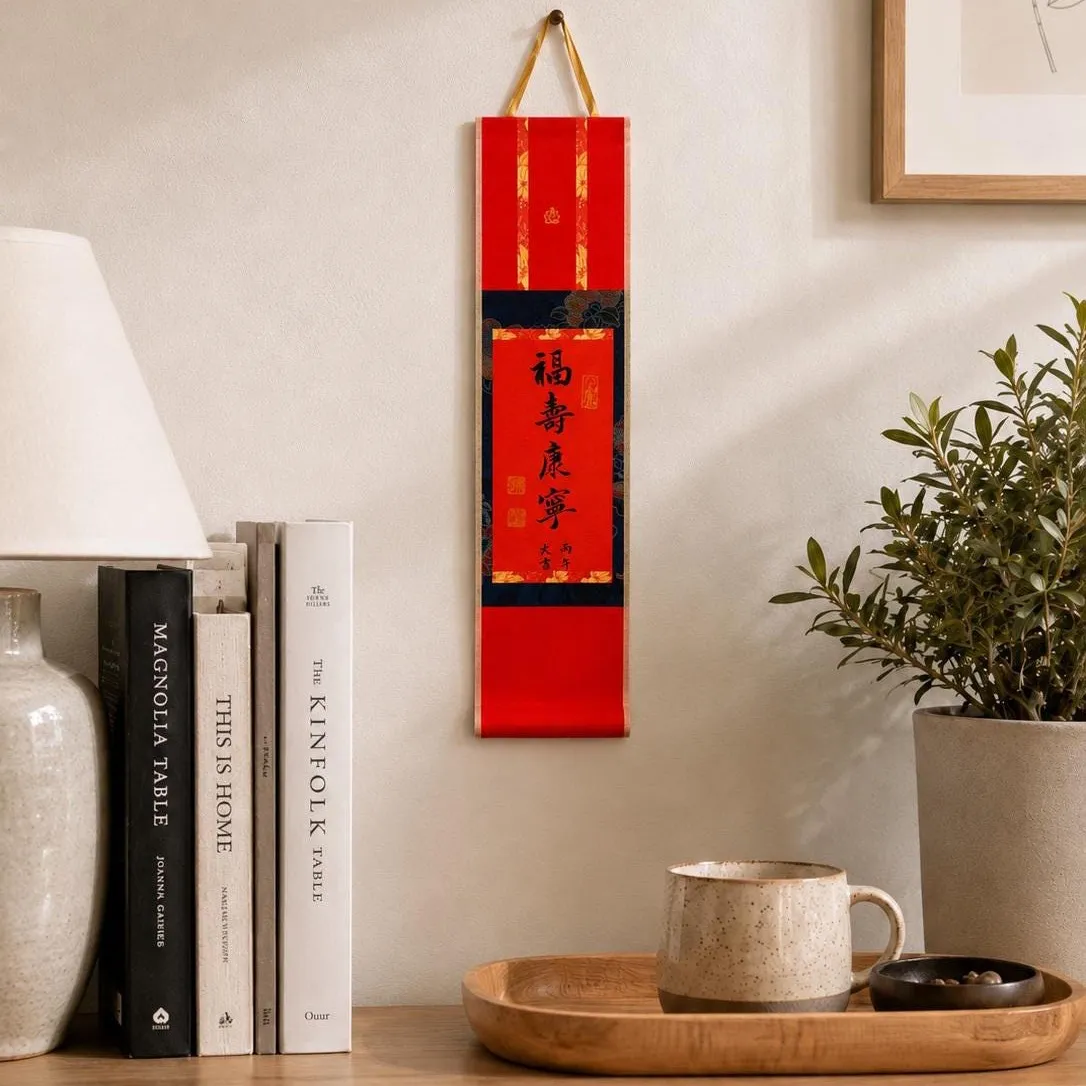
Photo shows a sample — yours will be brushed with 财, or any character you choose.
Wall Scroll — for walls & housewarmingsfrom $38→ -
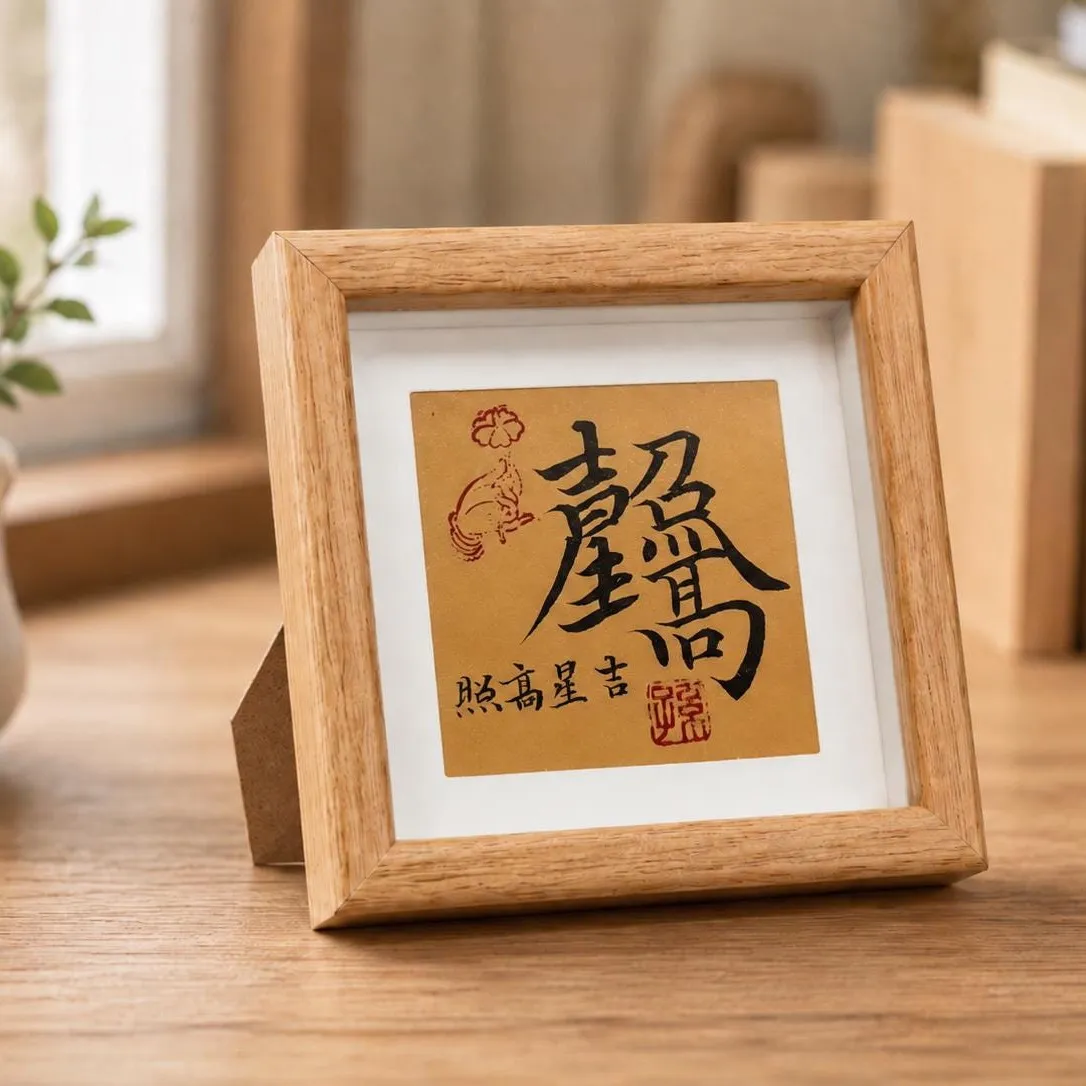
Photo shows a sample — yours will be brushed with 财, or any character you choose.
Desk Frame — for desks, studies & studiosfrom $44→ -
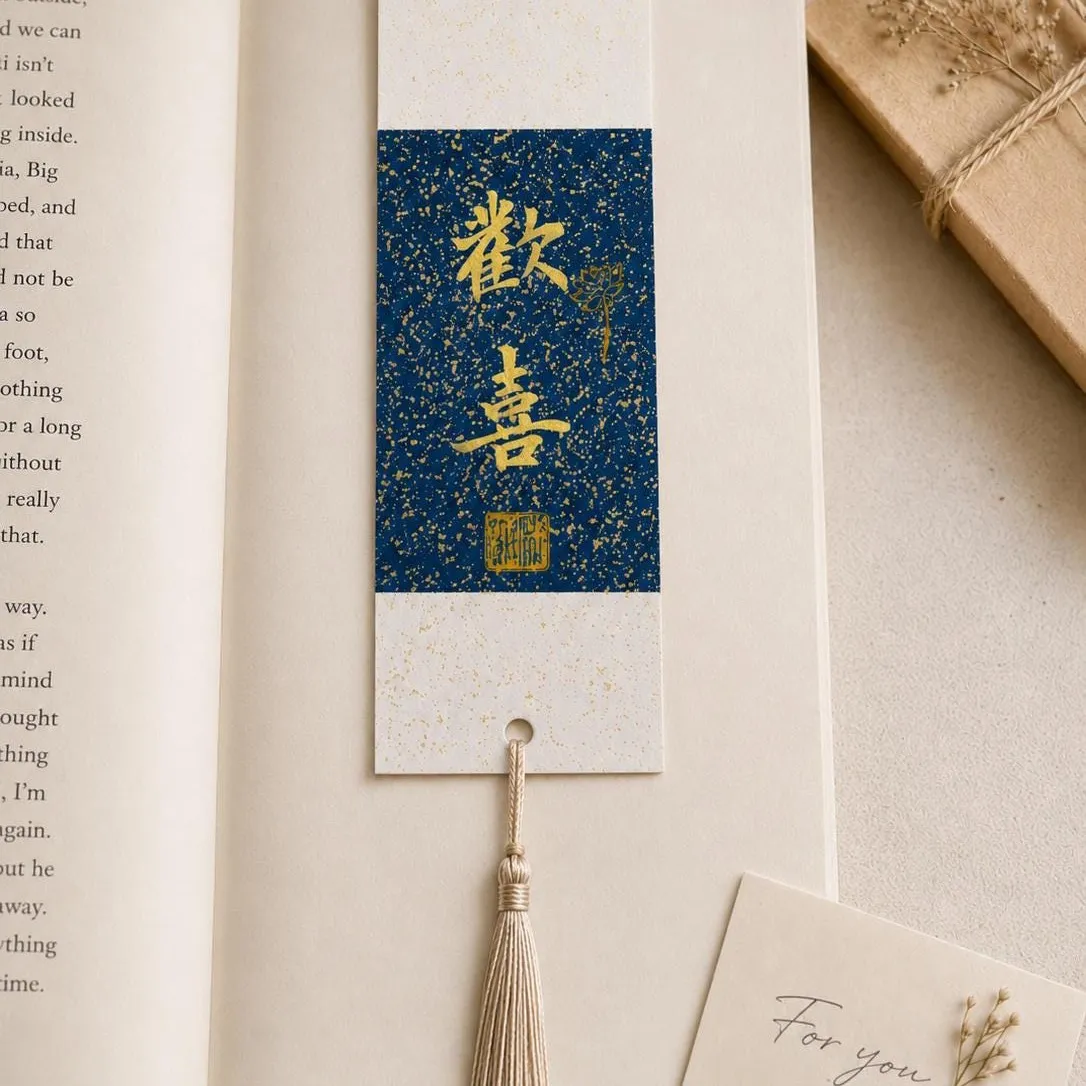
Photo shows a sample — yours will be brushed with 财, or any character you choose.
Bookmark — for readers & small thank-yousfrom $17→
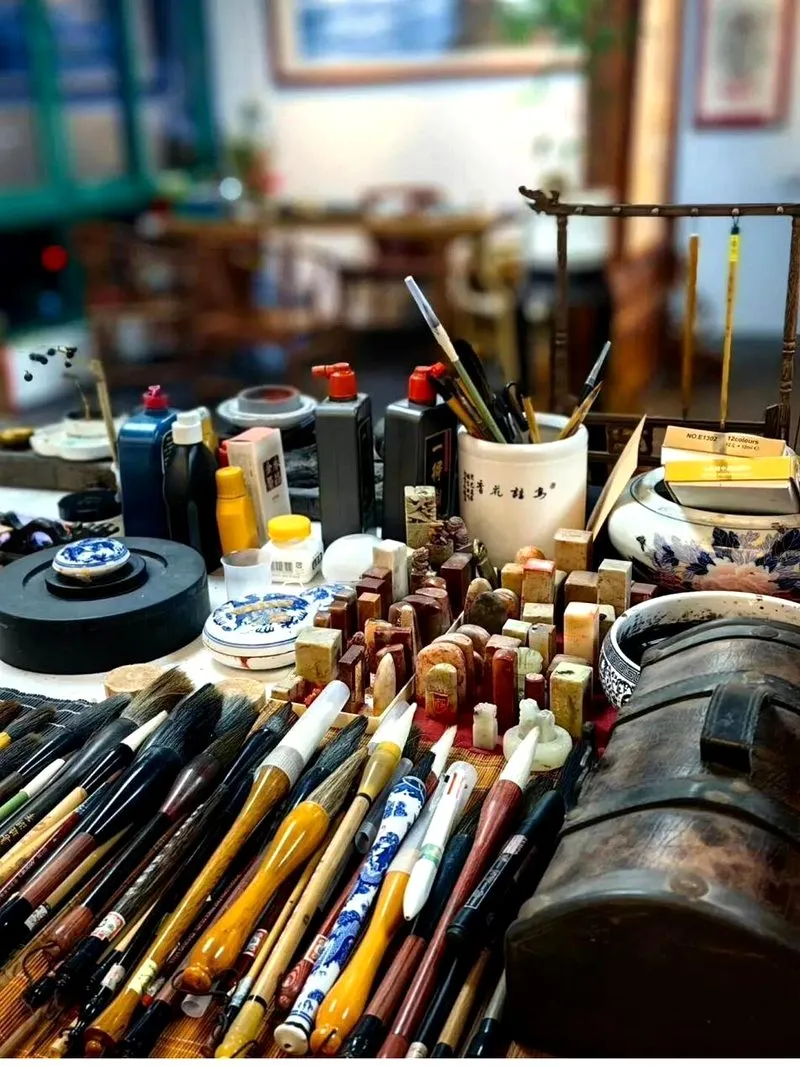
What people said after it arrived.
-
The item is fantastic. The customer service was genuine. Thanks!
— M.Verified purchase · from our Etsy shop reviews · -
They were great they gave me exactly what I asked for and then some. Thank you!!
— G.Verified purchase · from our Etsy shop reviews · -
It is well designed and customized. My daughter loves it. Amazing gift for family’s d friends
— S.Verified purchase · from our Etsy shop reviews ·
Each "财" is hand-brushed by Artist Lina Sun on rice paper.
See 财 (Cái) on Etsy →