柔 (róu) — Supple · Yielding · Tender Without Being Fragile
A single character.
Dry wood snaps; green wood takes the bend and comes back. That is not a figure of speech but the literal definition of this character — 说文解字 glosses 柔 as 木曲直也, wood that bends and straightens — and everything the word later came to mean about people is downstream of it. 柔 does not describe how someone feels to be around. It describes what happens at the moment something pushes: the give, and the fact of still being there afterwards. That is a different claim from 温 (wēn), which measures the warmth in a person’s presence, and a much less obvious one. See 温 → · See 刚 →
It is also, in Chinese, an argument about how to win. 以柔克刚 — overcome the hard by yielding to it — is the organizing principle of 太极拳, stated in the training classics as 四两拨千斤: four ounces deflecting a thousand catties. You do not block the force, you let it arrive and go past. The instruction is counterintuitive enough that it has to be taught: the reflex under pressure is to stiffen, and stiffening is precisely what the method forbids. What 太极 asks for is harder than resistance and looks, to anyone watching, like doing nothing at all.
A hand-brushed 柔 by Artist Lina Sun goes to the person whose first instinct under pressure has never been to harden. The wife whose give is the reason a bad week never became a bad year. The mother whose authority in the house was never once audible. The friend the years have not made brittle. It is a quieter gift than it looks, and a more demanding compliment: staying pliable takes something that hardening never asks for.
- supple — able to take force and return
- yielding as a method rather than a concession
- tenderness that is not fragility
- the give that outlasts the rigid
- weak 柔弱 pairs 柔 with a separate character for weak, and 优柔寡断 (yōu róu guǎ duàn, dithering) pairs it with hesitation — the negative senses arrive by compounding, never on its own. Laozi's claim runs the other way: what yields is what is still alive.
- submissive Submission concedes the point. 柔 concedes the shape and keeps the point — 以柔克刚 is instruction on how to prevail, not on how to give in.
- gentle Gentleness describes a manner. 柔 describes a material response: what a person does at the moment pressure is applied, which may look like nothing at all.
The short arms are the point: these readings don’t reach it.
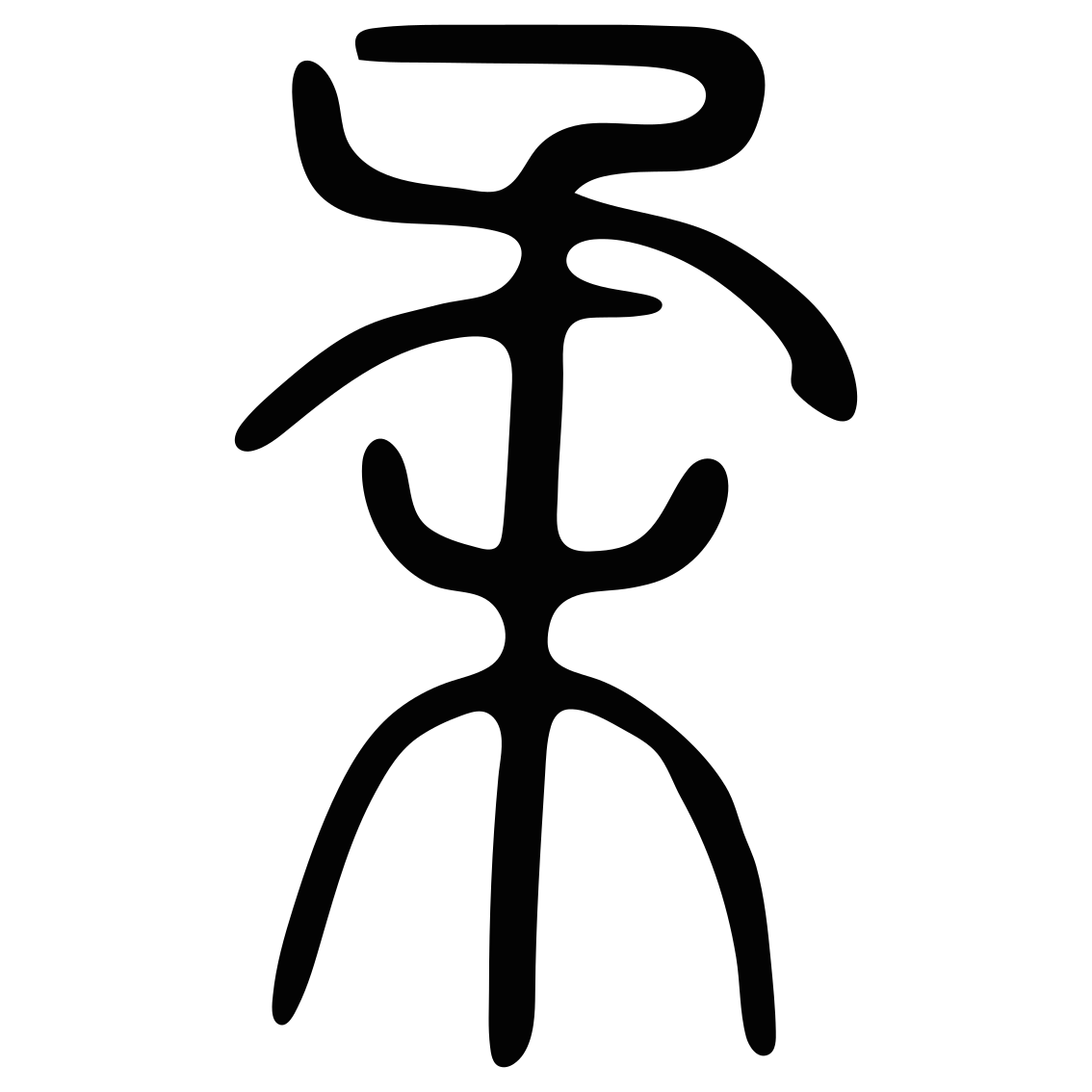
- 矛 spear (sound)The phonetic element, sitting on top. A spear is largely a shaft, and a shaft that cannot flex is a shaft that breaks — but the character borrows 矛 for its sound rather than its image, and the fit is a happy accident rather than the etymology.
- 木 tree, wood (meaning)The semantic half, and where the argument lives — 说文解字 defines the whole character by it: 木曲直也. The same dictionary records 輮, 柔 with the cart radical 車 beside it, as the word for a cart-wheel rim: the one part of a wheel you get only by bending timber into a circle. The earliest business of this character was structural, and every later sense — a gentle manner, a martial technique — is that property of green timber applied to people.
character
- 温柔 wēn róu tender — warmth in how someone handles you, the most common everyday home for this character
- 柔和 róu hé soft and even — of light, of a voice, of a way of putting something difficult
- 柔韧 róu rèn supple and tough — pliancy that stretches without tearing, the physical ideal
- 柔情 róu qíng tenderness of feeling — the soft current in a strong bond, and never its weak point
- 以柔克刚 yǐ róu kè gāng to overcome the hard by yielding to it — the organizing idea of 太极拳
The Story Behind the Character
China's first dictionary (说文解字, c. 100 CE) disposes of this character in four characters, and not one of them concerns a feeling: 柔,木曲直也 — wood that bends and straightens. Later commentators unpacked the compressed gloss to mean timber that, having been curved, can be brought back straight, and having been straight, can be curved again. That is why the character is built on 木, a tree — with 矛 (a spear) stacked above it purely to carry the sound. Bows, cart-rims and spear shafts were all cut from stock chosen for exactly this property, which is a property of living material, measured under load.
The move from timber to people happened in the Warring States, and it was an argument rather than a metaphor. Laozi's seventy-sixth chapter makes an observation anyone can check on a corpse and a seedling: the living are supple, the dead are rigid — 人之生也柔弱,其死也坚强. From there the claim gets sharper. Rigidity is not strength but the condition strength arrives at just before it fails; suppleness is the signature of something still alive. Two chapters later the same text names the case that settles it: nothing under heaven is softer than water, and nothing does better against what is hard and strong.
What the character never settled into, in all of this, is the sense of being a pushover. The Classic of Poetry sets soft and hard side by side and hands its praise to the official who exploited neither — 柔亦不茹,刚亦不吐, he did not swallow the soft or spit out the hard. The Book of Changes puts the paradox in a single line about 坤, the receptive hexagram: utterly yielding, and yet in motion it is firm. That is the character's whole argument, and it sits in its own body. Wood, not a feather. You do not build a bow out of something weak — you build it out of something that gives.
Classical lines
- roughly 400 years
- c. 800 BCE 《诗经·大雅·烝民》
- c. 400 BCE 《道德经》第七十六章
- c. 400 BCE 《周易·坤·文言》
人之生也柔弱,其死也坚强。万物草木之生也柔脆,其死也枯槁。故坚强者死之徒,柔弱者生之徒。 A person alive is supple and yielding; dead, they are hard and stiff. Plants and trees alive are supple and tender; dead, they are dry and brittle. So the hard and stiff belong to the company of the dead, and the supple and yielding to the company of the living.
Laozi arguing from something anyone can verify rather than from doctrine, and arguing it through wood, which is where the character came from in the first place: 柔 is built on 木, and this is the plant half of the proof.
柔亦不茹,刚亦不吐。不侮矜寡,不畏强御。 The soft he did not swallow, the hard he did not spit out; he did not bully the widowed and alone, and did not fear the powerful.
The poem is praising the minister Zhong Shanfu, and it works by inverting a proverb it quotes two lines earlier: ordinary people swallow what is soft and spit out what is hard. He did neither. The couplet is the reason 柔 never came to mean 'easy to push around' — the tradition's admiration went to the man who refused to treat it that way.
坤至柔而动也刚,至静而德方。 Kun is utterly yielding, yet in motion it is firm; utterly still, yet its power is square and definite.
Kun is the earth hexagram, six broken lines, the most receptive figure in the book. The commentary refuses to let receptivity mean passivity: the thing that yields at rest is exactly the thing that holds its shape once it moves.
Why This Character Matters
Liu Xiang's 《说苑》 records a deathbed scene that has done more to fix the meaning of 柔 than any definition. The dying teacher Chang Chuang opens his mouth and asks Laozi two questions: is my tongue still there? It is. My teeth? Long gone. Then he asks what his student makes of that, and it is Laozi who supplies the reading — the tongue is still there because it is 柔, the teeth are gone because they were 刚. 嘻,是已, the old man answers: that is it, and there is nothing further worth telling you. A small, physical, faintly comic examination, and in the same mouth the soft part outlasted the hard one.
Two of the world's best-known martial arts are named with this character and almost nobody outside East Asia notices. 柔道 is judo — literally the yielding way — and 柔术 is jujutsu; Japan borrowed the Chinese character and with it the entire argument that giving way is a technique for winning rather than an admission of losing. The word does the same quiet work in ordinary speech: 柔韧 (supple and tough) is what a physiotherapist is after, 柔和 describes a light or a voice with nothing harsh in it, and 柔情 is the tenderness inside a serious attachment. None of these is a diminishment. In Chinese, calling something 柔 is a statement about what it can absorb.
A Chinese reader's first association is 以柔克刚 and, close behind it, 柔道 and 柔术 — so as a tattoo 柔 lands as a position on how to handle force rather than as a description of personality. That makes it a natural choice for anyone who trains, and an unusually precise one: it says the wearer prefers to absorb and redirect rather than meet a thing head-on. Outside the martial reading, 柔 is common in women's given names and carries a tender, unshowy warmth. Both readings are live at once. The one thing worth knowing is that 柔 turns negative only inside compounds — 优柔寡断, dithering — and never standing alone; a single 柔 reads as the martial position or the tender one, not as indecision. Hung rather than inked, it sits more naturally in a training room than a living room — a single 柔 on a wall picks up the martial reading first.
Calligraphy Styles for Tattoos
- Running script (行书 xíngshū) Best for tattoos
柔 is one of the characters running script genuinely improves. The brush carries the 矛 above straight down into the 木 below in a single descending motion, which makes the character read as one continuous give rather than two stacked parts. Works from about 2 inches up.
- Regular script (楷书 kǎishū) Excellent for tattoos
The safest choice if legibility matters more than movement. Regular script keeps the 矛 on top clearly separated from the 木 beneath, and both halves stay readable at small sizes. Reliable from 1.5 inches.
- Clerical script (隶书 lìshū) Good, with a caveat
Clerical script flattens and broadens the character, which reads as settled and grounded — attractive, but it works against the sense of flex the character is about. Choose it if you want the calm reading rather than the martial one.
Common Mistakes to Avoid
- Writing 予 on top instead of 矛Intended: 柔 — the spear component 矛 above 木
矛 and 予 are nearly identical, differing by one short stroke at the upper left. Drop it and the top half becomes a different component; the result is not a character at all, which is the single most common way this tattoo goes wrong.
- Adding a hand radical 扌 on the leftIntended: 柔 (róu), supple — not 揉 (róu), to knead
柔 with a hand added is 揉, the verb for kneading dough or rubbing your eyes. Same sound, completely different word, and a Chinese reader will see 'knead' rather than 'supple.'
Notes for Your Tattoo Artist
9 strokes, identical in simplified and traditional Chinese, so no form decision is needed. The composition is vertically stacked: 矛 above, 木 below, and the usual failure is letting the top half sprawl so the 木 gets crushed. Give the two halves roughly equal vertical space, and let the long left-falling and right-falling strokes of the 木 spread wide enough to carry the weight above them. Minimum legible size around 1.5 inches; forearm and upper back both suit the vertical proportion.
A few characters live near "柔" but mean something quieter, sharper, or more specific. Here's how to tell them apart.
takes the force, gives way, and is still there — pliancy as what survives
does not move when force is applied — the interior firmness that cannot be bought or pressured
what a person does when something pushes against them
what a person is like to stand near — the felt temperature of their care
the response to pressure — giving way without breaking or conceding
the response to difference — having room enough to take someone in unchanged
柔韧 is the word a coach uses for a body that stretches without tearing, and it is the same character.
- 柔韧 is the word a coach uses for a body that stretches without tearing, and it is the same character. That is the distinction worth making on this particular day: the soft thing in a long relationship is not the breakable thing, it is the load-bearing one. Give it to a partner who has been the one doing the absorbing — and give it as a description of them, never as a hint about how you would like them to behave.
- Somebody in a house takes the money worries, the bad news and the teenage years, and none of it continues past them. Chinese files that under 柔 rather than under patience, and the difference is worth keeping: patience is what you endure with, 柔 is what you do. The right gift for the mother whose decisions the household has always quietly run on — which is a fact about her authority, not a hope about her manner.
- Laozi's observation is that people harden as they age — 人之生也柔弱,其死也坚强 — and a birthday is the one occasion that actually counts the years. For the friend the years did not do that to: still open to being wrong, still able to change position without treating it as a defeat. 柔 on a birthday is the least sentimental thing you can say to someone who has stayed pliable while the people around them set.
Wife · Mom · Best Friend · or yourself
Looking for a name? See Western names written in Chinese →
-
What does 柔 (róu) mean?
柔 (róu) is the Chinese character for supple, yielding, tender without being fragile. Dry wood snaps; green wood takes the bend and comes back. That is not a figure of speech but the literal definition of this character — 说文解字 glosses 柔 as 木曲直也, wood that bends and straightens — and everything the word later came to mean about people is downstream of it. 柔 does not describe how someone feels to be around. It describes what happens at the moment something pushes: the give, and the fact of still being there afterwards. That is a different claim from 温 (wēn), which measures the warmth in a person's presence, and a much less obvious one. See 温 → · See 刚 → Liu Xiang's 《说苑》 records a deathbed scene that has done more to fix the meaning of 柔 than any definition. The dying teacher Chang Chuang opens his mouth and asks Laozi two questions: is my tongue still there? It is. My teeth? Long gone. Then he asks what his student makes of that, and it is Laozi who supplies the reading — the tongue is still there because it is 柔, the teeth are gone because they were 刚. 嘻,是已, the old man answers: that is it, and there is nothing further worth telling you. A small, physical, faintly comic examination, and in the same mouth the soft part outlasted the hard one.
-
What occasions is 柔 given for?
柔 is traditionally given for Valentine's Day, Mother's Day, Birthday. 柔韧 is the word a coach uses for a body that stretches without tearing, and it is the same character. That is the distinction worth making on this particular day: the soft thing in a long relationship is not the breakable thing, it is the load-bearing one. Give it to a partner who has been the one doing the absorbing — and give it as a description of them, never as a hint about how you would like them to behave. Somebody in a house takes the money worries, the bad news and the teenage years, and none of it continues past them. Chinese files that under 柔 rather than under patience, and the difference is worth keeping: patience is what you endure with, 柔 is what you do. The right gift for the mother whose decisions the household has always quietly run on — which is a fact about her authority, not a hope about her manner.
-
Is 柔 a good Chinese tattoo?
A Chinese reader's first association is 以柔克刚 and, close behind it, 柔道 and 柔术 — so as a tattoo 柔 lands as a position on how to handle force rather than as a description of personality. That makes it a natural choice for anyone who trains, and an unusually precise one: it says the wearer prefers to absorb and redirect rather than meet a thing head-on. Outside the martial reading, 柔 is common in women's given names and carries a tender, unshowy warmth. Both readings are live at once. The one thing worth knowing is that 柔 turns negative only inside compounds — 优柔寡断, dithering — and never standing alone; a single 柔 reads as the martial position or the tender one, not as indecision. Hung rather than inked, it sits more naturally in a training room than a living room — a single 柔 on a wall picks up the martial reading first.
-
Who brushes the 柔 calligraphy?
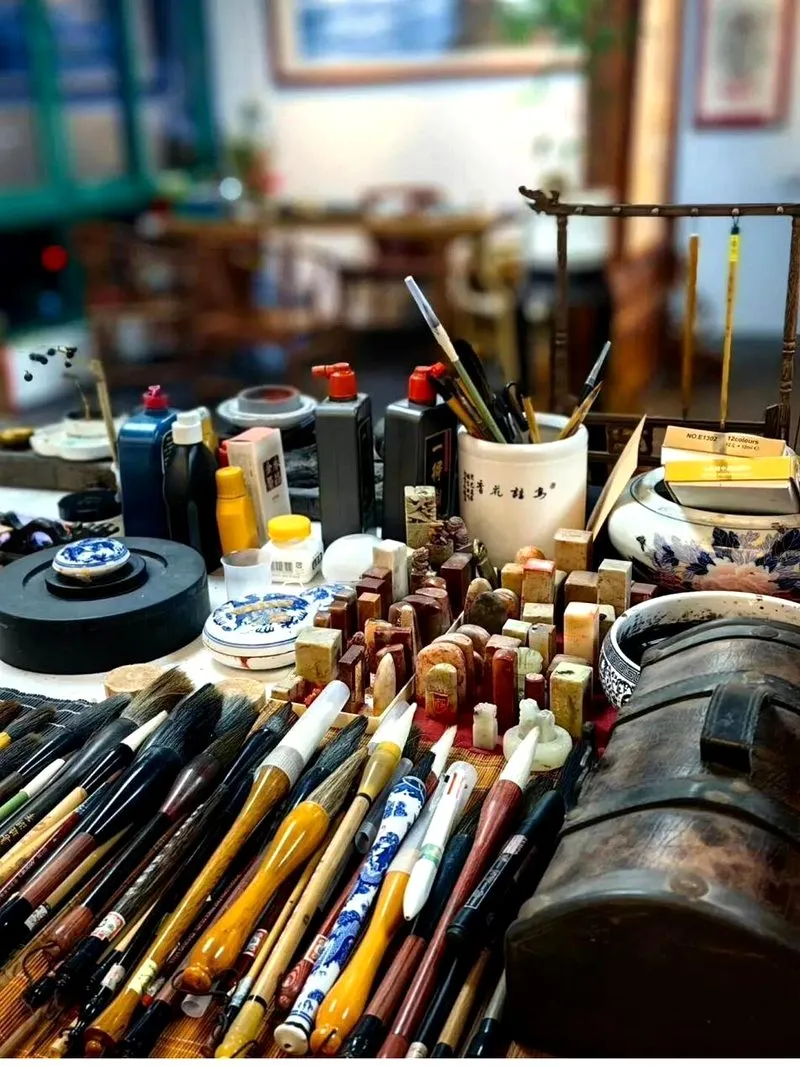
Each 柔 (Róu) is hand-brushed to order by Artist Lina Sun in ink on rice paper — never printed, never repeated.
Bring 柔 home — choose how you'd like it brushed.
-
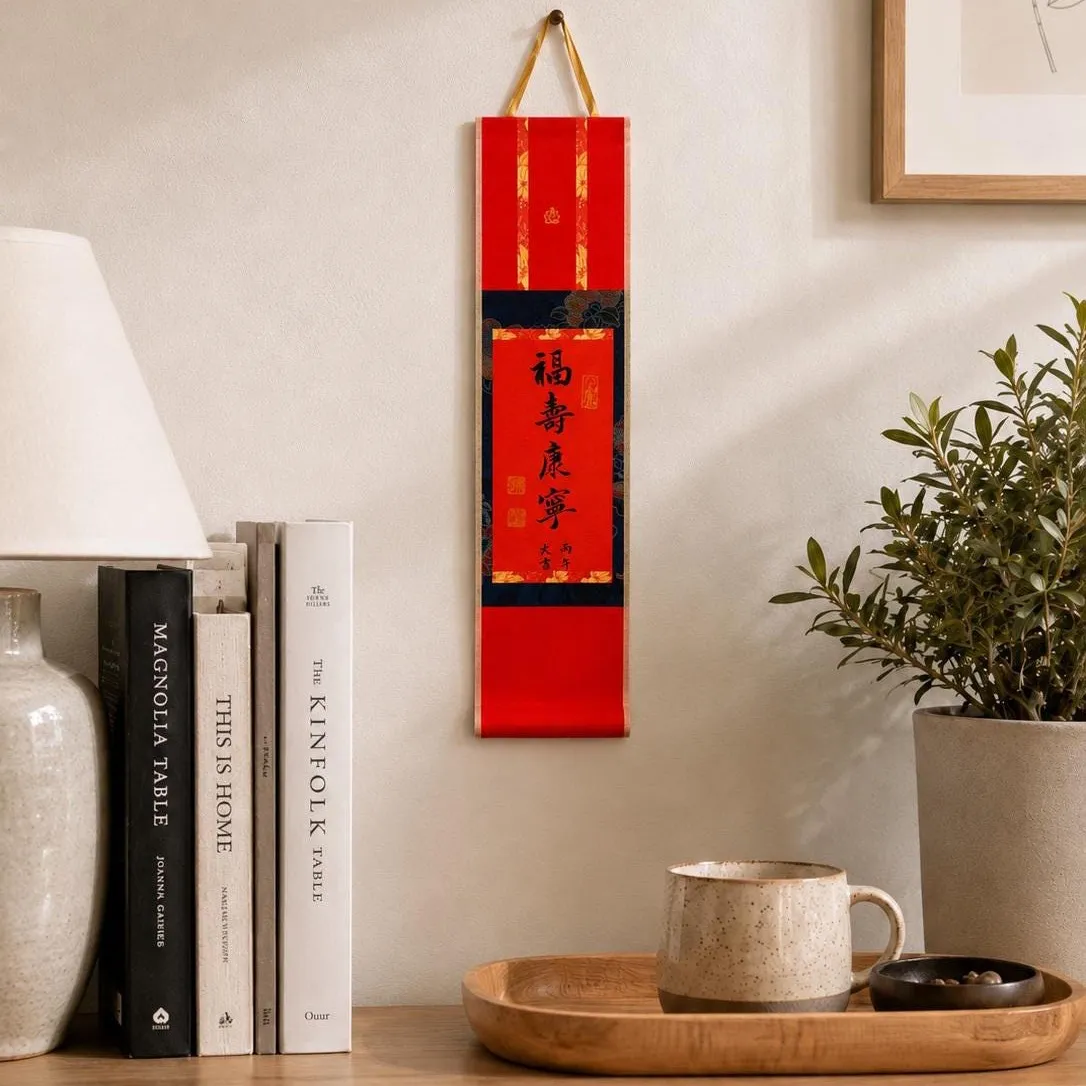
Photo shows a sample — yours will be brushed with 柔, or any character you choose.
Wall Scroll — for walls & housewarmingsfrom $38→ -
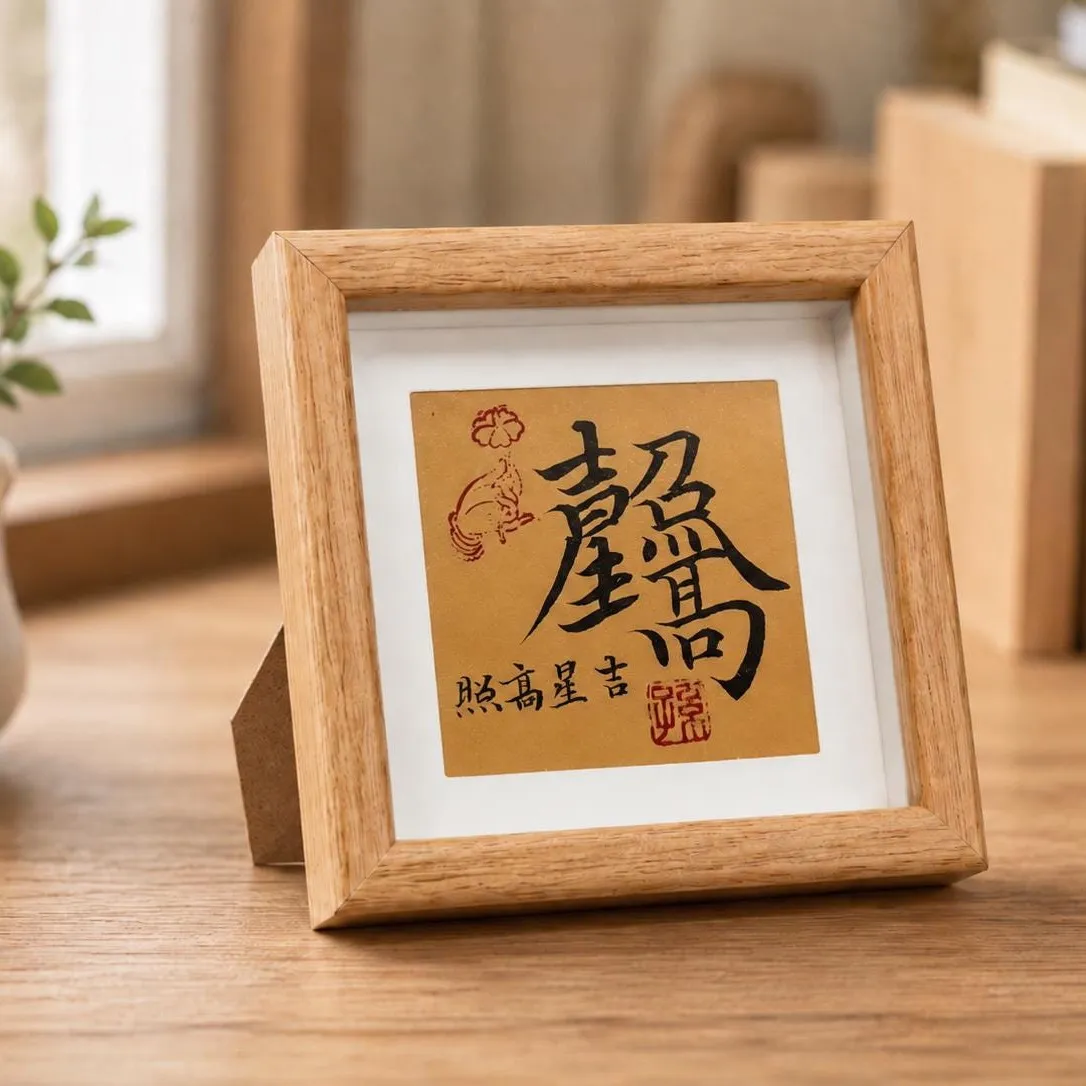
Photo shows a sample — yours will be brushed with 柔, or any character you choose.
Desk Frame — for desks, studies & studiosfrom $44→ -
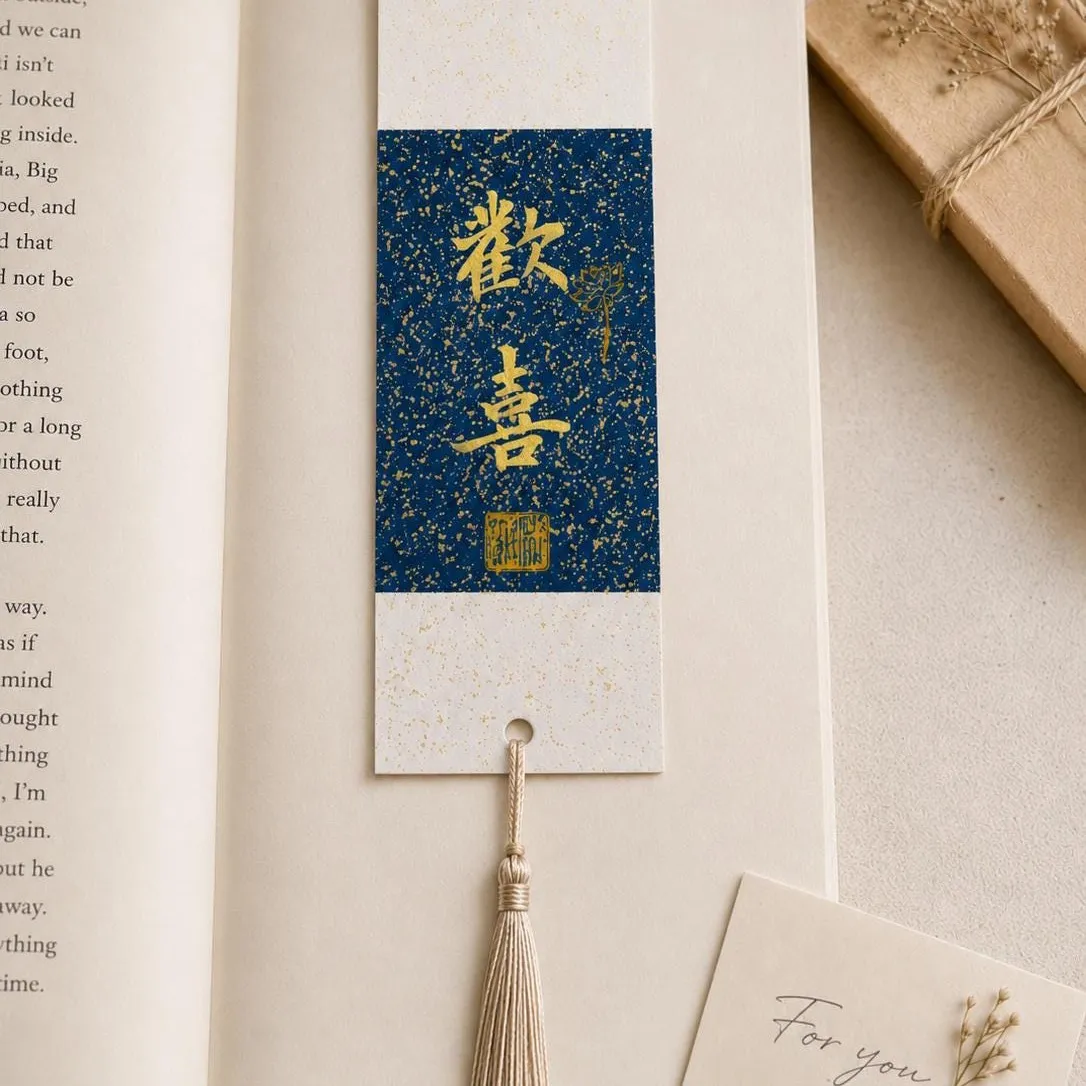
Photo shows a sample — yours will be brushed with 柔, or any character you choose.
Bookmark — for readers & small thank-yousfrom $17→
What people said after it arrived.
-
The item is fantastic. The customer service was genuine. Thanks!
— M.Verified purchase · from our Etsy shop reviews · -
They were great they gave me exactly what I asked for and then some. Thank you!!
— G.Verified purchase · from our Etsy shop reviews · -
It is well designed and customized. My daughter loves it. Amazing gift for family’s d friends
— S.Verified purchase · from our Etsy shop reviews ·
Each "柔" is hand-brushed by Artist Lina Sun on rice paper.
See 柔 (Róu) on Etsy →