龙 (lóng) — Dragon · Power · Auspicious Strength
A single character.
Of all the Chinese characters that have crossed cultural borders, 龙 — the dragon — may have traveled farthest. It appears on Western skin, Western walls, and Western jewelry with a frequency that no other Chinese character approaches, and for a reason that becomes obvious once you understand what the Chinese dragon actually is.
It is not the dragon of medieval Europe — the firebreathing obstacle between a knight and a princess. The Chinese dragon is the creature that makes rain, that rides between rivers and clouds, that carried emperors to heaven. It is not something to be defeated. It is something to aspire to.
In Chinese culture, calling someone a dragon is a compliment — the highest kind. The phrase 望子成龙 (every parent hopes their son becomes a dragon) is the standard expression of parental ambition. 龙的传人, “descendants of the dragon,” is how Chinese people have referred to themselves for centuries. And the Year of the Dragon is considered the most auspicious year in the twelve-year cycle — the one that brings outsized ambition and outsized results.
A hand-brushed 龙 by FuBlessings is not a piece of mythology. It is a wish for someone to become what the dragon represents: a person fully realized, rising at exactly the right moment.
- auspicious power
- excellence
- the force that rises
- transformation at its peak
- strength Strength is the capacity to push. 龙 is the image of everything aligned — strength, timing, and the willingness to rise.
- luck Luck is passive. 龙 is active — the kind of fortune that comes to those already moving.
- power Power suggests dominance over others. 龙 suggests dominance over one's own limits — the self made magnificent.
The short arms are the point: these readings don’t reach it.
- 龙 pictograph of the dragon itselfThe traditional form 龍 is a dense, 16-stroke character with a visible dragon body. The simplified 龙 strips it to 5 strokes while keeping the upward thrust — the suggestion of something coiling before it rises.
character
- 龙年 lóng nián Year of the Dragon — the most anticipated year in the Chinese zodiac cycle
- 龙腾 lóng téng the dragon soars — a phrase used to describe a person or enterprise at full momentum
- 真龙天子 zhēn lóng tiān zǐ the true dragon, son of heaven — the classical title for the emperor
- 龙凤呈祥 lóng fèng chéng xiáng dragon and phoenix bringing auspiciousness — the classic wedding blessing for a couple
The Story Behind the Character
The dragon is the oldest surviving pictograph in Chinese writing. Oracle bone inscriptions from the Shang dynasty — the very earliest Chinese script, scratched onto turtle shells and cattle bones around 1200 BCE — already show a creature with a scaled body, clawed feet, and a raised head. It looked nothing like the serpentine creature on European shields. It looked, from the beginning, like something rising.
In early Chinese cosmology, 龙 wasn't a monster to be slain. It was a creature of water and sky — the force that brought rain to crops, that moved between rivers and clouds, that was present at the origin of things. The Yellow Emperor, the mythological ancestor of the Chinese people, was said to have ascended to heaven on the back of a dragon. The first emperors wore robes embroidered with them. The character for "emperor" in certain formal contexts was synonymous with the dragon.
By the time the Han dynasty standardized the script, the complex early pictograph had simplified into a shape that suggested forward movement — a coiled body about to spring. The meaning had also expanded: 龙 no longer referred only to the creature. It had become a symbol of excellence so potent that the word itself was used as a compliment, a wish, a category of greatness.
Classical lines
飞龙在天,利见大人。 The dragon soars in the sky
it is the right moment for great people to appear. — The I Ching uses the flying dragon as the image of a person reaching the height of their power. Not the power of force, but the power of arrival at the right moment.
望子成龙,望女成凤。 Every parent hopes their son becomes a dragon, their daughter a phoenix.
The most common Chinese expression of parental ambition, and one of the few that treats aspiration itself as a form of love.
龙腾虎跃 Dragon soaring, tiger leaping
the image of a person or moment at full, unleashed power. Used to describe someone hitting their stride.
Why This Character Matters
The Chinese dragon is so different from its Western counterpart that they share little beyond the name. The Western dragon hoards gold, breathes fire, and dies under a knight's lance. The Chinese dragon brings rain, commands rivers, carries emperors to heaven, and is never, in three thousand years of recorded literature, the villain of the story.
The dragon in Chinese culture is a creature of synthesis: it has the head of a camel, the antlers of a deer, the eyes of a rabbit, the ears of a cow, the neck of a snake, the belly of a clam, the scales of a carp, the claws of an eagle, and the paws of a tiger. A creature made of the best parts of other creatures — which is also a description of excellence.
The phrase 龙的传人 — "descendants of the dragon" — is how Chinese people have referred to themselves for centuries. Not in the sense of mythological lineage, but in the sense of carrying forward a tradition of strength, adaptability, and the capacity to rise. In that sense, giving someone a 龙 is giving them a piece of that inheritance.
Dragons in Chinese culture are benevolent symbols of power and good fortune — nothing like the fire-breathing villains of Western mythology. A Chinese person seeing a 龙 tattoo reads it as bold and auspicious, especially for someone born in the Year of the Dragon. That said, 龙 is probably the most common Chinese character tattoo worldwide, so the reaction is often 'of course, dragon again' — make the calligraphy exceptional to stand out.
Calligraphy Styles for Tattoos
- Regular script (楷书 kǎishū) Best for tattoos
Best choice for the complex traditional form 龍 (16 strokes), where clarity is essential. For the simplified 龙 (5 strokes), regular script keeps every stroke precise — there's nowhere to hide imperfection.
- Running script (行书 xíngshū) Good for larger pieces
Adds dynamic energy that suits the dragon's nature. Works well with both forms, but the traditional 龍 in running script needs at least 4 inches to stay legible.
- Cursive script (草书 cǎoshū) Only with an expert calligrapher
Risky for 龍 — the 16-stroke traditional form can dissolve into an illegible tangle. The simplified 龙 fares better in cursive but still requires a confident hand. Only attempt with a calligrapher who specializes in cursive forms.
Common Mistakes to Avoid
- Confusing simplified 龙 with traditional 龍Intended: Dragon
Both forms are correct Chinese, but they look completely different — 龙 is 5 strokes, 龍 is 16 strokes. Decide which system you want before the session. Mixing elements of both creates a character that doesn't exist in either system.
- Using the Japanese kanji 竜 thinking it is ChineseIntended: Chinese dragon character
The Japanese shinjitai form 竜 is a valid Japanese character but is not used in Chinese. A Chinese reader would not recognize it as 龙 or 龍. If you want a Chinese dragon tattoo, use either the simplified or traditional Chinese form.
Notes for Your Tattoo Artist
The simplified 龙 (5 strokes) is manageable at any size — the visual center is the horizontal stroke crossing through the middle. Get that stroke's weight and position right and the rest follows. The traditional 龍 (16 strokes) is one of the most complex common characters in Chinese — plan for at least 3 inches, and consider having a calligrapher write it specifically for your tattoo rather than using a font.
A few characters live near "龙" but mean something quieter, sharper, or more specific. Here's how to tell them apart.
the force that rises and transforms — imperial, sky-bound, auspicious
raw power at ground level — fierce, immediate, intimidating
the whole creature at full height — power shaped by destiny and timing
the basic unit of force — muscle, effort, the push behind every action
Real people who chose "龙" — tattooed, collected, or carried with them.
- Angelina Jolie Oscar-winning actress, humanitarian龙 (Chinese dragon tattoo, since removed)Jolie had a Chinese dragon tattooed on her lower back in the 1990s — one of her earliest and most visible tattoos. She later had it removed by laser and replaced it with the geographic coordinates of her six children's birthplaces. The dragon gave way to something more personal, but for years it was her most recognized piece of ink.
- Mel C (Melanie Chisholm) Spice Girls member, 'Sporty Spice'Dragon armband (combined with Chinese characters)Mel C's tattoo collection in the 1990s included both a Chinese dragon armband and the characters 女力 (girl power) on her right shoulder — the two biggest Chinese tattoo archetypes of that decade, worn by the same person. The Spice Girls era turned Chinese characters into a mainstream Western tattoo trend.
For someone born in the Year of the Dragon — or someone whose energy, ambition, and force of personality remind you of one.
- For someone born in the Year of the Dragon — or someone whose energy, ambition, and force of personality remind you of one. 龙 is the character that says: you are a force to be reckoned with.
- The phrase 龙腾虎跃 — dragon soaring, tiger leaping — is the classical image of a person meeting their full potential. A 龙 at graduation is a bet on what someone is capable of becoming.
- In Chinese tradition, the dragon is the emblem of authority, protection, and honor. For a father who has been all three, 龙 says it without needing more words.
- The Year of the Dragon is considered the most auspicious of the twelve. In any year, 龙 carries the wish for the kind of luck, momentum, and presence that the dragon embodies.
Dad · Husband · Friend · Best Friend · Coworker · Boss · Grandparent · or yourself
Looking for a name? See Western names written in Chinese →
-
What does 龙 (lóng) mean?
龙 (lóng) is the Chinese character for dragon, power, auspicious strength. Of all the Chinese characters that have crossed cultural borders, 龙 — the dragon — may have traveled farthest. It appears on Western skin, Western walls, and Western jewelry with a frequency that no other Chinese character approaches, and for a reason that becomes obvious once you understand what the Chinese dragon actually is. The Chinese dragon is so different from its Western counterpart that they share little beyond the name. The Western dragon hoards gold, breathes fire, and dies under a knight's lance. The Chinese dragon brings rain, commands rivers, carries emperors to heaven, and is never, in three thousand years of recorded literature, the villain of the story.
-
What occasions is 龙 given for?
龙 is traditionally given for Birthday, Graduation, Father's Day, Chinese New Year. For someone born in the Year of the Dragon — or someone whose energy, ambition, and force of personality remind you of one. 龙 is the character that says: you are a force to be reckoned with. The phrase 龙腾虎跃 — dragon soaring, tiger leaping — is the classical image of a person meeting their full potential. A 龙 at graduation is a bet on what someone is capable of becoming.
-
Is 龙 a good Chinese tattoo?
Dragons in Chinese culture are benevolent symbols of power and good fortune — nothing like the fire-breathing villains of Western mythology. A Chinese person seeing a 龙 tattoo reads it as bold and auspicious, especially for someone born in the Year of the Dragon. That said, 龙 is probably the most common Chinese character tattoo worldwide, so the reaction is often 'of course, dragon again' — make the calligraphy exceptional to stand out.
-
Who brushes the 龙 calligraphy?
FuBlessings hand-brushes each 龙 (Lóng) to order, in ink on rice paper — never printed, never repeated.
Bring 龙 home — choose how you'd like it brushed.
-
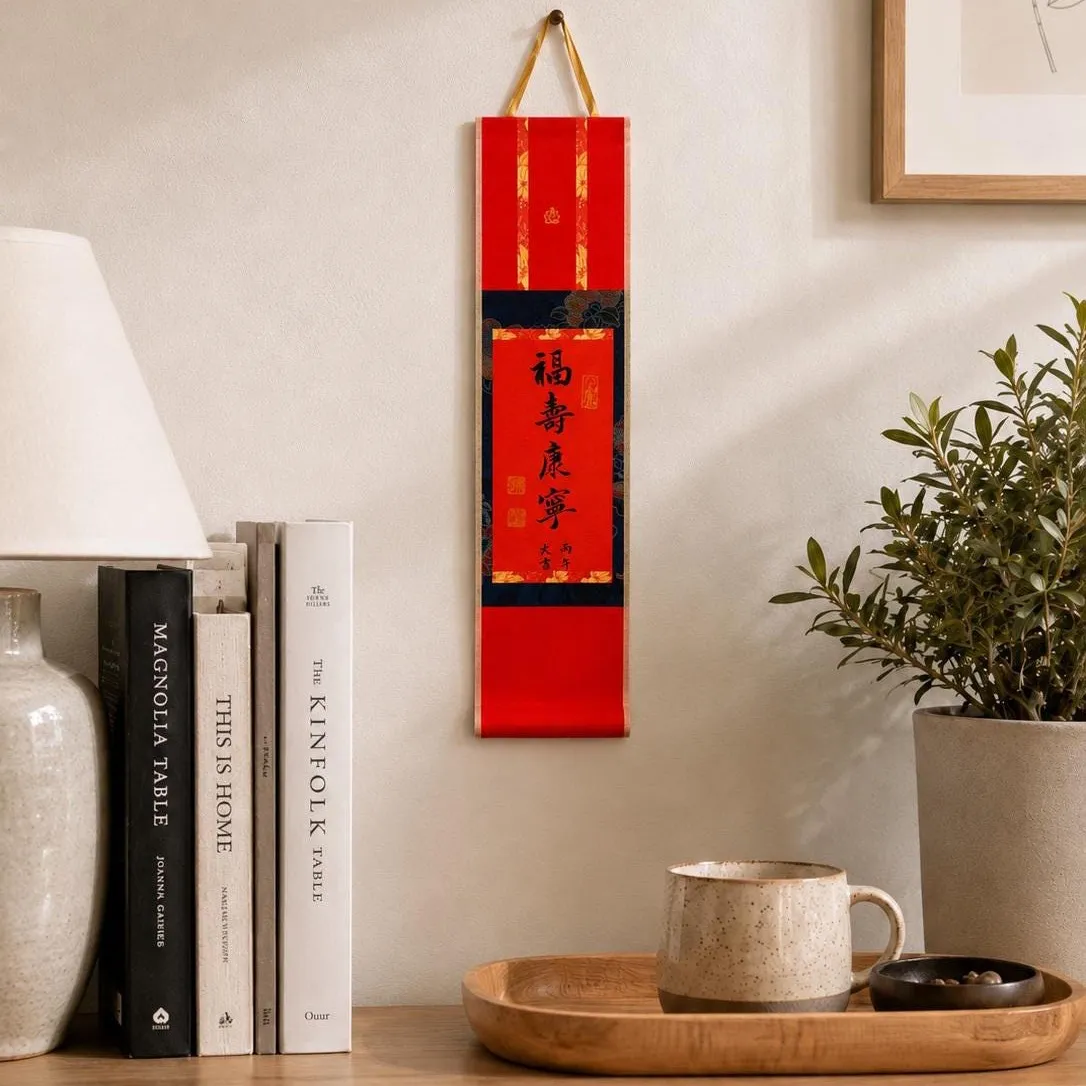
Photo shows a sample — yours will be brushed with 龙, or any character you choose.
Wall Scroll — for walls & housewarmingsfrom $38→ -
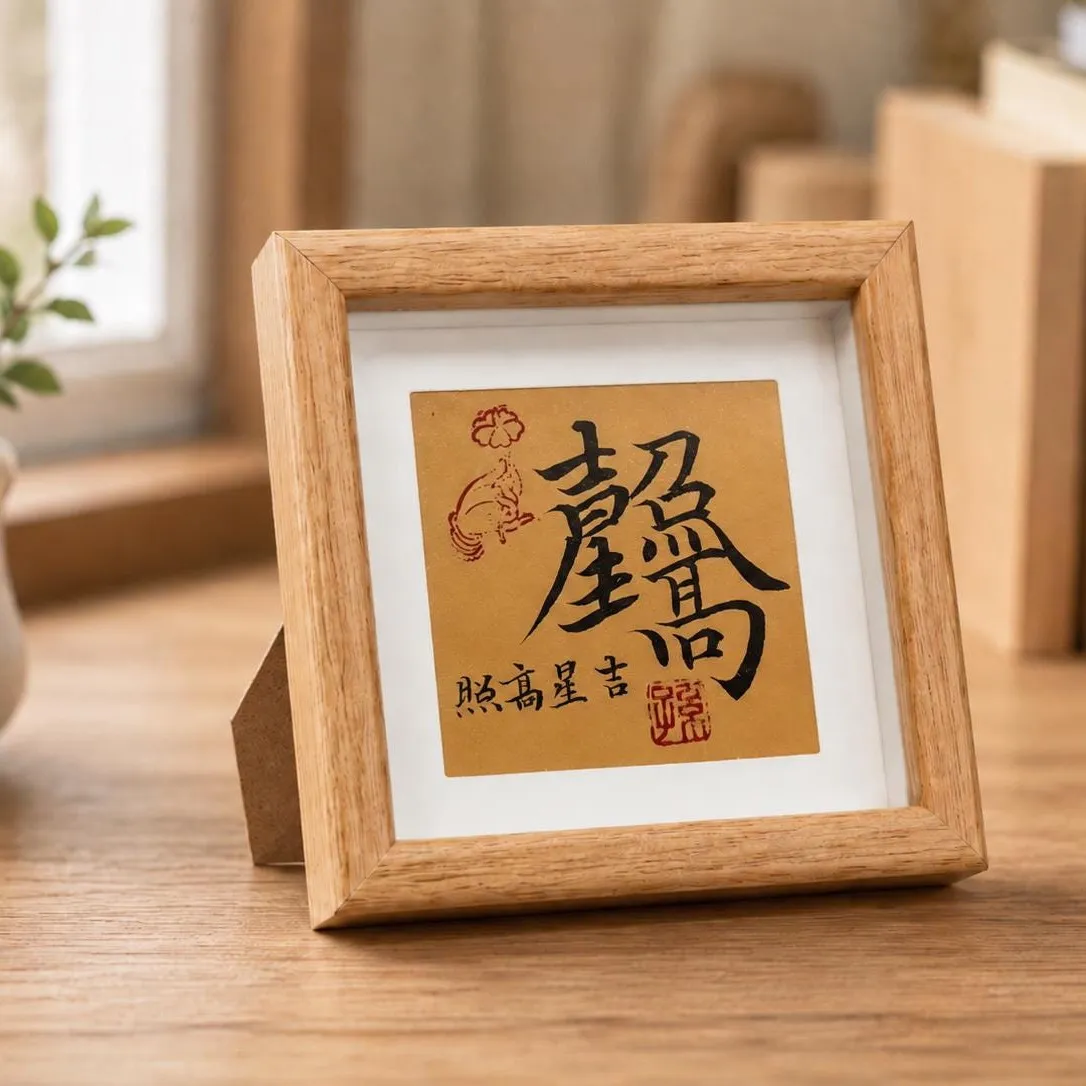
Photo shows a sample — yours will be brushed with 龙, or any character you choose.
Desk Frame — for desks, studies & studiosfrom $44→ -
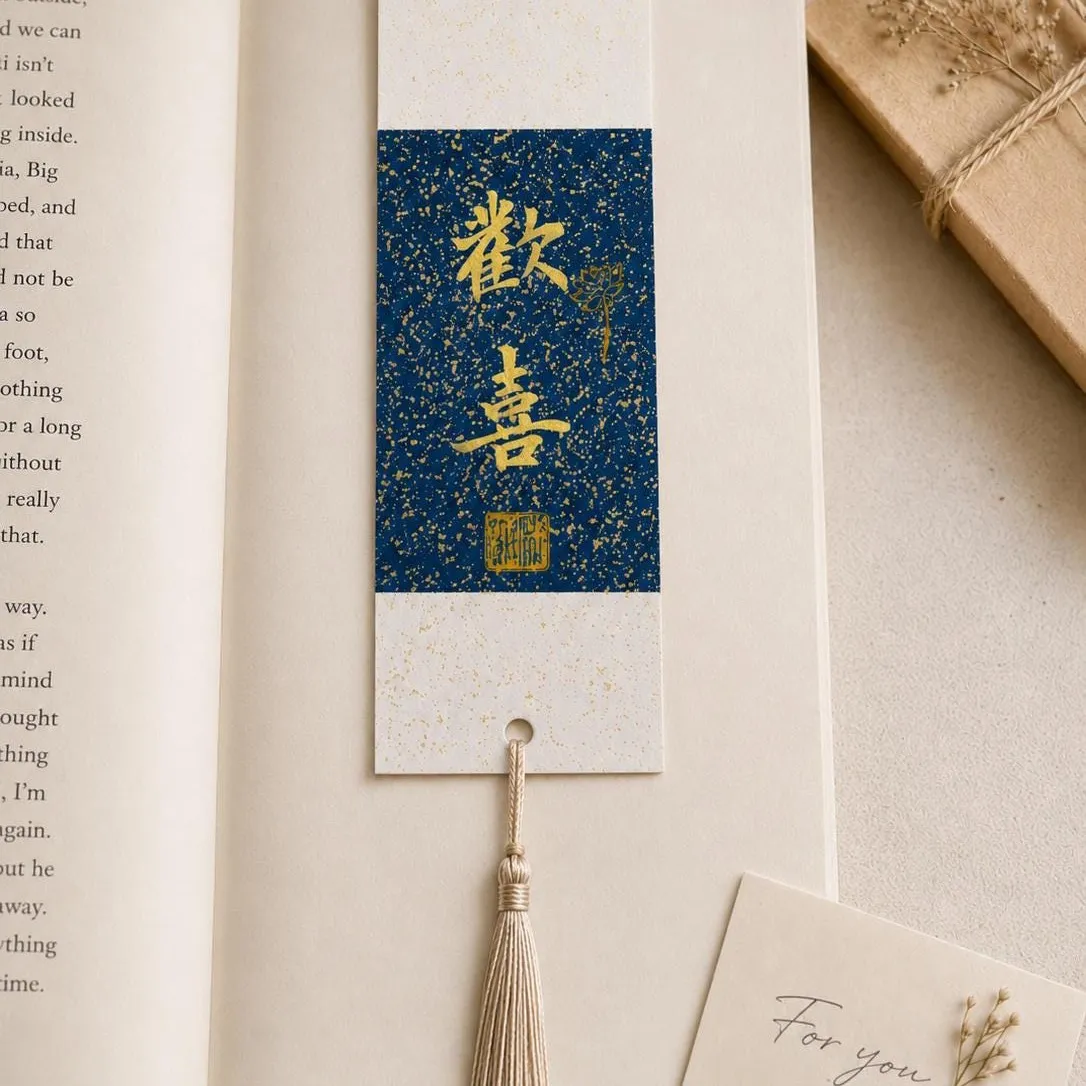
Photo shows a sample — yours will be brushed with 龙, or any character you choose.
Bookmark — for readers & small thank-yousfrom $14→
What people said after it arrived.
-
The item is fantastic. The customer service was genuine. Thanks!
— M.Verified purchase · from our Etsy shop reviews · -
They were great they gave me exactly what I asked for and then some. Thank you!!
— G.Verified purchase · from our Etsy shop reviews · -
It is well designed and customized. My daughter loves it. Amazing gift for family’s d friends
— S.Verified purchase · from our Etsy shop reviews ·
Each "龙" is hand-brushed by FuBlessings on rice paper.
See 龙 (Lóng) on Etsy →