安 (ān) — Peace · Safety · Tranquility
A single character.
Every Chinese blessing, if you trace it back far enough, is really a wish for 安. Long life without peace is just endurance. Wealth without safety is just anxiety. 安 is the foundation under everything else — the character that makes all the other blessings possible.
Its picture tells you why. A woman seated beneath a roof: the household is whole, the grain is stored, the door is latched for the night. You see 安 everywhere thresholds are crossed in Chinese life — carved into the lintels of new homes, stitched into the blankets of newborns, texted to the family group chat every time someone boards a plane. The poet Su Shi compressed the whole idea into seven syllables: wherever your heart is at peace, that is home.
A hand-brushed 安 by Artist Lina Sun is the right gift for someone crossing a threshold — a new home that needs its first blessing, a new baby whose parents need sleep, a friend recovering and ready for quieter days. It is not a wish for nothing to go wrong. It is a wish for a place where things feel right.
- peace
- the feeling of having arrived home
- safety that lets you rest
- settled stillness
- calm Too internal. Calm is a state of mind. 安 is a state of the world — the door is latched, the family is fed, the day is held.
- security Too defensive. Security is about what is kept out. 安 is about what is kept in — warmth, quiet, the people who belong there.
- tranquility Too passive. Tranquility is the absence of noise. 安 is the presence of a place that works.
The short arms are the point: these readings don’t reach it.
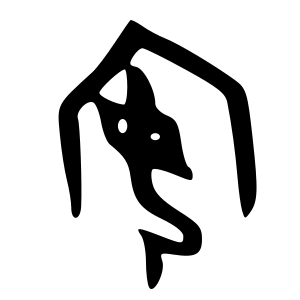
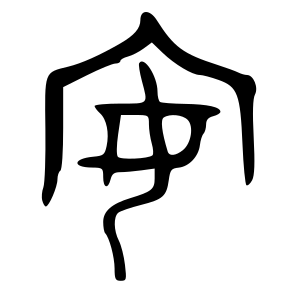
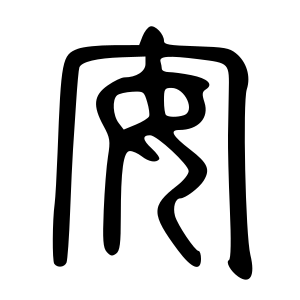
- 宀 a roof, a shelterThe radical for a house or covered space. Every character with this lid is about what happens indoors — what a roof makes possible. 安 puts a person under it.
- 女 a woman seatedThe lower half is a woman in a kneeling, settled posture. In early Chinese households she presided over the interior — the hearth, the grain, the children. Her presence under the roof did not mean fragility; it meant the household was running.
character
- 平安 píng ān safe and sound — the universal wish that someone gets through the day unharmed
- 安宁 ān níng peaceful and tranquil — a settled quiet, often of a place or a household
- 安心 ān xīn with a peaceful heart — to rest easy, to stop worrying
- 安康 ān kāng peace and good health — the standard wish for elders
- 安全 ān quán safety — the modern word, on every street sign and seatbelt label
- 晚安 wǎn ān good night — literally "evening peace"
The Story Behind the Character
The character 安 is one of the simplest and most visually immediate in all of Chinese writing. Even in its earliest bronze-age form, the picture is clear: a woman (女) sitting quietly beneath a roof (宀). That is it. No tools, no guards, no walls — just a person at rest under shelter. Peace, the early scribes decided, looks like someone who has made it home.
By the time Shuowen Jiezi cataloged the character around 100 CE, the definition was equally spare: 安,静也 — to be settled, to be still. But the dictionary also noted a second meaning that reveals more: 安 can mean "where" — as in, "where will you go?" The connection is not accidental. To early Chinese thinkers, peace was not an emotion. It was a place. To have 安 meant you had found where you belonged.
Later scholars pointed out something else hidden in the structure: the woman under the roof is not hiding. She is presiding. In early Chinese households, the woman managed the interior — the grain stores, the hearth, the children. Her presence under the roof did not mean fragility. It meant the household was functioning, fed, and whole. 安 was never about the absence of trouble. It was about a house that runs.
Classical lines
- roughly 1,500 years
- c. 400 BCE 《左传·襄公十一年》
- 761 CE 杜甫《茅屋为秋风所破歌》
- c. 1080 CE 苏轼《定风波》
居安思危,思则有备,有备无患。 When you are safe, think about danger. When you think ahead, you prepare. When you prepare, nothing catches you off guard.
Early China's version of 'hope for the best, plan for the worst,' recorded after a duke narrowly survived a political crisis.
安得广厦千万间,大庇天下寒士俱欢颜。 If only I could find ten thousand houses to shelter every cold and struggling soul and see them smile.
Du Fu wrote this while his own thatched roof was being torn apart by a storm. His wish was not for himself.
此心安处是吾乡。 Wherever my heart is at peace, that is my homeland.
Su Shi wrote this for a friend's concubine who had followed her partner into exile and was asked if she missed home.
Why This Character Matters
If there is one phrase every Chinese person knows by heart, it is 平安 — literally "level peace," the universal wish that someone gets through the day, the year, the journey unharmed. Parents text it to children boarding planes. Friends say it at the end of phone calls. During Chinese New Year, the phrase 岁岁平安 ("peace year after year") appears on banners, red envelopes, and text messages by the billion. 安 is the load-bearing word in all of them.
In Chinese philosophy, 安 sits at a fascinating crossroads. Confucians treated it as a social achievement — a peaceful home produces peaceful citizens, and peaceful citizens produce a stable state. Daoists saw it differently: real 安 comes from accepting the world as it already is, not from arranging it to your liking. Buddhists borrowed the character for yet another purpose, using 安 to describe the settled mind that emerges from meditation. Three traditions, three definitions, one character — and all of them agree that 安 is not something you feel. It is something you build.
安 is a genuinely good tattoo choice. It's one of the most universally positive characters in Chinese — not trendy or cliché like 龙 (dragon), but deeply embedded in daily life. A Chinese person would read it as a sincere, thoughtful wish for peace. The character is also visually elegant with its symmetrical structure, so it looks good as ink.
Calligraphy Styles for Tattoos
- Regular script (楷书 kǎishū) Best for tattoos
安 is only 6 strokes with an elegant, balanced structure — the roof 宀 sheltering 女 below. Regular script preserves the clean symmetry and keeps both components instantly readable.
- Running script (行书 xíngshū) Excellent for tattoos
The simplicity of 安 makes it one of the few characters that looks better in running script at almost any size. The roof and the woman underneath flow naturally into each other, creating a graceful, continuous line.
- Cursive script (草书 cǎoshū) Good for larger pieces
Cursive 安 can be strikingly minimal — just a few fluid strokes. But at small sizes the 女 component can lose its identity, making the character look like a random squiggle. Works well at 2+ inches.
Common Mistakes to Avoid
- Writing 女 with the horizontal stroke too high, making it look like 宇 (universe)Intended: 安 (peace) with 女 properly seated beneath the roof
The horizontal stroke of 女 should cross at the lower third of the character, not the middle. If placed too high, it visually merges with the roof radical and the character loses its distinctive 'woman under shelter' shape.
- Making the roof 宀 too narrow so it doesn't visually shelter the 女 belowIntended: A balanced 安 where the roof spans wider than the base
The whole meaning of 安 is protection — the roof must look like it covers the figure beneath it. A narrow roof makes the character look top-heavy and cramped.
Notes for Your Tattoo Artist
6 strokes. One of the simplest characters in the library. The key proportion challenge is the roof-to-base ratio: 宀 should be about 20% wider than 女 on each side. Minimum size: 1 inch — this character is simple enough to stay legible even quite small. The final stroke of 女 (the rightward sweep) should be the widest point of the lower half.
A few characters live near "安" but mean something quieter, sharper, or more specific. Here's how to tell them apart.
a household that works — safety as a place, a roof, a person at home in it
an inner quiet — the settled mind, the stilled water, peace as a feeling rather than a place
Full comparison →peace as the precondition for everything — without 安, nothing else is possible
health and vitality — the body's well-being specifically, not the household's
Full comparison →the foundation — quiet days, a safe threshold, sleep without worry
the whole picture — health, family, abundance, longevity, with 安 underneath them all
Full comparison →A wish that the walls hold warmth, the rooms hold quiet, and the threshold welcomes only good things.
- Housewarming · A New HomeA wish that the walls hold warmth, the rooms hold quiet, and the threshold welcomes only good things.
- For a family welcoming a new little life — "安" is the wish that quiet sleep and safe days will follow.
- Get Well SoonA gentle wish for someone recovering — for restful nights and gentle days ahead.
- For the mother whose peace of mind is always last on her own list. 安 turns the wish around — a hope that her days are quiet, safe, and restful.
- Just BecauseSometimes the best gift is no occasion at all — just a quiet reminder that someone wishes you peace.
Friend · Best Friend · Family · New Parent · New Couple · New Homeowner · or yourself
安 is one of the characters we use to write Western names in Chinese. See it at work:
-
What does 安 (ān) mean?
安 (ān) is the Chinese character for peace, safety, tranquility. Every Chinese blessing, if you trace it back far enough, is really a wish for 安. Long life without peace is just endurance. Wealth without safety is just anxiety. 安 is the foundation under everything else — the character that makes all the other blessings possible. If there is one phrase every Chinese person knows by heart, it is 平安 — literally "level peace," the universal wish that someone gets through the day, the year, the journey unharmed. Parents text it to children boarding planes. Friends say it at the end of phone calls. During Chinese New Year, the phrase 岁岁平安 ("peace year after year") appears on banners, red envelopes, and text messages by the billion. 安 is the load-bearing word in all of them.
-
What occasions is 安 given for?
安 is traditionally given for Housewarming · A New Home, Baby Shower, Get Well Soon, Mother's Day, Just Because. A wish that the walls hold warmth, the rooms hold quiet, and the threshold welcomes only good things. For a family welcoming a new little life — "安" is the wish that quiet sleep and safe days will follow.
-
Is 安 a good Chinese tattoo?
安 is a genuinely good tattoo choice. It's one of the most universally positive characters in Chinese — not trendy or cliché like 龙 (dragon), but deeply embedded in daily life. A Chinese person would read it as a sincere, thoughtful wish for peace. The character is also visually elegant with its symmetrical structure, so it looks good as ink.
-
Who brushes the 安 calligraphy?
Each 安 (Ān) is hand-brushed to order by Artist Lina Sun in ink on rice paper — never printed, never repeated.
Bring 安 home — choose how you'd like it brushed.
-
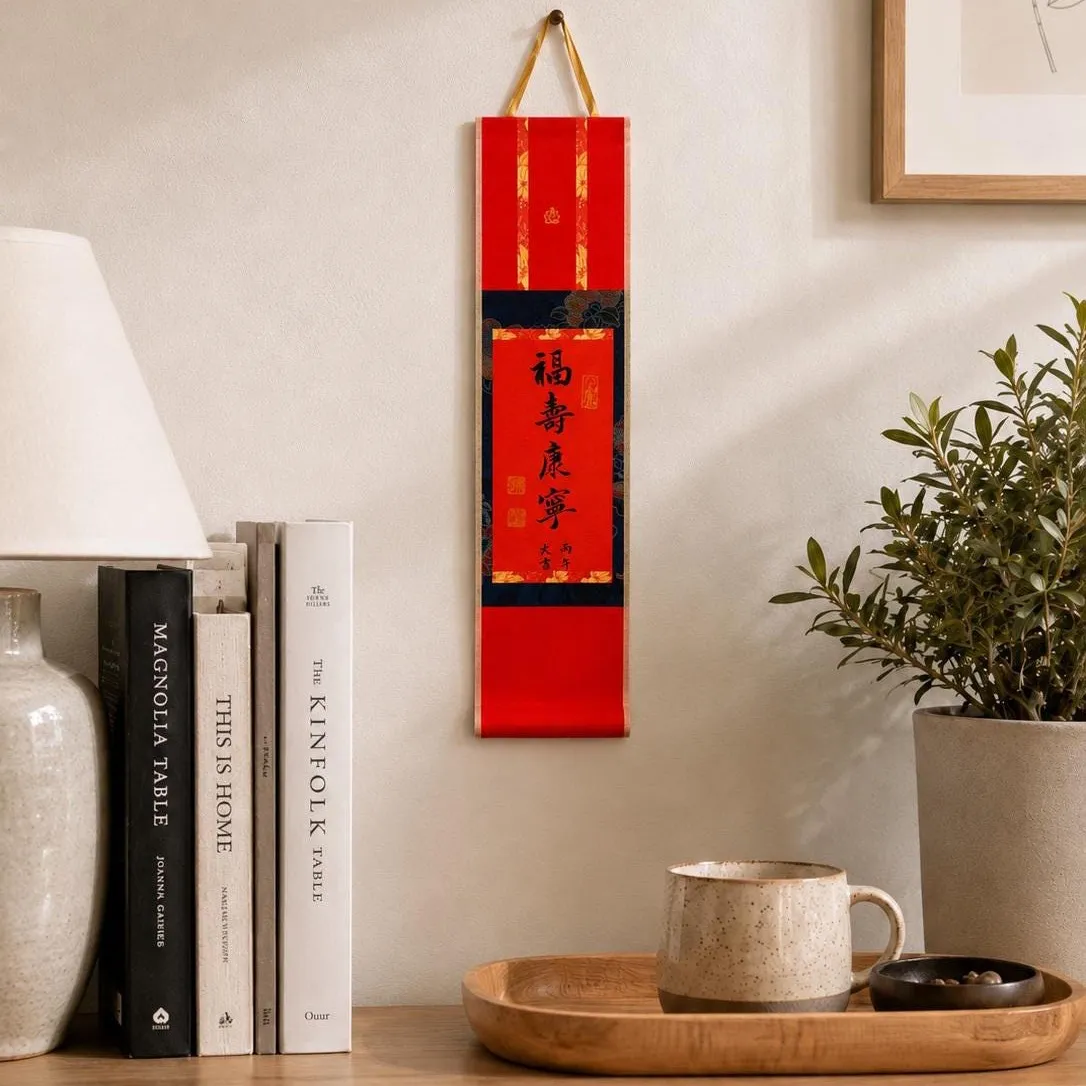
Photo shows a sample — yours will be brushed with 安, or any character you choose.
Wall Scroll — for walls & housewarmingsfrom $38→ -
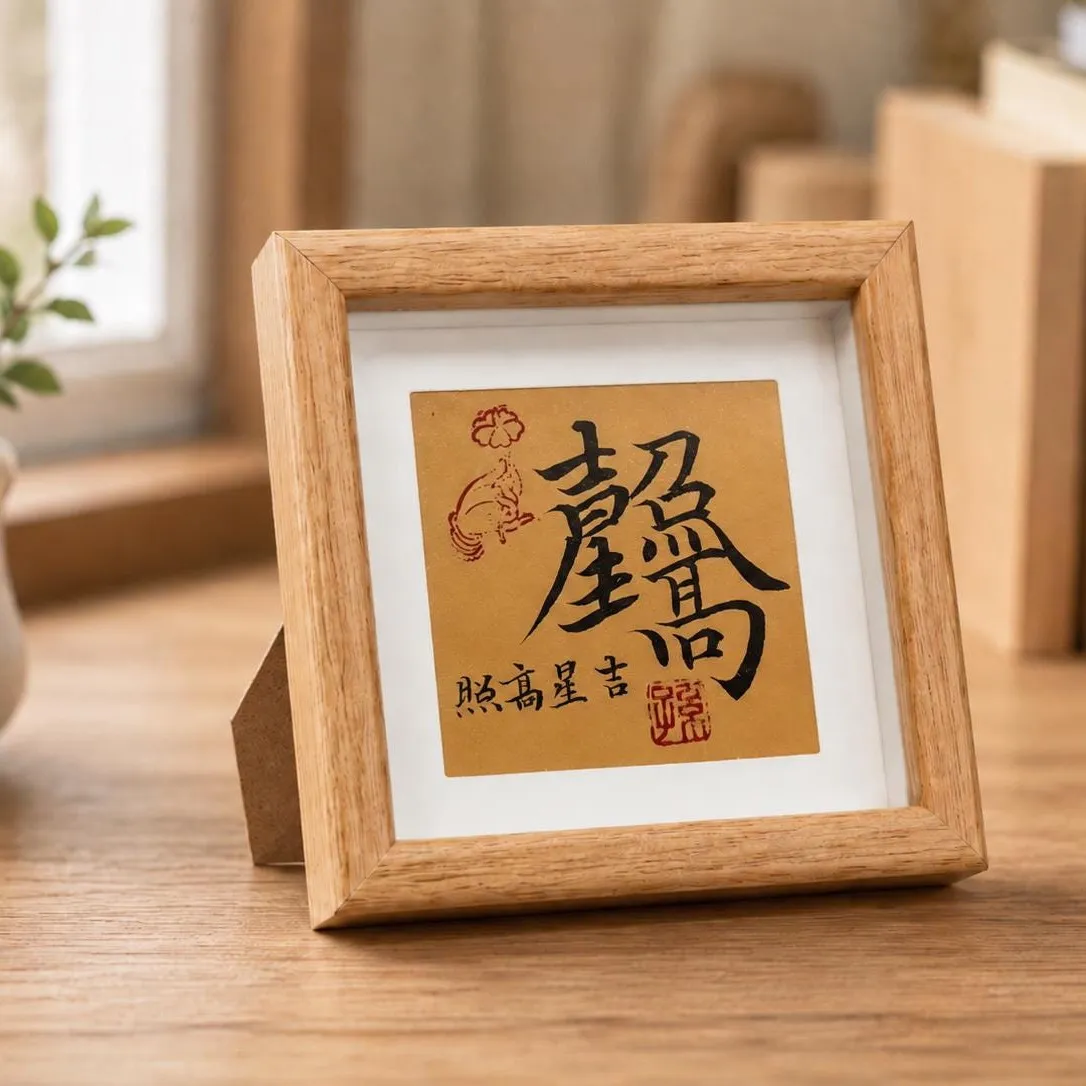
Photo shows a sample — yours will be brushed with 安, or any character you choose.
Desk Frame — for desks, studies & studiosfrom $44→ -
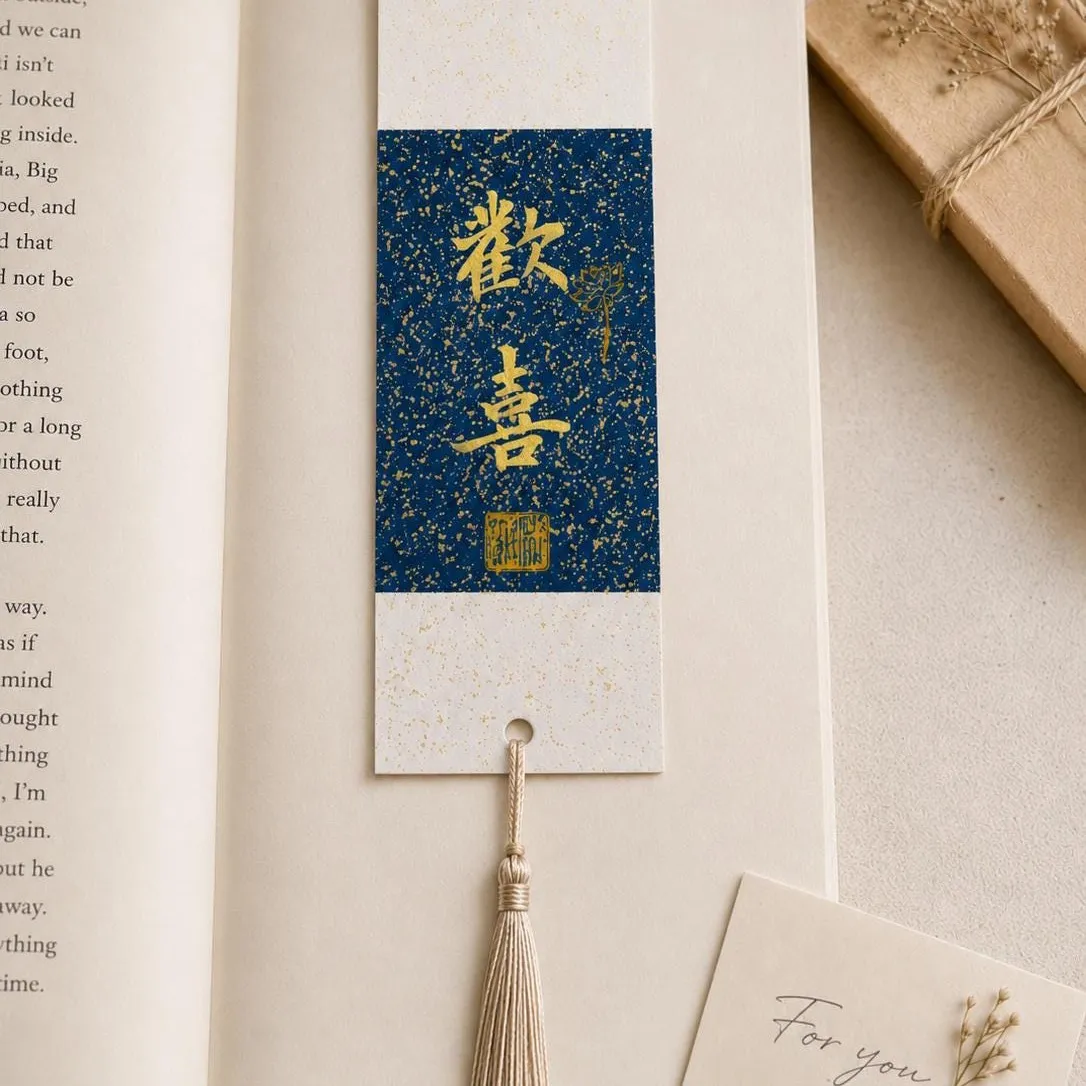
Photo shows a sample — yours will be brushed with 安, or any character you choose.
Bookmark — for readers & small thank-yousfrom $17→
What people said after it arrived.
-
The item is fantastic. The customer service was genuine. Thanks!
— M.Verified purchase · from our Etsy shop reviews · -
They were great they gave me exactly what I asked for and then some. Thank you!!
— G.Verified purchase · from our Etsy shop reviews · -
It is well designed and customized. My daughter loves it. Amazing gift for family’s d friends
— S.Verified purchase · from our Etsy shop reviews ·
Each "安" is hand-brushed by Artist Lina Sun on rice paper.
See 安 (Ān) on Etsy →