喜乐 (xǐ lè) — Joy · Daily Gladness · The Quiet Warmth That Lasts
A two-character word, not a single character.
喜乐 names the full range of what joy can be — from the cymbal crash of a wedding day to the quiet warmth of a Tuesday evening at home. Chinese culture has always understood that these are two different experiences, and it built two different characters to describe them: 喜 for the peaks (the announcement, the celebration, the moment everyone cheers) and 乐 for the sustain (the ease, the music, the laughter that needs no occasion). Most blessings offer one or the other. 喜乐 insists on both — because a life that has only celebrations but no daily warmth is exhausting, and a life that has only comfort but no peaks is flat. See 喜 → See 乐 →
This is what distinguishes 喜乐 from the more famous 囍 (double happiness) that dominates Chinese weddings. 囍 doubles the peak — two joyful events stacked together, maximum celebration. 喜乐 pairs the peak with the baseline — the wedding day and the years that follow, the birth announcement and the ordinary mornings after. It appears on family scrolls and living room calligraphy more often than 囍 because it names what a home should feel like on an unremarkable day, not just at a milestone. Chinese-language translations of the Bible chose 喜乐 to render the concept of spiritual joy (chara) precisely because no single character covered both registers: momentary delight and abiding gladness. Only the compound did.
A hand-brushed “喜乐” by FuBlessings is a fitting gift for the home or the person you want to fill with daily warmth — for a wedding that should last beyond the banquet, for a friend whose ordinary days you hope are gentle, for the household where you want joy to be the room temperature, not just the weather.
- joy across registers
- peaks and daily warmth together
- abiding gladness
- the home's emotional temperature
- happy Too thin. 喜乐 spans both the peak event and the sustained baseline — neither English 'happy' nor 'glad' carries both registers at once.
- fun Too event-bound. 乐 includes quiet warmth, not just active pleasure. 喜乐 is what a Tuesday evening at home should feel like.
The short arms are the point: these readings don’t reach it.
- 喜 bright joy / the peakA drum above a mouth — a person singing or shouting over percussion. Public, audible, celebratory joy: the wedding, the announcement, the moment everyone cheers. The cymbal crash.
- 乐 sustained gladness / the baselineSilk strings on a wooden frame — a musical instrument. The melody that continues after the guests go home: ease in the kitchen, laughter that needs no occasion, warmth as room temperature.
characters
- 喜乐平安 xǐ lè píng ān joy and peace — the Chinese Christian blessing
- 和乐 hé lè harmonious and glad — household warmth as a daily state
- 其乐融融 qí lè róng róng joy that warms through and through — the family scene at its best
- 欢喜 huān xǐ delight and gladness — the active version of 喜
- 知足常乐 zhī zú cháng lè knowing what is enough is lasting joy — the Daoist version of 乐
The Story Behind the Character
喜 (xǐ) in its oracle bone form is one of the most visually joyful characters in the early script: it depicts a drum (壴) above a mouth (口) — a person singing or shouting over percussion. This is not quiet satisfaction; it is public, audible, celebratory joy. The character retains this energy today: 喜事 means a happy event (especially a wedding), 喜报 means good news announced publicly, and the doubled form 囍 (double happiness) is the single most recognizable symbol at Chinese weddings. 乐 (lè) comes from a different register entirely. Its earliest form shows silk strings stretched over a wooden frame — a musical instrument. The Shuowen Jiezi defines it as 五声八音之总名 — "the collective name for all five tones and eight timbres." Joy, in 乐's original meaning, is not an event. It is music: something sustained, patterned, and capable of filling a room without anyone announcing it.
The compound 喜乐 merges these two frequencies. 喜 is the cymbal crash — the wedding, the birth announcement, the moment everyone cheers. 乐 is the melody that continues after the guests go home — the ease in the kitchen, the laughter that needs no occasion, the warmth of a house that has settled into itself. Neither character alone captures what a good life actually feels like over time. 喜 without 乐 is celebration without a resting state — exhausting. 乐 without 喜 is comfort without peaks — pleasant but flat. Together they describe the full emotional range of a life that has both: high points that genuinely thrill, and a baseline warmth that holds between them.
The pairing appears in classical texts with exactly this double meaning. The Book of Rites (礼记) discusses how ritual occasions (喜) and daily music (乐) together compose the texture of a well-ordered life. Centuries later, Chinese-language translations of the Bible chose 喜乐 to render the Greek word chara (χαρά) — a joy that encompasses both momentary delight and abiding spiritual gladness. The translators' instinct was precise: no single Chinese character covered both registers. Only the compound did.
Classical lines
- roughly 1,400 years
- c. 400 BCE 《论语·八佾》
- c. 400 BCE 《论语·述而》
- c. 1000 CE 宋·汪洙《神童诗》
乐而不淫,哀而不伤。 Joyful without excess, sorrowful without collapse.
Confucius defining emotional maturity: real joy is sustainable because it does not burn itself out.
发愤忘食,乐以忘忧。 So absorbed as to forget to eat, so joyful as to forget all worry.
Confucius describing his own experience of deep gladness: the kind that displaces anxiety entirely.
久旱逢甘雨,他乡遇故知。 Rain after long drought, an old friend in a foreign land.
Two of the 'four great joys' of Chinese tradition: the moments that break through ordinary life and make the heart sing.
Why This Character Matters
The doubled character 囍 (shuāng xǐ, "double happiness") may be the single most reproduced symbol in Chinese visual culture. It appears on wedding invitations, banquet tablecloths, red lanterns, door decorations, candy wrappers, and even manhole covers in Chinese cities. Legend attributes its invention to a Song dynasty scholar who passed the imperial exam and married on the same day — two 喜 events so close together that he wrote the character twice and fused them into one. Whether or not the legend is true, the instinct behind it is real: in Chinese culture, joy is something you want to double, not dilute.
But 喜乐 points to something the doubled 囍 does not. 囍 is about peak moments stacked together. 喜乐 is about peak moments (喜) woven into a baseline of daily warmth (乐). In Chinese household culture, the distinction matters: a family that has only 喜 — celebrations, events, milestones — but no 乐 — ease, laughter, music in the ordinary hours — is missing the thing that makes the celebrations worth returning to. This is why 喜乐 appears on family scrolls and living room calligraphy more often than 囍: it names what a home should feel like on a Tuesday, not just at a wedding.
A few characters live near "喜乐" but mean something quieter, sharper, or more specific. Here's how to tell them apart.
peak joy plus sustained warmth — the full emotional range
bright celebratory joy alone — the specific happy event, the wedding moment
joy as felt experience across registers — what living rooms should feel like
daily warmth as the home's room temperature — joy in ordinary hours
beauty / fulfillment — the aesthetic and completed quality of a good life
Where 喜 alone marks the bright joy of the wedding day, 喜乐 wishes for the gentler, repeating joy of the years that follow — the kind that returns on quiet evenings without needing a reason.
- Where 喜 alone marks the bright joy of the wedding day, 喜乐 wishes for the gentler, repeating joy of the years that follow — the kind that returns on quiet evenings without needing a reason.
- New Home喜乐 hung in a new home is the wish for the steady warmth that fills it — laughter at dinner, ease in the rooms, joy that doesn't need an occasion.
- For the friend whose presence in your life is itself a steady gladness, 喜乐 names the quality you hope they carry into the year ahead.
- Just BecauseSometimes the best gift is a quiet wish for ordinary joy — for the friend whose days you hope are gentle, even when nothing in particular is happening.
Wife · Husband · Family · New Couple · Best Friend · Coworker · or yourself
Looking for a name? See Western names written in Chinese →
-
What does 喜乐 (xǐ lè) mean?
喜乐 (xǐ lè) is a two-character Chinese word for joy, daily gladness, the quiet warmth that lasts. 喜乐 names the full range of what joy can be — from the cymbal crash of a wedding day to the quiet warmth of a Tuesday evening at home. Chinese culture has always understood that these are two different experiences, and it built two different characters to describe them: 喜 for the peaks (the announcement, the celebration, the moment everyone cheers) and 乐 for the sustain (the ease, the music, the laughter that needs no occasion). Most blessings offer one or the other. 喜乐 insists on both — because a life that has only celebrations but no daily warmth is exhausting, and a life that has only comfort but no peaks is flat. See 喜 → See 乐 → But 喜乐 points to something the doubled 囍 does not. 囍 is about peak moments stacked together. 喜乐 is about peak moments (喜) woven into a baseline of daily warmth (乐). In Chinese household culture, the distinction matters: a family that has only 喜 — celebrations, events, milestones — but no 乐 — ease, laughter, music in the ordinary hours — is missing the thing that makes the celebrations worth returning to. This is why 喜乐 appears on family scrolls and living room calligraphy more often than 囍: it names what a home should feel like on a Tuesday, not just at a wedding.
-
What occasions is 喜乐 given for?
喜乐 is traditionally given for Wedding, New Home, Birthday, Just Because. Where 喜 alone marks the bright joy of the wedding day, 喜乐 wishes for the gentler, repeating joy of the years that follow — the kind that returns on quiet evenings without needing a reason. 喜乐 hung in a new home is the wish for the steady warmth that fills it — laughter at dinner, ease in the rooms, joy that doesn't need an occasion.
-
Who brushes the 喜乐 calligraphy?
FuBlessings hand-brushes each 喜乐 (Xǐ Lè) to order, in ink on rice paper — never printed, never repeated.
Bring 喜乐 home — choose how you'd like it brushed.
-
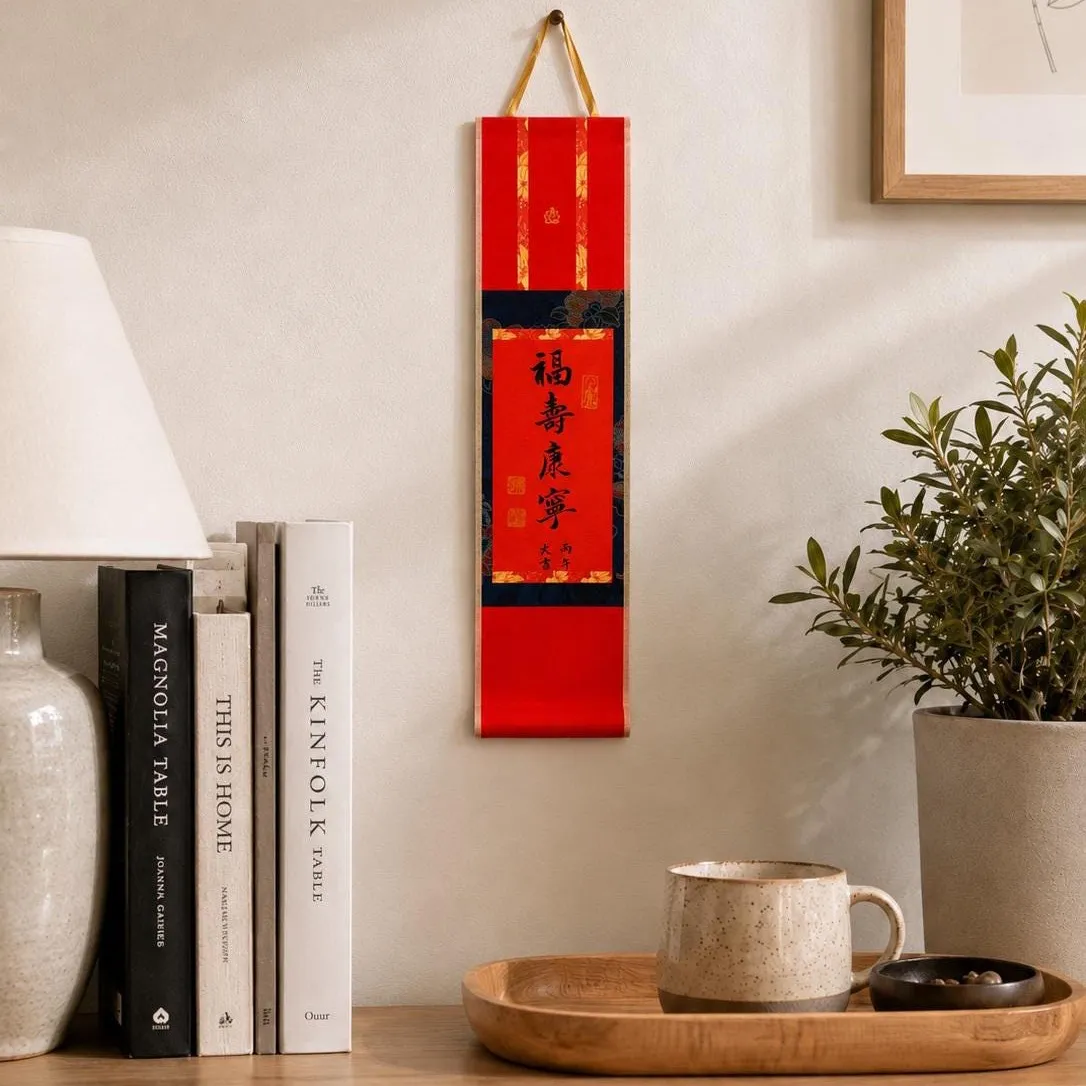
Photo shows a sample — yours will be brushed with 喜乐, or any character you choose.
Wall Scroll — for walls & housewarmingsfrom $38→ -
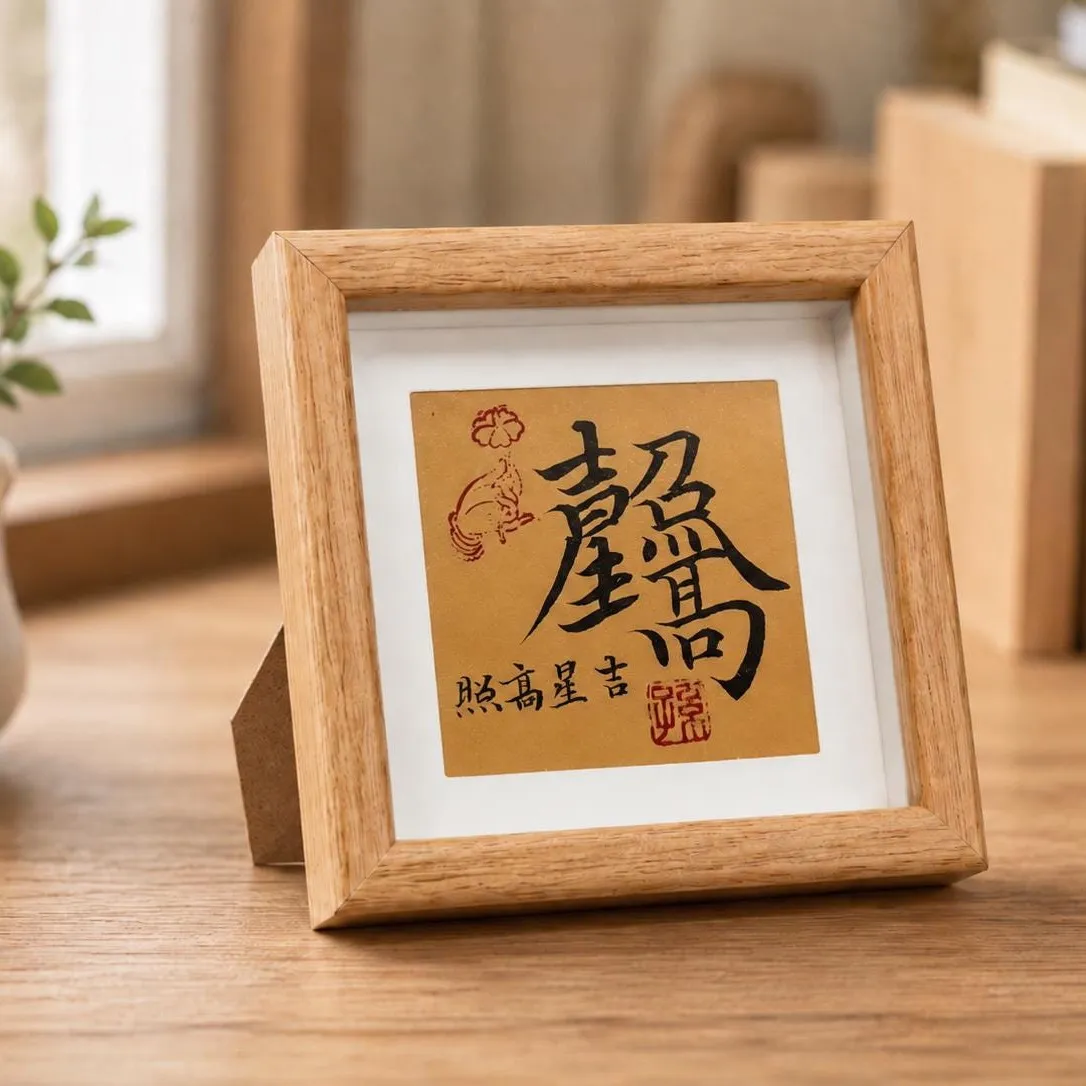
Photo shows a sample — yours will be brushed with 喜乐, or any character you choose.
Desk Frame — for desks, studies & studiosfrom $44→ -
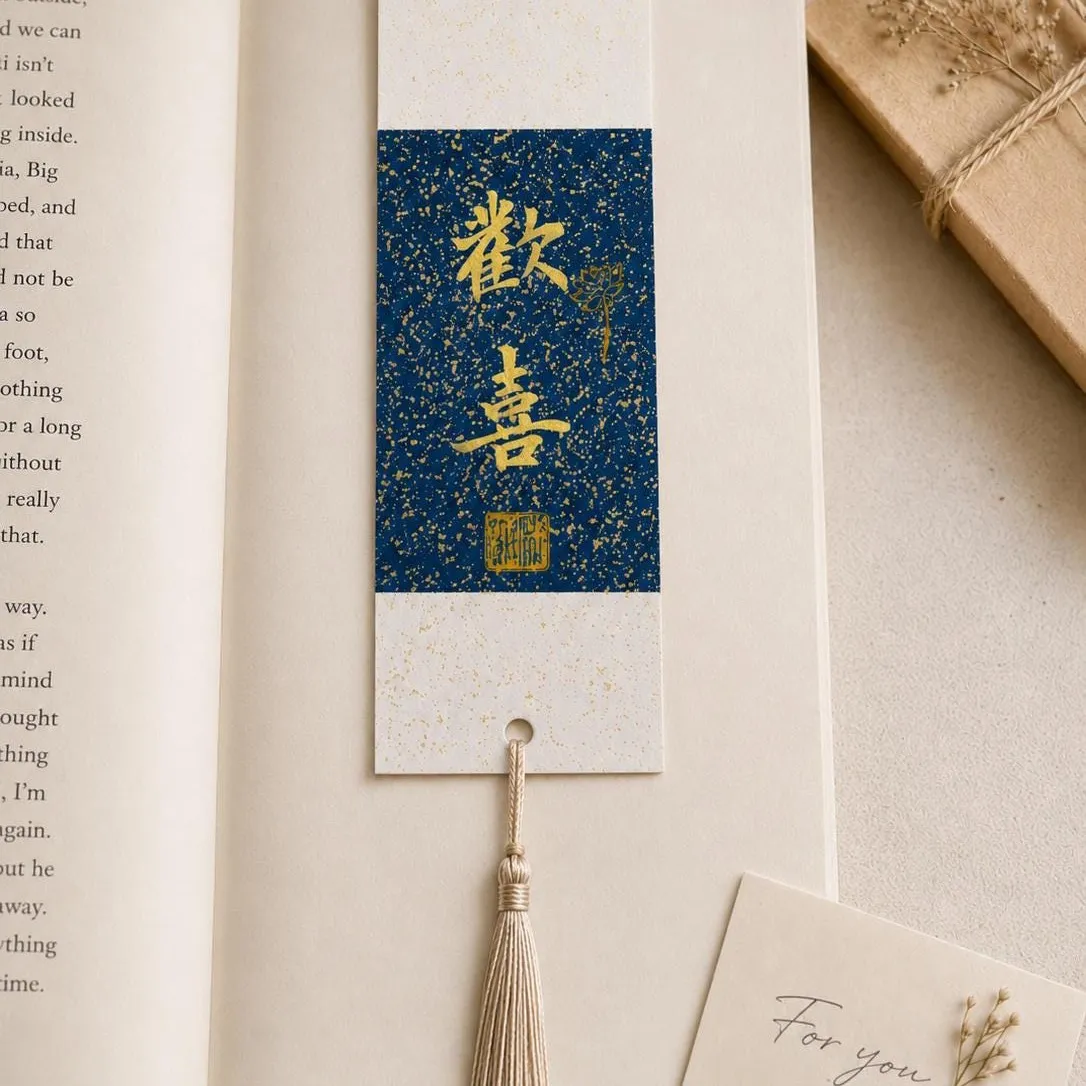
Photo shows a sample — yours will be brushed with 喜乐, or any character you choose.
Bookmark — for readers & small thank-yousfrom $14→
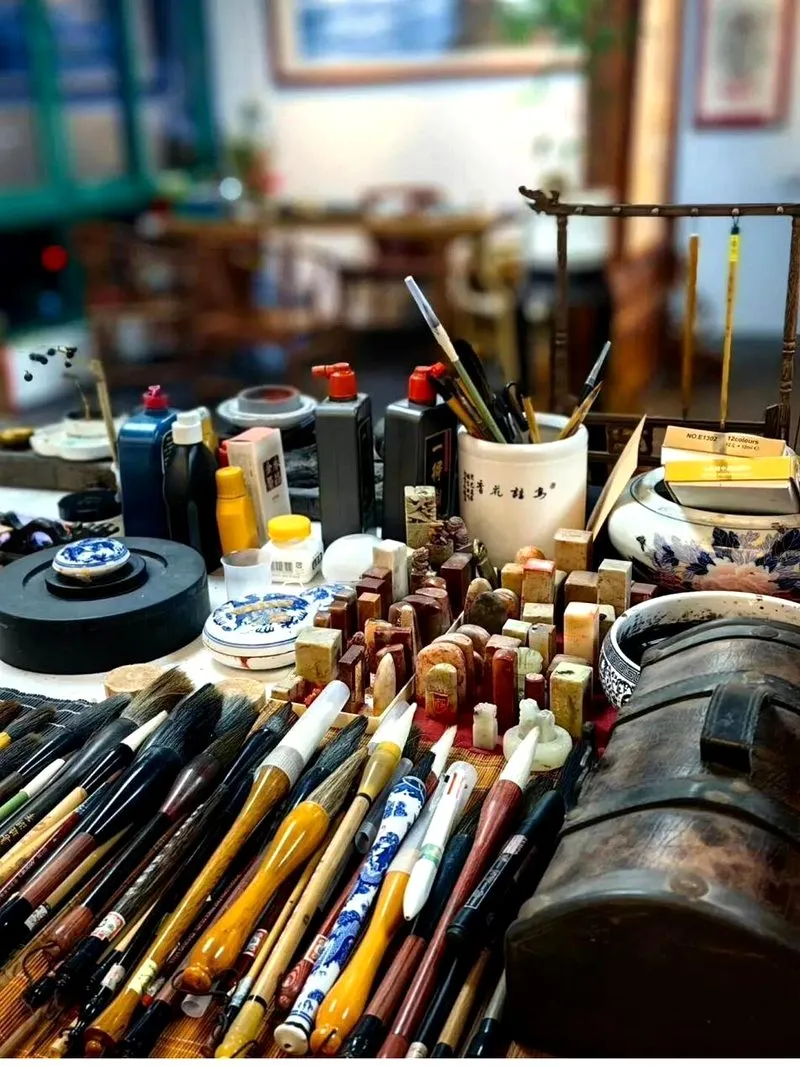
What people said after it arrived.
-
The item is fantastic. The customer service was genuine. Thanks!
— M.Verified purchase · from our Etsy shop reviews · -
They were great they gave me exactly what I asked for and then some. Thank you!!
— G.Verified purchase · from our Etsy shop reviews · -
It is well designed and customized. My daughter loves it. Amazing gift for family’s d friends
— S.Verified purchase · from our Etsy shop reviews ·
Each "喜乐" is hand-brushed by FuBlessings on rice paper.
See 喜乐 (Xǐ Lè) on Etsy →