学业有成 (xué yè yǒu chéng) — The Studies Carried Through
Simplification touched only the first two bays: 學 lost the hands and the 爻 they held over the child, and 業 kept its row of teeth but lost the board they were cut into. 有 and 成 stand as they always did.
The main hall of a Confucius temple is called 大成殿, the Hall of Great Completion — a name the Song court gave it in 1104 on the strength of a line in 《孟子》 calling Confucius the one who gathered the whole into completion. Students bowed there before examinations for eight centuries. The 成 in these four characters is that word scaled down to one person and one enrolment, and Chinese keeps the distinction on paper: a 肄业证书 records that somebody attended and left, a 毕业证书 that they finished, and they are two different documents because the difference is real. What 学业有成 asks after is the thing neither document can certify. It is also the only blessing on this shelf that voids itself by working — the year the studies are complete it stops applying to that person at all, and 事业有成 takes over.
The register is formal, and that is most of what you need to know about where it turns up. Nobody texts a classmate 学业有成 the night before a paper; that gets 加油. These four characters are what an uncle stands up to say at a 升学宴 when a nephew’s university place comes through, what goes inside the red envelope at the start of term, and what a teacher writes in a graduating student’s 留言册 when the occasion asks for the formal wording rather than the fond one. It is the wording adults use when they have decided to be serious in front of a young person, which is also why it arrives in bulk from relatives at New Year and why a student, receiving it for the eleventh time, learns to hear it as affection rather than instruction.
A hand-brushed “学业有成” by FuBlessings suits a friend starting a degree, a friend’s child sitting exams, or a colleague doing a part-time master’s in the evenings after work. Hung over a desk it is not pressure, because of what the grammar leaves out — 学业 is the subject of the sentence and the student is not in it, so the scroll asks after the course rather than measuring the person sitting under it. What it says to someone three years into something long is the thing they most need said: that the years are a course and not a corridor, and that courses end.
- the course of study carried through to the end of it
- years of school with something standing at the end
- the work finished, not merely attended
- a student who reached the milestone the course was aimed at
- clever 聪明 is equipment a person turns up with. These four characters are about a stretch of time and what came out of it, which is why they are sayable to a student who found it hard and honest about one who did not.
- good grades 成绩 is a number on a transcript and one arrives every term, which is exactly why it is not what this asks after. 有成 is a single verdict at the far end, available once, and a student can collect indifferent 成绩 for years and still land it.
- graduation 毕业 is administrative: a date, a certificate, a status you either hold or do not. 学业有成 is a judgement about whether the years underneath that certificate came to anything, and the two genuinely come apart in both directions.
- a successful career That is 事业有成, and the two hand off to each other. This one stops applying at the moment it comes true; that one cannot honestly be said until a person has started work.
The short arms are the point: these readings don’t reach it.
- 学业 the course of study being carriedA thing you are on the roll for. 学籍 is the registration; 学业 is what the registration obliges you to carry, and it comes with an end date — which is why 肄业, 毕业 and 结业 are all statuses of this noun and not of any other study word in the language.
- 有成 it reached completion成 is measured against the far end of the course and against nothing else. No comparison is available inside these four characters — nothing in them says better, or first, or top of the year, only arrived.
characters
- 学有所成 xué yǒu suǒ chéng the studying came to something — the variant whose subject is the activity rather than the enrolment, so it covers the self-taught as well as the registered
- 品学兼优 pǐn xué jiān yōu excellent in character and in study alike — the school's own verdict, printed on certificates, and it grades the person as well as the work
- 大器晚成 dà qì wǎn chéng the great vessel is finished late — the same 成, with the schedule stretched out as consolation
- 十年寒窗 shí nián hán chuāng ten years at a cold window — related by sense, sharing no character: it names the years of work that these four characters report the end of
- 金榜题名 jīn bǎng tí míng the name written on the golden list — also related by sense alone, and it is the result rather than the course: the exam board, not the years behind it
Cinnabar marks the characters 学业有成 actually contains. The dark row is a relative by meaning or by sound, not one shared stroke.
The Story Behind the Character
Take the oracle-bone form of 學 apart and it stacks up from the ground. A roof. Above the roof, a pair of adult hands, one at each side, reaching down; held between them, 爻, two crossed strokes doubled, read variously as counting rods, as knotted cords, as the lattice of the very building the scene takes place in. The child (子) is added later, in bronze forms — because teaching and learning both concern the young. The graph is not a person reading. It is a pair of hands coming down under a roof, with the crossed sticks that show how something is put together.
《说文解字》 files the character under its fuller form 斅 and defines it in one word that has nothing to do with information: 覺悟也 — to wake up, to come to. The Shuowen analysis has 教 sitting inside 斅, and the excavated record supports the closer claim: teaching and studying were written with the same elements, and the difference between them is only which end you are standing at. 《尚书·说命下》 says it outright — 惟斅学半, teaching is half of studying — and 《礼记·学记》 quotes the line approvingly, because in that grammar the adult leaning over the child is doing the same verb the child is.
The 成 at the other end is a school word before it is a success word. 《礼记·学记》 sets out the classical curriculum as a schedule with two grades of finished in it — 小成 at seven years, 大成 at nine — and neither of them is a score. That is the completion these four characters ask for — not a prize, not a rank, but the far end of a course somebody is currently partway along. What classical writing gives you is 学有所成, the studying came to something, whose subject is the activity — which is why it still fits a person teaching themselves something with no school anywhere near them. 学业有成 is the modern fixed greeting, and the swap it makes is institutional: 学业 is a noun you have to be enrolled to own, so the wish reaches exactly as far as a register does.
Classical lines
- roughly 1,000 years
- c. 400 BCE 《论语·为政》
- c. 300 BCE 《礼记·学记》
- c. 300 BCE 《孟子·尽心上》
- c. 590 CE 《颜氏家训·勉学》
吾十有五而志于学,三十而立,四十而不惑。 At fifteen I set my mind on study; at thirty I stood firm; at forty I was no longer confused.
The most quoted autobiography in Chinese, and it opens with an enrolment rather than an achievement. Study is where the count starts, and the standing firm is fifteen years later.
七年视论学取友,谓之小成。 In the seventh year he is examined on how he discusses learning and how he chooses his friends
this is called the small completion. — Look at what is being examined: not a quantity of material recalled, but whether the student can hold an argument and pick his company. 成 enters the vocabulary of study attached to that, and to a count of years, and to nothing resembling a mark.
君子之志于道也,不成章不达。 For a person set on the Way: without completing a movement, there is no getting through.
章 is a whole section of music, and Mencius has just compared the learner to running water that will not move on until it has filled the hollow in front of it. Half a section played is not progress deferred; it is not progress at all.
积财千万,不如薄伎在身。 Ten million in savings is worth less than one modest skill carried on your person.
Yan Zhitui was three times over the subject of a fallen state — Liang, Northern Qi, Northern Zhou — and wrote this chapter for his sons on the strength of it. He offers the line as a proverb rather than his own, which is its own kind of evidence: the argument for study here is not refinement but property nobody can take off you.
Why This Character Matters
Every June the 高考 puts well over ten million candidates into exam rooms over the same two days — three or four of them in the provinces that have added papers — and for the weeks around it these four characters are one of the most-sent formal blessings in the country — on red banners over school gates, in the toast a teacher gives at the 谢师宴 that families throw once results are out, at the end of messages from relatives who have not called since New Year. They travel with 金榜题名: that one for the result, this one for the years that produced it. One is about a list with your name on it. The other does not mention the list.
The traffic runs one way. Adults say it to students — teachers to their classes, parents to children, an aunt to a nephew she sees once a year — and a student cannot say it back, because the returning compliment to a teacher is 桃李满天下, the peaches and plums filling the world. Underneath sits a distinction Chinese keeps and English blurs: 学习 is the activity, what you did this afternoon; 学业 is the course you are enrolled in and answerable for, with a start date and an end; 学问 is what a person ends up carrying, and it takes decades. Only the middle one can be finished, and these four characters ask after exactly that one.
A few characters live near "学业有成" but mean something quieter, sharper, or more specific. Here's how to tell them apart.
a course of study, which has an end date built in
a working life, which does not
the years already put in, and whether they arrived
the road out in front, and how it looks
the whole course, judged at the far end
one book, opened this evening
A certificate records a date.
- A certificate records a date. These four characters record what the years underneath the date came to, and the two do not always agree — which is why this is the line that goes on the banner over the hall and 毕业快乐 is the line that goes in the group chat. It reads the whole course backwards from the end: the enrolment that turned into attendance, the attendance that turned into work, the work that reached the milestone it was aimed at. Said on the day the certificate is handed over, it credits the four years rather than the ceremony.
- At New Year the greetings sort the room by age before anyone opens their mouth. An elder gets 身体健康, a working adult gets 事业有成, and anyone still enrolled — six years old or twenty-six — gets these four characters, usually paired with 天天向上 for a child or 金榜题名 for a student with an exam in front of them. Parents go on saying it long after a child has stopped wanting to hear it, and they are not wrong to: the seat it addresses is held for exactly as long as the enrolment lasts, and not one New Year longer.
- Confucius dated his own start at fifteen: 吾十有五而志于学 — at fifteen I set my mind on study. A birthday inside a course of study is a marker in exactly that sense, a count of years against a thing still unfinished rather than a celebration of one already done. For a student's birthday these four characters say the plainest useful thing an adult can say: that the years are going somewhere, and that the somewhere has an end you will reach.
Friend · Best Friend · Coworker · or yourself
Looking for a name? See Western names written in Chinese →
-
What does 学业有成 (xué yè yǒu chéng) mean?
学业有成 (xué yè yǒu chéng) is a 4-character Chinese phrase for the studies carried through. The main hall of a Confucius temple is called 大成殿, the Hall of Great Completion — a name the Song court gave it in 1104 on the strength of a line in 《孟子》 calling Confucius the one who gathered the whole into completion. Students bowed there before examinations for eight centuries. The 成 in these four characters is that word scaled down to one person and one enrolment, and Chinese keeps the distinction on paper: a 肄业证书 records that somebody attended and left, a 毕业证书 that they finished, and they are two different documents because the difference is real. What 学业有成 asks after is the thing neither document can certify. It is also the only blessing on this shelf that voids itself by working — the year the studies are complete it stops applying to that person at all, and 事业有成 takes over. Every June the 高考 puts well over ten million candidates into exam rooms over the same two days — three or four of them in the provinces that have added papers — and for the weeks around it these four characters are one of the most-sent formal blessings in the country — on red banners over school gates, in the toast a teacher gives at the 谢师宴 that families throw once results are out, at the end of messages from relatives who have not called since New Year. They travel with 金榜题名: that one for the result, this one for the years that produced it. One is about a list with your name on it. The other does not mention the list.
-
What occasions is 学业有成 given for?
学业有成 is traditionally given for Graduation, Chinese New Year, Birthday. A certificate records a date. These four characters record what the years underneath the date came to, and the two do not always agree — which is why this is the line that goes on the banner over the hall and 毕业快乐 is the line that goes in the group chat. It reads the whole course backwards from the end: the enrolment that turned into attendance, the attendance that turned into work, the work that reached the milestone it was aimed at. Said on the day the certificate is handed over, it credits the four years rather than the ceremony. At New Year the greetings sort the room by age before anyone opens their mouth. An elder gets 身体健康, a working adult gets 事业有成, and anyone still enrolled — six years old or twenty-six — gets these four characters, usually paired with 天天向上 for a child or 金榜题名 for a student with an exam in front of them. Parents go on saying it long after a child has stopped wanting to hear it, and they are not wrong to: the seat it addresses is held for exactly as long as the enrolment lasts, and not one New Year longer.
-
Who brushes the 学业有成 calligraphy?
FuBlessings hand-brushes each 学业有成 (Xué Yè Yǒu Chéng) to order, in ink on rice paper — never printed, never repeated.
Bring 学业有成 home — choose how you'd like it brushed.
-
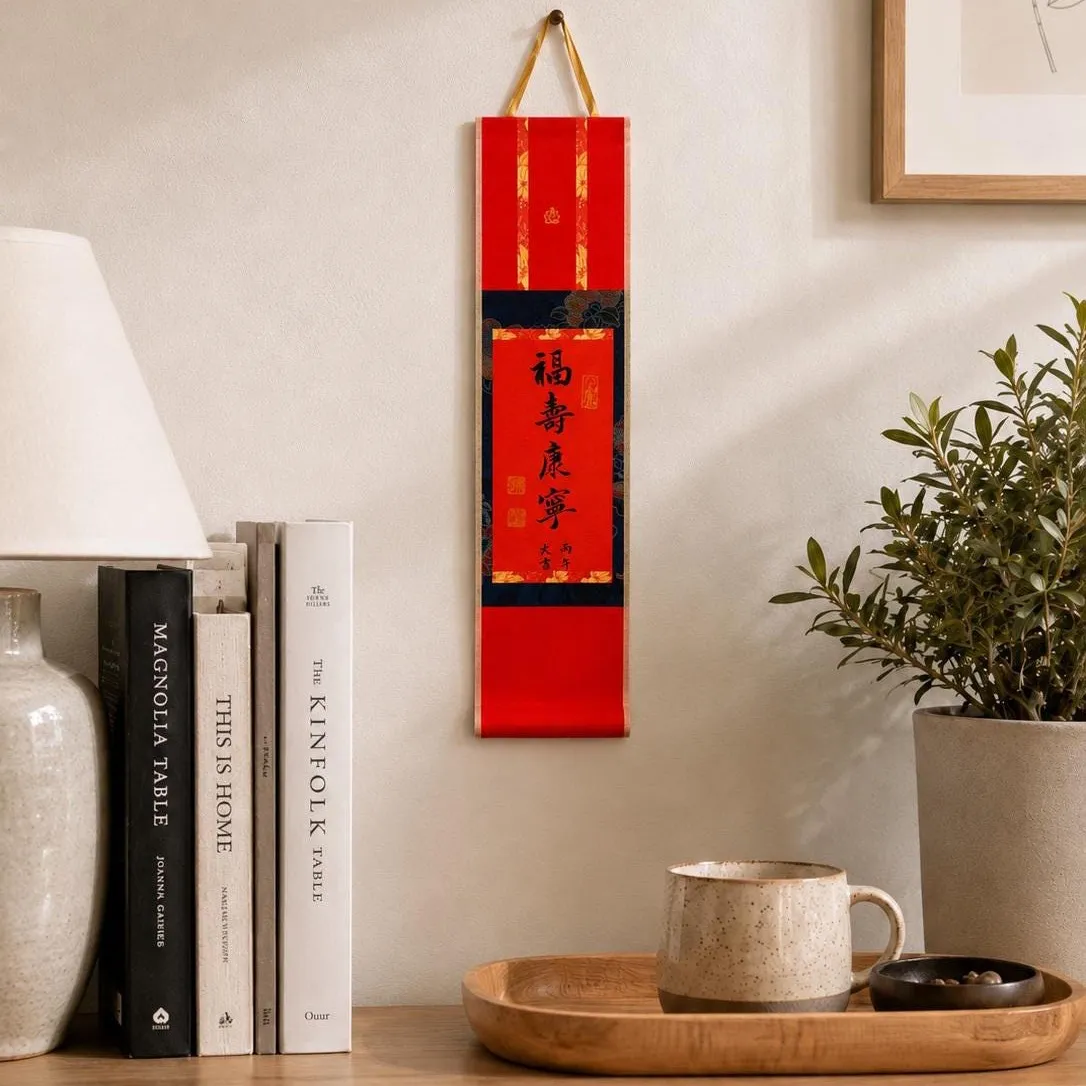
Photo shows a sample — yours will be brushed with 学业有成, or any character you choose.
Wall Scroll — for walls & housewarmingsfrom $38→ -
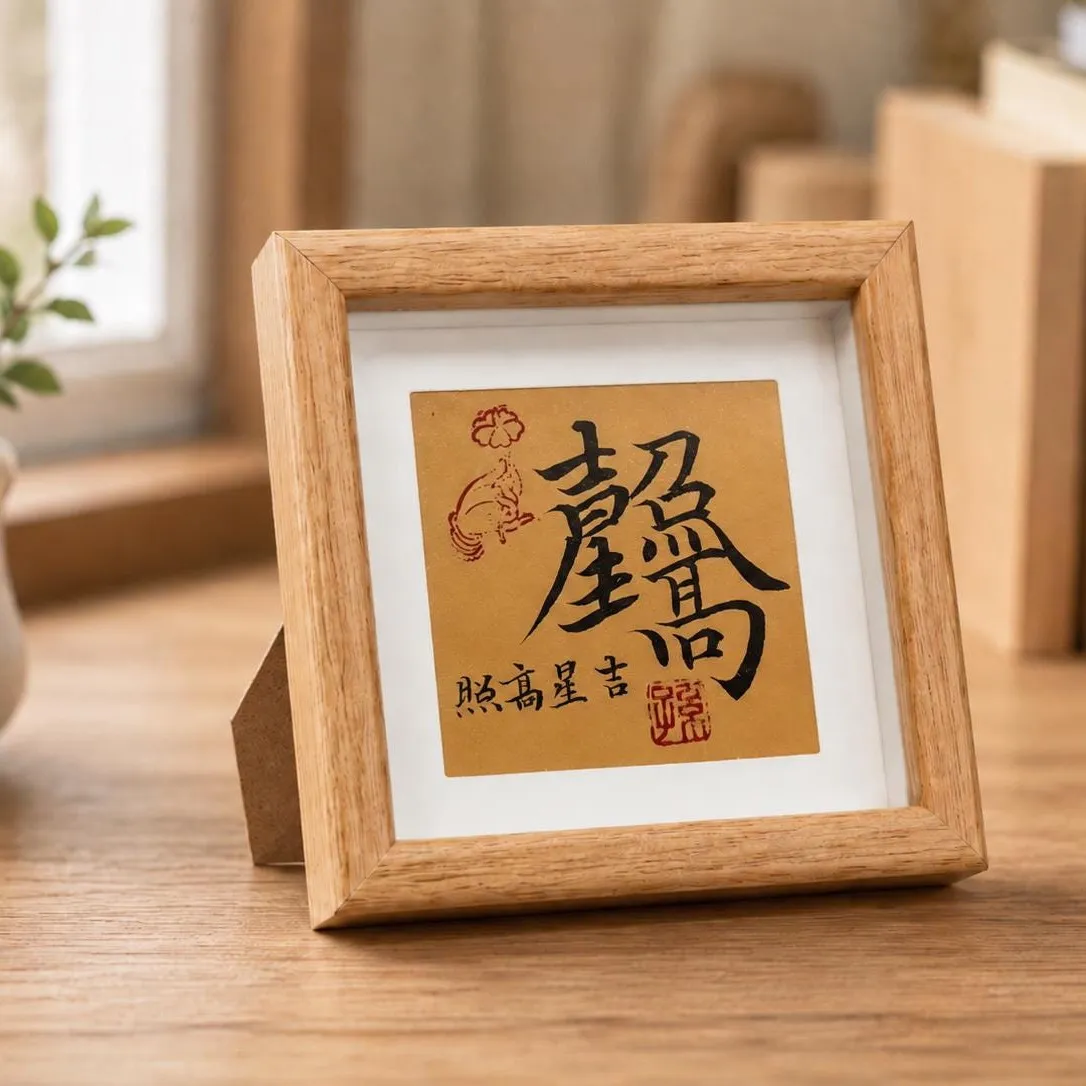
Photo shows a sample — yours will be brushed with 学业有成, or any character you choose.
Desk Frame — for desks, studies & studiosfrom $44→ -
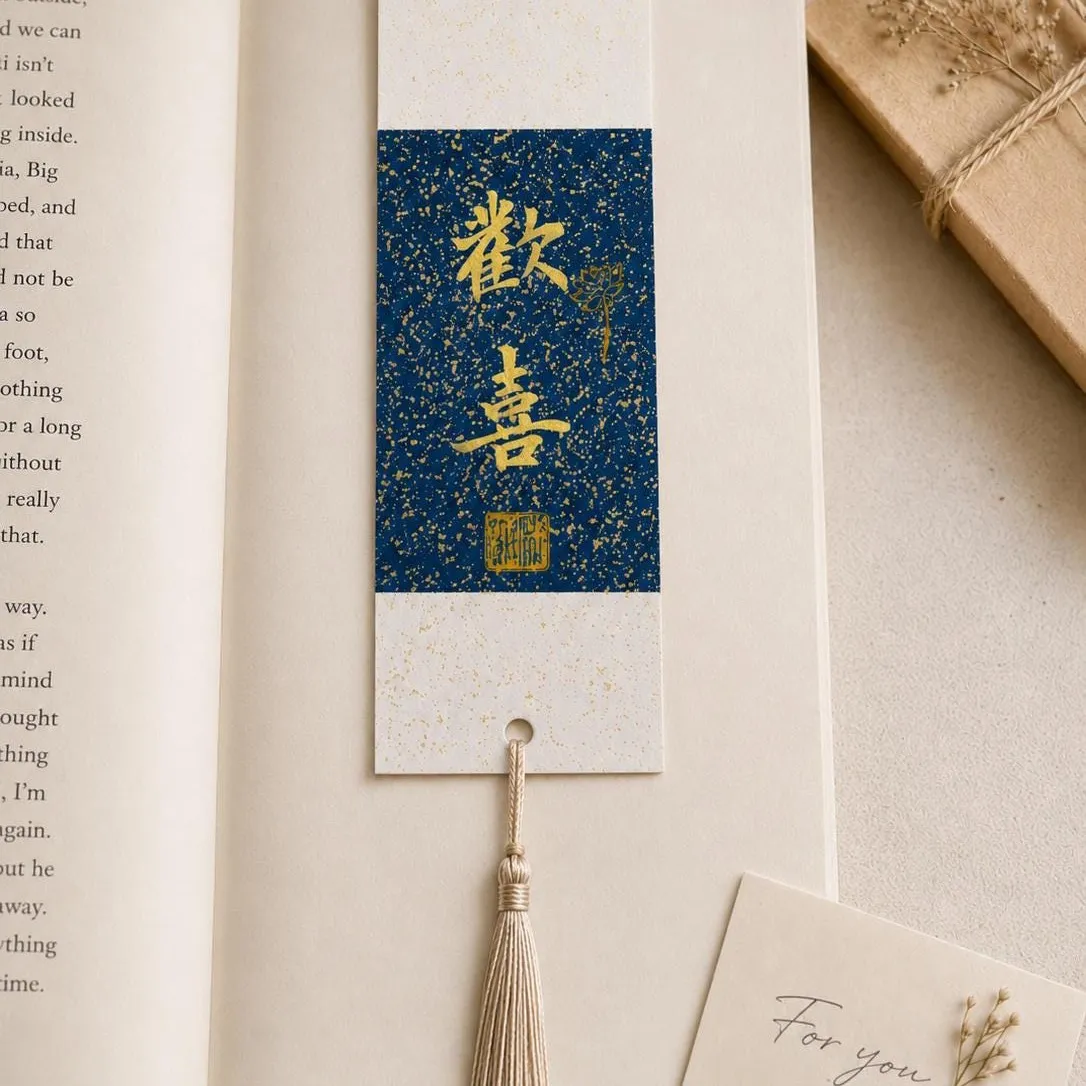
Photo shows a sample — yours will be brushed with 学业有成, or any character you choose.
Bookmark — for readers & small thank-yousfrom $14→

What people said after it arrived.
-
The item is fantastic. The customer service was genuine. Thanks!
— M.Verified purchase · from our Etsy shop reviews · -
They were great they gave me exactly what I asked for and then some. Thank you!!
— G.Verified purchase · from our Etsy shop reviews · -
It is well designed and customized. My daughter loves it. Amazing gift for family’s d friends
— S.Verified purchase · from our Etsy shop reviews ·
Each "学业有成" is hand-brushed by FuBlessings on rice paper.
See 学业有成 (Xué Yè Yǒu Chéng) on Etsy →