瑞 (ruì) — Good Tidings · Blessing · Promise of a Bright Year
A single character.
瑞 is not a blessing — it’s a forecast. Where 福 wishes for good fortune and 吉 declares it, 瑞 reads the signs and says: it’s coming. The character began as the name for jade tokens that proved a king had heaven’s approval, then expanded to describe anything in nature that signaled good things ahead — the first snow of winter, an unusual cloud at dawn, a crane spotted in an unexpected place. Giving someone 瑞 is like pointing at the horizon and saying: look, the season is about to turn.
The character carries special weight at beginnings. Chinese New Year greetings are full of 瑞: 瑞气盈门 (auspicious energy filling the doorway), 瑞雪兆丰年 (a timely snow foretelling a harvest year). Babies born in auspicious years are given names with 瑞. New businesses incorporate it into their company names. Housewarming gifts carry it across the threshold. In each case, 瑞 does the same work: it blesses the start of something by saying the signs are good, the timing is right, the conditions favor what’s about to happen.
A hand-brushed 瑞 by Artist Lina Sun is the right gift for the person standing at the start of something — a new job, a new home, a new baby, a new year. It doesn’t promise that everything will be easy. It promises something better: that the signs point toward good things, and the season ahead is bright. For Chinese New Year or a graduation, it’s the most forward-looking character in the library.
- auspicious sign
- good tidings
- promise of a bright season
- a hopeful omen
- luck Too random. 瑞 is not chance — it is a readable signal that conditions are aligning.
- blessing A blessing is the thing itself. 瑞 is the first hint that the blessing is coming.
- miracle Too dramatic. 瑞 is quiet — a timely snow, an early flower, a cloud at dawn. The promise is in the subtlety.
The short arms are the point: these readings don’t reach it.
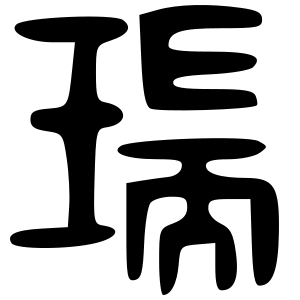
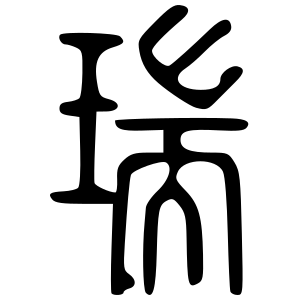
- 王 (玉) jadeThe jade radical, drawn as three horizontal lines linked by a vertical stroke — heaven, earth, and humanity threaded together. As a radical, it marks the character as belonging to the world of jade: precious, incorruptible, used as proof of trust.
- 耑 a sprout breaking throughAn image of a young plant pushing up out of the soil — the first visible sign that something alive is on its way.
character
- 瑞雪 ruì xuě auspicious snow — the well-timed snowfall that foretells a harvest
- 祥瑞 xiáng ruì auspicious omen — a sign that good fortune is on its way
- 瑞气 ruì qì auspicious energy — the felt atmosphere of a bright moment
- 瑞兆 ruì zhào an auspicious portent — a visible forecast of good things
- 瑞玉 ruì yù the jade tablet — the original meaning, a token of heaven's approval
The Story Behind the Character
The left side of 瑞 is 王, the jade radical — in early script, this was drawn as three horizontal lines connected by a vertical stroke, representing the three realms (heaven, earth, humanity) linked together, the material embodiment of cosmic harmony. When used as a radical, it signals jade: precious, incorruptible, treated as proof of trust. The right side, 耑, depicted a sprout pushing up from the earth — the first visible sign that something alive is about to emerge.
Together, the character described a very specific early concept: the jade token that a king received as a sign of heaven's approval. China's first dictionary (Shuowen Jiezi, c. 100 CE) defined 瑞 as "以玉为信" — "using jade as a sign of trust." These were real objects: carved jade tablets called 瑞玉 that served as proof of legitimacy, exchanged between rulers and officials the way modern governments exchange credentials.
But the meaning soon expanded beyond diplomacy. Anything that signaled heaven's favor became 瑞: an unusual cloud formation (瑞云), the season's first snow (瑞雪), even a rare animal sighting. The common thread was always the same — a sign from the universe that good things are coming. Not good luck itself, but the promise of it, the first visible hint that the season is about to turn.
Classical lines
- about a century
- c. 823 CE 白居易《忆江南》
- c. 824 CE 刘禹锡《秋词二首》
One further source is quoted below without a date printed, so it stays off the rail.
瑞雪兆丰年。 A timely snow foretells a harvest year.
The most famous 瑞 saying in Chinese: when snow falls at the right moment, insulating the winter wheat and killing pests, farmers know the next harvest will be good. An auspicious sign you can actually measure.
日出江花红胜火,春来江水绿如蓝。 The sunrise makes the river flowers redder than fire; spring turns the river water green as jade.
A Tang dynasty poet describing the moment when spring arrives and everything announces itself at once. The poem became shorthand for 瑞气: the visible energy of a new season.
山明水净夜来霜,数树深红出浅黄。 Clear mountains, clean water, frost at night
a few trees turn deep red against pale yellow. — Another poet finding 瑞 in nature: the sign that autumn has arrived is not dramatic, just a few trees changing color. The promise is in the subtlety.
Why This Character Matters
The phrase 瑞雪兆丰年 — "a timely snow foretells a rich harvest" — is probably the most widely known proverb containing 瑞 in all of Chinese. It refers to the agricultural observation that a good snowfall in late winter insulates young wheat and kills overwintering pests, leading to a better crop. The saying has been in continuous use for so long that no one can date its origin. It captures 瑞 perfectly: not luck itself, but a readable sign that luck is on its way.
In modern Chinese, 瑞 appears most often in names — both personal and commercial. The coffee chain Luckin Coffee is called 瑞幸 (Ruì Xìng, "auspicious fortune") in Chinese. Children are given names like 瑞雪 (auspicious snow) or 瑞祥 (auspicious sign). Companies choose 瑞 for their names because it signals fresh starts and bright prospects without being as heavy-handed as 福 or 财. As a gift character, 瑞 is the optimist's choice: it doesn't claim that good things have arrived, but it reads the signs and says — they're coming.
瑞 is a beautiful character that Chinese people associate with fresh starts and good omens. It's popular in names — both personal and brand names — so it feels natural and refined, not foreign. A native speaker would see this tattoo as genuinely auspicious and tasteful. One of the better tattoo choices.
Calligraphy Styles for Tattoos
- Regular script (楷书 kǎishū) Best for tattoos
瑞 has 13 strokes split between the narrow jade radical 王 on the left and the broader 耑 on the right. Regular script keeps the proportions clean and the two halves visually balanced.
- Running script (行书 xíngshū) Good for larger pieces
Running script gives 瑞 a sense of forward motion that suits its meaning of emerging good fortune. Works well at 3+ inches where the right component 耑 has room to flow.
- Cursive script (草书 cǎoshū) Only with an expert calligrapher
Cursive 瑞 can be striking — the jade radical simplifies to a few quick strokes and the right side flows like a sprouting plant. But the character is unfamiliar enough in cursive that readability drops fast.
Common Mistakes to Avoid
- Writing the left radical as 玉 (with the bottom dot) instead of 王 in its radical formIntended: 瑞 with the standard jade radical 王
When 玉 appears as a left-side radical, it drops its bottom dot and is written as 王. Adding the dot is a common error that disrupts the character's proportions and signals the tattoo artist didn't consult a proper reference.
- Confusing the right side 耑 with 端 (the full character for 'proper')Intended: 瑞 with 耑 as its right component
端 is a standalone character that contains 耑 plus the standing radical 立. Adding extra strokes from 端 into 瑞 creates a character that doesn't exist.
Notes for Your Tattoo Artist
13 strokes. The jade radical 王 on the left should be kept narrow — about one-third of the total width. The right component 耑 needs room for its internal horizontal strokes. Minimum size 2 inches. The key proportion challenge is keeping 王 compact so 耑 doesn't get cramped.
A few characters live near "瑞" but mean something quieter, sharper, or more specific. Here's how to tell them apart.
the forecast — the first sign that good things are coming
the promise of what's about to arrive
The traditional moment for "瑞" — a wish for a year of bright beginnings and gentle fortune.
- The traditional moment for "瑞" — a wish for a year of bright beginnings and gentle fortune.
- New HomeFor a friend or family member starting fresh — "瑞" is the wish that good things follow them into the new space.
- New Job · New ChapterFor anyone stepping into something new — a hopeful blessing for the road ahead.
- For a family welcoming a new life — 瑞 carries the hope that the new chapter ahead is gentle, bright, and full of good things.
- For the graduate stepping into a new season — 瑞 is the wish for everything that's ahead to carry good things.
- A way to mark a new year of life — and wish for everything that's ahead to unfold gently.
Family · Friend · Mom · Dad · Boss · Coworker · Best Friend · New Parent · or yourself
瑞 is one of the characters we use to write Western names in Chinese. See it at work:
-
What does 瑞 (ruì) mean?
瑞 (ruì) is the Chinese character for good tidings, blessing, promise of a bright year. 瑞 is not a blessing — it's a forecast. Where 福 wishes for good fortune and 吉 declares it, 瑞 reads the signs and says: it's coming. The character began as the name for jade tokens that proved a king had heaven's approval, then expanded to describe anything in nature that signaled good things ahead — the first snow of winter, an unusual cloud at dawn, a crane spotted in an unexpected place. Giving someone 瑞 is like pointing at the horizon and saying: look, the season is about to turn. The phrase 瑞雪兆丰年 — "a timely snow foretells a rich harvest" — is probably the most widely known proverb containing 瑞 in all of Chinese. It refers to the agricultural observation that a good snowfall in late winter insulates young wheat and kills overwintering pests, leading to a better crop. The saying has been in continuous use for so long that no one can date its origin. It captures 瑞 perfectly: not luck itself, but a readable sign that luck is on its way.
-
What occasions is 瑞 given for?
瑞 is traditionally given for Chinese New Year, New Home, New Job · New Chapter, Baby Shower, Graduation, Birthday. The traditional moment for "瑞" — a wish for a year of bright beginnings and gentle fortune. For a friend or family member starting fresh — "瑞" is the wish that good things follow them into the new space.
-
Is 瑞 a good Chinese tattoo?
瑞 is a beautiful character that Chinese people associate with fresh starts and good omens. It's popular in names — both personal and brand names — so it feels natural and refined, not foreign. A native speaker would see this tattoo as genuinely auspicious and tasteful. One of the better tattoo choices.
-
Who brushes the 瑞 calligraphy?
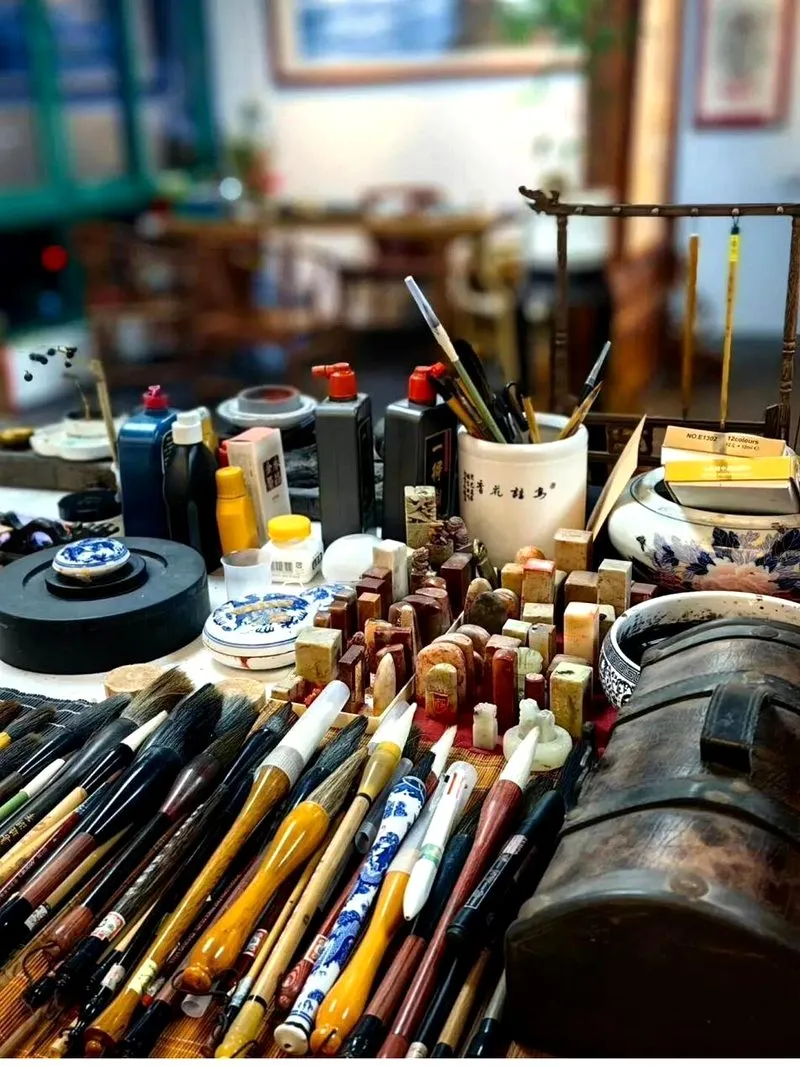
Each 瑞 (Ruì) is hand-brushed to order by Artist Lina Sun in ink on rice paper — never printed, never repeated.
Bring 瑞 home — choose how you'd like it brushed.
-
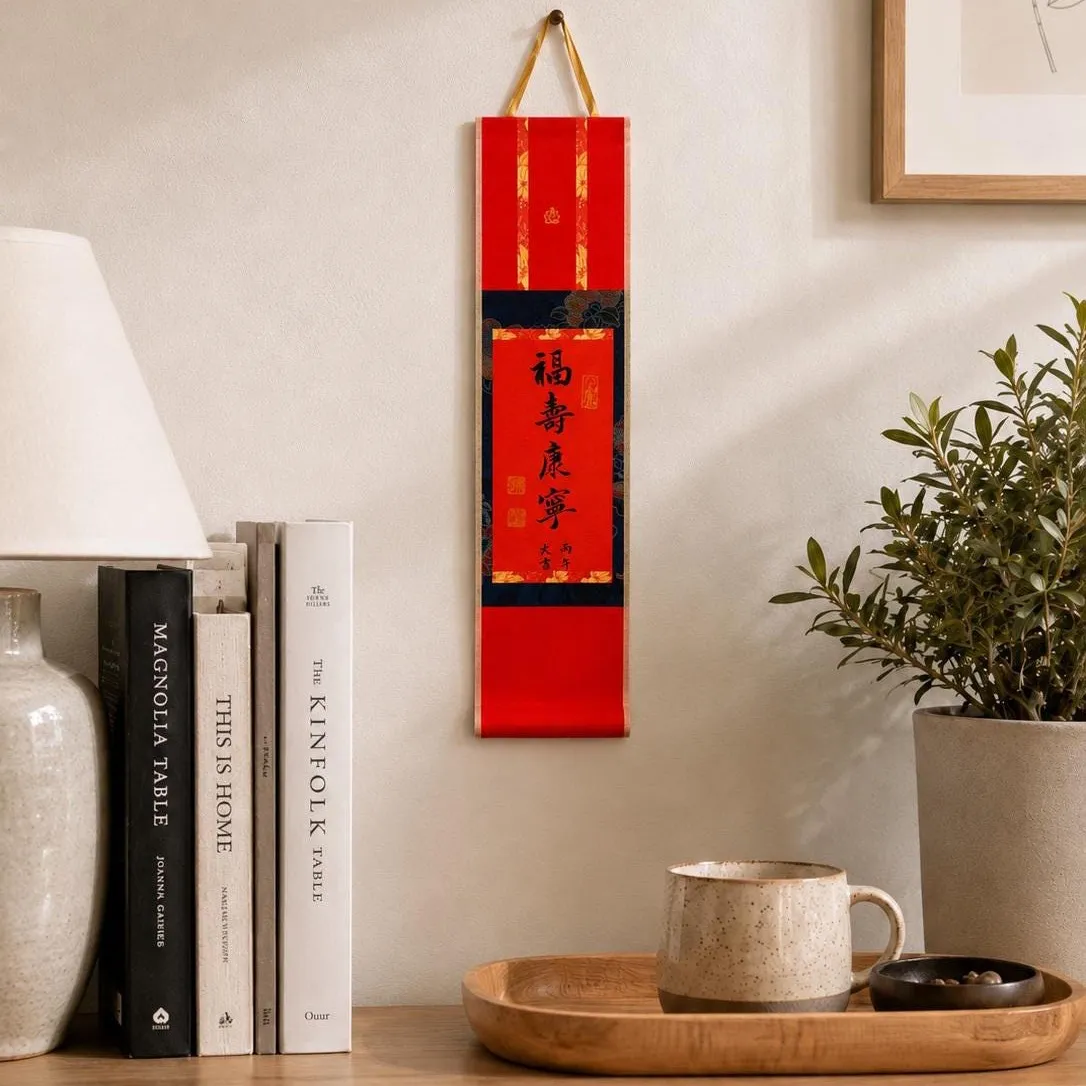
Photo shows a sample — yours will be brushed with 瑞, or any character you choose.
Wall Scroll — for walls & housewarmingsfrom $38→ -
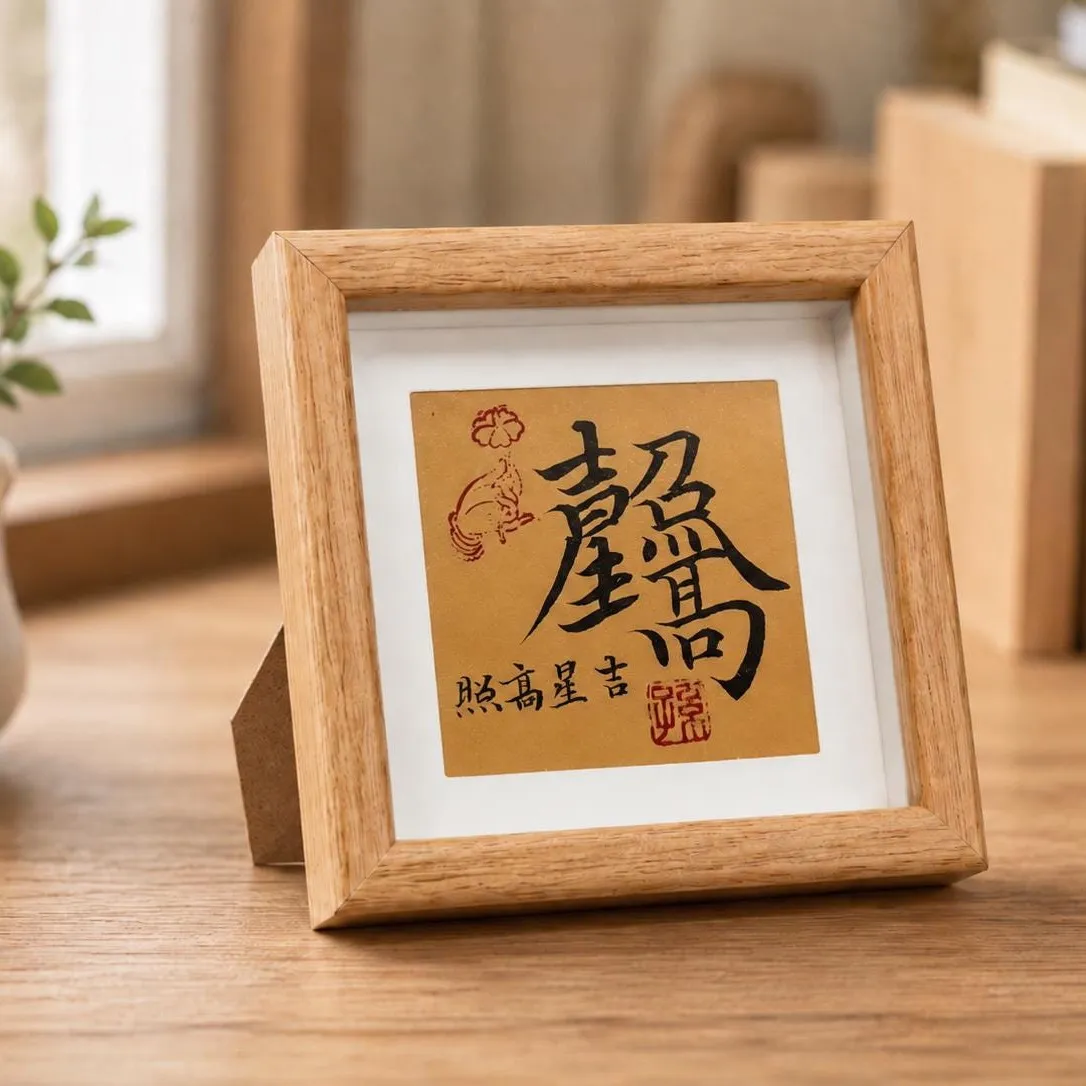
Photo shows a sample — yours will be brushed with 瑞, or any character you choose.
Desk Frame — for desks, studies & studiosfrom $44→ -
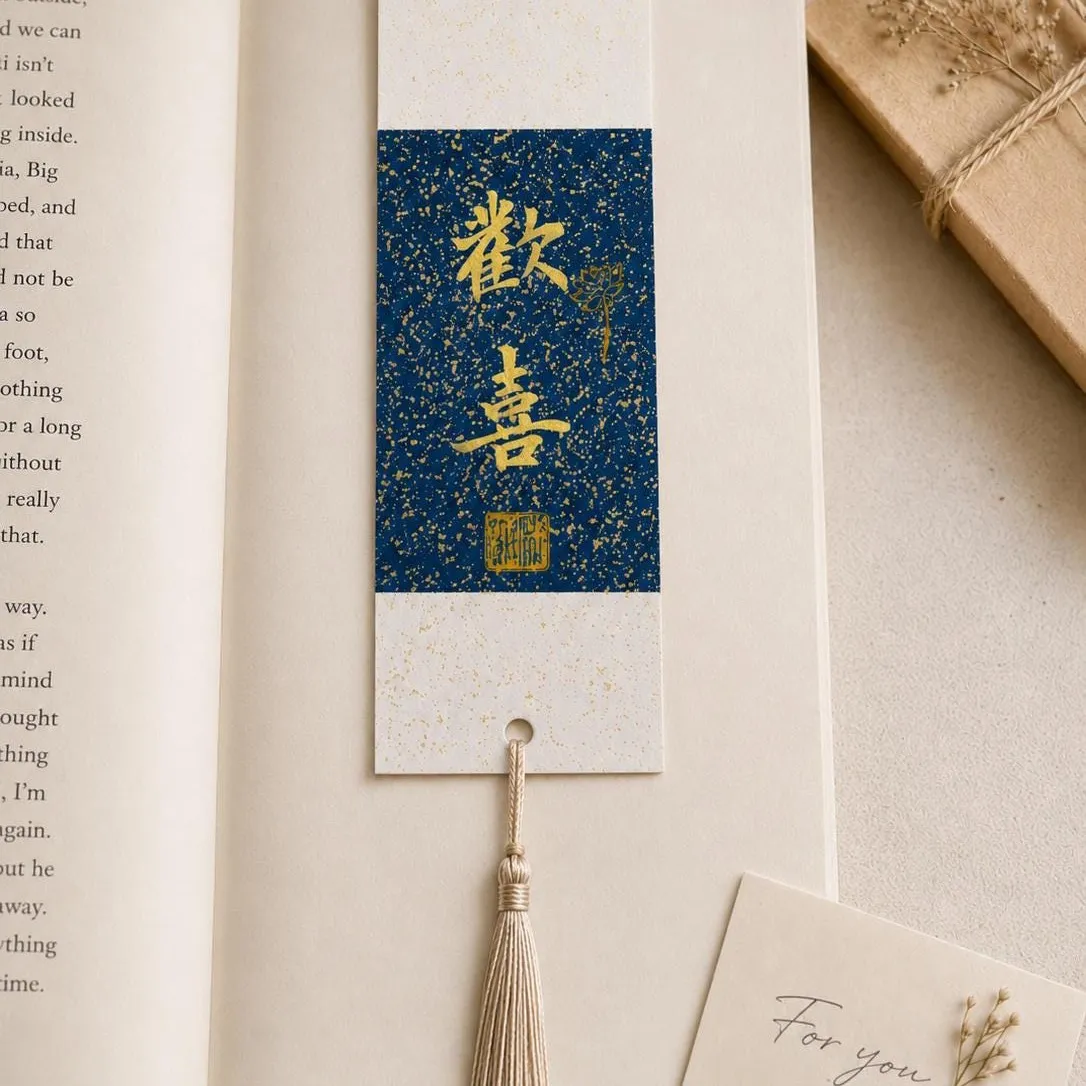
Photo shows a sample — yours will be brushed with 瑞, or any character you choose.
Bookmark — for readers & small thank-yousfrom $17→
What people said after it arrived.
-
The item is fantastic. The customer service was genuine. Thanks!
— M.Verified purchase · from our Etsy shop reviews · -
They were great they gave me exactly what I asked for and then some. Thank you!!
— G.Verified purchase · from our Etsy shop reviews · -
It is well designed and customized. My daughter loves it. Amazing gift for family’s d friends
— S.Verified purchase · from our Etsy shop reviews ·
Each "瑞" is hand-brushed by Artist Lina Sun on rice paper.
See 瑞 (Ruì) on Etsy →