义 (yì) — Righteousness · What Is Owed · Rightness in Action
A single character.
Mencius made the case with a meal. He wants fish; he wants bear’s paw; if he cannot have both, he takes the bear’s paw. Then he runs the sentence again with staying alive on one side and 义 on the other, and takes 义. That is the position this character occupies: whatever a person concludes they owe, weighed against their own interest and found to outrank it. Its standing opposite in Chinese is not laziness or cowardice but 利, profit. That is an unusual place to put the opposite of a virtue: it means 义 is never measured by how much somebody did, only by what doing it cost them. It is also why the compounds run the way they do. 义工 is a volunteer, 义演 a benefit performance, 义父 a father who is not one by blood: in each of them the character marks something taken on where neither payment nor blood supplied a reason to.
In ordinary speech the word is 义气, and it is not an abstract compliment. Saying someone 讲义气 means they turned up when turning up cost them something and nobody could have held it against them if they hadn’t. You cannot say it of a person in general; it always points back at a particular week. Classical Chinese drew the line in the same place. Mencius called 仁 a person’s house and 义 their road: 仁 is the standing turn toward other people, and 义 is what that turn does once it has to walk somewhere in particular. 忠, the third neighbor, is faithfulness running along a tie that already exists. 义 is the judgment, made before any of that, that somebody was owed something at all.
A hand-brushed 义 by Artist Lina Sun is for the person who has been reliable in the specific way this character describes — the friend who showed up during the bad year at real cost to themselves and never once mentioned the cost, the father who covered what was not strictly his to cover, the relative everyone else quietly assumed would handle it, who did. Three strokes, and what they say is that somebody noticed.
- righteousness
- what is owed
- doing what the situation requires
- an obligation taken on by choice
- justice Justice is institutional — courts, laws, verdicts. That is 正义. 义 on its own is personal: what this situation asks of you, judged by you, with nobody to enforce the answer.
- loyalty That is 忠, which runs along a tie already in place — to a partner, a teacher, a country. 义 is what you decide you owe someone who had no prior claim on you at all.
- honor Honor is about standing — how you are seen, what would be shameful. 义 is about the debt itself, and it holds whether or not anyone is watching.
The short arms are the point: these readings don’t reach it.
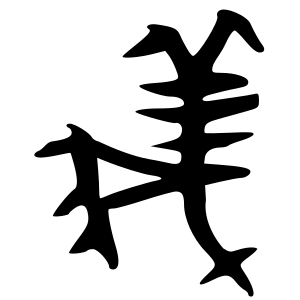
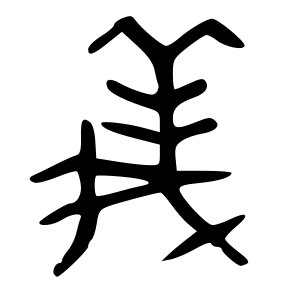
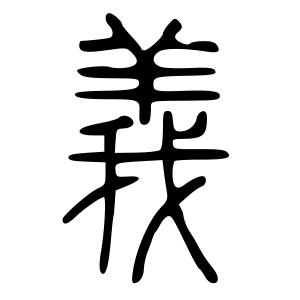
- 羊 ram — the mark of what is well-formedThe ram sits at the top of the traditional 義, the same element Chinese writing uses in 美 (beautiful), 善 (good) and 祥 (auspicious). It signals not the animal but the standard: what is fit to be presented.
- 我 a saw-toothed blade, later borrowed for “I”In the oldest forms 我 is a dagger-axe with a serrated edge — a weapon for display. Under the ram it makes 義 a picture of a weapon dressed for ceremony, which is why the Shuowen defined the character as a person's dignified bearing before it meant anything moral.
- 乂 + 丶 the whole of the simplified formSimplified 义 is an abbreviation long in popular use before it was standardized: 乂, itself an old character and a homophone (yì), with a dot set above. It preserves neither the ram nor the blade — one of the few characters where simplification kept the sound and the sense and discarded the picture entirely.
character
- 义气 yì qì the readiness to stand by a friend at your own cost — the street-level, everyday form of 义
- 情义 qíng yì feeling and obligation together — the word for a bond that has both halves
- 仁义 rén yì benevolent and righteous — what a person is called after years of being fair and generous
- 义务 yì wù duty; also unpaid work — a single word for what you owe and what you are not paid for
- 结义 jié yì to swear brotherhood — to convert a friendship into a tie with obligations attached
The Story Behind the Character
Under the traditional form 義 there is a weapon. The lower component 我 is now the ordinary word for "I," but in its oldest forms it drew a dagger-axe with a saw-toothed edge — a blade shaped to be looked at as much as swung. Sitting above it is 羊, the ram: the animal led up to the altar, and the element Chinese writing reaches for whenever something is fine, correct and well-made (美, 善, 祥). Put the two together and the character shows a weapon dressed for a ceremony.
The Shuowen Jiezi (c. 100 CE) glossed it without a word about morality: 義,己之威儀也 — "one's own dignified bearing." That is a statement about how a person carries themselves during a rite, not about right and wrong. For a long stretch 義 was also simply how you wrote 儀, ceremony; the Qing commentator Duan Yucai noted the split in one line — 古者威儀字作義,今仁義字用之, "in old texts the word for bearing was written 義; today the character is used for righteousness." When scribes eventually built a separate 儀 by adding the person radical, the outward form went with it, and what stayed behind under 義 was the standard the ceremony had existed to express. Righteousness, in this reading, is what is left of decorum once you take the decorum away.
The definition that survived is a pun that doubles as an argument: 义者宜也 — rightness is fittingness. Not a code consulted and applied, but whatever a particular situation turns out to require of the particular person standing in front of it. Simplified 义 keeps none of the picture. It is an abbreviation copyists had used for centuries before the 1956 reform made it official: 乂, an old character in its own right and a homophone, yì, with a single dot set above it. A sound and a mark where the ram and the blade used to be — and the job intact underneath: work out what a moment asks of you, then do that.
Classical lines
- roughly 300 years
- c. 500 BCE 《论语·里仁》
- c. 300 BCE 《孟子·告子上》
- c. 200 BCE 《礼记·中庸》
君子喻于义,小人喻于利。 The noble person understands what is right; the small person understands what is profitable.
Confucius's sharpest test of character: not what someone does, but which consideration reaches them first. 义 and 利 have been a standing pair in Chinese ethics ever since, and asking which one a person hears first is still how the language takes someone's measure.
生,亦我所欲也;义,亦我所欲也。二者不可得兼,舍生而取义者也。 Life is something I want; rightness is also something I want. If I cannot have both, I will let go of life and take rightness.
Mencius argues from an extreme in order to establish an ordinary rule: there exists something a person can rank above their own interest. The four characters 舍生取义 became one of the most quoted phrases in the language, which is why 义 carries far more weight than its three strokes suggest.
义者宜也,尊贤为大。 Rightness means what is fitting; and the greatest part of it is honoring the worthy.
The gloss classical scholars kept returning to. It makes 义 a judgment rather than a list: not a fixed inventory of duties, but a reading of what this situation, with these people in it, actually requires.
Why This Character Matters
Run down the 义 compounds in a modern dictionary and one property holds across nearly all of them: nobody is being paid. 义工 (volunteer), 义卖 (charity sale), 义演 (benefit performance), 义诊 (free clinic), 义务 (a duty, and also unpaid work — one word for both). Then the character does something stranger. 义父 is an adoptive father, 义子 an adopted son, 义兄弟 sworn brothers, and 义齿 a false tooth. Across the whole set 义 marks one idea running in two directions: work nobody paid for, and a father, a brother or a tooth that nature never supplied and somebody put in place anyway.
The most-repeated 义 story in Chinese culture is the peach-garden oath that opens 《三国演义》: three men with no kinship between them, kneeling among the blossom to swear they will be brothers. Guan Yu, one of the three, became the figure the culture pinned the word to permanently, and the four characters usually written beneath his image are 义薄云天 — rightness that presses all the way up to the clouds, 薄 here in its old sense of pressing close rather than of thinness. His statue turns up in restaurants, in police stations, and in the back rooms of businesses on both sides of the law, which says something honest about the word. 义 binds whoever swears it. It does not check first which side they are on.
义 rarely stands alone as a tattoo. What Chinese readers expect to see is 忠义 or 义气, and both carry an unmistakable 江湖 flavor — sworn-brotherhood culture, which in Hong Kong and Taiwan also reads as triad iconography. That is not a reason to avoid the character, but it is worth knowing before choosing it: 义 signals a particular kind of loyalty, the kind with a code behind it, rather than general good character. Brushed on paper rather than skin, the connotation is much cleaner.
Calligraphy Styles for Tattoos
- Regular script (楷书 kǎishū) Best for tattoos
Simplified 义 is 3 strokes: a dot, then a left-falling and a right-falling stroke crossing beneath it. Regular script gives the crossing its correct angle and keeps the dot clearly separate. With so little material, size is not the constraint — proportion is. Legible down to about 1 inch.
- Running script (行书 xíngshū) Good, but use the traditional form
Traditional 義 at 13 strokes has enough material for running script to be expressive without blurring. Simplified 义 has so few strokes that running script barely changes it. For a flowing piece choose 義 and plan for 2.5+ inches.
- Cursive script (草书 cǎoshū) Only with an expert calligrapher
In cursive, simplified 义 collapses toward 又 or an unreadable slash — there is not enough structure left to survive the abbreviation. Traditional 義 holds up better but packs 羊 over 我 into a dense mark that needs a specialist.
Common Mistakes to Avoid
- Setting the dot down onto the point where the two strokes crossIntended: 义 with the dot clear above the crossing, slightly left of center
The dot is its own stroke and needs its own space. Dropped onto the intersection it merges with the crossing and the character reads as 又 or as a plain X — which is also, unhelpfully, how a Chinese reader marks something wrong.
- Mixing simplified 义 and traditional 義 within one designIntended: one form, chosen deliberately for the whole piece
义 and 義 are the same word in two scripts, and calligraphers pick one for a reason — 義 for a classical piece, 义 for a modern one. Combining them in a multi-character tattoo (traditional 忠 beside simplified 义, say) is immediately visible to any Chinese reader.
Notes for Your Tattoo Artist
3 strokes simplified, 13 traditional — an unusually wide gap, so settle the form before anything else. For 义 everything rests on the crossing: the left-falling 撇 and right-falling 捺 should meet in the upper third rather than the middle, and the 捺 should finish heavier and lower than the 撇 or the whole character tips. The dot sits above and slightly left, never touching. For 義, keep 羊 compressed on top so 我 below has room for its hooks.
A few characters live near "义" but mean something quieter, sharper, or more specific. Here's how to tell them apart.
the obligation taken on toward someone with no prior claim on you
faithfulness running along a tie that already exists — the centered heart pointed at it
what a specific situation turns out to require — rightness in the act
the standing orientation toward other people — the disposition underneath any act
what you owe where no promise was ever made
keeping the word you actually gave — reliability in the commitment made
Where 担当 names ownership of a load once the household needs someone to hold it, 义 names the reckoning behind who counts as owed anything at all — the school fees for somebody else's child, the brother-in-law's bad year, the funeral nobody else offered to pay for.
- Where 担当 names ownership of a load once the household needs someone to hold it, 义 names the reckoning behind who counts as owed anything at all — the school fees for somebody else's child, the brother-in-law's bad year, the funeral nobody else offered to pay for. Father's Day tends to produce gifts about strength; this one is about what he judged the strength was for.
- For the friend whose defining quality is 义气 — the readiness to stand by someone at real cost. A birthday 义 is given by somebody who was present for a particular day and has decided to say so. Where 忠 credits faithfulness inside a bond that was already in place, 义 credits the judgment that someone was owed help before anything on paper said so.
Dad · Best Friend · Friend · or yourself
Looking for a name? See Western names written in Chinese →
-
What does 义 (yì) mean?
义 (yì) is the Chinese character for righteousness, what is owed, rightness in action. Mencius made the case with a meal. He wants fish; he wants bear's paw; if he cannot have both, he takes the bear's paw. Then he runs the sentence again with staying alive on one side and 义 on the other, and takes 义. That is the position this character occupies: whatever a person concludes they owe, weighed against their own interest and found to outrank it. Its standing opposite in Chinese is not laziness or cowardice but 利, profit. That is an unusual place to put the opposite of a virtue: it means 义 is never measured by how much somebody did, only by what doing it cost them. It is also why the compounds run the way they do. 义工 is a volunteer, 义演 a benefit performance, 义父 a father who is not one by blood: in each of them the character marks something taken on where neither payment nor blood supplied a reason to. Run down the 义 compounds in a modern dictionary and one property holds across nearly all of them: nobody is being paid. 义工 (volunteer), 义卖 (charity sale), 义演 (benefit performance), 义诊 (free clinic), 义务 (a duty, and also unpaid work — one word for both). Then the character does something stranger. 义父 is an adoptive father, 义子 an adopted son, 义兄弟 sworn brothers, and 义齿 a false tooth. Across the whole set 义 marks one idea running in two directions: work nobody paid for, and a father, a brother or a tooth that nature never supplied and somebody put in place anyway.
-
What occasions is 义 given for?
义 is traditionally given for Father's Day, Birthday. Where 担当 names ownership of a load once the household needs someone to hold it, 义 names the reckoning behind who counts as owed anything at all — the school fees for somebody else's child, the brother-in-law's bad year, the funeral nobody else offered to pay for. Father's Day tends to produce gifts about strength; this one is about what he judged the strength was for. For the friend whose defining quality is 义气 — the readiness to stand by someone at real cost. A birthday 义 is given by somebody who was present for a particular day and has decided to say so. Where 忠 credits faithfulness inside a bond that was already in place, 义 credits the judgment that someone was owed help before anything on paper said so.
-
Is 义 a good Chinese tattoo?
义 rarely stands alone as a tattoo. What Chinese readers expect to see is 忠义 or 义气, and both carry an unmistakable 江湖 flavor — sworn-brotherhood culture, which in Hong Kong and Taiwan also reads as triad iconography. That is not a reason to avoid the character, but it is worth knowing before choosing it: 义 signals a particular kind of loyalty, the kind with a code behind it, rather than general good character. Brushed on paper rather than skin, the connotation is much cleaner.
-
Who brushes the 义 calligraphy?
Each 义 (Yì) is hand-brushed to order by Artist Lina Sun in ink on rice paper — never printed, never repeated.
Bring 义 home — choose how you'd like it brushed.
-
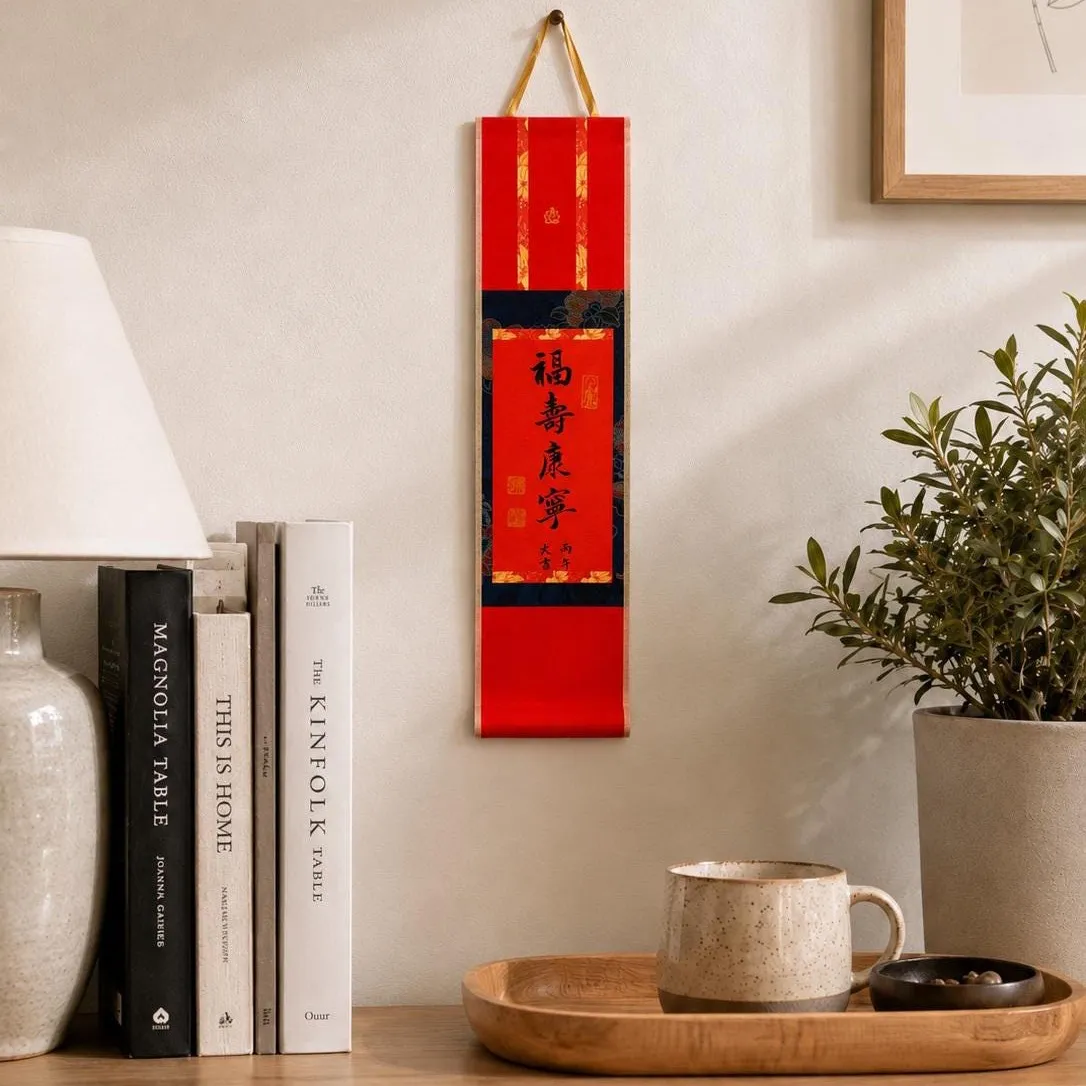
Photo shows a sample — yours will be brushed with 义, or any character you choose.
Wall Scroll — for walls & housewarmingsfrom $38→ -
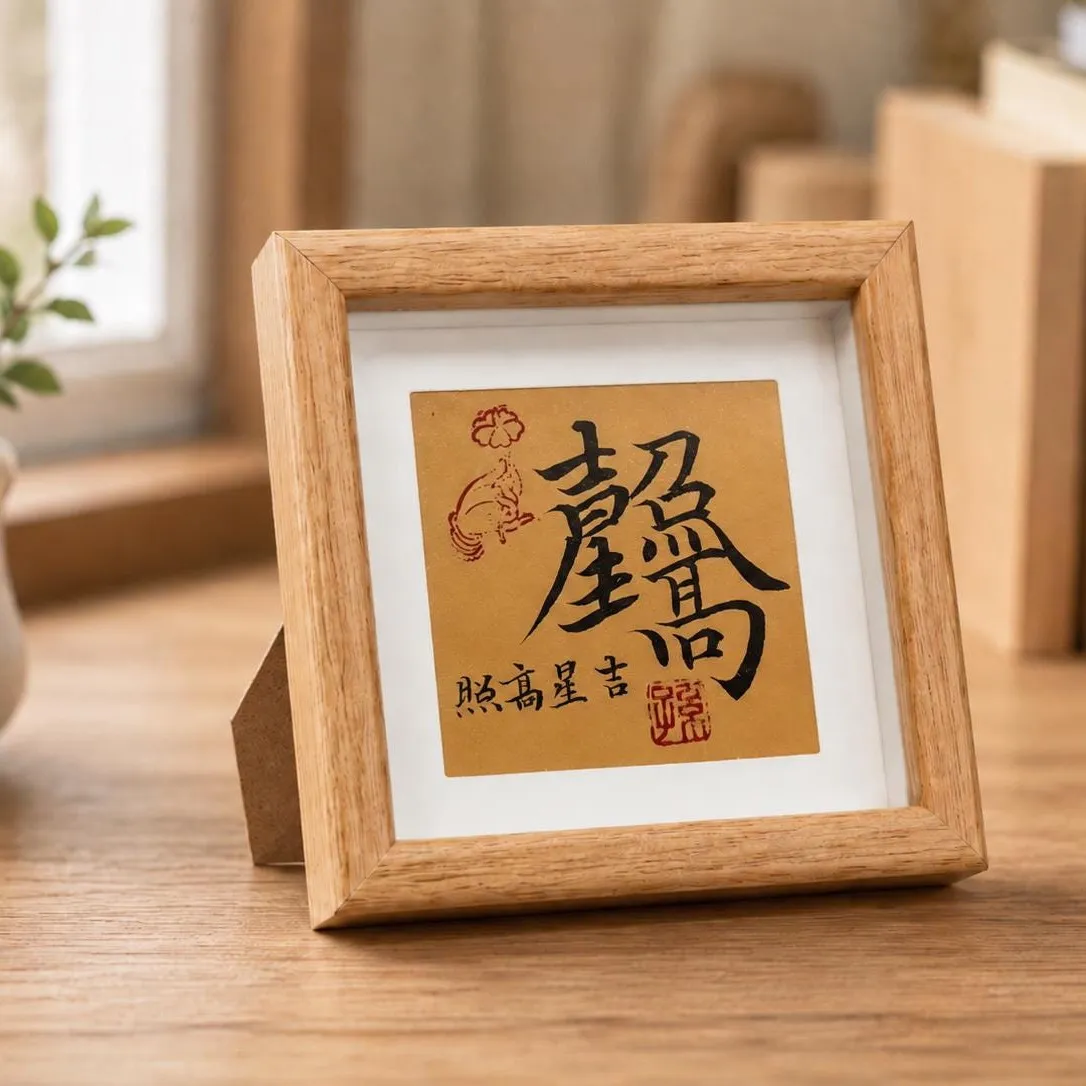
Photo shows a sample — yours will be brushed with 义, or any character you choose.
Desk Frame — for desks, studies & studiosfrom $44→ -
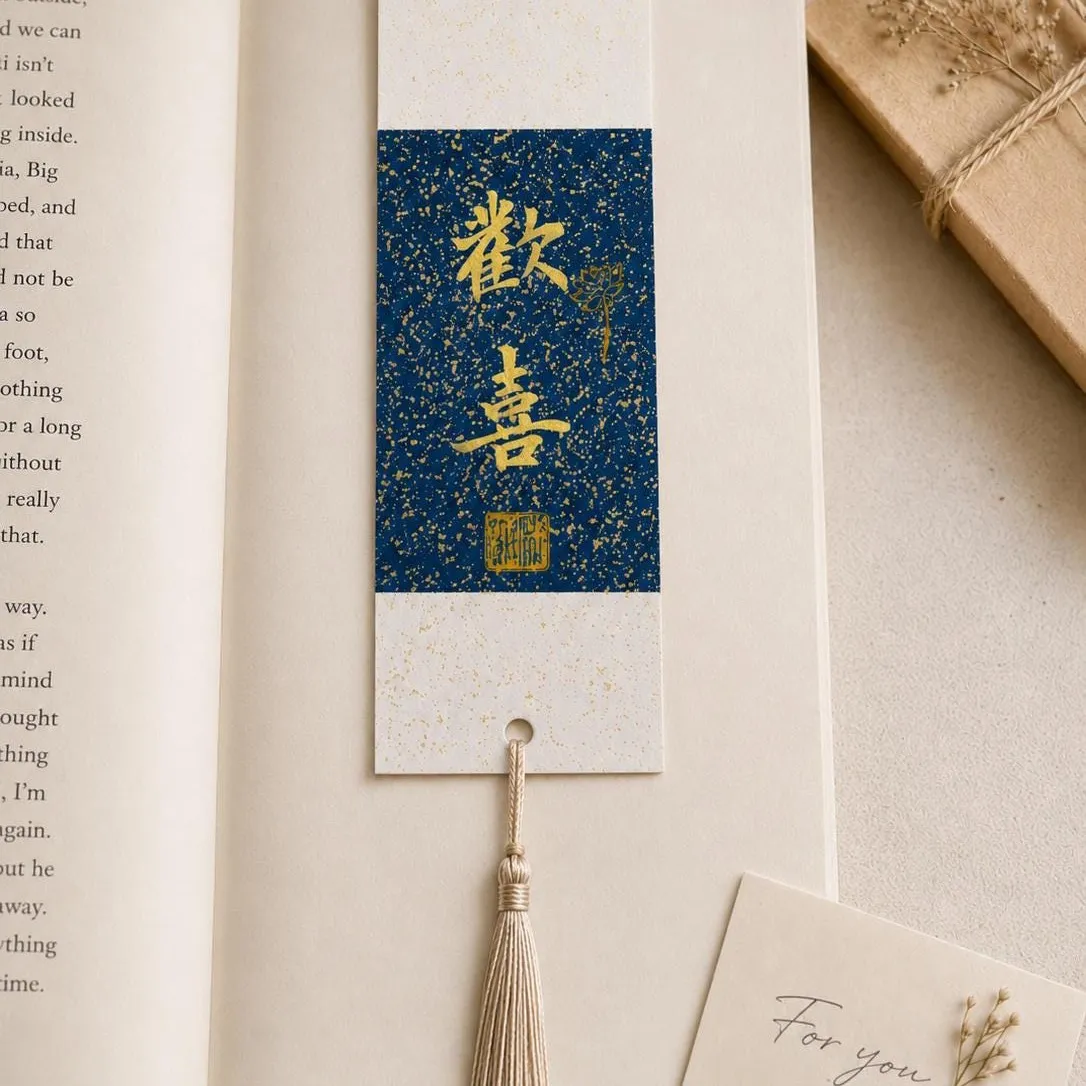
Photo shows a sample — yours will be brushed with 义, or any character you choose.
Bookmark — for readers & small thank-yousfrom $17→
What people said after it arrived.
-
The item is fantastic. The customer service was genuine. Thanks!
— M.Verified purchase · from our Etsy shop reviews · -
They were great they gave me exactly what I asked for and then some. Thank you!!
— G.Verified purchase · from our Etsy shop reviews · -
It is well designed and customized. My daughter loves it. Amazing gift for family’s d friends
— S.Verified purchase · from our Etsy shop reviews ·
Each "义" is hand-brushed by Artist Lina Sun on rice paper.
See 义 (Yì) on Etsy →