宁 (níng) — Serenity · Inner Calm · Stillness
A single character.
The oldest form of 宁 is a picture of a heart sitting under a roof — and that image has never needed updating. Three thousand years later, it still means exactly what it looks like: a heart that has found the place where it can stop. Not safety (that’s 安). Not silence (that’s 静). Serenity — the feeling of having arrived somewhere you don’t need to leave.
宁 is woven into the geography of China itself. Nanjing was once called 江宁 — “the river at peace.” Ningxia province means “peaceful summer.” Parents have named daughters 宁 for centuries, wishing them an inner life that stays calm no matter what the outer one delivers. The character shows up on the walls of meditation rooms, on retirement gifts, on the calligraphy scroll a doctor gives a patient leaving the hospital. Wherever someone has earned the right to rest, 宁 marks the occasion.
A hand-brushed 宁 by Artist Lina Sun is a gift for the person whose life has been more effort than ease — the new parent who hasn’t slept, the coworker who just finished an impossible project, the friend recovering from something hard. It doesn’t wish for success or fortune. It wishes for the thing that comes after all of that: the deep exhale, the settled heart, the morning with nowhere to be.
- serenity
- a heart that has arrived
- settledness
- the ease that follows effort
- calm Too neutral. Calm is the temperature of a moment. 宁 is the temperature of a life that has found its place.
- peace Peace can describe the world. 宁 is interior — the warmth of a heart at home, regardless of what's outside the door.
- rest Rest is a pause. 宁 is the deeper condition that makes real rest possible — wanting nothing, expecting nothing, no longer searching.
The short arms are the point: these readings don’t reach it.
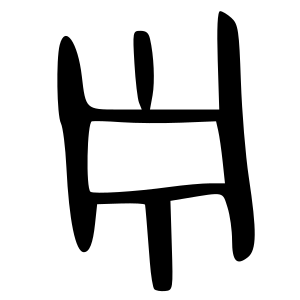
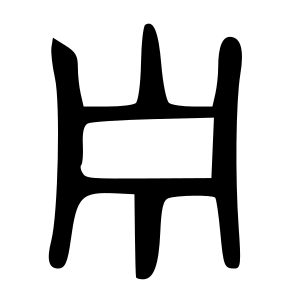
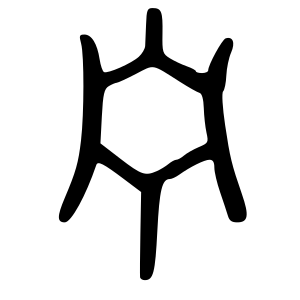
- 宀 a roof / shelterThe pictograph of an enclosure overhead. The signal that whatever follows is happening inside, sheltered, with the noise of the world kept out.
- 心 the heartIn the older full form 寧, a heart sits beneath the roof — sometimes above a dish (皿) meaning a vessel that holds and fills. The whole image: a heart sheltered, contained, no longer wandering. Simplified to 宁, the picture shortened but the meaning stayed.
character
- 安宁 ān níng peaceful and serene — the everyday phrase for a quiet life or quiet mind
- 宁静 níng jìng tranquility — a settled heart inside a still environment, the phrase Zhuge Liang made famous
- 康宁 kāng níng health and serenity — the third of the classical Five Blessings
- 宁愿 nìng yuàn would rather — the same character in its other tone, meaning to prefer (a small reminder that 宁 carries weight in everyday speech too)
- 宁可 nìng kě would rather — the quiet firmness of choosing on your own terms
The Story Behind the Character
The earliest forms of 宁 show a simple, powerful image: a roof (宀) with a heart (心) resting beneath it, and sometimes a dish or table below — a heart that has found shelter, settled into a place where it can stop searching. No wandering, no weather. Just the feeling of being, finally, home.
China's first dictionary (Shuowen Jiezi, c. 100 CE) explained it as "安也" — peace, settledness. But the original pictograph says more than the definition. The character's creators didn't draw a guard at the gate or a wall around a city. They drew a heart under a roof. Safety, they understood, is an outer condition. Serenity is an inner one. 宁 is what happens after the door closes and the noise of the world stays outside.
The most revealing detail is that 宁 originally had a longer form: 寧, which added an additional element meaning "to store" or "to fill." The full character described not just a sheltered heart but a heart that is full and content — wanting nothing, expecting nothing, at rest not because the world is quiet but because the self is. When the character was simplified in the 20th century, the storage element was dropped, but the meaning remained.
Classical lines
- roughly 1,400 years
- c. 234 CE 诸葛亮《诫子书》
- c. 400 CE 陶渊明《饮酒·其五》
- c. 1590 CE 《菜根谭》
宁静致远。 From serenity, the capacity to reach far.
Four characters that have been on the walls of Chinese scholars' studios for eighteen centuries. Zhuge Liang — the most legendary strategist in Chinese history — told his son that calm was more valuable than brilliance.
心安茅屋稳,性定菜根香。 A peaceful heart makes a thatched hut steady; a settled nature makes vegetable roots taste sweet.
A Ming dynasty philosopher's argument that contentment transforms circumstances rather than the other way around.
结庐在人境,而无车马喧。问君何能尔?心远地自偏。 I built my hut among the world of men, yet hear no noise of horse and cart. How is that possible? A distant heart makes any place remote.
A poet who quit his government job to farm, explaining how serenity is a choice of mind, not a choice of address.
Why This Character Matters
宁 is one of the most popular characters in Chinese given names — particularly for daughters. The name 宁宁, 安宁, or simply 宁 has been given to children for centuries as a wish that their inner life will be calm regardless of what the outer world delivers. The city of Nanjing (南京) was historically called 江宁, meaning "the Yangtze at peace," and the province of Ningxia (宁夏) means "peaceful summer" — the name itself a wish for tranquil seasons. When Chinese parents or city founders reached for a word that meant deep, lasting calm, they reached for 宁.
What sets 宁 apart from 安 (safety) or 静 (stillness) is its emotional temperature. 安 is about external conditions — a world without threats. 静 is about mental discipline — a mind that has learned to settle. 宁 is warmer than both: it describes a heart that has come home. In Buddhist and Daoist practice, 宁 is the state you reach after meditation has done its work — not the effort of sitting still, but the ease that follows. It's why the character feels right as a gift for someone recovering from illness, settling into retirement, or simply needing permission to stop striving.
宁 is one of China's most beloved name characters — 宁宁, 安宁, and cities like 南京 (originally 江宁) all use it. A Chinese person seeing it as a tattoo would find it natural and pleasant, like a name they recognize. The simplified form is almost too simple visually — just 5 strokes — so some Chinese people might suggest the traditional 寧 for a tattoo, which has more visual presence.
Calligraphy Styles for Tattoos
- Regular script (楷书 kǎishū) Best for tattoos
宁 in simplified form is only 5 strokes — one of the simplest characters possible. Regular script makes it crisp and immediately legible. The roof 宀 over 丁 is elegant in its minimalism.
- Running script (行书 xíngshū) Excellent for tattoos
The simplicity of 宁 makes running script work beautifully at almost any size. The roof flows into the vertical stroke below with natural grace. One of the best characters for flowing brushwork tattoos.
- Cursive script (草书 cǎoshū) Good for larger pieces
Cursive 宁 can be reduced to just a few brushstrokes, but at small sizes it risks looking like a meaningless mark. The traditional form 寧 (14 strokes) offers much more visual material for cursive and can be a better choice for this style.
Common Mistakes to Avoid
- Confusing simplified 宁 with the unrelated character 宁 (zhù, a space between pillars in classical Chinese)Intended: 宁 read as níng (serenity)
In classical Chinese, the form 宁 (without the full interior) originally meant something architectural. The serenity meaning belongs to 寧. Modern simplified Chinese reassigned 宁 to carry the serenity meaning, but a classical scholar might read it differently. For tattoo clarity, some people prefer the traditional 寧.
- Making the 宀 roof too flat or too narrow, losing the shelter shapeIntended: A properly proportioned roof that visually encloses the element below
宁 is so simple that every proportion matters. The roof needs to be wide enough and angled enough to look like a shelter. A flat horizontal line instead of the angled roof changes the visual metaphor entirely.
Notes for Your Tattoo Artist
5 strokes (simplified) or 14 strokes (traditional 寧). The simplified form is the easiest character in this entire set to tattoo — the challenge is making something so simple look intentional rather than incomplete. Minimum size: 0.75 inches for simplified. If using traditional 寧, minimum 2 inches. The roof-to-body ratio is the only proportion to get right in the simplified form.
A few characters live near "宁" but mean something quieter, sharper, or more specific. Here's how to tell them apart.
an interior condition — a heart that has come home
the warmth of arrival — settling because the searching is over
For the friend who has been working too hard.
- Just BecauseFor the friend who has been working too hard. Sometimes the best gift is a quiet word of permission to rest.
- Get Well SoonA gentle wish for restful days and inner calm — for the people we want to see at peace again.
- RetirementAfter a lifetime of effort — "宁" honors the slower, deeper days that lie ahead.
- New HomeFor someone seeking stillness in their new space — a meditation corner, a quiet study, a room of their own.
Self · Best Friend · Mom · Coworker · Boss · Mentor · New Parent · or yourself
宁 is one of the characters we use to write Western names in Chinese. See it at work:
-
What does 宁 (níng) mean?
宁 (níng) is the Chinese character for serenity, inner calm, stillness. The oldest form of 宁 is a picture of a heart sitting under a roof — and that image has never needed updating. Three thousand years later, it still means exactly what it looks like: a heart that has found the place where it can stop. Not safety (that's 安). Not silence (that's 静). Serenity — the feeling of having arrived somewhere you don't need to leave. 宁 is one of the most popular characters in Chinese given names — particularly for daughters. The name 宁宁, 安宁, or simply 宁 has been given to children for centuries as a wish that their inner life will be calm regardless of what the outer world delivers. The city of Nanjing (南京) was historically called 江宁, meaning "the Yangtze at peace," and the province of Ningxia (宁夏) means "peaceful summer" — the name itself a wish for tranquil seasons. When Chinese parents or city founders reached for a word that meant deep, lasting calm, they reached for 宁.
-
What occasions is 宁 given for?
宁 is traditionally given for Just Because, Get Well Soon, Retirement, New Home. For the friend who has been working too hard. Sometimes the best gift is a quiet word of permission to rest. A gentle wish for restful days and inner calm — for the people we want to see at peace again.
-
Is 宁 a good Chinese tattoo?
宁 is one of China's most beloved name characters — 宁宁, 安宁, and cities like 南京 (originally 江宁) all use it. A Chinese person seeing it as a tattoo would find it natural and pleasant, like a name they recognize. The simplified form is almost too simple visually — just 5 strokes — so some Chinese people might suggest the traditional 寧 for a tattoo, which has more visual presence.
-
Who brushes the 宁 calligraphy?
Each 宁 (Níng) is hand-brushed to order by Artist Lina Sun in ink on rice paper — never printed, never repeated.
Bring 宁 home — choose how you'd like it brushed.
-
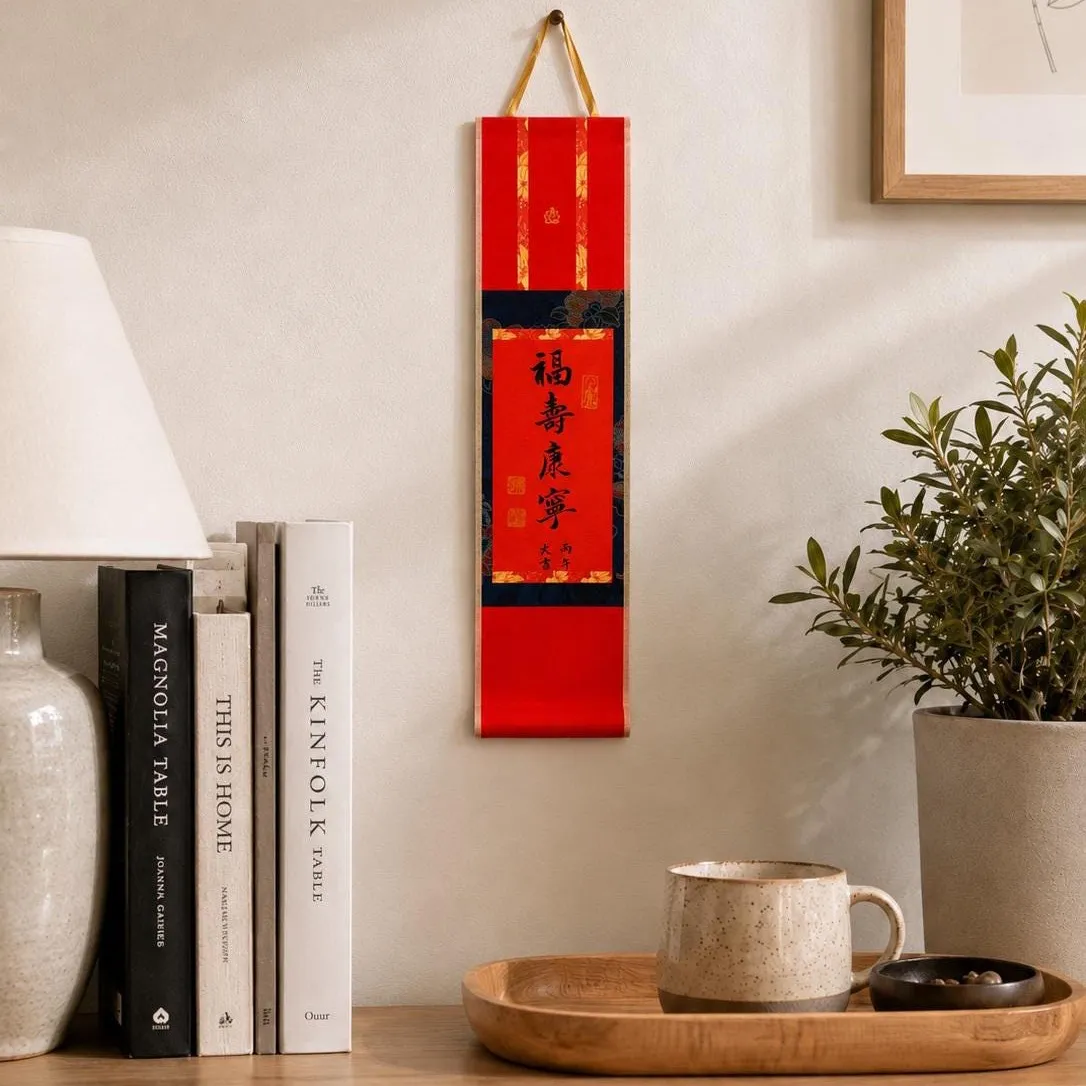
Photo shows a sample — yours will be brushed with 宁, or any character you choose.
Wall Scroll — for walls & housewarmingsfrom $38→ -
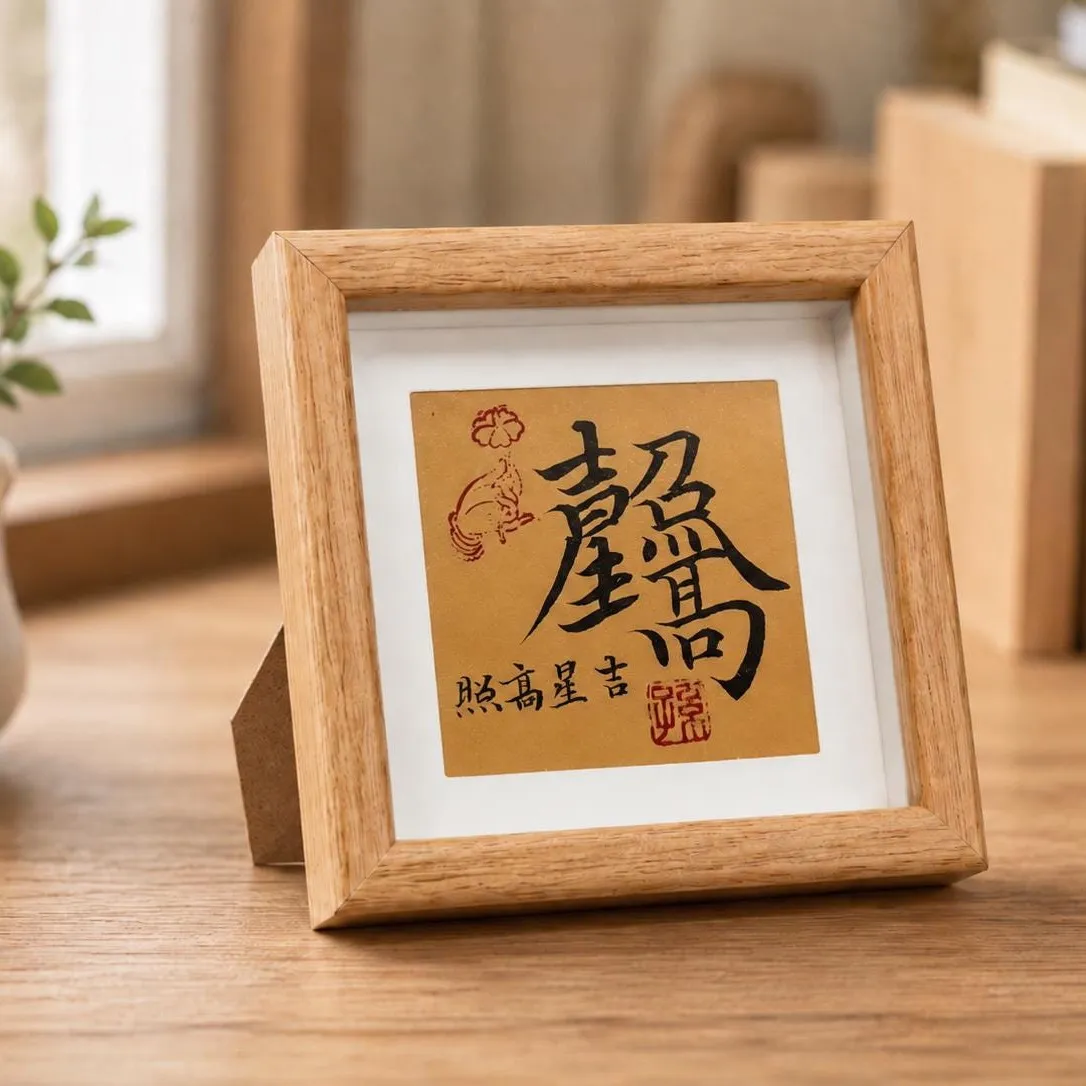
Photo shows a sample — yours will be brushed with 宁, or any character you choose.
Desk Frame — for desks, studies & studiosfrom $44→ -
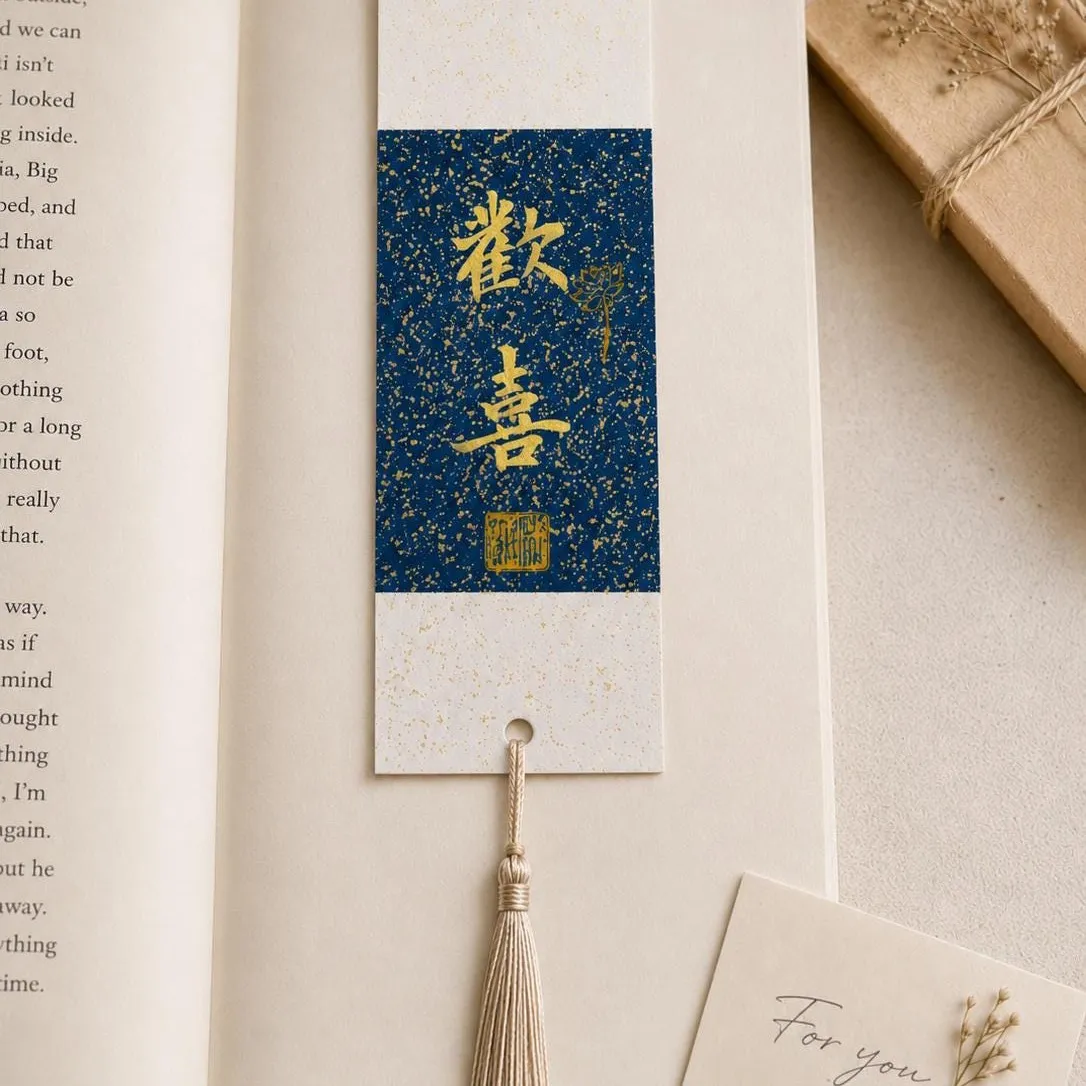
Photo shows a sample — yours will be brushed with 宁, or any character you choose.
Bookmark — for readers & small thank-yousfrom $17→

What people said after it arrived.
-
The item is fantastic. The customer service was genuine. Thanks!
— M.Verified purchase · from our Etsy shop reviews · -
They were great they gave me exactly what I asked for and then some. Thank you!!
— G.Verified purchase · from our Etsy shop reviews · -
It is well designed and customized. My daughter loves it. Amazing gift for family’s d friends
— S.Verified purchase · from our Etsy shop reviews ·
Each "宁" is hand-brushed by Artist Lina Sun on rice paper.
See 宁 (Níng) on Etsy →