欢聚一堂 (huān jù yī táng) — Gathered Joyfully Under One Roof · Everyone Came · One Hall, One Evening
A 4-character phrase, not a single character.
一堂 is one hall, and it is also one night. The last two characters of this phrase are a time limit, and no other blessing in the catalog carries one. 家和 asks that a household stay in accord; 幸福美满 asks that a life come out whole; 昌盛 asks for a run of years long enough to be seen from outside. Every one of them wants something to hold. 欢聚一堂 wants an evening — people converged, glad to have done it, going home in the morning — and it says so in its own wording rather than hoping nobody notices. The other thing the phrase declines to ask for is blood. 团圆 presumes a family scattered and drawn back, and it counts the chairs. This one counts nobody, and the reason is built into 堂: that is the raised hall where a household receives guests, not 室, the inner room where it actually lives. See 团圆 →
So it turns up wherever people assemble on purpose and are not all related. It is on the backdrop at the New Year gala, at the head of the program at a company’s year-end dinner, across the whiteboard at a thirty-year school reunion booked around whoever could get the time off. The frame is older than any of those: 济济一堂, a hall packed with worthies, has been in the language for centuries, and 欢聚一堂 keeps the shape while lowering the bar from distinction to gladness. What fills the hall is noise, and the tradition has never been embarrassed about that — Ouyang Xiu, listing what the pleasure of a feast actually consists of, ruled out the musicians he had hired and kept the crowd. Against its neighbors the line is clean. 乐 is gladness that needs nobody else in the room. See 乐 → 喜 is the delight that follows a piece of news. See 喜 → 阖家欢乐 shuts the door and wishes the same joy on the people inside. See 阖家欢乐 → This one leaves the door open.
A hand-brushed “欢聚一堂” by Artist Lina Sun is the gift for the friend or the grandparent whose best day of the year is the one with everybody in the house — a birthday when the room fills up, or the New Year week when the people who moved away come back. It promises nothing about the future and pays no compliments. It records something instead: that the gathering happened, that the hall was full and loud, and that somebody thought it was worth putting on paper before everyone went home.
- the gathering itself — people converged, and glad about it
- an evening with a date on it, not a standing condition
- kin optional: 堂 is the guest hall, not the inner room
- the banner line at a year-end dinner, a class reunion, a New Year table
- 团圆 团圆 counts. It is the family circle closed, and it always knows which seat is empty. 欢聚一堂 keeps no roll and sets no requirement of blood — it asks only that the people who came be glad they did.
- party The English word names a kind of event, which can be thrown and can still fall flat. 欢聚一堂 names what an event managed to become. You can hold a party that never turned into one.
- 聚会 聚会 is the neutral noun — a meetup, a get-together, on the calendar whether or not it goes well. The 欢 is what the phrase adds, and it is the whole of the claim.
The short arms are the point: these readings don’t reach it.
- 欢聚 to gather, gladly and out loud欢 is 《说文》's 喜乐也, filed among the characters done with the mouth open — and it never has just one participant; the gladness is always pointed at somebody. 聚 is 会也, built on 乑, three figures side by side; early on it also named the hamlet that formed where people converged.
- 一堂 one hall — and one evening堂 is the raised main hall where guests are received, not 室, the inner room where the family lives; 《论语·先进》 uses the difference as a scale of intimacy. 一堂 therefore means everyone in the receiving room, kin or not — on the same pattern as 济济一堂, a hall packed with worthies.
characters
- 欢聚 huān jù to gather joyfully — the two-character core, which in practice almost always arrives with 一堂 attached
- 欢声笑语 huān shēng xiào yǔ glad voices and laughing talk — the sound of the room, named as its own phrase
- 阖家欢乐 hé jiā huān lè gladness for the whole household — the same 欢, narrowed to the family and the New Year card
- 济济一堂 jǐ jǐ yī táng a hall packed with worthies — the older phrase built on the same 一堂 frame
- 久别重逢 jiǔ bié chóng féng long parted, met again — the specific occasion Du Fu's lamp-lit evening describes
Cinnabar marks the characters 欢聚一堂 actually contains. The dark row is a relative by meaning or by sound, not one shared stroke.
The Story Behind the Character
Open 《说文解字》 (c. 100 CE) at the 欠 section and every entry in it is something done with the mouth open: 歌 to sing, 欲 to want out loud, and 欢 (歡) among them, glossed simply 喜乐也. 欠 itself is drawn there as 张口气悟也,象气从人上出之形 — a mouth opening, breath rising and leaving a person. But the more useful fact about 欢 is not that it is loud; it is that it always has a second party. 欢迎 is gladness pointed at someone arriving, 欢送 the same gladness pointed at someone leaving, 联欢 gladness held jointly. There is no 欢 you can do by yourself. The character carries its audience inside it.
聚 was once a place you could walk to. 《说文》 reads it 会也, to convene, and builds it on 乑 — three human figures standing side by side — then ends the entry with 邑落云聚: a hamlet is called a 聚. 《史记·五帝本纪》 shows the word doing exactly that work in its account of Shun: 一年而所居成聚,二年成邑,三年成都 — in one year the place he settled became a 聚, in two a town, in three a city. Convergence in this character was never abstract. People came to where somebody was, and what they made by coming had a name and a location.
The last two characters are the ones that do the quiet work. 堂 is not a generic room: it is the raised main hall of a Chinese house, built up on packed earth — hence the 土 beneath it — and it is where guests are received and rites are held, as opposed to 室, the inner chamber where the family actually lives. Confucius grades a disciple on that architecture in 《论语·先进》, saying the man has ascended to the 堂 but not yet entered the 室. So 一堂 does not mean one household. It means everyone in the receiving hall, the room a family opens to visitors — which is why the phrase has never required the people in it to be kin. The four characters together are a late formation — not a line lifted from any classic, but a vernacular phrase assembled from old parts on a frame Chinese had already worn smooth: 济济一堂, a hall packed with worthies, runs on exactly the same pattern. What 欢聚一堂 adds is the condition, and it is a modest one. Not that the room be full of the accomplished. Only that the people in it be glad they came.
Classical lines
- roughly 300 years
- 759 《赠卫八处士》杜甫
- 1046 《醉翁亭记》欧阳修
One further source is quoted below without a date printed, so it stays off the rail.
人生不相见,动如参与商。今夕复何夕,共此灯烛光。 In this life we go without seeing one another, moving like Shēn and Shāng
the two stars that never share a sky. What night is this night, that we sit together under one lamp? — Du Fu had just found a friend he had not seen in twenty years, in the middle of the rebellion that scattered everyone he knew. The most quoted line in the poem is not about the reunion but about its improbability: he names two constellations that rise only once the other has set, then asks what night it can possibly be. The greatest gathering poem in the language spends its opening explaining why the evening should not have happened.
而浮生若梦,为欢几何?古人秉烛夜游,良有以也。 This floating life is like a dream
how much of it is gladness? The people before us walked at night holding candles, and they had good reason. — Li Bai wrote this as the note explaining a party, and the word he uses for the gladness being counted is 欢 itself. It is the plainest argument in Chinese for why gatherings get held at all: the quantity is small and finite, so you do not put the evening off to a better month.
宴酣之乐,非丝非竹,射者中,弈者胜,觥筹交错,起坐而喧哗者,众宾欢也。 The joy of a feast at its height is not in the strings and not in the flutes: the archer hits his mark, the chess player wins, wine cups and tally sticks crisscross the table, and people are up and down and making a racket
that is the guests being glad. — Ouyang Xiu defines the pleasure of a gathering by ruling out the entertainment he laid on for it. What he keeps is the crowd itself, and the character he lands on to name what they are doing is 欢.
Why This Character Matters
The program watched by more people than any other on the night it airs is named for the first of these four characters. 春节联欢晚会 — the Spring Festival Gala, broadcast every Lunar New Year's Eve since 1983 — is the Spring Festival joint-欢 evening party, and 联欢 has been an institution word in modern Chinese ever since: the 联欢会 is what a school, a factory, or a work unit calls the evening it sets aside for its own people. Chinese marks both doors of such an evening with the same character too. You are 欢迎 on the way in and 欢送 on the way out, met with gladness and sent off with it, and what happens between the two doors is the phrase on the banner.
What the phrase will not do is pretend the evening lasts. Chinese keeps 聚散 — gathering and scattering — as a single standing word, because nobody ever expected the halves to come apart, and the proverb every family can finish is 天下没有不散的筵席: no banquet under heaven fails to break up. 一堂 is one hall and one night, and the phrase says so in its own last two characters. That is what separates it from the blessings it hangs beside, which mostly ask for a condition to hold: a household in accord, a life come out whole, a line still flourishing in fifty years. 欢聚一堂 asks for nothing to hold. It concedes at the start that everyone goes home tomorrow, and says the evening counted anyway — which is precisely why it gets brushed onto paper, where the evening cannot.
A few characters live near "欢聚一堂" but mean something quieter, sharper, or more specific. Here's how to tell them apart.
gladness that requires other people, a room, and a night
gladness as the settled texture of a life — available on an ordinary Tuesday, alone
joy whose cause is the people in the room
joy whose cause came from outside it — the news arrived, the thing happened
one evening, and it ends
the standing warmth between people who live close, on days when nothing is happening
A birthday hands out a number, and most of what gets said on the day answers it — more years, a good year ahead, a look back over the ones already spent.
- A birthday hands out a number, and most of what gets said on the day answers it — more years, a good year ahead, a look back over the ones already spent. 欢聚一堂 ignores the number and looks at the room. It names the one thing that actually happens: people arrived. The one who took the early train, the one who traded a shift, the ones who have not all stood in the same doorway since the last time somebody turned a round age. It pays the birthday person no compliment and makes no forecast — it says only that the house filled up and everybody was glad to be in it, which for a great many birthdays is the entire content of the day. It is also the shortest-lived wish in this catalog, because the evening it describes is over by morning. That is the reason to put it on paper rather than a reason not to.
- The holiday runs on two words that look alike and are not. 团圆 is the family circle closed, and it counts: it presumes the journey home, and it is always aware of which chair is empty. 欢聚一堂 keeps no roll at all. It asks only that the people in the room be glad to be there, and it does not check whether they are relatives — which is why it is the phrase that ends up on the banner at the year-end dinner and the reunion lunch rather than at the family table alone. For the friend whose New Year is spent with the company they chose instead of the company they inherited — the classmates back in town for a week, the neighbors who host the same evening every year, the colleagues who stayed in the city — this is the more accurate of the two by a wide margin. [See 团圆 →](/library/tuan-yuan/)
Friend · Best Friend · Grandparent · or yourself
Looking for a name? See Western names written in Chinese →
-
What does 欢聚一堂 (huān jù yī táng) mean?
欢聚一堂 (huān jù yī táng) is a 4-character Chinese phrase for gathered joyfully under one roof, everyone came, one hall, one evening. 一堂 is one hall, and it is also one night. The last two characters of this phrase are a time limit, and no other blessing in the catalog carries one. 家和 asks that a household stay in accord; 幸福美满 asks that a life come out whole; 昌盛 asks for a run of years long enough to be seen from outside. Every one of them wants something to hold. 欢聚一堂 wants an evening — people converged, glad to have done it, going home in the morning — and it says so in its own wording rather than hoping nobody notices. The other thing the phrase declines to ask for is blood. 团圆 presumes a family scattered and drawn back, and it counts the chairs. This one counts nobody, and the reason is built into 堂: that is the raised hall where a household receives guests, not 室, the inner room where it actually lives. See 团圆 → The program watched by more people than any other on the night it airs is named for the first of these four characters. 春节联欢晚会 — the Spring Festival Gala, broadcast every Lunar New Year's Eve since 1983 — is the Spring Festival joint-欢 evening party, and 联欢 has been an institution word in modern Chinese ever since: the 联欢会 is what a school, a factory, or a work unit calls the evening it sets aside for its own people. Chinese marks both doors of such an evening with the same character too. You are 欢迎 on the way in and 欢送 on the way out, met with gladness and sent off with it, and what happens between the two doors is the phrase on the banner.
-
What occasions is 欢聚一堂 given for?
欢聚一堂 is traditionally given for Birthday, Chinese New Year. A birthday hands out a number, and most of what gets said on the day answers it — more years, a good year ahead, a look back over the ones already spent. 欢聚一堂 ignores the number and looks at the room. It names the one thing that actually happens: people arrived. The one who took the early train, the one who traded a shift, the ones who have not all stood in the same doorway since the last time somebody turned a round age. It pays the birthday person no compliment and makes no forecast — it says only that the house filled up and everybody was glad to be in it, which for a great many birthdays is the entire content of the day. It is also the shortest-lived wish in this catalog, because the evening it describes is over by morning. That is the reason to put it on paper rather than a reason not to. The holiday runs on two words that look alike and are not. 团圆 is the family circle closed, and it counts: it presumes the journey home, and it is always aware of which chair is empty. 欢聚一堂 keeps no roll at all. It asks only that the people in the room be glad to be there, and it does not check whether they are relatives — which is why it is the phrase that ends up on the banner at the year-end dinner and the reunion lunch rather than at the family table alone. For the friend whose New Year is spent with the company they chose instead of the company they inherited — the classmates back in town for a week, the neighbors who host the same evening every year, the colleagues who stayed in the city — this is the more accurate of the two by a wide margin. See 团圆 →
-
Who brushes the 欢聚一堂 calligraphy?
Each 欢聚一堂 (Huān Jù Yī Táng) is hand-brushed to order by Artist Lina Sun in ink on rice paper — never printed, never repeated.
Bring 欢聚一堂 home — choose how you'd like it brushed.
-
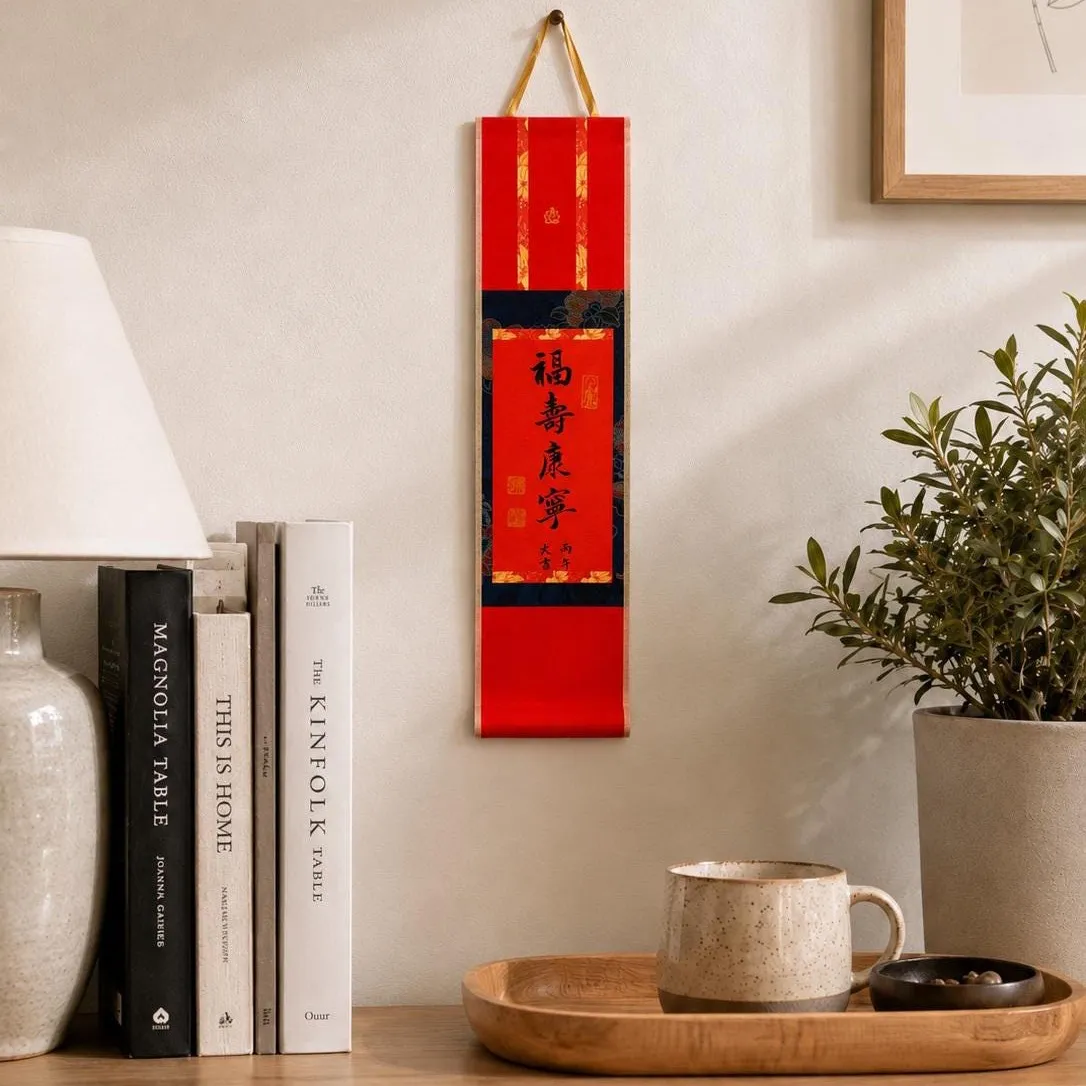
Photo shows a sample — yours will be brushed with 欢聚一堂, or any character you choose.
Wall Scroll — for walls & housewarmingsfrom $38→ -
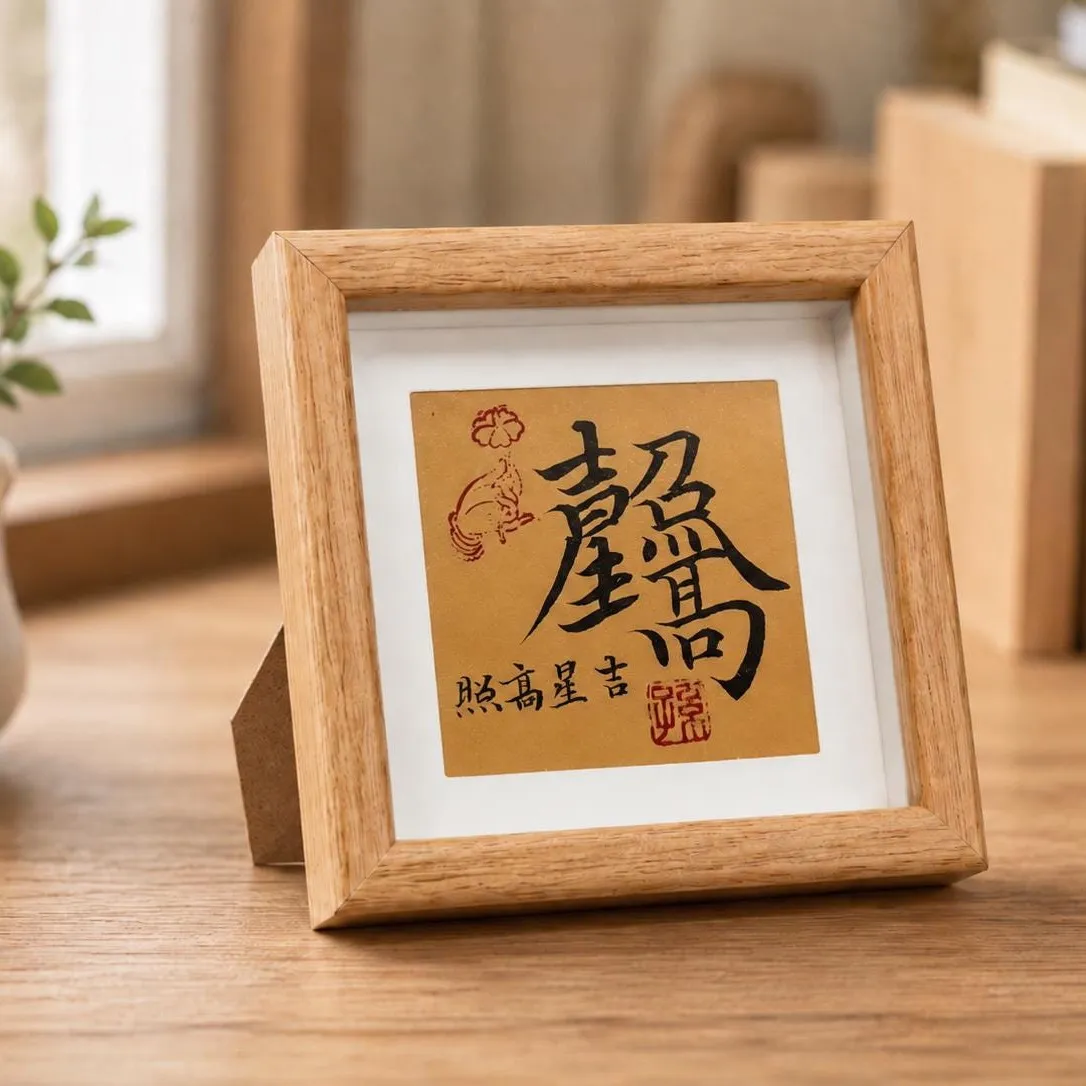
Photo shows a sample — yours will be brushed with 欢聚一堂, or any character you choose.
Desk Frame — for desks, studies & studiosfrom $44→ -
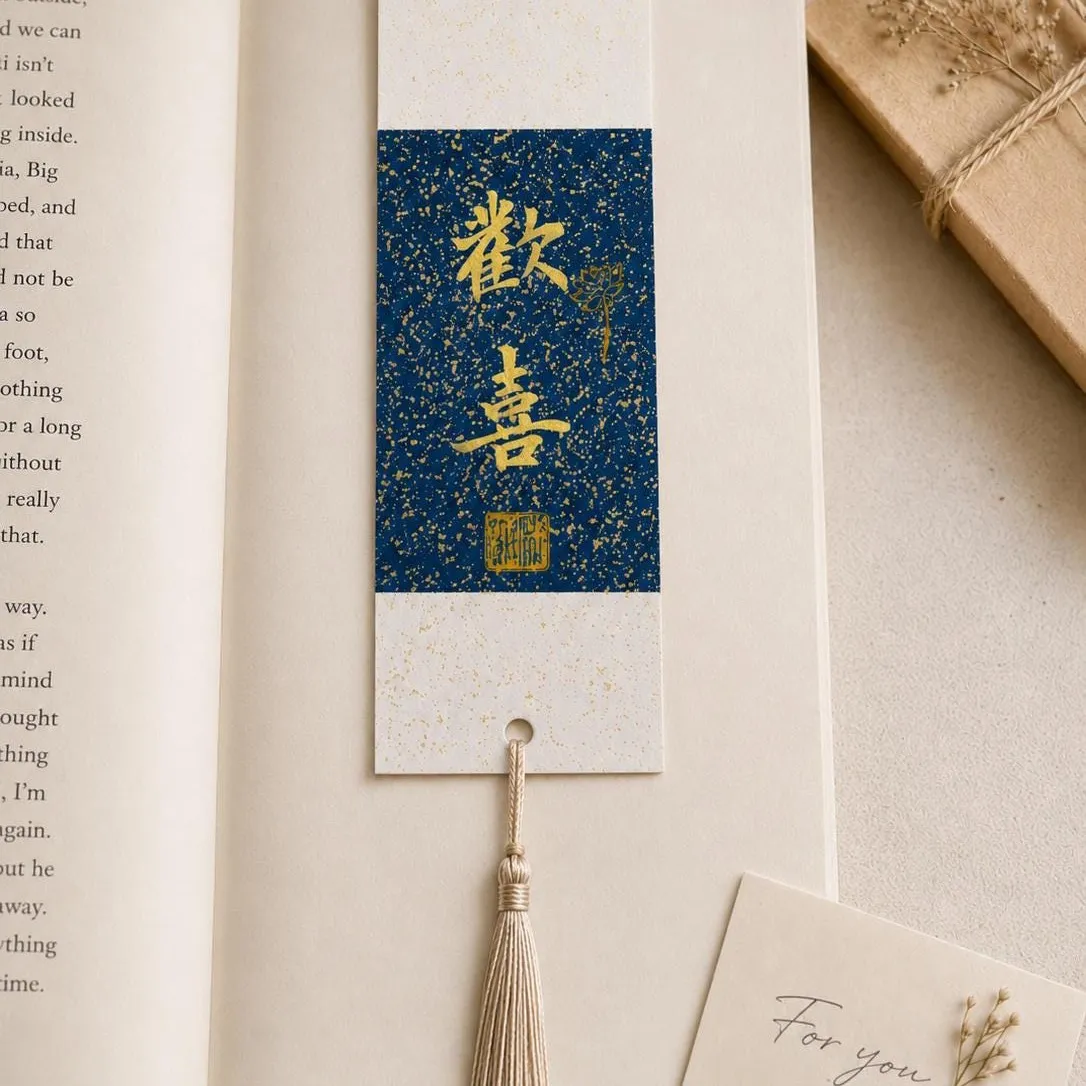
Photo shows a sample — yours will be brushed with 欢聚一堂, or any character you choose.
Bookmark — for readers & small thank-yousfrom $17→
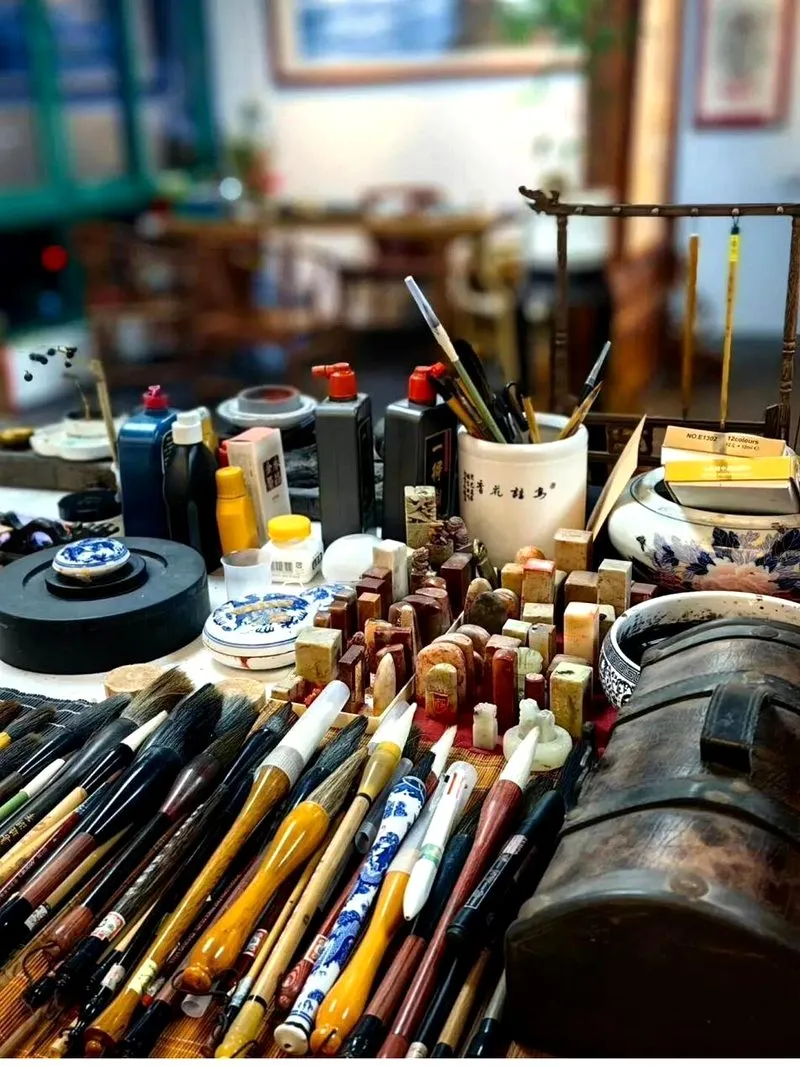
What people said after it arrived.
-
The item is fantastic. The customer service was genuine. Thanks!
— M.Verified purchase · from our Etsy shop reviews · -
They were great they gave me exactly what I asked for and then some. Thank you!!
— G.Verified purchase · from our Etsy shop reviews · -
It is well designed and customized. My daughter loves it. Amazing gift for family’s d friends
— S.Verified purchase · from our Etsy shop reviews ·
Each "欢聚一堂" is hand-brushed by Artist Lina Sun on rice paper.
See 欢聚一堂 (Huān Jù Yī Táng) on Etsy →