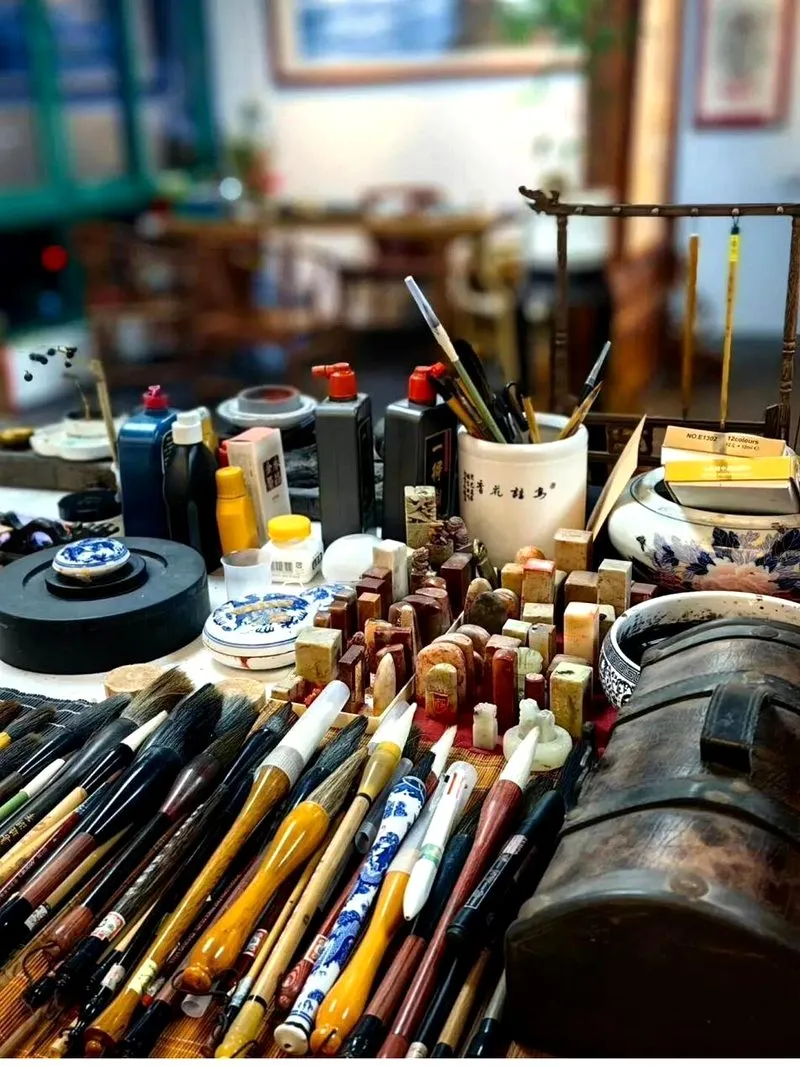
For Dad
Chinese characters for the man who carried more than he ever said — a gift for Dad.
The best Chinese calligraphy gift for parents is one character the household already uses for that relationship, written once in ink. For a father, 父爱如山 names a love felt as presence and 孝 names the child's side. Artist Lina Sun hand-brushes it on rice paper in her Shenzhen one-person studio.
Recommended characters
孝 (Xiào) — Filial Piety
For the father whose years of care have not been taken for granted. 孝 names the recognition explicitly and in the only direction it can run: from child to parent. It does not wish the father anything (that is 德 or 长寿); it acknowledges what he has done and names the relationship as foundational. Given at Father’s Day, it is the gift that says the example has been received and the debt understood.
仁 (Rén) — Benevolence
For the father whose presence has been characterized by consistent attention to the people around him rather than any particular achievement. 仁 names the disposition that 德 (moral character) and 敬 (respect) both depend on: the basic orientation toward others — the choice, repeated over years, to face the family and turn toward them. A gift that names the relational fact rather than the role.
德 (Dé) — Virtue
For the father whose conduct has been the quiet curriculum. 德 names not what a father says or provides but what he embodies, consistently and over many years — the moral formation that becomes the standard his children carry forward without always knowing where they got it.
长寿 (Cháng Shòu) — Longevity
For the father whose continued presence is the foundation. 长寿 is the most direct birthday or Father’s Day wish in the longevity category — not health or ease, but simply more years. Chinese families give it at milestone celebrations as the plainest acknowledgment of what they most want: that he stays.
康宁 (Kāng Níng) — Health and Ease
For the father whose body has done years of work. 康宁 names both conditions a father’s milestone year might warrant: health that holds (康) and the settled mind that comes when the hardest work is behind him (宁). More specific than 安康, which wishes for safety — 康宁 wishes for the interior ease that good health makes possible.
家和 (Jiā Hé) — Family Harmony
For the father whose presence has been the structure the household formed around. 家和 names that structure directly — not his achievements or his provision, but the accord he has held together over years. The most foundational of the household blessings, and the one that best honors what a father’s stability actually produces.
家和万事兴 (Jiā Hé Wàn Shì Xīng) — When Family is Harmonious, All Things Flourish
For the father whose steady presence has been the household’s accord. 家和万事兴 completes the argument that 家和 begins: not just that the home is in harmony but that this harmony is the cause of everything the family has produced. A gift that names the foundational work the recipient has been doing without naming it as work.
毅 (Yì) — Resolve
For the father whose resolve has been the household’s quiet foundation — who did not reduce his commitment when the cost became visible, or change his standard when the standard became inconvenient. 毅 names the interior quality that sustained the external example: not his accomplishments or provision, but the determination from which both came.
刚 (Gāng) — Principled Firmness
For the father whose interior position has not been moved by what surrounded him — by the pressures that offered reasonable justifications for compromise, by the circumstances that made accommodation convenient. 刚 names the quality that makes the standard consistent over years: not rigidity visible on the surface but the firmness inside that didn’t bend in the matters that counted. Where 德 names what his conduct has accumulated and 毅 names the resolve that held under difficulty, 刚 names the interior that was not moved in the first place.
坚 (Jiān) — Tenacity
For the father whose commitment held across the unrewarded years — not through any single act of resolve but through the sustained pressure of time and circumstance. 坚 names the foundational quality that only duration reveals: the roots in cracked rock, the pine and cypress that are last to wither when the cold holds. Where 毅 names the determination that reaffirmed itself under specific difficulty and 刚 names the interior that didn’t bend to temptation, 坚 names the material condition of not having cracked under what accumulated.
伟 (Wěi) — Greatness
For the father whose years have produced something genuinely consequential — not famous, but deeply formative in the lives his presence shaped. 伟 is the most elevated of the Father’s Day characters: where 德 names what he has accumulated in moral character and 刚 names the interior that didn’t bend, 伟 names the scale at which those qualities became visible in their effects. The gift for the father whose influence on the family, once you step back to see it, can only be named with a larger word.
强 (Qiáng) — Strength
For the father whose years of provision and protection have demanded, and demonstrated, genuine capacity. 强 names the underlying power — physical and moral together — that the role required and his record proves: not the quality of his character (that is 德) or the firmness of his interior (that is 刚), but the actual strength from which both became possible. The gift that names the source.
铭 (Míng) — Inscription
For the father whose example has been genuinely formative — not observed from the outside but pressed into the people he raised as surely as words into bronze. 铭 names what remains: the lessons and way of seeing that do not require reminding, that show up in how his children think and act. Where 德 names what he has built in character and 伟 names the scale of his influence, 铭 names its durability — what he has left that does not fade.
安泰 (Ān Tài) — Peace and Cosmic Right-Order
For Father’s Day or a milestone birthday, when the gift should name what decades of work — in the world and in the household — have together produced. 安泰 names both dimensions: the inner peace (安) that comes from a self cultivated across a long working life and family role, and the favorable world-configuration (泰) that right conduct navigates and, in some measure, helps sustain. Where 刚 names the interior that didn’t bend and 德 names the accumulated virtue, 安泰 names the condition of a life that has held at both scales — the person settled within themselves and the world met with grace.
仁爱 (Rén Ài) — Benevolent Love
For the father whose love has taken the form of sustained orientation rather than declaration — the daily, unremarked attending-to that neither 仁 (orientation without act) nor 爱 (feeling without principle) describes alone. 仁爱 is the compound for the father who kept facing outward when circumstances made inward easier — not the firmness of 刚 or the virtue of 德, but the specific quality of love that kept pointing at the family, steadily and without announcement.
忠孝 (Zhōng Xiào) — Loyalty and Filial Piety
For the father whose years of household faithfulness are the occasion both for recognition (孝 — naming the debt explicitly, as the day calls for) and for honoring the quality that sustained those years (忠 — the centered-heart orientation toward commitment and the people depending on him). 忠孝 gives both at once: the filial acknowledgment the occasion asks for and the recognition of the faithfulness that made it worth giving. Where 孝 alone names only the child’s stance and 忠 alone names only the father’s quality, 忠孝 names the complete relational accounting — what he has given and what is owed.
明德 (Míng Dé) — Manifest Virtue
For the father whose virtue has been visible — not the private accumulation of good character (that is 德) but the character actively made manifest: the conduct that entered the household as a legible standard because it was consistently, deliberately forward-facing. 明德 names the father whose example has been an active demonstration across years, not simply a character trait his children happened to absorb without noticing. The most pointed of the virtue characters for the father whose standard has been visible enough to name.
担当 (Dān Dāng) — Taking Responsibility
For the father whose record demonstrates a specific pattern: when something needed doing and no one had been assigned to it, he was the one. 担当 names the initial act of stepping in — distinct from the faithfulness (忠) that sustained a commitment once made or the resolve (毅) that held through difficulty. It names what came first: the choice to pick up the load. Among the Father’s Day characters, it is the most precise for the father whose reliability has always had this quality — not waiting for assignment, identifying the gap and moving toward it.
栋梁 (Dòng Liáng) — Pillar of Strength
For the father whose years have not merely demonstrated good qualities but have been the organizing load-bearing element of the household — the one the family formed around without naming it. 栋梁 is the structural recognition: not what he accumulated in character (德), not how he stepped in (担当), not the quality of his resolve (毅), but the claim that without him, the household’s form itself would be different. The most specific Father’s Day character for the father whose presence has been indispensable at the structural level rather than the relational or moral one.
刚毅 (Gāng Yì) — Firm Resolve
For the father whose record demonstrates both qualities of intactness, not just one. 刚 (principled firmness) alone names the interior that didn’t bend; 毅 (resolve) alone names the determination that didn’t stop. 刚毅 names the compound: the father who was neither bought off in the good years nor worn down in the hard ones. More specific than 德 (accumulated moral character broadly) and more complete than either single character: the recognition for the father whose career as a parent proved both types of intactness across the full arc.
坚强 (Jiān Qiáng) — Resilient Strength
For the father whose years required both types of strength — not just the holding (坚) or just the capacity to keep going (强), but the combination that Chinese tribute speech names when it says a man was the household’s foundation and its engine together. 坚强 is more complete than 坚 alone (which names structural firmness under accumulated pressure) and more complete than 强 alone (which names the active capacity the role required): it names the father who proved both across the same life, whose roots held under the difficulty and whose capacity to build did not stop.
父爱如山 (Fù Ài Rú Shān) — A Father’s Love Is Like a Mountain
For the father whose love was registered as presence rather than speech — felt as weight and steadiness, never said and never needing to be. Where the single characters name his qualities (德 his character, 刚 his firmness, 伟 his stature) and 孝 names the child’s debt back to him, 父爱如山 names the shape of the love itself: silent, immovable, holding everything up. The simile a child understands before understanding any of the virtues that produced it — and the most direct gift for the undemonstrative father whose 含蓄的爱 showed in the long drives and the waiting up rather than the words.
厚德载物 (Hòu Dé Zài Wù) — Deep Virtue Carries All Things
For the father whose role, looked at honestly, was to be the one everything got loaded onto — the worries, the failures, the people who could not yet carry themselves. Where 德 names the character he accumulated and 父爱如山 names the shape of his love, 厚德载物 names the function that depth performed: the carrying itself. The phrase comes from the 坤 hexagram of the Book of Changes, where the earth is the model — the ground that holds mountains and seas without choosing and without complaint. The Father’s Day gift for the man who held the household up for years and called it nothing.
自强不息 (Zì Qiáng Bù Xī) — Strengthen Yourself Without Rest
For the father whose defining trait, looked at honestly, was that he did not stop. Where 厚德载物 names the weight he carried and 父爱如山 names the steadiness others felt, 自强不息 names the verb underneath both — the years of getting up and continuing through stretches that offered every reason to slow down, with no one assigning the effort and no one keeping score. It is the active half of the Tsinghua motto, lifted from the 乾 hexagram of the Book of Changes, where the standard for human effort is heaven’s own motion: constant, tireless, never resting. The gift for the man whose strength was mostly his refusal to quit.
天道酬勤 (Tiān Dào Chóu Qín) — The Way of Heaven Rewards the Diligent
For the father who provided for years before there was any proof it would pay off. Where 自强不息 names his refusal to stop and 父爱如山 names the steadiness others felt, 天道酬勤 names the quiet bet underneath all of it — that the effort was not poured into a void, that a fair order eventually settles its accounts. It is the rare gift that does not praise a trait but makes a promise about the world: the work counted, and the counting is reliable even when the reward ran late. Give it to the man who kept going on faith, and call the faith vindicated.
谦 (Qiān) — Modesty
For the father whose authority never needed announcing — who absorbed the credit instead of claiming it and let his competence be discovered rather than displayed. 谦谦君子, the thoroughly modest man, is among the highest things Chinese can say about someone, and it fits the dad whose steadiness was never loud about itself. Where 德 names the character he accumulated and 刚 names the interior that didn’t bend, 谦 names the restraint over both: real capability held without advertisement. The gift that names what you may have measured only years later — the strength that stayed quiet.
泰 (Tài) — Grand, Settled Peace
For the father who has earned his ease — the man whose years of carrying the household have finally resolved into something steady and sure. 泰 names that settled state: not the absence of trouble but the grand calm that outlasts it, the composure Confucius praised in 君子泰而不骄, at ease without arrogance. Where 厚德载物 names the weight he bore and 自强不息 names his refusal to stop, 泰 names what they were for — a life arrived at peace, flourishing and unshakable. The gift for the dad you wish a wide, untroubled stretch of years.
宽 (Kuān) — Magnanimity
For the father whose defining quality was the room he left you — to be wrong, to be different, to fall short and still belong. 宽 names breadth, not provision or firmness: the magnanimity of the man who could have been exacting and chose to overlook what didn’t matter and forgive what did. It is the virtue of the secure — hardest in those with the standing to be petty. Where 刚 names the interior that didn’t bend and 谦 names the strength he never advertised, 宽 names the latitude he extended outward, the patience you measured only years later, when you understood how easily he could have been smaller and never was.
慈祥 (Cí Xiáng) — Kindly and Gentle
For the father whose sternness mellowed into warmth — the one his grandchildren climb on without a second thought, whose face has gone gentle with the years. Chinese parenting once split the roles, 慈母严父, the loving mother and the strict father; 慈祥 is the word for the father who became the gentle one too. Where 父爱如山 names love felt as silent, immovable weight and 泰 names the settled calm he has arrived at, 慈祥 names what shows on the surface now: the kindly, benign demeanor of an elder dad whose toughness gave way to an open, easy warmth. It is reserved for the old — the recognition of the gentleness that outlasted the hardness.
阖家幸福 (Hé Jiā Xìng Fú) — Happiness for the Whole Family
For the father who would count his life well spent if the family he built is well — the man whose own contentment has always run through the household rather than around it. Where 泰 names the settled ease he has personally arrived at and 父爱如山 names his love felt as silent weight, 阖家幸福 turns the wish outward to the whole family he carried: not peace for him alone but a good life shared by everyone he provided for. It is the blessing addressed to his household as a unit, the way he has always kept his own accounts. The gift for the dad whose idea of a good life was never his own but his family’s.
端 (Duān) — Uprightness
For the father whose defining quality was that he was straight — principled, dignified, the same in every room. 端 names 品行端正, upright conduct: not the silent weight of 父爱如山 or the breadth of 宽, but the moral square-corner you measured yourself against for life. Where 刚 names the interior that didn’t bend and 慈祥 names the gentleness the years brought out, 端 names the bearing that made “be a proper person” something you saw before you were ever told — the dad who never had to say what was right because you could read it in how he stood, sat, and kept his word.
慎 (Shèn) — Prudence
For the father who taught you not to rush — the one who weighed a decision out loud, measured twice, and showed you that care is a form of respect for the thing you are doing. 慎 names that considered judgment: 谨慎, the prudence you grew up watching, and 慎独, the discipline of being careful even when no one is watching. Where 刚 names the interior that didn’t bend and 端 names the bearing you measured yourself against, 慎 names the habit of thought underneath both — the dad whose steadiness was never caution for its own sake but the care to do a thing right. The gift for the father whose careful judgment you only understood the value of later.
团圆 (Tuán Yuán) — The Family Gathered Whole
For the father who would never phone to say he misses you but knows to the day when the reunion dinner falls. 团圆 names the thing he waits for without announcing it — the whole family back under one roof at the New Year, the chairs all filled, the loud table he pretends to find tiring. Where 刚 names the interior that never bent and 阖家幸福 wishes the household a good year, 团圆 names the softer fact underneath: that the man measures the year by who comes home for it.
感恩 (Gǎn Ēn) — Gratitude
For the father whose sacrifices you understood only after you had to make your own. 感恩 is gratitude that arrives late and lands hard — the recognition of years of provision and steadiness that were never announced and never asked to be thanked. Where 父爱如山 names his love as silent, immovable weight and 孝 names the duty owed back, 感恩 names the feeling in between: the grown child, now old enough, moved by what they were given. The gift for the dad you thanked too little because he never seemed to need it.
身体健康 (Shēn Tǐ Jiàn Kāng) — May Your Body Be Well
For the father who has been given words about strength his whole life — 刚, 坚, 强, 毅 — and never once a word about his body. Every one of those characters describes what he withstood; 身体健康 is the only one that turns around and asks after the thing doing the withstanding. It is the plainest wish on this shelf and, for him, the most useful one: not another verdict on his character but the request his children would make out loud if he made it easy to. The gift for the dad whose health you would rather have than any further proof of his toughness.
宏 (Hóng) — Grand Scale · Vast Vision
For the father whose plans were always drawn wider than the year he was in. Most of what else sits on this shelf measures what he withstood — 刚 his firmness, 坚 what he outlasted, 毅 the not-quitting — and each of them takes his measure by the pressure applied to him. 宏 measures the other direction: how far out he was looking the whole time. It does not praise the result, which is 伟; it names the size of the drawing the result came from. The choice for the dad whose ambitions were never modest and, more often than the family says out loud, were never for himself.
通 (Tōng) — Open · Connected
For the father you could always get through to. 通 is not a measurement of him at all — it describes the line between you, which is why nothing else on this shelf quite substitutes for it. The character sits inside 通情达理: understands the feeling, arrives at the reason. It is the everyday Chinese compliment for a person who can actually be talked to, and it fits the dad who took the call, heard the argument out, changed his mind and said so. 父爱如山 casts a father as a mountain, immovable by design. 通 makes the quieter claim, and for many families the truer one: that the line stayed open in both directions.
禄 (Lù) — What He Provided
This page has characters for what he withstood (坚, 刚), what he shouldered (担当, 栋梁) and how the family came to feel about it (感恩). None of them says the plain thing: that a wage arrived every month for twenty years and everything else on this list rested on it. 禄 says only that. It is the stipend of a post — provision that exists because someone holds a job and keeps holding it — and it is the one character in the catalog willing to name the money without either apologising for it or making it the whole man. The scale is right, too. 伟 would embarrass most fathers and 父爱如山 makes a mountain of one; 禄 makes no figure of him at all. For the dad whose contribution was paid out in ordinary instalments and never once described out loud.
义 (Yì) — What He Decided Was His
Shares a romanization with 毅 higher up this page and does something entirely different. 毅 is about withstanding what arrives. 义 is about the accounting he did beforehand — the person he kept visiting after everyone else had stopped, the money he sent with no repayment date attached, the standard he held toward people who had no way of making him hold it. 担当, further up, is about load: who owns the problem once it exists. 义 is about the ledger behind the answer, and the ledger has an unusual entry in it, because the debts he recognized included people whose claim on him was nil. For the dad whose sense of what he owed ran consistently wider than anything he was actually responsible for.
达 (Dá) — Where You Ended Up Standing
达 takes an object, and the Analects puts it in exactly that form: 己欲达而达人 — the man who wants to arrive gets other people there. It describes a common shape of Chinese fatherhood with unusual precision. He was aiming at something — a trade, a city, a degree, a margin that would not run out — and what the aim produced was children standing in the place he had been walking toward, often further along it than he ever got himself. The character does not credit him with having arrived. It credits the arriving that happened at the other end of him, which is the version most fathers would actually accept and most families never say out loud. For the dad who would have trouble pointing at his own arriving, and whose children can point at it without thinking.
廉 (Lián) — What He Left on the Table
孟子 fixed the test for this character in one clause — 可以取,可以无取,取伤廉, when taking is permitted and declining is permitted, taking is what damages you. Which means the decisions that made a father 廉 are the ones nobody ever questioned, and most families learn about them late or not at all: the supplier’s envelope that went back, the contract that did not go to a relative, the expenses that were only ever what they were. 德 higher up this page is the accumulated weight of a whole life. 义 is the outbound side, what he decided he owed people who had no claim on him. 廉 is the inbound edge — the shorter, harder list of what came within reach and stayed where it was. For the dad whose record is clean in the places nobody thought to look.
宽厚 (Kuān Hòu) — The Margin He Never Shaved
宽 higher up this page credits one measurement — the room he left you to be wrong in. 宽厚 keeps that and opens a second column, because 厚 is thickness and its opposite is 薄, thin. What goes in the second column is the advantage that was there for the taking, would never have been contested, and was not taken. The supplier who was paid the agreed number in a year the agreed number hurt; the tenant whose late month went unmentioned; the younger brother who borrowed and was never asked. 廉 further up is about a post and about money that had a giver behind it. This is the ordinary version, where nothing improper was on offer and he still came out on the generous side of every close call. For the dad whose decency is attested by people who had no leverage over him at all.
安心 (Ān Xīn) — Taking Something Off Him, Not Adding to It
担当 higher up this page names the load he took on when nobody assigned it, and 父爱如山 makes him the mountain. Both add to the pile, respectfully, and he has spent a long time being the thing that holds. 安心 runs the other way and reduces it. The word is a verb with an object — 安 is the transitive 安 of 安民 and 安邦, and what it settles is 心 — so the sentence needs somebody doing the settling, and for a father that somebody is almost always his child. A man who stopped raising the subject of your job, your rent, your health did not stop tracking them; from the outside the two are identical. This says one of them can be stood down, and stakes the claim on you.
丹心 (Dān Xīn) — What Ends Up Written Down About Him
Both of the poets who fixed this word set it next to the record — 史册 in 陆游’s line, 汗青 in 文天祥’s — and both were writing about how they would read once they were no longer available to explain themselves. 铭 higher up this page credits the sentences he said often enough that you still carry them, which are his own account. 忠孝 names the two directions he was faithful in while he was practising them. 丹心 is the only one of the three that is an entry rather than a description: a colour somebody else takes a reading of, afterwards, and sets down. In most families that assembly begins late and is done out of small pieces — a number that does not add up, a job he left without saying why, something an aunt lets slip at a table. What goes into it is precisely the part he never narrated.
正直 (Zhèng Zhí) — The Witness Who Did Not Count
端 appears higher up this page for the bearing he held, and 廉 for a particular thing he declined. 正直 has no single moment attached to it, and children end up with an unusually long observation window on it. A father manages a reputation with a colleague, a neighbour, his own parents; there is a version of most stories calibrated for each of them. What he cannot do is manage it selectively with the person doing homework at the far end of the table, who gets the unedited account of the week and then hears the version that goes down the phone. That gives a child years of readings taken under conditions available to no one else, filed long before there is a word for what is being filed. 正直 is the word, and it is one of the few on this page a child is better placed to award than anybody outside the house.
睿 (Ruì) — Not the Same as Careful
慎 further up this page is the father who weighed a decision out loud and measured twice. That is a description of how he worked. 睿 is a description of where he got to. The 说文 will not gloss the character as clarity on its own. It puts 深 in front, and the graph it takes apart is built around a valley and a cut, so what the word carries is a distance rather than a brightness. So the gift is for the dad whose account of something had a floor under it that nobody else’s did: the reason that was not the obvious reason, and turned out to be the real one. 慎 can be recognised in the moment, in the way he handled a thing. This one only shows up later, in whether the account held.
俭 (Jiǎn) — A Rule, Not an Amount
This one is a rule rather than a quantity, and 孔子 phrased it as one. Asked what lay at the root of ritual, he answered 与其奢也,宁俭 — where a rite could go lavish or sparing, go sparing — and the shape of that answer is what the character carries into ordinary life: given two versions you could have either of, take the smaller. Which is why it cannot be applied to a father who had no options. It measures the gap between what was available and what was actually spent, and in a household the gap leaves physical evidence — the tool that got repaired a third time, the sofa that outlasted two moves, the second-hand bike that turned out to be fine. Most children read that evidence as ordinary while they are living inside it. This is for the dad whose version of ordinary you eventually worked out was a decision, taken daily, and never once presented as one.
承 (Chéng) — The Load Has Moved
The call starts coming to you instead of to him. He stops being asked about the decision. You drive over and do the repair yourself. No family marks the day any of that begins, and by the time it is finished there is no occasion left on which to mention it. 承 is the verb Chinese has for that, and all it does is report which way the weight has gone. 孝 is addressed to him as a person; this one is addressed to what he was carrying. 担当 further up this page credits him for picking a load up when nobody assigned it, which is the same motion with the other man as its subject. 安心 higher up asks him to stop watching. This one gives the reason: the thing he was watching is being carried by somebody else now. For the dad who has never been told that somebody else is now standing where he stands.
弘 (Hóng) — The Sound Gets Further Than the Bow
The character was drawn around a bow, and on the standard reading of the oldest forms what it named was not the weapon or the shot but the noise — the thing that reaches the far side of the field first and carries on past it. That is still the shape of the word. 宏 higher up this page can be given to a father whose plans never came off, because it credits the drawing rather than the building. Its homophone 弘 cannot. It pays out only if something outside him actually ended up larger: the trade, the house, the way a job is expected to be finished. None of those began with him, and the character asks only whether they are larger now than when they arrived. It is a low bar to state and a hard one to fake, because something outside the man has to have changed. 承 elsewhere on this page marks the day a grown child takes the weight. This is the long stretch before that, when it was his and did not stay the size he found it.
笃 (Dǔ) — He Never Said What It Was
For the father who never stated what he was committed to and never needed to. This character does not state it either: it returns how much weight stands behind a commitment and leaves the object for the room to fill in. A house is full of people who worked out long ago what he had been putting his weight behind, and none of them has ever had occasion to say it. 承 marks the day the load finally came off him, and 弘 asks whether what he was handed ended up wider than he found it. 笃 is the quieter measurement underneath both — how much was actually behind each unremarkable instance while the thing was still his. 许慎 defined it with a horse whose step had gone heavy, and the heaviness is a fact about the load, not about the animal under it.
康泰 (Kāng Tài) — A Wish He Does Not Have to Answer
泰 higher up this page is the composure Confucius set against arrogance — 君子泰而不骄 — and there it is a word about bearing. Beside 康 the same character stops describing how a man carries himself and starts describing whether anything in him is held up: 康 the reserve, 泰 the clearance to spend it. That is the whole of what 康泰 asks, and it asks in writing, because the letter closing reserved for a recipient older than the writer is where the compound settled. 康宁 elsewhere here adds a settled mind to the sound body; 身体健康 is the spoken version said at his door at New Year. For the father who has never once answered the question honestly when it was put to him out loud, a wish that does not require him to answer is not a small thing to give.
天伦之乐 (Tiān Lún Zhī Lè) — Gladness, Not a Grade
孝 settles a debt toward him; 承 marks when the load moved; 康泰 asks whether the body still clears. 天伦之乐 refuses that scoring. It says the father-child bond still has joy in it — the same quality Yuanchun put above rank when she spoke of a farmhouse table. For the dad who should hear kinship gladness rather than another performance review from his children.
厚 (Hòu) — Only the Outbound Number
宽厚 above keeps two ledgers, and 厚德载物 above is the load the household set on him. This character is neither frame. It is the through-measurement on its own: a hillside’s thickness in 许慎, and later the word for a dealing that was not the thin one. A child can check it in cases too small to become stories. The wedding gift sized for the relationship he wanted rather than the one on the invitation. The repair he paid for someone who would not have asked a second time. 廉 on this page is money that arrived and went back. This is time or money that went out when keeping it would have been allowed. For the dad whose generosity never looked like an occasion.
恩 (Ēn) — What Arrived
感恩 above weighs a debt as a feeling. 德 above names the man he became. 孝 names what a child owes, and 厚 above measures a margin past the minimum. This character names arrivals that opened an account: the wage that kept the household eating, the school place, the introduction a later life still calls 知遇之恩. The account can be heavy when the margin was everything he had. For the dad whose provision was never narrated, and whose children are old enough to list it without turning the list into thanks.
福 (Fú) — Blessing · Good Fortune · Happiness
See 福 →爱 (Ài) — Love · Affection · Devotion
See 爱 →寿 (Shòu) — Longevity · Long Life · Health and Vitality
See 寿 →瑞 (Ruì) — Good Tidings · Blessing · Promise of a Bright Year
See 瑞 →康 (Kāng) — Health · Well-being · Wholeness
See 康 →敬 (Jìng) — Respect · Reverence · Honor
See 敬 →平安 (Píng Ān) — Peace · Safety · Well-being
See 平安 →安康 (Ān Kāng) — Peace · Health · Wholeness of Body and Mind
See 安康 →福寿 (Fú Shòu) — Blessing · Longevity · A Long and Happy Life
See 福寿 →龙 (Lóng) — Dragon · Power · Auspicious Strength
See 龙 →力 (Lì) — Strength · Force · The Power to Act
See 力 →阖家欢乐 (Hé Jiā Huān Lè) — Joy for the Whole Household
See 阖家欢乐 →岁岁平安 (Suì Suì Píng Ān) — Peace Year After Year
See 岁岁平安 →健康长寿 (Jiàn Kāng Cháng Shòu) — Good Health · Long Life
See 健康长寿 →龙马精神 (Lóng Mǎ Jīng Shén) — The Vigor of the Dragon and Horse · Tireless Spirit
See 龙马精神 →福寿康宁 (Fú Shòu Kāng Níng) — Blessing · Longevity · Health · Peace
See 福寿康宁 →福寿安康 (Fú Shòu Ān Kāng) — Blessing · Longevity · Peace · Health
See 福寿安康 →-
What is the best Chinese calligraphy gift for parents?
The best Chinese calligraphy gift for parents is a character the family already uses for that relationship, not a generic decoration. For dad, people often choose 父爱如山 (a father's love is like a mountain) or 孝 (filial piety) — 孝 names the child's side of the bond. 爱 (love) is the quieter option when the household rarely says the word. For more years and a well body, families use 长寿 or 身体健康. Father's Day is the usual occasion. Each piece is hand-brushed by Artist Lina Sun on rice paper.
-
Which Chinese characters do people often choose for dad?
The characters that recur for a father are 孝, 父爱如山, 爱, 感恩, 长寿, and 身体健康. 孝 and 感恩 speak from the child; 父爱如山 names love felt as presence rather than speech; 爱 says the same feeling in one character. 长寿 and 身体健康 wish him more years in a well body. 福寿康宁 is the four-part elder wish. Start with the Father's Day gift guide. The matching mother list is on For Mom.
-
Why give parents a hand-brushed calligraphy piece?
A printed character repeats a file. A hand-brushed piece is written once, in ink, on rice paper, by Artist Lina Sun — the object is the sitting, not a copy. Parents tend to keep a character they already recognize; the brushwork is what makes it a gift rather than wall text. Materials and how each piece is made are on the studio page.
Bring a hand-brushed piece home — choose how you'd like it brushed.
-
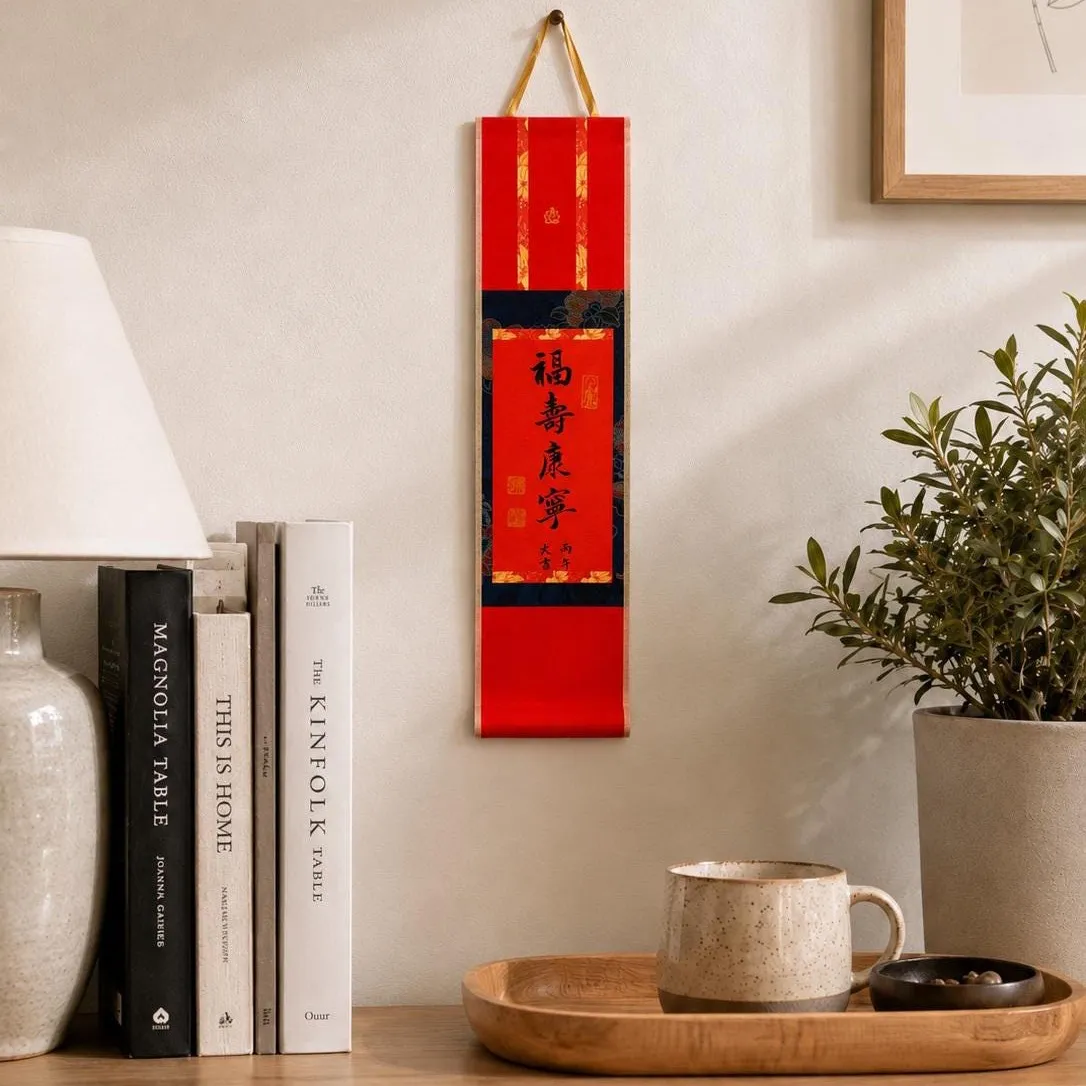
Photo shows a sample — yours will be brushed with the character you choose.
Wall Scroll — for walls & housewarmingsfrom $38→ -
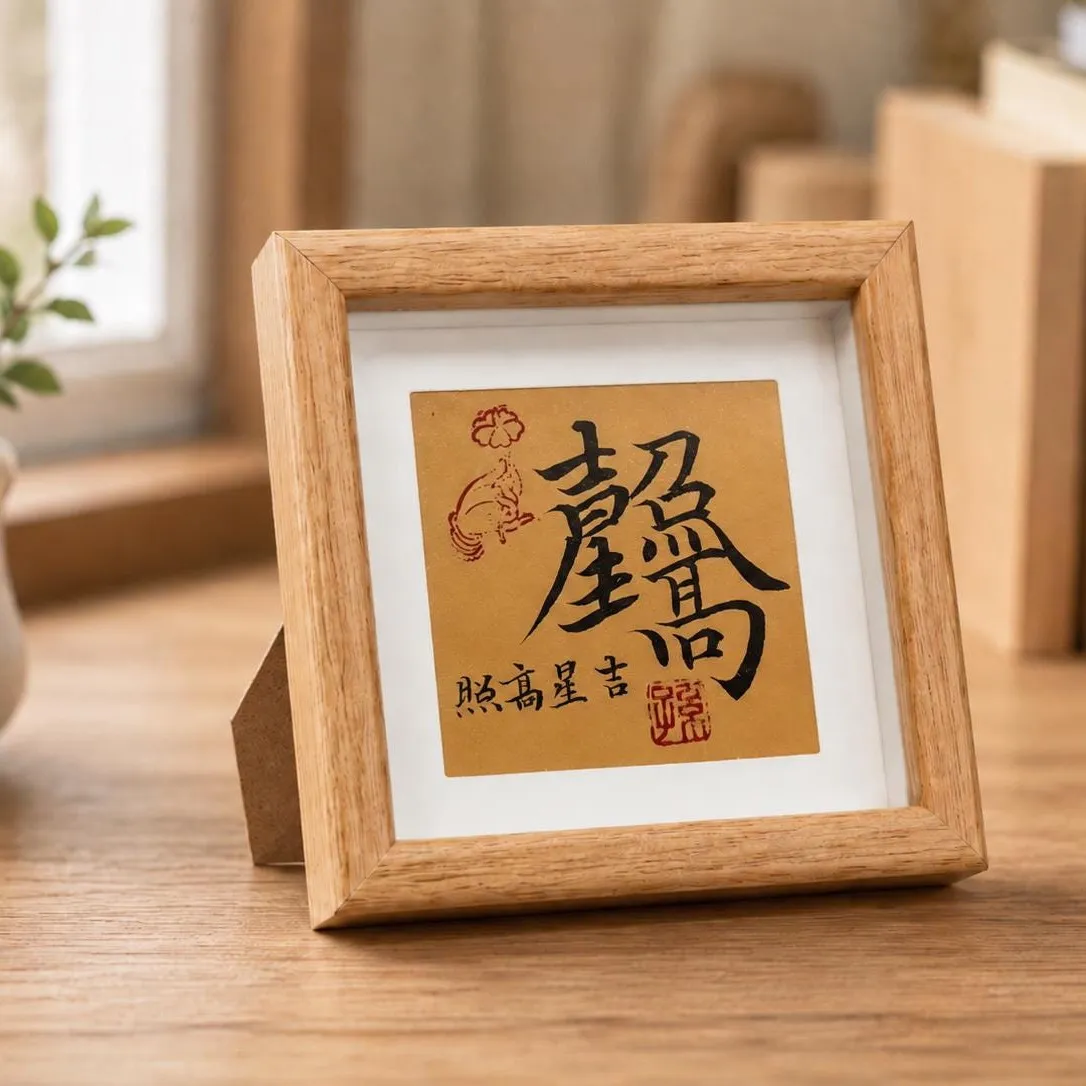
Photo shows a sample — yours will be brushed with the character you choose.
Desk Frame — for desks, studies & studiosfrom $44→