慈祥 (cí xiáng) — Kindly and Gentle · The Benign Warmth of an Elder · Tenderness Made Visible
A two-character word, not a single character.
Some kindness you have to be told about; 慈祥 is the kind you can see. The pair takes the inward tenderness of See 慈 → — the protective love that bends down toward a child, an elder’s care for the young — and adds 祥, the good, benign sign of a thing, so that the warmth rises to the surface where a face can hold it. That is the whole difference between the two words. 慈 is the feeling; 慈祥 is the feeling made visible — the soft eyes, the unhurried smile, the welcome that costs the visitor nothing. And unlike 和蔼 or 和善, which an affable person of any age can earn, 慈祥 waits for the years. It is tenderness that has had time to settle into a demeanor. See 祥 →
You meet it most where Chinese describes the old. 慈祥的老人 is the gentle elder; 慈祥的面容 is the kindly face; 慈眉善目 — “kindly brows, gentle eyes” — locates the whole quality in the way a person looks back at you. It is the grandmother who never once made you feel you were too much, the grandfather whose patience outlasted every one of your mistakes, the parent whose long love has worn into an open, easy warmth. At a memorial it is the first thing a family names — 慈祥的笑容, that kindly smile — because a demeanor, not a résumé, is what the people who loved someone actually keep.
A hand-brushed “慈祥” by Artist Lina Sun is the gift for the grandparent or parent whose kindness has become something the whole family can see — the elder whose welcome never had to be earned, whose face softens before they even speak. On a birthday it says aloud what the years already proved; on Mother’s or Father’s Day it names the gentleness that outlasted everything else. It does not wish them kinder. It tells them their kindness shows.
The Story Behind the Character
Ask a Chinese speaker to picture 慈祥 and they will not reach for a feeling — they will describe a face: the soft eyes and unhurried smile of someone old enough to have stopped needing to prove anything. That is the first thing to know about the pair. 慈 on its own is an inward disposition, the tenderness that bends down toward what is small and fragile. 祥 is what carries that tenderness to the surface, where another person can see it. Bound together, the two name love that has become visible — kindness you can read in a face across a room.
Each half brings something the other cannot. [See 慈 →](/library/ci/) is the heart that nurtures: the character stacks 兹, luxuriant growth, over 心, the heart, and the classics fixed its direction early — 父慈子孝, the parent loves downward and the child honors upward. It is the felt, protective warmth, but kept inside it is only a disposition. 祥 supplies the showing. Built on 示, the element for a sign or omen, 祥 named a good sign, something benign made perceptible; the oldest dictionary even records a second reading of it simply as 善, good. Where 慈 is the warmth, 祥 is the good sign of it — the calm, settled aura that tells you the tenderness is really there.
What the compound does, then, is move 慈 from the heart to the demeanor. This is why 慈祥 is almost never said of an abstract virtue and almost always of how a person looks and carries themselves — 慈祥的面容, a kindly face; 慈祥的老人, a gentle old soul. And it is why the word ages with its subject. A toddler is not 慈祥; a brash young friend is not 慈祥. The pair waits for the years that turn private tenderness into something a whole family can simply see.
Classical lines
- roughly 200 years
- c. 7th c. BCE 《诗经·大雅·泂酌》
- c. 7th c. BCE 《诗经·邶风·凯风》
- c. 5th c. BCE 《论语·子张》
岂弟君子,民之父母。 The genial, kindly nobleman is father and mother to his people.
岂弟 (kǎitì) means gracious and warm, and the line makes kindness so encompassing that it earns a person the title of parent to all. It is 慈祥 at its widest reach: the gentleness that makes everyone near it feel held, as a child is held.
君子有三变:望之俨然,即之也温,听其言也厉。 The gentleman shows three aspects: seen from afar he is dignified, approached up close he is warm, heard in his words he is exact.
Zixia's portrait of a teacher catches the exact texture of 慈祥: the warmth you feel only when you come near (即之也温). Dignity at a distance, gentleness within reach — the very thing a grandchild discovers about the imposing elder.
凯风自南,吹彼棘薪。母氏圣善,我无令人。 The warm south wind blows on the grown thornwood. My mother is wise and good; it is I who fall short.
凯风, the gentle south wind, became the language's enduring image for a mother's love. The poem measures her 慈祥 not by what she says but by how mild her warmth is — a wind that keeps tending the thorn even after it has hardened into firewood.
Why This Character Matters
慈祥 is one of the few compliments in Chinese that is quietly age-bound. You can call a young colleague 和蔼 (affable) or 和善 (good-natured), but 慈祥 is held in reserve for the old — it presumes the decades of gentleness that those words do not. The matching four-character idiom, 慈眉善目, "kindly brows and gentle eyes," makes the same point physically: this is a kindness you locate in a face, in eyes that have softened, in a smile that no longer hurries.
The word does its most moving work at the end of a life. At a Chinese memorial, the phrase relatives reach for again and again is 慈祥的笑容 — the kindly smile — because what a family remembers of a beloved elder is rarely an achievement and almost always a demeanor: the patience, the open welcome, the face that never made anyone brace before approaching. 慈祥 is also the standard description of the bodhisattva Guanyin's expression and of the round-cheeked 老寿星, the longevity elder of folk imagery — wherever Chinese culture pictures benevolence grown old and serene, this is the word waiting for it.
For the grandparent or parent whose birthday is really the family's chance to say what it has always felt: that being near them is gentle.
- For the grandparent or parent whose birthday is really the family's chance to say what it has always felt: that being near them is gentle. 慈祥 is recognition, not a wish — it names the soft-eyed, unhurried kindness the young grew up inside. Where 寿 marks the years and 福 the good in them, 慈祥 names the warmth those years settled into a face. Best for the elder whose patience never ran out, whose welcome never had to be earned.
- For the mother whose tenderness has, with time, become something you can see — in the way she looks at you, the way her face softens before she even speaks. 慈母 names the love; 慈祥 names what that love looks like worn for decades. Where [See 慈 →](/library/ci/) is the protective care that flows down to a child, 慈祥 is that same care grown calm and visible — the gentleness of a mother who has been loving the same direction her whole life.
- For the father whose sternness has mellowed into warmth — the one whose grandchildren climb on him without a second thought. Chinese parenting once split the roles, 慈母严父, the loving mother and the strict father; 慈祥 is the word for the father who, in the end, became the gentle one too. It recognizes the elder dad whose toughness gave way to an open, easy kindness — the soft landing the family learned to count on.
Grandparent · Mom · Dad · or yourself
Looking for a name? See Western names written in Chinese →
-
What does 慈祥 (cí xiáng) mean?
慈祥 (cí xiáng) is a two-character Chinese word for kindly and gentle, the benign warmth of an elder, tenderness made visible. Some kindness you have to be told about; 慈祥 is the kind you can see. The pair takes the inward tenderness of See 慈 → — the protective love that bends down toward a child, an elder's care for the young — and adds 祥, the good, benign sign of a thing, so that the warmth rises to the surface where a face can hold it. That is the whole difference between the two words. 慈 is the feeling; 慈祥 is the feeling made visible — the soft eyes, the unhurried smile, the welcome that costs the visitor nothing. And unlike 和蔼 or 和善, which an affable person of any age can earn, 慈祥 waits for the years. It is tenderness that has had time to settle into a demeanor. See 祥 → 慈祥 is one of the few compliments in Chinese that is quietly age-bound. You can call a young colleague 和蔼 (affable) or 和善 (good-natured), but 慈祥 is held in reserve for the old — it presumes the decades of gentleness that those words do not. The matching four-character idiom, 慈眉善目, "kindly brows and gentle eyes," makes the same point physically: this is a kindness you locate in a face, in eyes that have softened, in a smile that no longer hurries.
-
What occasions is 慈祥 given for?
慈祥 is traditionally given for Birthday, Mother's Day, Father's Day. For the grandparent or parent whose birthday is really the family's chance to say what it has always felt: that being near them is gentle. 慈祥 is recognition, not a wish — it names the soft-eyed, unhurried kindness the young grew up inside. Where 寿 marks the years and 福 the good in them, 慈祥 names the warmth those years settled into a face. Best for the elder whose patience never ran out, whose welcome never had to be earned. For the mother whose tenderness has, with time, become something you can see — in the way she looks at you, the way her face softens before she even speaks. 慈母 names the love; 慈祥 names what that love looks like worn for decades. Where See 慈 → is the protective care that flows down to a child, 慈祥 is that same care grown calm and visible — the gentleness of a mother who has been loving the same direction her whole life.
-
Who brushes the 慈祥 calligraphy?
Each 慈祥 (Cí Xiáng) is hand-brushed to order by Artist Lina Sun in ink on rice paper — never printed, never repeated.
Bring 慈祥 home — choose how you'd like it brushed.
-
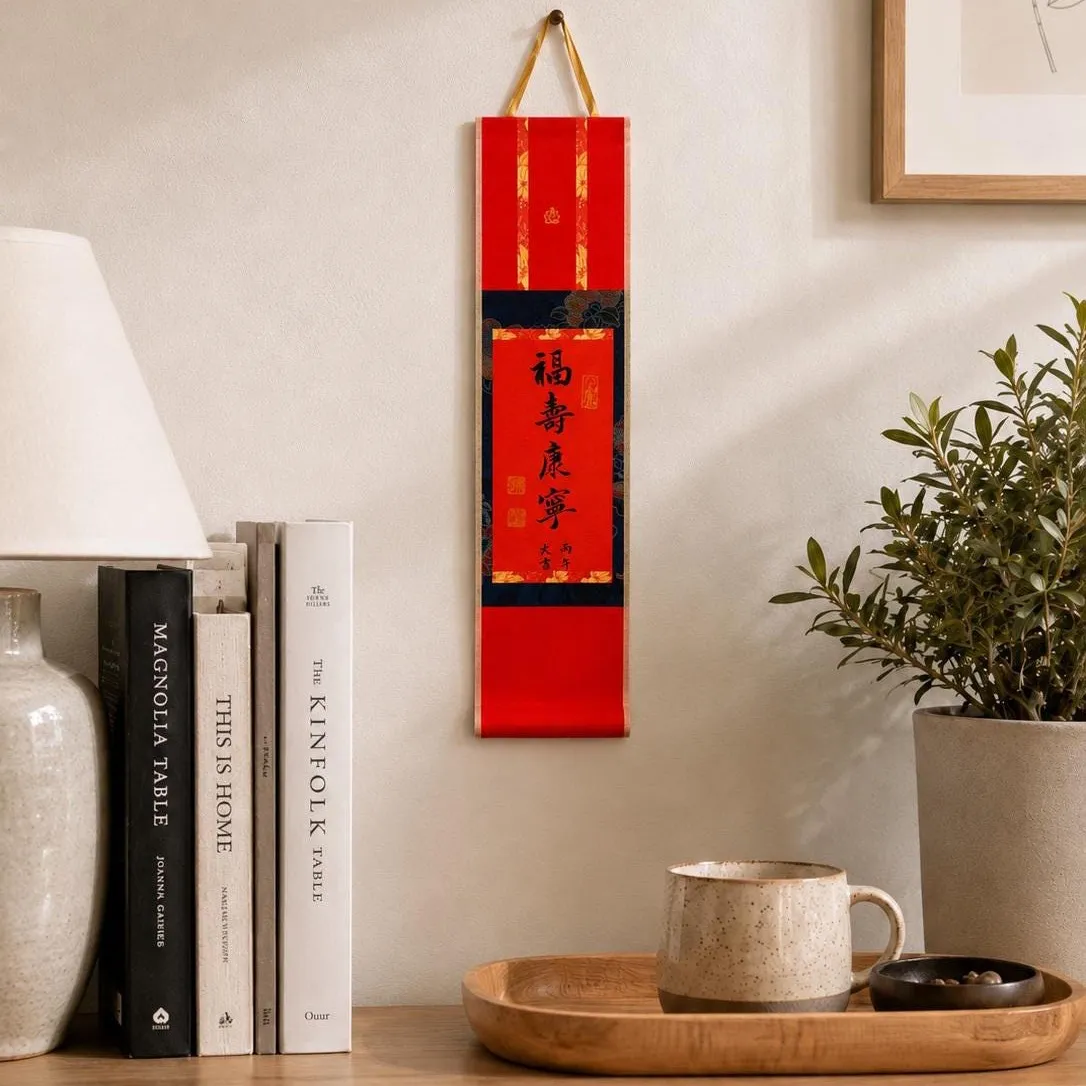
Photo shows a sample — yours will be brushed with 慈祥, or any character you choose.
Wall Scroll — for walls & housewarmingsfrom $38→ -
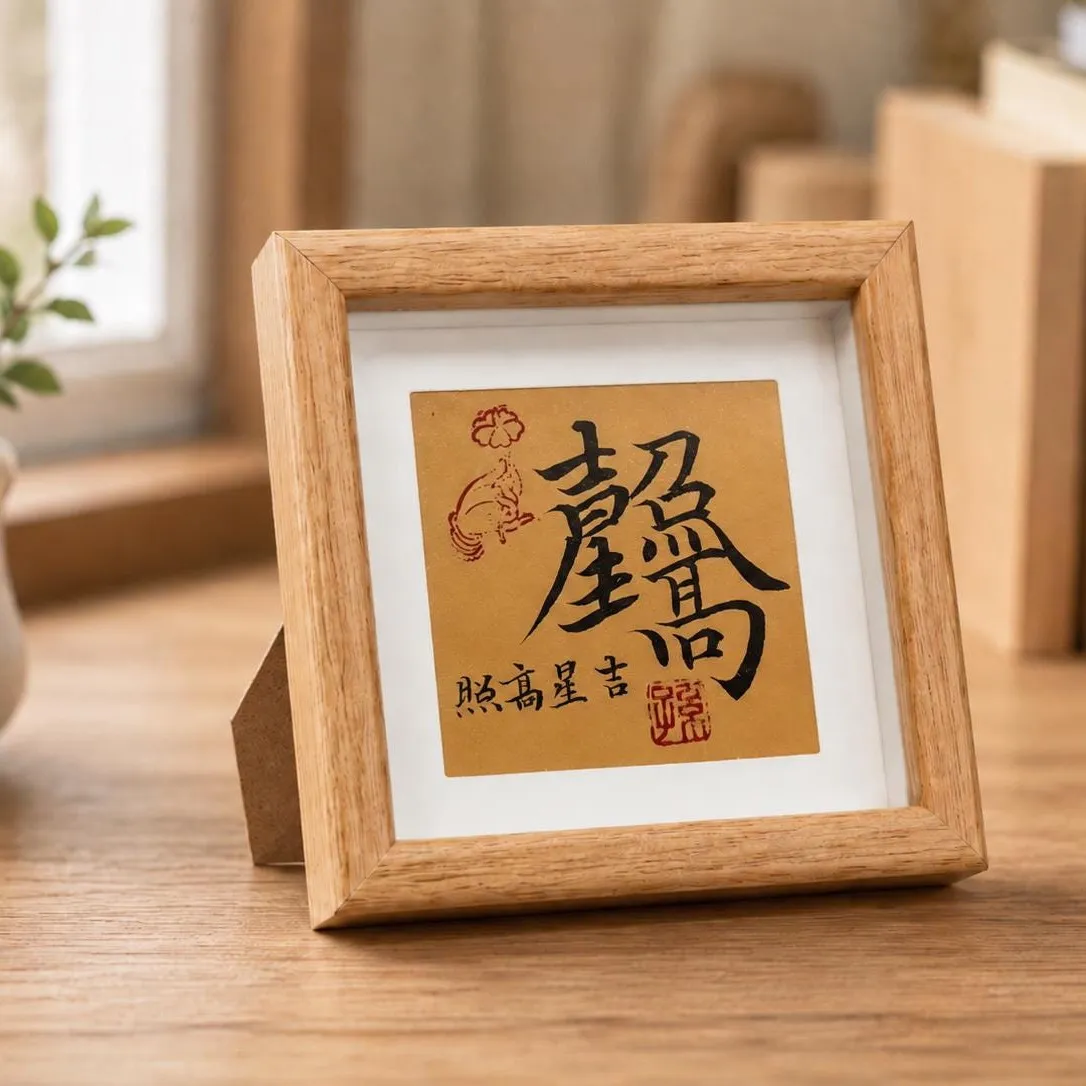
Photo shows a sample — yours will be brushed with 慈祥, or any character you choose.
Desk Frame — for desks, studies & studiosfrom $44→ -
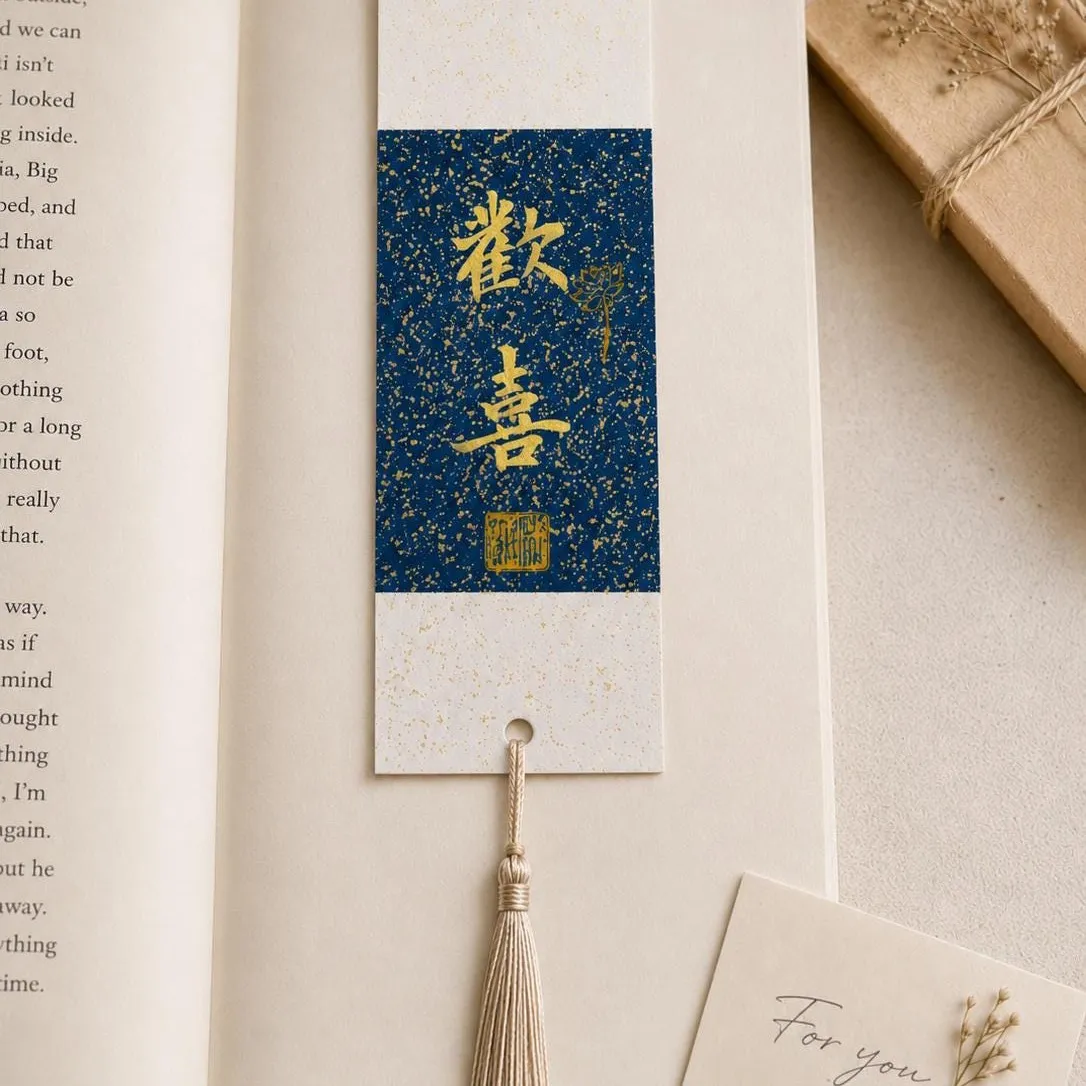
Photo shows a sample — yours will be brushed with 慈祥, or any character you choose.
Bookmark — for readers & small thank-yousfrom $17→
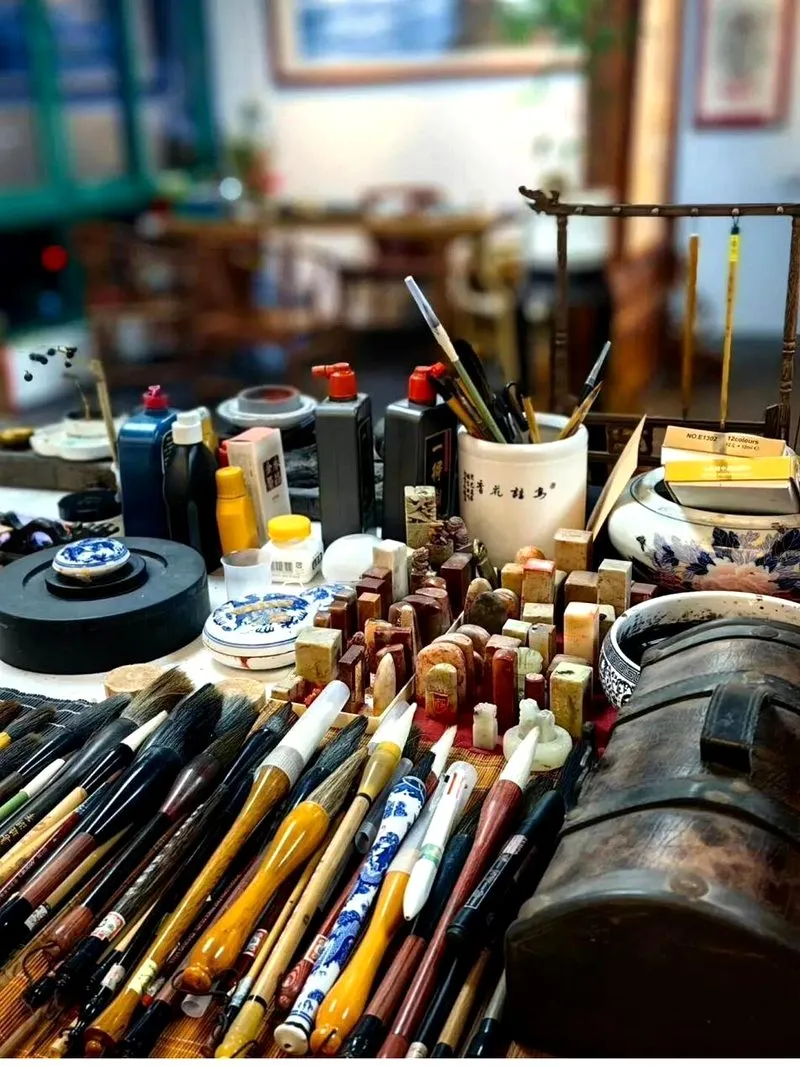
What people said after it arrived.
-
The item is fantastic. The customer service was genuine. Thanks!
— M.Verified purchase · from our Etsy shop reviews · -
They were great they gave me exactly what I asked for and then some. Thank you!!
— G.Verified purchase · from our Etsy shop reviews · -
It is well designed and customized. My daughter loves it. Amazing gift for family’s d friends
— S.Verified purchase · from our Etsy shop reviews ·
Each "慈祥" is hand-brushed by Artist Lina Sun on rice paper.
See 慈祥 (Cí Xiáng) on Etsy →