宽 (kuān) — Breadth · Tolerance · Magnanimity
A single character.
Some people make you feel that there is room for you — room to be wrong, to be different, to fall short and still belong. That is 宽. It is not 仁 (the active care that turns toward others) and not 谦 (the modesty that holds your own worth lightly). 宽 is breadth: the interior space to absorb a slight without retaliating, to let a small fault pass, to hold people unlike you without needing them to change. The character is literally a roomy house — the roof 宀 over an open space — and the oldest meaning was a hall with air to spare. The metaphor never left: a 宽 person has room inside.
The virtue shows up early and everywhere in Chinese life. 宽以待人 — be generous toward others — is among the first moral phrases a child is taught; 宽宏大量 is the compliment paid to someone who refuses to be petty; 宽恕 is the word for forgiveness itself. Confucius listed 宽 among the five practices of benevolence and made it the first thing he looked for in anyone holding authority — 居上不宽, a leader without breadth, he said, was not worth watching. It belongs especially to those who could be exacting and choose not to be: the father who lets a mistake teach its own lesson, the elder who has seen enough to forgive much, the boss who leaves people room to grow into.
A hand-brushed 宽 by Artist Lina Sun is the gift for the person whose breadth you have lived inside — the father, grandfather, or mentor who could have been smaller and never was. It does not wish them long life or success; those are other characters. It names the rarer thing: the room they made for everyone around them, and the quiet strength it takes to keep that room open. 宽以待人 — be broad with people — is easy to say and hard to live. This is the character for someone who has lived it.
- breadth of mind — room to spare inside
- tolerance — the latitude to let differences and small faults pass
- magnanimity — generosity of spirit, the refusal to be petty
- forgiveness — the capacity to absorb a wrong without being diminished
- permissiveness 宽 is not letting everything slide. Classical thought pairs it with 严 (strictness), not against it — 宽严相济. A 宽 person has standards and the room to contain what falls short of them; they have not abandoned the line.
- weakness 宽 is not the inability to hold a position. It takes a secure, even strong person to overlook what doesn't matter and forgive what does — which is why 宽 sits beside 刚 (firmness), not opposite it.
- kindness Kindness is a warmth of feeling. 宽 is a breadth of capacity — the interior room to hold others' mistakes, differences, and shortcomings without striking back or keeping score.
The short arms are the point: these readings don’t reach it.
- 宀 roof / houseThe roof radical sets the original scene — not a person but a building. 宽's first meaning was a spacious dwelling (屋宽大也, in the Shuowen Jiezi), and the breadth of that house became the breadth of a mind. A character about having room begins, fittingly, with a roof over open space.
- 见 lower elementBeneath the roof the modern form ends in 见 (see). The traditional character 寬 carries the phonetic 萈 (huán) in this position; the simplified form keeps 见 at the foot. The meaning of the character lives in the roof and the space it covers, not in this lower piece.
character
- 宽容 kuān róng tolerance — to make room for others, to forgive
- 宽厚 kuān hòu generous and kind — broad in spirit and substantial in character
- 宽宏大量 kuān hóng dà liàng broad-minded and big-hearted — the magnanimity that refuses to be small
- 宽恕 kuān shù to forgive, to pardon — to extend room to someone who has wronged you
- 宽广 kuān guǎng broad, vast — of a space, a road, or a mind
The Story Behind the Character
The oldest meaning of 宽 has nothing to do with a person's heart. It is a room. The whole character sits under 宀, the roof radical, and China's first dictionary (Shuowen Jiezi, c. 100 CE) defines it in four words — 寬,屋寬大也 — a house wide and large. 宽 began as a measurement of physical space: a hall you could cross without your shoulders brushing the walls, a courtyard with air to spare. Before it was a virtue, it was an architecture.
The metaphor that every language eventually reaches — a "big heart," a "broad mind" — Chinese reached through this character. A person who is 宽 has interior room: space to absorb a slight without striking back, latitude to let a small fault pass, capacity to hold people who are not like them without needing them to change. Its opposites are spatial too — 窄 (zhǎi) and 狭 (xiá), narrow, cramped, the pinched mind with no room for anyone's mistake. By the time of Confucius the breadth had become moral and political: 宽则得众, he taught — be broad with people and you win them.
What the character finally came to name is the virtue of the secure. It costs nothing to be generous from a position of plenty; 宽 is hardest, and most worth naming, in those who hold power and could be exacting instead — the parent, the elder, the one in charge. To be 宽 is not to have no standards but to have room enough to contain what falls short of them. The roof never left: the breadth of a house became the breadth of a mind that nothing small can crowd.
Classical lines
- roughly 2,200 years
- c. 400 BCE 《论语·阳货》
- c. 400 BCE 《论语·八佾》
- 1839 林则徐
宽则得众。 Be broad with people, and you win them.
Confucius named 宽 (breadth, magnanimity) as one of the five practices of benevolence, listed beside respect, trust, diligence, and generosity. The reasoning is plain: people gather around the one who leaves them room, and scatter from the one who keeps score.
居上不宽,为礼不敬,临丧不哀,吾何以观之哉? A man in high position who is not magnanimous, who performs the rites without reverence, who faces a funeral without grief
what is there in him for me to look at? — Confucius made 宽 the first requirement of anyone who holds authority; without it, rank is just a seat. The line is why 宽 belongs on a gift to a father, an elder, or a boss: it praises the breadth that power is supposed to come with and so seldom does.
海纳百川,有容乃大。 The sea takes in a hundred rivers; its capacity is what makes it vast.
Lin Zexu kept this couplet as his own motto, brushed for the wall. It is the cleanest image Chinese has for 宽: greatness is not refusing what is small or muddy or unlike you, but having room enough to hold it all. Breadth, not exclusion, is what makes a thing large.
Why This Character Matters
There is a four-character rule Chinese parents pass down almost as a reflex: 宽以待人,严于律己 — be 宽 (broad, lenient) toward others, be strict with yourself. The order matters, because most people live it backwards. 宽 in this maxim is always outward-facing: the latitude you extend to other people, never the excuse you grant yourself. A genuinely 宽 person holds a demanding standard for their own conduct and a forgiving one for everyone else's, and the gift of 宽 quietly names that asymmetry as something admirable rather than naive.
It is easy to mistake 宽 for permissiveness, but classical thought pairs it with its opposite, not with weakness. 宽严相济 — "temper breadth with rigor" — is the governing ideal for a magistrate, a parent, or a boss: the wisdom to know when to leave room and when to hold the line. 宽 is the breadth of someone who has standards, not the softness of someone who has none. That is why it sits comfortably beside 刚 (firmness) rather than against it — the same person can be impossible to push off a principle and generous about everything that isn't one.
宽 is a warm, slightly literary choice — it lives in 宽容 (tolerance), 宽厚 (generous), and as a given name. A Chinese person reading it as a tattoo would see breadth of mind, tolerance, or forgiveness, and find it thoughtful and uncommon rather than flashy — closer to a value someone lives by than a bold statement.
Calligraphy Styles for Tattoos
- Regular script (楷书 kǎishū) Best for tattoos
宽 has 10 strokes under a wide roof 宀, ending in 见 at the foot. Regular script keeps the roof broad and the lower component legible — which matters for a character whose whole meaning is room to spare. Minimum recommended size: 1.5 inches.
- Running script (行书 xíngshū) Good for larger pieces
The flowing strokes suit 宽's open, generous sense. Works best at 2+ inches, where the roof keeps its width and the lower element stays distinct.
- Cursive script (草书 cǎoshū) Only with an expert calligrapher
In cursive the lower component can collapse into an indistinct shape and lose legibility. Attempt only with a calligrapher experienced in cursive 宽.
Common Mistakes to Avoid
- Writing the foot as 贝 (shell) instead of 见 (see)Intended: 宽 with 见 at the bottom
The modern form of 宽 ends in 见 (see), not the similar-looking 贝 (shell). Swapping them produces a non-character, and a Chinese reader catches it at once.
- Cramping the character tall and narrowIntended: 宽 with a wide, roomy roof
宽 literally means wide. A tall, pinched 宽 fights its own meaning — the roof 宀 should be broad and the space beneath it open. Squeezing the width out of a character whose entire point is width is the most common proportion error.
Notes for Your Tattoo Artist
10 strokes. Top-bottom structure: a wide roof 宀 (3 strokes) over the body, ending in 见 (4 strokes) at the foot. Keep the roof broad — the character means wide, and a narrow roof reads as a contradiction. Minimum 1.5 inches to hold the lower component's detail.
A few characters live near "宽" but mean something quieter, sharper, or more specific. Here's how to tell them apart.
the room you leave others — latitude to be wrong, different, or imperfect and still belong
the active care that turns toward others in the first place — benevolence as orientation
how you treat other people — the breadth that forgives and makes space for them
how you hold yourself — the modesty that keeps your own worth quiet
breadth extended in every direction — tolerance and forgiveness toward equals and all comers
tenderness aimed downward — the protective, indulgent love an elder gives the young
For the father whose defining quality was the room he left you — to be wrong, to be different, to fall short and still belong.
- For the father whose defining quality was the room he left you — to be wrong, to be different, to fall short and still belong. 宽 names breadth, not provision or firmness (those are other characters): the magnanimity of the man who could have been exacting and chose to overlook what didn't matter and forgive what did. Most apt for the dad whose patience you only measured years later, when you understood how easily he could have been smaller and never was.
- For the elder or mentor at a milestone, when the gift should name the generosity of spirit a long life is supposed to produce and so rarely does. 宽 is the breadth of someone secure enough not to be petty — the grandparent who has seen enough to forgive much, the boss who leaves people room to grow into. A recognition before it is a wish: it names the latitude they have extended to everyone around them, and the quiet strength it takes to keep that room open.
Dad · Grandparent · Boss · or yourself
Looking for a name? See Western names written in Chinese →
-
What does 宽 (kuān) mean?
宽 (kuān) is the Chinese character for breadth, tolerance, magnanimity. Some people make you feel that there is room for you — room to be wrong, to be different, to fall short and still belong. That is 宽. It is not 仁 (the active care that turns toward others) and not 谦 (the modesty that holds your own worth lightly). 宽 is breadth: the interior space to absorb a slight without retaliating, to let a small fault pass, to hold people unlike you without needing them to change. The character is literally a roomy house — the roof 宀 over an open space — and the oldest meaning was a hall with air to spare. The metaphor never left: a 宽 person has room inside. There is a four-character rule Chinese parents pass down almost as a reflex: 宽以待人,严于律己 — be 宽 (broad, lenient) toward others, be strict with yourself. The order matters, because most people live it backwards. 宽 in this maxim is always outward-facing: the latitude you extend to other people, never the excuse you grant yourself. A genuinely 宽 person holds a demanding standard for their own conduct and a forgiving one for everyone else's, and the gift of 宽 quietly names that asymmetry as something admirable rather than naive.
-
What occasions is 宽 given for?
宽 is traditionally given for Father's Day, Birthday. For the father whose defining quality was the room he left you — to be wrong, to be different, to fall short and still belong. 宽 names breadth, not provision or firmness (those are other characters): the magnanimity of the man who could have been exacting and chose to overlook what didn't matter and forgive what did. Most apt for the dad whose patience you only measured years later, when you understood how easily he could have been smaller and never was. For the elder or mentor at a milestone, when the gift should name the generosity of spirit a long life is supposed to produce and so rarely does. 宽 is the breadth of someone secure enough not to be petty — the grandparent who has seen enough to forgive much, the boss who leaves people room to grow into. A recognition before it is a wish: it names the latitude they have extended to everyone around them, and the quiet strength it takes to keep that room open.
-
Is 宽 a good Chinese tattoo?
宽 is a warm, slightly literary choice — it lives in 宽容 (tolerance), 宽厚 (generous), and as a given name. A Chinese person reading it as a tattoo would see breadth of mind, tolerance, or forgiveness, and find it thoughtful and uncommon rather than flashy — closer to a value someone lives by than a bold statement.
-
Who brushes the 宽 calligraphy?
Each 宽 (Kuān) is hand-brushed to order by Artist Lina Sun in ink on rice paper — never printed, never repeated.
Bring 宽 home — choose how you'd like it brushed.
-
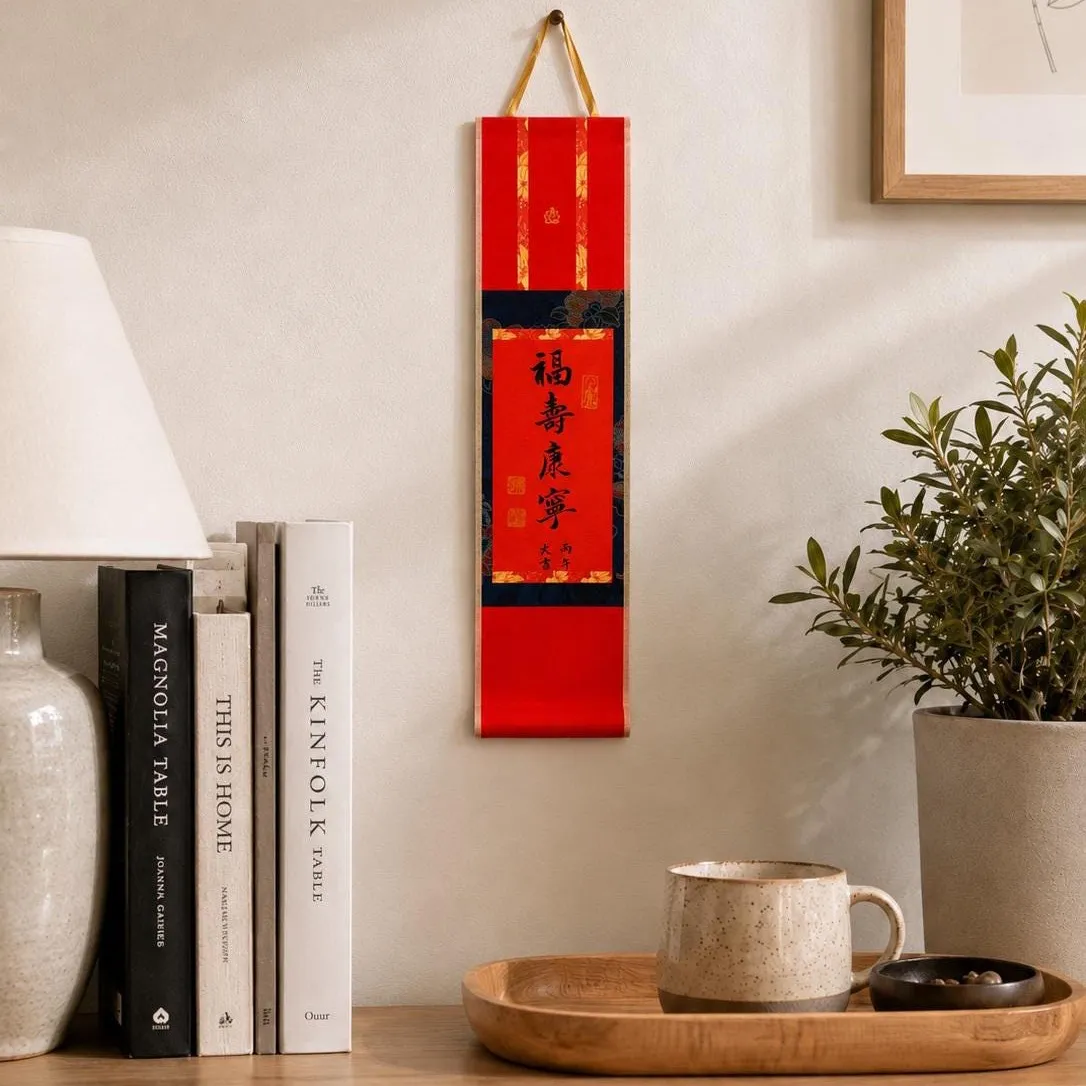
Photo shows a sample — yours will be brushed with 宽, or any character you choose.
Wall Scroll — for walls & housewarmingsfrom $38→ -
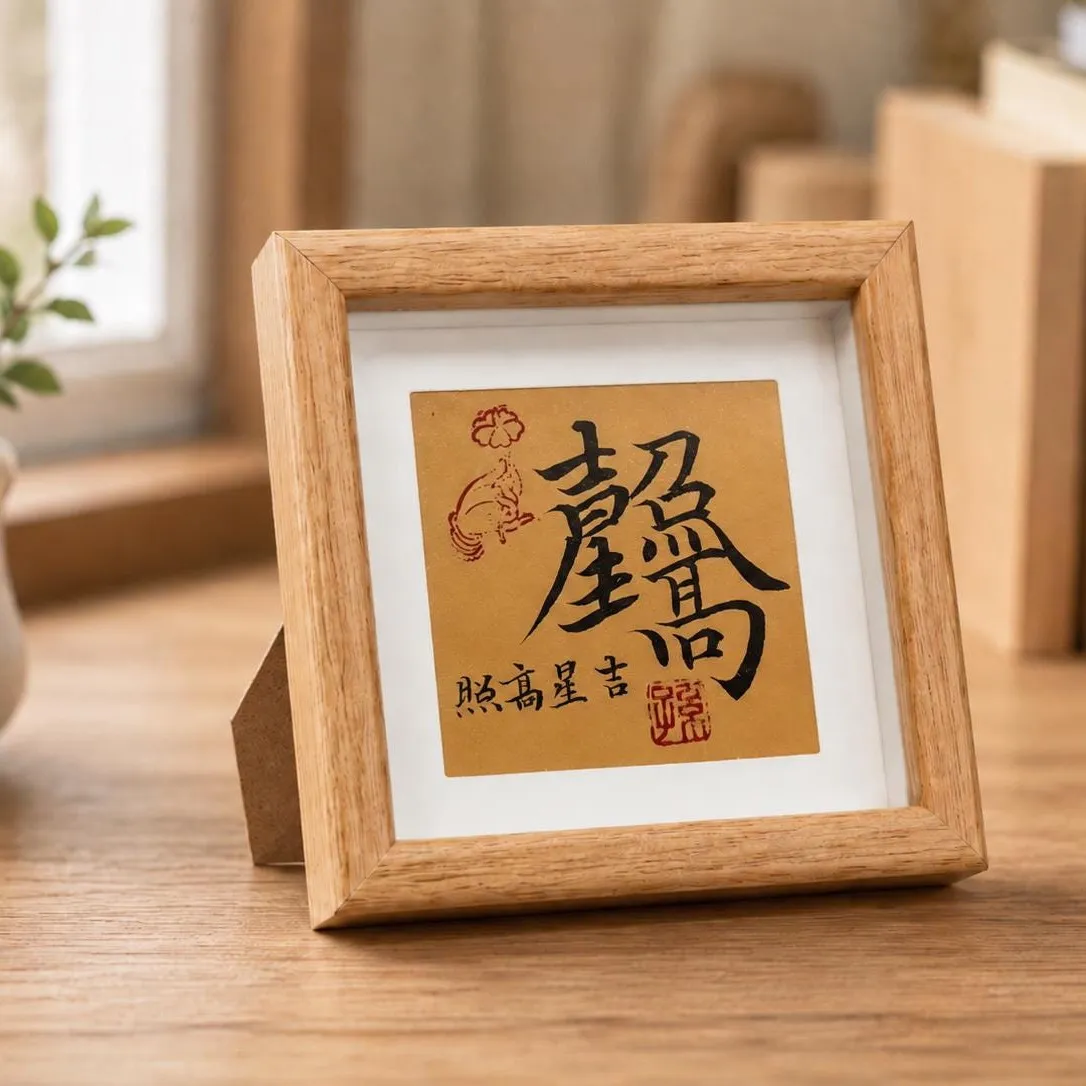
Photo shows a sample — yours will be brushed with 宽, or any character you choose.
Desk Frame — for desks, studies & studiosfrom $44→ -
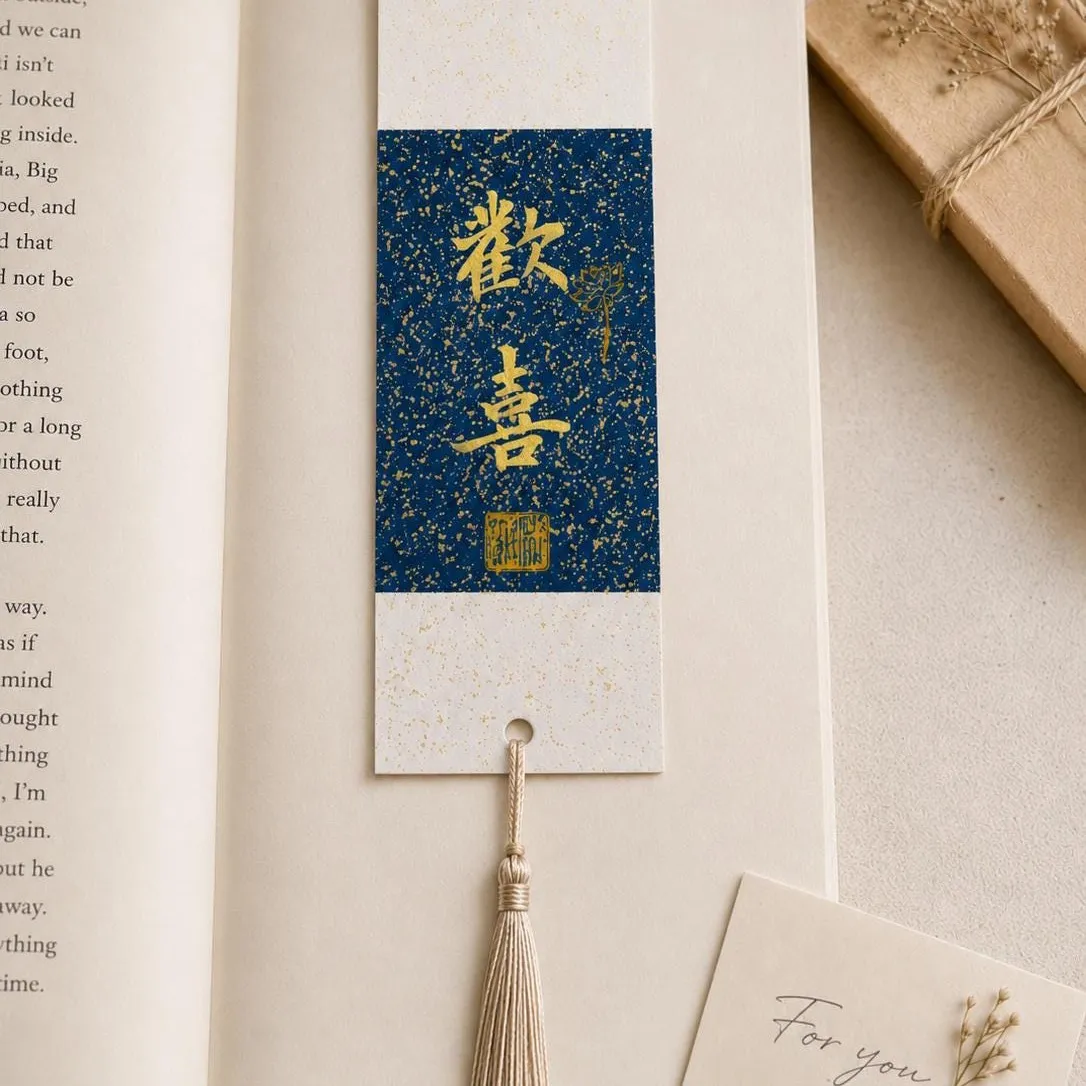
Photo shows a sample — yours will be brushed with 宽, or any character you choose.
Bookmark — for readers & small thank-yousfrom $17→
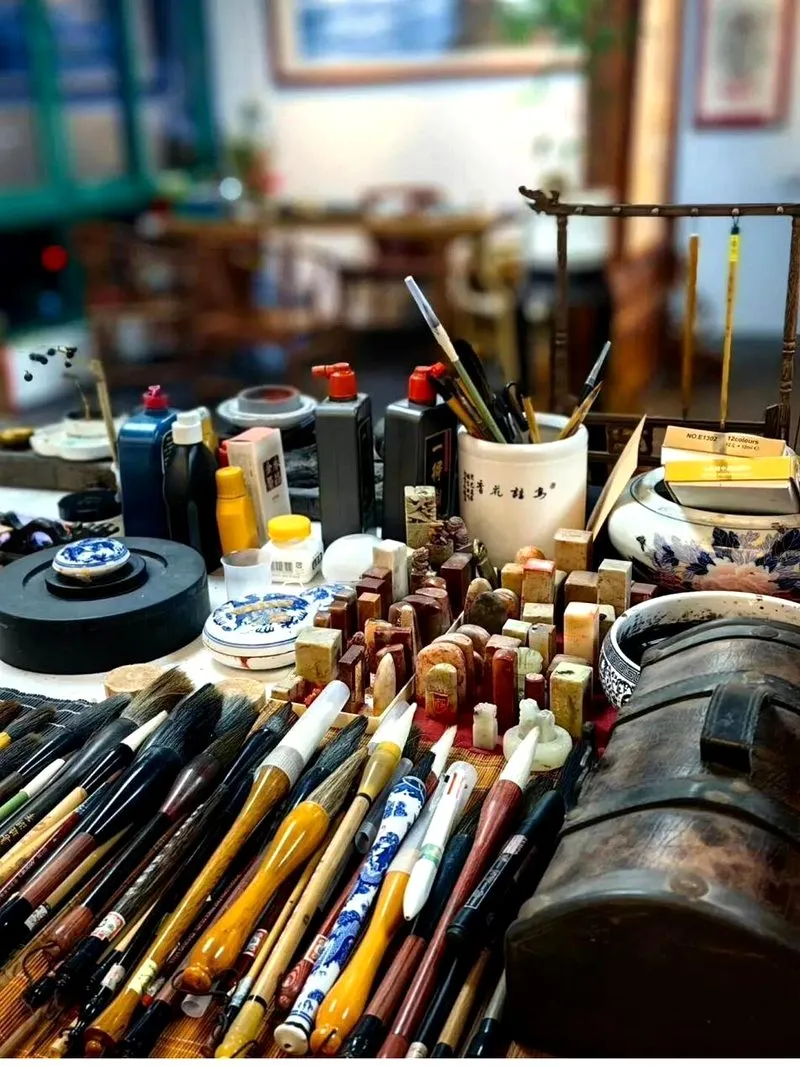
What people said after it arrived.
-
The item is fantastic. The customer service was genuine. Thanks!
— M.Verified purchase · from our Etsy shop reviews · -
They were great they gave me exactly what I asked for and then some. Thank you!!
— G.Verified purchase · from our Etsy shop reviews · -
It is well designed and customized. My daughter loves it. Amazing gift for family’s d friends
— S.Verified purchase · from our Etsy shop reviews ·
Each "宽" is hand-brushed by Artist Lina Sun on rice paper.
See 宽 (Kuān) on Etsy →