Jia He Wan Shi Xing (家和万事兴) — When Family Is Harmonious, All Things Flourish
A 5-character phrase, not a single character.
Jiā hé wàn shì xīng (家和万事兴) is a five-character Chinese household saying that means when the family is harmonious, all things flourish. Word by word: jiā is home or family, hé is harmony, wàn shì is ten thousand affairs (every matter), and xīng is to flourish or rise. English speakers also gloss it as “home and everything prospers.” It names a condition, not a wish list: household accord first, then work and daily life have room to grow. Families hang it as living-room wall art and New Year couplets, and give it as a housewarming or wedding gift. FuBlessings hand-brushes the phrase in her Shenzhen studio, ink on rice paper — living craft, one sitting, never printed.
See 家和 → · See 出入平安 → · Housewarming gifts →
- family harmony produces flourishing
- the household as causal premise
- a conditional, not a wish
- happy family Too descriptive. 家和万事兴 is not naming a state — it is making an argument about cause and effect.
- prosperity Too narrow and too direct. 兴 is flourishing that grows from conditions tended; prosperity is a delivered outcome.
The short arms are the point: these readings don’t reach it.
- 家和 the household at peaceThe causal premise: the condition that must be present for everything else to follow. Not just a wish but the first half of an argument.
- 万事兴 all things flourishThe consequence that follows from family harmony. Ten thousand things — every endeavor, every undertaking — will flourish. 兴 is organic flourishing from conditions already tended, not delivered reward.
characters
- 家和 jiā hé household harmony — the premise of the argument
- 万事 wàn shì ten thousand matters — every endeavor under the sun
- 兴旺 xīng wàng to flourish and thrive — the kind of growth 兴 names
- 齐家 qí jiā to order the household — the Confucian self-cultivation step
- 春联 chūn lián Spring Festival couplets — where 家和万事兴 lives above doorways
Cinnabar marks the characters 家和万事兴 actually contains. The dark row is a relative by meaning or by sound, not one shared stroke.
The Story Behind the Character
家和万事兴 appears on more Chinese walls than almost any other inscription — in kitchens, living rooms, family restaurants, and above millions of front doors. This is not because the calligraphy is complex (it is not) but because the phrase makes a specific argument that Chinese family culture finds persuasive: that the household in accord is the prerequisite for everything else. 万事兴 does not mean "may ten thousand things prosper." It means "ten thousand things will prosper." The phrase asserts causation. No other Chinese blessing does this.
The five characters divide into two units — 家和 (a condition the household must achieve) and 万事兴 (the consequence that follows) — and their juxtaposition transforms 家和 from a wish into a premise. The Confucian text 《大学》(The Great Learning) laid out the underlying logic in its formal self-cultivation sequence: 修身 (cultivate the self) → 齐家 (order the household) → 治国 (govern the state) → 平天下 (bring peace to all under heaven). The household is the second step — between the individual and the world — and the classical tradition insisted the sequence cannot be shortcut. 家和万事兴 is the folk compression of that argument into five characters. [See 和 →](/library/he/) [See 家和 →](/library/jia-he/)
The phrase likely crystallized during the Ming dynasty, when folk proverbs entered spring couplet (春联) culture and households began inscribing short axioms above their doorways for the new year. Unlike 福 or 平安 or 万事如意 — each of which names something one hopes will arrive — 家和万事兴 names something that must first be maintained. It is not a prayer. It is a hypothesis that Chinese households test against their own experience year after year.
Classical lines
- roughly 400 years
- c. 800 BCE 《周易·家人卦》彖辞
- c. 700 BCE 《诗经·周南·桃夭》
- c. 400 BCE 《大学》
桃之夭夭,灼灼其华。之子于归,宜其室家。 Peach blossoms, bright and bursting. The young woman goes to her new home, bringing good order to her household.
One of the oldest wedding poems in Chinese literature: the beauty of the moment is not the bride herself but what she does to the household. The same causal logic as 家和万事兴, three thousand years earlier.
一家仁,一国兴仁;一家让,一国兴让。 When one household practices benevolence, benevolence spreads across the state; when one household practices deference, deference spreads across the state.
The Great Learning's argument for why 家和 produces 万事兴: the household is not a private domain. What is practiced inside the home radiates outward.
父父,子子,兄兄,弟弟,夫夫,妇妇而家道正,正家而天下定矣。 When fathers conduct themselves as fathers, sons as sons, elder brothers as elder brothers, younger brothers as younger brothers, husbands as husbands, wives as wives
the Way of the household is correct; and when the household is correct, all under heaven is settled. — The I Ching connecting domestic order directly to the stability of the world. 家和万事兴 is this argument condensed to five characters.
Why This Character Matters
家和万事兴 is printed on kitchen tiles, commercial napkin holders, and refrigerator magnets across the Chinese-speaking world. The question worth asking is why: what makes a conditional argument about household causation — rather than a wish for prosperity, longevity, or joy — the most displayed inscription in Chinese domestic culture? The answer is that Chinese household tradition understands 家和万事兴 as an empirical claim, not an aspiration. Families display it because they have watched it prove true.
The character 兴 (xīng) in 万事兴 is precise: it names the coming-up itself — different from 成 (to succeed), 得 (to obtain), or 来 (to arrive). It describes something being raised rather than a reward being delivered, and the household in accord is what does the lifting. 家和万事兴 does not promise a specific outcome. It says: tend the household, and growth follows as naturally as a cultivated field responds to care. This is why the phrase appears in Chinese homes in hard years as well as good ones — it names the one variable that remains within the household's control regardless of what the world outside is doing.
A few characters live near "家和万事兴" but mean something quieter, sharper, or more specific. Here's how to tell them apart.
the conditional argument — premise plus consequence
only the premise — the state of household accord, without the claim about what follows
a causal argument about cause and effect — accord produces flourishing
a description of the warm gathering — joy that fills the room when everyone is present
names the precondition for ten thousand things to flourish
names the ten thousand outcomes directly, without specifying the precondition
家和万事兴 is not a wish for happiness at the wedding but a structural argument for what marriages require to produce everything else.
- 家和万事兴 is not a wish for happiness at the wedding but a structural argument for what marriages require to produce everything else. Giving it at a wedding is giving the premise before the years fill in the consequences — a gift that belongs not to the wedding day but to the household the couple is founding.
- The proverb was designed for the threshold: before a home is filled with objects or achievements, it requires the one condition that makes them count. 家和万事兴 hung above the front door of a new home is both a wish and a declaration — the household begins here in accord.
- At New Year, 家和万事兴 names the sequence families believe governs the year ahead: settle the household (家和) and the year's outcomes follow (万事兴). Where 万事如意 asks for all the outcomes directly, 家和万事兴 asks for the condition that produces them — the premise, not the list.
New Couple · Mom · Dad · or yourself
Looking for a name? See Western names written in Chinese →
-
What does each character in Jiā hé wàn shì xīng (家和万事兴) mean?
Jiā hé wàn shì xīng (家和万事兴) is a five-character phrase, not four. 家 (jiā) is home or family — the household and the people in it. 和 (hé) is harmony, accord among those people. 万 (wàn) is ten thousand, the ordinary Chinese way of saying “every” or “all.” 事 (shì) is an affair, a matter, a piece of work. 兴 (xīng) is to flourish, to rise. Read as two units, not five isolated glosses: 家和 is the condition (the family is harmonious); 万事兴 is what follows (all things flourish). English speakers also gloss the whole line as “home and everything prospers,” but the Chinese order matters: household accord first, then the ten thousand affairs have room to grow. It names a sequence, not a wish list.
-
Is Jiā hé wàn shì xīng for the home or for an office?
Jiā hé wàn shì xīng (家和万事兴) is for the home. The first character is 家 — home, family, household. The saying is about accord among people who live together, not a team, a shop floor, or a company. Hung in a living room or over a family doorway, it reads as a household inscription. Hung in an office or a storefront, the 家 is in the wrong place: it would be wishing family harmony on a workplace. For a shop or studio, pick another inscription — one that names the work, the year, or the threshold, not the family.
-
When do you give Jiā hé wàn shì xīng as a gift?
People give Jiā hé wàn shì xīng (家和万事兴) when a household is being named or begun. At a housewarming it is the first wall: not for what fills the rooms, but for the accord the rooms will need. At a wedding it is given to the new couple as the premise of the household they are founding. At Chinese New Year it hangs as living-room wall art or a couplet — settle the family, and the year has room to grow. Parents also choose it when they want the wall to say the condition the house actually runs on. FuBlessings hand-brushes 家和万事兴 to order in her Shenzhen studio, ink on rice paper, living craft.
-
How is a hand-brushed Jiā hé wàn shì xīng different from a printed poster or tattoo flash?
A printed poster and most tattoo flash sheets repeat the same digital outline of 家和万事兴. A hand-brushed Jiā hé wàn shì xīng by FuBlessings is written once, in one sitting, in ink on rice paper in her Shenzhen studio. Each of the five characters has to sit with the others: the house of 家, the accord of 和, the span of 万事, the rise of 兴. That is living craft, not a print run. Five-character phrases sit poorly as tattoos — they are long for skin, easy to crowd or mis-copy, and this one is a household saying, not a body inscription. FuBlessings is not a print shop or a tattoo parlor. FuBlessings brushes originals for walls.
Bring 家和万事兴 home — choose how you'd like it brushed.
-
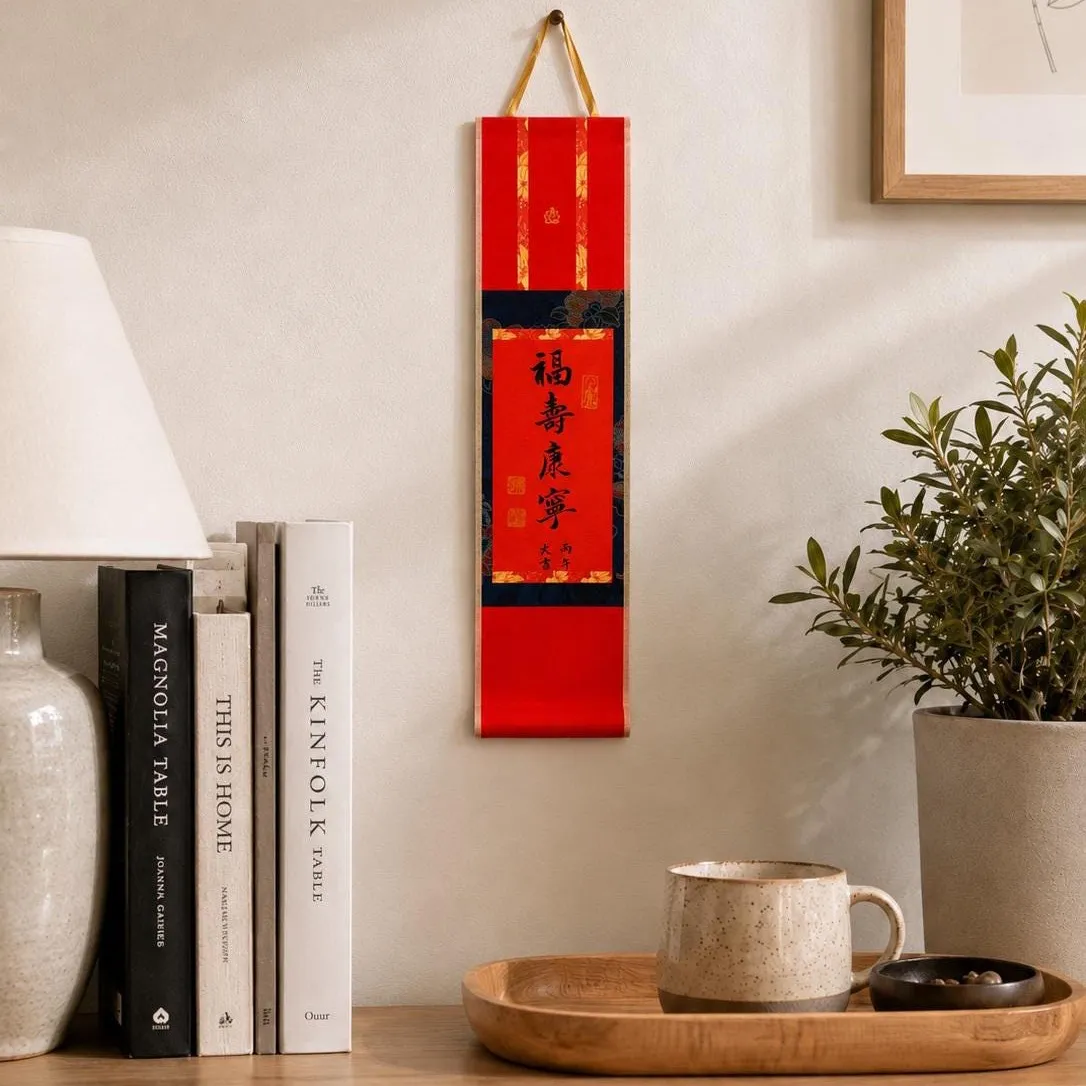
Photo shows a sample — yours will be brushed with 家和万事兴, or any character you choose.
Wall Scroll — for walls & housewarmingsfrom $38→ -
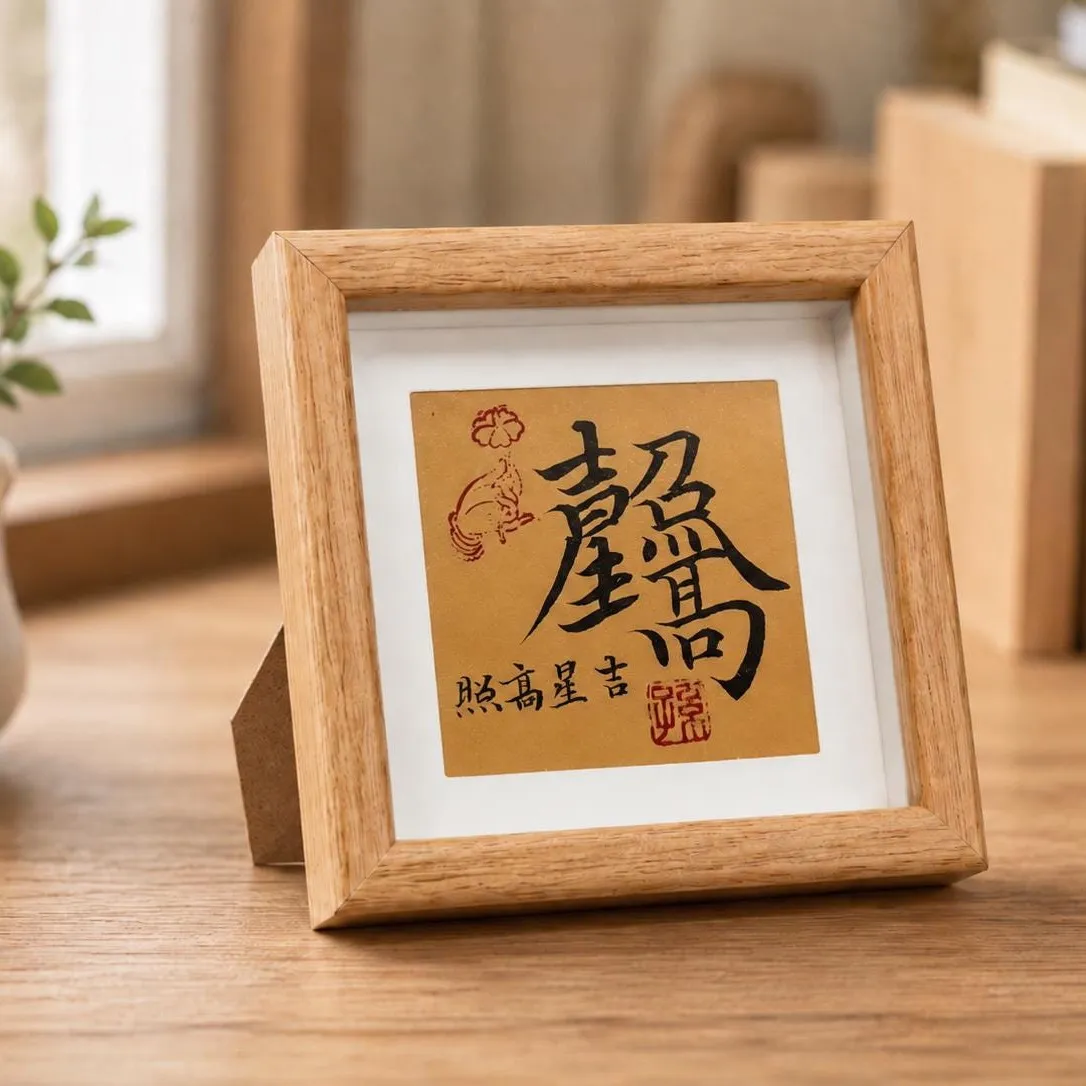
Photo shows a sample — yours will be brushed with 家和万事兴, or any character you choose.
Desk Frame — for desks, studies & studiosfrom $44→ -
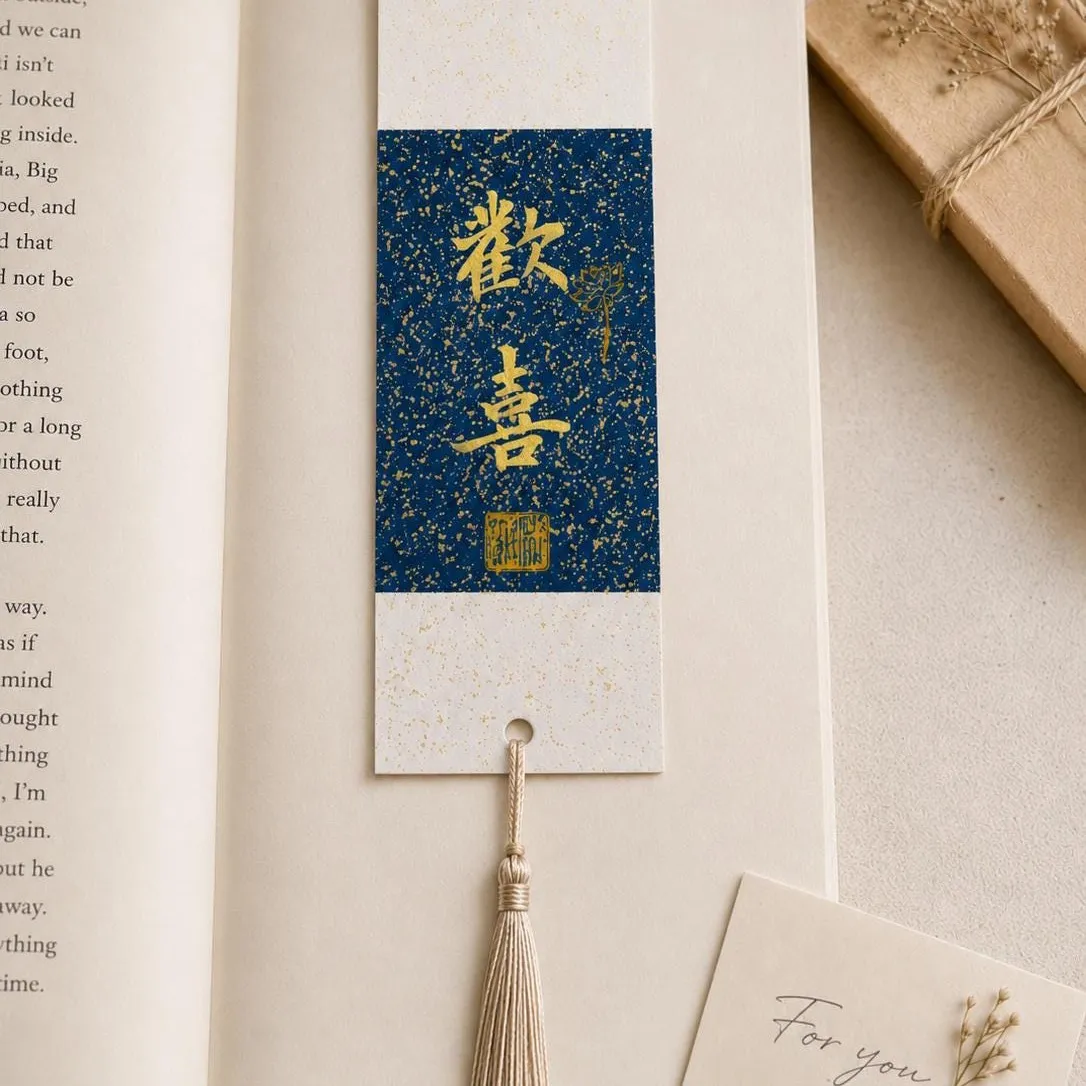
Photo shows a sample — yours will be brushed with 家和万事兴, or any character you choose.
Bookmark — for readers & small thank-yousfrom $14→
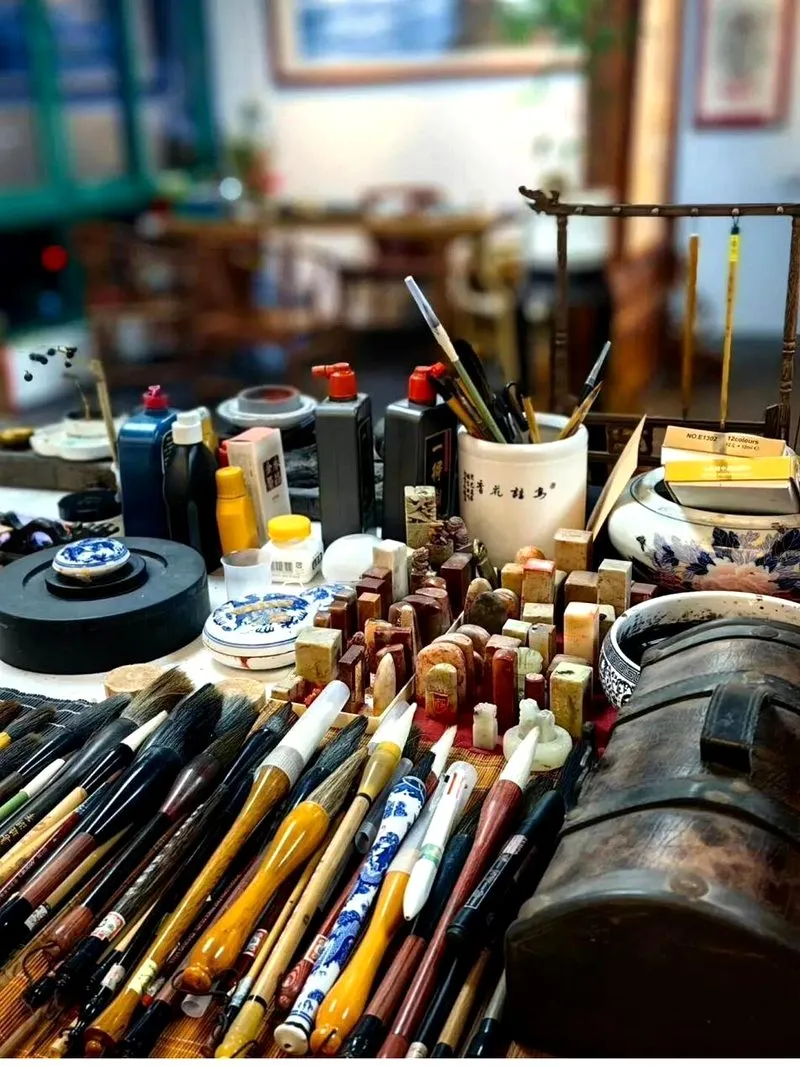
What people said after it arrived.
-
The item is fantastic. The customer service was genuine. Thanks!
— M.Verified purchase · from our Etsy shop reviews · -
They were great they gave me exactly what I asked for and then some. Thank you!!
— G.Verified purchase · from our Etsy shop reviews · -
It is well designed and customized. My daughter loves it. Amazing gift for family’s d friends
— S.Verified purchase · from our Etsy shop reviews ·
Each "家和万事兴" is hand-brushed by FuBlessings on rice paper.
See 家和万事兴 (Jiā Hé Wàn Shì Xīng) on Etsy →