仁爱 (rén ài) — Benevolent Love · Loving Kindness · Humane Affection
A two-character word, not a single character.
仁爱 sits differently from 爱 alone or 仁 alone. 爱 — love, affection — can be fierce and instinctive; 仁 — benevolence, the orientation toward others — can be cool and principled. 仁爱 is what happens when both are present at once: love that persists past its own intensity, sustained not by feeling but by the commitment that 仁 supplies. It is the Chinese term for the specific quality of parental and grandparental care — the love that continues when there is nothing to sustain it except the sheer orientation toward the other person’s wellbeing. See 仁 → See 爱 →
In practice, 仁爱 describes the mother who kept caring after the children left, the grandparent whose attention never became merely dutiful, the father whose love took the form of daily unremarked acts rather than declarations. Chinese families use the compound when they want to name not the feeling but the quality of sustained practice — the love that shows up as conduct over decades. It appears alongside 仁政 (benevolent rule) in classical governance texts with the same logic: care oriented toward the other’s genuine flourishing, not the caregiver’s satisfaction.
A hand-brushed “仁爱” by FuBlessings names this quality directly — not a wish for the year ahead but a recognition of what decades of care have already demonstrated. It is most apt for the parent or grandparent whose particular form of love has been exactly this: undemonstrative, sustained, and oriented entirely outward.
The Story Behind the Character
In Han dynasty texts, 仁 and 爱 appear together often enough that scholars began treating them as a linked pair: 仁 was the disposition — the interior orientation toward other people — while 爱 was its necessary expression. One without the other was incomplete. The Confucian masters had made 仁 the root virtue, yet when students pressed for a concrete definition, the teacher's answer was relentlessly practical: benevolence is not something you hold in reserve — it is a direction of attention, and it points at people. 仁 without 爱 is an orientation with no act; 爱 without 仁 is an act with no principle.
The compound 仁爱 resolved this asymmetry. By the Warring States period it appeared as a set phrase in discussions of governance and family ethics — the ruler who governs with 仁爱 and the parent who raises with 仁爱 are the same type: love that is not merely felt but oriented toward the other person's genuine flourishing. In the Confucian literature of the Warring States and Han periods, 仁爱 named the love that sustains rather than clutches — not the love that keeps the other close but the love that wishes them well from wherever they are.
What distinguishes 仁爱 from 爱 alone is precisely what 仁 contributes: the element of direction and commitment that makes love a practice rather than a mood. A parent who loves with 仁爱 is not one who feels more intensely but one who continues orienting — attending, caring, giving — past the point where the child notices or returns it. In Chinese cultural usage, 仁爱 became the standard term for this: the love of parents and grandparents, teachers and benefactors — those whose care was structural rather than occasional, enduring long after the relationship's early heat.
Classical lines
- roughly 300 years
- c. 600 BCE 《诗经·小雅·蓼莪》
- c. 400 BCE 《中庸》第二十章
- c. 300 BCE 《孟子·梁惠王上》
老吾老,以及人之老;幼吾幼,以及人之幼。 Treat the elders of your own family as elders should be treated, and extend that to the elders of all; treat the children of your family as children should be treated, and extend that to all children.
Mencius on the outward movement of 仁爱: the love one has for one's own parents and grandparents is not the end of the obligation but the model for a wider one. 仁 supplies the principle that 爱 for one's own kin must expand, not stop at the household gate.
父兮生我,母兮鞠我。拊我畜我,长我育我,顾我复我,出入腹我。欲报之德,昊天罔极。 Father gave me life; Mother nourished me. They held me, they tended me, they raised me, they reared me, they attended to me, they never left my side. I want to repay their virtue
but it is as boundless as the sky, without end. — One of the most direct accounts of parental 仁爱 in classical poetry: love rendered as an accumulation of daily, unremarked acts. The final line explains why 仁爱 cannot be repaid — only recognized.
仁者,人也,亲亲为大。 Benevolence is what is proper to human beings, and its greatest practice is in loving one's own kin.
From the Zhongyong's account of virtue in action: the most demanding form of benevolence is not love extended to strangers but love sustained across decades within the household, where nothing is abstract and everything is tested.
Why This Character Matters
Across the Chinese-speaking world, 仁爱 is one of the most common names for hospitals — 仁爱医院 appears in mainland China, Taiwan, and Hong Kong, as do schools, foundations, and clinics named for the compound. The name was chosen because 仁爱 describes care that does not ask for return: medical care as the extension of benevolent love to strangers. Mencius had already made the logic explicit in 老吾老,以及人之老 — the love felt for one's own parents, extended outward past the household gate.
In classical Chinese political philosophy, 仁爱 described the quality shared by ideal rulers and ideal parents — and the parallelism was deliberate. Governing a state well required extending to all people the love one had for one's own kin: feeling it first for parents and grandparents, then widening that circle. This is why 仁爱 became the standard phrase for parental love in contexts where the emphasis is on sustained practice rather than initial feeling: the love that continues long after the child has stopped being young enough to notice it.
仁爱 names the particular quality of maternal love that endures past the early intensity — the sustained, selfless orientation toward a child's wellbeing that continues when there is no longer any expectation of return.
- 仁爱 names the particular quality of maternal love that endures past the early intensity — the sustained, selfless orientation toward a child's wellbeing that continues when there is no longer any expectation of return. For a mother whose care has had this quality over decades, 仁爱 is more precise than 爱 (which names the feeling) or 孝 (which names the filial response): it names what she has actually been demonstrating.
- At a milestone birthday for a parent or grandparent, 仁爱 names what neither 仁 nor 爱 alone can reach: not the orientation toward others in the abstract (that is 仁) nor the feeling of affection (that is 爱 alone), but the love that has already shown itself as practice — the daily, unremarked attending-to that a long life makes legible. Most apt when the birthday is the occasion to name the love that kept orienting outward past the point it was noticed.
Mom · Grandparent · Dad · or yourself
Looking for a name? See Western names written in Chinese →
-
What does 仁爱 (rén ài) mean?
仁爱 (rén ài) is a two-character Chinese word for benevolent love, loving kindness, humane affection. 仁爱 sits differently from 爱 alone or 仁 alone. 爱 — love, affection — can be fierce and instinctive; 仁 — benevolence, the orientation toward others — can be cool and principled. 仁爱 is what happens when both are present at once: love that persists past its own intensity, sustained not by feeling but by the commitment that 仁 supplies. It is the Chinese term for the specific quality of parental and grandparental care — the love that continues when there is nothing to sustain it except the sheer orientation toward the other person's wellbeing. See 仁 → See 爱 → Across the Chinese-speaking world, 仁爱 is one of the most common names for hospitals — 仁爱医院 appears in mainland China, Taiwan, and Hong Kong, as do schools, foundations, and clinics named for the compound. The name was chosen because 仁爱 describes care that does not ask for return: medical care as the extension of benevolent love to strangers. Mencius had already made the logic explicit in 老吾老,以及人之老 — the love felt for one's own parents, extended outward past the household gate.
-
What occasions is 仁爱 given for?
仁爱 is traditionally given for Mother's Day, Birthday. 仁爱 names the particular quality of maternal love that endures past the early intensity — the sustained, selfless orientation toward a child's wellbeing that continues when there is no longer any expectation of return. For a mother whose care has had this quality over decades, 仁爱 is more precise than 爱 (which names the feeling) or 孝 (which names the filial response): it names what she has actually been demonstrating. At a milestone birthday for a parent or grandparent, 仁爱 names what neither 仁 nor 爱 alone can reach: not the orientation toward others in the abstract (that is 仁) nor the feeling of affection (that is 爱 alone), but the love that has already shown itself as practice — the daily, unremarked attending-to that a long life makes legible. Most apt when the birthday is the occasion to name the love that kept orienting outward past the point it was noticed.
-
Who brushes the 仁爱 calligraphy?
FuBlessings hand-brushes each 仁爱 (Rén Ài) to order, in ink on rice paper — never printed, never repeated.
Bring 仁爱 home — choose how you'd like it brushed.
-
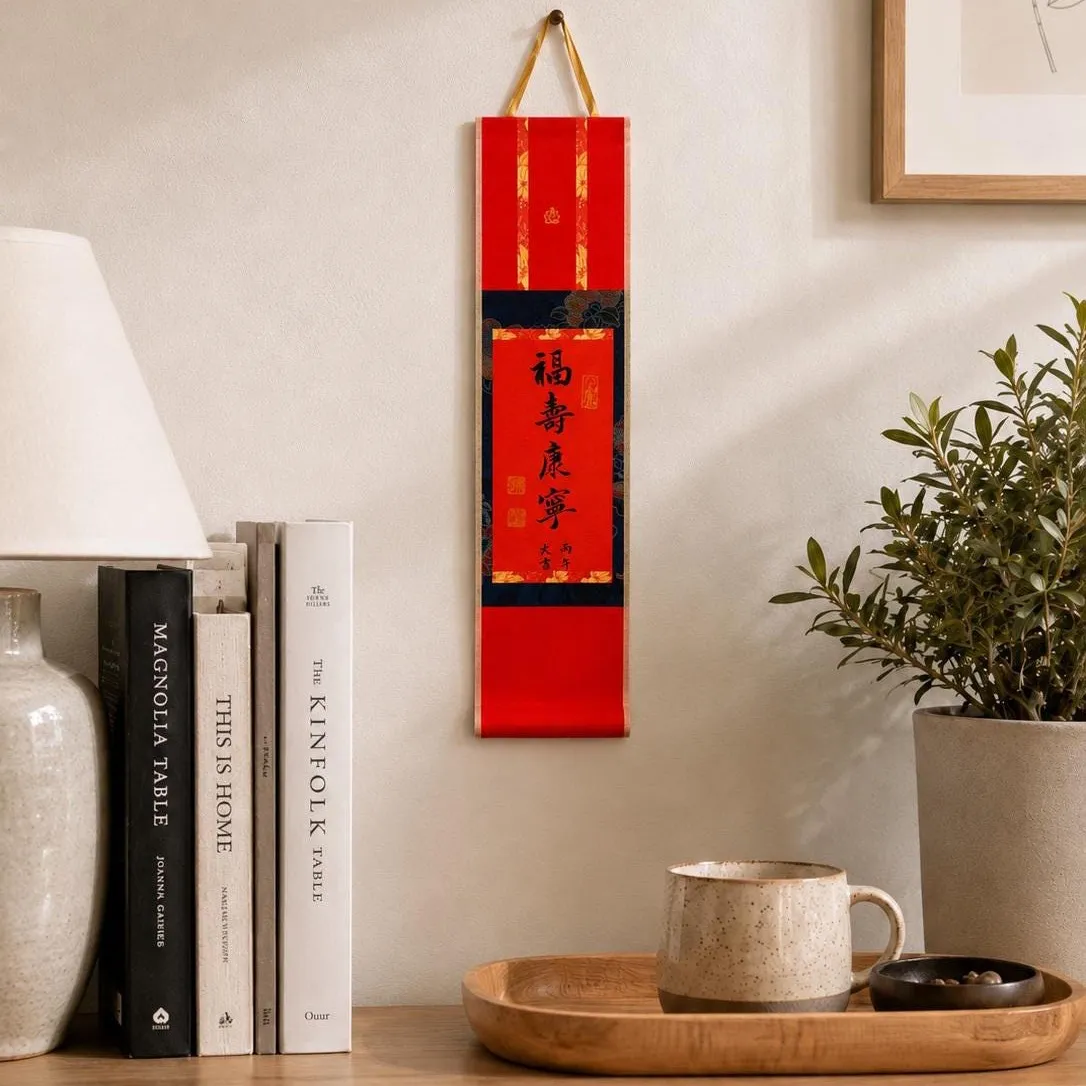
Photo shows a sample — yours will be brushed with 仁爱, or any character you choose.
Wall Scroll — for walls & housewarmingsfrom $38→ -
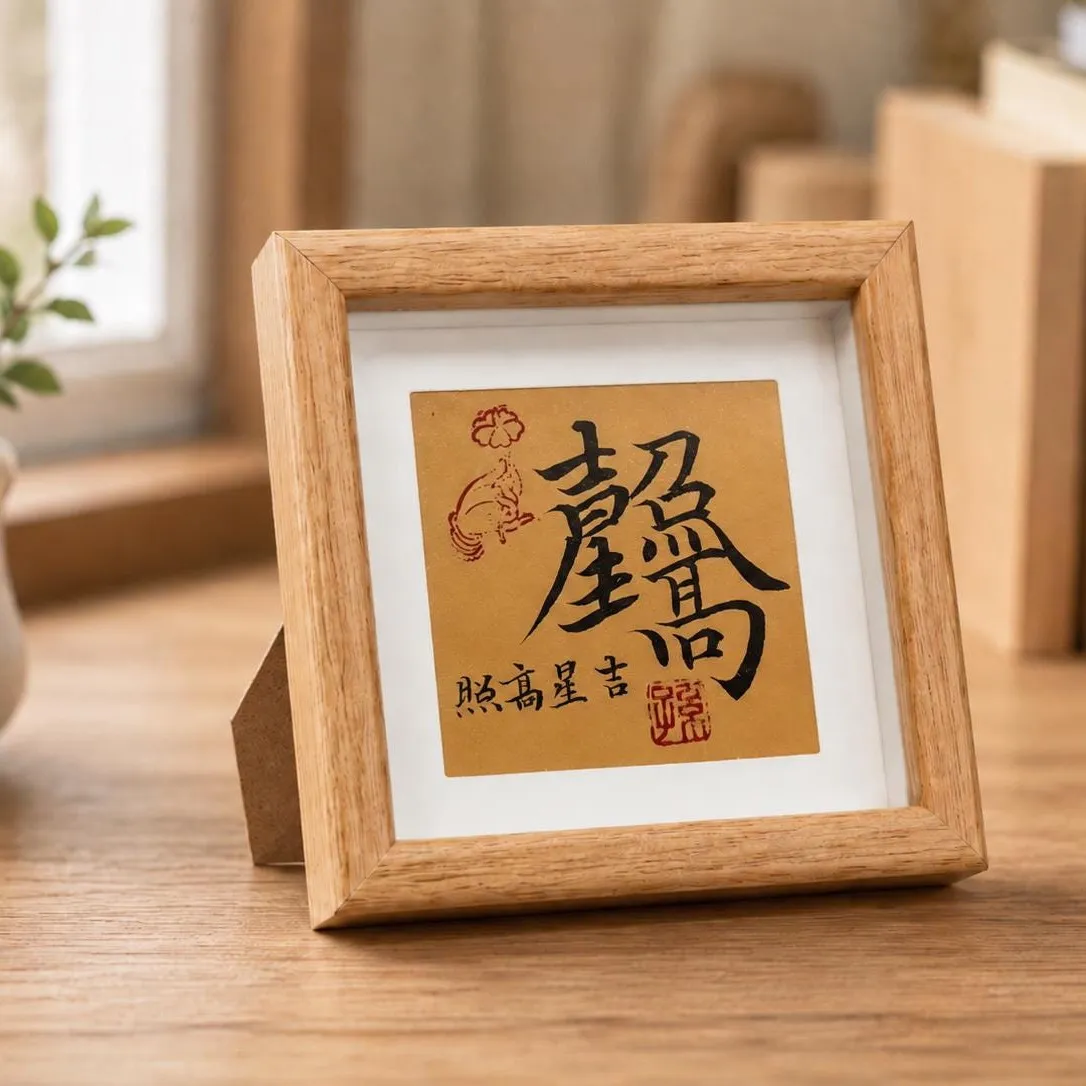
Photo shows a sample — yours will be brushed with 仁爱, or any character you choose.
Desk Frame — for desks, studies & studiosfrom $44→ -
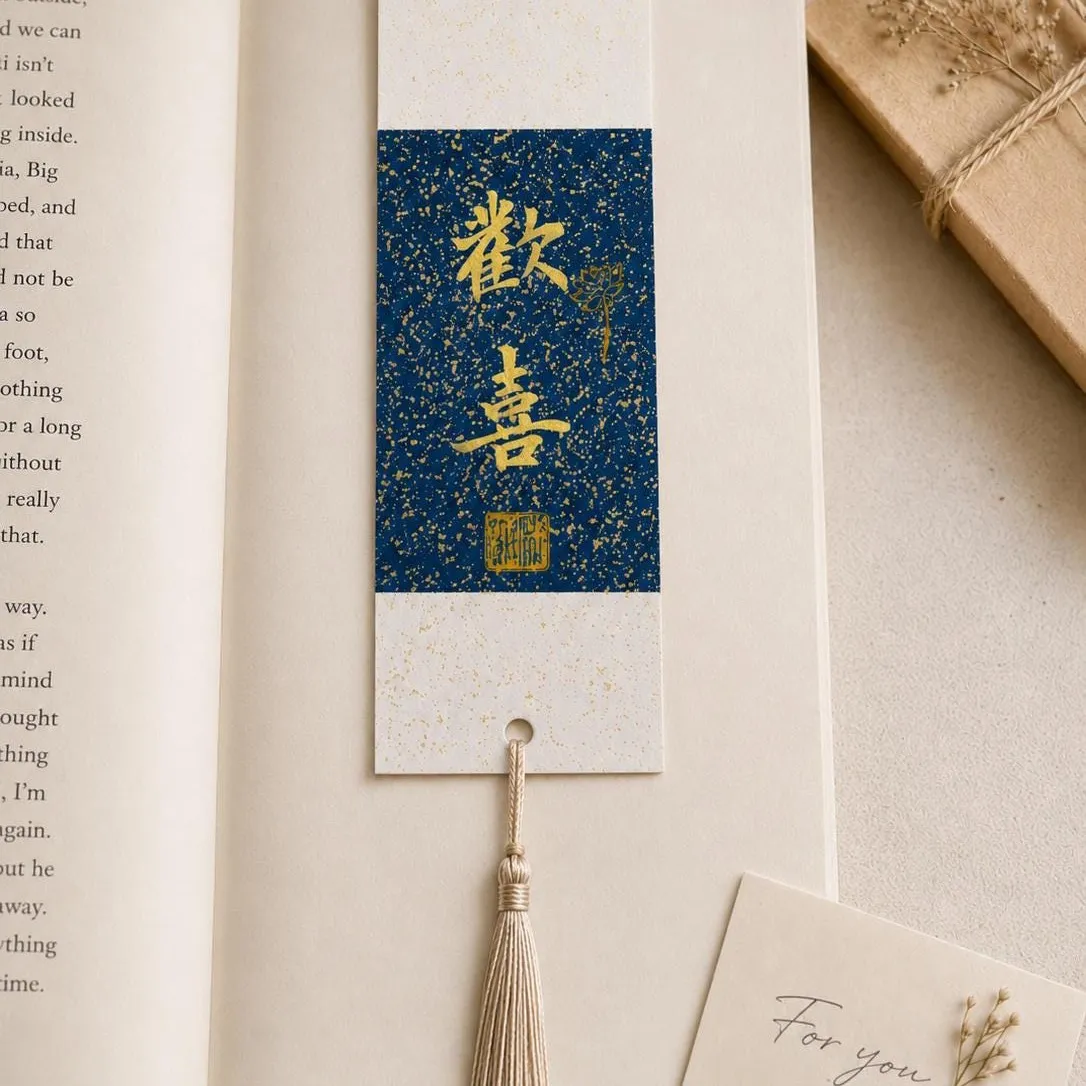
Photo shows a sample — yours will be brushed with 仁爱, or any character you choose.
Bookmark — for readers & small thank-yousfrom $14→
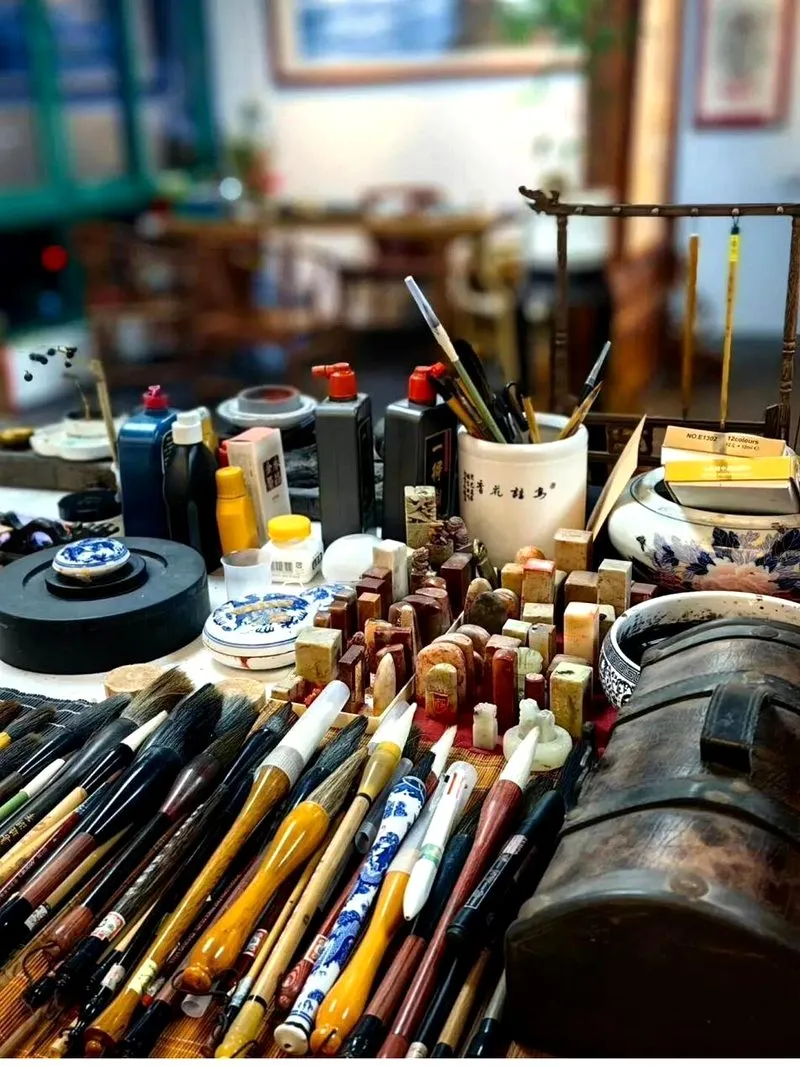
What people said after it arrived.
-
The item is fantastic. The customer service was genuine. Thanks!
— M.Verified purchase · from our Etsy shop reviews · -
They were great they gave me exactly what I asked for and then some. Thank you!!
— G.Verified purchase · from our Etsy shop reviews · -
It is well designed and customized. My daughter loves it. Amazing gift for family’s d friends
— S.Verified purchase · from our Etsy shop reviews ·
Each "仁爱" is hand-brushed by FuBlessings on rice paper.
See 仁爱 (Rén Ài) on Etsy →