康宁 (kāng níng) — Health and Ease · Wholeness in Body and Mind
A two-character word, not a single character.
康宁 is the third of the 五福 (Five Blessings) listed in the Book of Documents — positioned between wealth and moral virtue in the oldest known account of what a complete human life contains. See 康 → See 宁 → That placement is not arbitrary. The classical authors understood that having enough (富) and being good enough (攸好德) are both hollow without the condition between them: a body that is well and a mind that is at rest. 康 names the body in its unencumbered state — healthy, capable, not fighting against itself. 宁 names the mind under its own roof — settled, undisturbed, not replaying old worries or anticipating new ones. Together they describe the condition that makes everything else in a long life livable.
The distinction between 康宁 and the more common 安康 (ān kāng) is precise and matters. 安 adds security from external threat — the wish that illness and hardship stay away. 宁 adds something deeper: interior stillness, the mind at rest within itself. A grandmother who passes every medical exam but lies awake worrying about her children has 安康 without 康宁. A grandfather who is physically strong but cannot stop replaying decisions he made decades ago has health without serenity. 康宁 is the compound wish for both — and the reason the Book of Documents listed it rather than 安康 among its Five Blessings is that the classical authors recognized what modern psychology is now confirming: safety is not the same as peace, and a good life requires the deeper condition.
A hand-brushed “康宁” by FuBlessings is the birthday or parent’s day gift drawn directly from the Five Blessings — a wish for the condition that makes long life worth having. Not just more years, not just safety from harm, but health and the settled mind to actually enjoy what those years contain.
- health and ease
- wellness in body and serenity in mind
- the Five Blessings' third gift
- physically well and inwardly at rest
- healthy Too narrow. 康 alone is health. 康宁 demands the mental register too — the mind settled inside the well body.
- calm Too narrow the other way. 宁 alone is calm. 康宁 demands the physical register too — the body sound beneath the settled mind.
The short arms are the point: these readings don’t reach it.
- 康 health / unencumbered bodyGrain stalks growing tall and straight — the agricultural image of something thriving without obstruction, reaching its natural height. The body in its unencumbered state: capable, functioning, not fighting itself.
- 宁 serenity / settled mindA heart beneath a roof — the mind at home within itself, undisturbed. Not just the absence of noise, but the interior stillness of someone not replaying old worries or anticipating new ones.
characters
- 五福临门 wǔ fú lín mén the Five Blessings at the door — the New Year decoration where 康宁 is the third bat
- 身心康宁 shēn xīn kāng níng body and mind in health and ease — the full compound spelled out
- 宁静致远 níng jìng zhì yuǎn in stillness, one reaches far — from Zhuge Liang's letter to his son
- 康健 kāng jiàn health and vigor — the body-focused version
- 安宁 ān níng safety and serenity — the threat-warding version of 宁
Cinnabar marks the characters 康宁 actually contains. The dark row is a relative by meaning or by sound, not one shared stroke.
The Story Behind the Character
康宁 derives its authority from a specific passage in the Book of Documents (尚书), one of the Five Classics of Chinese civilization. In the chapter "Hong Fan" (洪范, "The Great Plan"), the text lists the 五福 (Five Blessings) that constitute a complete human life: 一曰寿,二曰富,三曰康宁,四曰攸好德,五曰考终命 — "first longevity, second wealth, third health-and-ease, fourth love of virtue, fifth a peaceful death." 康宁 is the third blessing, positioned between material abundance and moral cultivation, named as a foundational condition in its own right.
The two characters address different registers of the body. 康 (health, ease of body) originally depicted grain stalks growing tall and straight — the agricultural image of something thriving without obstruction, reaching its natural height. In early medical texts, 康 described the body in its unencumbered state: no illness, no deficiency, no external force preventing it from functioning as it should. 宁 (serenity, settled calm) showed a heart beneath a roof — the image of someone at home within themselves, the mind at rest under its own shelter.
The pairing is precise. 康 without 宁 is the person who passes every medical exam but cannot sleep at night — healthy in body, restless in mind. 宁 without 康 is the person who has achieved deep inner peace but whose body has begun to fail — serene but physically diminished. The Book of Documents named both together because it understood something that modern medicine is only now articulating: physical health and mental ease are not separate categories. They are one condition, experienced in two registers.
Classical lines
- about a century
- c. 4th c. BCE 《尚书·洪范》
- c. 300 BCE 《礼记·大学》
- c. 239 BCE 《吕氏春秋·先己》
一曰寿,二曰富,三曰康宁,四曰攸好德,五曰考终命。 First longevity, second wealth, third health-and-ease, fourth love of virtue, fifth a peaceful death.
The oldest known enumeration of what a good life contains. 康宁 is listed third — after the years and the resources, before the character and the ending — as the condition that makes everything else livable.
身安而天下安,身治而天下治。 When the self is at ease, the world is at ease; when the self is governed, the world is governed.
The Qin-era encyclopedia making the case that康宁 is not selfish: a person at peace in body and mind is the precondition for everything they owe to others.
定而后能静,静而后能安,安而后能虑,虑而后能得。 Once settled, one can be still; once still, at peace; once at peace, able to reflect; and only then able to arrive at what matters.
The Great Learning's staircase into the 宁 of 康宁: serenity is not a mood that descends but a condition reached, one step at a time. A well body needs a settled mind to rest in.
Why This Character Matters
The 五福 (Five Blessings) from the Book of Documents are not an obscure scholarly reference — they are the structural framework behind one of the most recognizable objects in Chinese culture: the 五福临门 (wǔ fú lín mén) New Year decoration, where five bats (蝠, a homophone of 福) surround the character 寿. This image appears on doors, porcelain, textiles, and red envelopes across the Chinese-speaking world every lunar new year. 康宁 is the third bat — the one that represents the condition between having enough and being good enough: the state of being well in body and settled in mind.
What distinguishes 康宁 from the more common 安康 (ān kāng, peace-and-health) is the second character. 安 adds security from external threat — the wish that nothing bad arrives. 宁 adds interior stillness — the wish that the mind itself is at rest. A grandmother who is physically healthy and safe from hardship has 安康. A grandmother who is healthy and also at peace — not worried about her children, not replaying old regrets, not restless in the small hours — has 康宁. This is why the Book of Documents listed 康宁 rather than 安康 among its Five Blessings: the classical authors understood that safety is not the same as serenity, and that a good life requires the deeper condition.
A few characters live near "康宁" but mean something quieter, sharper, or more specific. Here's how to tell them apart.
health plus interior stillness — the mind at rest within itself, the deeper condition
health plus safety — peace from external threat, body and mind together
health paired with serenity — the compound listed among the Five Blessings
health alone — the body unencumbered, the agricultural image of thriving
serenity paired with bodily wellness — both registers together
serenity alone — the heart under a roof, interior stillness
康宁 is the most specifically grounded birthday wish for an elder — named explicitly as the third of the Five Blessings (五福) in the Book of Documents, between longevity and love of virtue.
- 康宁 is the most specifically grounded birthday wish for an elder — named explicitly as the third of the Five Blessings (五福) in the Book of Documents, between longevity and love of virtue. A choice that connects a gift directly to the oldest Chinese account of what a good life contains.
- For the mother who has spent years attending to others' needs. 康宁 wishes that her body and mind both have room to be easy — health that allows for rest, and the settled quiet that comes when the urgency has passed.
- For the father whose body has done years of work and whose mind has carried more than he said. 康宁 is the paired wish: that his health holds and that what he has carried settles — ease in both registers.
Grandparent · Mom · Dad · or yourself
Looking for a name? See Western names written in Chinese →
-
What does 康宁 (kāng níng) mean?
康宁 (kāng níng) is a two-character Chinese word for health and ease, wholeness in body and mind. 康宁 is the third of the 五福 (Five Blessings) listed in the Book of Documents — positioned between wealth and moral virtue in the oldest known account of what a complete human life contains. See 康 → See 宁 → That placement is not arbitrary. The classical authors understood that having enough (富) and being good enough (攸好德) are both hollow without the condition between them: a body that is well and a mind that is at rest. 康 names the body in its unencumbered state — healthy, capable, not fighting against itself. 宁 names the mind under its own roof — settled, undisturbed, not replaying old worries or anticipating new ones. Together they describe the condition that makes everything else in a long life livable. The 五福 (Five Blessings) from the Book of Documents are not an obscure scholarly reference — they are the structural framework behind one of the most recognizable objects in Chinese culture: the 五福临门 (wǔ fú lín mén) New Year decoration, where five bats (蝠, a homophone of 福) surround the character 寿. This image appears on doors, porcelain, textiles, and red envelopes across the Chinese-speaking world every lunar new year. 康宁 is the third bat — the one that represents the condition between having enough and being good enough: the state of being well in body and settled in mind.
-
What occasions is 康宁 given for?
康宁 is traditionally given for Birthday, Mother's Day, Father's Day. 康宁 is the most specifically grounded birthday wish for an elder — named explicitly as the third of the Five Blessings (五福) in the Book of Documents, between longevity and love of virtue. A choice that connects a gift directly to the oldest Chinese account of what a good life contains. For the mother who has spent years attending to others' needs. 康宁 wishes that her body and mind both have room to be easy — health that allows for rest, and the settled quiet that comes when the urgency has passed.
-
Who brushes the 康宁 calligraphy?
FuBlessings hand-brushes each 康宁 (Kāng Níng) to order, in ink on rice paper — never printed, never repeated.
Bring 康宁 home — choose how you'd like it brushed.
-
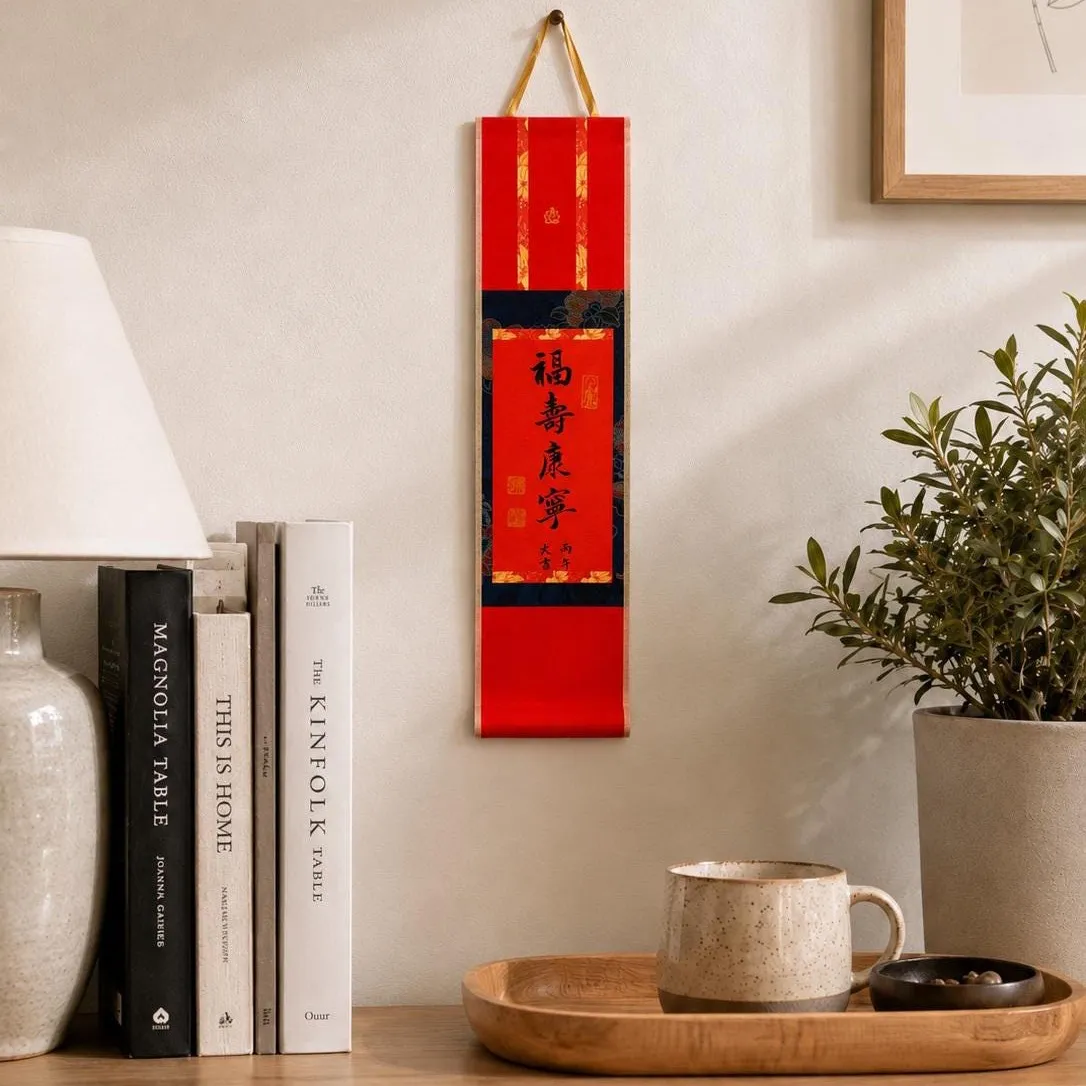
Photo shows a sample — yours will be brushed with 康宁, or any character you choose.
Wall Scroll — for walls & housewarmingsfrom $38→ -
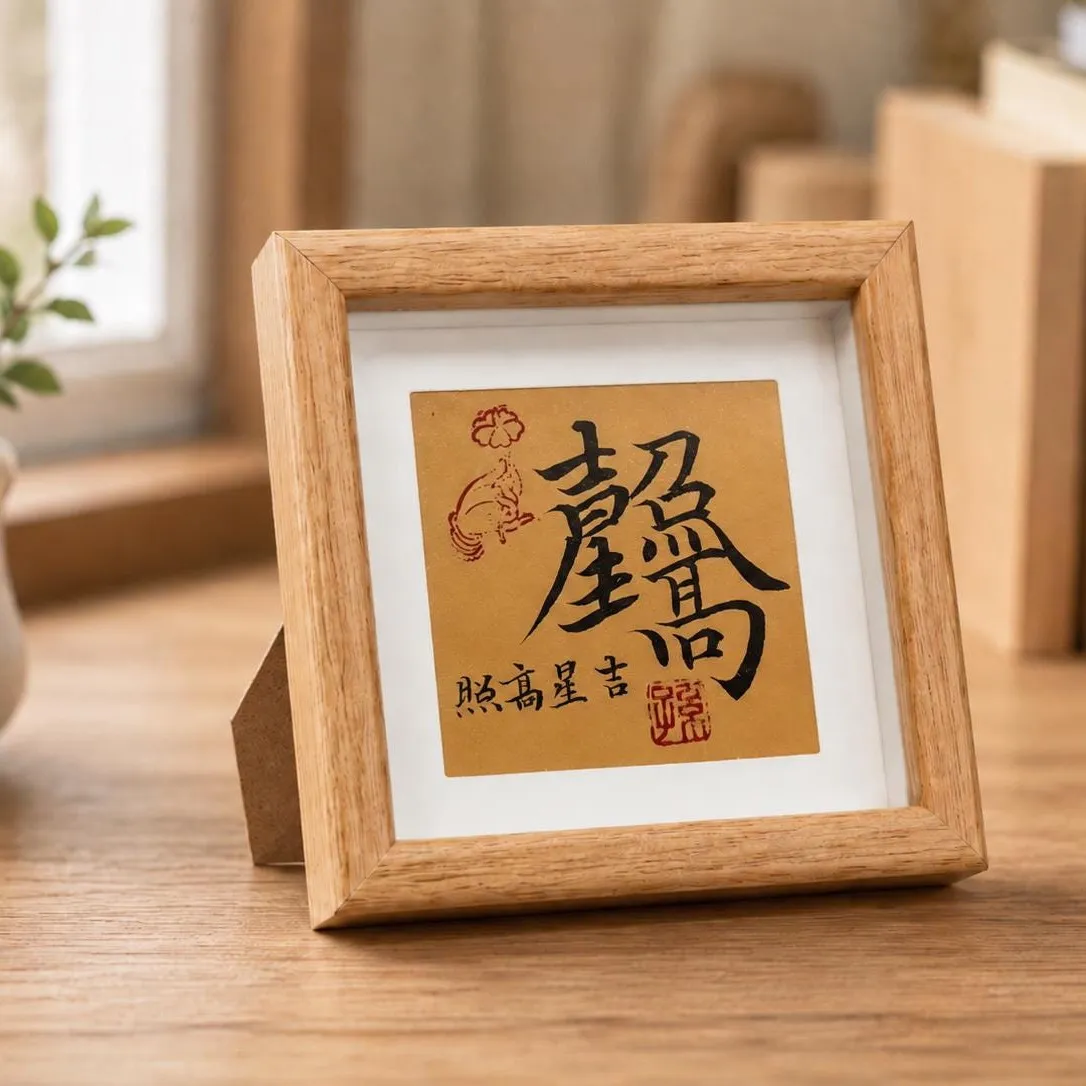
Photo shows a sample — yours will be brushed with 康宁, or any character you choose.
Desk Frame — for desks, studies & studiosfrom $44→ -
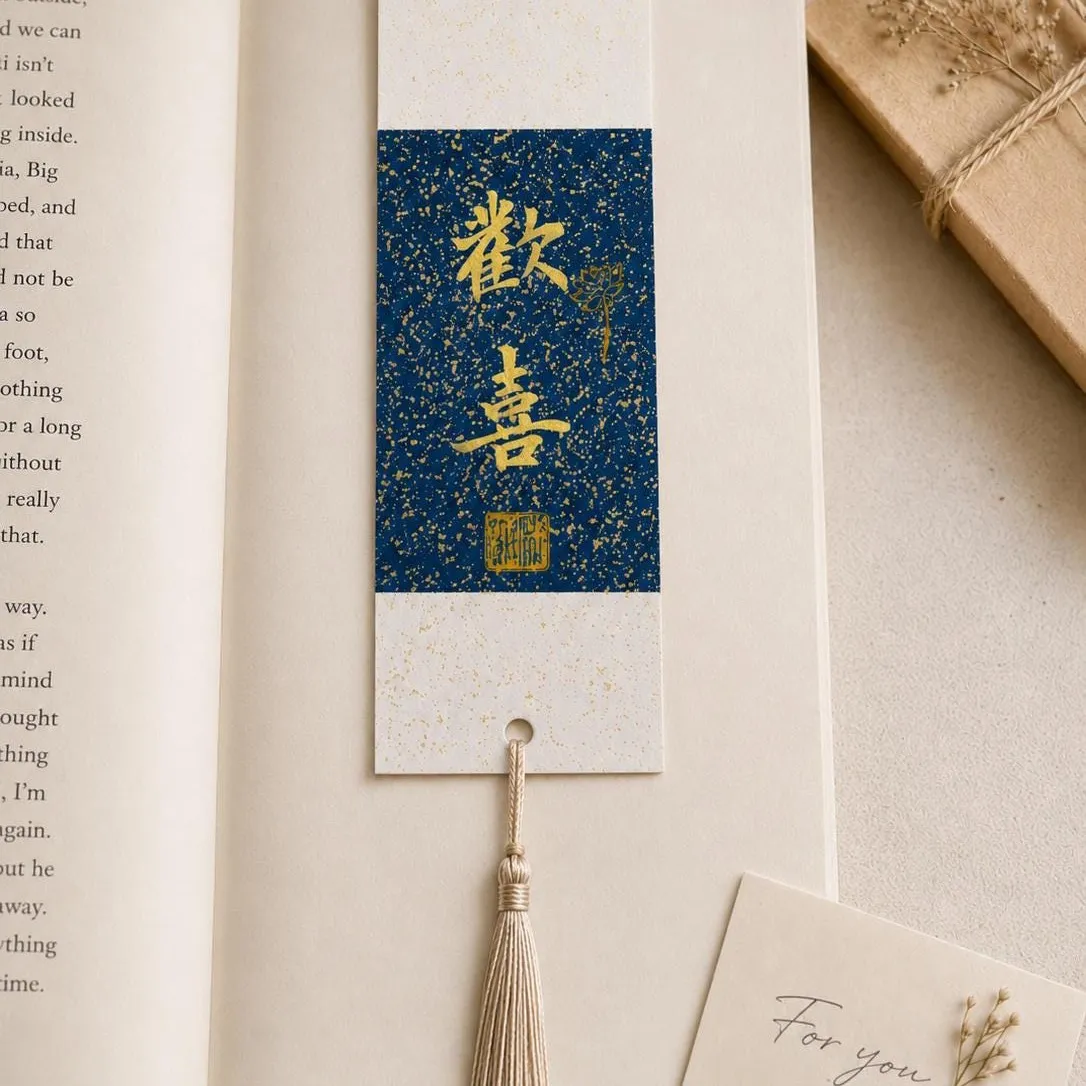
Photo shows a sample — yours will be brushed with 康宁, or any character you choose.
Bookmark — for readers & small thank-yousfrom $14→

What people said after it arrived.
-
The item is fantastic. The customer service was genuine. Thanks!
— M.Verified purchase · from our Etsy shop reviews · -
They were great they gave me exactly what I asked for and then some. Thank you!!
— G.Verified purchase · from our Etsy shop reviews · -
It is well designed and customized. My daughter loves it. Amazing gift for family’s d friends
— S.Verified purchase · from our Etsy shop reviews ·
Each "康宁" is hand-brushed by FuBlessings on rice paper.
See 康宁 (Kāng Níng) on Etsy →