坚强 (jiān qiáng) — Resilient Strength · The Root That Holds, the Shoot That Rises
A two-character word, not a single character.
坚强 names a quality that its components name separately but not together. See 坚 → names the structural firmness that does not crack under sustained pressure — the bamboo root in cracked rock, the pine last to wither in the cold, the quality that duration and accumulated difficulty reveal. See 强 → names the active capacity that the work of a life requires — the power built by 自强不息, the combination of tested ability and directed will. 坚强 names both: the person who holds AND keeps going, who did not crack under what accumulated against them AND continued building the capacity to act. In Chinese tribute speech and daily encouragement alike, this combination is recognized as distinct from either quality alone.
What makes the pair specific is the difference between the two tests. 坚 is tested by what continues to press — the unrewarded years, the sustained difficulty, the commitment that keeps asking. 强 is tested by whether the capacity remains after that: whether the person who held through it still has the power to move forward. A father or husband who was 坚 but not 强 would have endured without thriving. One who was 强 but not 坚 would have had capacity that difficulty hollowed out. 坚强 is the recognition for the person who went through difficulty intact and came through it still able to act — whose record, looked at across enough time, proves that neither quality gave way.
A hand-brushed 坚强 by FuBlessings gives the recognition a form permanent enough to match what it names. For the friend who has held through a hard year and kept the capacity to move into the next one, the husband whose years in the marriage have been demanding and whose response has been to keep building rather than conserving what remains, the father whose sustained presence has asked of him exactly what 坚强 names — the holding and the building, together: this is the gift that recognizes the two-part strength that only difficulty finally shows.
The Story Behind the Character
Wildfire cannot burn it away; spring winds blow and it rises again. When Bai Juyi wrote these lines as a young man (c. 787 CE), he named the two things 坚强 always names: the root system that survives, and the return to life that proves it held. Each character carries one half of this image. 堅 (the traditional form of 坚) shows 臤 — a gripping hand — above 土 (earth): earth that has been pressed into consolidation, soft clay at the moment of becoming the material that holds its shape under force. 强 (強) derives from a beetle's hard carapace and mandibles — China's first dictionary (说文解字, c. 100 CE) traces it to 蚚, the insect that does not yield to what presses against it because its body is built not to. From the beetle's armor, the character generalized to a bow at full draw: concentrated force held in readiness, an active capacity that exists to be released.
The distinction between 坚 and 强, and why both are needed, is already implicit in how the language uses them apart. 坚 is tested by duration — the thousand rubs and ten thousand blows that reveal structural integrity over time. The bamboo root in cracked rock, the pine last to wither in the cold. 强 is tested by application — whether the capacity is actually there when the moment calls for it. Laozi observed that overcoming others requires force (力) but overcoming oneself requires 强; the 中庸 (Doctrine of the Mean) paired 强 with effort multiplied a thousand times — 人一能之己百之,人十能之己千之 — until the soft becomes 强. Neither quality alone completes the picture. 坚 without 强 is endurance without renewal — the person who holds but cannot push forward. 强 without 坚 is capacity without foundation — power that the next sustained difficulty can hollow out. 坚强 names both together: the structural integrity that holds and the active power that keeps building.
By the Tang and Song dynasties, the compound had become one of the most common terms of encouragement and recognition in Chinese. The usage is precise: 你要坚强 does not mean "be tough" or "be brave" — those are 刚 (principled) and 勇 (courageous). It means: keep your roots from letting go and keep the capacity to grow back. The image is the grass, not the stone. Stone is hard until it breaks; grass survives fire and comes back. This is why 坚强 is the Chinese word for resilience, not mere toughness.
Classical lines
- roughly 1,000 years
- c. 280–230 BCE 《荀子·劝学》
- c. 736 CE 杜甫《望岳》
- c. 787 CE 白居易《赋得古原草送别》
锲而舍之,朽木不折;锲而不舍,金石可镂。 Carve and give up, and you cannot split rotten wood; carve without giving up, and you can engrave metal and stone.
Xunzi naming what 坚强 produces when the two qualities work together. The image is exact: 坚 is the refusal to give up (不舍), and 强 is the applied force (锲). Either quality without the other fails — you can stop before rotten wood gives way, or you can exert force without sustaining it. The compound that cuts through metal and stone is the one that combines both: continued force that never lets go.
野火烧不尽,春风吹又生。 Wildfire cannot burn it away; spring winds blow and it rises again.
Bai Juyi's most cited lines on survival, written on the prairie grass of the Tang plain. The grass does not fight the fire — it goes underground and holds (坚). Then, when the wind turns, it grows back (强). This is the precise image of 坚强: not the stone's rigid resistance, which breaks under enough heat, but the root that survives by holding, and the shoot that proves the root held by rising. The poem has been taught in Chinese elementary schools for generations, and the two lines remain the most natural image for what 坚强 means.
会当凌绝顶,一览众山小。 I will stand at the very summit
from there, all lesser heights look small. — Du Fu in his twenties, writing of 泰山. The poem is not about having climbed — it is about the intention to climb all the way, rather than stopping where the view is good enough. 坚强 as aspiration: the determination to reach the summit (强) combined with the structural commitment not to turn back before it (坚). Du Fu wrote this in hope, before his years of exile and difficulty. The line is remembered because what he was describing in imagination, he eventually demonstrated in fact.
Why This Character Matters
你要坚强 — "be 坚强" — is the most common phrase of encouragement in Chinese interpersonal life: said to the friend who has just received bad news, to the child who is going through difficulty at school, to the parent at the memorial service. It is not generic; it names something specific. 加油 (keep going) is energizing; 勇敢 (be brave) is about facing fear; 坚强 is about the combination of structural integrity and continued capacity — hold your roots and keep growing. The phrase is used specifically when difficulty is real and has not been chosen, and when what the person needs is the reminder that both qualities are already present in them.
As calligraphy, 坚强 occupies a different register from most of the library. It is less often a forward wish than a retrospective recognition — less "I hope you have this" than "I see that you do." Given on a birthday to a friend who has had a hard year, or to a father at a milestone after a period of sustained difficulty, it names what has been observed rather than what is wished. This directional difference is worth naming explicitly when giving it: 坚强 as a gift says the giver has been watching closely enough to see the root system, not just the surface, and that what they saw held.
For Father's Day when the gift should name the combination of structural and active strength that the years required.
- For Father's Day when the gift should name the combination of structural and active strength that the years required. 坚 names the holding — the roots in cracked rock that didn't let go under accumulated pressure. 强 names the building — the capacity that kept going, kept providing, kept being the father. 坚强 is the pair for the father who demonstrated both over the same years: not just endurance (that would be 坚 alone) and not just capacity (that would be 强 alone), but the combination that Chinese tribute speech names when it says a man was the household's foundation and its engine together.
- For the birthday of a husband or friend whose years — and particularly their difficult years — have demonstrated 坚强 rather than just either quality separately. 坚强 as a birthday recognition requires knowing the recipient well enough to say that they have been through difficulty and come through it: held structurally without cracking (坚) and kept their capacity to act and move forward (强). Where 乐 wishes for gladness and 美 recognizes beauty of character, 坚强 recognizes something more specific: the two-part proof that difficulty reveals, and that a milestone birthday is the occasion to name.
Looking for a name? See Western names written in Chinese →
-
What does 坚强 (jiān qiáng) mean?
坚强 (jiān qiáng) is a two-character Chinese word for resilient strength, the root that holds, the shoot that rises. 坚强 names a quality that its components name separately but not together. See 坚 → names the structural firmness that does not crack under sustained pressure — the bamboo root in cracked rock, the pine last to wither in the cold, the quality that duration and accumulated difficulty reveal. See 强 → names the active capacity that the work of a life requires — the power built by 自强不息, the combination of tested ability and directed will. 坚强 names both: the person who holds AND keeps going, who did not crack under what accumulated against them AND continued building the capacity to act. In Chinese tribute speech and daily encouragement alike, this combination is recognized as distinct from either quality alone. 你要坚强 — "be 坚强" — is the most common phrase of encouragement in Chinese interpersonal life: said to the friend who has just received bad news, to the child who is going through difficulty at school, to the parent at the memorial service. It is not generic; it names something specific. 加油 (keep going) is energizing; 勇敢 (be brave) is about facing fear; 坚强 is about the combination of structural integrity and continued capacity — hold your roots and keep growing. The phrase is used specifically when difficulty is real and has not been chosen, and when what the person needs is the reminder that both qualities are already present in them.
-
What occasions is 坚强 given for?
坚强 is traditionally given for Father's Day, Birthday. For Father's Day when the gift should name the combination of structural and active strength that the years required. 坚 names the holding — the roots in cracked rock that didn't let go under accumulated pressure. 强 names the building — the capacity that kept going, kept providing, kept being the father. 坚强 is the pair for the father who demonstrated both over the same years: not just endurance (that would be 坚 alone) and not just capacity (that would be 强 alone), but the combination that Chinese tribute speech names when it says a man was the household's foundation and its engine together. For the birthday of a husband or friend whose years — and particularly their difficult years — have demonstrated 坚强 rather than just either quality separately. 坚强 as a birthday recognition requires knowing the recipient well enough to say that they have been through difficulty and come through it: held structurally without cracking (坚) and kept their capacity to act and move forward (强). Where 乐 wishes for gladness and 美 recognizes beauty of character, 坚强 recognizes something more specific: the two-part proof that difficulty reveals, and that a milestone birthday is the occasion to name.
-
Who brushes the 坚强 calligraphy?
FuBlessings hand-brushes each 坚强 (Jiān Qiáng) to order, in ink on rice paper — never printed, never repeated.
Bring 坚强 home — choose how you'd like it brushed.
-
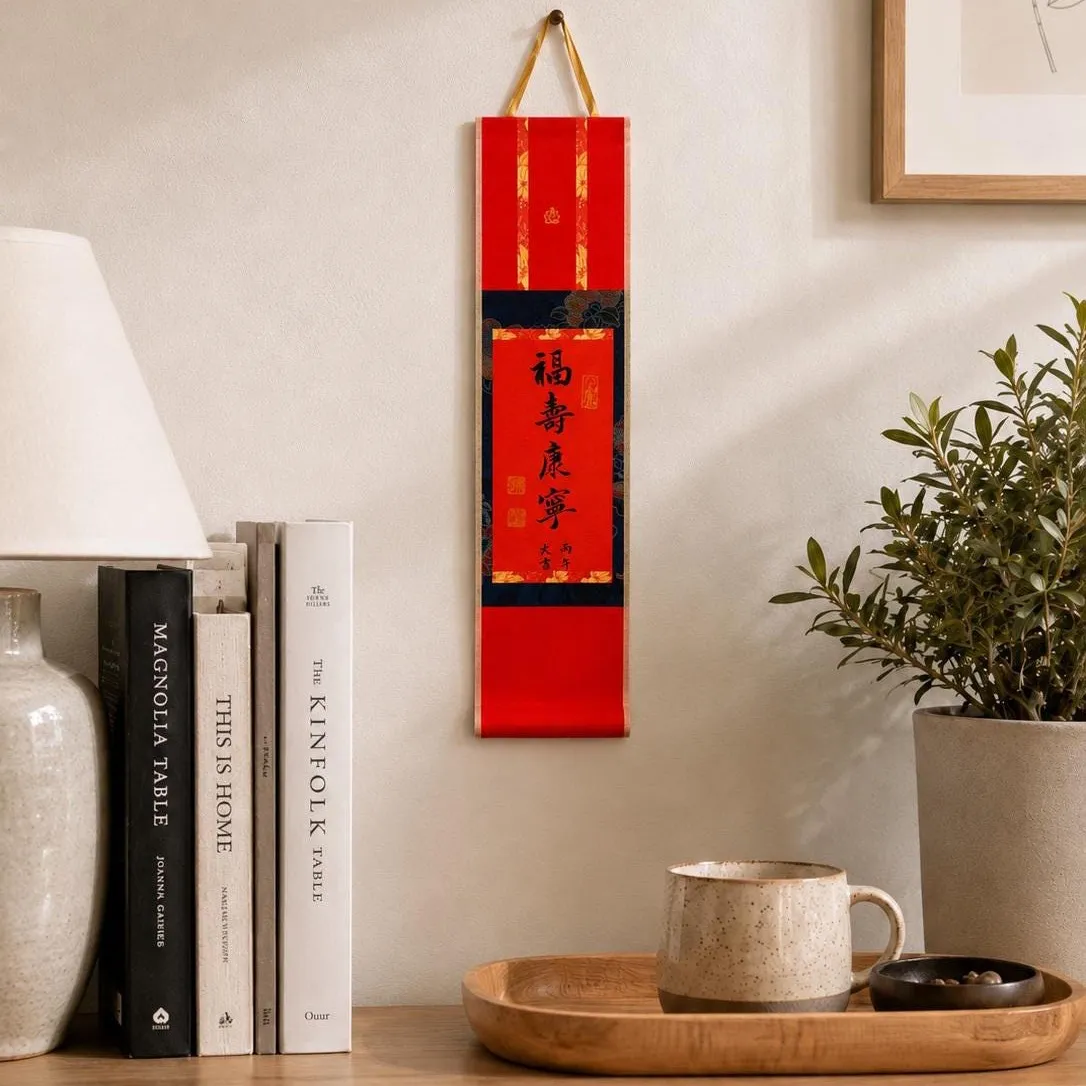
Photo shows a sample — yours will be brushed with 坚强, or any character you choose.
Wall Scroll — for walls & housewarmingsfrom $38→ -
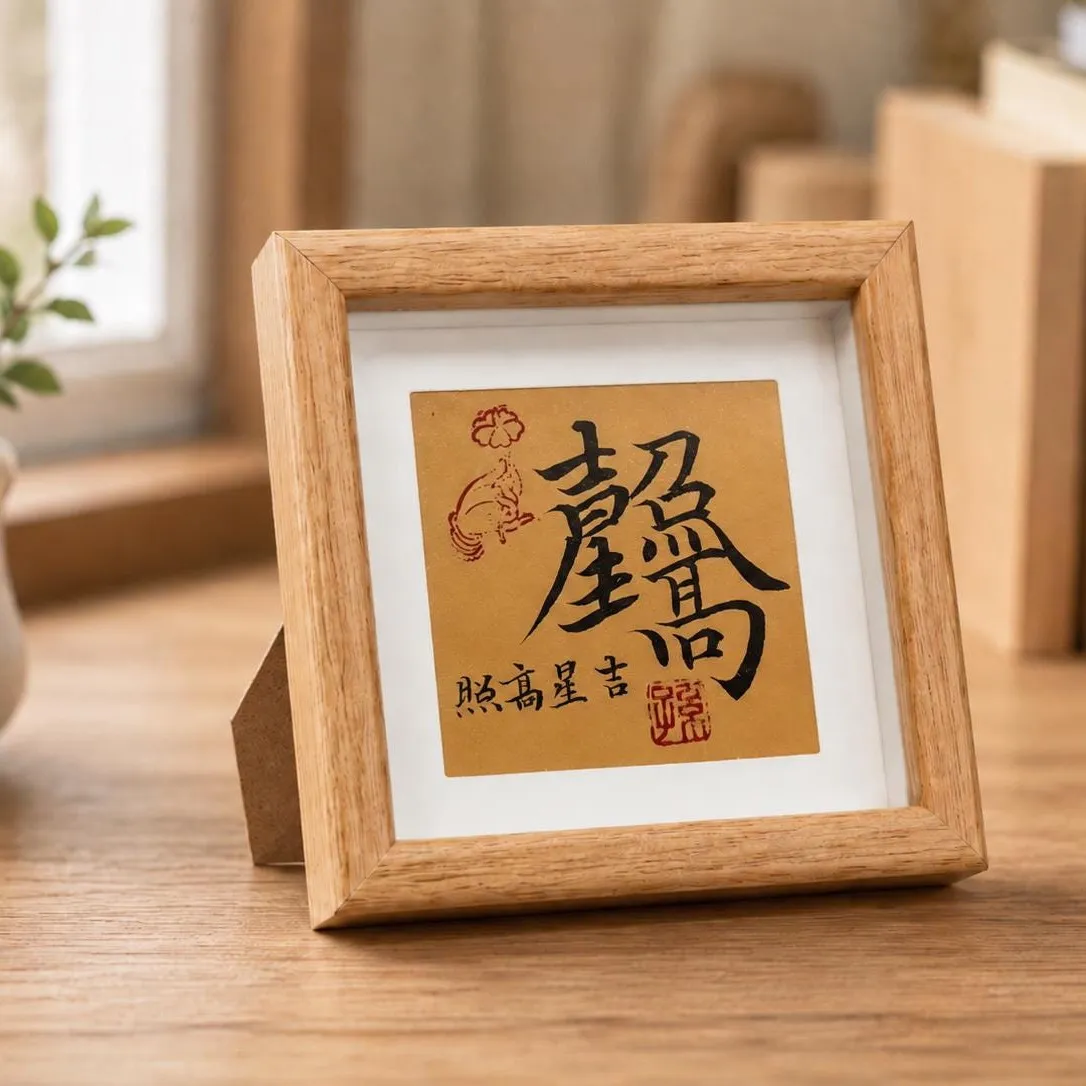
Photo shows a sample — yours will be brushed with 坚强, or any character you choose.
Desk Frame — for desks, studies & studiosfrom $44→ -
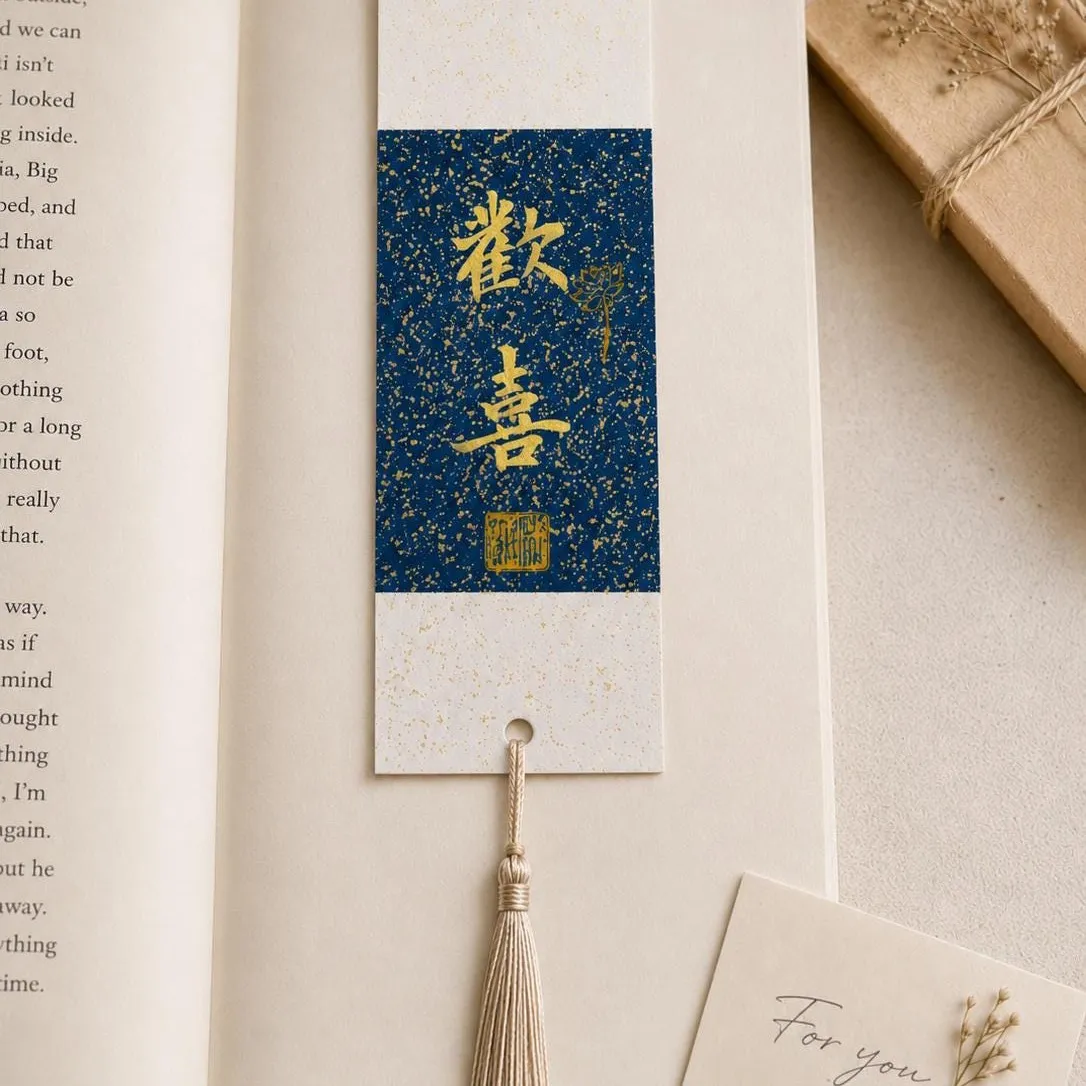
Photo shows a sample — yours will be brushed with 坚强, or any character you choose.
Bookmark — for readers & small thank-yousfrom $14→
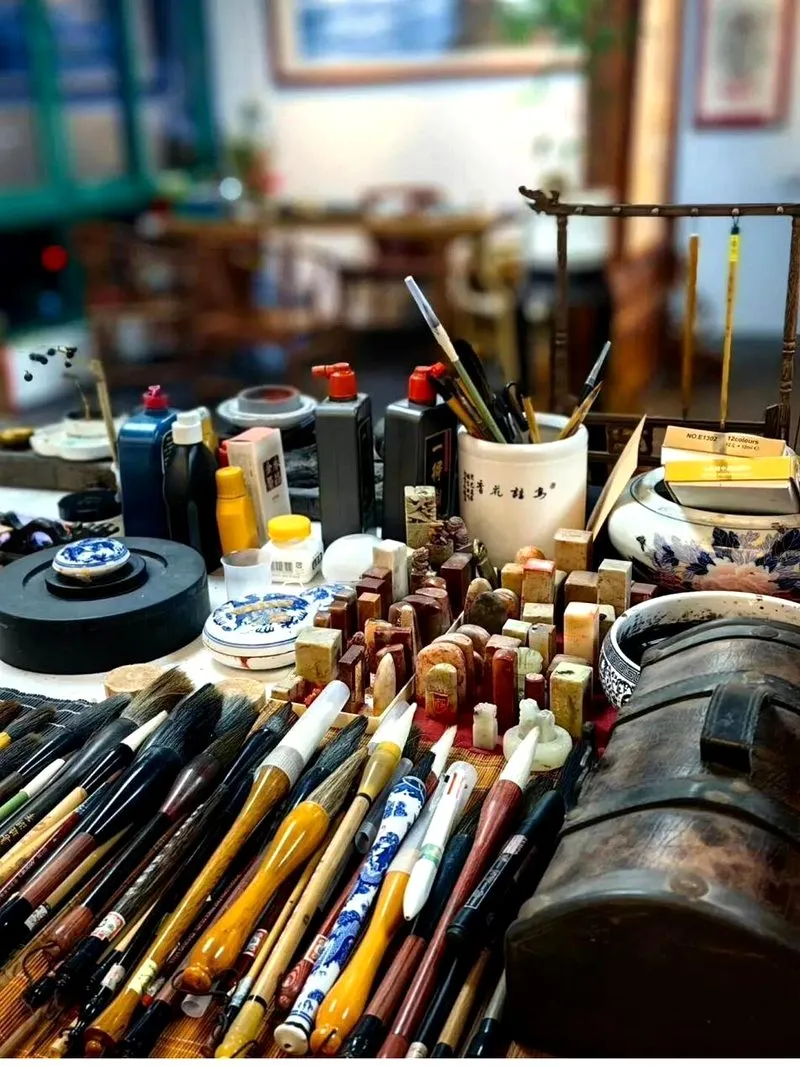
What people said after it arrived.
-
The item is fantastic. The customer service was genuine. Thanks!
— M.Verified purchase · from our Etsy shop reviews · -
They were great they gave me exactly what I asked for and then some. Thank you!!
— G.Verified purchase · from our Etsy shop reviews · -
It is well designed and customized. My daughter loves it. Amazing gift for family’s d friends
— S.Verified purchase · from our Etsy shop reviews ·
Each "坚强" is hand-brushed by FuBlessings on rice paper.
See 坚强 (Jiān Qiáng) on Etsy →