铭 (míng) — Inscription · Engraved in Memory · A Lesson That Does Not Fade
A single character.
Every other character in this catalog describes a quality of the person you are giving it to: their moral formation, their strength, their stature, their clarity. 铭 does something different. It names not who they are but what they have left — the lessons and example that have been pressed into the people around them as permanently as words into bronze. King Tang engraved his bathing basin with a renewal practice; Cui Yuan kept his conduct compass at his right hand; Liu Yuxi pressed his conviction into a room inscription from exile. What each understood is what 铭 encodes: the words that matter are the ones you commit to permanent material, the ones still there when you return to them.
In Chinese life, 铭 runs through the language at the places where permanence matters most. 铭记在心 — engraved in the heart — is what you say about a lesson you will not forget. 座右铭 — seat-right inscription — is what you call the maxim you keep visible, the conduct principle that stays in the corner of your eye. 铭文 is what bronze age China called its most durable records: not carved in wood or written on silk but cast into metal, inseparable from the vessel. The gift character names this quality in the person who gave you your most durable lessons. It says: what you taught is still here; it has not required tending; it is part of how I see.
A hand-brushed 铭 by FuBlessings is the most uncommon gift in the catalog — not because 铭 is rare but because it says something most gift-giving language cannot say cleanly: not “I admire you” or “you have great character” but “you have become part of how I think.” For the father, grandparent, or mentor whose example has been genuinely formative, it names the precise quality of that formation — not the character it required but the permanence of what it produced in you.
- engraved in memory
- a lesson that does not fade
- what you have permanently taken in
- kept the way words are kept in bronze
- memory Too passive, and too fragile. Memory dims and needs refreshing. 铭 is the opposite — what was pressed in deliberately and stays without tending.
- tribute A tribute is offered outward, to honor someone. 铭 faces inward: it names what the other person left inside you, not the praise you return to them.
- vow A vow is a promise about the future. 铭 is about something already set — a lesson received and held, not an intention declared.
The short arms are the point: these readings don’t reach it.
- 钅 metalThe metal radical (a compressed form of 金, gold or metal). It marks the original act behind the character: words cast or carved into bronze, the material that does not decompose. Everything 铭 means about permanence comes from this left side.
- 名 nameName — itself 夕 (evening) over 口 (mouth), originally a person calling out their name in the dark when their face could not be seen. Joined to metal, it gives the literal picture: a name pressed into metal, the oldest Chinese technology for making something last.
character
- 铭记 míng jì to engrave in memory — to hold something so it will not be forgotten
- 座右铭 zuò yòu míng a motto kept at one's right hand — a conduct principle kept permanently in view
- 铭文 míng wén an inscription — text cast or carved into bronze and stone, China's most durable records
- 刻骨铭心 kè gǔ míng xīn carved into the bone, engraved in the heart — a feeling or lesson that will never leave you
The Story Behind the Character
The character 銘/铭 depicts its own meaning: the 钅 (metal) radical on the left, 名 (name) on the right — a name pressed into metal. Among the earliest Chinese writing that has survived is precisely this kind of inscription: short texts cast into the walls of bronze vessels during the Shang and Zhou dynasties, recording events, dedications, and the names of those honored. To have your name in bronze was not a metaphor for permanence — it was the technology that produced it. These 铭文 (engraved texts) are among the oldest continuous written records in any language, preserved because the material they were made from does not decompose.
The cultural weight of 铭 derives from this origin. What is engraved is not what you write down to remember later; it is what you commit to permanently, what you mean to carry. King Tang of the Shang dynasty had his bathing basin inscribed with 苟日新,日日新,又日新 — if truly new today, make it new day by day — so that the words would be before him every morning. The practice gave the genre its name. By the Eastern Han dynasty, the writer Cui Yuan (崔瑗, c. 78–143 CE) had formalized a new form: the 座右铭 (zuò yòu míng), inscription placed to the right of one's seat — a short text kept permanently visible as a behavioral compass. The phrase 铭记在心 (míng jì zài xīn), engraved in the heart, extended the bronze analogy into the inner life. Some lessons, like metal inscriptions, cannot be worn away.
Among the gift characters, 铭 stands alone in naming not a quality of the person but the permanence of their effect on others. 德 names what the father or mentor has built in moral character. 强 names the capacity they demonstrated. 伟 names the scale of their consequence. 铭 names something that only the recipient of the influence can confirm: that the teaching has been pressed into them, that it is still there, that it does not require reminding.
Classical lines
- roughly 1,100 years
- c. 300 BCE 汤王《盘铭》,引于《礼记·大学》
- c. 100 CE 崔瑗《座右铭》
- c. 820 CE 刘禹锡《陋室铭》
苟日新,日日新,又日新。 If truly new today, make it new day by day, and yet again new day by day.
The oldest surviving Chinese inscription used as a personal practice. Tang had these words cast into his bathing basin so they would be before him every morning. The logic of 铭 is here in its original form: engraving words into durable material so they remain present, available, returning to you rather than requiring you to find them.
无道人之短,无说己之长。施人慎勿念,受施慎勿忘。 Do not speak of others' shortcomings; do not dwell on your own virtues. When you give to others, do not keep thinking of it; when you receive, do not forget.
The oldest surviving 座右铭 in Chinese literature. Cui Yuan invented the form: a short conduct text kept permanently at the right hand, a behavioral compass you return to. The gift character 铭 names this quality of influence — the lesson that stays visible rather than fading.
山不在高,有仙则名。水不在深,有龙则灵。斯是陋室,惟吾德馨。 The mountain need not be high
if an immortal dwells there, it has fame. The water need not be deep — if a dragon lives there, it is spirited. This is a humble room — yet my virtue alone makes it fragrant. — Liu Yuxi wrote this from exile. His point is the one all 铭 eventually make: what matters is not the circumstances but the person whose example the space has absorbed. For the gift giver, the logic runs in reverse: the person being honored has been the immortal who gave the mountain its name.
Why This Character Matters
The oldest surviving 铭文 (engraved inscriptions) on Chinese bronze vessels date to approximately 1200 BCE and were cast into the inside walls of ritual vessels at the moment of their creation — not added afterward. This means the inscription was considered inseparable from the object's purpose. A vessel without a 铭 was a container; a vessel with one was a document. Some bronze inscriptions run to several hundred characters, recording complete historical events with dates, participants, and consequences. China's bronze age produced both the most refined casting technology then in use anywhere and the longest continuous written record: the two achievements are the same achievement.
The 座右铭 tradition carries this into daily life. Personal conduct inscriptions — short, placed where the eyes rest — became a standard practice of the educated class. Tao Yuanming had one; Wang Anshi had one; Su Shi discussed the form. The practice names something precise about 铭 in the gift context: the character honors not a quality observed from the outside but a lesson received and carried. The most direct translation is not "inscription" but "what I have engraved from you" — the phrase 铭记在心 (engraved in the heart) still carries this meaning in modern Chinese. As single-character calligraphy given as a gift, 铭 reads in the 座右铭 tradition rather than 墓志铭 (the literary form of epitaphs, which shares the radical but looks backward): a living reminder rather than a memorial, a permanent present-tense rather than a past.
铭 is uncommon as a tattoo, which works in its favor — a Chinese person seeing it would read it as thoughtful rather than generic. It carries the sense of a lesson or memory deliberately kept, so it reads as personal: this is something I will not let fade. It is also a fairly common given-name character, so without context some may first read it as a name.
Calligraphy Styles for Tattoos
- Regular script (楷书 kǎishū) Best for tattoos
铭 is a left-right character — 钅 (metal) narrow on the left, 名 (name) wider on the right. Regular script keeps the boundary between them clean. 11 strokes; plan for a minimum of 2 inches so the right side does not crowd.
- Running script (行书 xíngshū) Good for larger pieces
Suits the meaning — a flowing hand reads like something written to be kept. At small sizes the metal radical and 名 can run together, so works best at 2.5+ inches where the two halves keep their shape.
- Seal script (篆书 zhuànshū) A fitting choice for this character
Of all the gift characters, 铭 has the most honest connection to seal script — the script of the bronze inscriptions the character was named for. A seal-script 铭 is, in effect, the character drawn in the style of the thing it describes. Best executed by someone who knows the form.
Common Mistakes to Avoid
- Writing the left radical as 金 in full when the intended form is the compressed 钅Intended: 铭 with the simplified metal radical 钅
In modern 铭 the metal radical is the narrowed 钅, not the full square 金. Using the full form makes the character look unbalanced and dated. Decide on simplified 铭 before the stencil and keep the radical compact.
- Confusing 铭 (míng, to inscribe) with 名 (míng, name) on its ownIntended: 铭 — engraved in memory, with the metal radical
Without the metal radical on the left, you are left with only 名, which simply means 'name.' The whole meaning of 铭 — that something has been pressed in to last — lives in that radical. Drop it and the message changes entirely.
Notes for Your Tattoo Artist
11 strokes, left-right structure. The challenge is balance: the 钅 radical must stay narrow and the 名 on the right must not crowd it. The vertical of the metal radical should be confident and straight. Minimum 2 inches; the dense right side needs room.
A few characters live near "铭" but mean something quieter, sharper, or more specific. Here's how to tell them apart.
what their example pressed permanently into you
the moral character they built in themselves over a lifetime
the lasting mark left inside the people they shaped
the visible scale of their consequence, seen from the outside
a lesson held permanently, the way words are kept in bronze
keeping faith — being someone whose word can be relied on
For Father's Day when the gift should name not a quality of the father but what he has permanently left in the people he raised.
- For Father's Day when the gift should name not a quality of the father but what he has permanently left in the people he raised. 铭 names the father's example as inscription — something pressed into the family's way of seeing and acting as permanently as words into bronze. Where 德 names what the father has accumulated and 伟 names the scale of his influence, 铭 names the specific quality of that influence: that it does not fade, that it is there when you return to it.
- For a milestone birthday when the gift should name the lasting quality of the recipient's influence on the people around them. 铭 does not describe who they are; it describes what they have left in others — the lessons and example that have become permanently part of how those people think and act. Most fitting for the grandparent, father, or mentor at a milestone when the conversation can name this honestly.
Dad · Grandparent · Boss · or yourself
Looking for a name? See Western names written in Chinese →
-
What does 铭 (míng) mean?
铭 (míng) is the Chinese character for inscription, engraved in memory, a lesson that does not fade. Every other character in this catalog describes a quality of the person you are giving it to: their moral formation, their strength, their stature, their clarity. 铭 does something different. It names not who they are but what they have left — the lessons and example that have been pressed into the people around them as permanently as words into bronze. King Tang engraved his bathing basin with a renewal practice; Cui Yuan kept his conduct compass at his right hand; Liu Yuxi pressed his conviction into a room inscription from exile. What each understood is what 铭 encodes: the words that matter are the ones you commit to permanent material, the ones still there when you return to them. The oldest surviving 铭文 (engraved inscriptions) on Chinese bronze vessels date to approximately 1200 BCE and were cast into the inside walls of ritual vessels at the moment of their creation — not added afterward. This means the inscription was considered inseparable from the object's purpose. A vessel without a 铭 was a container; a vessel with one was a document. Some bronze inscriptions run to several hundred characters, recording complete historical events with dates, participants, and consequences. China's bronze age produced both the most refined casting technology then in use anywhere and the longest continuous written record: the two achievements are the same achievement.
-
What occasions is 铭 given for?
铭 is traditionally given for Father's Day, Birthday. For Father's Day when the gift should name not a quality of the father but what he has permanently left in the people he raised. 铭 names the father's example as inscription — something pressed into the family's way of seeing and acting as permanently as words into bronze. Where 德 names what the father has accumulated and 伟 names the scale of his influence, 铭 names the specific quality of that influence: that it does not fade, that it is there when you return to it. For a milestone birthday when the gift should name the lasting quality of the recipient's influence on the people around them. 铭 does not describe who they are; it describes what they have left in others — the lessons and example that have become permanently part of how those people think and act. Most fitting for the grandparent, father, or mentor at a milestone when the conversation can name this honestly.
-
Is 铭 a good Chinese tattoo?
铭 is uncommon as a tattoo, which works in its favor — a Chinese person seeing it would read it as thoughtful rather than generic. It carries the sense of a lesson or memory deliberately kept, so it reads as personal: this is something I will not let fade. It is also a fairly common given-name character, so without context some may first read it as a name.
-
Who brushes the 铭 calligraphy?
FuBlessings hand-brushes each 铭 (Míng) to order, in ink on rice paper — never printed, never repeated.
Bring 铭 home — choose how you'd like it brushed.
-
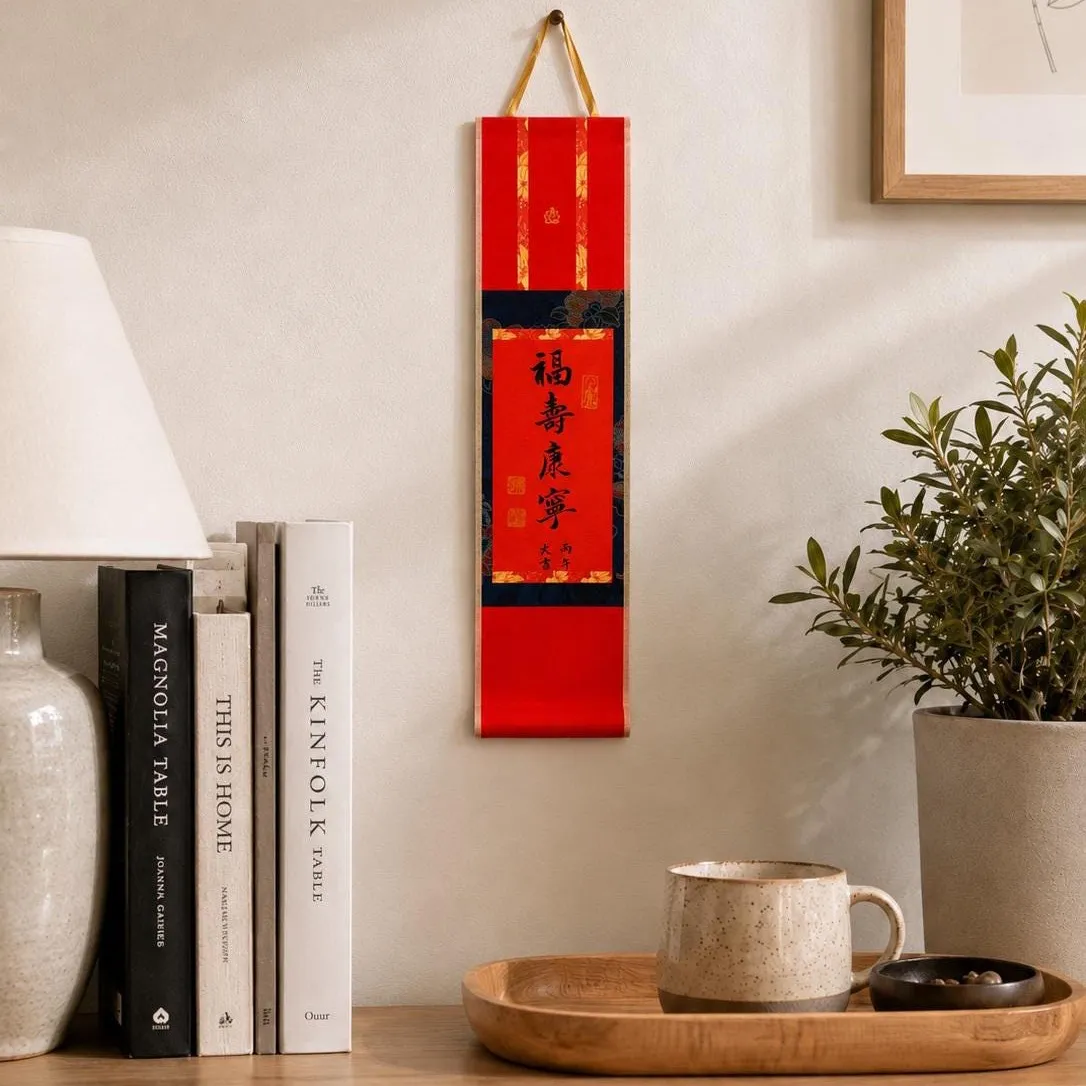
Photo shows a sample — yours will be brushed with 铭, or any character you choose.
Wall Scroll — for walls & housewarmingsfrom $38→ -
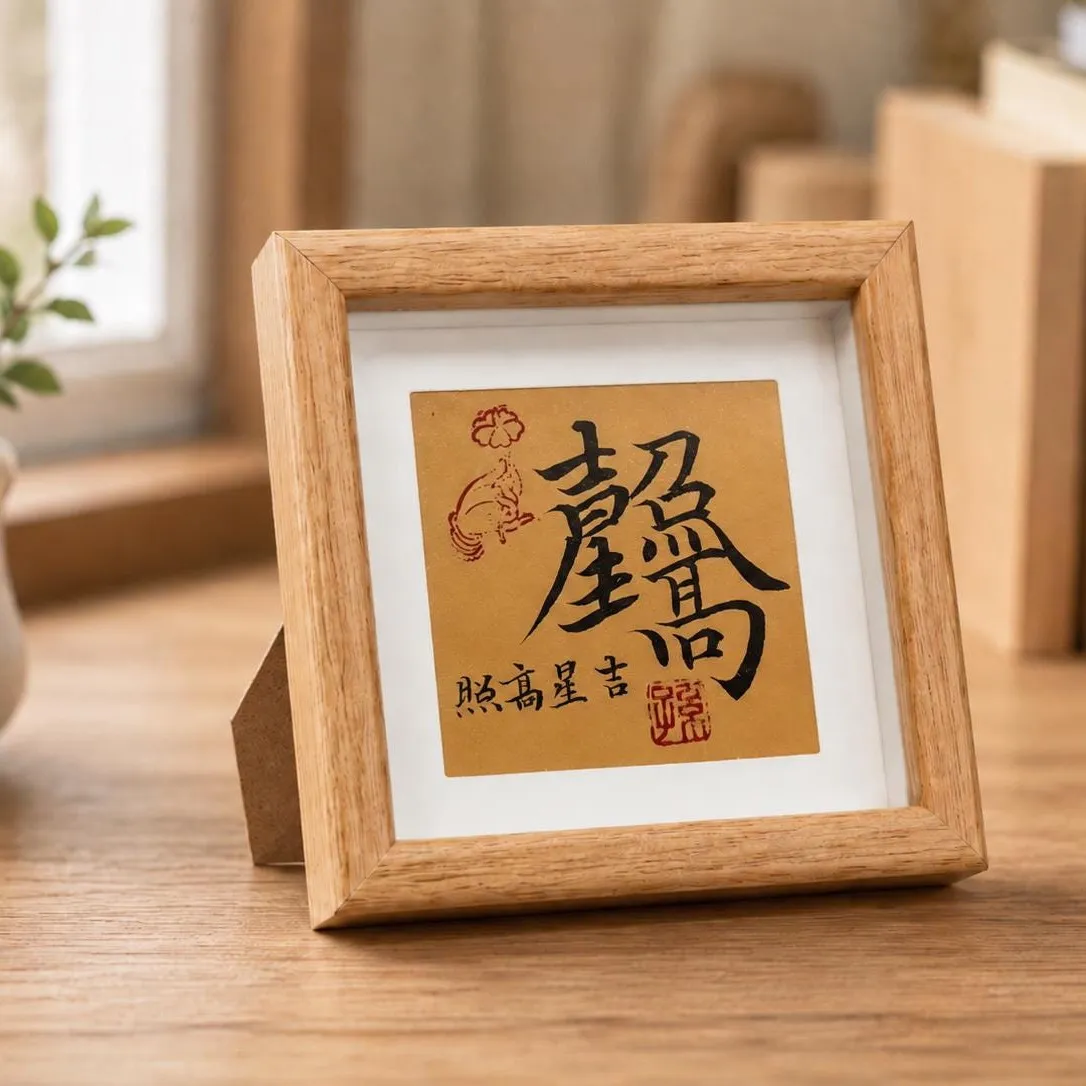
Photo shows a sample — yours will be brushed with 铭, or any character you choose.
Desk Frame — for desks, studies & studiosfrom $44→ -
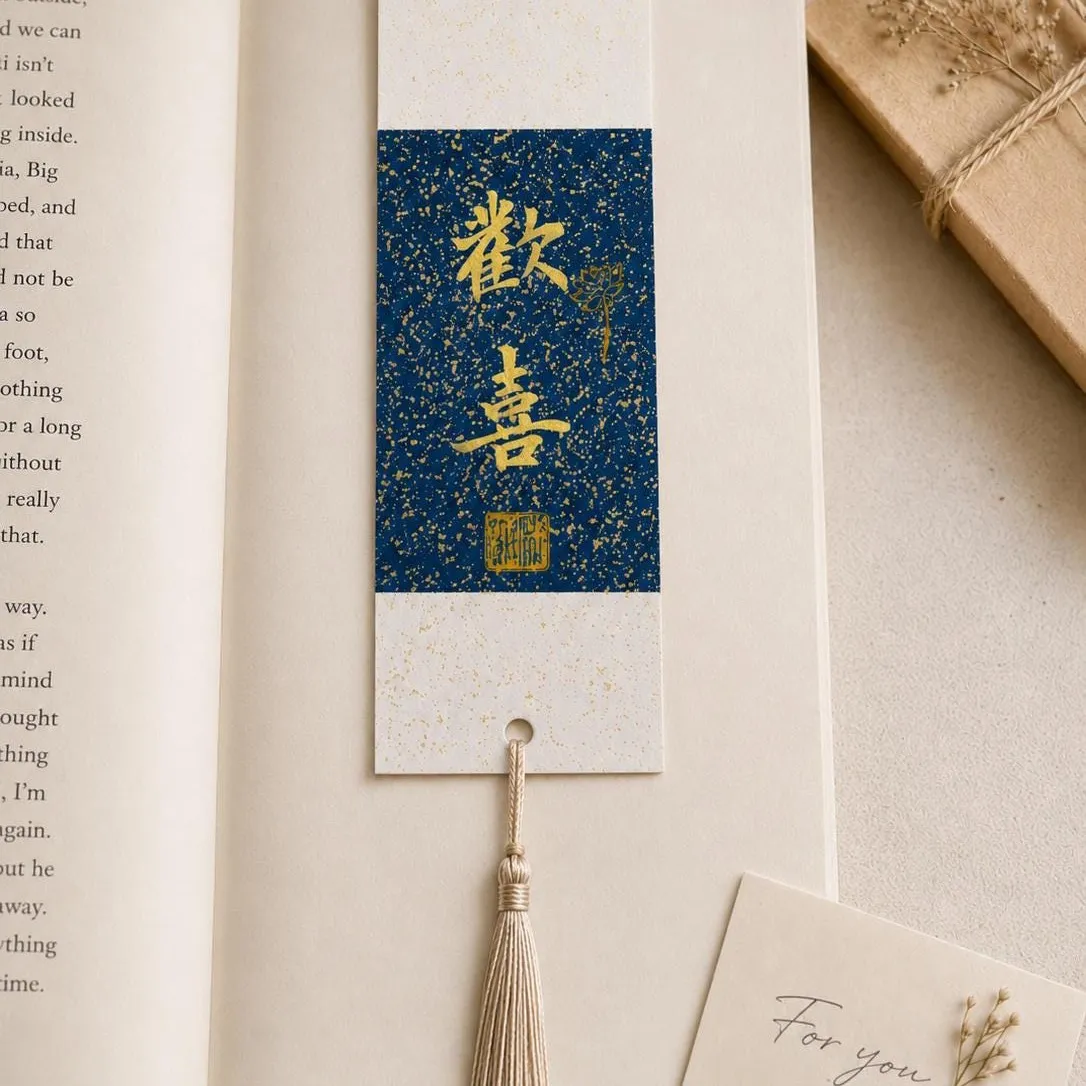
Photo shows a sample — yours will be brushed with 铭, or any character you choose.
Bookmark — for readers & small thank-yousfrom $14→
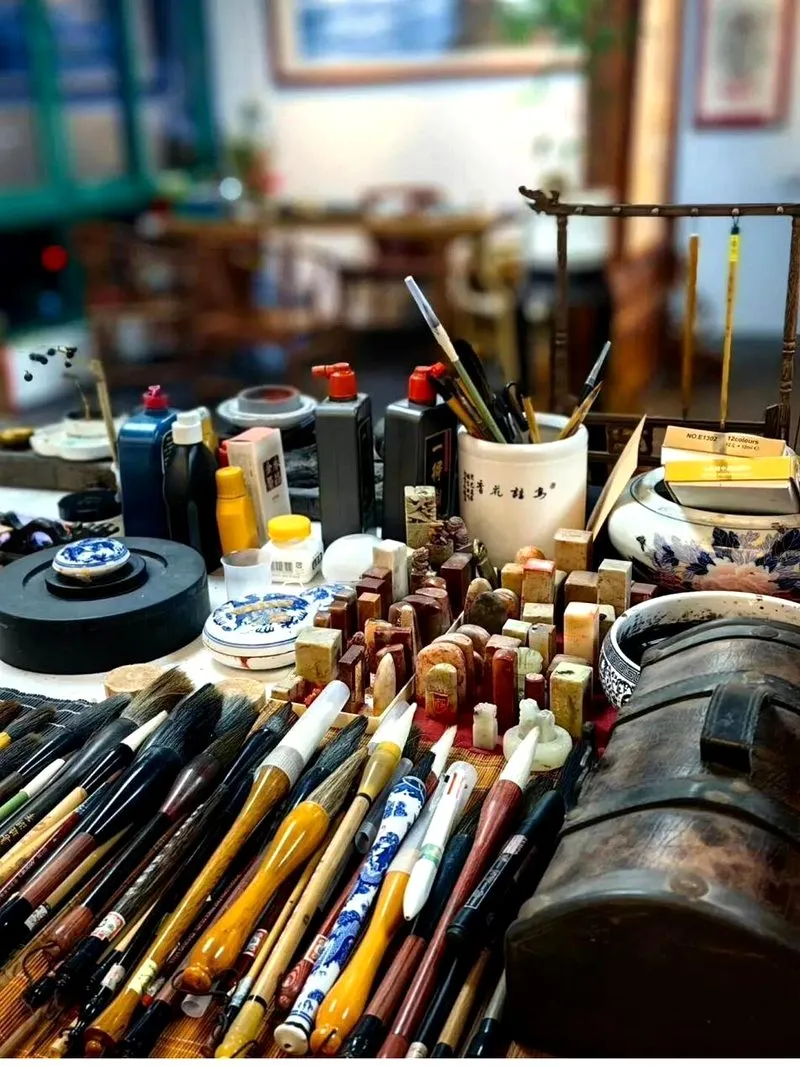
What people said after it arrived.
-
The item is fantastic. The customer service was genuine. Thanks!
— M.Verified purchase · from our Etsy shop reviews · -
They were great they gave me exactly what I asked for and then some. Thank you!!
— G.Verified purchase · from our Etsy shop reviews · -
It is well designed and customized. My daughter loves it. Amazing gift for family’s d friends
— S.Verified purchase · from our Etsy shop reviews ·
Each "铭" is hand-brushed by FuBlessings on rice paper.
See 铭 (Míng) on Etsy →