福寿康宁 (fú shòu kāng níng) — Blessing · Longevity · Health · Peace
A 4-character phrase, not a single character.
福寿康宁 is the four-character blessing that covers the full territory of a good old age — not by listing every possible wish, but by naming the four that matter most and insisting they belong together. 福 is blessing, the accumulated good fortune of a life well lived. 寿 is longevity, years that carry weight. 康 is health, the body still working as it should. 宁 is peace, the mind at rest. The phrase draws from the Five Blessings enumerated in the Book of Documents, one of the oldest texts in the Chinese canon, and it carries that classical authority into every birthday scroll and longevity plaque it appears on. See 福 → See 寿 → See 康 → See 宁 →
What makes 福寿康宁 distinctive among elder blessings is the pair it closes with: 康宁, health-and-peace. The Book of Documents treats 康宁 as a single concept, not two. To have a healthy body with an anxious mind is not 康宁; to have peace of spirit in a failing body is not 康宁 either. The Book of Documents insists that body and mind are one system, and 福寿康宁 inherits that insistence. It is a blessing that refuses to settle for partial wellbeing.
A hand-brushed “福寿康宁” by FuBlessings is for the parent, grandparent, or elder whose birthday calls for more than a card — the person whose health you hope will hold, whose peace of mind you want to protect, and whose years you hope will multiply. It says, in four characters: may everything that matters stay intact.
- the full spectrum of elder wellbeing
- blessing, years, health, and peace held together
- a good old age in four characters
- health and happiness Too modern and too thin. 福寿康宁 carries classical weight — it draws from the Five Blessings of the Book of Documents and distinguishes between bodily health (康) and mental peace (宁).
- long life Only one quarter of the wish. 福寿康宁 insists that longevity alone is not enough — it must come with blessing, health, and peace.
The short arms are the point: these readings don’t reach it.
- 福寿 blessing and longevity — the two most fundamental elder wishes福 is the broadest blessing in Chinese; 寿 is longevity earned through virtue. Together they form the most common pair in elder birthday inscriptions — the minimum wish, before any specifics are added.
- 康宁 health and peace — the inseparable pair from the Five Blessings康 is robust bodily health; 宁 is deep mental tranquility. The Book of Documents treats them as a single blessing, insisting that body and mind must both be sound for either to count.
characters
- 福寿 fú shòu blessing and longevity — the foundational elder pair
- 康宁 kāng níng health and peace — the inseparable pair from the Five Blessings
- 五福 wǔ fú the Five Blessings — the classical enumeration from the Book of Documents that 福寿康宁 draws from
- 寿比南山 shòu bǐ nán shān may your life rival the Southern Mountain — the classical longevity toast
The Story Behind the Character
福寿康宁 assembles the four pillars of the classical Chinese vision of a good old age, each drawn from a distinct tradition. 福 (fú) is blessing in its broadest sense — the accumulated good fortune that a life of virtue and right conduct is supposed to attract. 寿 (shòu) is longevity — not merely years but years that count, the kind of long life that earns the reverence of descendants. 康 (kāng) is health — specifically the robust, energetic health of a body that still functions well, not mere survival. 宁 (níng) is peace — the deep, settled tranquility of a mind that is not troubled, a household that is not in conflict, a spirit that is at rest.
The phrase draws from the "Five Blessings" (五福) enumerated in the Book of Documents (《尚书·洪范》), one of the foundational chapters of the Chinese classical canon: 寿 (longevity), 富 (wealth), 康宁 (health and peace), 攸好德 (love of virtue), and 考终命 (a natural death at the end of a full life). 福寿康宁 takes three of the five — longevity, health-and-peace, and the overarching concept of blessing — and compresses them into a single four-character wish. The absence of 富 (wealth) is notable: this is a blessing for the person whose material needs are either met or beside the point. What matters is the body, the mind, the spirit, and the years.
The compound 康宁 (kāng níng) deserves special attention. It appears in the Book of Documents as a single concept, not two separate wishes. To be 康 without 宁 is to have a healthy body with an anxious mind; to be 宁 without 康 is to have peace of spirit in a failing body. The Book of Documents insists they are inseparable — that true wellbeing requires both the body and the mind to be sound. 福寿康宁 inherits this insistence.
Classical lines
- roughly 500 years
- c. 800 BCE 《诗经·小雅·斯干》
- c. 300 BCE 屈原《楚辞·九歌·东皇太一》
One further source is quoted below without a date printed, so it stays off the rail.
如竹苞矣,如松茂矣。 Flourishing like bamboo, luxuriant like pine.
A household blessing from the Book of Songs, set in a poem about a family settling a new home. Bamboo and pine are the two plants Chinese culture reads as longevity itself — green through every winter, the image of years that hold.
五音纷兮繁会,君欣欣兮乐康。 The five notes weave together in abundance, and the honored one is glad and well.
Qu Yuan closing a hymn on the single word 乐康 — joyful and at ease, the heart and the body well at once. It is the exact condition 福寿康宁 closes on: health that comes with peace, not without it.
身体发肤,受之父母,不敢毁伤,孝之始也。 Our bodies, hair, and skin we receive from our parents
we dare not damage them. This is the beginning of filial devotion. — The Confucian root of 康 as a moral duty: to maintain the body is an act of respect for the parents who gave it.
Why This Character Matters
In Chinese birthday culture, the distinction between different elder blessings carries real weight. 福寿安康 and 福寿康宁 cover similar territory but differ in emphasis: 安康 (peace and health) leads with 安 (safety, the absence of danger), while 康宁 leads with 康 (robust health) and closes with 宁 (deep tranquility). The choice between them is not arbitrary. 福寿安康 is the more protective wish — for the elder whose family worries about their safety. 福寿康宁 is the more aspirational wish — for the elder whose health is strong and whose family hopes their peace of mind will match.
The phrase appears on longevity scrolls (寿幛), embroidered panels, and carved plaques given at milestone birthdays — particularly the 六十大寿 (sixtieth birthday), 七十大寿 (seventieth), and 八十大寿 (eightieth), when Chinese families traditionally hold formal celebrations. The four characters are often rendered in gold on red fabric, a combination that encodes the full spectrum of Chinese auspiciousness: gold for nobility and permanence, red for joy and vitality.
A few characters live near "福寿康宁" but mean something quieter, sharper, or more specific. Here's how to tell them apart.
closes with 康宁 — robust health plus deep tranquility, aspirational
closes with 安康 — safety and health, protective
covers four dimensions — blessing, longevity, health, and peace of mind
covers two — health and long life, direct and unadorned
comprehensive and balanced — the whole territory of elder wellbeing
singles out vigor — the visible spark, mythological in scale
福寿康宁 is the classical inscription for an elder's birthday celebration — the wish that the four pillars of a good late life stand firm together: blessing, years, health, and peace of mind.
- A Milestone Birthday福寿康宁 is the classical inscription for an elder's birthday celebration — the wish that the four pillars of a good late life stand firm together: blessing, years, health, and peace of mind.
- As a New Year greeting for parents or grandparents, 福寿康宁 covers the full territory of elder wellbeing without singling out any one anxiety. It is the comprehensive wish.
- For the parent who does not ask for gifts, 福寿康宁 names the four things they actually want — and the four things their children most hope for on their behalf.
- RetirementAt the threshold of a life without schedules, 福寿康宁 blesses the new era with the four qualities that make unstructured time a gift rather than a burden.
Mom · Dad · Grandparent · Parent · Elder · Mentor · or yourself
Looking for a name? See Western names written in Chinese →
-
What does 福寿康宁 (fú shòu kāng níng) mean?
福寿康宁 (fú shòu kāng níng) is a 4-character Chinese phrase for blessing, longevity, health, peace. 福寿康宁 is the four-character blessing that covers the full territory of a good old age — not by listing every possible wish, but by naming the four that matter most and insisting they belong together. 福 is blessing, the accumulated good fortune of a life well lived. 寿 is longevity, years that carry weight. 康 is health, the body still working as it should. 宁 is peace, the mind at rest. The phrase draws from the Five Blessings enumerated in the Book of Documents, one of the oldest texts in the Chinese canon, and it carries that classical authority into every birthday scroll and longevity plaque it appears on. See 福 → See 寿 → See 康 → See 宁 → In Chinese birthday culture, the distinction between different elder blessings carries real weight. 福寿安康 and 福寿康宁 cover similar territory but differ in emphasis: 安康 (peace and health) leads with 安 (safety, the absence of danger), while 康宁 leads with 康 (robust health) and closes with 宁 (deep tranquility). The choice between them is not arbitrary. 福寿安康 is the more protective wish — for the elder whose family worries about their safety. 福寿康宁 is the more aspirational wish — for the elder whose health is strong and whose family hopes their peace of mind will match.
-
What occasions is 福寿康宁 given for?
福寿康宁 is traditionally given for A Milestone Birthday, Chinese New Year, Mother's Day · Father's Day, Retirement. 福寿康宁 is the classical inscription for an elder's birthday celebration — the wish that the four pillars of a good late life stand firm together: blessing, years, health, and peace of mind. As a New Year greeting for parents or grandparents, 福寿康宁 covers the full territory of elder wellbeing without singling out any one anxiety. It is the comprehensive wish.
-
Who brushes the 福寿康宁 calligraphy?
FuBlessings hand-brushes each 福寿康宁 (Fú Shòu Kāng Níng) to order, in ink on rice paper — never printed, never repeated.
Bring 福寿康宁 home — choose how you'd like it brushed.
-
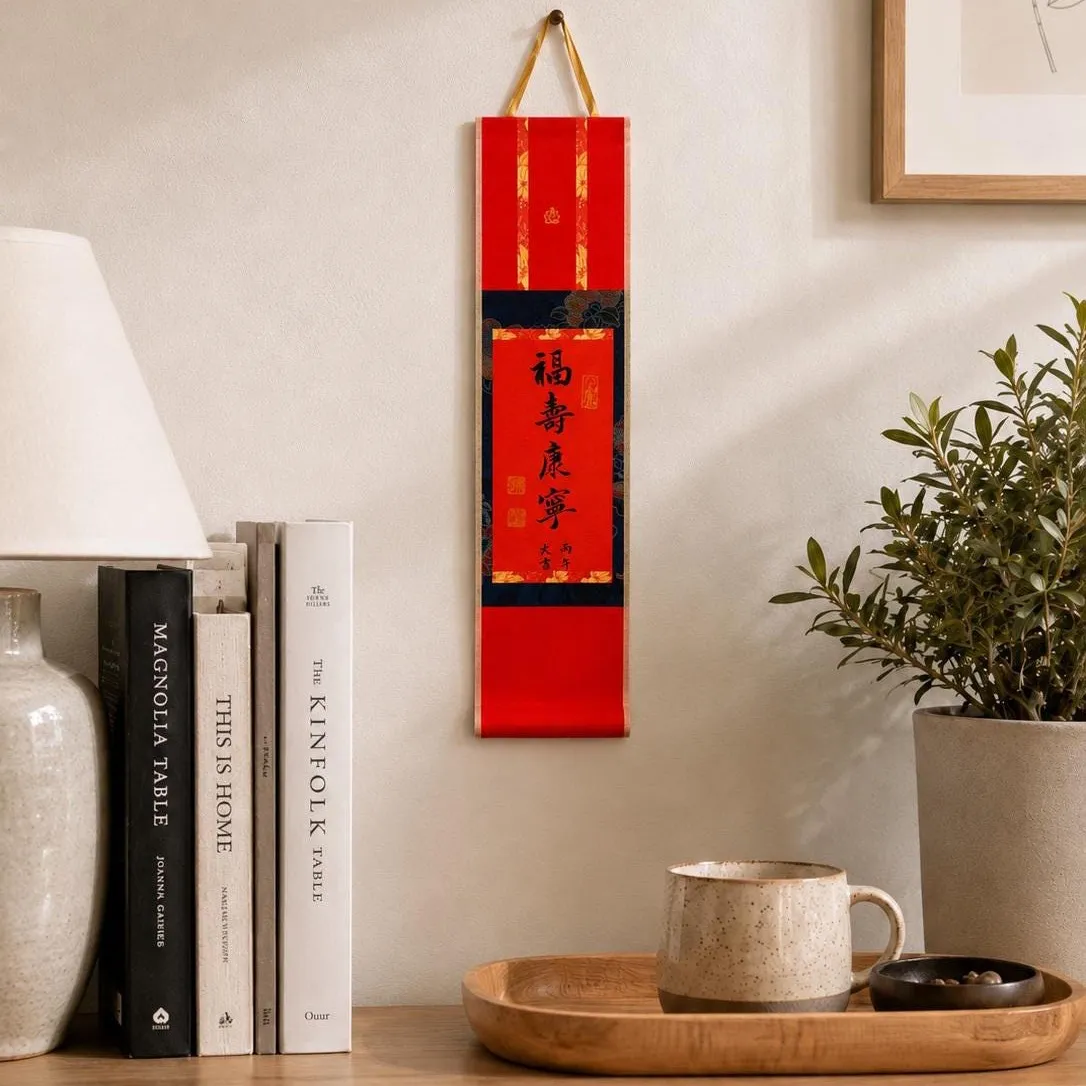
Photo shows a sample — yours will be brushed with 福寿康宁, or any character you choose.
Wall Scroll — for walls & housewarmingsfrom $38→ -
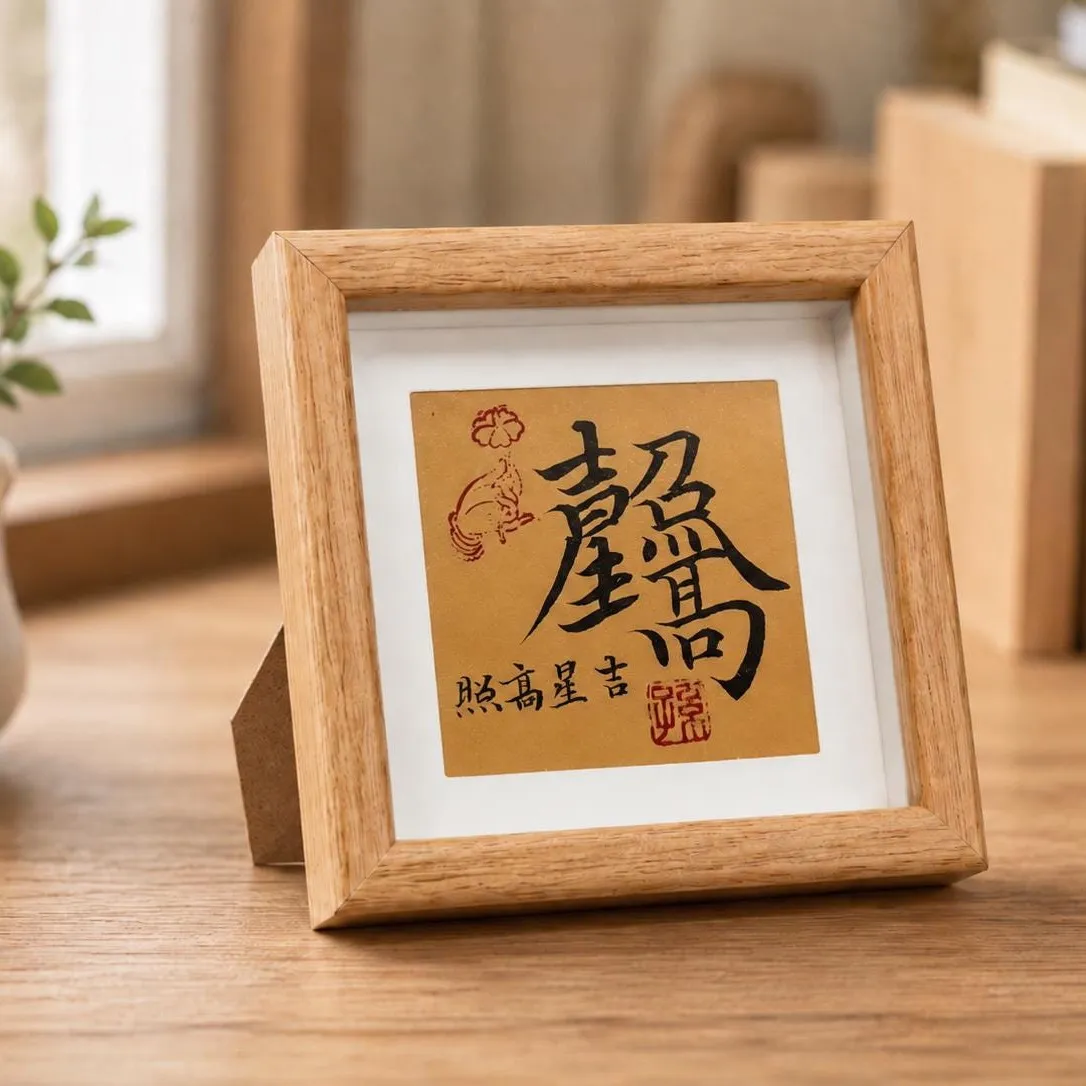
Photo shows a sample — yours will be brushed with 福寿康宁, or any character you choose.
Desk Frame — for desks, studies & studiosfrom $44→ -
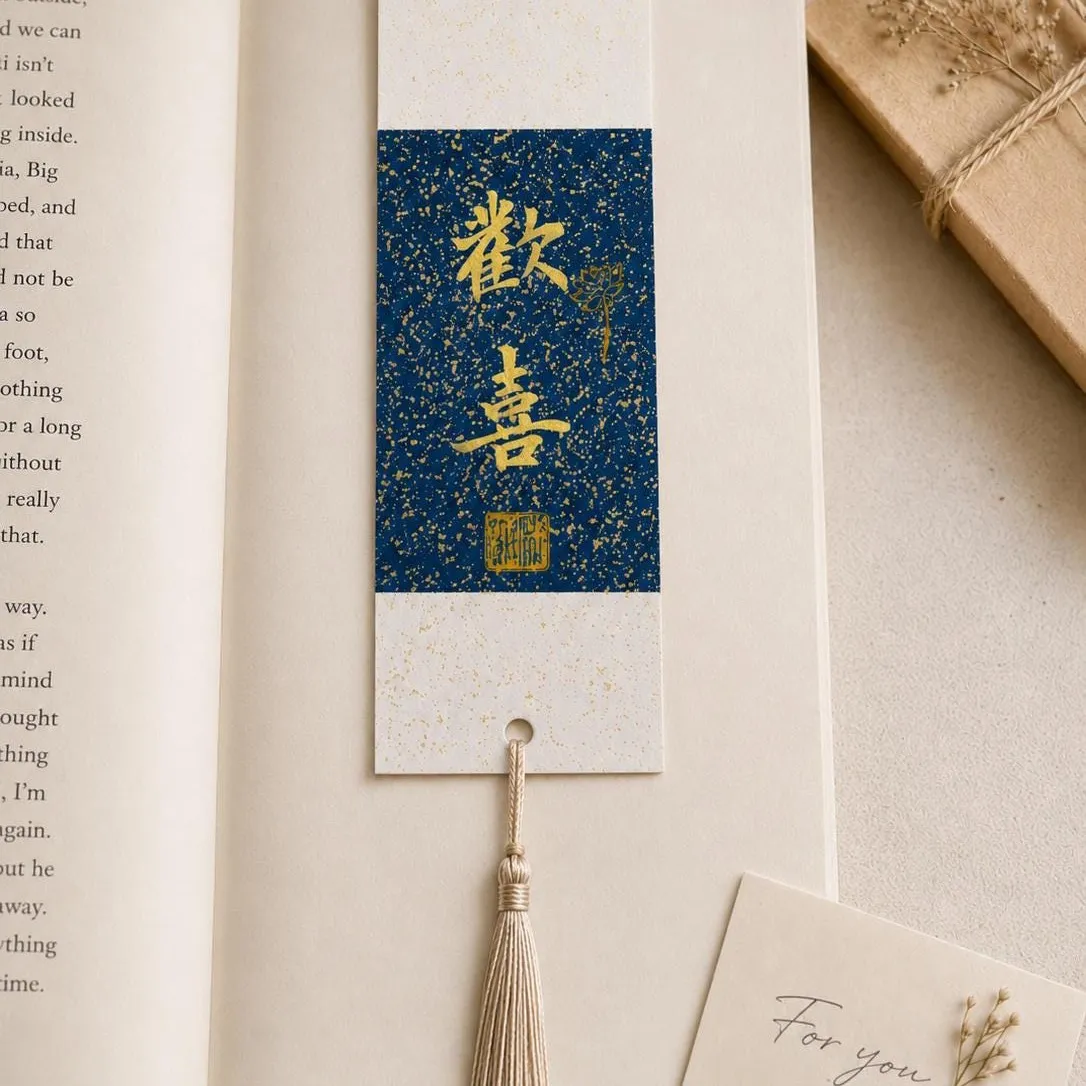
Photo shows a sample — yours will be brushed with 福寿康宁, or any character you choose.
Bookmark — for readers & small thank-yousfrom $14→
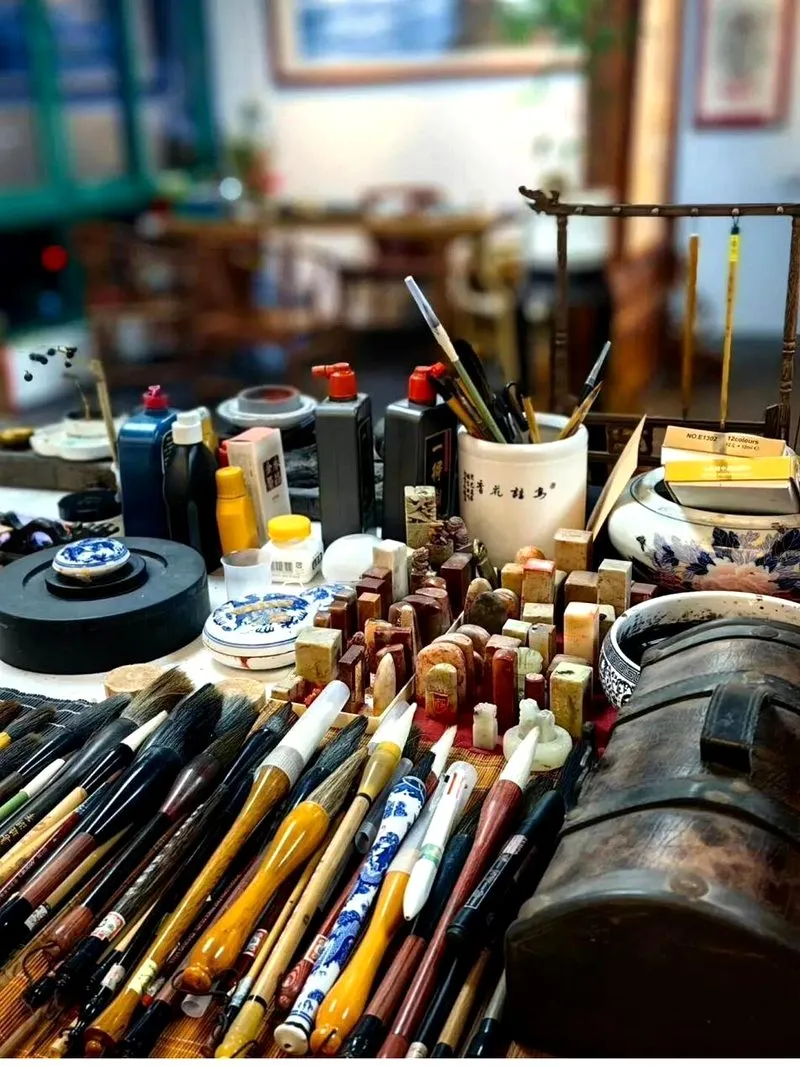
What people said after it arrived.
-
The item is fantastic. The customer service was genuine. Thanks!
— M.Verified purchase · from our Etsy shop reviews · -
They were great they gave me exactly what I asked for and then some. Thank you!!
— G.Verified purchase · from our Etsy shop reviews · -
It is well designed and customized. My daughter loves it. Amazing gift for family’s d friends
— S.Verified purchase · from our Etsy shop reviews ·
Each "福寿康宁" is hand-brushed by FuBlessings on rice paper.
See 福寿康宁 (Fú Shòu Kāng Níng) on Etsy →