阖家欢乐 (hé jiā huān lè) — Joy for the Whole Household
A 4-character phrase, not a single character.
阖家欢乐 is the only common four-character blessing that is addressed to a group rather than a person. Where 福寿安康 speaks to an elder and 吉祥如意 speaks to anyone, 阖家欢乐 speaks to a household — the unit that sits around one table, shares one roof, and counts its members before the meal begins. Its first character, 阖, is the key: not the everyday word for “all” but a literary term meaning “the door shut, everyone inside.” The blessing begins by confirming that no one is missing. See 乐 →
The phrase lives at the center of the Chinese New Year. On New Year’s Eve (除夕), families across China sit down to a reunion dinner (年夜饭) that is the emotional anchor of the entire holiday. Red couplets pasted on the front door often read 阖家欢乐. The phrase also governs 春运 — the forty-day travel season surrounding the Lunar New Year, when over three billion trips are made as workers cross the country to reach their family tables. The same four characters appear on the calligraphy pieces in-laws commission for a newly married couple’s home, and on the banners hung above the table where three generations share a meal. Wherever the inscription appears, the message is the same: the family is whole, the room is warm, the joy belongs to everyone in it.
A hand-brushed “阖家欢乐” by FuBlessings is the inscription for families at their milestones — a new home, a wedding, a Lunar New Year, any moment when the gathering matters more than any one person in it. It is the wish that the table stays full and the door stays closed against the cold.
- joy for the whole household
- everyone present, everyone glad
- the warmth of family reunion
- happy family Too generic. 阖家欢乐 specifies the door closed and the table full — joy that requires the gathering to be complete.
- merry Too festive. 欢乐 is settled gladness, not party energy. It can fill an ordinary evening, not just a celebration.
The short arms are the point: these readings don’t reach it.
- 阖家 the whole household, no one missingNot the everyday word for 'all' (全) but a literary term meaning 'the door shut, everyone inside.' The word itself enacts the completeness it describes — gates closed against the outside world, the family complete within.
- 欢乐 joy of gathering plus settled gladnessTwo kinds of joy Chinese distinguishes where English does not. 欢 is the joy of reunion — being together. 乐 is the deeper, resonant happiness named after a stringed instrument. Together: warm, full-table joy.
characters
- 阖家 hé jiā the whole household — literally 'the gate shut, all inside'
- 欢乐 huān lè joy of reunion — the warm, full-table happiness
- 团圆 tuán yuán family reunion — the gathering that 阖家欢乐 blesses
- 年夜饭 nián yè fàn New Year's Eve reunion dinner — the central setting for 阖家欢乐
- 春运 chūn yùn the Spring Festival travel season — three billion trips to make 阖家欢乐 possible
Cinnabar marks the characters 阖家欢乐 actually contains. The dark row is a relative by meaning or by sound, not one shared stroke.
The Story Behind the Character
The key to 阖家欢乐 is its first character. 阖 (hé) is not the everyday word for "all" or "every" — that would be 全 or 所有. 阖 is a literary term meaning "the door closed, everyone inside" — it comes from 門 (door) and 盍 (to cover, to shut), and its original meaning was a gate fully closed. When applied to a family, it carries a specific image: everyone gathered, the door shut against the outside world, the household complete. No one is missing, no one has left early, no one is absent from the table. The word itself enacts the completeness it describes.
欢乐 (huān lè), the second half, combines two kinds of joy that Chinese distinguishes where English does not. 欢 is the joy of reunion, of being together — it appears in 欢迎 (welcome), 欢聚 (joyful gathering), 欢送 (a festive send-off). 乐 is a deeper, more settled happiness — the character originally depicted a stringed instrument on a wooden frame, linking joy to music, harmony, and things that resonate. Together, 欢乐 is not giddiness or excitement but the warm, full-table happiness of a family that is all present and all glad to be there.
The phrase crystallized into its current form through its use in 春节 (Spring Festival) couplets. For centuries, families have pasted 春联 (red couplets) on their front doors before the Lunar New Year, and 阖家欢乐 became one of the most common inscriptions — written on red paper in gold ink, hung where everyone entering the home would see it. The phrase migrated from doorframe to gift inscription, and then to the calligraphy pieces families commission for one another. But it never lost its original setting: a closed door, a full table, the family all together.
Classical lines
- roughly 1,600 years
- c. 9th c. BCE 《诗经·小雅·常棣》
- c. 300 BCE 《孟子·尽心上》
- 761 王维《九月九日忆山东兄弟》
兄弟既翕,和乐且湛。 When brothers gather closely, the joy runs deep and full.
The oldest Chinese poem about family reunion, describing the same warmth 阖家欢乐 names.
父母俱存,兄弟无故,一乐也。 That both parents are living and one's brothers are well
this is the first of life's joys. — Mencius's list of the three great joys opens not with wealth or honor but with this: the family intact, everyone accounted for. It is exactly the gladness 阖家欢乐 names — the joy of the whole household, no one missing.
独在异乡为异客,每逢佳节倍思亲。 A stranger in a strange land, I miss my family twice as much on every holiday.
Wang Wei's famous poem about the ache of being the missing person at the family table.
Why This Character Matters
The Chinese New Year travel season — 春运 (chūn yùn) — is the largest annual human migration on Earth. In a typical year, over three billion trips are made in the forty-day period around the Lunar New Year, as workers return from coastal factories to inland hometowns, as students cross provinces to reach their parents' tables. The entire infrastructure of a nation bends to serve a single cultural imperative: 阖家欢乐, the whole family gathered, the table complete. Trains sell out months in advance. Motorcycle convoys ride hundreds of miles through winter rain. The phrase is not a pleasantry — it describes what billions of people rearrange their lives to make happen, once a year, no matter the cost.
In Chinese gift-giving, 阖家欢乐 occupies a specific role: it is the inscription exchanged between families, not between individuals. When in-laws commission a calligraphy piece for a newly married couple's home, 阖家欢乐 is the standard choice — a wish that the two families now joined will find joy as one unit. It is also the inscription on the red envelopes (红包) given by grandparents to the whole household, and on the banners hung above the table where three generations eat together on New Year's Eve. The phrase always points at the group, never at a single person within it.
A few characters live near "阖家欢乐" but mean something quieter, sharper, or more specific. Here's how to tell them apart.
joy that fills the household when everyone is present
the underlying harmony — accord between members, the structural state of the family
names the felt warmth of the gathering itself — addressed to the group
names the household as a causal premise — accord produces flourishing in everything else
joy specifically for the whole family unit, the door closed, everyone inside
joy at any scale, in any setting — celebration and daily gladness, not tied to gathering
阖家欢乐 is the traditional inscription for the Lunar New Year's Eve dinner — the wish that the table stays full and the room stays warm.
- 阖家欢乐 is the traditional inscription for the Lunar New Year's Eve dinner — the wish that the table stays full and the room stays warm. A blessing for the family as a unit, not for any one member.
- Family ReunionWhen generations gather, 阖家欢乐 names the quality of what should be in the room — joy that belongs to all of them at once. A frequent inscription on plaques given by in-laws.
- Hung in a new home, 阖家欢乐 is the blessing that the house itself becomes a place of family joy — the laughter at the table, the warmth in the rooms.
- A traditional gift between in-laws — 阖家欢乐 wishes the new joined family the wholeness that makes a marriage more than a couple.
Family · Mom · Dad · Parent · New Couple · New Homeowner · Mother-in-law · Father-in-law · or yourself
Looking for a name? See Western names written in Chinese →
-
What does 阖家欢乐 (hé jiā huān lè) mean?
阖家欢乐 (hé jiā huān lè) is a 4-character Chinese phrase for joy for the whole household. 阖家欢乐 is the only common four-character blessing that is addressed to a group rather than a person. Where 福寿安康 speaks to an elder and 吉祥如意 speaks to anyone, 阖家欢乐 speaks to a household — the unit that sits around one table, shares one roof, and counts its members before the meal begins. Its first character, 阖, is the key: not the everyday word for "all" but a literary term meaning "the door shut, everyone inside." The blessing begins by confirming that no one is missing. See 乐 → The Chinese New Year travel season — 春运 (chūn yùn) — is the largest annual human migration on Earth. In a typical year, over three billion trips are made in the forty-day period around the Lunar New Year, as workers return from coastal factories to inland hometowns, as students cross provinces to reach their parents' tables. The entire infrastructure of a nation bends to serve a single cultural imperative: 阖家欢乐, the whole family gathered, the table complete. Trains sell out months in advance. Motorcycle convoys ride hundreds of miles through winter rain. The phrase is not a pleasantry — it describes what billions of people rearrange their lives to make happen, once a year, no matter the cost.
-
What occasions is 阖家欢乐 given for?
阖家欢乐 is traditionally given for Chinese New Year, Family Reunion, Housewarming, Wedding. 阖家欢乐 is the traditional inscription for the Lunar New Year's Eve dinner — the wish that the table stays full and the room stays warm. A blessing for the family as a unit, not for any one member. When generations gather, 阖家欢乐 names the quality of what should be in the room — joy that belongs to all of them at once. A frequent inscription on plaques given by in-laws.
-
Who brushes the 阖家欢乐 calligraphy?
FuBlessings hand-brushes each 阖家欢乐 (Hé Jiā Huān Lè) to order, in ink on rice paper — never printed, never repeated.
Bring 阖家欢乐 home — choose how you'd like it brushed.
-
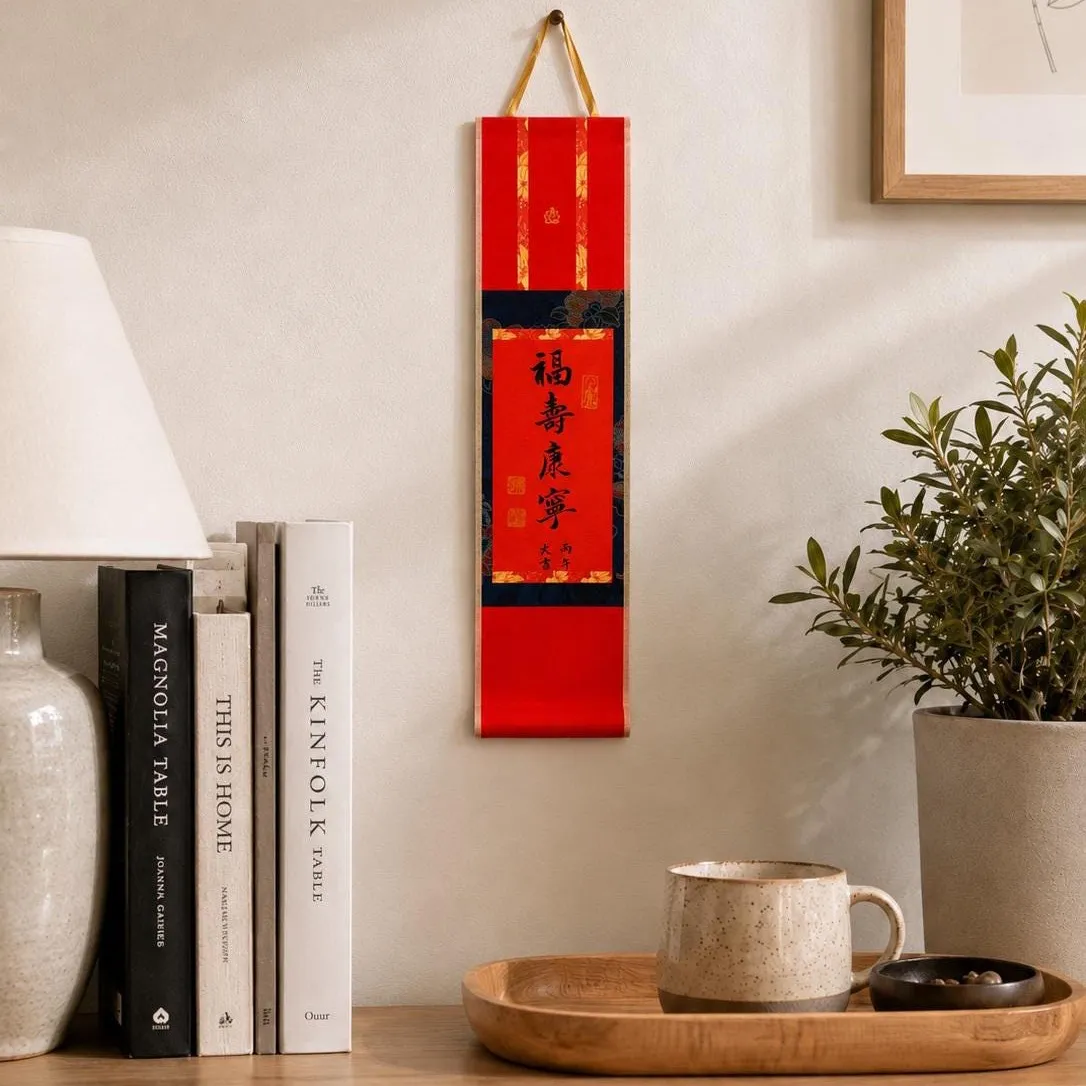
Photo shows a sample — yours will be brushed with 阖家欢乐, or any character you choose.
Wall Scroll — for walls & housewarmingsfrom $38→ -
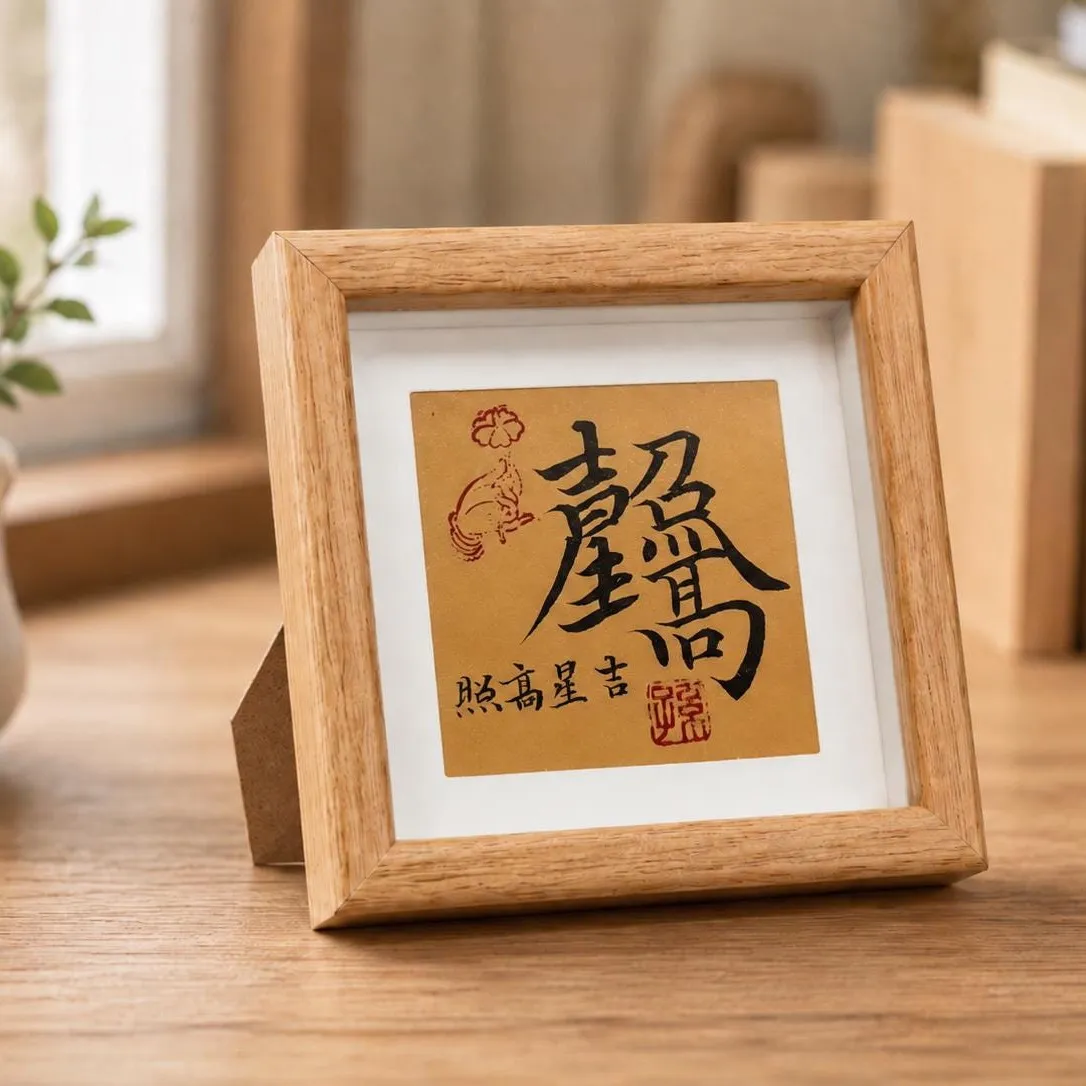
Photo shows a sample — yours will be brushed with 阖家欢乐, or any character you choose.
Desk Frame — for desks, studies & studiosfrom $44→ -
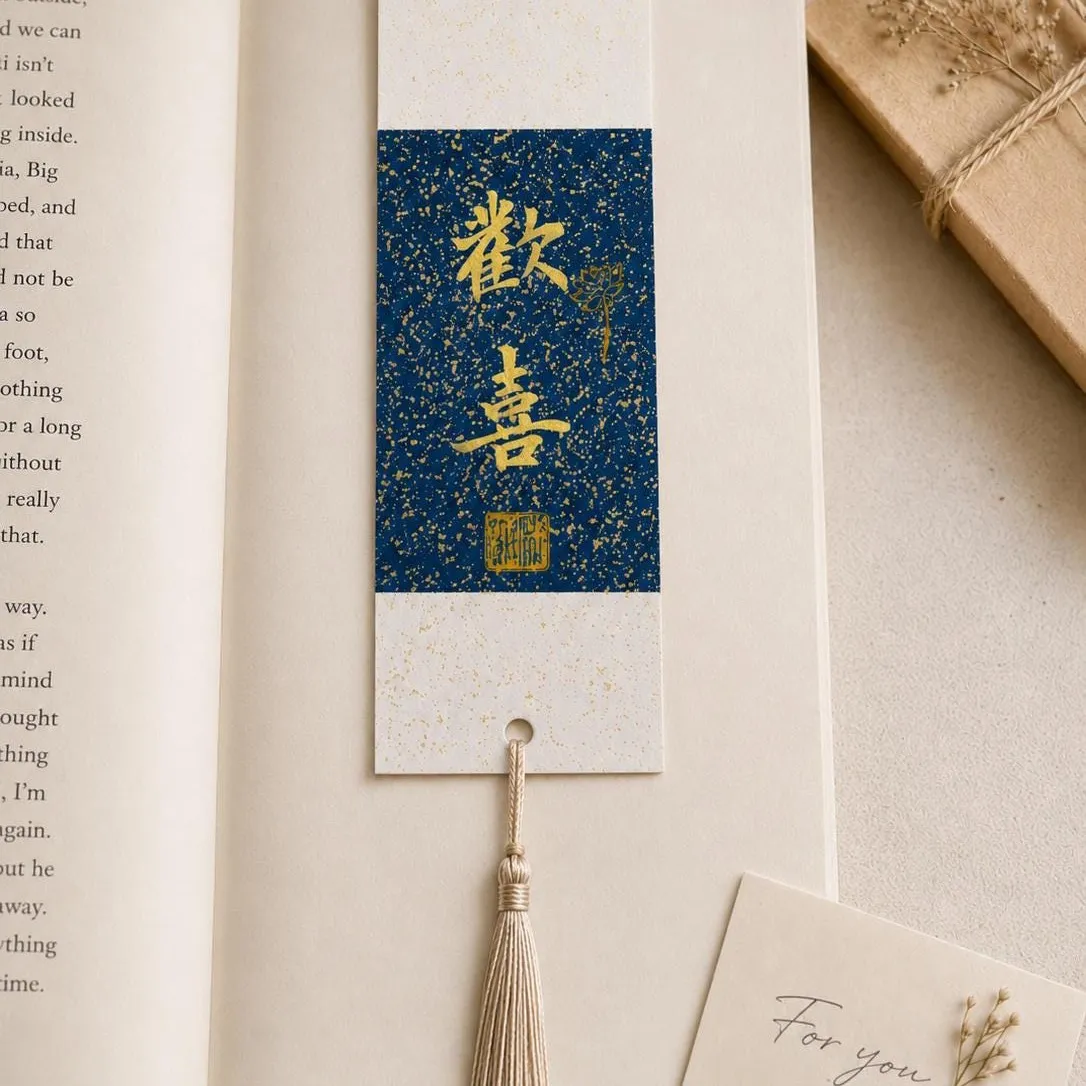
Photo shows a sample — yours will be brushed with 阖家欢乐, or any character you choose.
Bookmark — for readers & small thank-yousfrom $14→
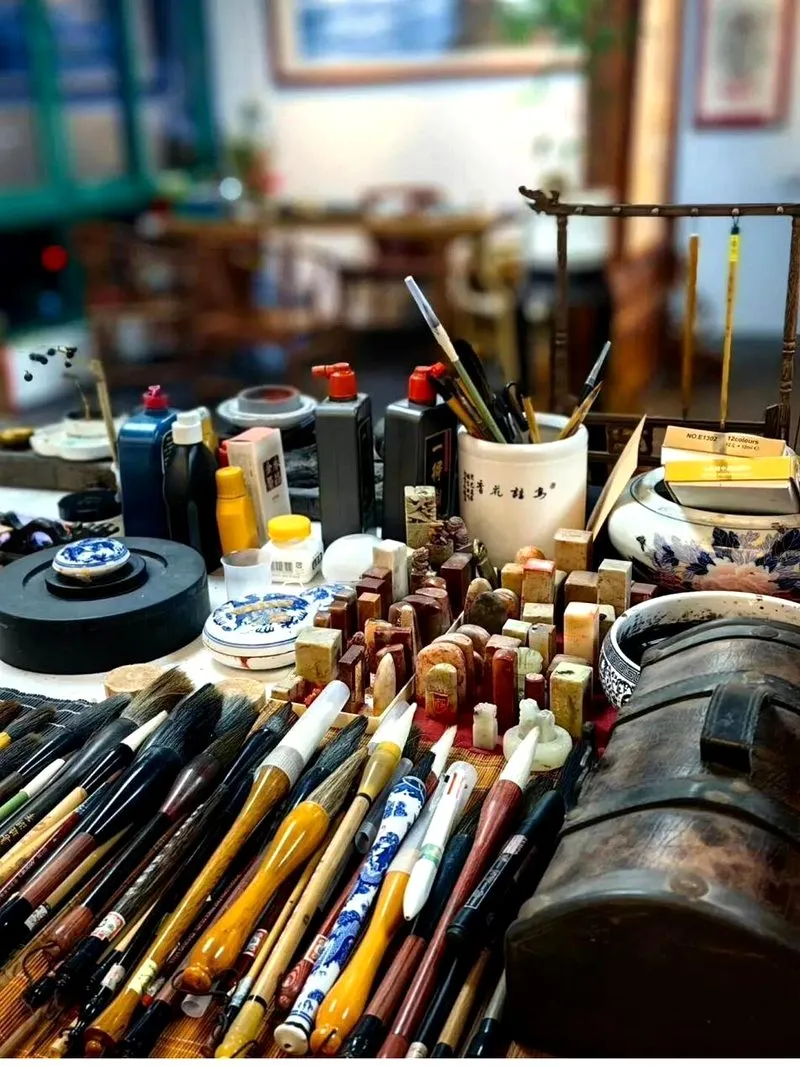
What people said after it arrived.
-
The item is fantastic. The customer service was genuine. Thanks!
— M.Verified purchase · from our Etsy shop reviews · -
They were great they gave me exactly what I asked for and then some. Thank you!!
— G.Verified purchase · from our Etsy shop reviews · -
It is well designed and customized. My daughter loves it. Amazing gift for family’s d friends
— S.Verified purchase · from our Etsy shop reviews ·
Each "阖家欢乐" is hand-brushed by FuBlessings on rice paper.
See 阖家欢乐 (Hé Jiā Huān Lè) on Etsy →