寿 (shòu) — Longevity · Long Life · Health and Vitality
A single character.
Of the Five Blessings listed in China’s oldest book of governance, longevity came first. Not wealth, not virtue, not peace of mind — time. The reasoning was simple: every other good thing in life requires years to unfold. 寿 is the character that asks for those years.
When a Chinese grandparent turns 70 or 80, the family throws a 寿宴 (longevity banquet). Pink dough peaches shaped like the fruit of immortality are stacked on platters. The character 寿 appears on banners, tableware, and the gift envelopes piled by the door. Calligraphers through the centuries created over a hundred distinct ways to write it — flowing, angular, knotted, looping — because one style never felt like enough for this particular wish.
A hand-brushed 寿 by Artist Lina Sun carries the weight of that tradition into a single piece of art. For a parent’s milestone birthday, a grandparent’s wall, or the person whose continued presence in your life you refuse to take for granted — this is the character that says: stay.
- longevity
- long life
- enduring years
- a life that lasts
- immortality Too absolute. 寿 is not about escaping death — it is about reaching old age with something intact.
- health Health is one piece of 寿, but you can be healthy in your thirties. 寿 is specifically about the accumulation of decades.
- survival Too bare. Survival is just lasting. 寿 is lasting with grace, with family around you, with years that were worth living.
The short arms are the point: these readings don’t reach it.
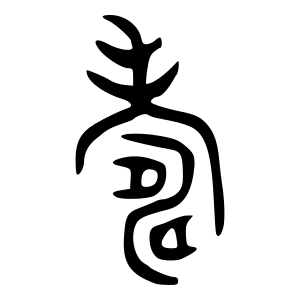
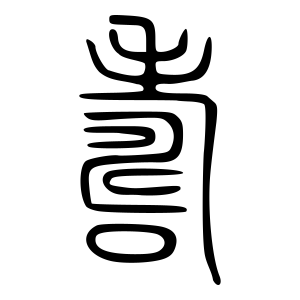
- 𠂉 / 士 an elder / a learned personThe upper portion traces back to a figure walking with a cane in the earliest oracle-bone forms — an old person still on their feet. In the simplified character, it reads as 士, the upright scholar or elder.
- 寸 measureThe radical for an inch, a measured length. Here it carries the idea of measuring something out — in this case, the long stretch of years a life can hold.
character
- 长寿 cháng shòu long life — the most direct expression of the wish
- 寿辰 shòu chén a milestone birthday — the celebration of years lived
- 寿宴 shòu yàn longevity banquet — the family gathering for an elder's milestone birthday
- 寿桃 shòu táo longevity peach — the pink dough peach served at birthday banquets
- 福寿 fú shòu blessing and long life — the most traditional pairing for elders
The Story Behind the Character
The earliest form of 寿 on oracle bones (甲骨文) shows a stooped figure walking with a cane — an old person, still moving. It wasn't a picture of frailty. It was a picture of endurance: someone who had lived long enough to need the cane and was still on their feet.
Through bronze inscriptions and seal script, the cane gradually disappeared and the character absorbed new components. By the time China's first dictionary defined it (说文解字, c. 100 CE), the entry read simply: "寿,久也" — longevity means lasting. Not just surviving, but persisting through time with something intact.
The most telling fact about 寿 is how many ways the Chinese wrote it. Over the centuries, calligraphers developed more than one hundred stylistic variations — the famous "百寿图" (hundred longevity chart). No other character received this treatment. It suggests that the wish for long life was so important, a single way of writing it felt insufficient.
Classical lines
- roughly 500 years
- c. 800 BCE 《诗经·小雅·天保》
- c. 800 BCE 《诗经·豳风·七月》
- c. 4th c. BCE 《尚书·洪范》
如南山之寿,不骞不崩。 May your life be like the southern mountains
never crumbling, never wearing away. — One of the oldest birthday wishes in any language, comparing a person's years to something geological.
跻彼公堂,称彼兕觥,万寿无疆。 They climb to the great hall, raise the rhinoceros-horn cup, and wish: long life without end.
From one of the oldest harvest poems in any language. The whole village gathers after the year's work, lifts a cup, and the toast is 寿 — boundless years. Three thousand years later, the birthday banquet still raises the same cup.
五福:一曰寿。 Of the Five Blessings, the first is long life.
In the canonical Chinese list of what makes a good life, longevity came first — not wealth, not power. Everything else needs time to unfold.
Why This Character Matters
寿 has more calligraphic variations than any other Chinese character — over a hundred distinct styles, collected in charts called 百寿图 that have been printed and displayed for centuries. Some versions look like flowing water, others like knotted trees. The sheer number tells you something: this is the wish the Chinese cared most about getting right.
In Chinese birthday tradition, the milestone ages — 60, 70, 80, and beyond — are called 寿辰 (shòuchén), and celebrating them is not optional. The family gathers, 寿桃 (longevity peaches, made from dough and dyed pink) are served, and the character 寿 appears on everything from banners to bowls. It's not morbid. It's the opposite: each decade survived is evidence that the family's collective luck and love are working. Giving 寿 at these milestones is less a wish and more an acknowledgment — you have lasted, and we are grateful.
寿 is one of the most culturally loaded characters in Chinese — it appears on birthday banquets, ceramics, and traditional art everywhere. A Chinese person seeing this tattoo would immediately associate it with wishing long life to elders. On a young person, it can feel slightly old-fashioned, like wearing your grandmother's jewelry — charming if intentional, odd if not.
Calligraphy Styles for Tattoos
- Regular script (楷书 kǎishū) Best for tattoos
The simplified 寿 has only 7 strokes, making it one of the most tattoo-friendly characters. Regular script keeps it clean and instantly recognizable. A strong choice for smaller placements.
- Running script (行书 xíngshū) Excellent for tattoos
Running script adds flowing energy to 寿 that suits its meaning of enduring life. The low stroke count means running script stays legible even at moderate sizes. One of the few characters where running script works at under 2 inches.
- Cursive script (草书 cǎoshū) Good for larger pieces
寿 has over a hundred historical calligraphic variations (百寿图), and cursive versions can be strikingly beautiful. At 3+ inches, a skilled calligrapher can draw on centuries of artistic tradition to create something unique.
Common Mistakes to Avoid
- Mixing elements from the simplified 寿 and traditional 壽 in one characterIntended: Either simplified 寿 (7 strokes) or traditional 壽 (14 strokes), not a hybrid
The simplified and traditional forms look very different. Combining strokes from both creates a character that doesn't exist in either system. Decide which form you want before the stencil is drawn and stick with it.
- Writing the bottom component 寸 with the dot (点) too far from the horizontal strokeIntended: 寿 with properly proportioned 寸 at the bottom
The bottom radical 寸 is small but precise — the dot must sit close to the intersection of the horizontal and vertical strokes. If it drifts, the character looks poorly constructed.
Notes for Your Tattoo Artist
7 strokes (simplified) or 14 strokes (traditional). The simplified form is unusually tattoo-friendly due to its low stroke count and open structure. Minimum size 1 inch for simplified, 2 inches for traditional. Key challenge: the upper and lower halves must share the vertical center line precisely.
A few characters live near "寿" but mean something quieter, sharper, or more specific. Here's how to tell them apart.
the years themselves — the time a life is given
the length of the road
Especially the 60th, 70th, or 80th — the birthdays that traditionally call for "寿." An honor as much as a gift.
- A Milestone BirthdayEspecially the 60th, 70th, or 80th — the birthdays that traditionally call for "寿." An honor as much as a gift.
- For the parents whose long lives have shaped your own. "寿" is the wish for many more good years.
- Get Well SoonA gentle wish for renewed health and quiet strength — for the people we want to keep with us.
- Just BecauseSometimes the most meaningful gift is the unexpected one — a wish for a long, full life, sent on no particular day.
Mom · Dad · Grandparent · Parent · Mother-in-law · Father-in-law · Boss · or yourself
Looking for a name? See Western names written in Chinese →
-
What does 寿 (shòu) mean?
寿 (shòu) is the Chinese character for longevity, long life, health and vitality. Of the Five Blessings listed in China's oldest book of governance, longevity came first. Not wealth, not virtue, not peace of mind — time. The reasoning was simple: every other good thing in life requires years to unfold. 寿 is the character that asks for those years. 寿 has more calligraphic variations than any other Chinese character — over a hundred distinct styles, collected in charts called 百寿图 that have been printed and displayed for centuries. Some versions look like flowing water, others like knotted trees. The sheer number tells you something: this is the wish the Chinese cared most about getting right.
-
What occasions is 寿 given for?
寿 is traditionally given for A Milestone Birthday, Mother's Day · Father's Day, Get Well Soon, Just Because. Especially the 60th, 70th, or 80th — the birthdays that traditionally call for "寿." An honor as much as a gift. For the parents whose long lives have shaped your own. "寿" is the wish for many more good years.
-
Is 寿 a good Chinese tattoo?
寿 is one of the most culturally loaded characters in Chinese — it appears on birthday banquets, ceramics, and traditional art everywhere. A Chinese person seeing this tattoo would immediately associate it with wishing long life to elders. On a young person, it can feel slightly old-fashioned, like wearing your grandmother's jewelry — charming if intentional, odd if not.
-
Who brushes the 寿 calligraphy?
Each 寿 (Shòu) is hand-brushed to order by Artist Lina Sun in ink on rice paper — never printed, never repeated.
Bring 寿 home — choose how you'd like it brushed.
-
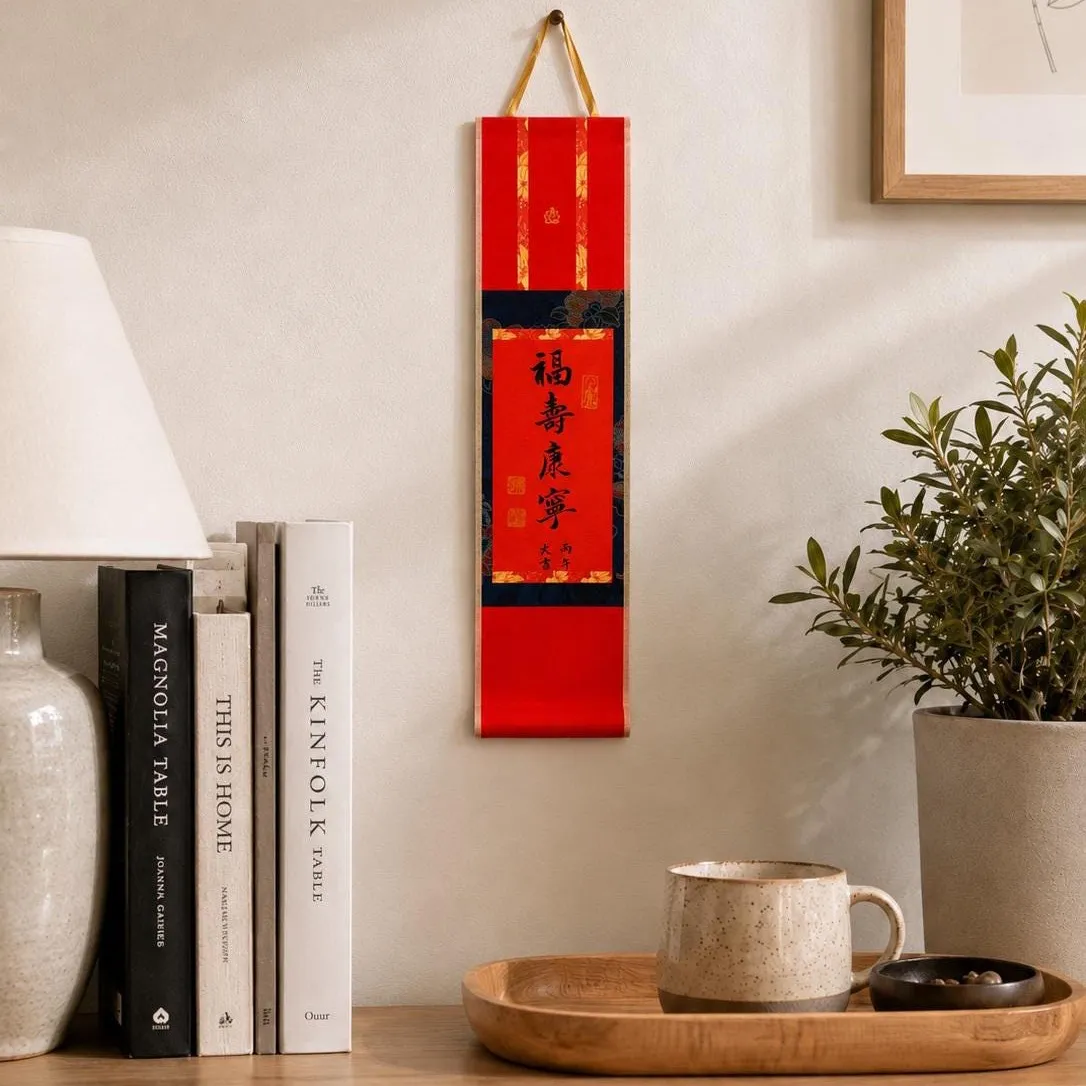
Photo shows a sample — yours will be brushed with 寿, or any character you choose.
Wall Scroll — for walls & housewarmingsfrom $38→ -
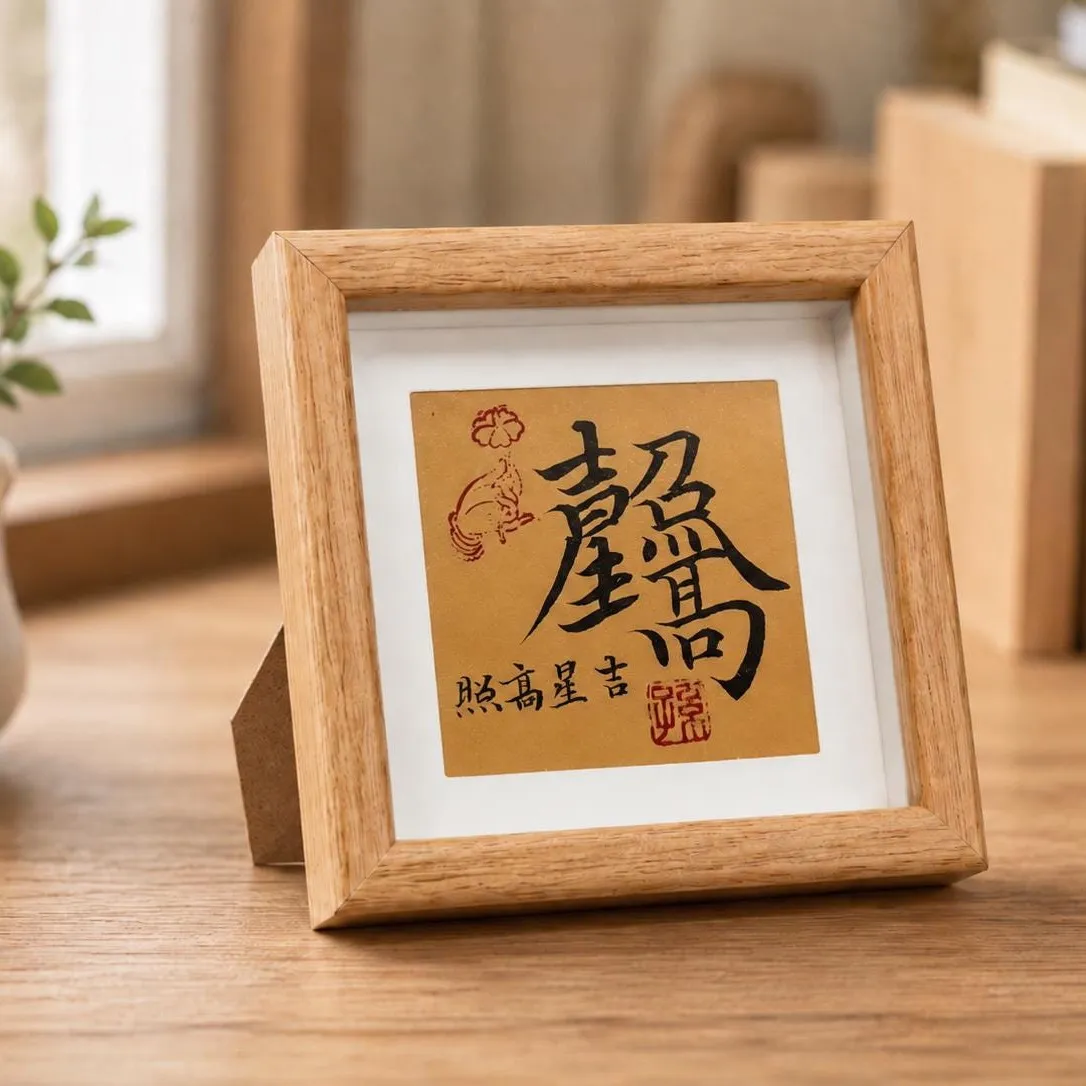
Photo shows a sample — yours will be brushed with 寿, or any character you choose.
Desk Frame — for desks, studies & studiosfrom $44→ -
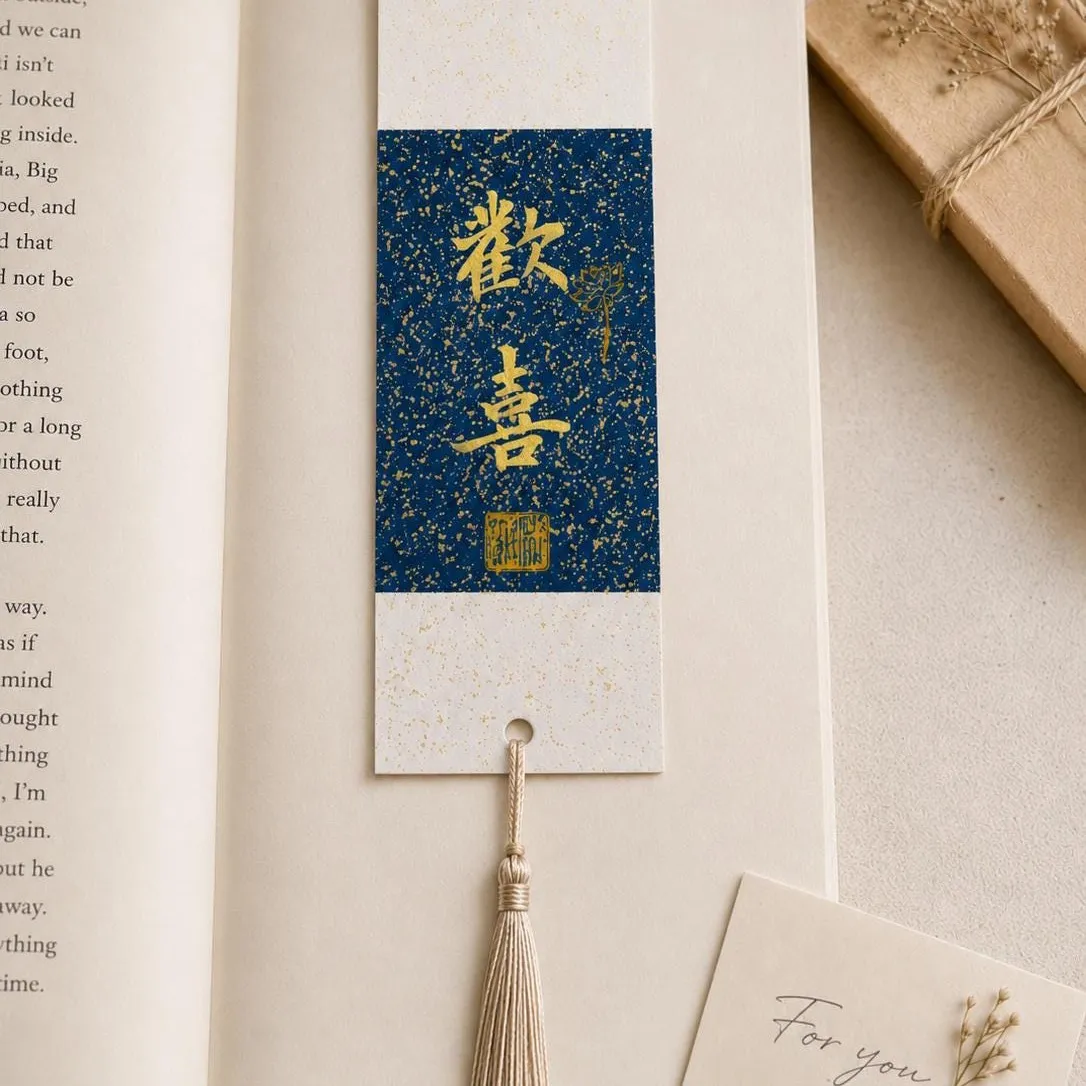
Photo shows a sample — yours will be brushed with 寿, or any character you choose.
Bookmark — for readers & small thank-yousfrom $17→
What people said after it arrived.
-
The item is fantastic. The customer service was genuine. Thanks!
— M.Verified purchase · from our Etsy shop reviews · -
They were great they gave me exactly what I asked for and then some. Thank you!!
— G.Verified purchase · from our Etsy shop reviews · -
It is well designed and customized. My daughter loves it. Amazing gift for family’s d friends
— S.Verified purchase · from our Etsy shop reviews ·
Each "寿" is hand-brushed by Artist Lina Sun on rice paper.
See 寿 (Shòu) on Etsy →