刚毅 (gāng yì) — Firm Resolve · Incorruptible in Good Fortune, Undeterred in Adversity
A two-character word, not a single character.
刚毅 names a character that neither of its components names alone. See 刚 → names the interior that cannot be moved by inducement — by wealth that offers a shortcut, by the desire for approval, by pressure that makes accommodation look reasonable. See 毅 → names the determination that keeps going when conditions are hard — the commitment that holds when stopping would be understandable. 刚毅 is the person who is neither bought off by comfort nor worn down by adversity. In Chinese biographical writing, 为人刚毅 is how a historian summarizes a career that proved both: incorruptible on the way up, indefatigable on the way down.
These qualities arrive as different tests, at different moments. The temptation that defeats 刚 comes when things are going well — when accommodation is easy and the cost of principle is invisible. The pressure that defeats 毅 comes when things are going badly — when the work is hard and the exit is available. A person can hold firmly (刚) but crack under sustained difficulty; or persist doggedly (毅) but yield to the right inducement. The compound is the name for the person who proved both qualities across enough time to make the verdict clear — which is why 刚毅 rather than either character alone has traditionally named a father’s, husband’s, or mentor’s full record.
A hand-brushed 刚毅 by FuBlessings gives the recognition its form — the blade holding its edge against the mountain’s weather, the boar running straight toward what it is running toward. For the father whose years were neither softened by success nor broken by difficulty, the husband whose commitment held in both the easy periods and the hard ones, the boss whose professional record speaks for itself across the full range of what a working life can ask: this is the gift that names the two-part proof that only long observation can deliver.
The Story Behind the Character
The traditional script of 剛 places a mountain ridge (冈, gāng) beside a blade (刂): the quality of the cutting edge that holds its form against every condition the mountain encounters. 毅 puts a different image forward — 豕 (wild boar) beneath a halberd (殳), the animal that early Chinese natural history described as charging directly, without deviation, even when wounded. One names the interior that cannot be moved; the other names the will that cannot be stopped. The characters existed independently for centuries, but the Analects locked them together: Confucius listed 刚 and 毅 as the first two of four qualities that approach 仁 — naming them as a pair, which is how they have traveled ever since.
The pairing answers a precise question: how does a commitment fail? It fails in two directions. In good times, when the inducements to compromise are greatest — the bribe, the easier path, the social pressure to accommodate — the interior softens (lack of 刚). In hard times, when the cost of continuing is highest — the setback, the sustained difficulty, the year that offers nothing — the determination collapses (lack of 毅). 刚毅 covers both failure modes. Xunzi, in his chapter on not-compromising (不苟), expanded on this: 刚强猛毅 is the quality that holds under every test and keeps examining itself — not stubbornness but the systematic refusal to let the wrong things move you, in either direction. That is what the pair names.
By the time the paired compound appeared in Chinese biographical writing, 刚毅 had become the standard two-character summary for the official who had cleared both tests: neither bought by faction nor broken by adversity. The historical biographies (史传) use the phrase 为人刚毅 — "his character was 刚毅" — as a compact index of both qualities proved across a career. It is not the same as 勇 (courage in the moment of danger), not the same as 德 (the broad accumulation of moral character), not the same as 担当 (the act of stepping in): it names the two types of durability that only a long record can verify.
Classical lines
- about a century
- c. 300 BCE 《礼记·中庸》
- c. 280–230 BCE 《荀子·不苟》
- c. 200 BCE 《礼记·儒行》
刚强猛毅,靡所不信,非骄暴也。 Firm, strong, fierce, resolute
letting nothing go unexamined — this is not arrogance. — Xunzi defending the quality against its most common misreading: what looks like stubbornness from outside is, from inside, a sustained practice. 刚强猛毅 names not a posture but a method — the maintenance of principled interior firmness (刚) combined with determined forward motion (毅), applied consistently rather than selectively. The non-arrogance qualification is the key: 刚毅 has nothing to do with needing to be right. It has to do with not being moved by the wrong things.
儒有可亲而不可劫也,可近而不可迫也,可杀而不可辱也。 A person of cultivation can be approached but not coerced; can be befriended but not pressured; can be killed but not shamed.
Three escalating challenges with the same answer. The first two describe 刚 — the interior that cannot be moved by inducement or force short of death. The third describes 毅 at its ultimate: the resolve that holds not because death is irrelevant but because integrity survives it. The Book of Rites is describing 刚毅 at full scale — the person who has cleared both tests, from the mild to the extreme.
强哉矫!国有道,不变塞焉,强哉矫!国无道,至死不变,强哉矫! What resilience, what uprightness!
In a state with good governance, not abandoning one's principles; what resilience! In a state without good governance, holding to them until death; what resilience! — The Zhongyong's definition of genuine strength as the refusal to let the external environment alter the interior position. In favorable circumstances (国有道) the failure mode is 刚 — the temptation to relax when accommodation is easy. In hostile circumstances (国无道) the failure mode is 毅 — the temptation to give up when the cost is existential. The Zhongyong names the same person under both conditions and finds them unchanged. This is 刚毅.
Why This Character Matters
为人刚毅 — "his character was 刚毅" — appears as a compact summary phrase in Chinese biographical literature across twenty centuries, from the Han dynasty histories through Ming and Qing biographies of officials and scholars. It is not a general compliment. The phrase appears specifically when the biographer wants to convey that a person cleared both tests: resisted factional corruption (刚) and continued difficult work through political adversity, exile, or repeated failure (毅). Chinese official biographies distinguish this combination precisely because the two qualities are independent — a man could be incorruptible (刚) but fragile under setbacks, or indefatigable (毅) but susceptible to bribery. 刚毅 names the compound that both halves are present and demonstrated.
In Chinese official life, the compound named what a career had to survive in two directions. The 刚 dimension was tested in advancement — whether an official refused factional alignment, declined corrupt arrangements, and held a principled position when accommodation was the path of least resistance. The 毅 dimension was tested in adversity — through political demotion, exile to distant postings, or the long stretches of unrewarded work that characterized principled officials before and after their periods of influence. An official remembered as 刚毅 had proved incorruptibility under pressure to yield and determination through pressure to stop. The compound appears in historical biographies not as generic praise but as a specific character judgment: this person demonstrated both types of intactness, across the full career arc, in different circumstances and opposite directions. 他很刚毅 carries the same precision today — not fierce or unyielding in manner, but proved incorruptible and indefatigable in the record.
For Father's Day when the gift should name the compound interior quality that makes a man's years genuinely reliable: not the principled firmness (刚) that kept his standard consistent, not the resolve (毅) that held through difficulty — but both together, covering the two directions from which a commitment typically fails.
- For Father's Day when the gift should name the compound interior quality that makes a man's years genuinely reliable: not the principled firmness (刚) that kept his standard consistent, not the resolve (毅) that held through difficulty — but both together, covering the two directions from which a commitment typically fails. 刚毅 is the recognition for the father who was neither bought off by comfort nor worn down by adversity. Where 刚 alone names the interior that didn't bend and 毅 alone names the determination that didn't stop, 刚毅 names the person who cleared both tests across the years.
- For the milestone birthday of a husband or boss whose record demonstrates a specific pattern in two registers: when the conditions were favorable and accommodation would have been easy, the standard held (刚); when the conditions were hard and stopping would have been understandable, the commitment continued (毅). 刚毅 is the compound recognition for the person whose years have demonstrated both types of intactness — more complete than 刚 or 毅 alone and more specific than 德 (accumulated character overall): the gift that names what the full arc has proved.
Looking for a name? See Western names written in Chinese →
-
What does 刚毅 (gāng yì) mean?
刚毅 (gāng yì) is a two-character Chinese word for firm resolve, incorruptible in good fortune, undeterred in adversity. 刚毅 names a character that neither of its components names alone. See 刚 → names the interior that cannot be moved by inducement — by wealth that offers a shortcut, by the desire for approval, by pressure that makes accommodation look reasonable. See 毅 → names the determination that keeps going when conditions are hard — the commitment that holds when stopping would be understandable. 刚毅 is the person who is neither bought off by comfort nor worn down by adversity. In Chinese biographical writing, 为人刚毅 is how a historian summarizes a career that proved both: incorruptible on the way up, indefatigable on the way down. 为人刚毅 — "his character was 刚毅" — appears as a compact summary phrase in Chinese biographical literature across twenty centuries, from the Han dynasty histories through Ming and Qing biographies of officials and scholars. It is not a general compliment. The phrase appears specifically when the biographer wants to convey that a person cleared both tests: resisted factional corruption (刚) and continued difficult work through political adversity, exile, or repeated failure (毅). Chinese official biographies distinguish this combination precisely because the two qualities are independent — a man could be incorruptible (刚) but fragile under setbacks, or indefatigable (毅) but susceptible to bribery. 刚毅 names the compound that both halves are present and demonstrated.
-
What occasions is 刚毅 given for?
刚毅 is traditionally given for Father's Day, Birthday. For Father's Day when the gift should name the compound interior quality that makes a man's years genuinely reliable: not the principled firmness (刚) that kept his standard consistent, not the resolve (毅) that held through difficulty — but both together, covering the two directions from which a commitment typically fails. 刚毅 is the recognition for the father who was neither bought off by comfort nor worn down by adversity. Where 刚 alone names the interior that didn't bend and 毅 alone names the determination that didn't stop, 刚毅 names the person who cleared both tests across the years. For the milestone birthday of a husband or boss whose record demonstrates a specific pattern in two registers: when the conditions were favorable and accommodation would have been easy, the standard held (刚); when the conditions were hard and stopping would have been understandable, the commitment continued (毅). 刚毅 is the compound recognition for the person whose years have demonstrated both types of intactness — more complete than 刚 or 毅 alone and more specific than 德 (accumulated character overall): the gift that names what the full arc has proved.
-
Who brushes the 刚毅 calligraphy?
FuBlessings hand-brushes each 刚毅 (Gāng Yì) to order, in ink on rice paper — never printed, never repeated.
Bring 刚毅 home — choose how you'd like it brushed.
-
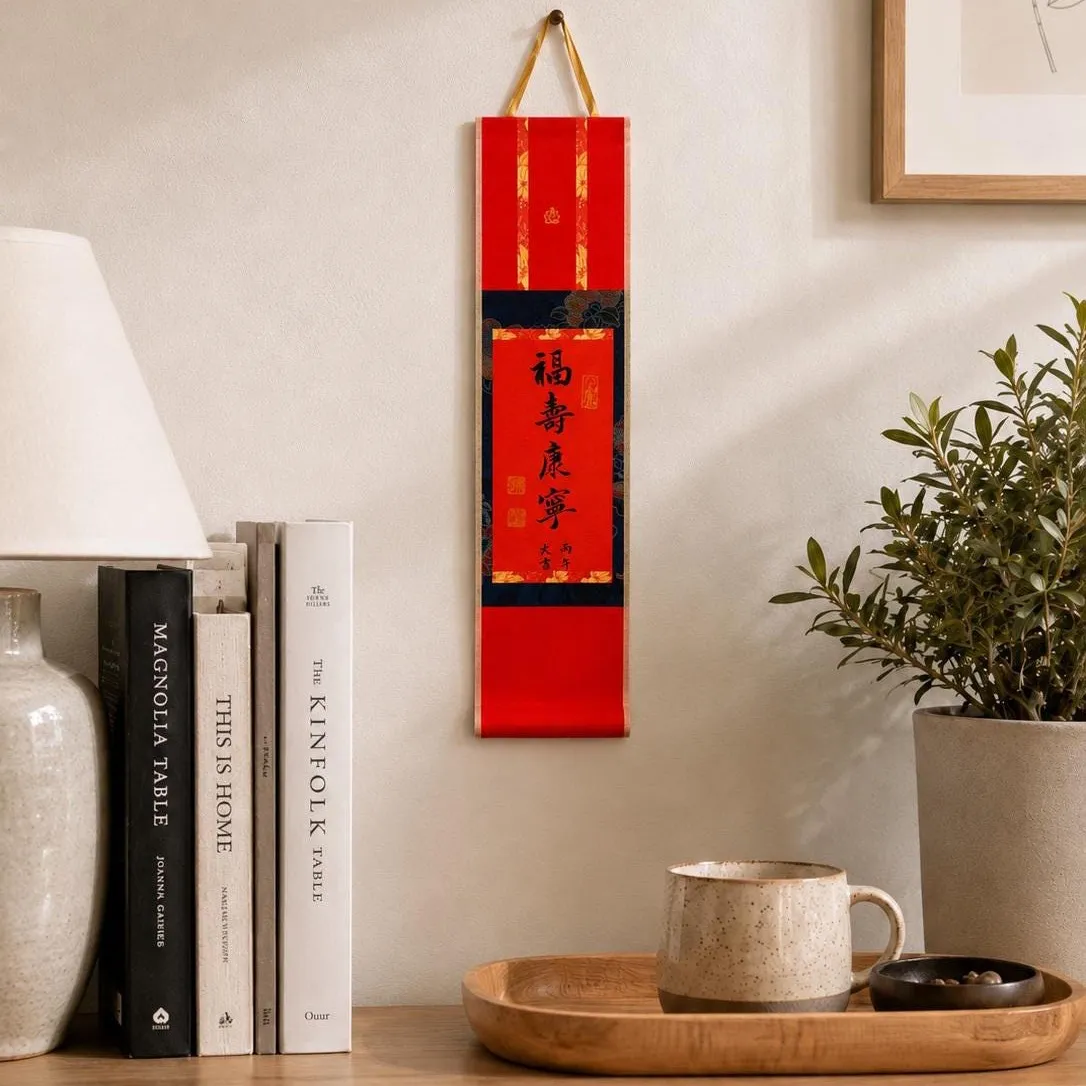
Photo shows a sample — yours will be brushed with 刚毅, or any character you choose.
Wall Scroll — for walls & housewarmingsfrom $38→ -
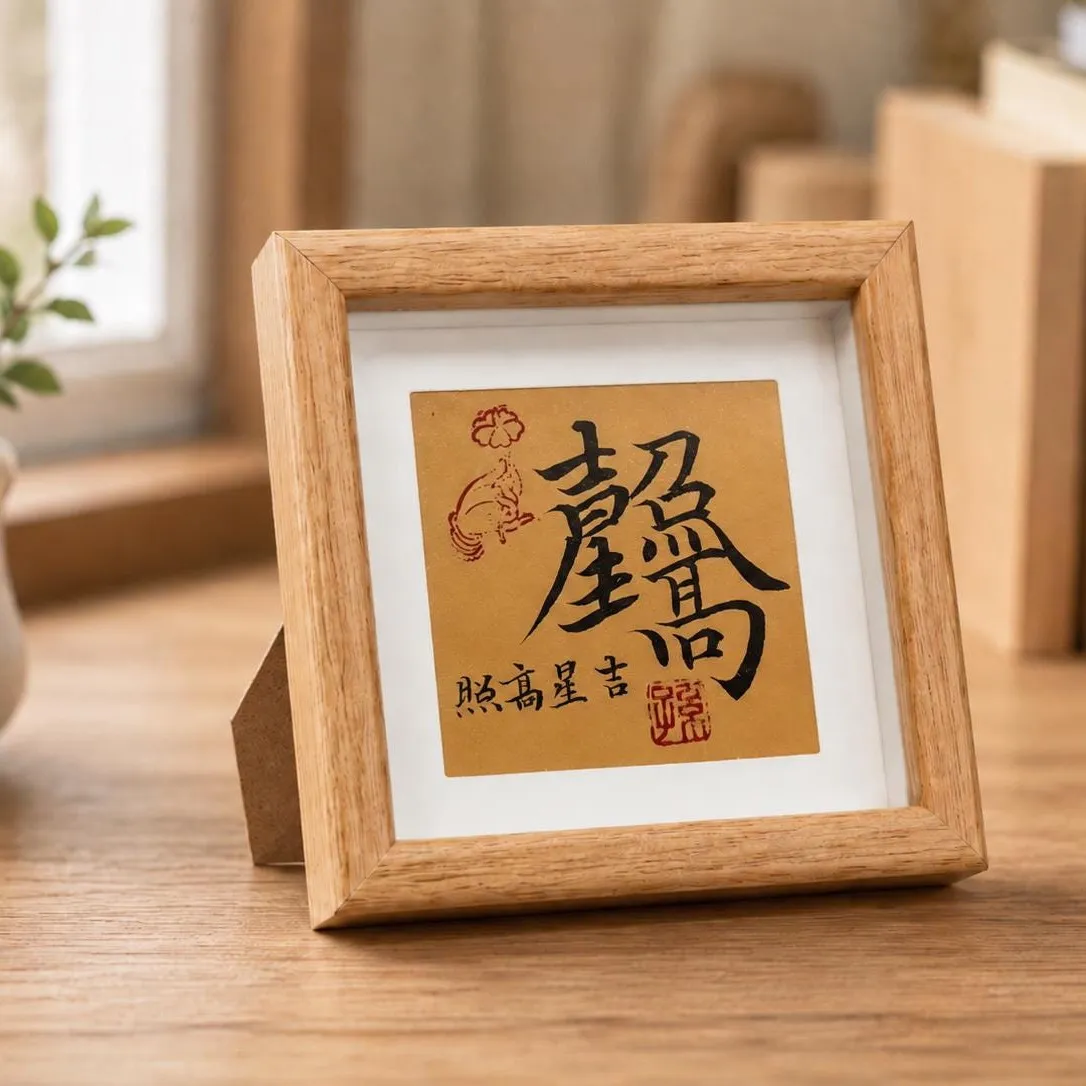
Photo shows a sample — yours will be brushed with 刚毅, or any character you choose.
Desk Frame — for desks, studies & studiosfrom $44→ -
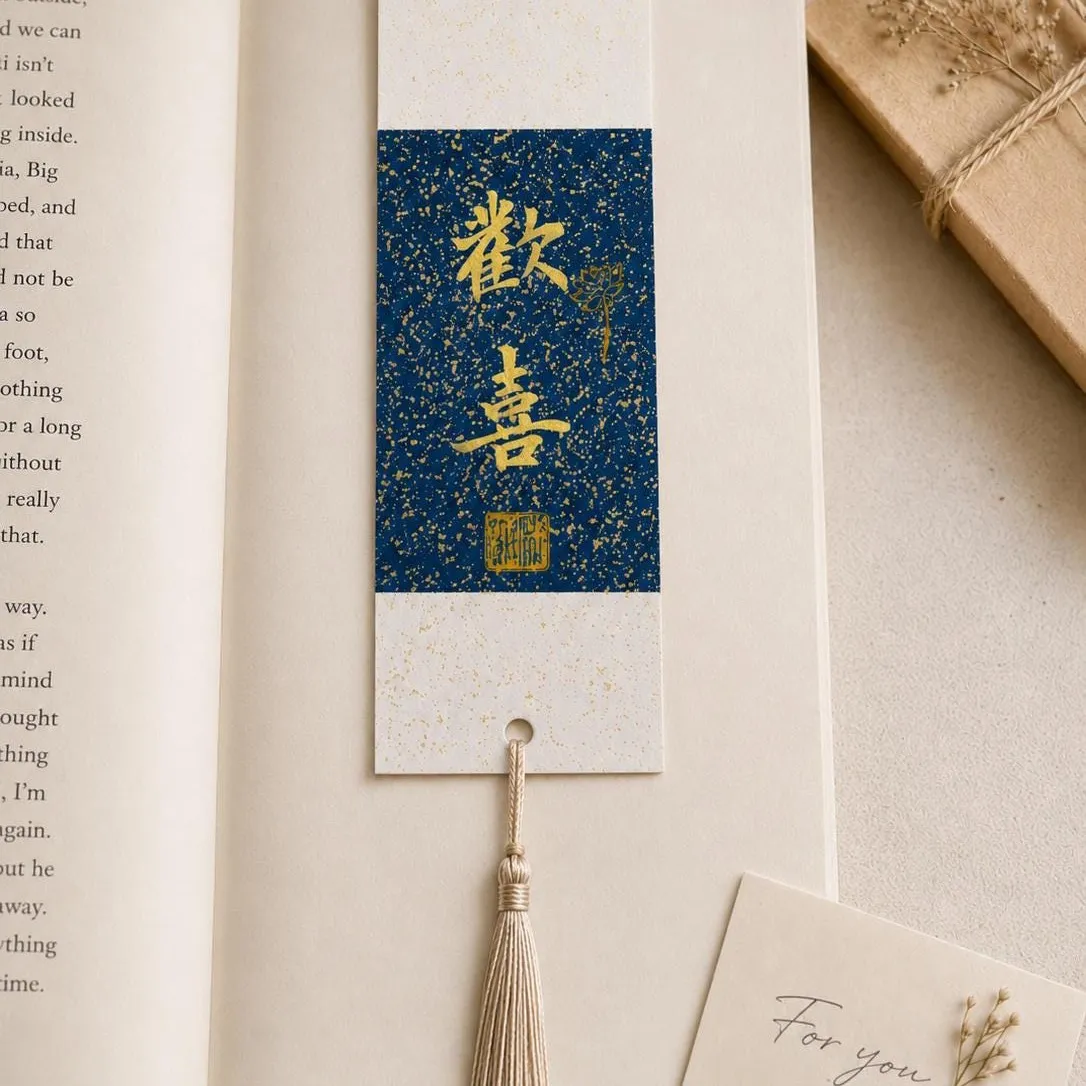
Photo shows a sample — yours will be brushed with 刚毅, or any character you choose.
Bookmark — for readers & small thank-yousfrom $14→

What people said after it arrived.
-
The item is fantastic. The customer service was genuine. Thanks!
— M.Verified purchase · from our Etsy shop reviews · -
They were great they gave me exactly what I asked for and then some. Thank you!!
— G.Verified purchase · from our Etsy shop reviews · -
It is well designed and customized. My daughter loves it. Amazing gift for family’s d friends
— S.Verified purchase · from our Etsy shop reviews ·
Each "刚毅" is hand-brushed by FuBlessings on rice paper.
See 刚毅 (Gāng Yì) on Etsy →