仁 (rén) — Benevolence · Humaneness · Kindness
A single character.
仁 is the first of the Five Confucian Virtues (仁义礼智信) and the one that makes the others coherent. Where 德 names a person’s accumulated moral character and 敬 names the regard offered in a relationship, 仁 names something more foundational: the orientation toward other people that underlies all of it. The character’s oldest form — a person beside two strokes — argued this before philosophy did: virtue is what happens between people, in the space of their encounter.
Confucius made 仁 the center of the Analects not by defining it once and moving on, but by returning to it from different angles — because the same word needed to enter different lives differently. The most compressed definition: 仁者爱人, “the benevolent person loves people.” The most traveled formulation: 己所不欲,勿施于人 — Confucius’s most widely traveled sentence, cited in international ethics discussions and inscribed in institutional settings on several continents. What both share is directionality: 仁 is not a private achievement but a disposition that faces outward. In everyday speech, 仁慈, 仁爱, and 仁义 all carry that forward — words for the person who has been consistently turned toward others.
A hand-brushed 仁 by FuBlessings is for the person — a father, grandparent, or mentor — whose way of treating the people around them has been the example worth absorbing. It names something specific: not their role or their provision, but the orientation toward others that made their presence matter in a way that cannot be adequately described by any other word in the catalog.
- benevolence
- humaneness
- kindness toward others
- compassion
- love Love can be private and inward. 仁 is specifically relational and outward-facing — 仁者爱人, the benevolent person loves people, with people as the object.
- niceness Too soft and surface-level. 仁 is the governing virtue Confucius returned to more than any other — a deep orientation of character, not pleasant manners.
- charity Charity is an act of giving. 仁 is the disposition beneath the act — the standing turn toward others from which generous acts follow.
The short arms are the point: these readings don’t reach it.
- 亻 personThe standing-person radical, the side-form of 人. It places a human being at the heart of the character — 仁 is a quality that exists in people, in how they face one another.
- 二 twoThe number two. Person plus two: virtue is not a private possession but something that happens between people. The Shuowen defined 仁 as 親 — closeness — and the two strokes are the second person the first turns toward.
character
- 仁爱 rén ài benevolence and love — caring kindness directed at others
- 仁慈 rén cí kindheartedness — mercy and gentleness toward people
- 仁义 rén yì benevolent and righteous — the character earned by years of fairness and generosity
- 仁者 rén zhě a person of benevolence — one who has made 仁 their orientation
- 仁心 rén xīn a benevolent heart — the inner disposition of kindness
The Story Behind the Character
The bronze inscription form of 仁 sets two horizontal strokes beside the character for person (人). The Han lexicographer's definition in Shuowen Jiezi was direct: 仁,親也。从人二 — "Benevolence is closeness. It consists of person and two." Before philosophy arrived with its abstractions, the character made its argument visually: virtue is what happens in the space between people. Not an interior state, but a spatial fact — proximity, the willingness to be near.
Confucius returned to 仁 more often than to any other concept in the Analects. When students asked what it was, they received different answers, because the teacher understood that the same word needed to enter different lives at different angles. His most compressed definition: 仁者爱人 — "the benevolent person loves people." His most famous formulation came when Fan Chi pressed him: 己所不欲,勿施于人 — "What you would not want done to yourself, do not do to others." Both answers have the same structure: 仁 begins in the direction of attention, the turn toward the other person.
The Shuowen definition — "closeness" — preserves the most important thing about 仁 that abstract translations like "benevolence" can lose: it is not a quality you have in isolation. Confucius made this explicit when a student asked whether 仁 was a distant ideal: 我欲仁,斯仁至矣 — "When I want it, it is already here." The wanting is itself the beginning of the proximity.
Classical lines
- about a century
- c. 400 BCE 《论语·颜渊》
- c. 400 BCE 《论语·卫灵公》
- c. 400 BCE 《论语·述而》
仁者爱人。 The benevolent person loves people.
Confucius's most direct definition, given when Fan Chi asked about 仁. The simplicity is the point: not a philosophical programme but a direction of attention. Everything else follows from turning to face the other person.
己所不欲,勿施于人。 What you would not want done to yourself, do not do to others.
Confucius's most widely traveled sentence: cited in international ethics discussions, inscribed in institutional settings on several continents, and the line most likely to have reached a wall that classical Chinese literature has ever reached. The simplest formulation of 仁 — not a doctrine but a daily practice.
仁远乎哉?我欲仁,斯仁至矣。 Is benevolence so far away? When I want it, it is already here.
Confucius's answer to the student who assumed 仁 was a distant achievement. Its accessibility is part of the claim: the wanting is itself the beginning of the proximity.
Why This Character Matters
仁 is the first and governing virtue among the Five Confucian Constants (仁义礼智信 — benevolence, righteousness, ritual propriety, wisdom, and faithfulness). Its priority is structural: the other four make sense only when 仁 is already present, because without the basic orientation toward other people, righteousness becomes coercion, ritual becomes performance, wisdom becomes manipulation, and faithfulness has no object. Confucian political thought held that a ruler without 仁 would eventually lose the Mandate of Heaven — governance without love for the governed could not be legitimate.
In everyday modern Chinese, the derivatives of 仁 track the same outward direction: 仁慈 (kindheartedness), 仁爱 (caring and loving), 仁义 (benevolent and righteous — the phrase a person earns when they have been fair and generous over years). The compound 仁义道德, sometimes used ironically for empty moralizing, nonetheless preserves the pairing that Confucian thought insisted upon: 仁 (benevolence, the inner orientation) alongside 义 (righteousness, the outward action). The two together, not either alone.
仁 reads to a Chinese eye as weighty and high-minded — it is the central virtue of Confucian thought and a common element in given names (仁杰, 志仁). As a tattoo it signals a commitment to kindness and good character rather than a mood, which gives it real depth. Because it is so clean and few-stroked, the calligraphy quality is everything: a well-brushed 仁 looks elegant, a clumsy one looks plain.
Calligraphy Styles for Tattoos
- Regular script (楷书 kǎishū) Best for tattoos
仁 is only 4 strokes — the narrow person radical 亻 beside two short horizontal lines. Its simplicity makes it very tattoo-friendly, and regular script keeps the spacing between the two lines balanced. Works cleanly even at smaller sizes; minimum 1 inch.
- Running script (行书 xíngshū) Excellent for tattoos
With so few strokes, running script keeps 仁 fully legible while adding a relaxed, hand-brushed quality. One of the characters where running script reads well even under 2 inches.
- Seal script (篆书 zhuànshū) Good for a distinctive piece
仁's clean, simple structure suits seal script, where the person radical and the two lines take on rounded, balanced curves. A good choice for a smaller, refined design with a calligrapher who works in seal forms.
Common Mistakes to Avoid
- Spacing the two horizontal strokes 二 unevenlyIntended: 仁 with the upper line shorter and the lower line longer, evenly set
The right side is 二 (two), and convention makes the lower stroke slightly longer than the upper. If they are equal length or crammed together, the character looks unbalanced — in such a simple character, every stroke's proportion is visible.
- Writing the person radical 亻 too wide so it crowds the 二Intended: 亻 kept narrow on the left, with room for the two lines on the right
亻 is two strokes and should stay slim. If it spreads, the two horizontal lines lose their space and the left-right balance breaks. With only 4 strokes total, there is no room to hide a proportion error.
Notes for Your Tattoo Artist
4 strokes. Deceptively simple — the whole effect rests on proportion. Keep 亻 narrow and upright on the left (a slanting stroke plus a vertical), and set the two horizontal lines on the right with the lower one longer than the upper, evenly spaced. With so few strokes there is nowhere to hide, so stroke weight and spacing must be precise. Suits small placements down to about 1 inch.
A few characters live near "仁" but mean something quieter, sharper, or more specific. Here's how to tell them apart.
the broad orientation toward all people — the governing virtue
love directed at someone in particular — warm, specific, often intimate
the disposition of facing toward others — benevolence as character
goodness measured in conduct — being good, doing right
the single foundational virtue: the turn toward other people
the whole of a person's accumulated moral character — virtue in sum
At a milestone birthday, 仁 names not the good fortune wished for but the quality already demonstrated.
- At a milestone birthday, 仁 names not the good fortune wished for but the quality already demonstrated. Most birthday characters are prospective — they wish for years or health ahead. 仁 is retrospective: a recognition of how this person has oriented themselves toward the people around them over a lifetime. The gift for someone whose example has been the long lesson.
- For Father's Day, 仁 names the most enduring quality of paternal presence — not provision or protection but the consistent orientation toward family that makes a father's conduct worth emulating. Where 德 names accumulated character and 敬 names the respect due, 仁 names the relational facing-toward that underlies both: the ongoing choice to love the people around you.
Grandparent · Dad · Boss · or yourself
Looking for a name? See Western names written in Chinese →
-
What does 仁 (rén) mean?
仁 (rén) is the Chinese character for benevolence, humaneness, kindness. 仁 is the first of the Five Confucian Virtues (仁义礼智信) and the one that makes the others coherent. Where 德 names a person's accumulated moral character and 敬 names the regard offered in a relationship, 仁 names something more foundational: the orientation toward other people that underlies all of it. The character's oldest form — a person beside two strokes — argued this before philosophy did: virtue is what happens between people, in the space of their encounter. 仁 is the first and governing virtue among the Five Confucian Constants (仁义礼智信 — benevolence, righteousness, ritual propriety, wisdom, and faithfulness). Its priority is structural: the other four make sense only when 仁 is already present, because without the basic orientation toward other people, righteousness becomes coercion, ritual becomes performance, wisdom becomes manipulation, and faithfulness has no object. Confucian political thought held that a ruler without 仁 would eventually lose the Mandate of Heaven — governance without love for the governed could not be legitimate.
-
What occasions is 仁 given for?
仁 is traditionally given for Birthday, Father's Day. At a milestone birthday, 仁 names not the good fortune wished for but the quality already demonstrated. Most birthday characters are prospective — they wish for years or health ahead. 仁 is retrospective: a recognition of how this person has oriented themselves toward the people around them over a lifetime. The gift for someone whose example has been the long lesson. For Father's Day, 仁 names the most enduring quality of paternal presence — not provision or protection but the consistent orientation toward family that makes a father's conduct worth emulating. Where 德 names accumulated character and 敬 names the respect due, 仁 names the relational facing-toward that underlies both: the ongoing choice to love the people around you.
-
Is 仁 a good Chinese tattoo?
仁 reads to a Chinese eye as weighty and high-minded — it is the central virtue of Confucian thought and a common element in given names (仁杰, 志仁). As a tattoo it signals a commitment to kindness and good character rather than a mood, which gives it real depth. Because it is so clean and few-stroked, the calligraphy quality is everything: a well-brushed 仁 looks elegant, a clumsy one looks plain.
-
Who brushes the 仁 calligraphy?
FuBlessings hand-brushes each 仁 (Rén) to order, in ink on rice paper — never printed, never repeated.
Bring 仁 home — choose how you'd like it brushed.
-
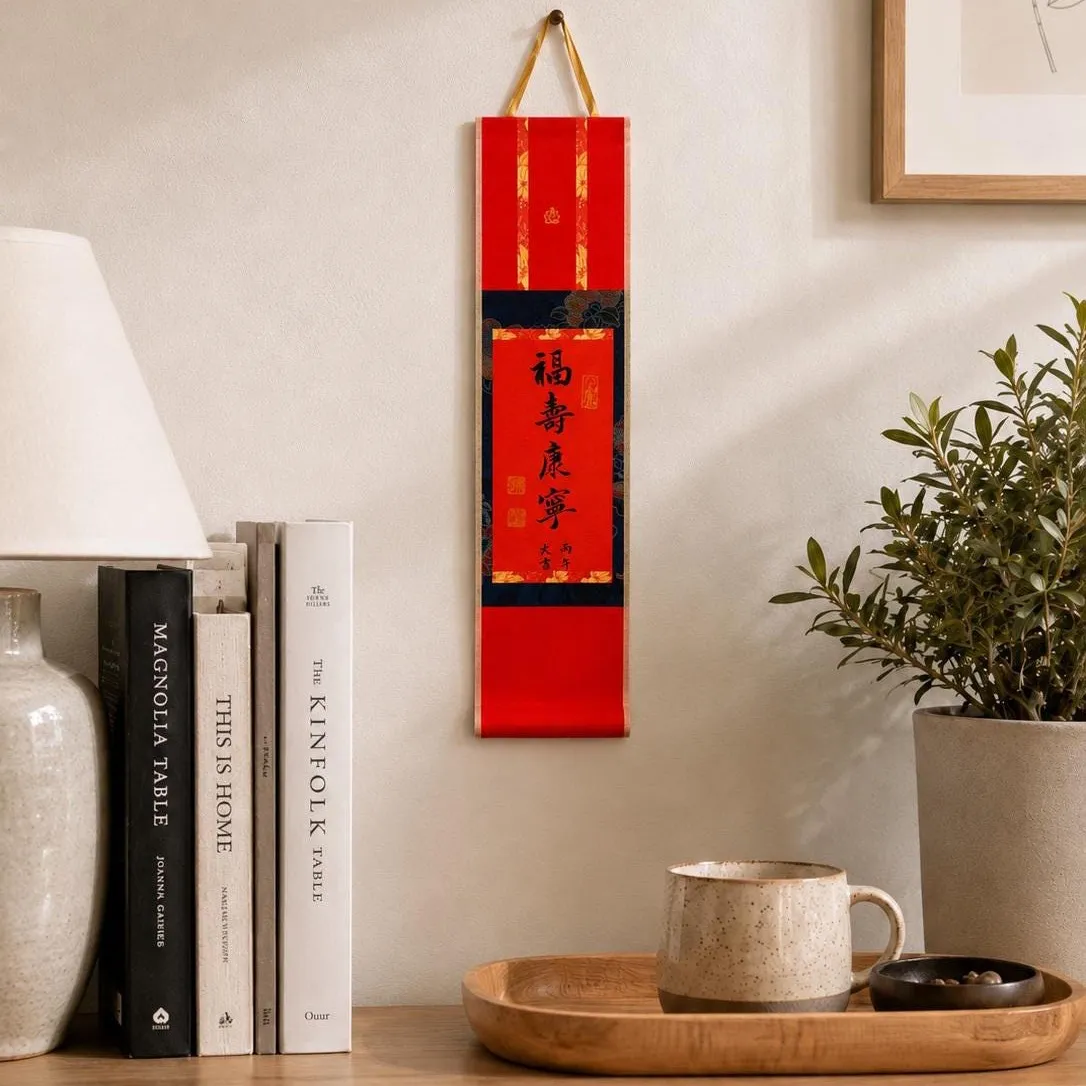
Photo shows a sample — yours will be brushed with 仁, or any character you choose.
Wall Scroll — for walls & housewarmingsfrom $38→ -
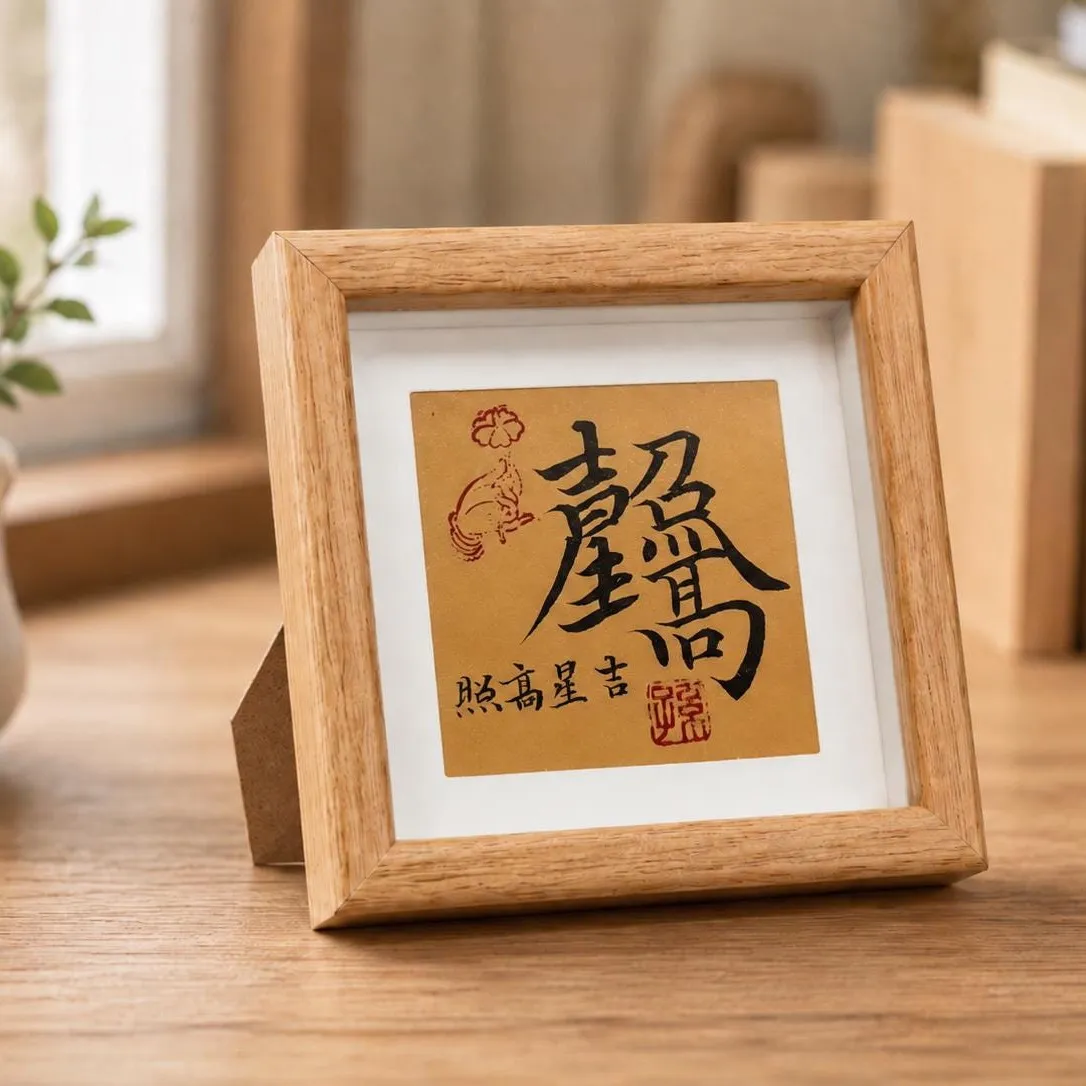
Photo shows a sample — yours will be brushed with 仁, or any character you choose.
Desk Frame — for desks, studies & studiosfrom $44→ -
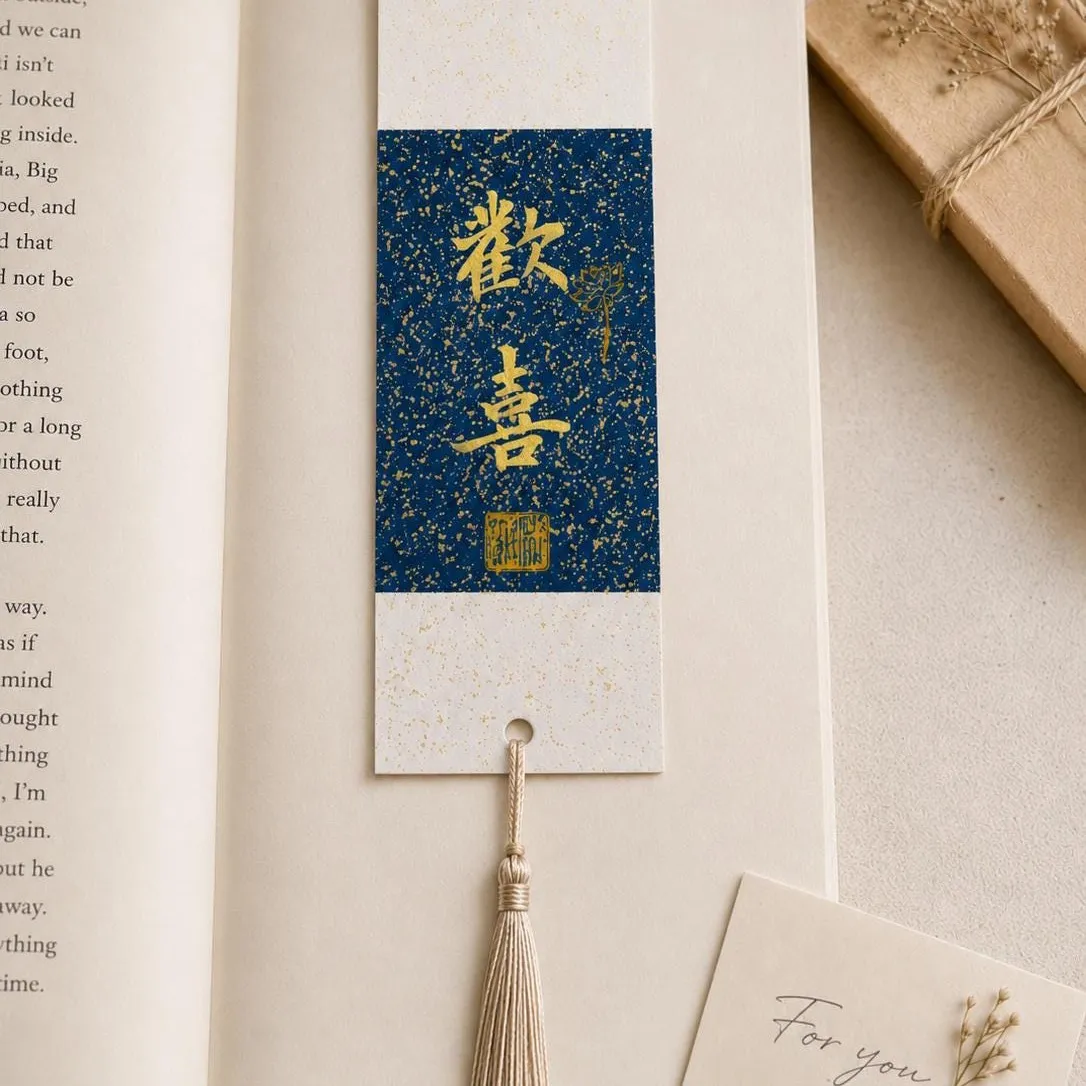
Photo shows a sample — yours will be brushed with 仁, or any character you choose.
Bookmark — for readers & small thank-yousfrom $14→

What people said after it arrived.
-
The item is fantastic. The customer service was genuine. Thanks!
— M.Verified purchase · from our Etsy shop reviews · -
They were great they gave me exactly what I asked for and then some. Thank you!!
— G.Verified purchase · from our Etsy shop reviews · -
It is well designed and customized. My daughter loves it. Amazing gift for family’s d friends
— S.Verified purchase · from our Etsy shop reviews ·
Each "仁" is hand-brushed by FuBlessings on rice paper.
See 仁 (Rén) on Etsy →