For a Coworker
Chinese characters for the colleague whose farewell, promotion, or holiday card needs more than a Starbucks gift card.
Recommended characters
恒 (Héng) — Constancy
For the colleague who stays the course when the project drags, when the work gets tedious, when everyone else is looking for a way out. 恒 names the professional quality that outlasts motivation: the disciplined persistence that turns sustained effort into results no single burst of energy could produce.
明 (Míng) — Clarity
For the colleague whose reads on situations have been accurate when most other people’s were not. 明 names the professional form of clear-sightedness — the team member who identifies the actual source of a problem rather than its surface symptom, who sees the client’s real concern beneath the stated one. Not the same as 智 (applied judgment): 明 is the unobstructed perception that makes judgment possible in the first place.
毅 (Yì) — Resolve
For the colleague whose professional resolve has been demonstrated under conditions of actual difficulty — not manageable pressure but the projects that dragged past what anyone expected, the setbacks that would have been reasonable excuses to redirect. 毅 names the interior source of that resolve: not discipline alone (that is 恒) but the determination that reaffirms the commitment when it has stopped being comfortable.
坚 (Jiān) — Tenacity
For the colleague who kept going through the long stretch — the project that dragged past its expected end, the quarter when results stopped arriving, the work that required sustained effort after the immediate energy had gone. 坚 names the quality specifically tested by duration: not one-time determination (that is 毅) but the condition of not having stopped when stopping would have been understandable. The character for the colleague whose 坚持 (jiān chí, will to keep going) has been the thing the rest of the room has been relying on.
强 (Qiáng) — Strength
For the colleague whose effective capacity has been the room’s productive engine — not the diligence (恒) that stays the course or the resolve (毅) that holds under difficulty, but the underlying power that makes both of those produce results. 强 names the constitutive strength of the person who has built what they need to act and does: the colleague whose outputs prove the capacity rather than merely naming the effort.
明德 (Míng Dé) — Manifest Virtue
For the colleague whose integrity has not been a private fact but a visible one — whose conduct in the workplace has been consistent enough to function as a standard others have oriented themselves by. 明德 names the virtue that has come forward into professional conduct rather than stayed within. Where 明 (clarity) names perceptual accuracy and 德 names accumulated moral character, 明德 names both together as a single visible quality: the colleague whose good character has shown in what they do, not merely in who they are.
才华 (Cái Huá) — Talent and Brilliance
For the colleague who brings something to the work that does not come from effort or experience alone — the particular quality in their contributions that others recognize before they can name it. 才华 is not a wish for the future and not recognition of their diligence (恒) or resolve (毅): it names the specific natural endowment that makes their work distinctively theirs. For the farewell, the promotion, or the occasion when standard professional praise falls short of the thing being said.
栋梁 (Dòng Liáng) — Pillar of Strength
For the colleague whose contribution to the team has been structural rather than additive — the person whose removal would not leave a gap but dissolve the team’s coherence. 栋梁 is distinct from 才华 (natural talent), 恒 (constancy), and 明 (clear-sightedness): it names the relationship between a person and the organization that depends on them. The most pointed professional recognition available for the colleague who has been the ridgepole — the one everything else organized around.
前程似锦 (Qián Chéng Sì Jǐn) — A Brilliant Road Ahead
For the colleague at a graduation, promotion, or career threshold, 前程似锦 describes the terrain they are entering rather than the quality they have developed. Where 才华 names the talent they bring to the work and 栋梁 names the structural role they are moving toward, 前程似锦 names what is in front of them: the measured professional path ahead, as luminous and detailed as brocade. The recognition that does not enumerate what they are or prescribe what they should do, but says what the terrain they have earned is made of.
步步高升 (Bù Bù Gāo Shēng) — Step by Step, Rising Higher
For the colleague at a graduation, promotion, or New Year — the gift that names the direction of their career rather than the terrain or the end-state. Where 才华 names the particular quality their work has and 前程似锦 describes the road ahead as luminous and brocaded, 步步高升 names the motion itself: one step higher than the last, and then the next. Most apt when the colleague is already moving upward and the gift is a vote of confidence in the trajectory, not a description of the destination.
自强不息 (Zì Qiáng Bù Xī) — Strengthen Yourself Without Rest
For the colleague whose results came less from raw talent than from the fact that they simply kept going — through the dull middle of a project, through setbacks that sent others looking for an exit. Where 才华 names the quality of their work and 步步高升 names the upward motion of their career, 自强不息 names the engine under both: the self-directed discipline that needs no manager and no deadline to stay in motion. Half of the Tsinghua University motto, drawn from the 乾 hexagram of the Book of Changes, it honors the persistence rather than the polish — the right gift for the colleague whose steadiness you came to rely on more than anyone’s brilliance.
天道酬勤 (Tiān Dào Chóu Qín) — The Way of Heaven Rewards the Diligent
For the colleague whose discipline has gone unrewarded so far — who has done the steady, unglamorous work without the promotion or the credit catching up to it yet. Where 自强不息 honors that they kept going, 天道酬勤 says the thing harder to say out loud: that the going will be answered, that effort is the one input a fair world does not write off. It is encouragement for the long game rather than praise for a single win — the right note for the colleague grinding through a season with no visible payoff, when what they need is not flattery but the assurance that the work counts.
谦 (Qiān) — Modesty
For the colleague who keeps asking questions long after they have earned the right to stop — the one whose 谦让 instinct yields the credit, the seat, and the last word without being asked. Where 强 names the visible capacity that drives the room’s output and 才华 names the talent in their work, 谦 names what they do with both: hold them lightly. The 论语 fixed the picture — 以能问于不能,以多问于寡, able yet asking the less able, knowing much yet asking those who know little. The recognition for the coworker whose openness has kept them growing, and made them easy to work beside.
朗 (Lǎng) — Brightness and Open Spirit
For the colleague whose temperament makes the team easier to work in — the 开朗, 爽朗 one who is frank without an edge, whose good cheer is steady rather than performed. Where 才华 names the talent in their work and 谦 names the modesty that keeps them teachable, 朗 names the disposition itself: open, clear, with no haze and nothing hidden, the presence that lightens a room on a long day. The recognition for the coworker whose company has been as reliable as their output.
谦和 (Qiān Hé) — Modest and Amiable
For the colleague who was good at the work and never once made it tiring to sit beside them. 谦和 binds the two things a capable coworker rarely keeps together: ability held lightly (谦) and a level ease that lets a team form around them without friction (和). Where 谦 names the modesty that kept them teachable and 朗 names a bright, open temperament, 谦和 names the practical test both pass — how approachable they are. The recognition for the coworker whose competence you came to rely on and whose company you never had to brace for.
开卷有益 (Kāi Juǎn Yǒu Yì) — There Is Profit in Opening a Book
For the colleague who still reads outside their field for the pleasure of it — the one who forwards the article no one asked for, who knows something surprising about a subject unrelated to the work. 开卷有益 names what that habit has quietly been doing all along: every book opened repays the reader, and the payoff shows up sideways, in a steadier judgment or a wider frame than the job strictly required. Where 才华 names the talent already visible in their output and 明 names the clear-sightedness you rely on, 开卷有益 names the practice underneath both — a mind kept open. The gift for the coworker whose range you came to trust and whose curiosity was never idle.
端 (Duān) — Uprightness
For the colleague whose conduct set a quiet standard — reliable, principled, the same whether or not anyone was watching. 端 names uprightness made visible in the daily work: 品行端正, the proper bearing that made them the person you trusted with the thing that mattered. Where 谦 names the modesty that kept them teachable and 朗 names a bright, open temperament, 端 names the straightness underneath both — the coworker whose word you never had to double-check. The recognition for the colleague whose integrity was the most dependable thing on the team.
慎 (Shèn) — Prudence
For the colleague you never had to double-check — the one who weighed things before committing, caught the error before it shipped, and carried the same care through the last step as the first. 慎 names that watchful diligence: 谨言慎行, careful in word and deed, and 慎终如始, as careful at the end as the beginning. Where 端 names the straightness of their conduct and 谦 names the modesty that kept them teachable, 慎 names the judgment that made them the person you handed the thing that couldn’t go wrong. The recognition for the coworker whose care was the quietest reliability on the team.
博 (Bó) — Breadth
For the colleague whose knowledge crosses the fences between departments — who can talk credibly about the client’s business, the engineering constraint, and the market all in one meeting, and who connects things the rest of the team keeps in separate boxes. 博 names that professional range: the wide, well-stocked mind built by taking a great deal in over the years. Not 智 (applied judgment) and not 慧 (quick cleverness) — 博 is the breadth underneath both, the reason this is the colleague everyone routes the odd, cross-cutting question to.
鹏程万里 (Péng Chéng Wàn Lǐ) — A Flight of Ten Thousand Li
For the colleague leaving for something bigger — the new role, the new city, the company of their own — when the farewell gift should measure the move at its real scale. Where 前程似锦 describes the road ahead as brocade and 步步高升 blesses the climb one step at a time, 鹏程万里 claims the whole distance at once: the peng bird of the 庄子, rising on the whirlwind, ten thousand li open in front of it. It is the send-off that colleagues write for exactly one kind of departure — the one where staying small would have been the mistake.
远 (Yuǎn) — Far · Long Range
For the colleague who is always working on the thing that pays off two years out — the one who argued for the slower architecture, the unglamorous migration, the client relationship that would not close this quarter. 远 names range: how far ahead someone is looking, and how much of what they are building has not arrived yet. Where 博 names the breadth of what they know and 慎 names the care they take with each step, 远 names the horizon they are taking those steps toward. The recognition for the coworker whose judgment kept getting better in hindsight.
通 (Tōng) — Open · Connected
For the colleague who unblocks things. Every organization has one: the person who knows which two teams have been solving the same problem separately, who gets the answer out of the department that never replies, who turns a stalled thread into a ten-minute call. 通 is the character in 沟通 — literally to dig a channel between two places — and it names exactly that work, which is invisible in a performance review and obvious the week they are on leave. 博 measures what one colleague has taken in; 通 measures what passes between everybody else because of them. The recognition for the coworker who was the connection.
颖 (Yǐng) — The Tip That Shows
Credit for a good decision tends to settle on whoever announced it rather than on whoever reached it first. 颖 is the sharp tip of an ear of grain, and it lives in 脱颖而出 — the tip pushing clear — from a 257 BCE argument that a point kept in the bag has not failed to be sharp; it has failed to be put anywhere. Where 通 credits what passes between people because of them and 远 credits how far ahead they are looking, 颖 says the plainer thing: you are quicker than your standing here reflects, and it should show.
敏 (Mǐn) — Quick to Respond
The colleague who says the useful thing while the meeting is still deciding what the problem is. 敏 measures one narrow thing — the interval between understanding something and moving on it — and it is the contribution hardest to point at in a performance review, because by the time anyone writes it down the response has been absorbed into whatever happened next. Confucius used the word about conduct and always fenced it: 敏于事而慎于言, quick in what you do, careful in what you say. That fence is why it works as a colleague gift and not as flattery. 慎 credits the care taken before acting and 颖 credits the visibility of ability that has been overlooked. 敏 credits neither the caution nor the standing — only how little time this person needs.
顺遂 (Shùn Suì) — Smooth, and Carried Through
祝工作顺遂 is the line people write to colleagues when the year turns, and the reason it gets written rather than said is that 顺利 is the corridor version — 工作顺利, tossed across a desk — while 顺遂 is what the same wish becomes in ink. It is also the least presumptuous thing on this page. 步步高升 assumes the colleague wants to climb; 前程似锦 assumes the road ahead ought to be spectacular. 顺遂 assumes nothing about the shape of their ambition. 顺 asks only that the work run without snagging, and 遂 that whatever they are carrying gets carried through to done — two conditions that hold whether the person is angling for a title or trying to finish one long thing well.
笃行 (Dǔ Xíng) — The Doing, Not the Knowing
Every office has more knowing in it than doing, and the gap between the two is the least discussed and most consequential thing about working with anyone. 笃行 is the word for the colleague who closes it. 笃 is a mass word rather than a temperature word — the same character as in 笃信, belief solid enough to act on, and 笃学, study that has settled in for good — so this is not praise for enthusiasm or for caring a lot. It says that when this person acts, something is behind the act. 敏 higher up this page credits the speed of the first move and 恒 credits staying with a thing after it stops being interesting; 勤 counts the hours whatever they went into. 笃行 credits none of those. It credits weight: that what the colleague understood in the meeting turned into something real afterward, which is the contribution everyone relies on and nobody has a column for.
达 (Dá) — Whether It Landed
词不达意 — the words did not arrive at the meaning — is the ordinary Chinese admission that something was said and nothing got across, and most weeks contain several. 达 is the character that failed there: to reach the far end. In a colleague it names the one whose explanation lands in the head it was aimed at, who can put a complicated thing to a client, a new hire or a skeptical director and have it arrive intact. That is a narrower skill than it sounds, and it is the reason two people holding the same information get very different outcomes out of the same meeting. 通 higher up credits the channels this person opens between other people. 表达 is the traffic that has to move along them, and being well connected is no guarantee of it. For the coworker who is worth putting in front of the room.
正直 (Zhèng Zhí) — The Caveat You Did Not Have to Ask For
Every team quietly sorts its work into what gets verified and what does not, and the sorting has little to do with seniority. 端 higher up this page credits the bearing that makes a colleague look dependable; 笃行 and 达 credit the doing and whether it landed. 正直 is the narrower operational thing in between — the caveat volunteered before anybody thinks to ask for it, the problem in their own numbers flagged rather than discovered, the estimate that does not move depending on who is in the room. Note that the second half alone is a liability: 直 by itself is a speed rather than a judgment, and 论语 lists it beside courage and caution as a quality that goes wrong untempered — 直而无礼则绞. 正 is what aims it. Together they make the person a team ends up routing its awkward questions through.
事业有成 (Shì Yè Yǒu Chéng) — A Sentence They Are Not In
The safest thing to hand a colleague is a sentence they do not appear in. 事业 is the subject of these four characters and 有成 is what gets said about it — the thing is finished enough to be looked at — and nobody is named, which is exactly why it can travel across a desk to someone whose actual record you are in no position to grade. 达 higher up this page asks whether what a person sent ever reached the far end; 笃行 asks whether what they know ever touched the ground; 顺遂 wishes them a clear road. This one asks after the only item on that list that will still be standing after the job ends, and asks it without claiming to have measured anything.
学业有成 (Xué Yè Yǒu Chéng) — For the Colleague Studying After Hours
For the colleague doing the part-time master’s, the professional exams, the certification that eats their evenings for two years. 事业有成 above is the phrase for their work and it is the safe one to hand across a desk; this is the phrase for the second job they took on voluntarily, and it lands differently precisely because the office is not where it lives. The traffic on these four characters normally runs from an adult to a student, teacher to class, aunt to nephew — so used sideways between colleagues it registers as noticing something a coworker rarely gets noticed for: that the person at the next desk has been carrying a course as well as a caseload, and that the course has an end they are heading toward.
志 (Zhì) — Headings the Same
The problem with most work gifts is that they grade someone. 毅 and 恒 higher up this page are verdicts on how a colleague held up; 达 asks whether what they sent arrived. 志 is the one character here that makes a claim about two people rather than about one, because its live compound is 志同道合 — headings the same, roads matching — which is what Chinese says where English says like-minded, and it cannot be said from above or below. It names a direction and nothing else: not how big the aim is, not whether it worked out. For the colleague you have been pointed the same way as for long enough to notice, and whose plan you would not presume to grade.
勉 (Miǎn) — The Part That Was Uphill
勤勉 is the phrase a reference letter reaches for, and it carries two characters rather than one because a reliable colleague is being credited with two separate things. 天道酬勤 higher up this page runs on the first: a quantity of work, recorded without comment on the mood it was done in. 勉 is the other half, and what it measures is friction — what the work had to be pushed past, which on most weeks is the person themselves. It suits the colleague who takes the job nobody puts their hand up for: the migration, the handover document, the account everyone else has learned to look busy during. 恒 and 坚 credit staying with a thing and 毅 credits holding steady once it turns difficult, which all presume the thing is already moving. This character is about getting it moving. A caution worth stating: it belongs across a desk, not down an org chart, where it turns into a complaint about somebody’s output.
笃志 (Dǔ Zhì) — One Aim, Kept in Focus
志 higher up this page is a claim about two people: 志同道合, headings the same. 笃行 credits the colleague whose understanding in a meeting became something afterward. 笃志 names the aim held firm and focused — the method, the problem, the side of the work they keep returning to. Across a desk you are not scoring their hours. The pair names the steadiness of the aim, including an aim they set recently and have not let go of.
平步青云 (Píng Bù Qīng Yún) — Level Steps, Not Counted Stairs
步步高升 counts the rungs; 前程似锦 paints the road; 鹏程万里 measures a flight. 平步青云 wishes something quieter and harder to fake at a desk: that their next rise into station will feel level underfoot — ordinary steps into the blue-cloud height of rank. For the colleague whose promotion, farewell, or birthday card should ask for ease rather than spectacle.
福 (Fú) — Blessing · Good Fortune · Happiness
See 福 →喜 (Xǐ) — Joy · Happiness · Celebration
See 喜 →财 (Cái) — Prosperity · Abundance · Success
See 财 →瑞 (Ruì) — Good Tidings · Blessing · Promise of a Bright Year
See 瑞 →勇 (Yǒng) — Courage · Strength · Bravery
See 勇 →宁 (Níng) — Serenity · Inner Calm · Stillness
See 宁 →慧 (Huì) — Wisdom · Clarity · Discernment
See 慧 →勤 (Qín) — Diligence · Industriousness · Steady Effort
See 勤 →诚 (Chéng) — Sincerity · Honesty · Integrity
See 诚 →智 (Zhì) — Intelligence · Wisdom · Practical Judgment
See 智 →富贵 (Fù Guì) — Wealth · Honor · Prosperity with Standing
See 富贵 →吉祥 (Jí Xiáng) — Auspiciousness · Good Omen · The Promise of Good Things
See 吉祥 →如意 (Rú Yì) — As You Wish · Aligned with the Heart
See 如意 →喜乐 (Xǐ Lè) — Joy · Daily Gladness · The Quiet Warmth That Lasts
See 喜乐 →知足 (Zhī Zú) — Contentment · Knowing What is Enough
See 知足 →厚德 (Hòu Dé) — Deep Virtue · Generous Character · A Ground That Holds
See 厚德 →福禄 (Fú Lù) — Blessing · Prosperity · Abundance Through a Respected Place
See 福禄 →龙 (Lóng) — Dragon · Power · Auspicious Strength
See 龙 →力 (Lì) — Strength · Force · The Power to Act
See 力 →万事如意 (Wàn Shì Rú Yì) — May All Things Go As You Wish
See 万事如意 →一帆风顺 (Yī Fān Fēng Shùn) — Smooth Sailing · A Steady Wind for the Journey Ahead
See 一帆风顺 →心想事成 (Xīn Xiǎng Shì Chéng) — May Your Heart's Wishes Come True
See 心想事成 →招财进宝 (Zhāo Cái Jìn Bǎo) — Summon Wealth · Draw In Treasure
See 招财进宝 →龙马精神 (Lóng Mǎ Jīng Shén) — The Vigor of the Dragon and Horse · Tireless Spirit
See 龙马精神 →凝神入画 (Níng Shén Rù Huà) — Spirit Stilled, Entering the Painting · Total Absorption in Creation
See 凝神入画 →渐入佳境 (Jiàn Rù Jiā Jìng) — Gradually Entering a Beautiful Place · Getting Better and Better
See 渐入佳境 →福至 (Fú Zhì) — Blessings Arrive · Fortune Has Come
See 福至 →吉祥如意 (Jí Xiáng Rú Yì) — Auspicious · As You Wish · A Year That Unfolds Well
See 吉祥如意 →Bring a hand-brushed piece home — choose how you'd like it brushed.
-
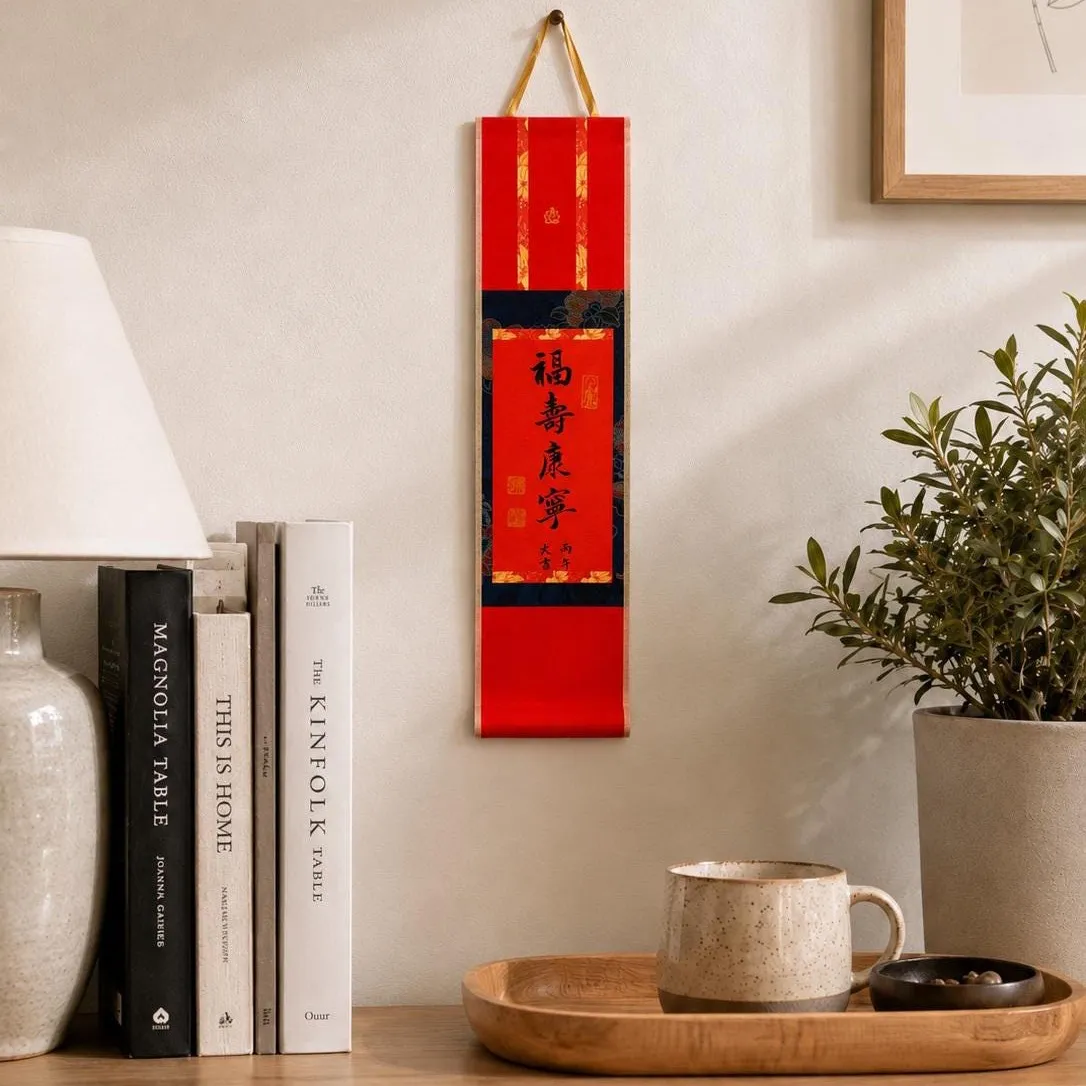
Photo shows a sample — yours will be brushed with the character you choose.
Wall Scroll — for walls & housewarmingsfrom $38→ -
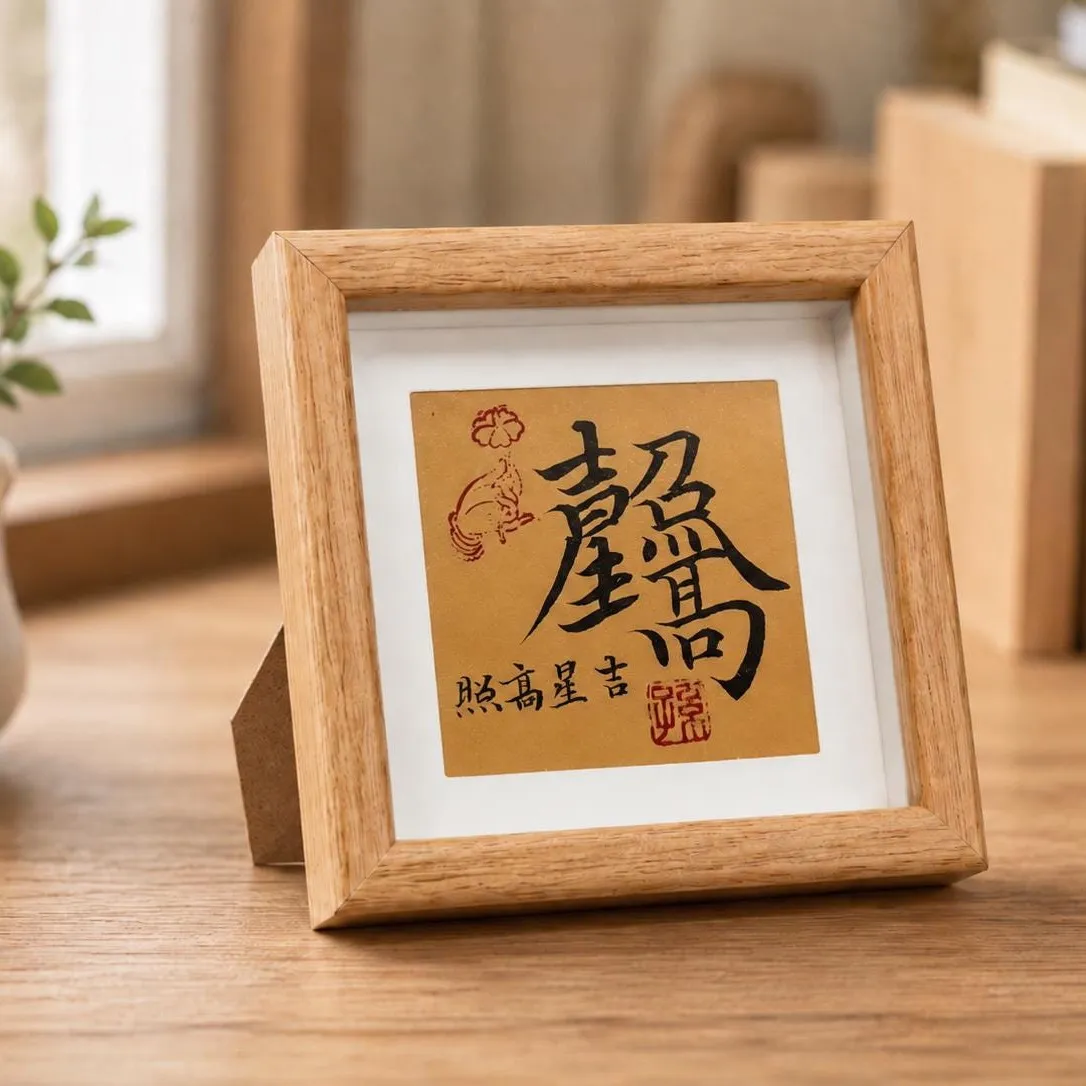
Photo shows a sample — yours will be brushed with the character you choose.
Desk Frame — for desks, studies & studiosfrom $44→ -
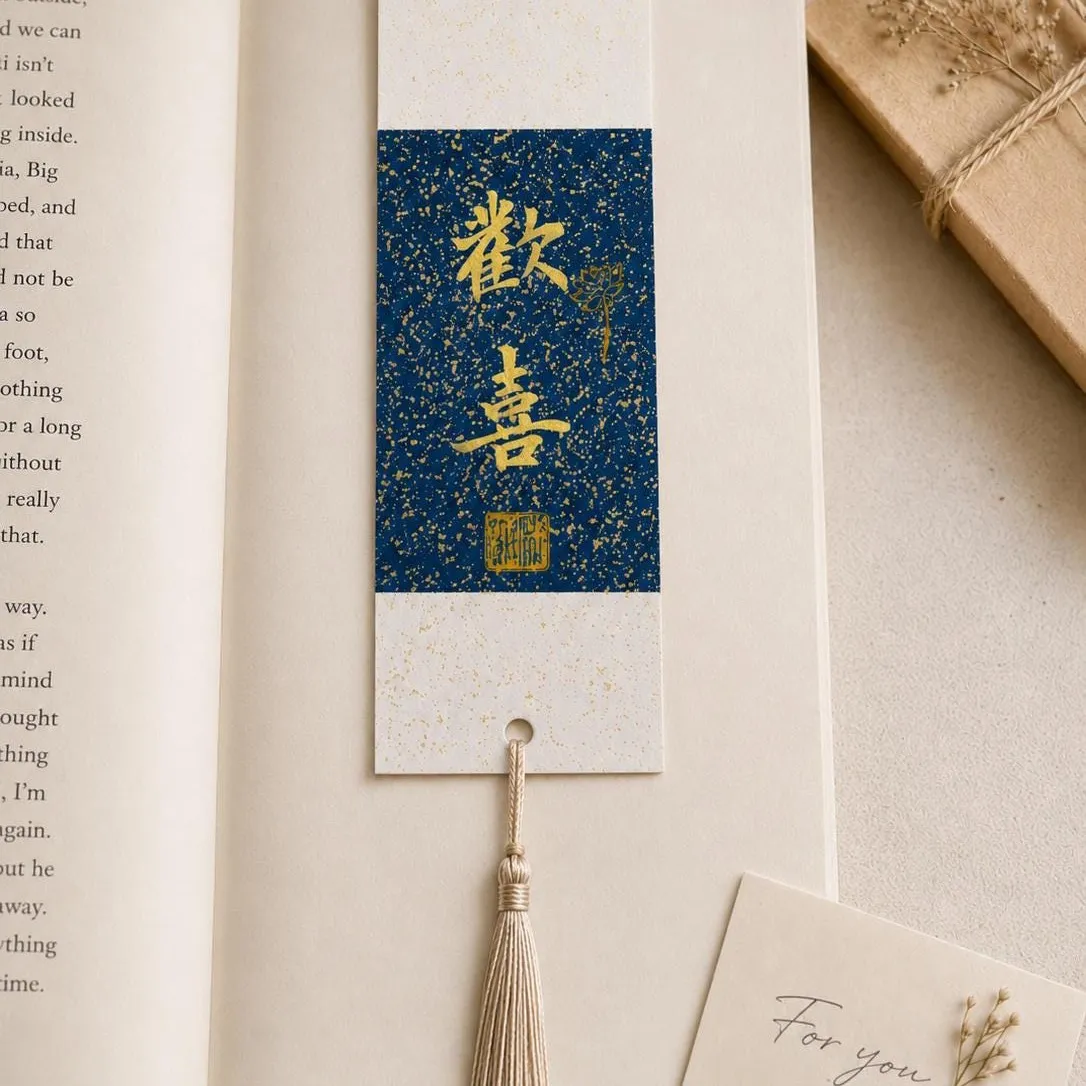
Photo shows a sample — yours will be brushed with the character you choose.
Bookmark — for readers & small thank-yousfrom $17→