明 (míng) — Clarity · Brightness · Clear-Sighted Perception
A single character.
When a rebel general overthrew the Mongol Yuan and founded a dynasty in 1368, he named it after this single character: 明. Not for a homeland or a family line, the way nearly every other Chinese dynasty was named, but for a quality of mind — the brightness that shows things as they actually are, rather than as power has arranged them to appear. That choice tells you what 明 is. It is not 慧 (quickness, the perception that arrives before analysis) or 智 (judgment, the call made when things are unclear). It is the prior condition both of those depend on: the unobstructed seeing that keeps the premises accurate. Confucius gave it a precise definition in the Analects — the quality of not being swayed by rumor that accumulates gradually or by complaints that hit hard in the moment. Not brilliance. Immunity to distortion.
The character itself states this. 日 (sun) beside 月 (moon): two sources of light, neither of which leaves anything hidden. In Chinese, the compounds that use 明 — 明白 (to understand clearly), 明智 (clear-headed judgment), 高明 (unusually acute perception) — all carry this sense of seeing without obstruction. 明察秋毫, one of Chinese literature’s oldest idioms for perceptive observation, translates literally as “to perceive the tip of an autumn hair”: the vision so unimpeded it catches what is nearly invisible.
A hand-brushed 明 by FuBlessings is the gift for the person whose read on complex situations has been the one you trusted — not because they were the most experienced or the most analytical, but because they were the least fooled. On a graduation, it names the quality that will distinguish them in professional life. Given to a friend, a colleague, or a mentor on a birthday, it recognizes something specific and earned: that their clarity has mattered to people who needed it.
- clear-sighted perception
- unobstructed seeing
- the quality of not being fooled
- lucidity — seeing what is actually there
- intelligence Too general. Intelligence includes processing speed, pattern recognition, memory. 明 names specifically the perceptual accuracy — the quality of not starting from distorted premises.
- wisdom Wisdom (智慧) includes both knowing and acting on what you know. 明 is the prior condition: accurate seeing. You can have 明 without yet knowing what to do about it.
- brightness Only the literal layer. The gift of 明 is not metaphorical shine — it is the specific capacity to perceive situations and people without wishful thinking or social pressure clouding the view.
The short arms are the point: these readings don’t reach it.
- 日 sunSolar light — the consistent, revealing illumination that shows things as they are in full exposure. In 明, it represents the clarity that comes from direct, unobstructed perception.
- 月 moonLunar light — the softer, reflected illumination that reveals what daylight might miss. Together with 日, it names a completeness of seeing: nothing hidden in bright light, nothing hidden in shadow.
character
- 明白 míng bái to understand clearly — the everyday word for comprehension
- 明智 míng zhì clear-headed and sensible — 明 combined with 智 for practical judgment unclouded by emotion
- 明察 míng chá perceptive observation — the official term for judicial discernment
- 高明 gāo míng brilliant, insightful — higher-register compliment for someone whose perception is unusually acute
- 明德 míng dé bright virtue — the Confucian term for the moral clarity that education seeks to uncover
The Story Behind the Character
The character 明 places the sun (日, rì) beside the moon (月, yuè) — two sources of light, each different in kind, together naming brightness. The earliest oracle bone inscriptions show a window with moonlight shining through: the image of natural light entering an enclosed space, clarifying what would otherwise remain obscure. By the time bronze inscriptions standardized the form, the sun had joined the moon, and 明 carried both the literal quality of illumination and the conceptual quality of seeing without obstruction.
China's first dictionary (说文解字, c. 100 CE) defined 明 as 照也 — to illuminate. But the philosophical tradition quickly made 明 a quality of mind rather than of light. The opening sentence of the 《大学》(Great Learning, one of the Four Books) uses 明明德 — "to illuminate the bright virtue" — in which 明 appears twice: first as a verb (the act of making clear) and second as an adjective (the native clarity that is already there, waiting to be unclouded). Generations of Confucian scholars debated whether 明德 was something you cultivated or something you recovered.
The character appears in the name of the Ming dynasty (明朝, 1368–1644), whose founding emperor chose it deliberately: the dynasty would be an era of luminous clarity after decades of foreign rule. It is one of the few Chinese dynasties named not for a place or a clan but for a moral quality — the brightness that makes things visible as they actually are, rather than as power has arranged them to appear.
Classical lines
- roughly 200 years
- c. 500 BCE 《论语·颜渊》
- c. 300 BCE 《礼记·大学》
One further source is quoted below without a date printed, so it stays off the rail.
知人者智,自知者明。 Knowing others is intelligence; knowing yourself is clarity.
Laozi's most compact statement on the difference between 智 and 明. Intelligence reads other people; 明 reads the self — the harder task, because self-knowledge requires seeing past the version of yourself you prefer. In the gift context, 明 names the person who has managed both.
大学之道,在明明德,在亲民,在止于至善。 The way of higher learning: to illuminate what is bright in one's virtue, to love the people, to rest in the highest good.
The most analyzed opening in Chinese philosophy. 明明德 uses 明 as both verb and noun: to make clear (明) what is inherently luminous (明德). The argument is that moral clarity is not constructed — it is uncovered.
浸润之谮,肤受之愬,不行焉,可谓明也已矣。 When pervasive slanders and immediate complaints fail to move you, you can be called clear-sighted (明).
Confucius here gave 明 its sharpest practical definition: not brilliance, not learning, but the specific resistance to being swayed by rumor that accumulates gradually or by complaint that hits hard in the moment. This is the 明 that matters in real organizational life.
Why This Character Matters
The phrase 明察秋毫 (míng chá qiū háo) — "to perceive the tip of an autumn hair" — describes the extreme end of 明: vision so clear it catches what is nearly invisible. The autumn hair (秋毫) refers to the fine new fur animals grow as temperatures drop, barely thicker than a thread. The idiom appears in Mencius and has been used for over two thousand years to name the quality of perception that misses nothing. It is still used in modern Chinese — in courtroom arguments, in journalism, in business — for the observer whose eye cannot be deceived by selective presentation.
明 holds a precise position relative to its near-neighbors. 慧 (huì) is quick perception — a gift of natural acuity. 智 (zhì) is applied judgment — knowledge put to work in difficult decisions. But 明 is the prior condition: the unobstructed seeing that makes 慧 and 智 possible. You can be 慧 and still be deceived; you can be 智 and still be operating on false premises. 明 is what keeps the premises accurate. In Chinese classical thought, a ruler with 明 could tell genuine counsel from flattery, genuine talent from performance. In everyday life, a friend with 明 is the one whose read on your situation you trust precisely because you know they are not telling you what you want to hear.
明 is one of the most common characters in the Chinese language — it appears in the word for 'tomorrow' (明天, míng tiān, literally 'bright day'), 'understand' (明白), 'wisdom' (明智), and the name of an entire dynasty. A Chinese person seeing it as a tattoo would read it as a statement about clarity or enlightenment, and find it more interesting than the standard blessing characters (福, 寿) while still being genuinely grounded in Chinese culture. The calligraphy quality matters — 明 is simple enough that a poor rendering is very obvious.
Calligraphy Styles for Tattoos
- Regular script (楷书 kǎishū) Best for tattoos
明 has 8 strokes in a left-right structure: 日 (4 strokes) on the left and 月 (4 strokes) on the right. Regular script keeps both radicals clearly readable and the character balanced. A clean, readable choice at 1.5+ inches.
- Running script (行书 xíngshū) Good for larger pieces
Running script gives 明 a fluid, open quality. The two radicals flow naturally side by side. Works well at 2+ inches where the left-right structure can breathe.
- Cursive script (草书 cǎoshū) Only with an expert calligrapher
In cursive, 日 and 月 can blur into a form that loses the structural clarity of the character — ironic for a character meaning clarity. Only attempt with a calligrapher who has worked specifically with cursive 明.
Common Mistakes to Avoid
- Making 日 (sun) and 月 (moon) the same width, so the character looks symmetrically splitIntended: 明 with 日 slightly narrower than 月 — the natural proportion
In standard calligraphy, 日 is narrower and more compact than 月. When both halves are made equal width, the character looks mechanical. Give 月 a little more space — it has an additional stroke (the hook at the base) that needs room.
- Writing 月 without the two internal horizontal strokes, making it look like 勿Intended: 明 with 月 correctly written: two horizontal strokes inside the frame
月 (moon) has two internal horizontal strokes. Omitting them produces 勿 (do not), which changes the character entirely. This is an extremely common calligraphy error and immediately visible to any Chinese reader.
Notes for Your Tattoo Artist
8 strokes. Left-right structure: 日 on the left (4 strokes, narrow and compact) and 月 on the right (4 strokes, slightly wider with a hook at the bottom). The two internal horizontal strokes inside 月 are essential — their absence changes the character. Minimum size 1.5 inches. Key proportion: keep 日 narrow; 月 should be the visually dominant half.
A few characters live near "明" but mean something quieter, sharper, or more specific. Here's how to tell them apart.
the unobstructed accuracy of perception — not being fooled by how things are presented
natural quickness of perception — the acuity that sees fast, before analysis
the accurate view of the situation — what you're working from
applied judgment using that view — the call you make once you see clearly
The graduation wish for the person whose record suggests they will be the one in the room who is not fooled — by consensus, by authority, or by their own wishes.
- The graduation wish for the person whose record suggests they will be the one in the room who is not fooled — by consensus, by authority, or by their own wishes. 明 is not a wish for success or diligence: it names the perceptual quality that makes judgment reliable when the situation is obscured by how it is being presented. A more pointed alternative to 智 (which names applied judgment) for the graduate whose particular strength is accurate perception rather than analytical speed.
- For the friend, colleague, or mentor whose clear-sightedness you have personally relied on. 明 on a birthday is recognition before it is a wish — naming the quality of a person who sees what is actually happening in complex situations, rather than what they or anyone else would prefer to see. Most specific when the relationship is close enough to make this observation honestly.
明 is one of the characters we use to write Western names in Chinese. See it at work:
-
What does 明 (míng) mean?
明 (míng) is the Chinese character for clarity, brightness, clear-sighted perception. When a rebel general overthrew the Mongol Yuan and founded a dynasty in 1368, he named it after this single character: 明. Not for a homeland or a family line, the way nearly every other Chinese dynasty was named, but for a quality of mind — the brightness that shows things as they actually are, rather than as power has arranged them to appear. That choice tells you what 明 is. It is not 慧 (quickness, the perception that arrives before analysis) or 智 (judgment, the call made when things are unclear). It is the prior condition both of those depend on: the unobstructed seeing that keeps the premises accurate. Confucius gave it a precise definition in the Analects — the quality of not being swayed by rumor that accumulates gradually or by complaints that hit hard in the moment. Not brilliance. Immunity to distortion. The phrase 明察秋毫 (míng chá qiū háo) — "to perceive the tip of an autumn hair" — describes the extreme end of 明: vision so clear it catches what is nearly invisible. The autumn hair (秋毫) refers to the fine new fur animals grow as temperatures drop, barely thicker than a thread. The idiom appears in Mencius and has been used for over two thousand years to name the quality of perception that misses nothing. It is still used in modern Chinese — in courtroom arguments, in journalism, in business — for the observer whose eye cannot be deceived by selective presentation.
-
What occasions is 明 given for?
明 is traditionally given for Graduation, Birthday. The graduation wish for the person whose record suggests they will be the one in the room who is not fooled — by consensus, by authority, or by their own wishes. 明 is not a wish for success or diligence: it names the perceptual quality that makes judgment reliable when the situation is obscured by how it is being presented. A more pointed alternative to 智 (which names applied judgment) for the graduate whose particular strength is accurate perception rather than analytical speed. For the friend, colleague, or mentor whose clear-sightedness you have personally relied on. 明 on a birthday is recognition before it is a wish — naming the quality of a person who sees what is actually happening in complex situations, rather than what they or anyone else would prefer to see. Most specific when the relationship is close enough to make this observation honestly.
-
Is 明 a good Chinese tattoo?
明 is one of the most common characters in the Chinese language — it appears in the word for 'tomorrow' (明天, míng tiān, literally 'bright day'), 'understand' (明白), 'wisdom' (明智), and the name of an entire dynasty. A Chinese person seeing it as a tattoo would read it as a statement about clarity or enlightenment, and find it more interesting than the standard blessing characters (福, 寿) while still being genuinely grounded in Chinese culture. The calligraphy quality matters — 明 is simple enough that a poor rendering is very obvious.
-
Who brushes the 明 calligraphy?
FuBlessings hand-brushes each 明 (Míng) to order, in ink on rice paper — never printed, never repeated.
Bring 明 home — choose how you'd like it brushed.
-
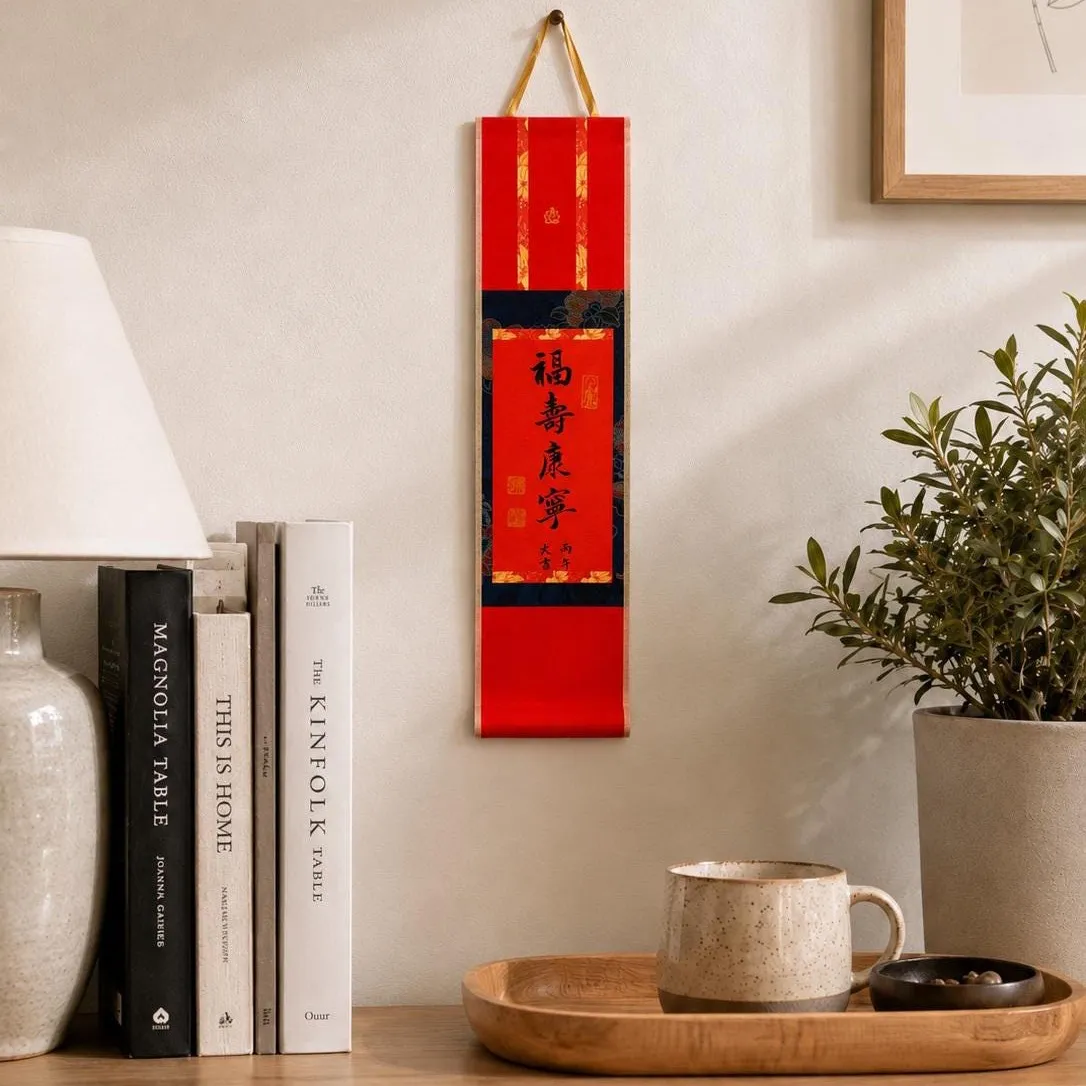
Photo shows a sample — yours will be brushed with 明, or any character you choose.
Wall Scroll — for walls & housewarmingsfrom $38→ -
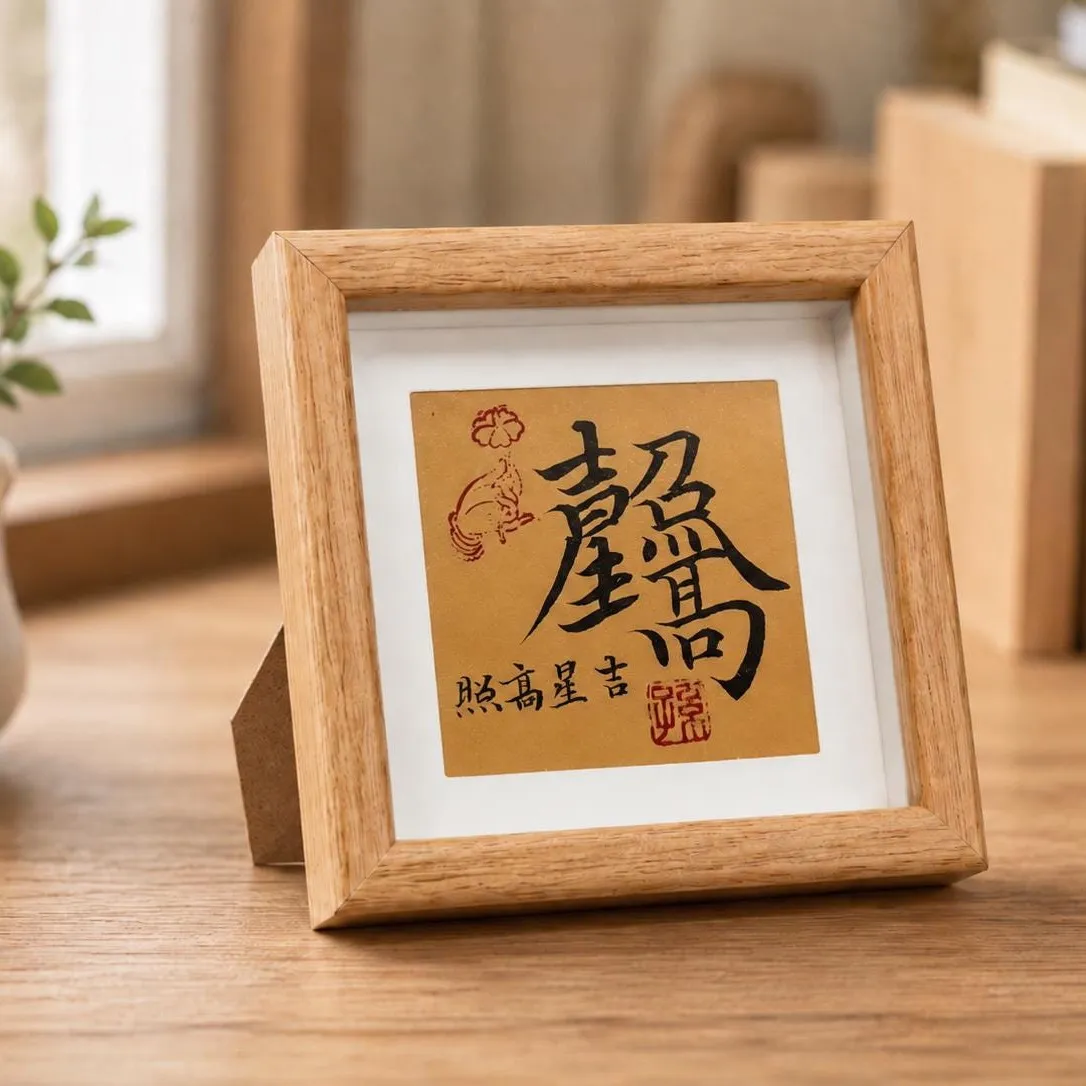
Photo shows a sample — yours will be brushed with 明, or any character you choose.
Desk Frame — for desks, studies & studiosfrom $44→ -
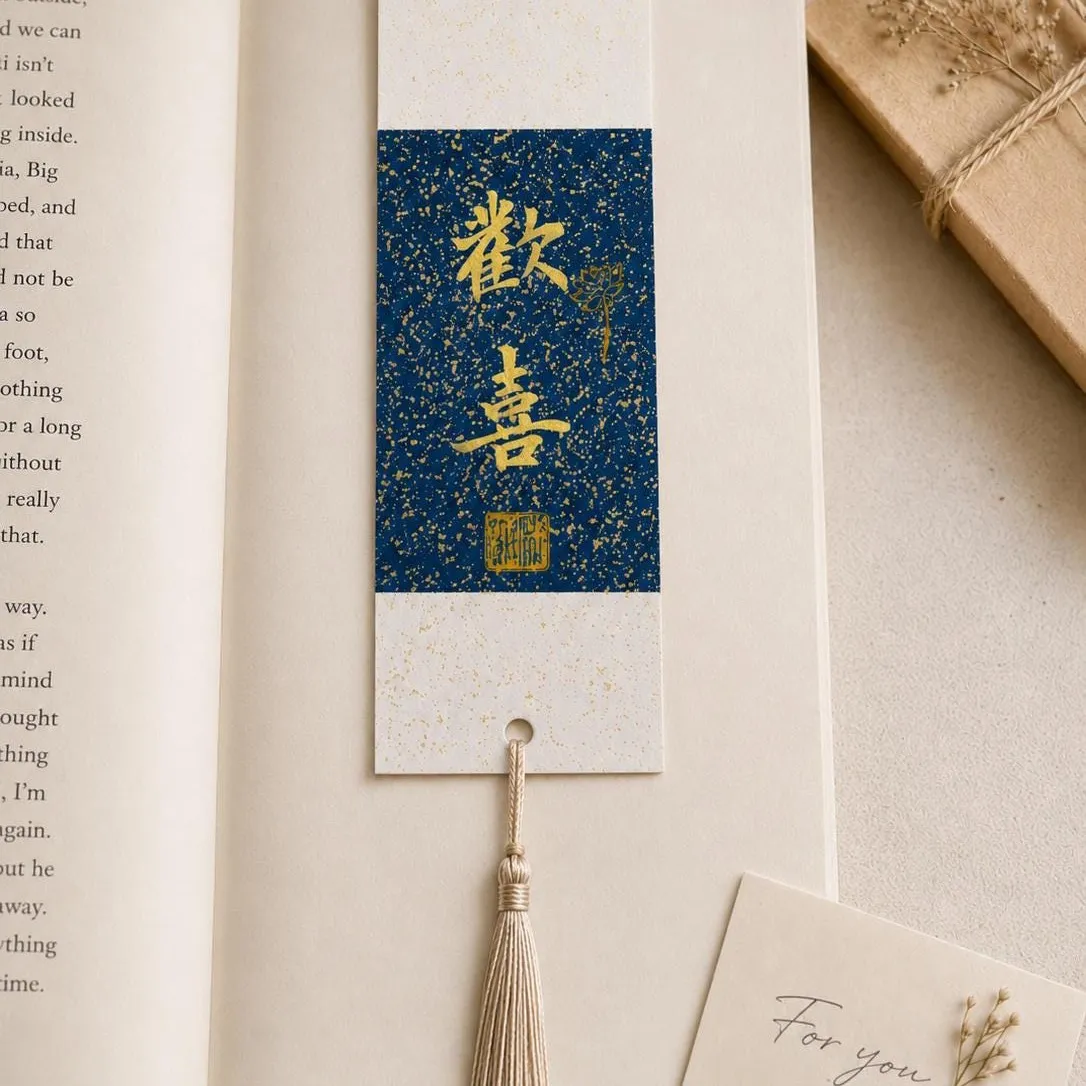
Photo shows a sample — yours will be brushed with 明, or any character you choose.
Bookmark — for readers & small thank-yousfrom $14→

What people said after it arrived.
-
The item is fantastic. The customer service was genuine. Thanks!
— M.Verified purchase · from our Etsy shop reviews · -
They were great they gave me exactly what I asked for and then some. Thank you!!
— G.Verified purchase · from our Etsy shop reviews · -
It is well designed and customized. My daughter loves it. Amazing gift for family’s d friends
— S.Verified purchase · from our Etsy shop reviews ·
Each "明" is hand-brushed by FuBlessings on rice paper.
See 明 (Míng) on Etsy →