颖 (yǐng) — The Tip That Shows · Quick-Witted · Standing Out
A single character.
颖 (yǐng) is not so much a quality as a position. The character’s first job was to name the end of an ear of grain — the awned tip, the part of the plant furthest out — and every later sense keeps that geometry. 秀 (xiù), built on the same 禾, is the whole plant coming into flower, quality showing on its own terms. 慧 (huì) and 智 (zhì) both face inward: how fast the mind runs, how well it judges. 颖 needs company to mean anything. It describes the single point that has come out past the others, which is why the phrase it lives inside — 脱颖而出 — begins with a bag full of awls. See 秀 → · See 慧 → · See 智 →
In use it splits cleanly in two. Applied to a person it is 聪颖 and 颖悟 — the quickness a teacher notices in the first term, the child who had it before anyone explained it twice. Applied to work it is 新颖: fresh, original, what a Chinese design review says about an idea that went past where the rest stopped. And 脱颖而出 turns up wherever the language talks about competition — admissions, hiring, the graduation speech — dragging its 257 BCE story along behind it. 毛遂, three years unremarked in his lord’s household, told to his face that genuine ability shows itself like an awl through cloth, answering that a point kept in the bag has not failed to be sharp. It has failed to be put anywhere.
A hand-brushed “颖” by Artist Lina Sun goes to the person whose ability is not in question and whose visibility is. The graduate walking into a field of applicants who all look identical on paper. The colleague who solved it and watched someone else present it. And the newborn — 颖 is a name Chinese parents actually give, and it asks for something most naming characters do not: not that the child be safe or fortunate, but that whatever they turn out to have will not stay in the bag. One note if you are giving it. 颖 names the coming-through rather than the arrival, so it reads as encouragement rather than a verdict on where someone currently stands — which is usually what you want at a beginning.
- the awned tip of an ear of grain
- the point of an awl or a brush
- quick-witted beyond one's years
- standing out from the field
- fresh, original, novel
- genius 天才 claims a rank, and it holds whether or not anyone is watching. 颖 claims a position — further out than the others in the same sack. Remove the sack and there is nothing left for the word to describe.
- gifted Closer, but a gift can stay hidden and 颖 cannot. It is the part already showing. 毛遂's entire argument was that a point kept inside the bag has not yet been anything at all.
- refined That is 秀, built on the same grain radical with the opposite emphasis. 秀 is the ear emerging — a claim about what the plant has produced, true whether or not another plant is standing next to it. 颖 is only the sharp end, and it is comparative by nature.
The short arms are the point: these readings don’t reach it.
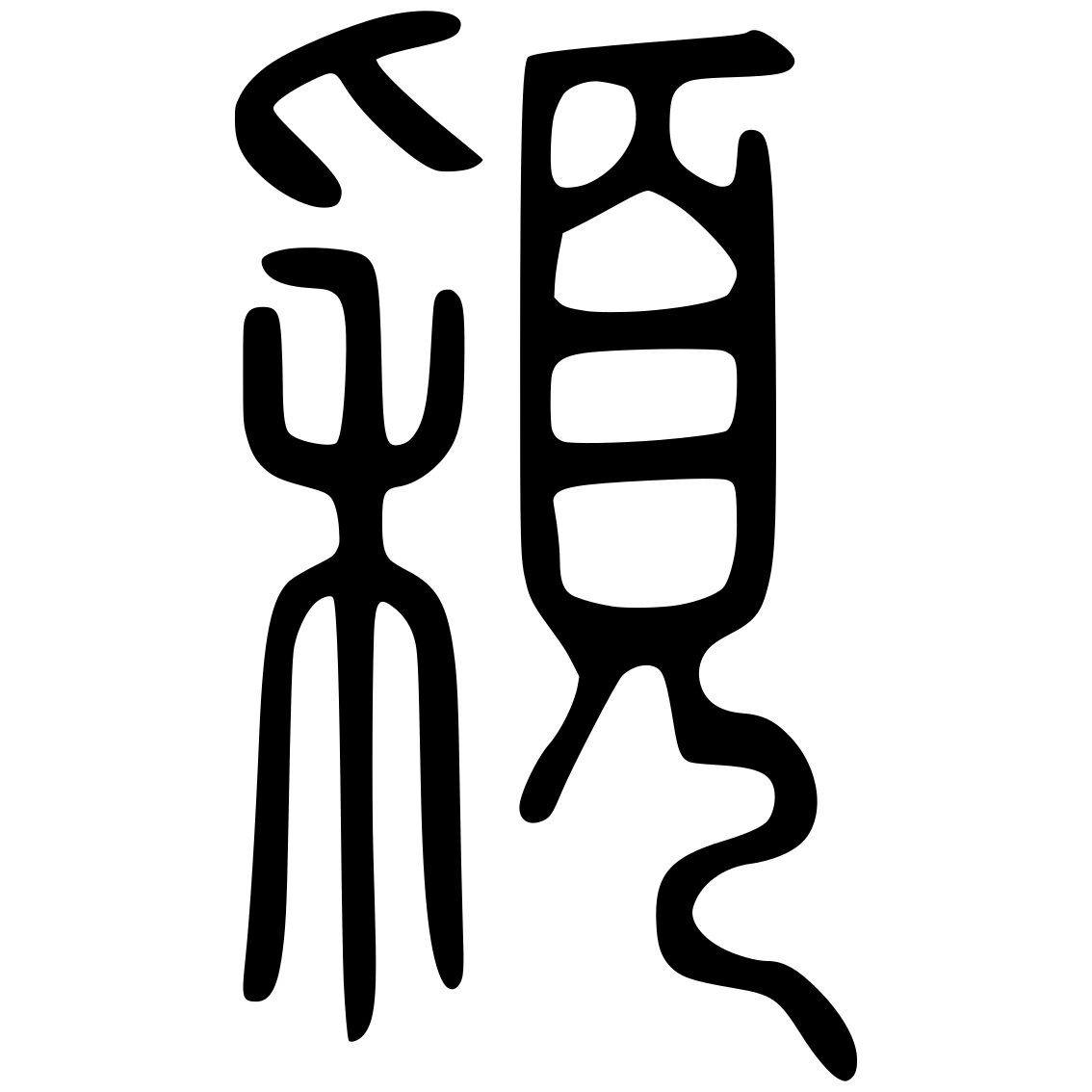
- 禾 standing grain — the meaningThe grain plant, drawn with its head bent over. 《说文解字》 defines the whole character with it in three words, 禾末也 — the end of the grain — so everything 颖 later came to mean is an extension of one part of one plant. Same radical: 秀 (to come into ear), 秋 (autumn), 稻 (rice), 稳 (steady).
- 顷 sound頃 (qǐng) is present for pronunciation only, and it is split around 禾 rather than written whole: 匕 sits above the grain stalk, 页 stands to the right. On its own 頃 is glossed by 《说文解字》 as 头不正也, a head held off-straight, and it survives in 倾 (to lean, to topple) and 顷刻 (an instant). Its tilt is not part of what 颖 claims.
character
- 聪颖 cōng yǐng bright and quick — the standard phrase for a mind that is noticeably fast
- 颖悟 yǐng wù quick to grasp — used of a child who understands ahead of schedule
- 脱颖而出 tuō yǐng ér chū the tip pushes clear — to emerge from a crowd and be picked out
- 新颖 xīn yǐng novel, original — said of an idea or design that goes past the usual
- 颖异 yǐng yì conspicuously able — talent of a kind that is hard to miss
The Story Behind the Character
Push a hand into a sack of unthreshed wheat and the thing that scratches is the awn — the stiff bristle at the far end of the ear. That end had its own word. 《说文解字》 (Shuowen Jiezi, c. 100 CE) gives 穎 three characters, 禾末也, the end of the grain, and parses it 从禾,頃聲: 禾, a stalk of grain, carrying the meaning; 頃 supplying only the sound. 頃 is itself a small picture — 匕 beside 頁, a head — and Xu Shen glosses it 头不正也, a head not held straight. In the traditional 穎 and the simplified 颖 alike, that phonetic is split open and the grain stalk set inside it. Nothing in the classical parsing asks the tilt to mean anything. It is a coincidence that a ripe ear leans.
What made the word travel is that a tip is a tip whatever it belongs to. By the Warring States the character had left the field: the sharp end of an awl was a 颖 too. In 257 BCE, with Handan under siege, a retainer named 毛遂 asked to join 平原君's emergency mission to Chu. He had been in the household three years without being noticed, and his lord said so — a worthy man in the world is like an awl in a bag, 其末立见, the point shows immediately. 毛遂's answer is why the character is still in daily use: had I been put in the bag earlier, the whole tip would have come through, 非特其末见而已, not merely its point. He got the seat, and 脱颖而出 has meant emerging from a crowd ever since.
From an object's point to a person's is one step, and Chinese took it early — 颖悟 for a child who understands ahead of schedule, 聪颖 for quickness visible before anyone has tested for it, 颖异 for the conspicuous kind. Much later the word reached back toward objects again: the gathered point of a writing brush became a 颖, and 新颖 — novel — became the ordinary way to say a design has gone past where the rest stopped. Across two thousand years of use the logic never bends. 颖 is never the whole of anything. It is the part that projects beyond the rest, and it needs the rest in order to be measured at all.
Classical lines
- roughly 1,700 years
- c. 900 BCE 《诗经·大雅·生民》
- c. 94 BCE 《史记·平原君虞卿列传》
- c. 810 CE 韩愈《毛颖传》
实坚实好,实颖实栗。 Firm and fine, the ears heavy-tipped, the grains hard.
The character's earliest surviving appearance is agricultural to the letter: a hymn to Hou Ji, the legendary founder of Chinese farming, describing the crop he raised. 颖 here is doing nothing metaphorical at all. It is simply the tip of the ear, weighed down and pointing out — the picture every later sense of the word is built on.
使遂蚤得处囊中,乃颖脱而出,非特其末见而已。 Had I been put in the bag sooner, the whole tip would have come through
not merely its point showing. — 毛遂 talking his way onto a diplomatic mission in 257 BCE, after three years of going unnoticed in his lord's household. The line invented 脱颖而出, and it is still the most-quoted rebuttal in Chinese to the assumption that real ability always makes itself known without help.
毛颖者,中山人也。 Mao Ying was a native of Zhongshan.
The opening line of a formal biography written for a writing brush. Han Yu named his hero Fur-Tip and gave him Zhongshan as a birthplace because Zhongshan rabbits supplied the best brush hair. Chinese writers have called the brush 毛颖 ever since — a nickname twelve centuries old, resting on a joke about a character meaning "point."
Why This Character Matters
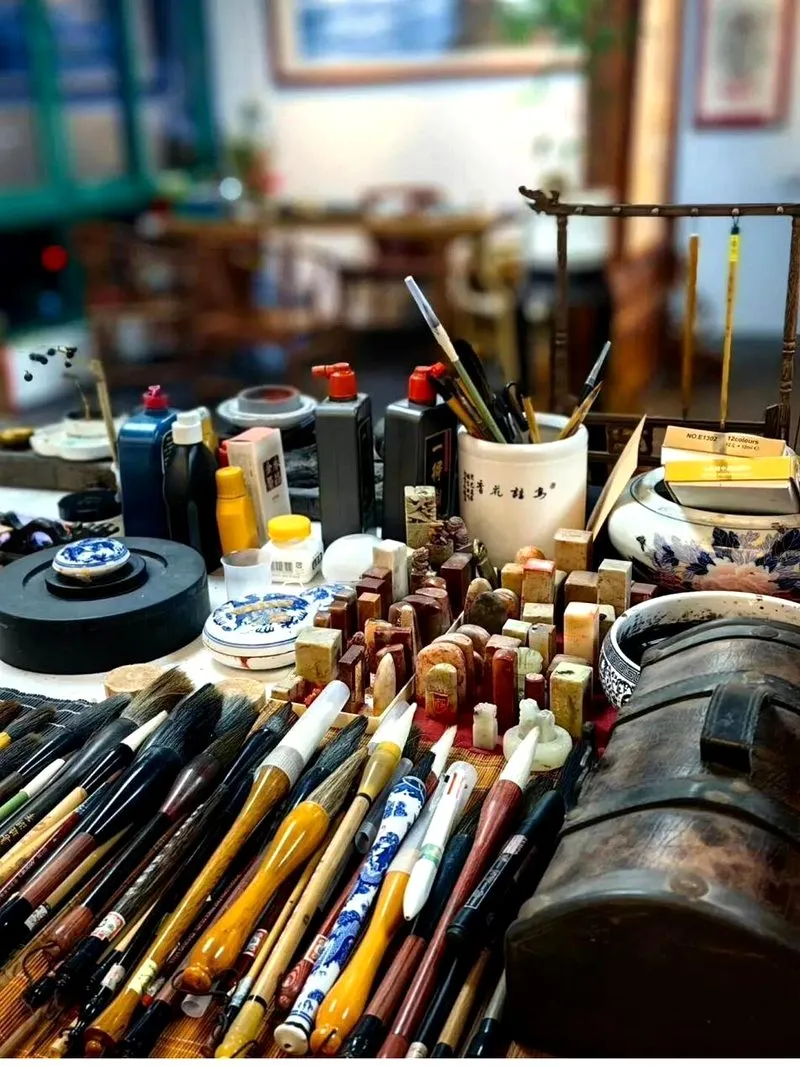
Around 810 CE 韩愈 wrote a full official-style biography — lineage, capture, career at court, decline and dismissal — for a writing brush. Its subject, 毛颖, is taken prisoner by 蒙恬's army at 中山, enters the emperor's service, is worn down by decades of work and let go when he can no longer hold a point. The name is the whole conceit: a brush is a bundle of hairs gathered to a single tip, which is precisely what 颖 means. Contemporaries were not amused, and the complaint recorded at the time was that 韩愈 was 以文为戏 — making a game of serious prose. The piece outlived the complaint. 毛颖 has been a literary nickname for the writing brush ever since.
颖 has also spent the last century as a common given name, and it is worth noticing what kind of wish that is. Most naming characters ask for something to be received — 福, 安, 康, 乐 all hope the world treats the child well. 颖 asks for something to be seen: parents who choose it are wishing their child the kind of ability that will not stay in the bag. That popularity has a consequence worth knowing before the character is hung on a wall. A single 颖 on its own reads to many native speakers as somebody's name first and a quality second — and more often than not a woman's — so give it with the recipient's name or the phrase you mean (聪颖, 脱颖而出) somewhere in the framing or on the card. Inside a phrase the naming reading disappears entirely. A second caution for anyone writing it: 颖 has a near twin, 颍 (yǐng), identical in sound and differing in a single component — the grain radical 禾 swapped for the water radical 氵. 颍 names a river in Henan and the 颍川 commandery whose great families staffed much of the later Han court. It has nothing to do with talent, and the two are mixed up often enough in printed material that it is worth checking which one a design source has given you.
A few characters live near "颖" but mean something quieter, sharper, or more specific. Here's how to tell them apart.
the one point that has come out past the others
the ear emerging at all — excellence that needs nothing to be measured against
quickness that is visible, and visible early
the discernment underneath, which may never show at all
being picked out of the field
the judgment exercised once you are
脱颖而出 — the tip coming through — is the phrase Chinese reaches for at every point where a person has to be picked out of a crowd: exam results, job postings, the speech at the end of the ceremony.
- 脱颖而出 — the tip coming through — is the phrase Chinese reaches for at every point where a person has to be picked out of a crowd: exam results, job postings, the speech at the end of the ceremony. It carries a 257 BCE argument with it. 毛遂 had spent three years unremarked in 平原君's household, and when he volunteered for the mission to Chu his lord told him a real talent is like an awl in a bag — the point shows at once. 毛遂's reply was that a point kept in the bag has not failed to be sharp; it has failed to be put anywhere. That is the graduate's exact position. 颖 does not congratulate the degree. It names the thing that has to happen next.
- A scroll given at a baby shower gets read twice, twenty years apart, and 颖 is unusual in having two readings ready. 颖悟 — quick to grasp — is what Chinese histories say about a child who understood things ahead of schedule, and that is the sense the character will carry through the first decade of the child's life. 脱颖而出, the tip pushing clear of the crowd, is the sense waiting at eighteen. Most blessings say the same thing at every age. This one changes register as the child does. It is also a character Chinese parents genuinely put on birth certificates, so a gift arriving before the naming doubles as a suggestion — charming or presumptuous depending entirely on how well you know them.
- 聪颖 names a mind that is quick — not learned, not diligent, quick — and it is one of the few compliments Chinese pays freely to children and then stops paying to the adults who still earn it. A birthday is the occasion to pay it. What 颖 credits is quickness measured against a field rather than in the abstract: not the raw speed of the mind but where it finished relative to everyone else in the room. Where 慧 (huì) names the discernment underneath and 秀 (xiù) names quality flowering into view, 颖 names only that standing — which is exactly what the friend or colleague you have leaned on all year is least likely to hear said out loud.
New Parent · Friend · Coworker · or yourself
Looking for a name? See Western names written in Chinese →
-
What does 颖 (yǐng) mean?
颖 (yǐng) is the Chinese character for the tip that shows, quick-witted, standing out. 颖 (yǐng) is not so much a quality as a position. The character's first job was to name the end of an ear of grain — the awned tip, the part of the plant furthest out — and every later sense keeps that geometry. 秀 (xiù), built on the same 禾, is the whole plant coming into flower, quality showing on its own terms. 慧 (huì) and 智 (zhì) both face inward: how fast the mind runs, how well it judges. 颖 needs company to mean anything. It describes the single point that has come out past the others, which is why the phrase it lives inside — 脱颖而出 — begins with a bag full of awls. See 秀 → · See 慧 → · See 智 → Around 810 CE 韩愈 wrote a full official-style biography — lineage, capture, career at court, decline and dismissal — for a writing brush. Its subject, 毛颖, is taken prisoner by 蒙恬's army at 中山, enters the emperor's service, is worn down by decades of work and let go when he can no longer hold a point. The name is the whole conceit: a brush is a bundle of hairs gathered to a single tip, which is precisely what 颖 means. Contemporaries were not amused, and the complaint recorded at the time was that 韩愈 was 以文为戏 — making a game of serious prose. The piece outlived the complaint. 毛颖 has been a literary nickname for the writing brush ever since.
-
What occasions is 颖 given for?
颖 is traditionally given for Graduation, Baby Shower, Birthday. 脱颖而出 — the tip coming through — is the phrase Chinese reaches for at every point where a person has to be picked out of a crowd: exam results, job postings, the speech at the end of the ceremony. It carries a 257 BCE argument with it. 毛遂 had spent three years unremarked in 平原君's household, and when he volunteered for the mission to Chu his lord told him a real talent is like an awl in a bag — the point shows at once. 毛遂's reply was that a point kept in the bag has not failed to be sharp; it has failed to be put anywhere. That is the graduate's exact position. 颖 does not congratulate the degree. It names the thing that has to happen next. A scroll given at a baby shower gets read twice, twenty years apart, and 颖 is unusual in having two readings ready. 颖悟 — quick to grasp — is what Chinese histories say about a child who understood things ahead of schedule, and that is the sense the character will carry through the first decade of the child's life. 脱颖而出, the tip pushing clear of the crowd, is the sense waiting at eighteen. Most blessings say the same thing at every age. This one changes register as the child does. It is also a character Chinese parents genuinely put on birth certificates, so a gift arriving before the naming doubles as a suggestion — charming or presumptuous depending entirely on how well you know them.
-
Who brushes the 颖 calligraphy?
Each 颖 (Yǐng) is hand-brushed to order by Artist Lina Sun in ink on rice paper — never printed, never repeated.
Bring 颖 home — choose how you'd like it brushed.
-
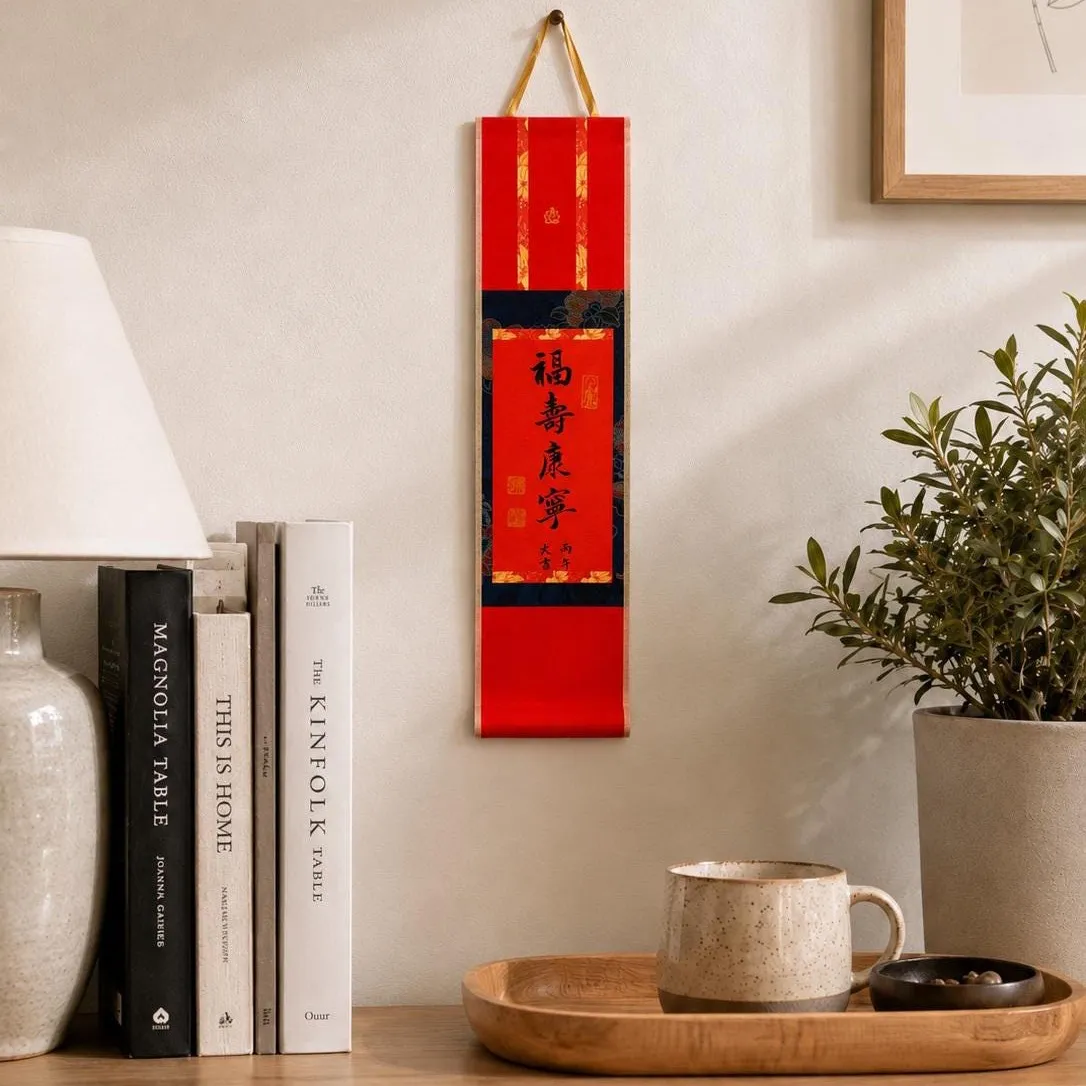
Photo shows a sample — yours will be brushed with 颖, or any character you choose.
Wall Scroll — for walls & housewarmingsfrom $38→ -
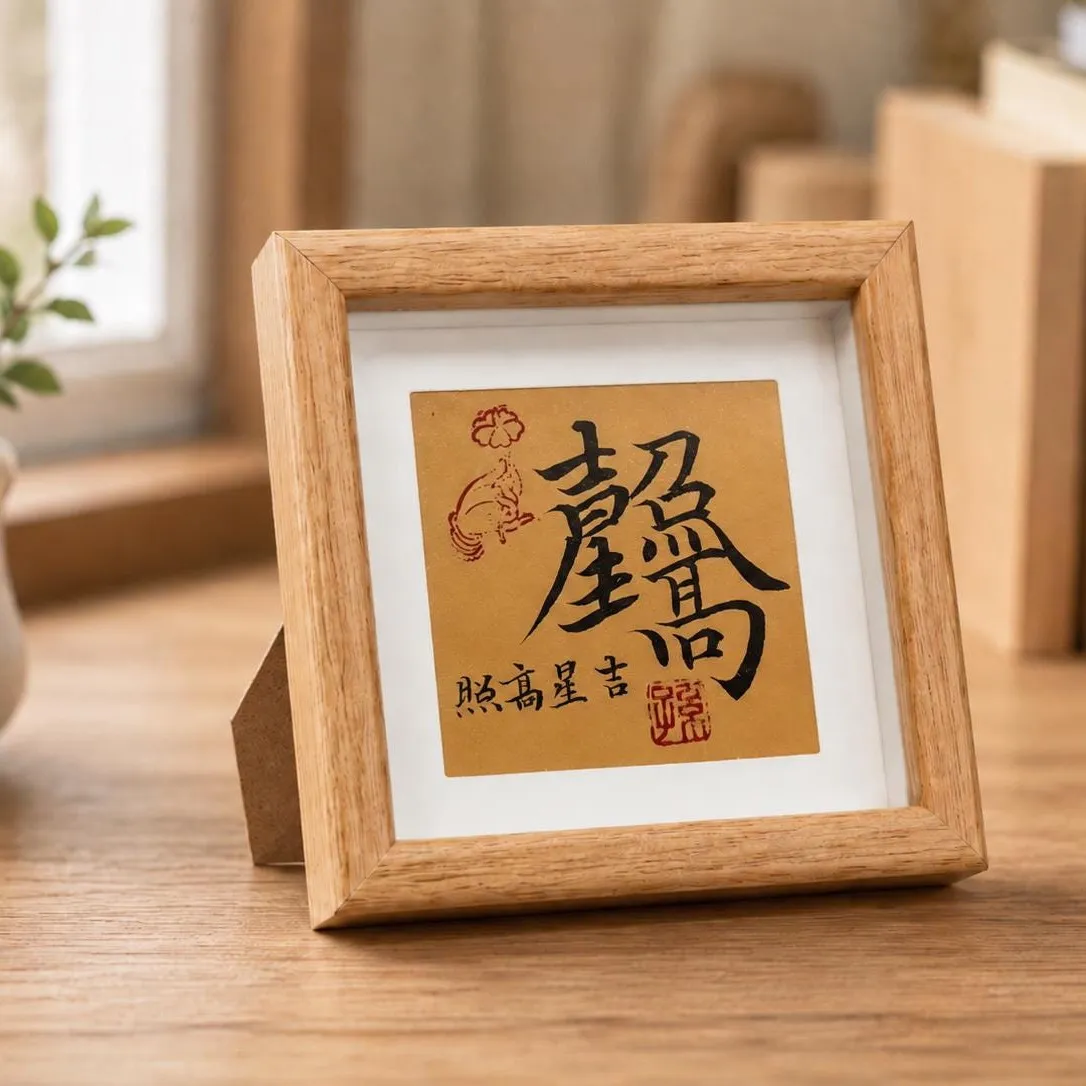
Photo shows a sample — yours will be brushed with 颖, or any character you choose.
Desk Frame — for desks, studies & studiosfrom $44→ -
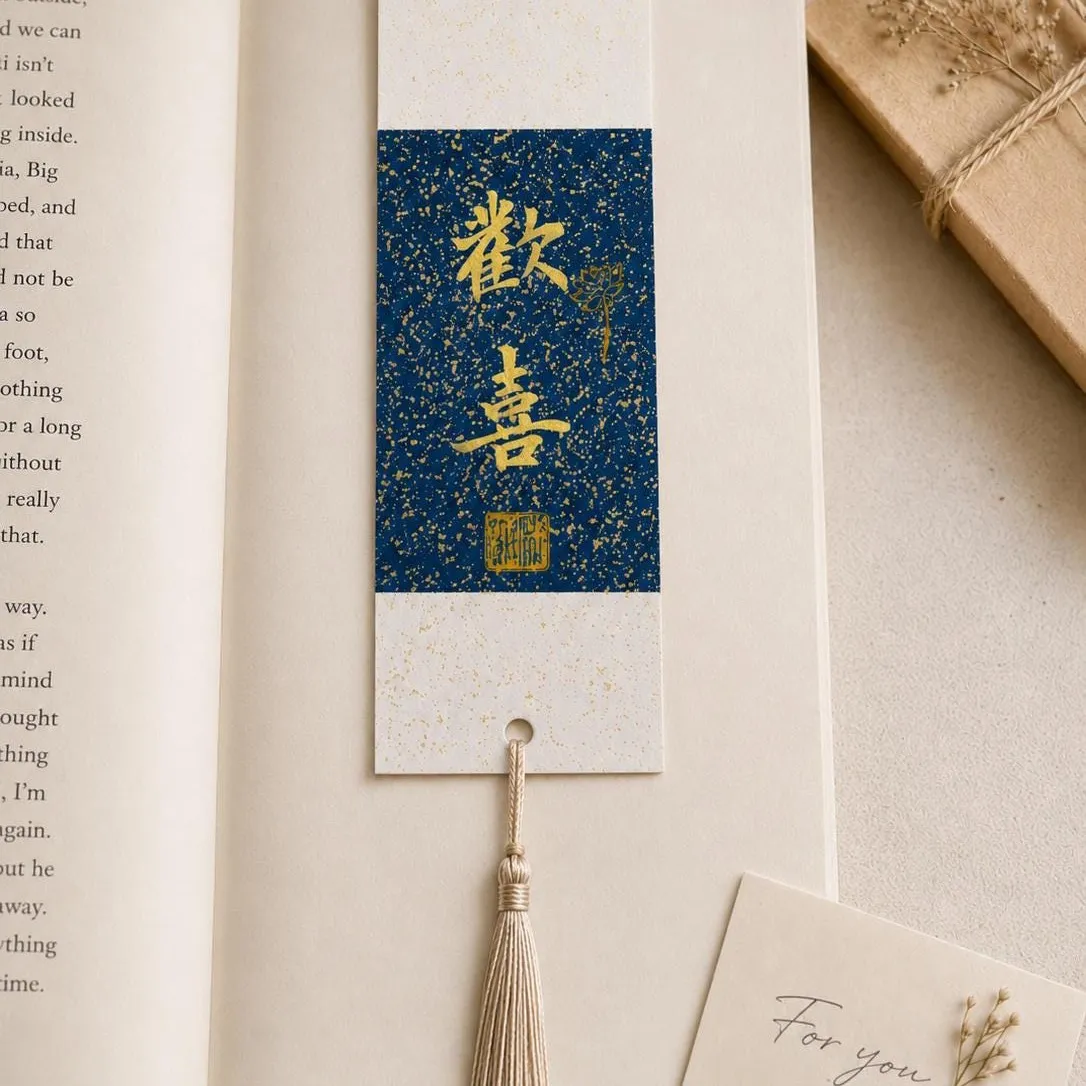
Photo shows a sample — yours will be brushed with 颖, or any character you choose.
Bookmark — for readers & small thank-yousfrom $17→
What people said after it arrived.
-
The item is fantastic. The customer service was genuine. Thanks!
— M.Verified purchase · from our Etsy shop reviews · -
They were great they gave me exactly what I asked for and then some. Thank you!!
— G.Verified purchase · from our Etsy shop reviews · -
It is well designed and customized. My daughter loves it. Amazing gift for family’s d friends
— S.Verified purchase · from our Etsy shop reviews ·
Each "颖" is hand-brushed by Artist Lina Sun on rice paper.
See 颖 (Yǐng) on Etsy →