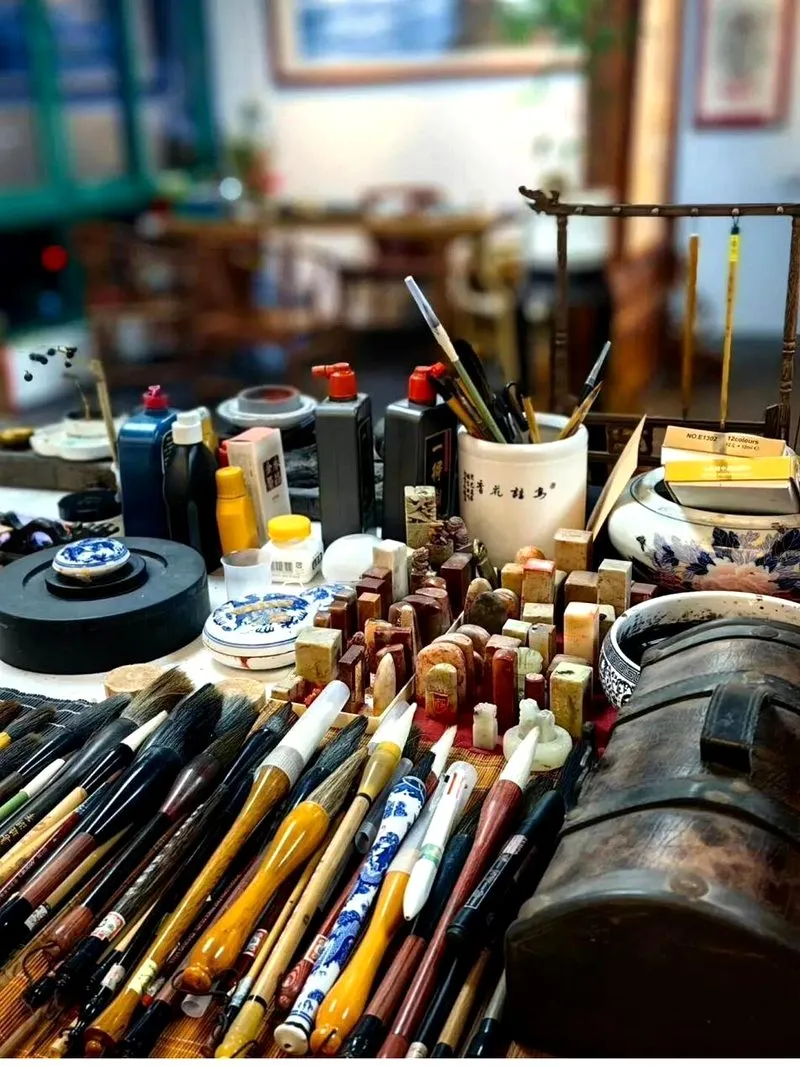
Father's Day Gifts
Chinese characters for Father's Day — for the man who carried more than he ever said.
Recommended characters
孝 (Xiào) — Filial Piety
For Father’s Day when the gift should name the direction of the relationship rather than a quality of the father. 孝 does not describe him — it describes the child’s stance toward him. Where 德 names what he has become and 仁 names his orientation toward the family, 孝 names the reciprocal: the recognition that the years of care have created an obligation the occasion is an opportunity to name.
仁 (Rén) — Benevolence
For Father’s Day when the gift should name the relational quality — the sustained orientation toward family — that made the father’s presence matter over decades. 仁 is distinct from 德 (which names accumulated moral character overall) and from 敬 (which names the respect owed): it names specifically the Confucian virtue of facing toward others, of loving the people in your care. The gift for the father whose attentiveness has been the thing.
德 (Dé) — Virtue
The most considered character for Father’s Day. 德 does not celebrate a father’s role or provision — it names his character: the moral formation that his conduct has represented over years of being watched and learned from. A gift that says the example has been noted and valued.
长寿 (Cháng Shòu) — Longevity
For Father’s Day when the most honest gift is the wish that he stays. 长寿 names what underlies every other blessing you could give a father — more years to be present for. The directest of the longevity inscriptions, it is the right choice when the occasion is specifically about honoring continued life rather than any particular quality of it.
康宁 (Kāng Níng) — Health and Ease
For Father’s Day when the wish is specifically for his wellbeing in both registers. 康宁 names health in body (康) and settled calm in mind (宁) — what a father who has done years of work and carried things quietly most deserves. A more considered choice than 安康, which emphasizes safety; 康宁 names the interior ease that good health makes possible.
毅 (Yì) — Resolve
For Father’s Day when the gift should name the quality of resolve behind the years — what kept the commitment intact when scaling back would have been reasonable, and what made the standard hold when holding it was not comfortable. 毅 is the specific complement to 恒 for the father whose constancy was sustained through genuine difficulty: the determination that reaffirmed itself when conditions tested rather than merely required it.
刚 (Gāng) — Principled Firmness
For Father’s Day when the gift should name the interior firmness behind the years — what kept the household’s standard consistent through circumstances where relaxing it would have been reasonable. 刚 is the character for the father who didn’t bend in the matters that counted: not visibly rigid but unmoved where it mattered. Where 德 names what his conduct has accumulated over years and 毅 names the resolve that held under specific difficulty, 刚 names the interior quality from which both arose — the position that was simply never negotiable.
坚 (Jiān) — Tenacity
For Father’s Day when the gift should name the quality that sustained the commitment through years of ordinary and extraordinary pressure alike — the foundational solidity that held under accumulated force rather than the resolve reaffirmed in moments of crisis (that is 毅) or the interior unmoved by temptation (that is 刚). 坚 is the character for the father whose presence has been the household’s demonstration of what Confucius observed: only when the cold holds long enough do we know the pine and cypress are last to wither.
伟 (Wěi) — Greatness
For Father’s Day when the gift should name scale rather than quality. 伟 is the most elevated character in the Father’s Day range: not describing what he has built in moral character (德) or the firmness that held through circumstances (刚), but the consequence of those qualities at the scale where they became an organizing force in the family. For the father whose influence, seen from outside the daily relationship, can only be named with a larger word than virtue.
强 (Qiáng) — Strength
For Father’s Day when the gift should name the underlying capacity the role demanded. 强 names the combined physical and moral power from which provision, protection, and sustained presence all drew — the foundation that 德 (character) and 刚 (principled firmness) rest on. Most specific for the father whose years have required genuine output across the full range of what fatherhood asks, and whose record proves the capacity was there.
铭 (Míng) — Inscription
For Father’s Day when the gift should name what the father has permanently left rather than describe a quality he holds. 铭 is a different register from every other Father’s Day character: where 德 names his accumulated moral character and 伟 names the scale of his consequence, 铭 names the durability of his influence in the people he raised — the lessons and examples that are part of how they think, not requiring memory because they have been pressed in. For the father whose teaching has already become permanent.
忠孝 (Zhōng Xiào) — Loyalty and Filial Piety
For Father’s Day when the gift should give both halves of the classical relational accounting. 孝 names what the occasion asks the giver to demonstrate: the explicit recognition that the years of care have created a debt the day is an opportunity to name. 忠 names what the father has demonstrated across those same years: the wholehearted faithfulness to family and commitment that made his presence the example. Giving 忠孝 at Father’s Day names both directions at once — what he has given, and what this gift returns.
明德 (Míng Dé) — Manifest Virtue
For Father’s Day when the gift should name the specific form the father’s virtue has taken: not the accumulated character that his children absorbed without registering it (that is 德) but the virtue actively made visible — the conduct that entered the household as a legible standard because it was consistently, deliberately forward-facing. 明德 names the father whose example has been an active demonstration, not simply a character trait that happened to leave an impression. A sharper recognition than 德, specific to the father whose virtue was manifest rather than merely present.
担当 (Dān Dāng) — Taking Responsibility
For Father’s Day when the gift should name the act of stepping in rather than the quality of having stayed. 担当 is the most action-oriented of the Father’s Day characters: not the accumulated virtue (德), the sustained faithfulness (忠), or the resolve that held under adversity (毅), but the initial orientation that preceded all of those — the pattern of identifying what the household needed and moving toward it, without being asked. Mencius named the spirit: “In this world, who but me will do it?” For the father whose answer, repeated over years, has been himself.
栋梁 (Dòng Liáng) — Pillar of Strength
For Father’s Day when the gift should name the structural relationship rather than a quality of character. 栋梁 makes a specific claim: not that the father has been good (德), steadfast (毅), principled (刚), or responsible (担当), but that the household’s form has depended on his position in it. The ridgepole does not merely function well in the building — it determines the building’s shape. For the father whose years have been the organizing center of the household rather than a contributor to it, 栋梁 is the most precise recognition available in the Father’s Day range.
刚毅 (Gāng Yì) — Firm Resolve
For Father’s Day when the gift should name a compound interior quality rather than a single virtue. 刚毅 covers both directions from which a father’s commitment might have failed: the inducements of comfort and success (where 刚 was tested) and the pressures of difficulty and adversity (where 毅 was tested). Where 刚 alone names the interior that didn’t bend and 毅 alone names the resolve that held through hardship, 刚毅 names the man who proved both across the same life — neither bought off by the good years nor worn down by the hard ones. The most complete of the interior-character Father’s Day pairs.
坚强 (Jiān Qiáng) — Resilient Strength
For Father’s Day when the gift should name the combination of structural and active strength the years required. Where 刚毅 names the interior quality proved in opposite circumstances (incorruptible in good fortune, undeterred in adversity), 坚强 names the ongoing two-part requirement the household placed on the father: the structural holding (坚) that didn’t crack under what accumulated, and the continued capacity (强) to keep providing and building. The distinction matters: 刚毅 names what the interior withstood; 坚强 names what the role asked. For the father whose years demonstrate both the root system and the renewal it made possible.
父爱如山 (Fù Ài Rú Shān) — A Father’s Love Is Like a Mountain
For Father’s Day when the gift should name not a virtue the father holds but the shape his love has taken. Every other character in this range describes a quality — accumulated character (德), interior firmness (刚), stature (伟), the act of stepping in (担当). 父爱如山 describes the felt experience of being raised under that love: a presence you registered as weight and steadiness, there and load-bearing and quiet about it. It is the standard language of the Chinese Father’s Day, set beside 母爱如海, and the most direct gift for the father whose love was shown in action rather than spoken.
厚德载物 (Hòu Dé Zài Wù) — Deep Virtue Carries All Things
For Father’s Day when the gift should name the part of fatherhood that is never thanked: the carrying. Every other character here names a quality — accumulated character (德), the shape of his love (父爱如山), the structural role (栋梁). 厚德载物 names the function those qualities served: that his depth existed in order to bear weight — the worries, the failures, the people who could not yet hold themselves up, loaded onto him for years without comment. From the 坤 hexagram of the Book of Changes, where the earth is the model that holds everything placed on it without buckling, it is the gift for the father who carried the household and called it nothing.
自强不息 (Zì Qiáng Bù Xī) — Strengthen Yourself Without Rest
For Father’s Day when the gift should name the not-stopping — the part of a father’s life that looked, from the outside, like nothing at all. Every other character here names a quality or a feeling; 自强不息 names the verb that ran underneath the years: getting up and continuing through stretches that offered every reason to slow down, with no one assigning the effort. It is the active half of the Tsinghua motto, paired with 厚德载物, drawn from the 乾 hexagram where the standard for human effort is heaven’s own tireless motion. The gift for the father whose strength was, in the end, mostly his refusal to quit.
天道酬勤 (Tiān Dào Chóu Qín) — The Way of Heaven Rewards the Diligent
For Father’s Day when the gift should say the one thing a working father rarely lets himself believe: that the years were not wasted. Every other character here honors a quality of his; 天道酬勤 makes a promise about the world he worked in — that effort is eventually answered, that a fair order settles its accounts even when the reward runs late. It is for the man who provided long before there was proof it would pay off, who kept going on an unspoken bet that the work would count. The Father’s Day gift that calls that bet vindicated and the diligence repaid.
谦 (Qiān) — Modesty
For Father’s Day when the gift should name the modesty that let his competence go unannounced. Every other character here names a quality — accumulated character (德), the firmness that held (刚), the shape of his love (父爱如山). 谦 names the restraint laid over all of them: the father who deflected the credit, who let the work be discovered rather than presented, who carried real ability without ever advertising it. 谦谦君子 — the thoroughly modest man — is among the highest things Chinese can say about a person’s character. The gift for the father whose strength you only fully measured years later, because he was never the one to point at it.
宽 (Kuān) — Magnanimity
For Father’s Day when the gift should name the room he left you — to be wrong, to be different, to fall short and still belong. Every other character here names a strength of his; 宽 names a breadth: the magnanimity of the father who could have been exacting and chose instead to overlook what didn’t matter and forgive what did. It is the virtue of the secure, hardest in those with the authority to be petty and most worth naming when they aren’t. Where 刚 names the interior that didn’t bend and 谦 names the strength he never advertised, 宽 names the latitude he extended outward — the dad whose patience you measured only years later, when you saw how easily he could have been smaller.
慈祥 (Cí Xiáng) — Kindly and Gentle
For Father’s Day when the gift should name the gentleness the years brought out in him — the father whose sternness has softened, who has become the kindly elder his grandchildren approach without hesitating. Chinese once split the roles, 慈母严父, the loving mother and the strict father; 慈祥 names the father who, in the end, became gentle too. Where 父爱如山 names love felt as silent, immovable weight and 宽 names the room he learned to leave you, 慈祥 names what shows now: the benign, warm demeanor of an aged dad. It is reserved for the old — the recognition that the toughness gave way, and the kindness is what you see.
端 (Duān) — Uprightness
For Father’s Day when the gift should name the uprightness you could read without being told — the father who was the same in every room, principled where bending would have been easier. 端 names 品行端正, upright conduct made visible: the moral square-corner a child measures themselves against for life. Where 刚 names the firmness that held and 谦 names the strength he never advertised, 端 names the bearing itself — the dad who never had to say what was right because you could see it in how he stood, sat, and kept his word. The gift for the father whose integrity set the line long before you understood it.
感恩 (Gǎn Ēn) — Gratitude
For the Father’s Day gift from a grown child who has come to see what the father quietly carried. 感恩 is gratitude that arrives late and lands hard — the recognition of years of provision and steadiness that were never announced and never asked to be thanked. Where 父爱如山 names his love as silent, immovable weight and 孝 names the duty owed back, 感恩 names the feeling in between: the son or daughter, now old enough, moved by what they were given. The gift for the father whose sacrifices you understood only after you had to make your own.
身体健康 (Shēn Tǐ Jiàn Kāng) — May Your Body Be Well
For the Father’s Day call that goes the way it always goes — fine, fine, everything’s fine — and hangs up with the real question unasked. 身体健康 is that question, made into an object and left where he will see it on a day when it cannot be deflected. It is not a tribute but a wish, and pointedly not the kind of praise the occasion usually runs on: 早日康复 would be wrong (he is not ill), 长寿 asks for a number, and 身体健康 asks only that this year be a sound one. The choice for the Father’s Day when what you want is not to praise him again but to say the quiet part out loud.
宏 (Hóng) — Grand Scale · Vast Vision
For the Father’s Day when the tribute should be about his reach rather than his endurance. The occasion runs heavily on characters for what a father held up under; 宏 is the one that asks how far ahead he was looking while he did it. It suits the father who thought in decades — who made the plan that was always larger than the year it was drawn in — and it says the thing families rarely say to the person who made the plans: that the size of them was noticed. Not a wish for him, and not a verdict on his toughness. A recognition of scope.
通 (Tōng) — Open · Connected
父爱如山 states the usual premise outright: a father as a mountain, immovable by design and addressed rather than answered. 通 declines that framing. The character sits inside 通情达理 — understands the feeling, arrives at the reason — and it praises a father for being reachable: the one who listened past the first sentence, revisited the decision, learned the thing he had no reason to learn except that it mattered to you. 宽 credits the room he gave; 慈祥 credits the warmth he showed. 通 credits the line that stayed open in both directions, which is a harder thing to keep up across a whole childhood than either.
禄 (Lù) — The Word That Audits Itself
Most fathers are hard to give things to, and Chinese has the sentence they reach for: 无功不受禄. It is a refusal assembled out of this exact character — no stipend without the work behind it — and in practice it functions less as a principle than as a reflex, deployed somewhere between the doorway and the table. Which makes 禄 a strange and useful thing to hand the man who says it. Most of this page hands him an assessment he can wave off: 伟 is too large, 坚 and 毅 describe a toughness he will insist was ordinary, 感恩 moves the feeling to the giver’s side where he cannot argue with it. 禄 assesses nothing. It states an arrangement — a post held, work done in it, provision that followed — and it carries its own audit clause, which is precisely why it survives the reflex. It concedes his terms and thanks him anyway.
义 (Yì) — Wider Than the Job Description
This page already carries a 毅 with the same romanization and a different point. 毅 is what let him hold out; 义 is what he had decided to hold out for. The distinction matters most in the cases nobody would have blamed him for skipping — the cousin he housed, the loan he never mentioned, the promise kept to someone with no way of enforcing it. 栋梁 elsewhere here is about capacity and 担当 about ownership, who takes the load once the household needs somebody to. 义 is about the reckoning behind both: what he concluded he owed people, including people who could never have collected. Father’s Day tends to produce gifts about strength. This is a gift about who the strength went to, and why he thought it had to.
达 (Dá) — The Other Half of 通达
通, further up this page, is the character for the father you could get through to. 达 is the one that completes the word — 通达 needs both — and the two halves fail in entirely different ways. A man can be perfectly reachable and never have got you anywhere: the line open, nothing sent down it. Another can have moved his children into a life he had no access to himself and been almost impossible to talk to the whole time he was doing it. Chinese keeps both characters because it has met both fathers. What 达 credits is the arrival — the advice that turned out to be right, the standard that held when holding it was inconvenient, the door he got open for someone who was not him. Choose it over 通 when what stands out about him is less the conversation than what came of it.
廉 (Lián) — The Column Nobody Reads Out
Father’s Day runs on what a man provided and what he withstood, and this page carries both well — 栋梁 for the load, 父爱如山 for the shape it took, 禄 for what it paid. 廉 counts a different column. It reports on what was within reach and left alone, which by 孟子’s definition is only ever the permitted kind of taking: 可以取,可以无取,取伤廉. Because the rule allowed it every time, none of those decisions generated a record, an argument or a story, and children usually find out about them decades later from someone outside the family, if at all. Handing a father this character on Father’s Day says you found out. For the man whose conduct in the unwatched cases turned out to be the same as his conduct in the watched ones.
宽厚 (Kuān Hòu) — Broad Shoulders, in Both Senses
为人宽厚 is what Chinese says about a man who was easy to be wrong in front of and hard to come away from empty-handed, and the two halves are separately checkable. 宽 is width across, 厚 is depth through — Shuowen still glosses them on a house and on a hillside — and neither has drifted far enough to be a metaphor; 宽厚的肩膀, broad thick shoulders, is the same word doing the same job on a body. Turned on conduct the axes stay independent: how much of what other people got wrong fitted inside him, and how much of what was his ended up with someone who had no claim on it. 厚德载物 higher up this page runs the same 厚 inward, asking how much ground a man has under him and what he can carry on it; that one is about what he withstood. 宽 is the first axis by itself. This pair is the only thing on the page measuring the traffic in both directions.
安心 (Ān Xīn) — Either True on the Day or Not
Father’s Day is a fixed date, and 安心 is the one gift on it the date cannot help. 德 credits what he became, and the credit stands the moment it is offered; 康宁 wishes him more of something, and a wish is complete as soon as it is made. Both are finished by the act of giving them. 安心 puts a heart in the object slot and leaves the subject slot for you — the heart is his, the settling is yours — so the sentence points outside the room and makes a claim about how things actually stand: that one thing he has been quietly keeping an eye on, usually you, no longer needs the attention. Either that is so on the day or it is not, and handing over a scroll does not move it. He is also the person best placed to check.
丹心 (Dān Xīn) — Not Visible From the Kitchen
Father’s Day is good at crediting what could be seen while it happened. 德 credits what he became, 担当 credits the load he picked up in front of everybody, and even 廉 has a moment attached — an offer, and a refusal. 丹心 credits the part with no moment. 丹 is not a shade of red but an ore, 朱砂, cinnabar, mined for a pigment that reads the same two thousand years later, so the compound describes what colour a heart would be on being opened rather than how it felt from inside. Classically the word is pointed upward, at a ruler or a dynasty, and a family does not get to borrow the object. What it can borrow is the standard: it is never said of loyalty that was cheap at the time. On this date it says the expensive year has been identified, and that he came out of it the same colour.
正直 (Zhèng Zhí) — A Finding, Not a Claim
端 further up this page credits what could be read off him — how he stood, sat, kept his word — and 丹心 credits a colour assembled afterwards out of one expensive year. 正直 needs neither the bearing nor the incident. What it needs is a comparison: two accounts of the same thing, given to different people at different times, found to match. That is not an inspection a man can run on himself, which is why the word almost always arrives in the third person, spoken about him while he is somewhere else. Like 廉 further up this page, the version of it held outside the house — by colleagues, by the people on the other side of a negotiation — reaches a family late and sideways, if it reaches them at all. Handing it over on this date does the one thing the ordinary route cannot: it tells him the comparison was made, and what it found.
睿 (Ruì) — The Answer That Took a Day
For the father who did not answer straight away and whose answer was worth the wait. 慎 elsewhere in the library names the care taken in the doing, which is a different quality: it describes a method rather than the ground the method covered. 睿 is not a claim about what he noticed either. The oldest classification of the faculties files it with thinking rather than with sight or hearing, so what it credits is the work done afterwards, alone, with nothing new coming in. That is why Father’s Day suits it. Nobody can settle this on the day. A child settles it years later, on their own, working out why he said what he said and finding that there was something under it.
俭 (Jiǎn) — Nobody Is Taught This by Being Told
There is no lesson attached to this one, and that is exactly what makes it a Father’s Day character. A household simply runs at a certain scale, and a child works out where the line falls years before anyone mentions that a line exists. 司马光 understood the problem and wrote his son an inventory rather than an argument, because a list of what was on the table can be checked and a principle cannot. Be clear about what the word credits and what it does not. Not that he was careful, since a man can weigh every decision twice and still live expensively. Not that he went without. It reports the difference between what the household could have run at and what it did. The gift suits the father whose scale you only recognised as a choice once you were running a household of your own and found yourself setting it higher.
承 (Chéng) — A Day With No Script
父亲节 is a recent arrival in Chinese life and it has never settled on a date. A Shanghai paper proposed the eighth of August in 1945, on the grounds that 八八 said quickly comes out as 爸爸 and that the two characters stacked look something like 父; Taiwan still keeps that date and calls the day 八八节. The mainland went the other way and unofficially observes the imported third Sunday in June. A holiday assembled that late and agreed on that loosely carries no inherited wording, which is why most families still get through the day on a phone call and a meal with nothing said out loud. 承 is a candidate for the thing that goes unsaid. It is the character for having taken the weight, and what it reports is not that a father did a great deal but that somebody else is doing it now. 孝 further up this page is the other sentence available on this day and the heavier of the two, because settling what is owed leaves him carrying everything he was already carrying. This one moves something off the pile instead. Nothing traditional is being competed with and no wording can be got wrong, which is an argument for spending the day on a sentence with content in it rather than on the meal alone.
弘 (Hóng) — Finish the Sentence
宏 above names the scale of the plan he was working from, and takes its reading off the father. 弘 points the instrument at the things instead, and it has one unusual property as a gift: it is a verb that needs an object, so it will not let the giver stay general. Anyone brushing it has to be able to finish the sentence, and the honest answers are usually small and specific — the shop ended up with a second room, the recipe ended up feeding more people, the standard for a finished job got passed to two apprentices who still use it. That is a useful demand to make of a giver, because the vagueness a gift normally permits is where this particular compliment goes to die. 承 elsewhere on this page says a weight has moved onto somebody else. This one is about the years when it had not, and he was quietly making the thing bigger.
笃 (Dǔ) — A Reading, Taken From Inside the House
Thanks is about what a father handed over. This character is about what stood behind it. 笃 puts a number on how much weight was behind whatever he kept at, and never asks anyone to name what that was. Only one person in the house has the full series of readings to compare, and it is the child who grew up taking them without knowing that was what they were doing. 俭 names a rule he held to; 承 names the day a grown child took the weight off him. 笃 sits underneath both — the amount that was behind the rule while he was keeping it, and behind the load while it was still his. It is also the one thing on the table nobody can claim in advance: on day one, no one is 笃 about anything.
厚 (Hòu) — The Date Cannot Invent It
Father’s Day is good at gifts about what a man withstood and what he provided. 厚德载物 above is the carrying. 宽厚 above folds tolerance and a margin into one phrase. This character is a reading of amount alone, and the holiday cannot manufacture the amount: either the dealings ran past the minimum or they did not. The date is useful because of who is in the room. A child who watched the uninvoiced favors — a colleague’s week in hospital, a neighbor’s move, a sibling’s rent — can report a total the father will not report. 俭 on this page is a household set to a lower scale than it could have run at. This is an outbound number set higher than it had to be. Both can be true. They are not one sentence.
恩 (Ēn) — The Ledger
感恩 above is recognition arriving late. 德 names what he has become. 厚 above is a margin past the minimum, and the holiday cannot invent the margin. This character is a kindness that opened an account: provision, a chance, a recognition someone will later call 知遇之恩. 报恩 would be the attempt to pay the account. The account itself is the sentence. For the Father’s Day card that lists what arrived.
福 (Fú) — Blessing · Good Fortune · Happiness
For the parents who have shaped your life. "福" is a quiet way to wish them health, peace, and the comfort of a life well lived.
See 福 →爱 (Ài) — Love · Affection · Devotion
For the parents whose love has shaped you. "爱" is a gentle way to say what is hard to put into words.
See 爱 →寿 (Shòu) — Longevity · Long Life · Health and Vitality
For the parents whose long lives have shaped your own. "寿" is the wish for many more good years.
See 寿 →勇 (Yǒng) — Courage · Strength · Bravery
For the father whose quiet courage — the kind that shows up every day without asking for recognition — you want to honor. 勇 names the strength you've watched him carry.
See 勇 →康 (Kāng) — Health · Well-being · Wholeness
For the father whose daily effort you want to acknowledge. 康 is a specific wish: that his body stays capable and his days feel unencumbered, year after year.
See 康 →敬 (Jìng) — Respect · Reverence · Honor
The most pointed Father's Day choice for a specific reason: in Confucian thought, 敬 names the particular virtue in how a son or daughter is expected to treat a parent — active, sustained regard, not merely affection. Where 爱 names what you feel, 敬 names how you conduct yourself. Giving it on Father's Day is the statement that he has earned something beyond feeling.
See 敬 →安康 (Ān Kāng) — Peace · Health · Wholeness of Body and Mind
For the parent whose body has carried more than most people see. 安康 is a quiet, specific wish: that their days feel easy and their health holds, year after year.
See 安康 →福寿 (Fú Shòu) — Blessing · Longevity · A Long and Happy Life
For the parents whose long lives have shaped your own. 福寿 is the wish that the years ahead are as full as they are many.
See 福寿 →龙 (Lóng) — Dragon · Power · Auspicious Strength
In Chinese tradition, the dragon is the emblem of authority, protection, and honor. For a father who has been all three, 龙 says it without needing more words.
See 龙 →力 (Lì) — Strength · Force · The Power to Act
The word 力气 (physical strength) is often the first thing Chinese children associate with their fathers — the one who carries things, fixes things, shows up. 力 is that association, simplified to a single stroke.
See 力 →岁岁平安 (Suì Suì Píng Ān) — Peace Year After Year
For the parents whose well-being you most want to last, 岁岁平安 names exactly that — peace, repeating, year by year.
See 岁岁平安 →健康长寿 (Jiàn Kāng Cháng Shòu) — Good Health · Long Life
For the parents whose continued health is the gift you most want to give back. 健康长寿 names what every other blessing for them ultimately rests on.
See 健康长寿 →龙马精神 (Lóng Mǎ Jīng Shén) — The Vigor of the Dragon and Horse · Tireless Spirit
For the parent who never stops, 龙马精神 names the quality you have noticed and wishes it forward — vitality that keeps showing up, year after year.
See 龙马精神 →福寿康宁 (Fú Shòu Kāng Níng) — Blessing · Longevity · Health · Peace
For the parent who does not ask for gifts, 福寿康宁 names the four things they actually want — and the four things their children most hope for on their behalf.
See 福寿康宁 →福寿安康 (Fú Shòu Ān Kāng) — Blessing · Longevity · Peace · Health
For the parents whose lives have shaped your own, 福寿安康 is the full wish — not abbreviated, not narrowed to one virtue. The whole blessing, named in full.
See 福寿安康 →Bring a hand-brushed piece home — choose how you'd like it brushed.
-
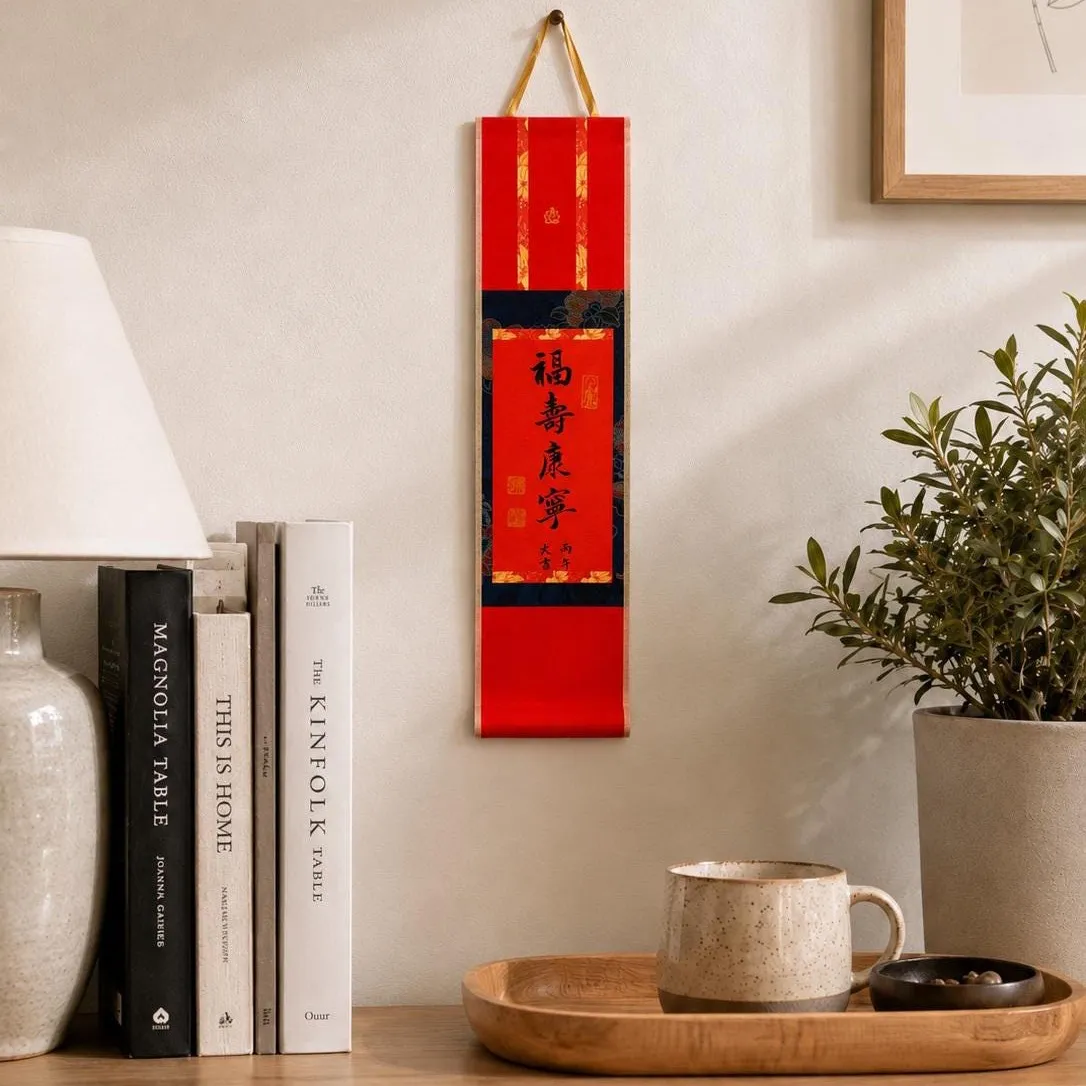
Photo shows a sample — yours will be brushed with the character you choose.
Wall Scroll — for walls & housewarmingsfrom $38→ -
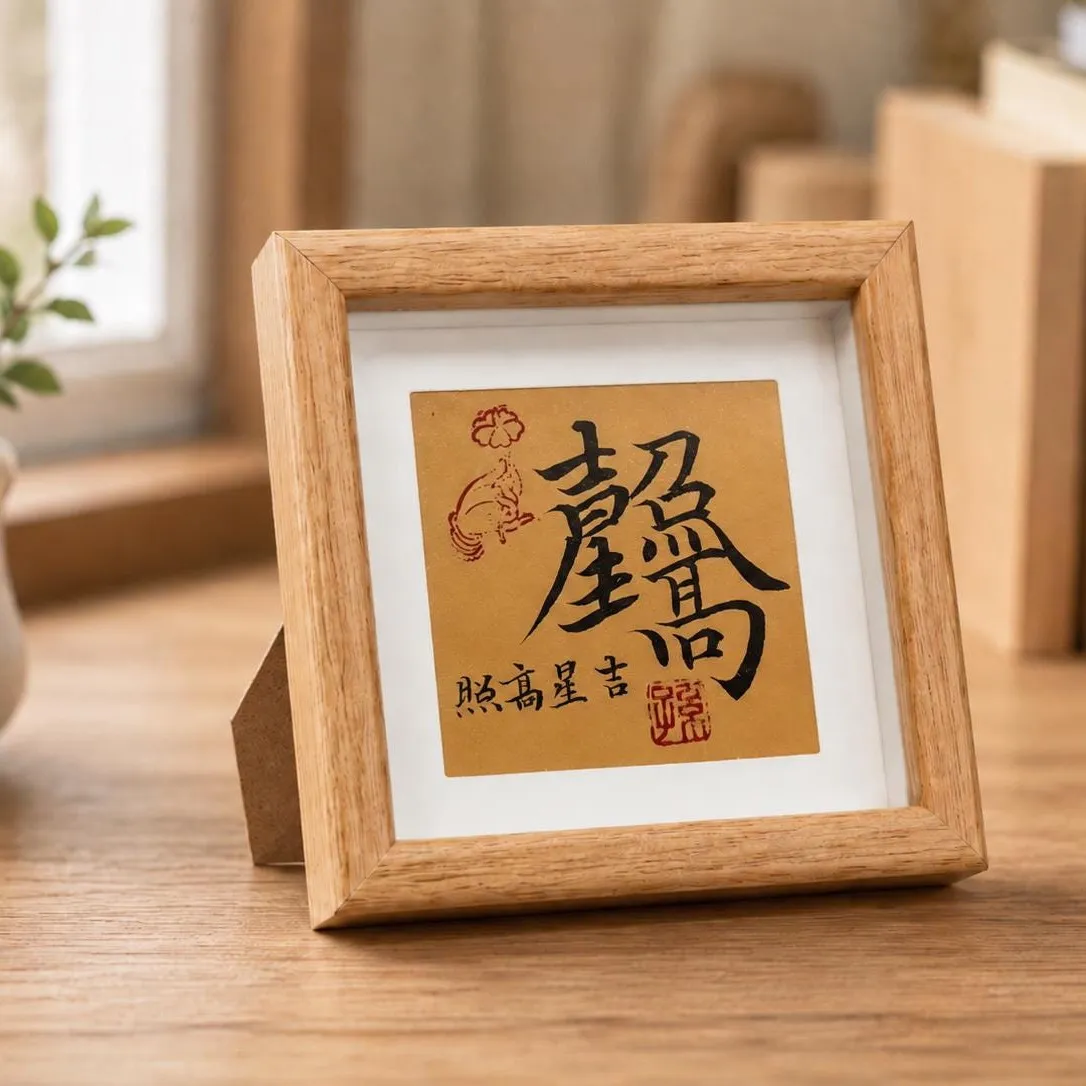
Photo shows a sample — yours will be brushed with the character you choose.
Desk Frame — for desks, studies & studiosfrom $44→