Chinese New Year Gifts
Chinese characters for the threshold of the lunar year — blessing, prosperity, joy, family harmony, and a smooth passage into the months ahead.
Recommended characters
乐 (Lè) — Joy
For the New Year gift that names the felt quality the year should have throughout. 新年快乐 is the most common greeting of the season — 乐 is what the year needs to feel like, not just at its threshold but in the daily texture of the months that follow. Where 福 wishes a whole good life and 万事如意 wishes for all outcomes, 乐 names something more specific: that the year be genuinely, ordinarily glad.
家和 (Jiā Hé) — Family Harmony
For the New Year gift that names what the year needs to go well. 家和 is the first half of the proverb that hangs in more Chinese homes than any other inscription — 家和万事兴 — and giving it at New Year is giving the condition, not the consequence: a household in accord with itself, before the year begins.
平安喜乐 (Píng Ān Xǐ Lè) — Peace · Safety · Joy · Gladness
For the New Year gift that names both what the year needs to sustain and what it should produce. 平安 (safety, undisturbed passage) covers the baseline families hold for each other at the turn of the year; 喜乐 (joy and gladness) covers the quality they hope the year holds throughout. More emotionally direct than 万事如意, which wishes for all outcomes — 平安喜乐 names two specific things: that everyone stays safe and that the year is genuinely glad.
家和万事兴 (Jiā Hé Wàn Shì Xīng) — When Family is Harmonious, All Things Flourish
For the New Year gift that gives the full proverb, not just the condition. 家和万事兴 is the inscription families have hung above their doorways at the lunar new year for centuries — not a wish for prosperity but the argument that household harmony is the prerequisite that makes the year’s outcomes possible. Where 家和 names the state the year should begin in, 家和万事兴 names the sequence that follows.
丰 (Fēng) — Abundance
For the New Year gift that names what the year should hold rather than how the year should feel. 五谷丰登 — five grains fill the granary — is among the most spoken New Year blessings in Mandarin; 丰 is the character at the center of that phrase. Where 福 names all good conditions together and 乐 names the year’s gladness, 丰 is specific: the wish that the year produces enough and more, the granary high, the table sumptuous. Most direct for the friend or couple beginning a new household.
祥和 (Xiáng Hé) — Auspiciousness and Harmony
For the New Year gift that names the complete condition of a good season — not the lucky omen alone (吉祥) or the household in accord alone (家和), but both dimensions together: a world that is favorably inclined and a household that is warm enough to receive it. 祥和 appears in the red doorframe couplets more than any other pair blessing; giving it as a gift names the quality of the entire period, not any single outcome.
安泰 (Ān Tài) — Peace and Cosmic Right-Order
For the New Year gift that names the complete double condition of a good year — the world in its right order (泰) and the household settled within it (安). Where 平安 names safe passage and 安康 names personal health alongside peace, 安泰 adds the cosmic dimension: 泰 names the world in the configuration in which everything communicates and flows through, the new year as a threshold that re-opens what the old year may have closed. The personal version of what 国泰民安 names at the scale of the kingdom — most apt for the grandparent or elder parent at whose New Year threshold the complete blessing is the right one.
福乐 (Fú Lè) — Blessing and Joy
For the New Year gift that names both the fortune wished for the year and the gladness it should feel like to live through. 福乐 compacts what the season calls for into two characters: 福 (the conditions — health, sufficiency, what the year needs to go well) and 乐 (the gladness of living through it). 新年快乐, the most spoken greeting of the season, already names the 乐 and leaves 福 implicit; giving 福乐 as a gift says both halves aloud. More compact than 万事如意 and more focused than 平安喜乐, it is the complete double wish — the year’s blessing and the year’s joy, inseparable.
五福临门 (Wǔ Fú Lín Mén) — The Five Blessings Arrive at the Threshold
For the New Year gift that names the complete conditions of a good year rather than a single quality or feeling. 五福临门 is the classic gate-inscription phrase of the season: the one that names all five blessings — longevity, sufficiency, health and inner peace, a disposition toward virtue, and a good end — as arriving simultaneously at the threshold. Where 福乐 names the blessing and the joy together, and 万事如意 names all outcomes, 五福临门 names the five-part endowment itself: the complete inventory of what the year is asked to hold from beginning to end.
步步高升 (Bù Bù Gāo Shēng) — Step by Step, Rising Higher
For the New Year gift that names a career trajectory rather than a general condition or feeling. 步步高升 is the career-motion phrase of the season — one of the fixed Spring Festival couplet phrases, paired with 年年有余 (abundance year after year) on the gate panels. Where 五福临门 names all five conditions of a complete life arriving at the threshold and 万事如意 wishes for all outcomes, 步步高升 is the specific wish for the working adult: that each year lands them one step higher than the last, the motion of ascent continuing through the year just beginning.
龙凤呈祥 (Lóng Fèng Chéng Xiáng) — Dragon and Phoenix Display Auspiciousness
For the New Year gift that names the year’s complete cosmological auspiciousness rather than a specific condition or trajectory. 龙凤呈祥 names the source from which all good omens derive: the dragon (cosmic yang) and phoenix (cosmic yin) together, their conjunction announcing that the fundamental forces of the year are aligned. Most apt for a couple entering the new year together — the New Year gift that names both the year’s orientation and the union’s continued right order in one phrase.
泰 (Tài) — Grand, Settled Peace
For the New Year gift that wishes the largest kind of peace — woven into the season itself through 三阳开泰, winter turning toward spring, the year reopening into flourishing. 泰 carries the hope of 否极泰来, a hard year giving way to a settled one, and the dignity of 国泰民安, the peace that holds a whole household. Where 五福临门 names all five conditions of a good year and 步步高升 names career ascent, 泰 wishes the ground beneath both — grand, unforced stability as the calendar turns.
盛 (Shèng) — Flourishing
For the New Year gift that wishes the year not merely smooth but flourishing — vigorous, growing, on the rise. 盛 names thriving in motion: 百业兴盛, every undertaking ascending. Where 丰 names the granary high and the measure overflowing, and 泰 wishes the grand calm of things settled, 盛 wishes the climbing energy of a year still rising toward its peak. Most apt when the wish is that the months ahead teem with life rather than simply pass safely.
太平 (Tài Píng) — Great Peace
For the New Year gift that wishes the largest and quietest thing of all: a year in which the world simply holds. 太平 is the 天下太平 of the season’s couplets, the companion of 国泰民安 — not a specific gain but the underlying condition that makes any gain safe, an age at rest in which ordinary life goes on undisturbed. Where 步步高升 names career ascent and 五福临门 names the five blessings arriving at the door, 太平 wishes the ground beneath all of them: peaceful times for the months ahead, nothing erupting, the calendar turning into a year that lets everyone be.
富足 (Fù Zú) — Abundance · Well-Provided
For the New Year gift that wishes the household its plain material floor for the year ahead: storehouses stocked, the table full, the family wanting for nothing. Where 丰 names the granary’s overflowing yield (五谷丰登, the bumper harvest) and 步步高升 names career ascent and rising rank, 富足 names the quieter base beneath them — plenty already in hand, enough and a little more, a household provided for rather than a year that overflows or a fortune that climbs. The 足 keeps the wish grounded in sufficiency, not endless gain. The New Year choice for the friend or family whose year you want simply well-supplied.
金玉满堂 (Jīn Yù Mǎn Táng) — Gold and Jade Fill the Hall
For the New Year gift that names abundance as a picture rather than a quality of the year. 金玉满堂 is one of the fixed prosperity phrases of the Spring Festival couplets, hung at the gate or above the main hall. Where 富足 names the household’s quiet material floor and 步步高升 names career ascent, 金玉满堂 names the celebratory image the season invites: the hall full, the year generous. It is also the phrase behind the season’s goldfish imagery — 金鱼满堂, a pond of red-gold fish standing a single tone away from 金玉, painted and hung at the turn of the year.
笑口常开 (Xiào Kǒu Cháng Kāi) — May the Laughing Mouth Stay Open
For the New Year gift that wishes the disposition rather than the outcome — the cheer phrase often extended to 笑口常开迎百福, keep the laughing mouth open and a hundred blessings come to meet it. Where 万事如意 wishes everything go as hoped and 步步高升 wishes advancement, 笑口常开 wishes the mood that makes a good year felt: the household entering the new year already glad, the face already open. The blessing that asks not for what the year produces but for the gladness to receive it in.
年年有余 (Nián Nián Yǒu Yú) — A Surplus Year After Year
For the New Year gift acted out on the table itself — the whole steamed fish no one is allowed to finish, because 余 (surplus) and 鱼 (fish) are both yú and a fish left over is a year left with something to spare. Where 金玉满堂 pictures the hall full of gold and jade and 步步高升 wishes career ascent, 年年有余 wishes the humbler, more durable thing: that every year close with a little kept in reserve, the household never running to the edge. One of the fixed couplet phrases at the gate, and the wish behind the season’s carp and goldfish imagery — prosperity as a margin that renews, not a fortune that arrives.
阖家幸福 (Hé Jiā Xìng Fú) — Happiness for the Whole Family
For the New Year gift that says the most common thing a Lunar New Year greeting can say — 祝您阖家幸福, may your whole family be happy. Where 富足 wishes the household its material floor and 金玉满堂 pictures the hall full of gold and jade, 阖家幸福 wishes only a good life, for everyone at home at once, addressed to the household as a unit rather than any one member. It is the blessing that reaches past the holiday: not gladness for the reunion table alone but well-being for all the New Years to come. The choice for the family whose whole year, not just whose feast, you want to wish well.
团圆 (Tuán Yuán) — The Family Gathered Whole
For the New Year gift that names the whole reason for the holiday. Before the fireworks and the red envelopes comes the 团圆饭, the reunion dinner on the last night of the old year, and the entire 春运 migration — the largest yearly movement of people anywhere — exists to make it possible. Where 阖家幸福 wishes the household happiness for the year ahead and 年年有余 wishes it surplus, 团圆 wishes the one thing the festival is actually built around: everyone home at once, the circle closed, no seat left empty. The choice for the family whose New Year is measured by who makes it to the table.
兴旺 (Xīng Wàng) — Thriving
For the New Year gift that wishes the year loud. 兴旺 gets pasted up in two registers each spring — 生意兴旺 behind the shop counter, may the trade thrive, and 人丁兴旺 at home, may the household be full of people — and it needs both to mean what it means. Businesses stretch it to four characters as 兴旺发达 and hang it where customers can see. Where 年年有余 wishes the year close with a margin kept back and 阖家幸福 wishes everyone at home well, 兴旺 wishes heat and increase — 兴 the climb, 旺 the fire burning hard, and the word insists on both. The choice for the friend or family whose good year would be counted in traffic, growth, and a table with more people around it than last time.
紫气东来 (Zǐ Qì Dōng Lái) — Purple Vapor Comes from the East
For the New Year gift that goes above the door — the horizontal scroll (横批) pasted across the top of the gate to crown the couplet below it. 紫气东来 is one of the most common of these, and it names the turn of the year as a horizon over which fortune is already visible: purple vapor drifting in from the east the way spring drifts in from the same quarter. Where 五福临门 names the blessings arriving and 万事如意 wishes all things go one’s way, 紫气东来 names none of them by name — only the direction. It says nothing about what the year will hold and everything about which way good is coming: toward this house, from the east. The Spring Festival inscription for a household you want to picture with something auspicious already on the road to its gate.
出入平安 (Chū Rù Píng Ān) — Safe Passage Coming and Going
For the New Year gift that goes above the door but wishes the plainest thing of all. Like 紫气东来, 出入平安 is a horizontal banner (横批) pasted across the top of the gate — but where 紫气东来 names the direction fortune arrives from and 五福临门 names the five blessings arriving, 出入平安 names nobody’s fortune and everybody’s safety: that every person who passes beneath this door in the coming year goes out and comes home unharmed. Built on the antithesis of 出 (going out) and 入 (coming in), it closes the loop the season’s other wishes leave open — not that the year be grand, but that it be lived through whole, by everyone who crosses the threshold.
旺 (Wàng) — The Fire at Midnight
In Shanxi and Inner Mongolia the year turns on a fire called 旺火: a cone of coal built in the courtyard through the last days of the twelfth month, lit at midnight on 除夕, the family walking a circle around it in the cold while it roars. That custom is this character, and it is the most literal New Year wish on this page. Where 兴旺 pairs the climb with the heat and gets pasted behind the shop counter, the single 旺 is only the heat — 火旺, 人气旺, 旺季 — and where 年年有余 wishes a margin kept back and 泰 wishes the year settled, 旺 wishes the opposite of settled: a year with more going on in it than the last one. For the household or the friend whose good year would be measured in noise and traffic.
禄 (Lù) — The Star You Have to Work For
三星高照 — may the three stars shine down — is what gets said over a New Year table, and the three are 福, 禄, 寿: fortune, provision, long life. Two of them are out of anybody’s hands. 禄 is the one that has to be worked for, and 禄星 is drawn to match: official’s hat, court robes, in most sets a tablet held in both hands. Hanging the single character picks that star out of the three, and it is a narrower wish than anything else on this page by design: 五福临门 sends five blessings to the door, 年年有余 asks for a surplus kept back, 步步高升 counts stairs without saying what waits at the top. 禄 names the thing itself — the income of a post, and the work that has to go on inside it. For the household that has one obvious variable in the year ahead and no wish to be coy about it.
顺遂 (Shùn Suì) — Ten Thousand Matters, All Carried Through
万事顺遂 gets typed by the million at midnight, and it asks for less than almost anything else on this page while covering more ground. 五福临门 sends five blessings to the door; 年年有余 asks that something be left over at the end of it; 禄 names an income and the work inside it. 顺遂 names no goods at all. It asks how the year runs instead: 顺, that the twelve months go without snagging on anything, and 遂, that whatever was planned inside them actually finishes. That second half is what separates it from the fair-wind greeting printed on the same red paper — 一帆风顺 wishes the wind, and 遂 asks whether the boat reached the place it was going. For the household whose coming year holds something specific that has to finish.
昌盛 (Chāng Shèng) — A Run of Years, Not a Year
繁荣昌盛 is the phrase said of the country when the calendar turns, and it is the largest wish on this page by a wide margin. Everything else here frames the twelve months and puts something inside them: 年年有余 asks for a margin kept back at the end of them, 兴旺 asks that the counter stay busy and the rooms stay noisy, 五福临门 sends five blessings to the door. 昌盛 sets no twelve-month frame at all. It asks for a stretch — 生意昌盛 on the card sent to a business, 家族昌盛 at a table with four generations at it — and asks that the flourishing be wide enough and long enough to be legible from outside. Note the register before choosing it: the couplet formula pasted at a shop door each spring is 生意兴隆, and 昌盛 is the more formal cousin, at home in a toast, a speech, or brushwork on a wall rather than on red paper. The New Year choice for the friend or family whose good year would be one more year in a run of them.
欢聚一堂 (Huān Jù Yī Táng) — Gathered Under One Roof
The season is really two occasions under one name, and they want different words. 除夕 and the day after it belong to the household — that is 团圆 territory, further up this page, with the journey home behind it and the chairs counted. Everything on either side of those two days belongs to everybody else: the company 年会 held in the week before the trains fill up, the classmates who book a lunch after 初二 because this is the one week of the year they are all in the same city, the neighbors’ table, the round of 拜年 calls. 欢聚一堂 is the phrase for that half of the holiday. It is why the line turns up on a backdrop or a banner rather than on the door of a house — it asks only that the room be glad, and never asks whether the room is related, since 堂 is the hall a household opens to guests rather than the inner room where it lives. For the New Year gift meant for the gatherings that were chosen rather than the one that is owed.
喜气洋洋 (Xǐ Qì Yáng Yáng) — Joy Brimming Over
The third piece of red paper at a Chinese gate is the short strip across the top — the 横批, which has to gather the couplet’s two lines into four characters. Most of the ones in the standard rotation point outward at something not yet arrived: 紫气东来 at the quarter fortune is coming from, 五福临门 at five blessings on their way to the door, 出入平安 at safe passage for everyone who will pass under it. 喜气洋洋 points down at the house instead. It goes up on the last afternoon of the old year and reports what is already true underneath it — paper cuttings on the glass, the kitchen going since morning, the first visitors due before noon — so it is the one strip in the set whose accuracy can be checked by looking down. It even has a tune behind it: 刘明源’s 1958 orchestral 《喜洋洋》, the piece that comes up under the New Year gala every year and that most people can hum without being able to name. For the household whose holiday you want named as it is being lived rather than forecast.
春 (Chūn) — Hitting the Spring
Across much of northern China the plain name for the first day of spring is not 立春 but 打春: hitting the spring. The phrase is a leftover from the county ceremony that used to open the season, in which a life-size ox modelled in clay was whipped apart in public and the pieces carried off to the fields — a season begun by striking it rather than waiting on it. That is the temperament of the character, and it is why 春 sits oddly among the other papers on a New Year door. 福 beside it on the same door asks for everything at once. 春 states only that the year has reached its starting position, on a date fixed years in advance, in weather that gives no support to the claim — 春节 falls between January 21st and February 20th, and 新春 goes out in the cold. For the gift where marking the turn is more honest than forecasting what comes of it.
祥 (Xiáng) — The Paper That Asks for No Event
祥 is on the table at New Year whether anyone registers it or not — printed as 吉祥 across the red envelope, drawn as 祥云 in the scrollwork around the printing. Hung as a single character it asks for less than the compound does. 吉祥 wants the signs to point at good things; 祥 requires no event at all. The character settled long ago onto conditions rather than events, which is how it ended up inside 祥和 for a room and 慈祥 for a face. 旺 further up this page asks for a fire going hard and 顺遂 for a clear road, and both name something happening. 祥 asks only that the year itself be well-disposed, and asks nothing of it beyond that.
兴 (Xīng) — The One Verb on the Door
兴 does most of its work in company at the turn of the year: 生意兴隆 behind the shop counter, 万事兴 closing the household line, 兴旺发达 stretched across a storefront. The classic shop couplet pairs it with an entry further down this list — 生意兴隆通四海,财源茂盛达三江, may the trade rise and reach the four seas, may the sources of income flourish and reach the three rivers. Pulled out of those compounds the single character does something the rest of the paper on the door does not. 五福临门 has blessings arriving at the threshold, 紫气东来 has fortune coming from the east, 出入平安 asks that everyone who passes under it come back whole — all of them ask the year to deliver. 兴 is a verb the household performs, and it takes an object: 兴家, 兴业, 兴学. For the gift that wishes not that the year be generous, but that whatever this family means to get off the ground this year, gets off the ground.
吉 (Jí) — The One That Names Days
At the turn of the year this character is everywhere in company — 大吉 on the red paper, 万事大吉 said over the last of the dishes, 恭喜发财 answered across the table with 大吉大利. In Guangdong and Hong Kong it also goes on a plant: 桔 and 吉 are the same syllable in Cantonese, so a potted kumquat set in the doorway is 大吉 growing, and a matched pair at a shop entrance reads as 大吉大利. Pulled out of all that, the single character makes a narrower wish than the rest of the door. 五福临门 has blessings arriving at the threshold and 顺 asks that the road stay clear. 吉 speaks about dates. The year ahead is a sequence of days on which this household will sign, move, open, travel and marry, and 吉 is the word for a day that is right for the thing being done on it — and a year is only ever lived one date at a time.
一元复始 (Yī Yuán Fù Shǐ) — The Half of the Couplet That Can Be Checked
The New Year couplet everyone in the country can recite is not four characters but eight, split across two lines: 一元复始 on the right of the door, 万象更新 answering on the left. Of the two the second is the famous one and the first is the one making a claim you can verify. 万象更新 says all ten thousand appearances have been made new, which is a great deal to assert about a household at eight in the morning on 初一. 一元复始 says only that the count has come back round to where counts start. The four-character strip across the top and most of what goes beside it point at something not yet in hand — 五福临门 at five blessings on the way to the door, 紫气东来 at the quarter fortune arrives from, 出入平安 at journeys nobody has taken yet. 喜气洋洋 higher on this page is checkable too, but by looking down at the kitchen. This one is checkable by arithmetic, and its subject is not the household at all: it is the calendar, reporting that the marker is back at the head. 春 further up this page dates the turn forward, to 立春, ahead of any evidence. This dates it backward, to the solstice six weeks behind — the day the dark stopped increasing, which the 《周易》 named 复, return, and which the old ritual code met by closing the passes and keeping the roads empty for a day. For the New Year gift where starting the year honestly matters more than forecasting it.
吉星高照 (Jí Xīng Gāo Zhào) — The One That Points Up
The 横批 rotation divides by where it is looking. 紫气东来 looks out at the quarter fortune is coming from, 五福临门 at five blessings on their way to the door, 出入平安 at everyone who will pass beneath it; 喜气洋洋 looks down and reports on the house. 吉星高照 is the strip that points up, and it is the only one in the set that describes nothing arriving. The reason it belongs on a doorframe at this particular moment is that the turn of the year is when the question gets asked at all: the almanac reassigns the roster at the change of the year — which of the good ranks are over a household for the next twelve months, and which are not — so New Year is when a family finds out what it is standing under. The four characters answer in advance and leave it there. No blessing named, no quantity, no date, and nothing asked of anyone underneath.
事业有成 (Shì Yè Yǒu Chéng) — The Second Line of the Standard Run
For the New Year gift to someone of working age, which is the one band of life this phrase fits. 拜年 to an adult usually runs 身体健康、事业有成 — health first, then the work — and the order is doing something: the first line is addressed to the body of the person in front of you, and the second steps past them to ask after what they made. 丰 elsewhere on this page asks that the year produce enough, and 兴 names the coming-up of something new. 事业有成 asks after one particular thing already under construction, and asks whether it is finished enough to be seen from outside. A child gets 学业有成 instead, and someone who has retired gets 身体健康 on its own.
学业有成 (Xué Yè Yǒu Chéng) — The Student’s Seat at the Same Table
事业有成 above is the second line of the standard adult 拜年 run. This is what the same table says to whoever is not an adult yet, and the two are worth owning as a pair rather than choosing between: the same grammatical move made at two ages, a course or a career sitting in the subject slot with 有成 as the report on it. A person crosses from one to the other exactly once, in the year they stop being enrolled. Which is the difference that matters when you are picking. The adult version can be given for thirty New Years running. This one has a date built into it, and reaching that date is what cancels it.
祥云 (Xiáng Yún) — Already Printed Around the Edge
Pick up a red sheet for the new year and the cloud is usually on it already: printed into the margins, around the rim of the lantern, along the frame of the print. It is the ground the season’s writing sits on, and it is almost never given as the subject in its own right. Brushed on its own sheet it stops being a frame and becomes the claim — that what is overhead has already been checked rather than asked for, which is a report and not a wish. 司马迁 took the trouble to write down what a cloud had to look like before it counted, and the household version kept the logic even after it stopped keeping the five colors. Hung on a wall in the first week of the year, the border says out loud the thing it had been saying quietly all along.
善缘 (Shàn Yuán) — The Second Round of Doors
New Year is the one holiday whose central activity is a verb performed at other people’s doors, and 善缘 is built on a verb of exactly that kind: 结, to tie. The pairing is not accidental — 广结善缘 asks only that the conditions be left in good order, and 拜年 is the one week a year when leaving them in good order means physically standing somewhere with a bag of oranges. Nothing is claimed about what comes back, on either side. 祥云 elsewhere on this page reports what is overhead and requires nobody to do anything. This one cannot be given without describing something the recipient did on foot, and it is the rare New Year word that credits something done rather than something observed.
康泰 (Kāng Tài) — The Sentence at the Door
拜年 has a fixed order that almost nobody notices: the health sentence goes first, aimed at whoever in the household is oldest, and the year, the work and the red envelopes all come after it. 身体健康 is what gets said at that door; 康泰 is what gets written, on the card that arrives when the sender cannot be standing there. 安泰 elsewhere on this page takes 泰 to its full width — the world in right order and the household settled inside it. This one will not go that far: it declines to say anything about the year at all, which is why it can still be sent to a grandparent whose year is not going to be a good one. It asks for clearance, not for the year to turn.
天伦之乐 (Tiān Lún Zhī Lè) — Kinship Joy at the Threshold
阖家欢乐 wants the door shut and everyone inside; 团圆 wants the travel story finished; 喜气洋洋 reports festive air already in the house. 天伦之乐 names the kinship gladness those scenes are for — usable even when the roster is imperfect — and stays clear of wealth and luck lines.
五谷丰登 (Wǔ Gǔ Fēng Dēng) — Harvest on the Couplet
金玉满堂 fills the hall; 年年有余 leaves the fish; 五福临门 names the five blessings at the door. 五谷丰登 is the couplet line that still reads the year as grain coming in — Moedict’s plain “good year for the grains.” For the Spring Festival gift that should name household fullness in the granary register, not treasure and not a career climb.
福 (Fú) — Blessing · Good Fortune · Happiness
The most traditional moment for "福" — a heartfelt wish for a year of joy, harmony, and peace ahead.
See 福 →喜 (Xǐ) — Joy · Happiness · Celebration
For the friend or family member whose New Year you want to be lighter than last year's. 喜 is the wish for celebration itself — many small joys, many shared moments.
See 喜 →财 (Cái) — Prosperity · Abundance · Success
A New Year wish that names what everyone hopes for but few say aloud — that the year ahead holds abundance, opportunity, and the kind of success that lets you take care of the people you love.
See 财 →瑞 (Ruì) — Good Tidings · Blessing · Promise of a Bright Year
The traditional moment for "瑞" — a wish for a year of bright beginnings and gentle fortune.
See 瑞 →平安 (Píng Ān) — Peace · Safety · Well-being
平安 is the foundational New Year wish — under the firecrackers and red envelopes, the first thing every parent quietly hopes for is that everyone makes it through the year whole. Hung above a doorway, it sets the tone for the year.
See 平安 →富贵 (Fù Guì) — Wealth · Honor · Prosperity with Standing
富贵 is a frequent New Year couplet for households hoping the year ahead is one of both means and recognition — the kind of prosperity neighbors notice.
See 富贵 →吉祥 (Jí Xiáng) — Auspiciousness · Good Omen · The Promise of Good Things
吉祥 is the umbrella greeting of the new year — the inscription on red envelopes, the language of couplets pasted to doorframes. To give 吉祥 is to wish the whole field of good things at once.
See 吉祥 →如意 (Rú Yì) — As You Wish · Aligned with the Heart
如意 is among the gentlest of New Year wishes — not for any specific outcome, but that what the recipient quietly hopes for, comes. It assumes the other person knows their own heart.
See 如意 →福禄 (Fú Lù) — Blessing · Prosperity · Abundance Through a Respected Place
Together with 寿 and 喜, 福禄 forms half of the four classical blessings 福禄寿喜 — the standard New Year iconography that appears on couplets, cards, and red envelopes.
See 福禄 →龙 (Lóng) — Dragon · Power · Auspicious Strength
The Year of the Dragon is considered the most auspicious of the twelve. In any year, 龙 carries the wish for the kind of luck, momentum, and presence that the dragon embodies.
See 龙 →万事如意 (Wàn Shì Rú Yì) — May All Things Go As You Wish
万事如意 is the most encompassing of New Year phrases — covering not just the big wishes but the day-to-day. The standard greeting on red envelopes, the closing line of New Year cards, the toast at the family table.
See 万事如意 →心想事成 (Xīn Xiǎng Shì Chéng) — May Your Heart's Wishes Come True
心想事成 is among the most spoken of the four-character New Year greetings — direct, personal, and one of the few specific enough to feel personal even at scale.
See 心想事成 →招财进宝 (Zhāo Cái Jìn Bǎo) — Summon Wealth · Draw In Treasure
A staple of New Year couplets pasted to entranceways — particularly for households hoping the year ahead is a year of inflow rather than effort alone.
See 招财进宝 →阖家欢乐 (Hé Jiā Huān Lè) — Joy for the Whole Household
阖家欢乐 is the traditional inscription for the Lunar New Year's Eve dinner — the wish that the table stays full and the room stays warm. A blessing for the family as a unit, not for any one member.
See 阖家欢乐 →岁岁平安 (Suì Suì Píng Ān) — Peace Year After Year
岁岁平安 is a staple of New Year inscriptions for elders — particularly fitting because of the folk pun: when something breaks at the New Year (碎, suì), the family says 岁岁(碎碎)平安, turning the mishap into a renewed wish.
See 岁岁平安 →龙马精神 (Lóng Mǎ Jīng Shén) — The Vigor of the Dragon and Horse · Tireless Spirit
A frequent New Year toast and inscription — the wish that the recipient meets the new year with the energy of the two animals who never tire.
See 龙马精神 →顺 (Shùn) — Smooth Going · Flowing Well · Without Obstruction
顺 at New Year names a specific hope: that the year ahead unfolds as planned, without the sideways turns that knock even good years off course. The right choice for the friend whose new year carries real stakes.
See 顺 →福寿康宁 (Fú Shòu Kāng Níng) — Blessing · Longevity · Health · Peace
As a New Year greeting for parents or grandparents, 福寿康宁 covers the full territory of elder wellbeing without singling out any one anxiety. It is the comprehensive wish.
See 福寿康宁 →福至 (Fú Zhì) — Blessings Arrive · Fortune Has Come
福至 is the shortest, most direct New Year blessing — two characters that announce the arrival of good fortune as accomplished fact. Hung on a door or written on a red banner, it declares that blessing is not hoped for but present.
See 福至 →吉祥如意 (Jí Xiáng Rú Yì) — Auspicious · As You Wish · A Year That Unfolds Well
吉祥如意 is one of the most-spoken phrases of the Chinese New Year — exchanged between friends, written on red envelopes, hung above doorways during 春节. A wish that the year arrives both lucky and aligned with what the recipient hopes for.
See 吉祥如意 →Bring a hand-brushed piece home — choose how you'd like it brushed.
-
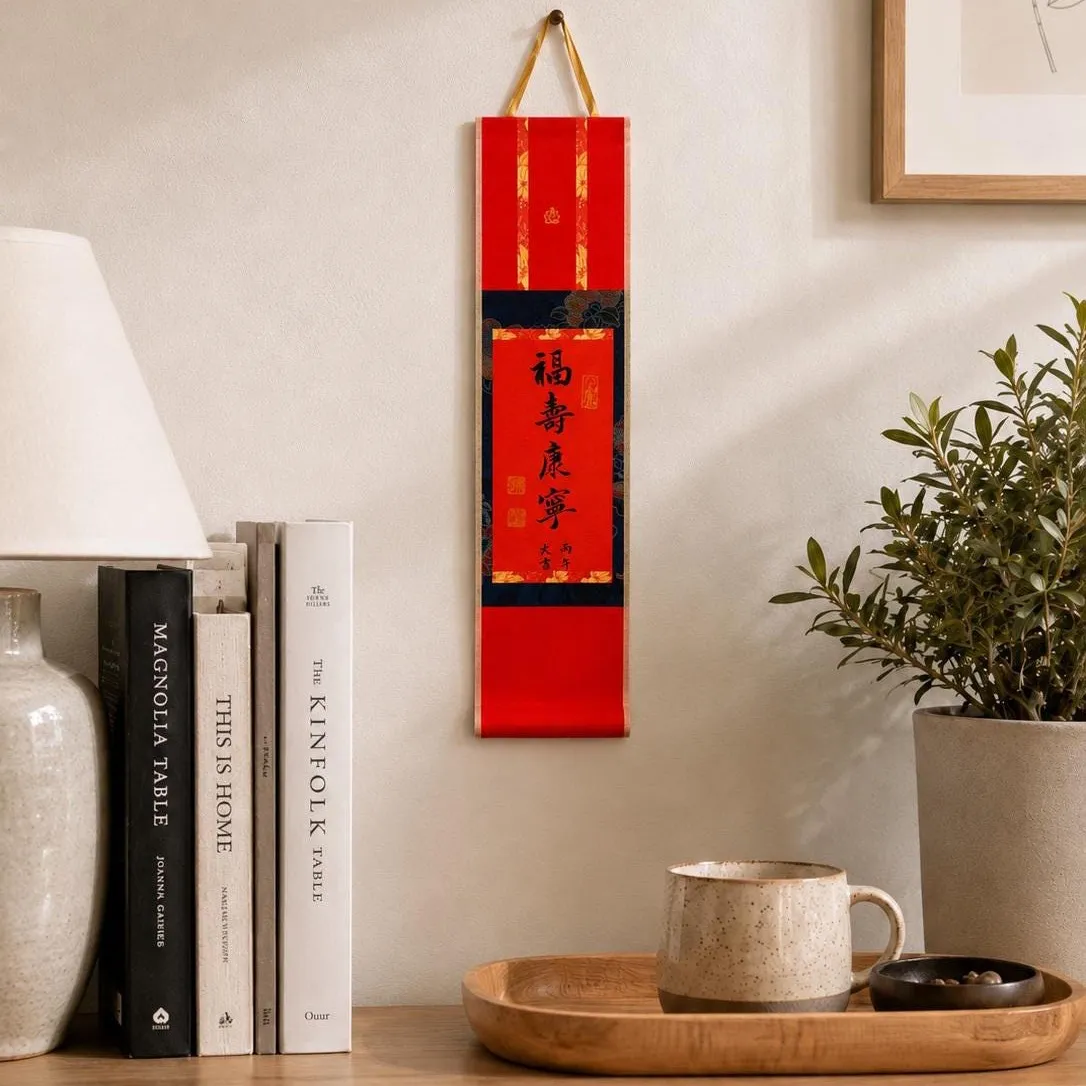
Photo shows a sample — yours will be brushed with the character you choose.
Wall Scroll — for walls & housewarmingsfrom $38→ -
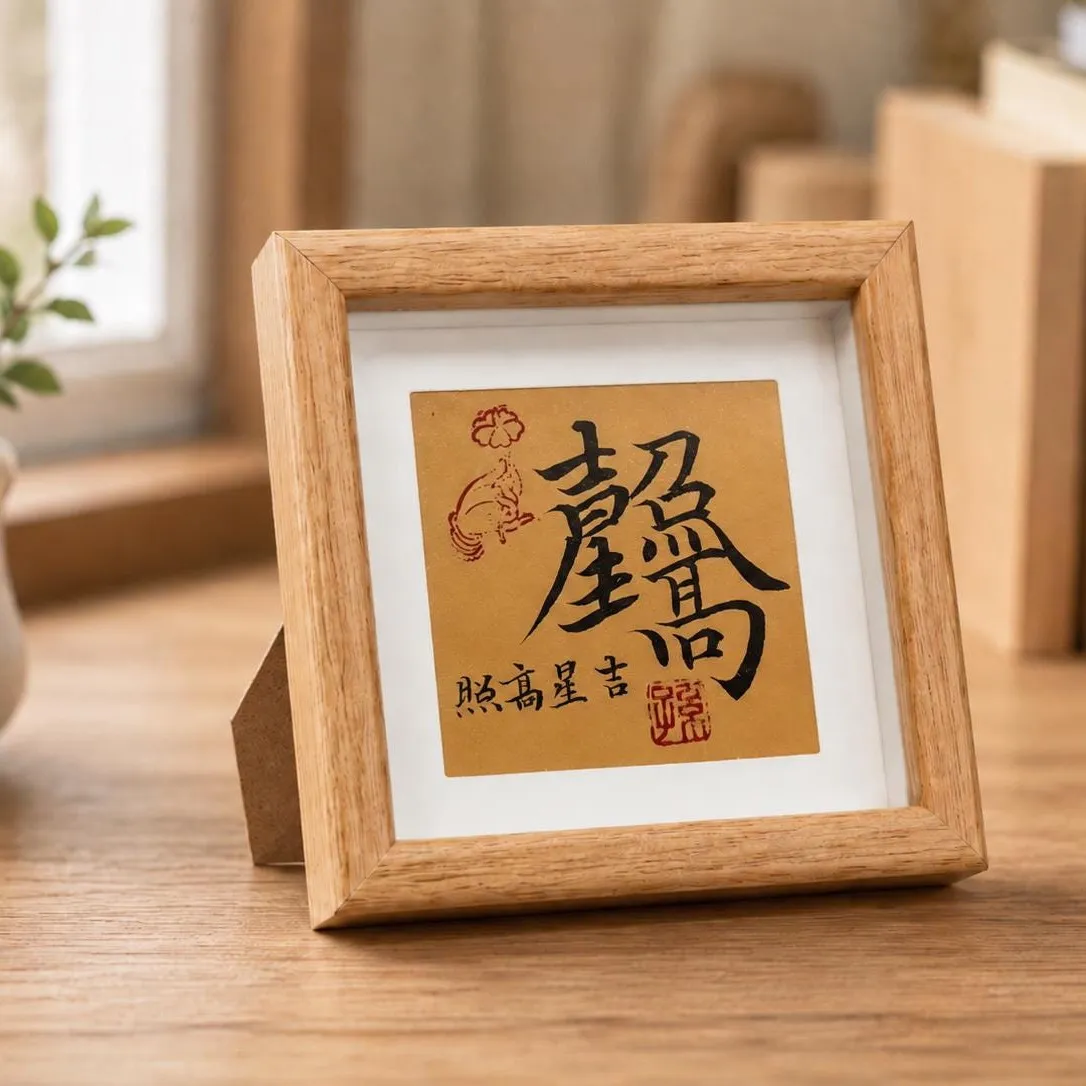
Photo shows a sample — yours will be brushed with the character you choose.
Desk Frame — for desks, studies & studiosfrom $44→ -
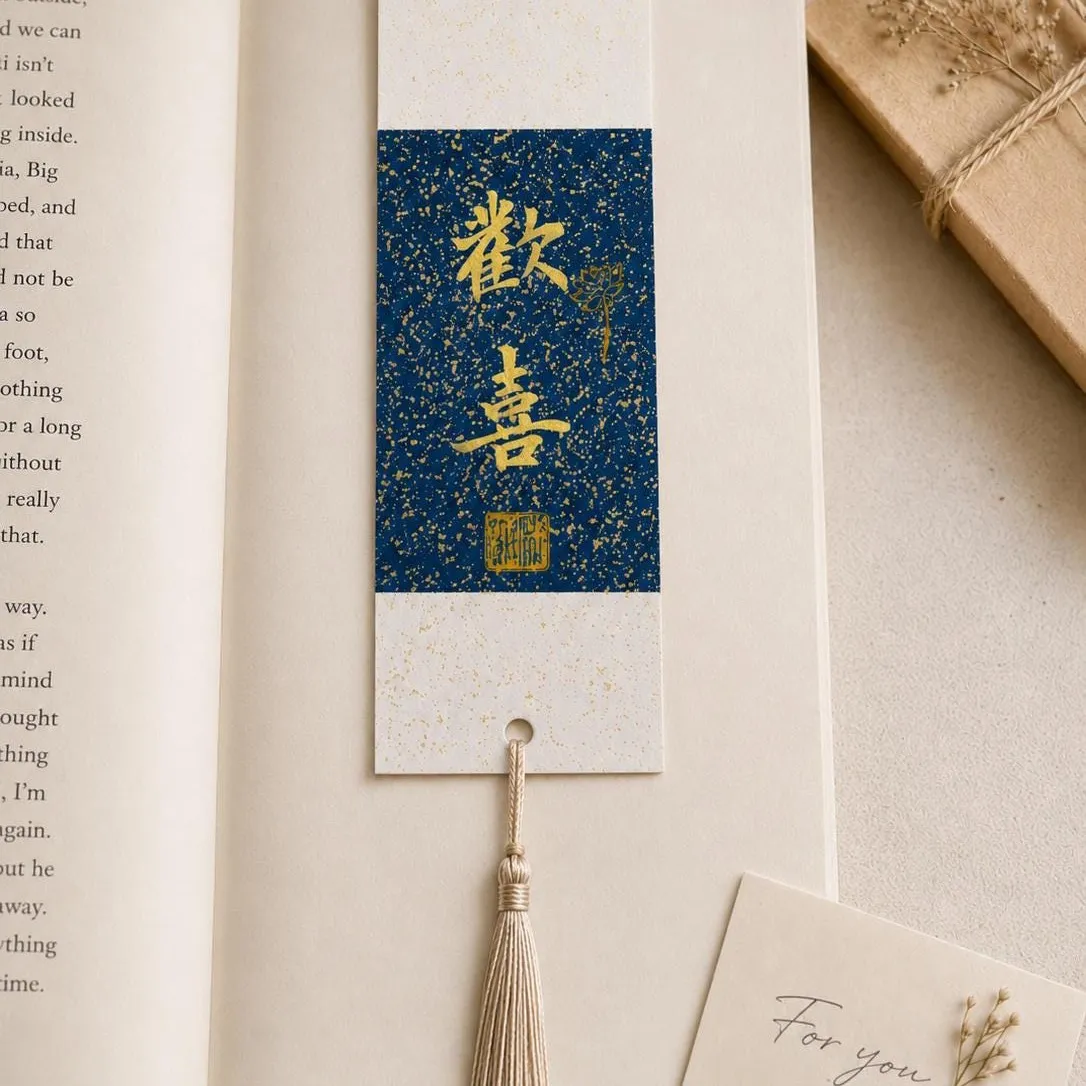
Photo shows a sample — yours will be brushed with the character you choose.
Bookmark — for readers & small thank-yousfrom $17→