丰 (fēng) — Abundance · Richness · Fullness
A single character.
Chinese has a cluster of abundance characters. 福 names the comprehensive blessing — health, peace, family, longevity, all gathered together. 富 names financial wealth specifically. 乐 names the gladness that a good year feels like from the inside. 丰 occupies a different register from all three: it names the material and experiential fullness of what the year actually holds — the granary being high, the table being sumptuous, the household having enough and then some. Where 福 is the wish for all conditions to be good and 万事如意 is the wish for all outcomes, 丰 is the wish for the year to be genuinely full — to produce more than what was strictly needed.
In Chinese life, 丰 shows up at the two thresholds where fullness matters most. At the lunar New Year, 五谷丰登 (wǔ gǔ fēng dēng, five grains fill the granary) is spoken across Mandarin-speaking communities as the agricultural calendar turns — a blessing that has survived urbanization intact because “five grains” became the term for all of life’s necessities, not just crops. At weddings, the banquet table is judged by whether it is 丰盛 (fēng shèng, sumptuous enough) — not merely sufficient but genuinely overflowing. The character describes the condition that allows generosity: having more than is needed means being able to give without diminishing what is yours.
A hand-brushed 丰 by FuBlessings carries this reading: not a wish for luck or fortune in the abstract, but for the year to be in its season of fullness — the season when the granary is high and the table has more than required. For a friend beginning a new year or a couple founding their household, 丰 is the wish that names what makes all the other blessings possible: the year in which the measure overflowed.
- abundance — material and experiential fullness
- a year that produces enough and more
- the condition of the household when nothing is missing
- richness in the sense of having plenty to give
- prosperity Prosperity (富, fù) specifically names financial abundance. 丰 is broader — the fullness of a year, a table, or a life, not just its financial state.
- fortune Fortune names luck or chance. 丰 names a result — the actual fullness that a good year produces, not the circumstances that produced it.
- luxury Luxury implies excess beyond need. 丰 names sufficiency at its maximum: enough and more, without the connotation of indulgence.
The short arms are the point: these readings don’t reach it.
- 豆 ritual grain vesselIn the traditional form 豐, the bean vessel 豆 appears at the base — the measuring vessel for the harvest. A 丰 year was one where the vessel overflowed its measure.
- 丰 (upper element) abundant growth above the rimThe arching growth above the vessel in 豐 — grain spilling over the top — is the visual root of the character's meaning: not a full vessel but an overflowing one.
character
- 丰收 fēng shōu abundant harvest — the year's fullness made concrete
- 丰年 fēng nián bumper year — the year that produces more than needed
- 丰盛 fēng shèng sumptuous, bountiful — used for a wedding feast or a table that is genuinely full
- 丰富 fēng fù rich, abundant — most commonly used for abundant resources or experience
- 五谷丰登 wǔ gǔ fēng dēng five grains fill the granary — the most spoken New Year abundance blessing
The Story Behind the Character
The traditional character 豐 shows a rounded vessel brimming with grain — not the vessel alone, but the grain arching above its rim. China's first dictionary (说文解字, c. 100 CE) defined it precisely: 豆之豐滿者也 — "the fullness and roundness of a bean vessel." The definition captures something deliberate. In early Chinese ritual, the 豆 (dòu) was not just a food vessel; it was the measuring vessel used to assess whether the harvest had been sufficient. A 豐 harvest was one where the measure overflowed.
The character found its earliest ceremonial expression in the Zhou royal hymns of the 《诗经》 — specifically in 《周颂·丰年》, one of the oldest harvest prayers in the collection. The Zhou kings offered this hymn after a 丰年 (fēng nián, bumper year), and the prayer is notable for what it does not ask: not divine protection or continued favor, but a plain acknowledgment that this year's abundance has been sufficient to honor the ancestral lines. The grain is so high it fills the topmost granary tier; the count runs to tens of millions. 丰 was the word for the year in which the measure overflowed.
The 《周易》 gave 丰 its most philosophical reading: Hexagram 55 (丰卦) carries the image of thunder and lightning together — force and clarity arriving simultaneously. Its 彖传 (Tuan Commentary) observes, in one of the most frequently cited sentences in the I Ching, that the sun at midday begins to decline and the full moon begins to wane. The point was not pessimism but precision: abundance is always in time, always at its peak before the turn. The hexagram counsels no anxiety about this — only the clarity to recognize the moment of fullness, and to be fully present to it.
Classical lines
- roughly 500 years
- c. 1000 BCE 《诗经·周颂·丰年》
- c. 800 BCE 《周易·丰卦》卦辞
- c. 500 BCE 《周易·丰卦·彖传》
丰年多黍多稌,亦有高廪,万亿及秭。 A year of abundance: millet and glutinous rice in plenty, and high granaries, in their tens of millions.
The oldest surviving 丰 prayer in Chinese letters — a Zhou royal hymn offered after a genuinely full harvest. What strikes the modern reader is its specificity: the hymn names the grain type, the granary height, and an implausible count. The exaggeration is part of the prayer — abundance so great it exceeds what can be tallied.
丰,亨,王假之,勿忧,宜日中。 Abundance: success. The king arrives at it; do not be anxious. It is proper to be like the sun at midday.
The I Ching's hexagram text for 丰. The phrase 勿忧 (do not be anxious) is the counsel of a tradition that had watched abundance generate its own worry — that it won't last, that it wasn't earned. The answer: be like the sun at midday — fully present to the moment of fullness, without anticipating the decline.
日中则昃,月盈则食,天地盈虚,与时消息。 The sun at midday begins to decline; the full moon begins to wane. Heaven and earth fill and empty, waxing and waning with the seasons.
The philosophical commentary accompanying the 丰 hexagram. This is not a warning about abundance but an observation about time: fullness has a season, and recognizing that season clearly is itself a form of wisdom. In the gift context, 丰 names the wish that the year is in its season of fullness — that this is its time of high granaries.
Why This Character Matters
The character 丰 appears in the first celebration hymn of the 《诗经》's Zhou royal section — a song composed not for a coronation but specifically for a year of good harvest. The Zhou kings maintained a ritual calendar tied to agricultural outcomes, and 丰年 (the full year) was the occasion for the highest offering. This pairing of abundance with acknowledgment — rather than abundance with prayer for more — is characteristic of how 丰 operates in Chinese cultural memory: it names what has arrived, not what is hoped for.
In daily modern use, 五谷丰登 (wǔ gǔ fēng dēng, five grains fill the granary) remains one of the most spoken New Year blessings in Mandarin-speaking communities. The phrase predates the printed calendar, and its agricultural reference has never required updating — "five grains" became the general term for all life's necessities, and "fill the granary" became the general term for having more than enough. A calligraphed 丰 at New Year or on a wedding gift carries the same meaning it carried in the Zhou hymns: this household, this year, is in its season of fullness.
A few characters live near "丰" but mean something quieter, sharper, or more specific. Here's how to tell them apart.
the fullness and richness of the year — what the household actually has, in material and experiential terms
the comprehensive blessing — all good things together, covering health, peace, family, and longevity
abundance in every dimension — harvest, household, relationship, experience
wealth specifically — financial and material abundance, the money register
the abundance of what the year holds — what is there
the felt gladness of the year — what it is like to live through
五谷丰登 — five grains fill the granary — is among the most spoken New Year phrases in Mandarin.
- 五谷丰登 — five grains fill the granary — is among the most spoken New Year phrases in Mandarin. Where 福 names the comprehensive blessing and 万事如意 names all outcomes, 丰 is specific: the wish that the year produces enough and more, in every dimension the household needs. The right choice when the gift is about the fullness of what the year holds, not just its auspiciousness.
- For the couple founding a household. A wedding feast in Chinese is called 丰盛 (fēng shèng) when it is sumptuous enough — when the table has more than needed. 丰 extends that wish from the feast to the household itself: that what the couple builds together will be genuinely full, not merely adequate. A more concrete alternative to 福 for the couple whose immediate threshold calls for the assurance of abundance.
Friend · New Couple · or yourself
Looking for a name? See Western names written in Chinese →
-
What does 丰 (fēng) mean?
丰 (fēng) is the Chinese character for abundance, richness, fullness. Chinese has a cluster of abundance characters. 福 names the comprehensive blessing — health, peace, family, longevity, all gathered together. 富 names financial wealth specifically. 乐 names the gladness that a good year feels like from the inside. 丰 occupies a different register from all three: it names the material and experiential fullness of what the year actually holds — the granary being high, the table being sumptuous, the household having enough and then some. Where 福 is the wish for all conditions to be good and 万事如意 is the wish for all outcomes, 丰 is the wish for the year to be genuinely full — to produce more than what was strictly needed. The character 丰 appears in the first celebration hymn of the 《诗经》's Zhou royal section — a song composed not for a coronation but specifically for a year of good harvest. The Zhou kings maintained a ritual calendar tied to agricultural outcomes, and 丰年 (the full year) was the occasion for the highest offering. This pairing of abundance with acknowledgment — rather than abundance with prayer for more — is characteristic of how 丰 operates in Chinese cultural memory: it names what has arrived, not what is hoped for.
-
What occasions is 丰 given for?
丰 is traditionally given for Chinese New Year, Wedding. 五谷丰登 — five grains fill the granary — is among the most spoken New Year phrases in Mandarin. Where 福 names the comprehensive blessing and 万事如意 names all outcomes, 丰 is specific: the wish that the year produces enough and more, in every dimension the household needs. The right choice when the gift is about the fullness of what the year holds, not just its auspiciousness. For the couple founding a household. A wedding feast in Chinese is called 丰盛 (fēng shèng) when it is sumptuous enough — when the table has more than needed. 丰 extends that wish from the feast to the household itself: that what the couple builds together will be genuinely full, not merely adequate. A more concrete alternative to 福 for the couple whose immediate threshold calls for the assurance of abundance.
-
Who brushes the 丰 calligraphy?
FuBlessings hand-brushes each 丰 (Fēng) to order, in ink on rice paper — never printed, never repeated.
Bring 丰 home — choose how you'd like it brushed.
-
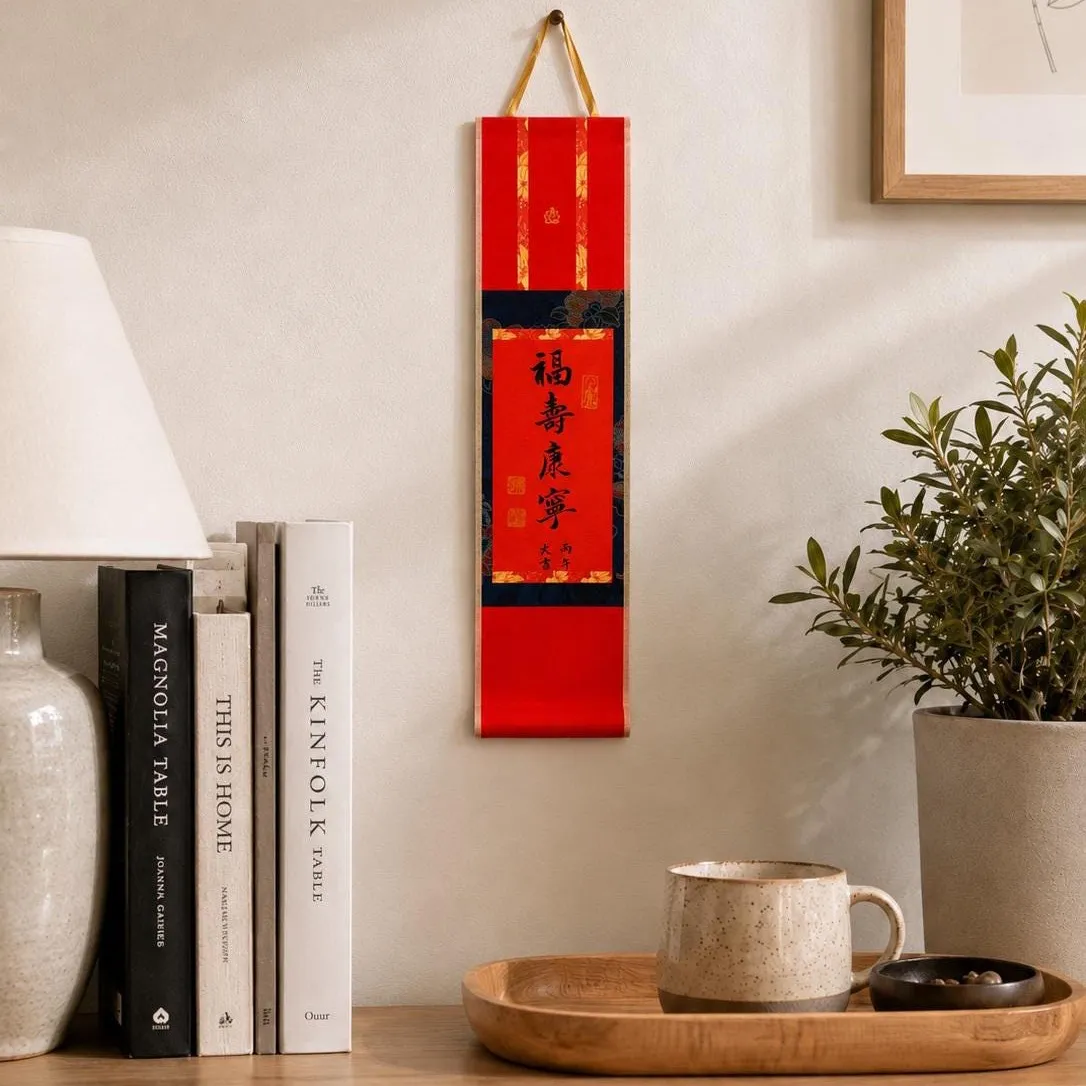
Photo shows a sample — yours will be brushed with 丰, or any character you choose.
Wall Scroll — for walls & housewarmingsfrom $38→ -
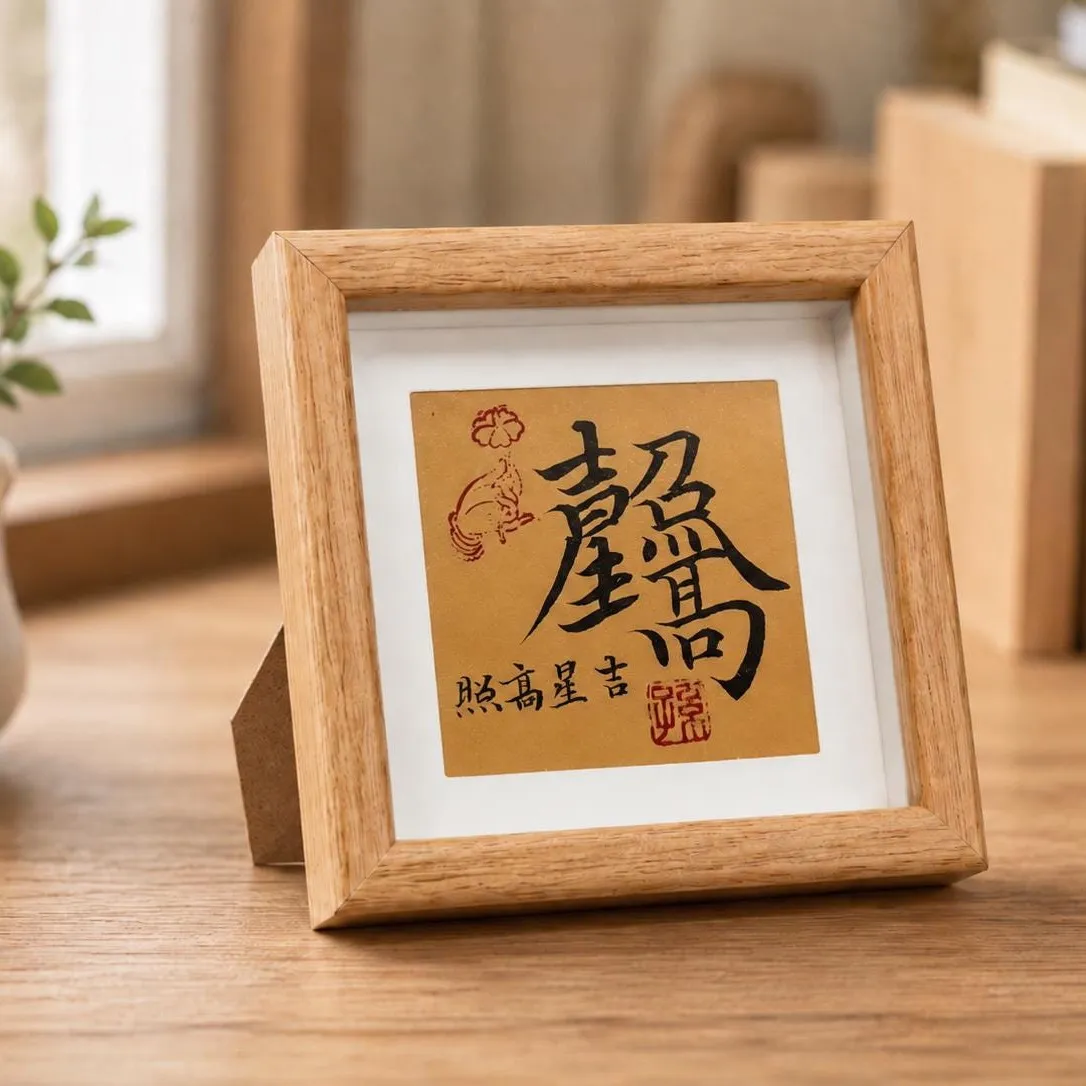
Photo shows a sample — yours will be brushed with 丰, or any character you choose.
Desk Frame — for desks, studies & studiosfrom $44→ -
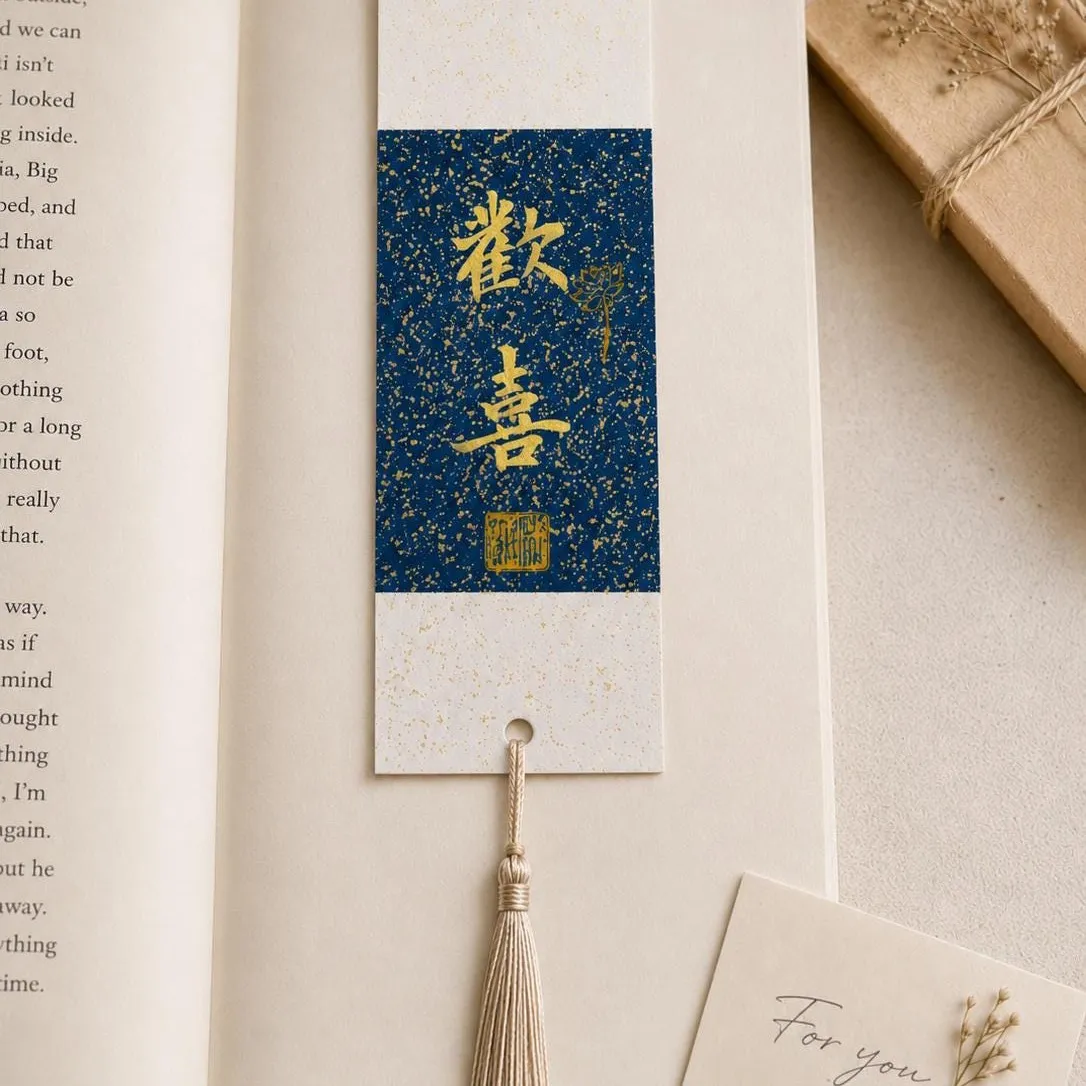
Photo shows a sample — yours will be brushed with 丰, or any character you choose.
Bookmark — for readers & small thank-yousfrom $14→
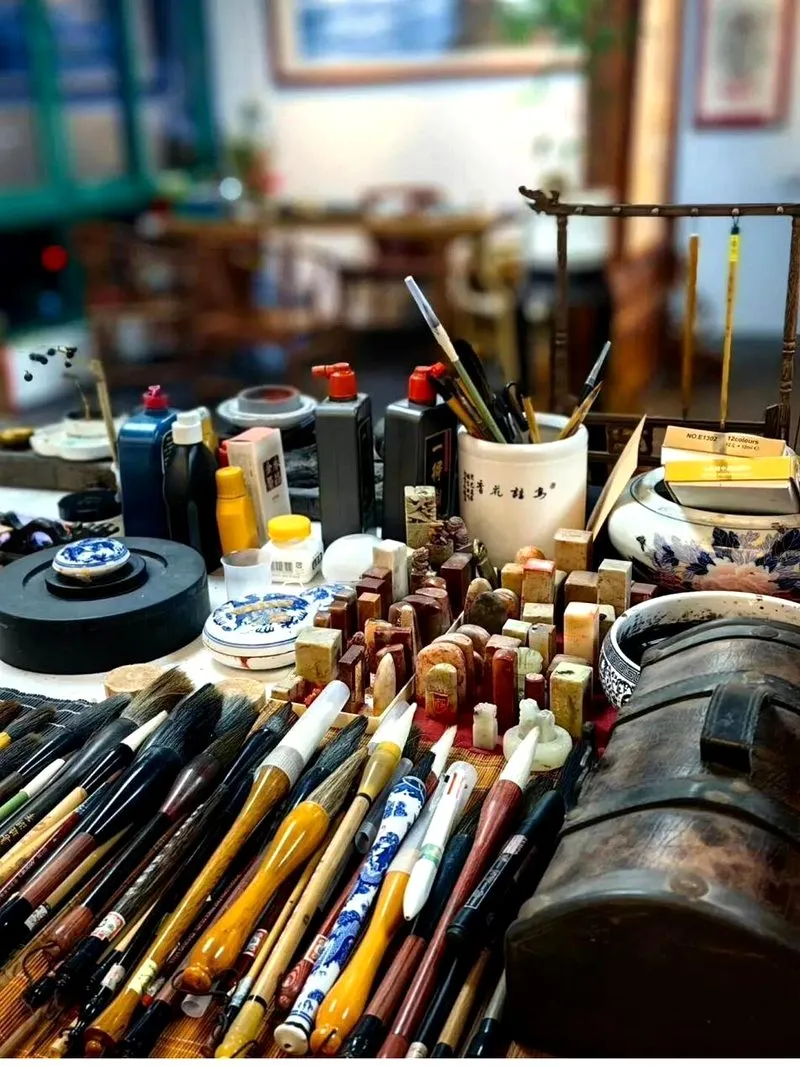
What people said after it arrived.
-
The item is fantastic. The customer service was genuine. Thanks!
— M.Verified purchase · from our Etsy shop reviews · -
They were great they gave me exactly what I asked for and then some. Thank you!!
— G.Verified purchase · from our Etsy shop reviews · -
It is well designed and customized. My daughter loves it. Amazing gift for family’s d friends
— S.Verified purchase · from our Etsy shop reviews ·
Each "丰" is hand-brushed by FuBlessings on rice paper.
See 丰 (Fēng) on Etsy →