五福临门 (wǔ fú lín mén) — The Five Blessings Arrive at the Threshold
A 4-character phrase, not a single character.
Most Chinese blessing phrases name one thing. 五福临门 names five — and names them as a complete inventory rather than a generous approximation. The five blessings drawn from the Book of Documents enumerate everything a full human life requires from beginning to end: a long life, enough to live on, health and a settled mind, a genuine disposition toward virtue, and a peaceful natural end. Each covers a gap the others leave open. The phrase is a completeness claim: not one or two of these, but all of them, arriving at the threshold at once.
At Chinese New Year, 五福临门 appears on the door charm (门符) hung at the threshold before the year opens — the inscription that names what the household is inviting in as the year begins. Where 新年快乐 (Xīn Nián Kuài Lè) names the feeling and 万事如意 names the outcomes, 五福临门 names the conditions: the five-part endowment that the year needs to hold in order for everything else to follow. The phrase has been written on New Year gate decorations since at least the Ming dynasty, which is also when the folk practice of placing five individual 福 characters on the five panels of a door became widespread — one character per blessing, the complete five visible every time someone crosses the threshold.
A hand-brushed “五福临门” by FuBlessings carries the full phrase in a form suited to both the New Year threshold and the entrance of a new home: four characters in ink that name the complete wish — not a single blessing but the whole inventory, delivered at the door. For the friend beginning a new year or the family crossing a new threshold, it is the gift that names everything the life inside is asked to hold.
The Story Behind the Character
The earliest systematic inventory of a good life in Chinese civilization appears not in a philosophical treatise or a religious text but in a chapter of government documents. Over three thousand years ago, a minister named Jizi presented the Zhou king with a framework for cosmic order divided into nine categories. The sixth category was 五福 — not a prayer, but an enumeration. Jizi listed five things: 寿 (shòu, longevity), 富 (fù, sufficiency and material enough), 康宁 (kāng níng, health and a settled mind), 攸好德 (yōu hào dé, a genuine disposition toward virtue), and 考终命 (kǎo zhōng mìng, a peaceful natural end to life). That fifth entry — dying quietly, in old age, without violence or disease cutting things short — reveals the framework's unusual candor: it names the good end alongside the good life, and counts both.
The phrase 五福临门 adds the threshold. 临 (lín) in classical Chinese means to overlook from above, to descend upon, to approach — it is the character of 君临天下 (the ruler's authority descending over all under heaven) and 降临 (a higher power arriving from above). When the five blessings 临 a home, the image is not of a wish traveling horizontally from the speaker to the recipient but of something descending from above onto the threshold below. The gate (门) is where this arrival is witnessed: the five blessings pass through the door into the life being lived inside. A folk visual tradition that developed from this vocabulary placed five 福 characters — one per blessing — on the five panels of a gate at New Year, so the threshold itself became the inventory, every panel lit with what was being invited in.
What separates 五福临门 from a simple wish of 福 is the completeness claim. [See 福 →](/library/fu/) names all good conditions gathered into one; 五福临门 names them individually. Longevity without sufficiency is hardship sustained too long; sufficiency without health is comfort lived in anxiety; health without virtue is a life that runs well but gives nothing back; and all three without a good end can still be cut short by violence or catastrophe. The Hongfan list was designed to be exhaustive: each item covers a gap the others leave open. The phrase asks that all five find the threshold at once — not one or two, but the full inventory.
Classical lines
- roughly 1,900 years
- c. 800 BCE 《诗经·小雅·斯干》
- c. 700 BCE 《诗经·大雅·凫鹥》
- c. 1069 CE 王安石《元日》
公尸燕饮,福禄来成。 The spirit guest dines and drinks
blessings and prosperity come to pass. — The Book of Songs poem of ritual arrival: when the ancestral feast is properly performed, the blessings do not merely approach but arrive and are established. 五福临门 inherits this same logic — the five blessings are not a future hope but a present arrival, confirmed at the threshold the moment the ceremony is right.
千门万户曈曈日,总把新桃换旧符。 A thousand gates, ten thousand households in the light of the breaking day
each one replacing the old door charm with a new one. — Wang Anshi observed the New Year renewal as both a court official and a poet; the poem catches the ritual of door-charm replacement as something happening simultaneously at every threshold across China. 五福临门 is written on the new charm that replaces the old: it names exactly what is invited in through the door just opened.
哙哙其正,哕哕其冥。君子攸宁。 Spacious and open, the great hall; bright and distinct, the inner chambers
here the lord finds peace. — The Book of Songs' poem for a completed royal residence, the first of its genre: the house built in right proportion, every room in its proper order, the inhabitant at rest inside it. For a new home, this is what 五福临门 prepares the threshold to hold: not only the blessings arriving at the door but the rooms that receive them.
Why This Character Matters
The 五福 in the phrase are most often understood through the 《尚书·洪范》 list, but a popular Ming-dynasty variant substitutes 多子多孙 (many children and grandchildren) for 攸好德 (a love of virtue), producing a more domestically focused five. The gift-giving tradition and formal calligraphy almost always draw on the Hongfan original, which is considered the authoritative source; the folk variant is found in almanacs and door-poster imagery, not in the phrase as a calligraphy commission.
The visual form of 五福临门 is one of the most immediately recognizable in Chinese New Year decoration: five 福 characters arranged symmetrically across the panels of a gate, or in a cross formation on a single door, one character per blessing, the total forming a complete tableau at the threshold. This arrangement is not decorative but structural — it gives each blessing a physical position at the entrance, so that the door itself becomes the inventory. Contemporary Chinese households still use this arrangement, and the single-phrase version 五福临门 functions as the compressed calligraphy form of the same complete wish: one inscription, five blessings, one threshold.
五福临门 is specifically a New Year threshold blessing — the phrase written on the gate charm that greets the year as it opens.
- 五福临门 is specifically a New Year threshold blessing — the phrase written on the gate charm that greets the year as it opens. It names all five conditions of a complete life arriving simultaneously at the door of the coming year: a more encompassing wish than 万事如意 (all things as you wish) or 平安喜乐 (peace and joy), because it inventories what a complete year actually needs from beginning to end.
- Housewarming · A New HomeFor a new home, 五福临门 names the wish specific to the threshold moment: that the five blessings — long life, sufficiency, health and inner peace, a genuine disposition toward virtue, and a good end — are what the door opens onto. Where 家和 names the relational condition the home needs and 顺 names the ease of daily life inside it, 五福临门 names the complete external endowment: what the life inside this threshold is asked to hold.
Friend · Grandparent · New Couple · or yourself
Looking for a name? See Western names written in Chinese →
-
What does 五福临门 (wǔ fú lín mén) mean?
五福临门 (wǔ fú lín mén) is a 4-character Chinese phrase for the five blessings arrive at the threshold. Most Chinese blessing phrases name one thing. 五福临门 names five — and names them as a complete inventory rather than a generous approximation. The five blessings drawn from the Book of Documents enumerate everything a full human life requires from beginning to end: a long life, enough to live on, health and a settled mind, a genuine disposition toward virtue, and a peaceful natural end. Each covers a gap the others leave open. The phrase is a completeness claim: not one or two of these, but all of them, arriving at the threshold at once. The 五福 in the phrase are most often understood through the 《尚书·洪范》 list, but a popular Ming-dynasty variant substitutes 多子多孙 (many children and grandchildren) for 攸好德 (a love of virtue), producing a more domestically focused five. The gift-giving tradition and formal calligraphy almost always draw on the Hongfan original, which is considered the authoritative source; the folk variant is found in almanacs and door-poster imagery, not in the phrase as a calligraphy commission.
-
What occasions is 五福临门 given for?
五福临门 is traditionally given for Chinese New Year, Housewarming · A New Home. 五福临门 is specifically a New Year threshold blessing — the phrase written on the gate charm that greets the year as it opens. It names all five conditions of a complete life arriving simultaneously at the door of the coming year: a more encompassing wish than 万事如意 (all things as you wish) or 平安喜乐 (peace and joy), because it inventories what a complete year actually needs from beginning to end. For a new home, 五福临门 names the wish specific to the threshold moment: that the five blessings — long life, sufficiency, health and inner peace, a genuine disposition toward virtue, and a good end — are what the door opens onto. Where 家和 names the relational condition the home needs and 顺 names the ease of daily life inside it, 五福临门 names the complete external endowment: what the life inside this threshold is asked to hold.
-
Who brushes the 五福临门 calligraphy?
FuBlessings hand-brushes each 五福临门 (Wǔ Fú Lín Mén) to order, in ink on rice paper — never printed, never repeated.
Bring 五福临门 home — choose how you'd like it brushed.
-
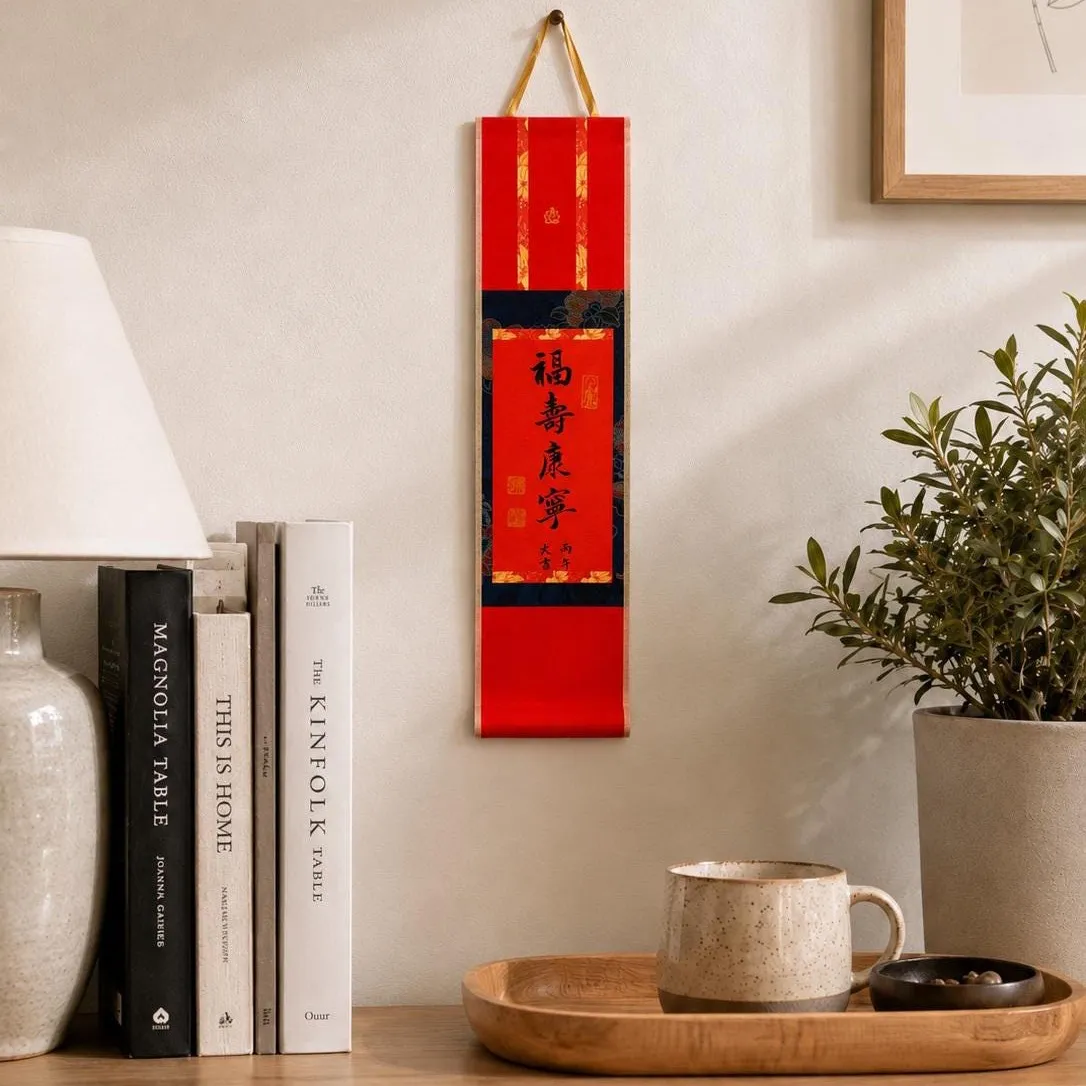
Photo shows a sample — yours will be brushed with 五福临门, or any character you choose.
Wall Scroll — for walls & housewarmingsfrom $38→ -
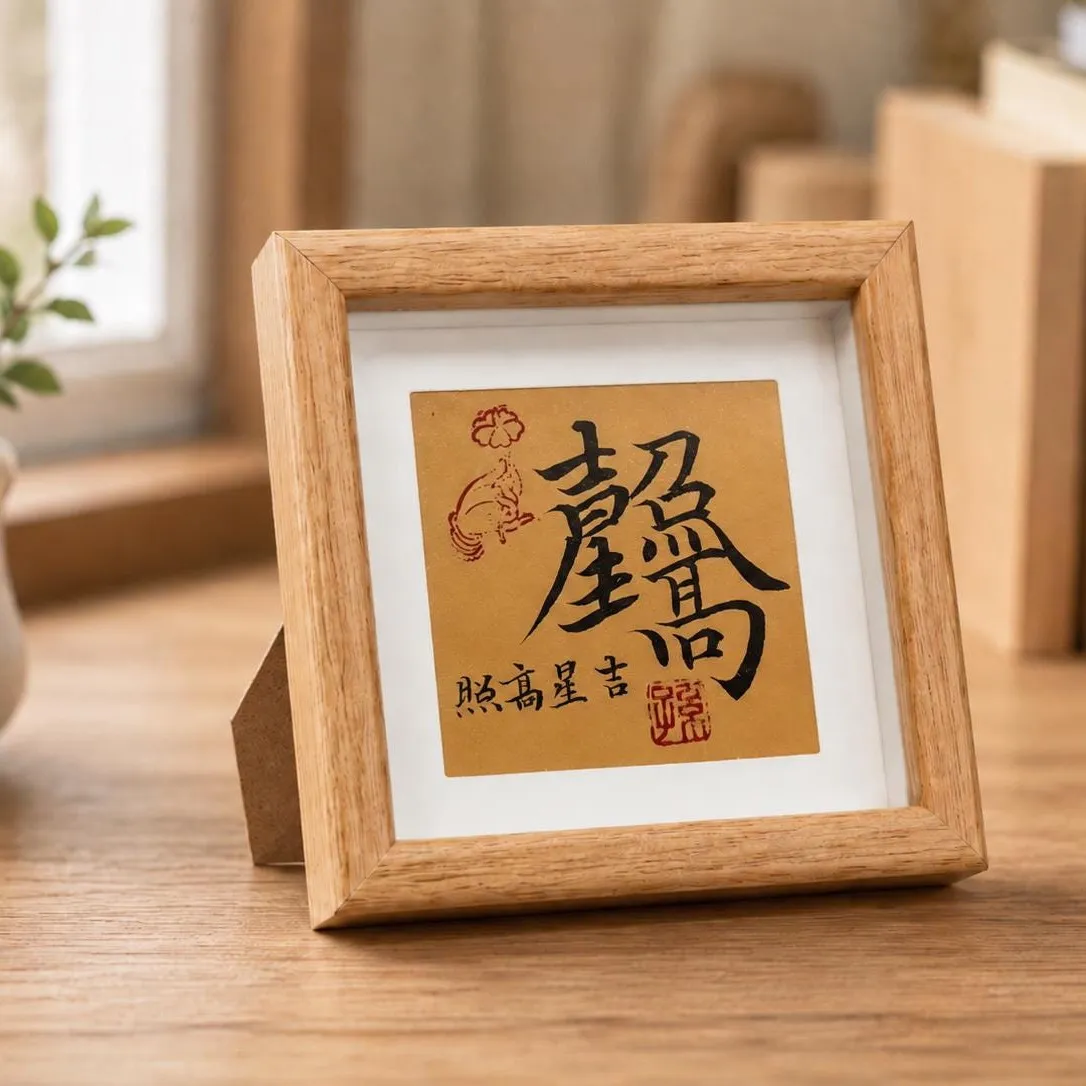
Photo shows a sample — yours will be brushed with 五福临门, or any character you choose.
Desk Frame — for desks, studies & studiosfrom $44→ -
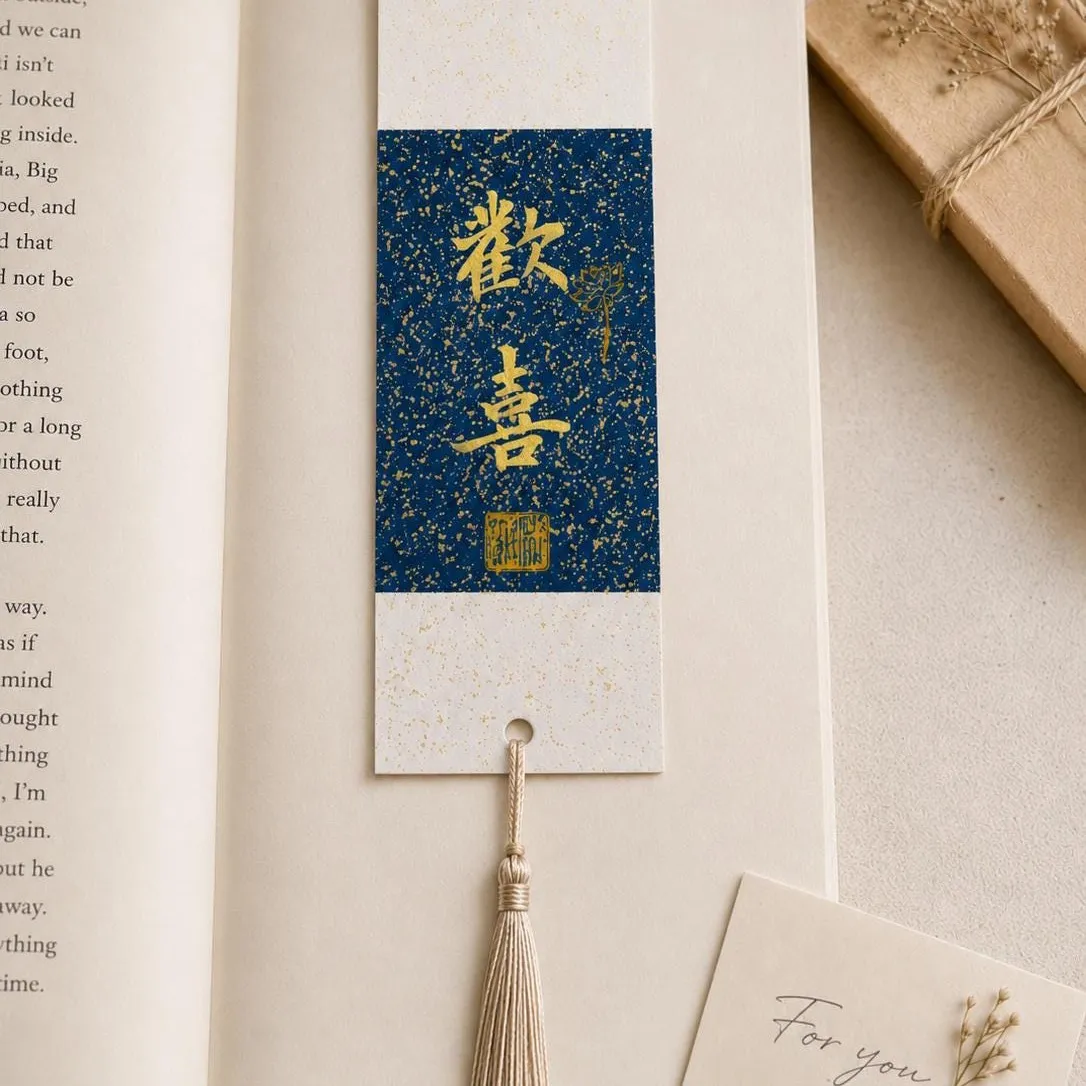
Photo shows a sample — yours will be brushed with 五福临门, or any character you choose.
Bookmark — for readers & small thank-yousfrom $14→
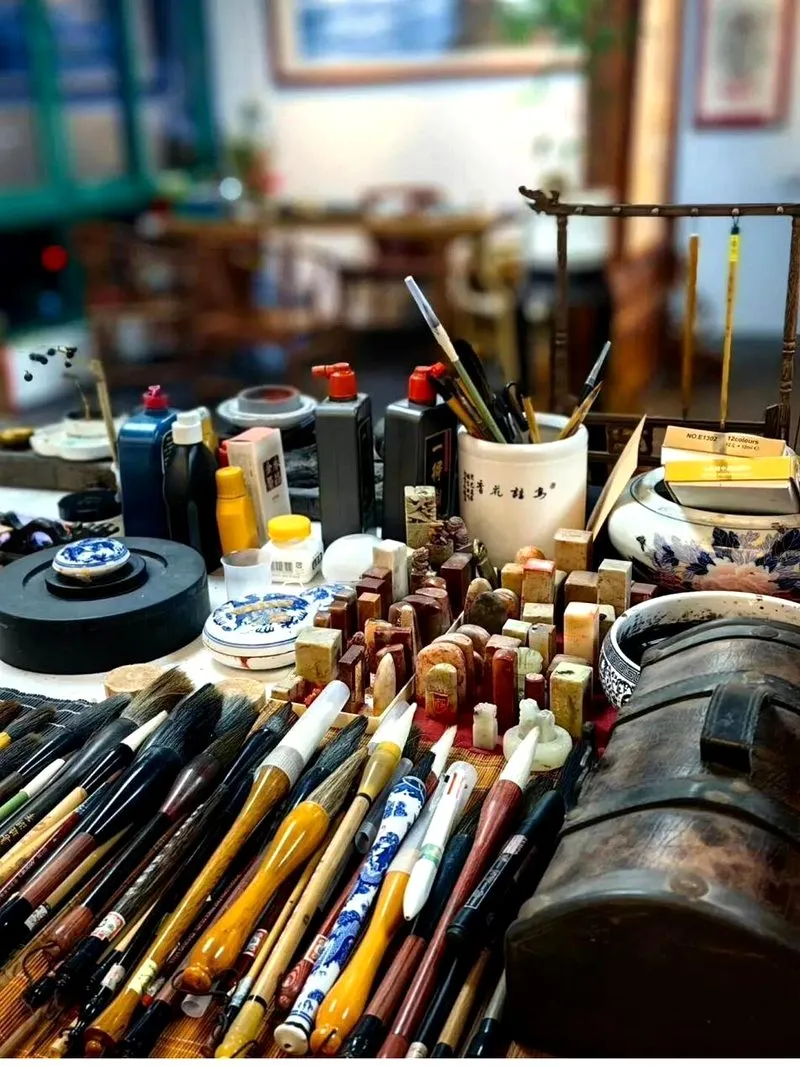
What people said after it arrived.
-
The item is fantastic. The customer service was genuine. Thanks!
— M.Verified purchase · from our Etsy shop reviews · -
They were great they gave me exactly what I asked for and then some. Thank you!!
— G.Verified purchase · from our Etsy shop reviews · -
It is well designed and customized. My daughter loves it. Amazing gift for family’s d friends
— S.Verified purchase · from our Etsy shop reviews ·
Each "五福临门" is hand-brushed by FuBlessings on rice paper.
See 五福临门 (Wǔ Fú Lín Mén) on Etsy →