祥和 (xiáng hé) — Auspiciousness and Harmony · Favorable Signs · Accord
A two-character word, not a single character.
Chinese blessing vocabulary has many ways to name luck and many ways to name harmony. 吉祥 is the favorable omen, given from outside. 家和 is the household in accord, maintained from within. 祥和 holds both together and makes them conditional on each other: a world favorably disposed, a household prepared to receive it. See 和 → What distinguishes 祥和 from its neighbors is the implicit argument it makes — that sustained harmony is what favorable conditions require in order to amount to anything, and that favorable conditions are what a harmonious household has earned the right to expect. See 祥 →
The phrase appears in the red couplets pasted to doorframes at Chinese New Year, in the openings of seasonal addresses, and in the inscriptions families have chosen for milestone celebrations across centuries. At New Year, it names the hoped-for quality of the coming period — not a wish for any specific outcome but for the complete atmospheric state: the year well-disposed, the household warm enough to meet it. At an elder’s milestone birthday, it shifts register and becomes retrospective: a recognition that the person has, across a long life, received both halves of the blessing — world favorable, household harmonious — and that the combination is worth naming directly.
A hand-brushed “祥和” by FuBlessings is the New Year or elder’s birthday gift for the complete condition — not luck alone, not accord alone, but the pairing that Chinese families have placed above their doors for over a thousand years when they wanted to name, in the fewest possible characters, everything that makes a season worth entering.
- auspiciousness and accord together
- a season well-disposed and a household ready for it
- favorable signs met with genuine harmony
- the complete condition — nothing missing from either side
- good luck Too passive. 祥 is not a windfall — it is a sign that reads as favorable to those who know how to read signs.
- peace Too interior. 和平 names peace as a state; 祥和 names the active compound of external favorability and internal accord.
- harmony That is 和 alone. 祥和 adds the cosmic dimension — the world well-disposed — that 和 by itself does not include.
The short arms are the point: these readings don’t reach it.
- 祥 auspiciousness / favorable signsSpirit altar (礻) + sheep (羊): the ritual offering received, the omen read as favorable. What the cosmos contributes when conditions are right.
- 和 harmony / accord among peopleGrain stalk (禾) + mouth (口): voices agreeing over a shared meal, the basic unit of domestic accord. What the household contributes to meet the favorable season.
characters
- 吉祥 jí xiáng good fortune and auspiciousness — the more common compound, used for luck and favorable omens
- 祥瑞 xiáng ruì auspicious signs — portents of favorable times, from comets to unusual animals
- 祥云 xiáng yún auspicious clouds — the visual symbol of favorable celestial conditions in classical painting
- 吉祥如意 jí xiáng rú yì good omens and things going as wished — the full four-character New Year blessing
The Story Behind the Character
In early Chinese divination culture, 祥 was not simply a word for good fortune. It was the name for a confirmed reading. After the ritual offering was made — the sheep brought before the ancestral altar, the inquiry posed — the outcome was observed and given a name. If the signs were favorable, that confirmed result was called 祥. Not chance, not hope: a sign that had been offered, read, and found to be well-disposed. The character encodes the practice: 礻, the spirit-altar radical, on the left; 羊 (yáng), the ritual animal, on the right. 祥 named the moment when the cosmos indicated its answer.
和 contributed what 祥 alone could never provide: the human dimension. 祥 named what came from above; 和 named what people made of it together. Harmony — originally the sound of reed pipes played in concert, each pipe a different pitch, the result larger than any single note — named the condition in which people relate well enough to receive what a favorable season offers. When Chinese blessing culture fused the two characters, it made a precise structural argument: neither element alone is sufficient. An auspicious sign descending on a household in discord is wasted. A harmonious household meeting an unfavorable season runs out of internal capacity. 祥和 names the complete picture: the cosmos and the household both in the right condition simultaneously.
The combination appears in Chinese calendar literature as early as the Han dynasty, and by the Tang and Song, 祥和 had become the standard shorthand for a period that is well-disposed in all directions. The red couplets (对联) pasted to doorframes at New Year, temple inscriptions, and official seasonal addresses have carried the pair for over a thousand years. What makes it specific enough to give is what it declines to name: not wealth, not longevity, not achievement — just the basic double condition of a world that is favorable and a household prepared to meet it.
Classical lines
- roughly 200 years
- 522 BCE 《左传·昭公二十年》
- c. 300 BCE 《周易·乾·彖》
- c. 300 BCE 《中庸》第二十四章
保合太和,乃利贞。 Sustain and hold the great harmony
then all is favorable and correct. — The 彖传 commentary on the first hexagram of the Book of Changes, describing 和 not at the household scale but at the cosmological one: the harmony that, when maintained, makes everything from crops to kingdoms go rightly. The 和 in 祥和 reaches for this larger register.
和如羹焉,水、火、醯、醢、盐、梅以烹鱼肉,宰夫和之,齐之以味;济其不及,以泄其过。 Harmony is like a broth: water, fire, vinegar, sauce, salt, and plum are used to cook fish and meat; the chef blends them, adjusting the flavor
compensating for what is lacking, reducing what is excessive. — Yan Zi's reply to Duke Jing of Qi, distinguishing 和 (genuine harmony among different elements) from 同 (mere agreement among identical ones). The 和 in 祥和 is Yan Zi's 和 — not sameness but a working composition of distinct parts.
国家将兴,必有祯祥;国家将亡,必有妖孽。 When a state is about to flourish, there will be auspicious signs; when it is about to fall, there will be ill portents.
The Confucian argument that 祥 is not random luck but a legible signal — one that rewards sustained attention to right conduct to read accurately.
Why This Character Matters
The sheep radical 羊 inside 祥 links it, by graphic origin, to three other foundational moral characters: 善 (goodness), 美 (beauty), and 义 (righteousness). In oracle-bone Chinese, the sheep was the ritual animal — brought to the altar in the expectation of a favorable response. This shared component is not incidental. A writing system that built its words for goodness, beauty, right conduct, and auspicious signs around the same image was encoding a relationship between them: these qualities travel together, and the absence of one tends to compromise the others.
The phrase 祥和 appears most densely in two contexts: the vertical couplets (对联, duìlián) hung at New Year, and the official openings of seasonal addresses. In both, it does the same work — naming the hoped-for quality of the coming period in its fullest form. Not peace (平安), not prosperity (富贵), not joy alone (喜乐), but the compound atmospheric condition: the world favorably inclined, the household in accord with it. Chinese speakers respond to 祥和 as something neither 吉祥 nor 和谐 can replace — a pairing that says precisely what neither character manages alone.
A few characters live near "祥和" but mean something quieter, sharper, or more specific. Here's how to tell them apart.
auspiciousness paired with the household harmony that receives it
the favorable omen alone — external, given, not tied to the household's condition
domestic harmony paired with the favorable cosmic condition surrounding it
the household in accord — internal, maintained, not yet tied to what the season offers
At New Year, 祥和 names both dimensions of a good season simultaneously: the world favorably inclined (祥) and the household in accord (和).
- At New Year, 祥和 names both dimensions of a good season simultaneously: the world favorably inclined (祥) and the household in accord (和). Where 吉祥 wishes for luck and 家和 names domestic harmony, 祥和 insists on both — the complete condition rather than a single part of it.
- For an elder's milestone birthday, 祥和 is a retrospective blessing as much as a wish: a recognition that the life behind them has been, in all its dimensions, both favorably met by the world and maintained in genuine accord. The compound names what 长寿 and 福寿 name separately — gathered into one.
Grandparent · Friend · New Couple · or yourself
Looking for a name? See Western names written in Chinese →
-
What does 祥和 (xiáng hé) mean?
祥和 (xiáng hé) is a two-character Chinese word for auspiciousness and harmony, favorable signs, accord. Chinese blessing vocabulary has many ways to name luck and many ways to name harmony. 吉祥 is the favorable omen, given from outside. 家和 is the household in accord, maintained from within. 祥和 holds both together and makes them conditional on each other: a world favorably disposed, a household prepared to receive it. See 和 → What distinguishes 祥和 from its neighbors is the implicit argument it makes — that sustained harmony is what favorable conditions require in order to amount to anything, and that favorable conditions are what a harmonious household has earned the right to expect. See 祥 → The sheep radical 羊 inside 祥 links it, by graphic origin, to three other foundational moral characters: 善 (goodness), 美 (beauty), and 义 (righteousness). In oracle-bone Chinese, the sheep was the ritual animal — brought to the altar in the expectation of a favorable response. This shared component is not incidental. A writing system that built its words for goodness, beauty, right conduct, and auspicious signs around the same image was encoding a relationship between them: these qualities travel together, and the absence of one tends to compromise the others.
-
What occasions is 祥和 given for?
祥和 is traditionally given for Chinese New Year, Birthday. At New Year, 祥和 names both dimensions of a good season simultaneously: the world favorably inclined (祥) and the household in accord (和). Where 吉祥 wishes for luck and 家和 names domestic harmony, 祥和 insists on both — the complete condition rather than a single part of it. For an elder's milestone birthday, 祥和 is a retrospective blessing as much as a wish: a recognition that the life behind them has been, in all its dimensions, both favorably met by the world and maintained in genuine accord. The compound names what 长寿 and 福寿 name separately — gathered into one.
-
Who brushes the 祥和 calligraphy?
FuBlessings hand-brushes each 祥和 (Xiáng Hé) to order, in ink on rice paper — never printed, never repeated.
Bring 祥和 home — choose how you'd like it brushed.
-
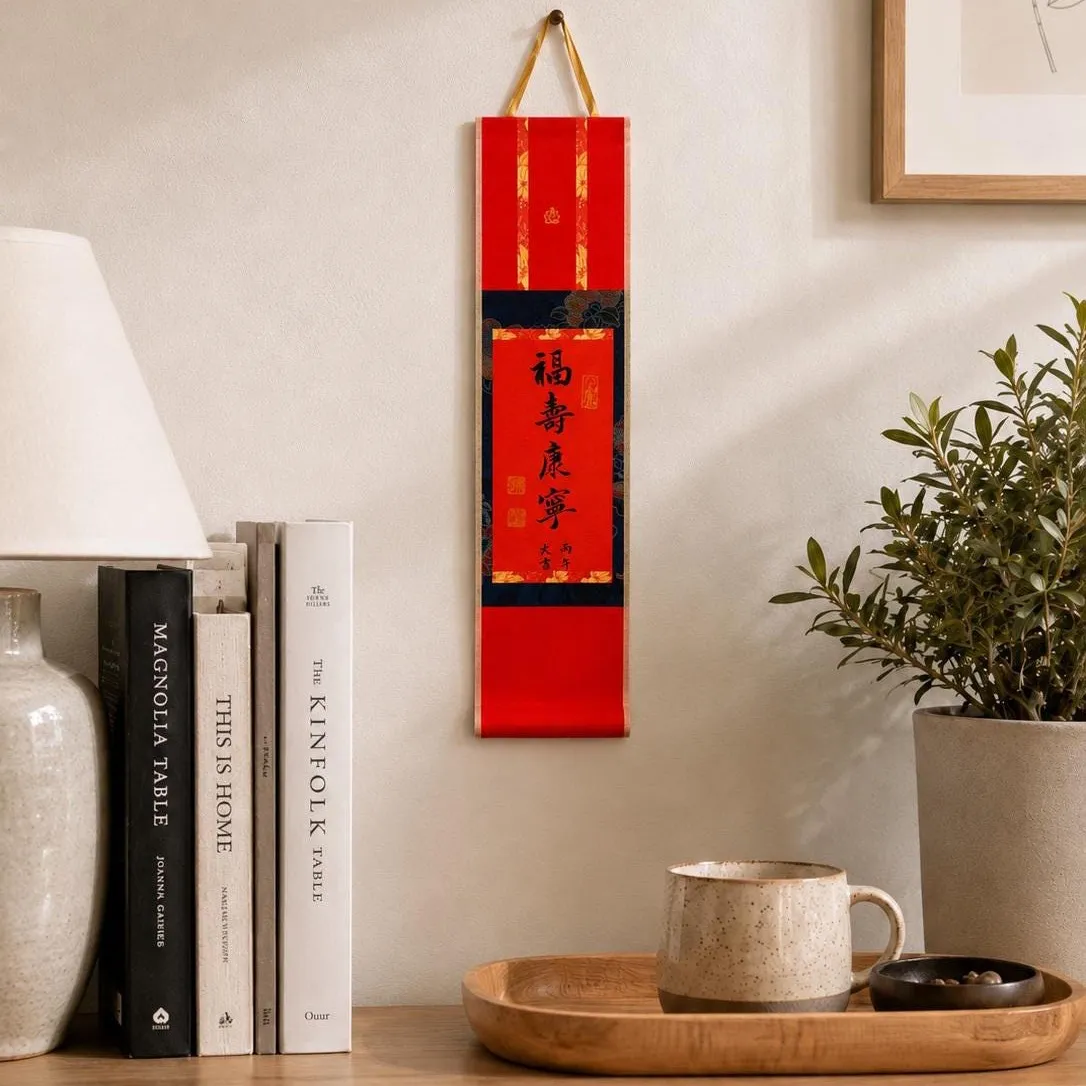
Photo shows a sample — yours will be brushed with 祥和, or any character you choose.
Wall Scroll — for walls & housewarmingsfrom $38→ -
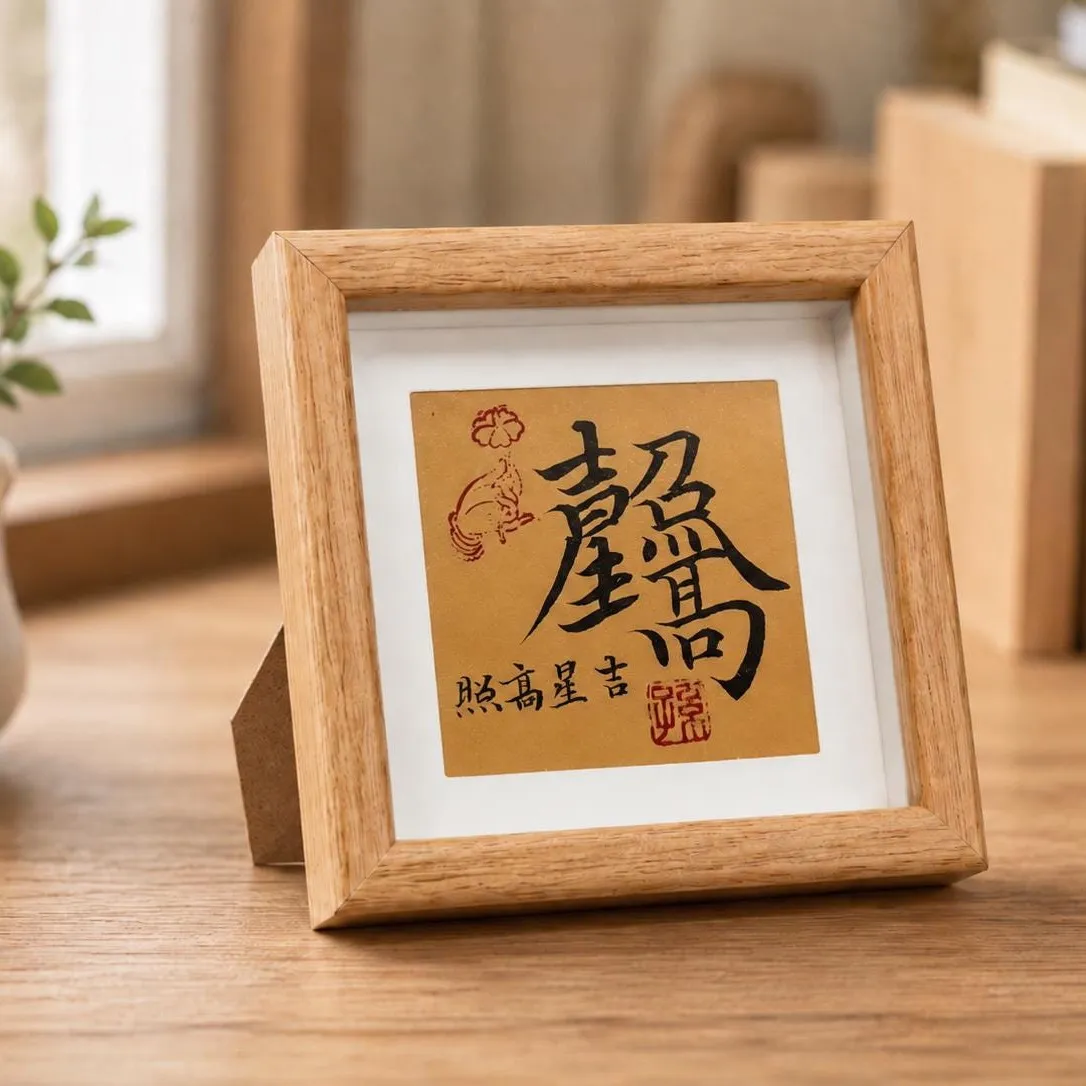
Photo shows a sample — yours will be brushed with 祥和, or any character you choose.
Desk Frame — for desks, studies & studiosfrom $44→ -
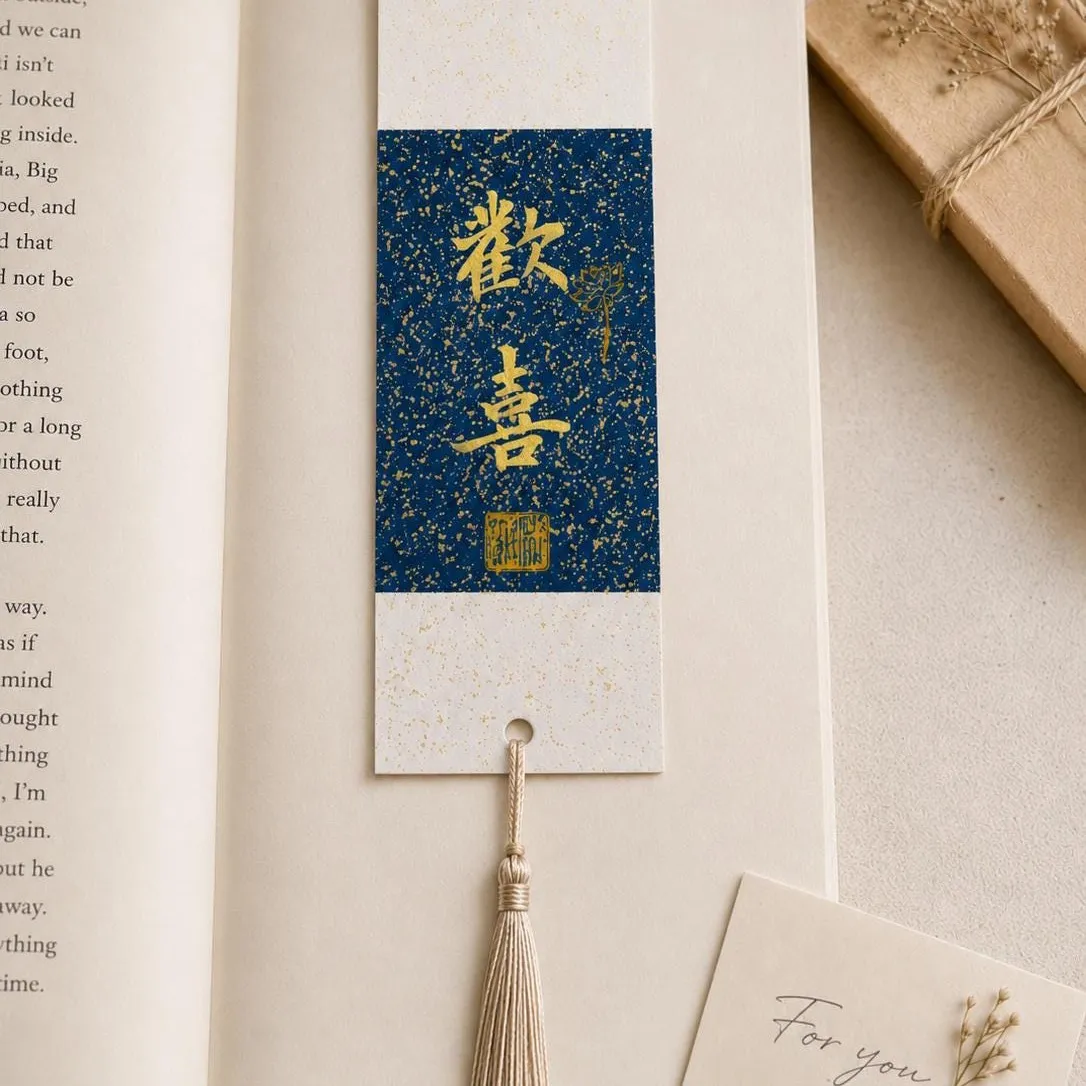
Photo shows a sample — yours will be brushed with 祥和, or any character you choose.
Bookmark — for readers & small thank-yousfrom $14→
What people said after it arrived.
-
The item is fantastic. The customer service was genuine. Thanks!
— M.Verified purchase · from our Etsy shop reviews · -
They were great they gave me exactly what I asked for and then some. Thank you!!
— G.Verified purchase · from our Etsy shop reviews · -
It is well designed and customized. My daughter loves it. Amazing gift for family’s d friends
— S.Verified purchase · from our Etsy shop reviews ·
Each "祥和" is hand-brushed by FuBlessings on rice paper.
See 祥和 (Xiáng Hé) on Etsy →