喜气洋洋 (xǐ qì yáng yáng) — Joy Brimming Over · The Whole Room Showing It
A 4-character phrase, not a single character.
A Chinese gate at New Year takes three pieces of red paper. Two run down the sides — the couplet, seven characters a side in the usual form — and a third, shorter strip goes across the top: the 横批, which has to gather both lines into four characters. 喜气洋洋 is one of the few that come back year after year, and what it puts up there is not a wish. 喜气 is the air of a happy occasion, the kind Chinese treats as physically present — you read it off faces, 满面喜气, and watch it fill a doorway, 喜气盈门. See 喜 → 洋洋 is the part that refuses a boundary — the doubling Chinese reaches for when a thing has no visible edge, the pair behind 洋洋大观 and behind the broad-running 河水洋洋 of the 《诗经》. Together they report a condition rather than request one — that the joy in this house has stopped being anybody’s private property and become the weather.
The four characters come out of an essay that was arguing against them. 范仲淹 wrote 《岳阳楼记》 in 1046 to insist that a person of character should not have their mood set by the view, 不以物喜,不以己悲 — and to make the case he first painted the mood he was warning about: a clear spring day on Lake Dongting, wine in hand, wind in the face, 其喜洋洋者矣. Chinese kept the picture and dropped the sermon, added a 气, and put the result above the gate. It has a sound, too. 刘明源 built the 1958 orchestral piece 《喜洋洋》 out of two Shanxi tunes, and it is what plays under a New Year gala, at a wedding banquet, outside a shop on its opening morning — most people can hum it and could not name it. Set beside the catalog’s other joy words the line is clean: 喜 is the news, 喜乐 is a household’s ordinary warmth on a day with no news in it, 欢聚一堂 is the evening itself and the fact that the people in it were glad to be there. 喜气洋洋 is not the evening. It is what the room looked like from the door.
A hand-brushed “喜气洋洋” by Artist Lina Sun goes where the 横批 goes and does what the 横批 does — for the friend hosting the New Year everyone is travelling for, for the couple who were the two people least able to see their own wedding hall while they were standing in it, for the grandparent whose house is the one everybody drives to and whose gate is the one the paper actually goes on. It is the piece to give when the honest thing to say about a house is not what you hope for it but what is happening in it: lanterns up, kitchen going since dawn, everybody due at ten.
- joy visible in a whole room, not just felt by one person
- the atmosphere of a good occasion, spilling past its cause
- the four characters pasted above a New Year gate
- said of a house, a hall, a street, a crowd, a face
- cheerful Too personal and too small. 喜气洋洋 is not a disposition someone has; it is a state a place is in, on a particular day, for a reason everybody present knows.
- jubilant Jubilation is volume. 洋洋 is extent — the claim is that the joy has spread past its edges, not that it is loud. A quiet house on New Year's morning can be 喜气洋洋.
- 喜庆 喜庆 is the category label for festive things — 喜庆的红色, 喜庆用品. It sorts. 喜气洋洋 describes one room on one day, which is why this is the form that gets brushed and hung and 喜庆 is not.
The short arms are the point: these readings don’t reach it.
- 喜气 the readable air of a happy occasion喜 is the drum-and-mouth character for news worth making noise about; 气 is the plain word for air and atmosphere, as in 天气 and 气氛. Together: joy that has left the person it happened to and become the condition of a room.
- 洋洋 brimming, without edgesThe doubling Chinese uses for extent: 《诗经》 applies 洋洋 to the Yellow River running broad, 《论语》 to music filling the ears. The single 洋 acquired its 'open sea' sense much later. The same pair sits behind 洋洋大观.
characters
- 喜气 xǐ qì the air of a happy occasion — readable on a face or in a room
- 喜气盈门 xǐ qì yíng mén joy filling the doorway — the same air, given a boundary
- 喜出望外 xǐ chū wàng wài joy past what was hoped for — the good news that overshoots
- 洋洋盈耳 yáng yáng yíng ěr music filling the ears past holding — 《论语》 on the same 洋洋
- 洋洋大观 yáng yáng dà guān a spectacle too vast to take in at once
The Story Behind the Character
The phrase was born in an essay arguing against it. In 1046 范仲淹 wrote 《岳阳楼记》 for a friend rebuilding a tower on Lake Dongting, and its whole point is that a person of character does not let weather set their mood — 不以物喜,不以己悲, not made glad by things, not made wretched by oneself. To get there he first paints the two moods he is warning about. In the rain the visitor climbs the tower and is overwhelmed by grief. On a clear spring day, water and sky one sheet of light, he climbs it again: 登斯楼也,则有心旷神怡,宠辱偕忘,把酒临风,其喜洋洋者矣 — the chest opens, honour and disgrace are both forgotten, wine in hand and wind in the face, and the joy is 洋洋. That third phrase escaped the essay, picked up a 气 in later use, and became the four characters that go up on hundreds of millions of gates each spring. What survived is not the argument. It is the weather he painted in order to warn against it.
The reason it survived is 洋洋, which is the language's word for extent. 《诗经·卫风·硕人》 has 河水洋洋,北流活活 — the Yellow River running broad and loud toward the north — and what the doubling says there is water without edges: too much of a thing to see where it stops. 《论语·泰伯》 uses the same pair of music, 洋洋乎盈耳哉, sound filling the ears past the point of holding it. Later heads keep the sense exactly, as in 洋洋大观, a spectacle too large to take in at once. The single 洋 came to mean the open sea only much later — 《说文解字》 still knows it as the name of a river in Shandong — but the sea is what a modern reader hears in it regardless, and the phrase takes no harm from that. Set behind 喜气, the two syllables turn a happy occasion into a condition of the air in a room.
Structurally the phrase is a subject and a predicate rather than two matched pairs: 喜气, the joy-air, is the thing; 洋洋 is what it is doing. That is why it reads as a report rather than a wish, and why it ended up on the strip above the gate rather than in the couplet below, where the lines are addressed to the year. The tighter cousin 喜气盈门 puts a boundary back on — 盈门, filling the doorway, joy that reaches the threshold and stops. 喜气洋洋 sets no threshold at all.
Classical lines
- roughly 300 years
- 763 CE 杜甫《闻官军收河南河北》
- 1046 CE 范仲淹《岳阳楼记》
One further source is quoted below without a date printed, so it stays off the rail.
登斯楼也,则有心旷神怡,宠辱偕忘,把酒临风,其喜洋洋者矣。 Climbing this tower then, the chest opens and the spirit eases, honour and disgrace are forgotten together, and with wine in hand facing the wind the joy brims over.
The sentence the phrase comes from, and the essay it comes from is arguing the opposite case: that a good official should not be at the mercy of a fine day. Chinese kept the picture and let the argument go.
却看妻子愁何在,漫卷诗书喜欲狂。 I turn to look at wife and children
where has the worry gone? I roll up the books any which way, wild with joy. — Du Fu has just heard the rebellion is over and the road home is open. Traditionally called the happiest poem he ever wrote, it catches the moment a private relief becomes a household's weather: by the next couplet he is calling for wine and singing in broad daylight.
桑柘影斜春社散,家家扶得醉人归。 The mulberry shadows lean over as the spring festival breaks up, and from every house they come out to help a drunk one home.
A village on the evening of the 社 sacrifice, measured by what the day left behind rather than by anything said at it. The 社 was a fixed date on the farming calendar and not a piece of news, and the street still ends up in this condition — which is the difference between a phrase that describes the state of a place and one that reports an event.
Why This Character Matters
There is a tune. In 1958 the 板胡 player and composer 刘明源 arranged a piece for Chinese orchestra out of two Shanxi folk melodies and called it 《喜洋洋》, and it is now close to unavoidable: the 笛子 and 板胡 that come up under the New Year gala, the music at a wedding banquet, the loop playing outside a shop on its opening morning. Most people who could hum it could not name it, which is the surest sign a piece of music has been absorbed into a season. The phrase and the tune reinforce each other every year, and between them they have made this one of the few pieces of classical Chinese a person is likely to meet as a sound before ever meeting it as writing — under a title one character shorter than the phrase itself.
The 气 in the middle deserves a plain reading. It is the ordinary word for air and atmosphere — the one in 天气 (weather), 气氛 (the mood of a room), 语气 (the tone of a remark) — and Chinese treats a mood as something with a physical presence you can walk into, read off faces, and watch spread. 满面喜气 says a person's face is showing it. 喜气盈门 says it has filled the doorway. The 横批 that carries the phrase is itself a piece of the thing it describes: red paper, brushed in black or gold, pasted above the gate on the last afternoon of the old year alongside the couplet, the door god prints and the upside-down 福. Nobody hangs it as a prediction. It goes up on a day when the claim is already accurate, and the point of writing it down is that a house should be able to say so.
A few characters live near "喜气洋洋" but mean something quieter, sharper, or more specific. Here's how to tell them apart.
what the joy did to the room — spread, visible, dated
the news itself — the event that started it
an occasion's atmosphere, true of a place for a day
a person's steady gladness, true of a life without an occasion
Of the four-character strips that come back to the same gate year after year, this is the one that does not point outward.
- Of the four-character strips that come back to the same gate year after year, this is the one that does not point outward. 紫气东来 names the direction good is arriving from; 出入平安 asks that everyone passing underneath comes home again; 五福临门 sends five blessings to the door. All three are about something not yet in the house. 喜气洋洋 is about the house. It goes up on the last afternoon of the old year and reports what is already true underneath it — the paper cuttings on the glass, the kitchen going since morning, the first visitors due before noon — which is a different job from the rest of the set. It makes no claim at all about the twelve months ahead. It describes the day it is pasted on, and its accuracy can be checked by looking down. For the household whose New Year you want named as it is being lived rather than forecast.
- 喜 is the wedding's own character — 喜事 for the event, 喜帖 for the invitation, 喜酒 for the banquet, 囍 on the glass — so 喜气 needs no explaining at a Chinese wedding; it is simply the air of the day. The work is done by 洋洋, the doubling Chinese reaches for when a thing has stopped having edges, and applied to a wedding it makes a specific claim: the joy did not stay with the two people it belonged to. It reached the aunt who flew in, the colleagues at table nine, the driver, the neighbours who came out to watch the car. Where 百年好合 speaks to the couple's next hundred years and 同心 states a condition about the two of them, this one turns around and describes everybody else in the room — which is what makes it worth handing to the couple afterwards, since they were the two people least able to see it while it was happening. The wedding gift that gives them back the day as their guests had it.
Friend · New Couple · Grandparent · or yourself
Looking for a name? See Western names written in Chinese →
-
What does 喜气洋洋 (xǐ qì yáng yáng) mean?
喜气洋洋 (xǐ qì yáng yáng) is a 4-character Chinese phrase for joy brimming over, the whole room showing it. A Chinese gate at New Year takes three pieces of red paper. Two run down the sides — the couplet, seven characters a side in the usual form — and a third, shorter strip goes across the top: the 横批, which has to gather both lines into four characters. 喜气洋洋 is one of the few that come back year after year, and what it puts up there is not a wish. 喜气 is the air of a happy occasion, the kind Chinese treats as physically present — you read it off faces, 满面喜气, and watch it fill a doorway, 喜气盈门. See 喜 → 洋洋 is the part that refuses a boundary — the doubling Chinese reaches for when a thing has no visible edge, the pair behind 洋洋大观 and behind the broad-running 河水洋洋 of the 《诗经》. Together they report a condition rather than request one — that the joy in this house has stopped being anybody's private property and become the weather. There is a tune. In 1958 the 板胡 player and composer 刘明源 arranged a piece for Chinese orchestra out of two Shanxi folk melodies and called it 《喜洋洋》, and it is now close to unavoidable: the 笛子 and 板胡 that come up under the New Year gala, the music at a wedding banquet, the loop playing outside a shop on its opening morning. Most people who could hum it could not name it, which is the surest sign a piece of music has been absorbed into a season. The phrase and the tune reinforce each other every year, and between them they have made this one of the few pieces of classical Chinese a person is likely to meet as a sound before ever meeting it as writing — under a title one character shorter than the phrase itself.
-
What occasions is 喜气洋洋 given for?
喜气洋洋 is traditionally given for Chinese New Year, Wedding. Of the four-character strips that come back to the same gate year after year, this is the one that does not point outward. 紫气东来 names the direction good is arriving from; 出入平安 asks that everyone passing underneath comes home again; 五福临门 sends five blessings to the door. All three are about something not yet in the house. 喜气洋洋 is about the house. It goes up on the last afternoon of the old year and reports what is already true underneath it — the paper cuttings on the glass, the kitchen going since morning, the first visitors due before noon — which is a different job from the rest of the set. It makes no claim at all about the twelve months ahead. It describes the day it is pasted on, and its accuracy can be checked by looking down. For the household whose New Year you want named as it is being lived rather than forecast. 喜 is the wedding's own character — 喜事 for the event, 喜帖 for the invitation, 喜酒 for the banquet, 囍 on the glass — so 喜气 needs no explaining at a Chinese wedding; it is simply the air of the day. The work is done by 洋洋, the doubling Chinese reaches for when a thing has stopped having edges, and applied to a wedding it makes a specific claim: the joy did not stay with the two people it belonged to. It reached the aunt who flew in, the colleagues at table nine, the driver, the neighbours who came out to watch the car. Where 百年好合 speaks to the couple's next hundred years and 同心 states a condition about the two of them, this one turns around and describes everybody else in the room — which is what makes it worth handing to the couple afterwards, since they were the two people least able to see it while it was happening. The wedding gift that gives them back the day as their guests had it.
-
Who brushes the 喜气洋洋 calligraphy?
Each 喜气洋洋 (Xǐ Qì Yáng Yáng) is hand-brushed to order by Artist Lina Sun in ink on rice paper — never printed, never repeated.
Bring 喜气洋洋 home — choose how you'd like it brushed.
-
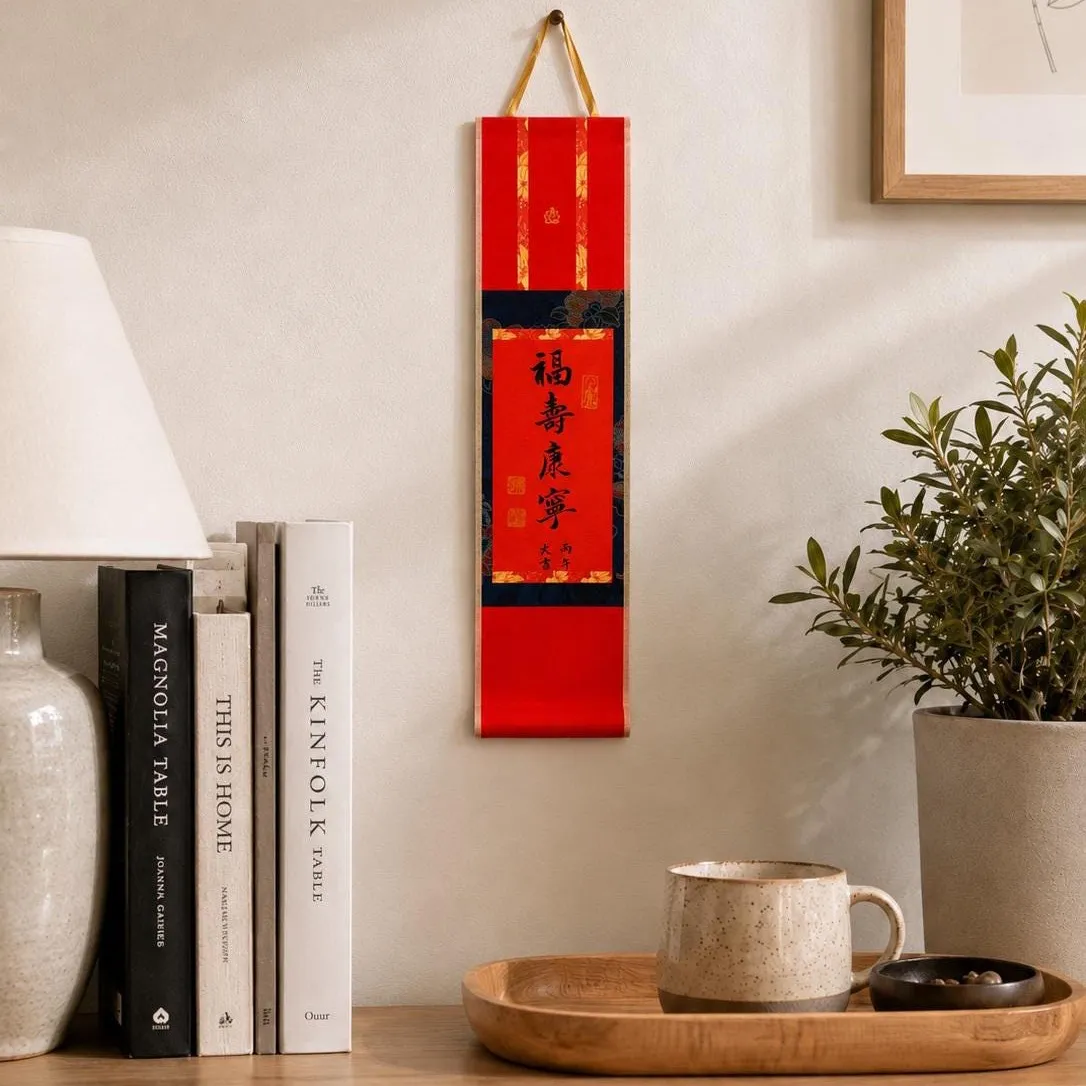
Photo shows a sample — yours will be brushed with 喜气洋洋, or any character you choose.
Wall Scroll — for walls & housewarmingsfrom $38→ -
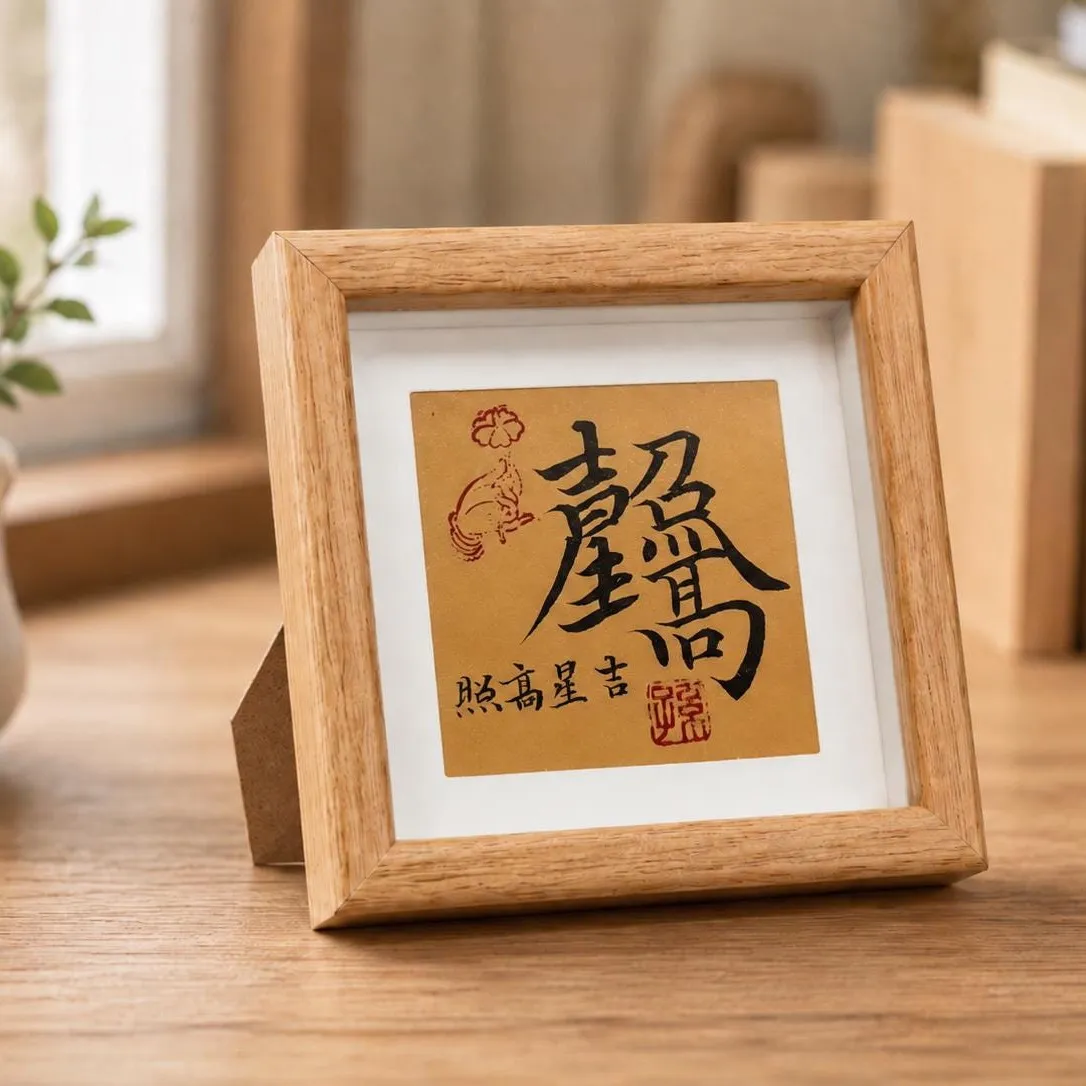
Photo shows a sample — yours will be brushed with 喜气洋洋, or any character you choose.
Desk Frame — for desks, studies & studiosfrom $44→ -
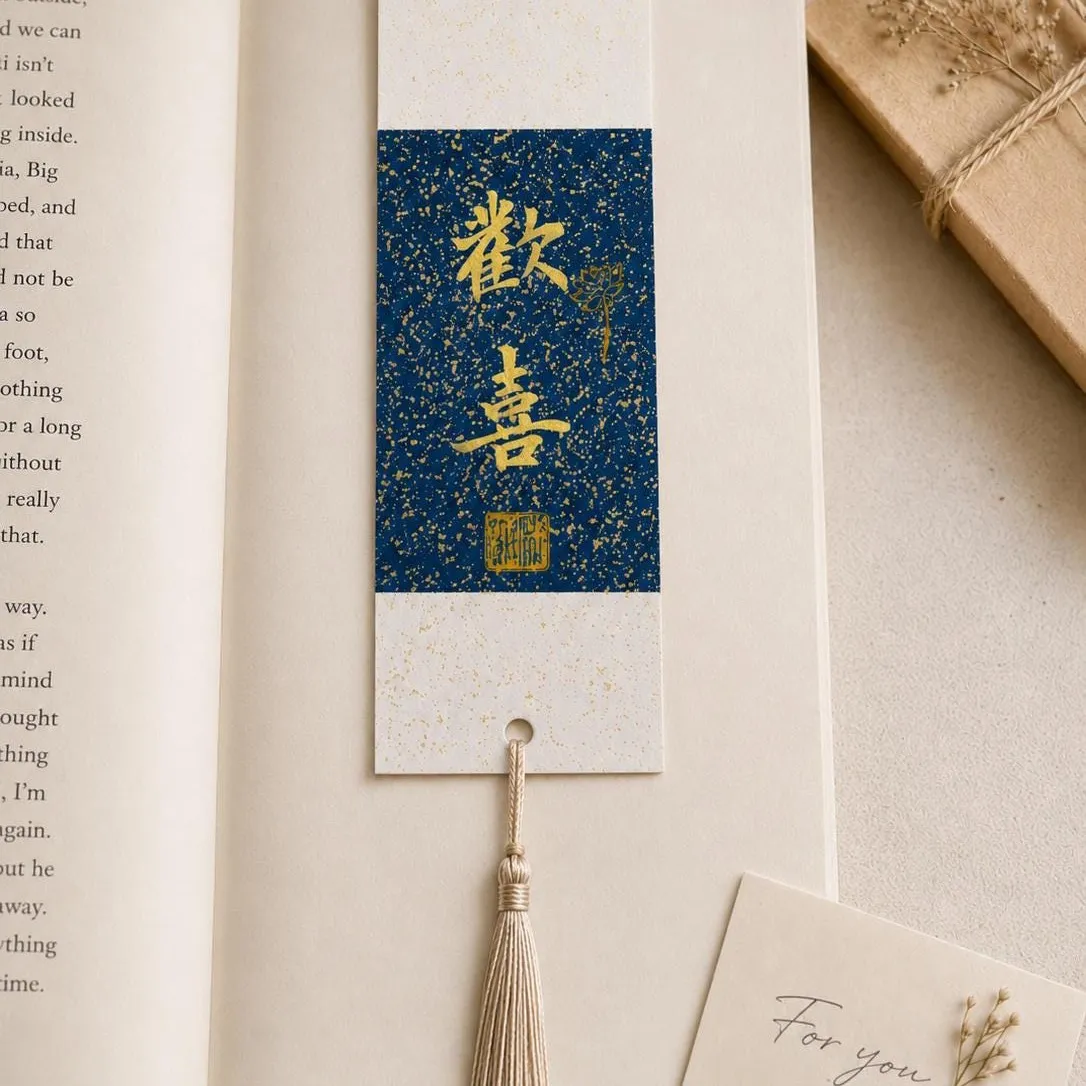
Photo shows a sample — yours will be brushed with 喜气洋洋, or any character you choose.
Bookmark — for readers & small thank-yousfrom $17→
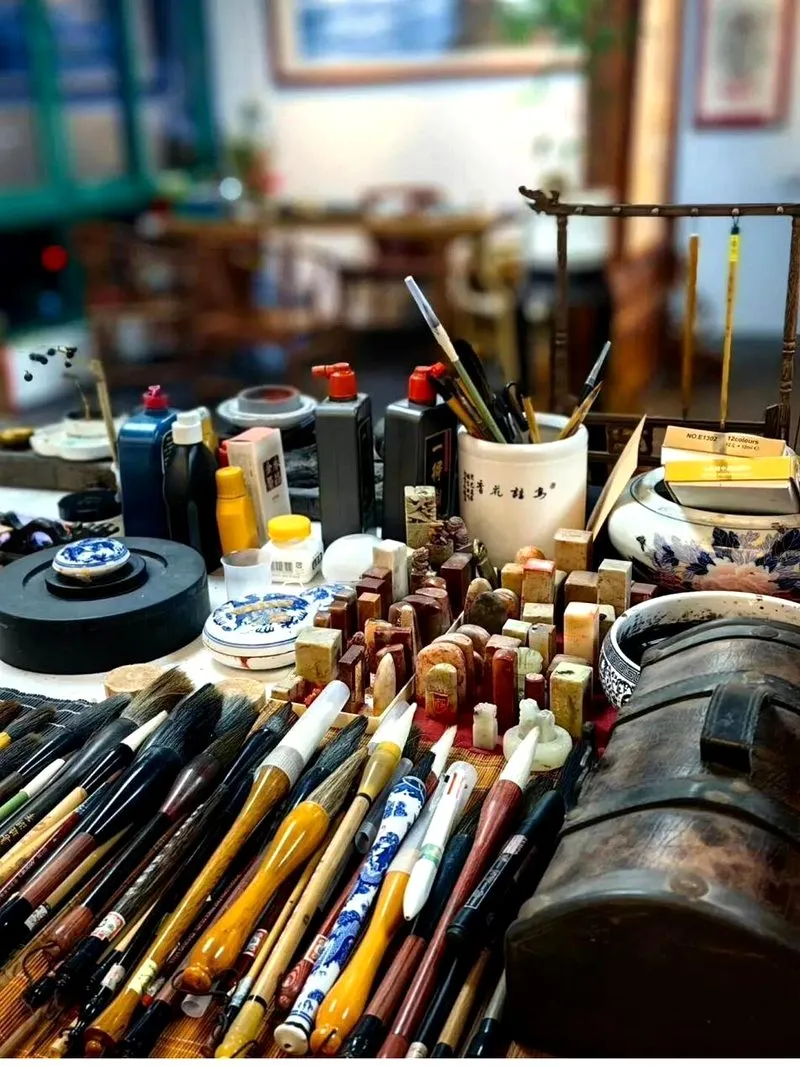
What people said after it arrived.
-
The item is fantastic. The customer service was genuine. Thanks!
— M.Verified purchase · from our Etsy shop reviews · -
They were great they gave me exactly what I asked for and then some. Thank you!!
— G.Verified purchase · from our Etsy shop reviews · -
It is well designed and customized. My daughter loves it. Amazing gift for family’s d friends
— S.Verified purchase · from our Etsy shop reviews ·
Each "喜气洋洋" is hand-brushed by Artist Lina Sun on rice paper.
See 喜气洋洋 (Xǐ Qì Yáng Yáng) on Etsy →