紫气东来 (zǐ qì dōng lái) — Purple Qi from the East
A 4-character phrase, not a single character.
紫气东来 is a blessing you read on your way through a door. Most auspicious phrases name what they wish for — five blessings, wealth, all outcomes going one’s way. This one names something narrower and stranger: the approach. Its purple vapor is fortune sighted over the eastern horizon, not fortune arrived — the omen, born from the morning a pass-keeper watched a colored cloud drift in from the east and knew a sage was coming, and Laozi rode up on a green ox. Where 五福临门 names the blessings landing at the threshold and 吉祥 names auspiciousness in the abstract, 紫气东来 names the sign still out over the road: good is coming, and it is coming this way.
That is why its home is the top of a doorway. It is one of the most common inscriptions above a Chinese main gate — carved into the lintel of a courtyard, brushed across the horizontal scroll (横批) that crowns a Spring Festival couplet. The east is not an idle detail: it is the quarter of the rising sun and of spring, the direction the 《周易》 names as where all things come forth, so a fortune arriving from the east arrives from the side of the sky where things begin. And because the purple vapor first announced Laozi, the phrase has always been the more lettered of the door blessings — the one with a book behind it, chosen by families who wanted their gate to say something with a mind in it.
A hand-brushed “紫气东来” by FuBlessings is the inscription for a threshold — a friend’s new home, an elder’s courtyard, the first door of a new year. It puts into ink the most forward-looking of blessings: not a catalogue of what a house already holds, but the promise read over its gate that what is on its way to it is good, and drawing nearer from the east.
- auspicious fortune approaching from the east
- the omen that good things are on their way
- a sign of something exalted drawing near
- good luck Too random. 紫气东来 is a sign read in the sky, tied to a specific image and direction — fortune sighted on its way in, not a chance turn of events.
- prosperity It names the harbinger, not the goods. 紫气东来 is the purple vapor over the horizon, the announcement before the arrival — not the wealth itself.
The short arms are the point: these readings don’t reach it.
- 紫气 the noble emanation, fortune made visible紫 was the color of the celestial pole (紫微垣) and later the imperial palace (紫禁城) — the hue of the exalted. 紫气, purple vapor, is the sign that something high is present or approaching, drawn from the omen that announced Laozi at the pass.
- 东来 arriving from the east东 is the quarter of the rising sun and spring, the direction the 《周易》 assigns to 震, where all things come forth. 来 keeps the fortune in motion — not a blessing already in hand, but one on its way in.
characters
- 紫气 zǐ qì purple vapor — the emanation of the exalted, sign of a sage or fortune approaching
- 吉祥 jí xiáng auspicious — the general good-omen quality 紫气东来 announces
- 祥瑞 xiáng ruì an auspicious portent — the class of sign 紫气 belongs to
- 青牛 qīng niú the green ox Laozi rode west — poetry's shorthand for the sage's departure
- 福星高照 fú xīng gāo zhào the star of fortune shining down — a sister inscription for a door
Cinnabar marks the characters 紫气东来 actually contains. The dark row is a relative by meaning or by sound, not one shared stroke.
The Story Behind the Character
In the last centuries of the Zhou, a keeper of the Hangu Pass named Yin Xi is said to have watched the sky for a living — reading the colored vapors that rose over the land the way others read tracks. One morning a band of purple drifted toward the pass from the east, and he knew a person of great attainment was coming. Soon an old man arrived on the road, riding a green ox, heading west to leave the world behind. Yin Xi kept him at the pass long enough to write down five thousand words before he vanished into the mountains — the book we call the 道德经, and the old man, by tradition, Laozi. The line survives in the 《列仙传》: 关令尹喜望见有紫气浮关 — the pass-keeper Yin Xi saw purple vapor floating over the gate. From that morning, 紫气 became the visible sign of something exalted approaching.
Why purple, and why the east. 紫 was the color of the center of heaven: the circle of stars around the pole was the 紫微垣, the Purple Enclosure, seat of the celestial sovereign — which is why, centuries later, the emperor's palace in Beijing was named the 紫禁城, the Purple Forbidden City. Purple vapor is the emanation of something high. And the east is the quarter of the rising sun and of spring; the 《周易》 seats 震, the trigram of the east, as the direction in which all things come forth. 紫气东来 layers the two: a noble emanation (紫气), moving in from the direction where beginnings begin (东来). Good, and on its way.
The grammar is a plain subject and predicate — 紫气, purple vapor; 东来, comes from the east (从东方来). Over the centuries the phrase loosened from the Laozi legend and settled into a fixed inscription for the top of a doorway: four characters above the main entrance, most often at the New Year, announcing that auspicious fortune approaches this threshold from the east. It is one of the few classical phrases most people meet first not in a book but over a door.
Classical lines
西望瑶池降王母,东来紫气满函关。 Westward, the Queen Mother descends to the Jade Pool; eastward, purple vapor fills the Hangu Pass.
Du Fu, writing in exile far up the Yangtze, reaches back to the Laozi legend to picture the capital's grandeur. His line 东来紫气满函关 is where the four-character phrase crystallizes in poetry: the purple vapor of the pass become an image of auspicious splendor arriving.
老子西游,关令尹喜望见有紫气浮关,而老子果乘青牛而过也。 Laozi journeyed west; the pass-keeper Yin Xi saw purple vapor floating over the gate, and Laozi did indeed come riding a green ox.
The locus classicus of the phrase. The whole idea of 紫气 as a portent of a coming sage traces to this one sentence, which also gives Chinese poetry its shorthand for Laozi's departure: 青牛, the green ox.
万物出乎震,震,东方也。 All things come forth in Zhen; Zhen is the east.
The Book of Changes assigns the east to Zhen, the trigram of thunder and spring's first stir, the quarter from which life emerges. It is the reason 东来 reads as auspicious in itself: the east is not merely a direction but the side of the sky where things begin.
Why This Character Matters
紫气东来 is one of the most common inscriptions carved or brushed above the main door of a Chinese home — the 门楣 over a courtyard gate, the 横批 crowning a Spring Festival couplet. Its reach comes from what it leaves unsaid. 五福临门 names five specific blessings; 恭喜发财 names wealth; 万事如意 names all outcomes. 紫气东来 names none of them — it names only the approach, the auspicious vapor still out over the eastern horizon, fortune sighted rather than fortune arrived. That is why it lives above the door rather than inside the room: it is the phrase you read on your way in, the promise that what is coming to this house is good.
The inscription carries a second register for anyone who knows its source. Because the purple vapor first announced Laozi, 紫气东来 has always been the more lettered of the door blessings — the one with a book behind it, favored by scholars and by families who wanted their gate to say something with a mind in it. Paired couplets sometimes make the debt explicit, setting 紫气东来 above a line that echoes the pass and the green ox. It is auspicious the way a well-chosen quotation is auspicious: a wish, and a small act of learning, in the same four strokes over a door.
A few characters live near "紫气东来" but mean something quieter, sharper, or more specific. Here's how to tell them apart.
a specific auspicious sign — fortune pictured as purple vapor drifting in from the east
auspiciousness as an abstract quality, without image or direction
the omen that fortune is on its way — the harbinger still at the horizon
the five blessings themselves, arriving in full at the threshold
fortune approaching from outside, an omen read over the gate
the settled condition of a world well-disposed and a household in accord
紫气东来 is written above a door, and a new door is exactly what a housewarming is.
- 紫气东来 is written above a door, and a new door is exactly what a housewarming is. Carved or brushed across the lintel (门楣) of a main entrance, the four characters declare that auspicious fortune is drawing toward this threshold from the east — not the blessings already inside, but the sign that good things are on their way in. Where 五福临门 names the five blessings arriving in full and 金玉满堂 pictures the hall already stocked, 紫气东来 names the approach itself: the household's first morning, and the omen read over its gate that what comes to it will be good. The inscription for the friend or family standing at a door they have just made their own.
- 紫气东来 is one of the most common horizontal scrolls (横批) pasted above the door at Spring Festival, crowning the vertical couplet below it. Where 五福临门 names the blessings arriving and 万事如意 wishes that all things go one's way, 紫气东来 names the turn of the year as a horizon over which fortune is already visible — the purple vapor drifting in from the east the way spring drifts in from the same quarter. It says nothing about what the year will hold and everything about its direction: good is coming, and it is coming toward this house. The New Year inscription for a household you want to picture with something auspicious already on the road to its gate.
New Couple · Friend · Grandparent · or yourself
Looking for a name? See Western names written in Chinese →
-
What does 紫气东来 (zǐ qì dōng lái) mean?
紫气东来 (zǐ qì dōng lái) is a 4-character Chinese phrase for purple qi from the east. 紫气东来 is a blessing you read on your way through a door. Most auspicious phrases name what they wish for — five blessings, wealth, all outcomes going one's way. This one names something narrower and stranger: the approach. Its purple vapor is fortune sighted over the eastern horizon, not fortune arrived — the omen, born from the morning a pass-keeper watched a colored cloud drift in from the east and knew a sage was coming, and Laozi rode up on a green ox. Where 五福临门 names the blessings landing at the threshold and 吉祥 names auspiciousness in the abstract, 紫气东来 names the sign still out over the road: good is coming, and it is coming this way. 紫气东来 is one of the most common inscriptions carved or brushed above the main door of a Chinese home — the 门楣 over a courtyard gate, the 横批 crowning a Spring Festival couplet. Its reach comes from what it leaves unsaid. 五福临门 names five specific blessings; 恭喜发财 names wealth; 万事如意 names all outcomes. 紫气东来 names none of them — it names only the approach, the auspicious vapor still out over the eastern horizon, fortune sighted rather than fortune arrived. That is why it lives above the door rather than inside the room: it is the phrase you read on your way in, the promise that what is coming to this house is good.
-
What occasions is 紫气东来 given for?
紫气东来 is traditionally given for Housewarming, Chinese New Year. 紫气东来 is written above a door, and a new door is exactly what a housewarming is. Carved or brushed across the lintel (门楣) of a main entrance, the four characters declare that auspicious fortune is drawing toward this threshold from the east — not the blessings already inside, but the sign that good things are on their way in. Where 五福临门 names the five blessings arriving in full and 金玉满堂 pictures the hall already stocked, 紫气东来 names the approach itself: the household's first morning, and the omen read over its gate that what comes to it will be good. The inscription for the friend or family standing at a door they have just made their own. 紫气东来 is one of the most common horizontal scrolls (横批) pasted above the door at Spring Festival, crowning the vertical couplet below it. Where 五福临门 names the blessings arriving and 万事如意 wishes that all things go one's way, 紫气东来 names the turn of the year as a horizon over which fortune is already visible — the purple vapor drifting in from the east the way spring drifts in from the same quarter. It says nothing about what the year will hold and everything about its direction: good is coming, and it is coming toward this house. The New Year inscription for a household you want to picture with something auspicious already on the road to its gate.
-
Who brushes the 紫气东来 calligraphy?
FuBlessings hand-brushes each 紫气东来 (Zǐ Qì Dōng Lái) to order, in ink on rice paper — never printed, never repeated.
Bring 紫气东来 home — choose how you'd like it brushed.
-
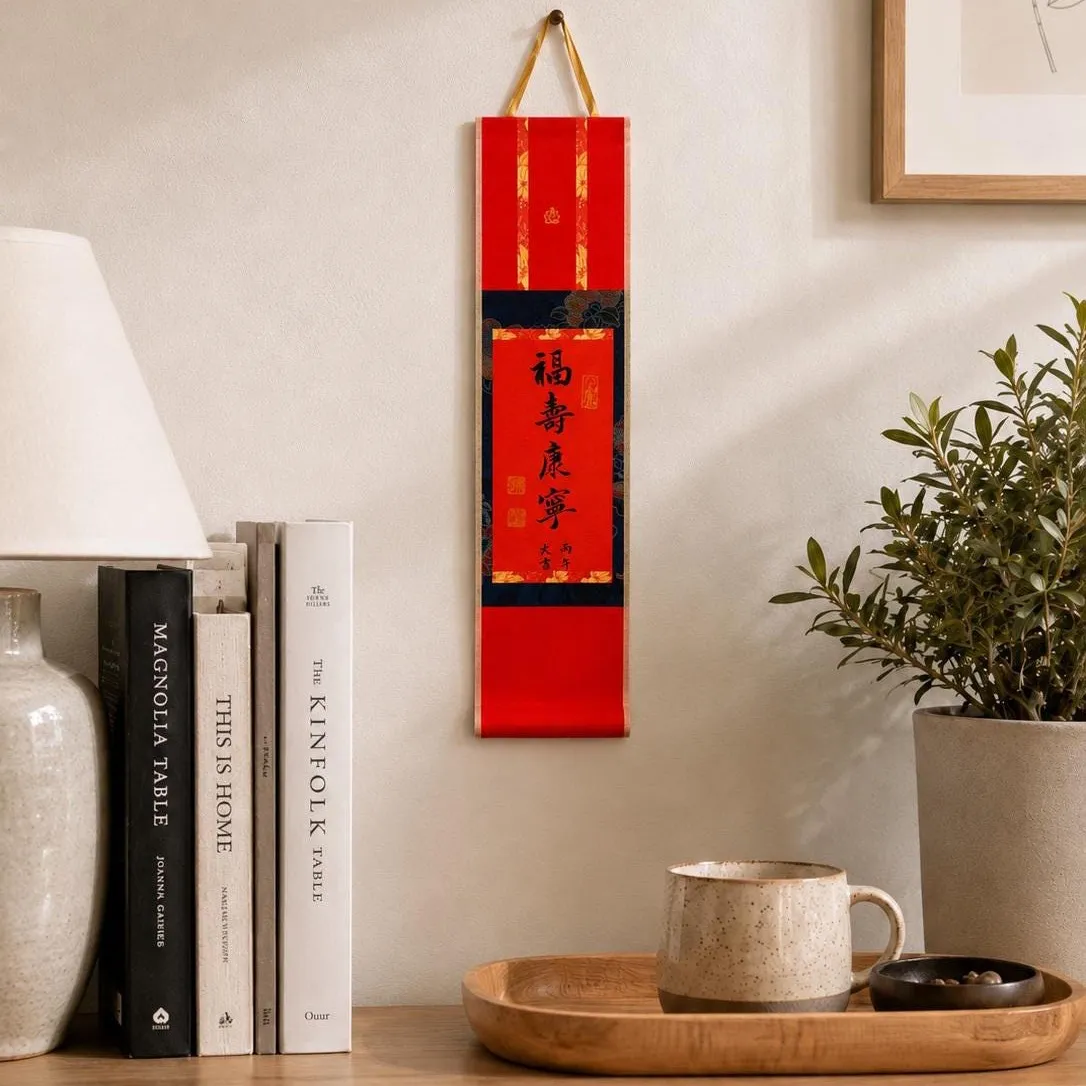
Photo shows a sample — yours will be brushed with 紫气东来, or any character you choose.
Wall Scroll — for walls & housewarmingsfrom $38→ -
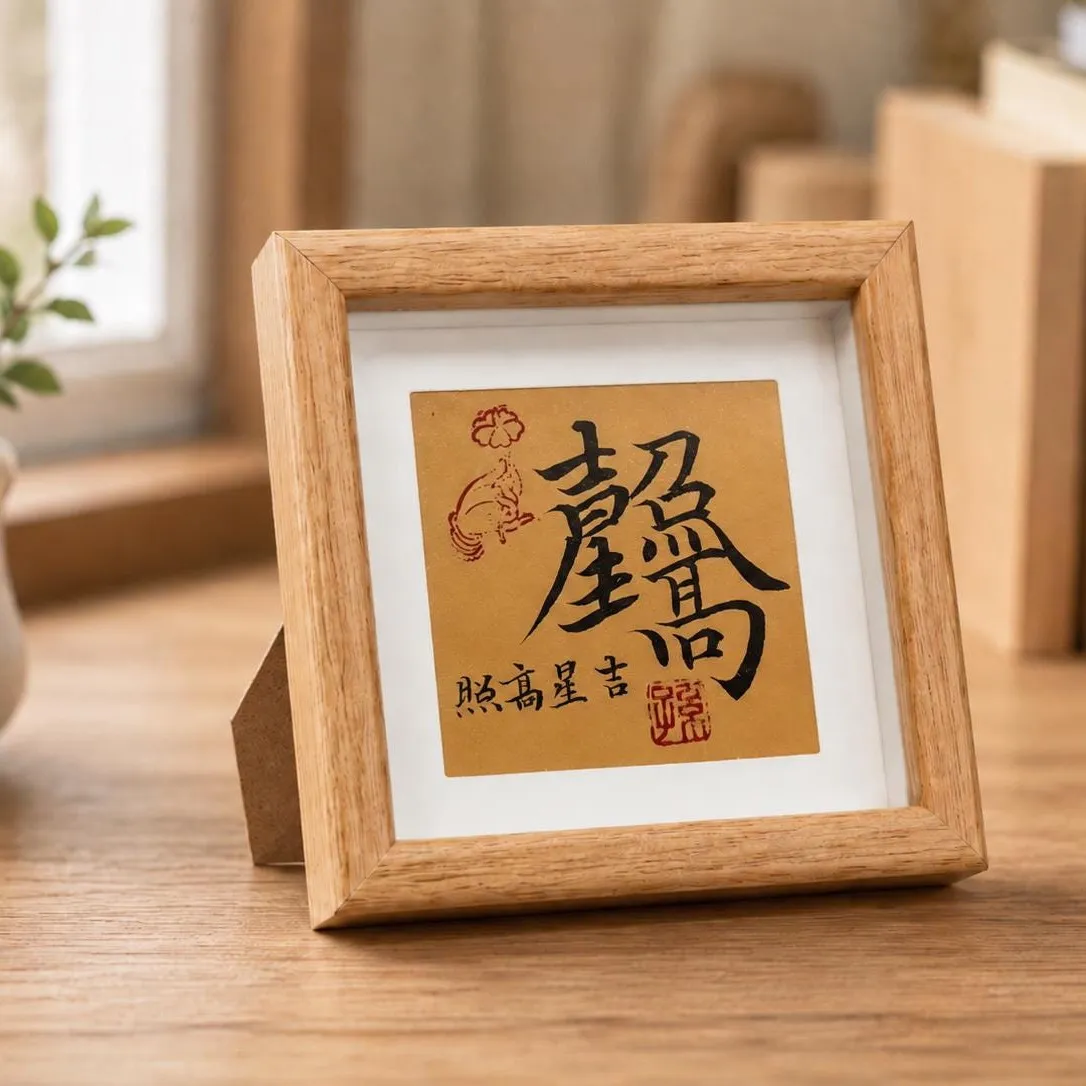
Photo shows a sample — yours will be brushed with 紫气东来, or any character you choose.
Desk Frame — for desks, studies & studiosfrom $44→ -
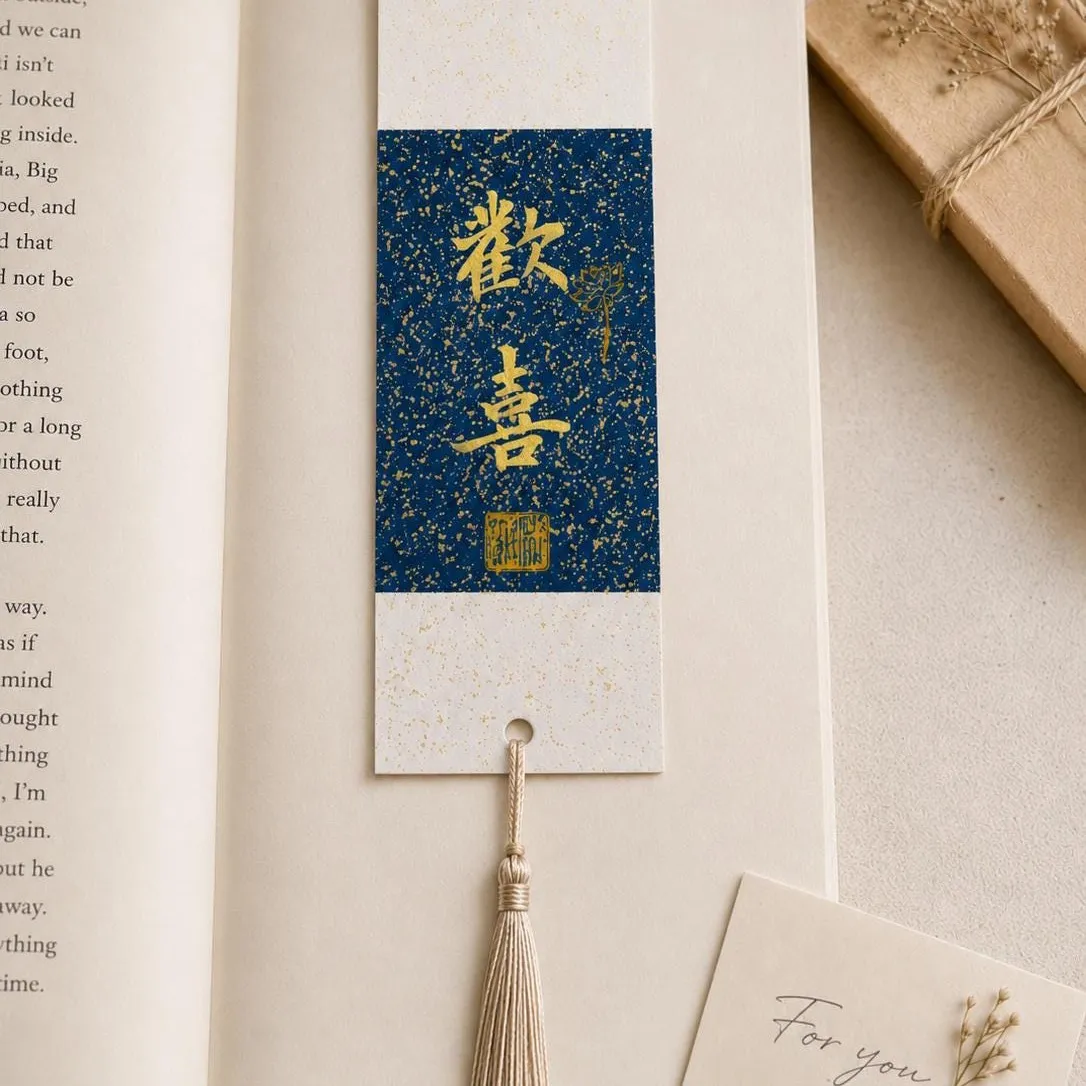
Photo shows a sample — yours will be brushed with 紫气东来, or any character you choose.
Bookmark — for readers & small thank-yousfrom $14→
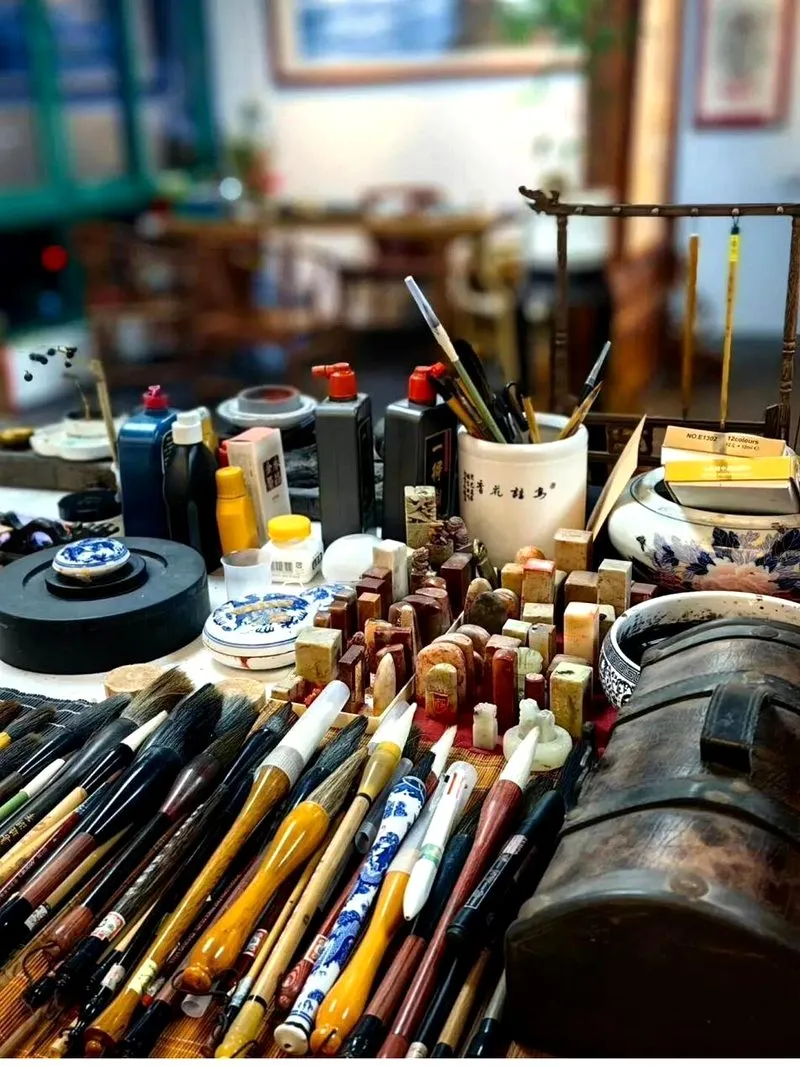
What people said after it arrived.
-
The item is fantastic. The customer service was genuine. Thanks!
— M.Verified purchase · from our Etsy shop reviews · -
They were great they gave me exactly what I asked for and then some. Thank you!!
— G.Verified purchase · from our Etsy shop reviews · -
It is well designed and customized. My daughter loves it. Amazing gift for family’s d friends
— S.Verified purchase · from our Etsy shop reviews ·
Each "紫气东来" is hand-brushed by FuBlessings on rice paper.
See 紫气东来 (Zǐ Qì Dōng Lái) on Etsy →