Jin Yu Man Tang (金玉满堂) — Gold and Jade Fill the Hall · Abundance
A 4-character phrase, not a single character.
Jīn yù mǎn táng (金玉满堂) is a four-character Chinese phrase meaning gold and jade fill the hall. 金 (jīn) is gold and worked bronze; 玉 (yù) is jade, tied to the cultivated person; 满 (mǎn) is to fill to capacity; 堂 (táng) is the main hall, the public heart of the house. It pictures substance and refinement, not coin alone. Classical usage reads 金玉 as talent and virtue, so the hall can hold what can be weighed and what cannot. The line first appears as a caution in the 《道德经》; folk tradition kept the picture and let the warning go. Artist Lina Sun hand-brushes 金玉满堂 to order in her Shenzhen one-person studio: ink on rice paper, living craft, never printed.
The Story Behind the Character
The phrase begins, surprisingly, as a warning. In the ninth chapter of the 《道德经》, Laozi sets down a sequence of cautions against overreaching: a cup filled to the brim is better left unfilled; a blade honed too sharp will not keep its edge; and 金玉满堂,莫之能守 — when gold and jade fill the hall, no one can keep them safe. The original sense is the opposite of a blessing. Lao Tzu's point is that heaped-up treasure cannot be guarded, that wealth paired with pride invites its own ruin, and that the way of heaven is to withdraw once the work is done. The four characters that later generations would brush onto red New Year banners began their life as a verse about the impossibility of holding on.
Over the centuries the cautionary clause fell away and the image survived. 金 (jīn) is gold and bronze, the worked metal of early China; 玉 (yù) is jade, the stone valued above gold for its coolness, its translucence, and its association with the cultivated person. Together 金玉 names the two most prized materials of the classical world. 满 (mǎn) is to fill to capacity; 堂 (táng) is the main hall, the formal reception room at the center of a traditional house — not a private chamber but the public heart of the household, where guests are received and the family gathers. The phrase's literal picture is therefore precise: the central room of a home filled to capacity with gold and jade. Folk usage kept the picture of plenty and quietly dropped Laozi's warning that it could not last.
At its fullest, 金玉 carries more than material weight. In classical usage 金 and 玉 also stood for the bell and the chime — Mencius described Confucius's complete virtue as 金声而玉振, beginning with the sound of bronze and concluding with the resonance of jade, the figure for a perfectly harmonized life. Read this way, 金玉满堂 names not only a rich house but a complete one: a household furnished with both the substance and the refinement that early China counted as a full life. The phrase the New Year banner carries is generous on both registers — the hall full of what can be weighed, and full of what cannot.
Classical lines
- roughly 350 years
- c. 7th c. BCE 《诗经·小雅·甫田》
- c. 4th c. BCE 《道德经》第九章
- c. 300 BCE 《孟子·万章下》
金玉满堂,莫之能守。 Gold and jade fill the hall, yet no one can keep them safe.
The phrase's original home, and its original warning: Laozi's counsel that heaped-up treasure cannot be guarded, and that the way of heaven is to withdraw once the work is done. Folk tradition kept the image of the full hall and let the caution fall away — but the line is where the four characters were first written down.
乃求千斯仓,乃求万斯箱。 Then we seek a thousand granaries, then we seek ten thousand carts.
A harvest hymn picturing abundance at its most concrete: the year's yield so great it needs a thousand storehouses to hold and ten thousand carts to move. This is the older, agricultural shape of the wish 金玉满堂 inherits — plenty measured not in coin but in barns too many to count.
集大成也者,金声而玉振之也。 To be a great synthesizer is to open with the sound of bronze and close with the resonance of jade.
Mencius's figure for Confucius's complete virtue, drawn from the ritual ensemble where a bronze bell begins the music and a jade chime ends it. It is why 金玉 means more than treasure: the same two materials name a life harmonized from start to finish, the fullest reading of what fills the hall.
Why This Character Matters
The most recognizable visual form of 金玉满堂 is not calligraphy but fish. 金鱼 (jīn yú, goldfish) sits one tone away from 金玉 (jīn yù, gold and jade), and a hall or courtyard pond crowded with goldfish became a standing visual pun for the phrase — 金鱼满堂, a room full of goldfish read as a room full of gold and jade. New Year prints, porcelain, and embroidery from the Ming and Qing onward render the blessing this way, a bowl or pond of red-gold fish doing the work of the four written characters. The pun is so established that goldfish themselves became a New Year gift carrying the wish.
As written calligraphy, 金玉满堂 belongs to the Spring Festival couplet tradition, where it appears among the fixed four-character prosperity phrases hung at the gate or above the main hall. It is most often given for a new home or the start of the lunar year — occasions that turn on a threshold and a household. For an elder it carries a second reading through 满堂: the same character that fills the hall with gold and jade also fills it, in the phrase 儿孙满堂, with children and grandchildren — a hall full of descendants being its own kind of abundance.
金玉满堂 names the wish specific to the central room of a new house — 堂, the reception hall that is the public heart of a Chinese home — overflowing with what early China valued most.
- Housewarming · A New Home金玉满堂 names the wish specific to the central room of a new house — 堂, the reception hall that is the public heart of a Chinese home — overflowing with what early China valued most. Where 家和 names the relational condition the household needs and 盛 names its rising vital energy, 金玉满堂 names the material picture: the hall well-furnished, the family wanting for nothing. The most concrete of the housewarming blessings, it wishes the new home not merely settled but visibly abundant.
- 金玉满堂 is one of the fixed prosperity phrases of the Spring Festival couplets, often paired with 富贵平安 on the gate panels. Where 富足 names the household's quiet material floor and 步步高升 names career ascent, 金玉满堂 names the celebratory picture the New Year invites: the hall full, the year generous. It is also the phrase behind the season's goldfish imagery — 金鱼满堂, a pond of goldfish standing in for the gold and jade, hung and painted at the turn of the year.
New Couple · Friend · Grandparent · or yourself
Looking for a name? See Western names written in Chinese →
-
What does Jīn yù mǎn táng (金玉满堂) mean?
Jīn yù mǎn táng (金玉满堂) means gold and jade fill the hall. It is a four-character phrase, not a single character. 金 (jīn) names gold and bronze, the worked metal of early China. 玉 (yù) names jade, the stone associated with the cultivated person. Together 金玉 are the two materials a complete household was imagined to hold — substance and refinement, not coin alone. Dictionaries also gloss 金玉 as talent and learning. 满 (mǎn) is to fill to capacity. 堂 (táng) is the main reception hall, not a private chamber. What survives as a blessing is a picture of a household generously provided for: the public heart of the home full of both what can be weighed and what cannot.
-
Did Jīn yù mǎn táng start as a warning?
The four characters first appear in chapter 9 of the 《道德经》: 金玉满堂,莫之能守 — when gold and jade fill the hall, no one can keep them safe. Laozi’s point is the opposite of a blessing: heaped-up treasure cannot be guarded, and pride in plenty invites its own ruin. Later the cautionary clause fell away and the image survived. Folk use kept the picture of a hall filled to capacity and dropped the warning that it could not last. That is why a New Year couplet or housewarming inscription can carry 金玉满堂 as a generous picture rather than a lecture. The line was first written down as counsel to withdraw once the work is done; what people hang is the hall, well-furnished.
-
When do people give or hang Jīn yù mǎn táng?
People give and hang Jīn yù mǎn táng (金玉满堂) at a housewarming and at Chinese New Year — two thresholds that suit a hall filling up. For a new home it names the 堂 itself: the reception hall at the center of the house, well-furnished, the family wanting for nothing. At Spring Festival it is one of the fixed four-character prosperity phrases on couplets at the gate or above the main hall. Its most recognizable visual form is not calligraphy but goldfish: 金鱼 (jīn yú) sits one tone from 金玉 (jīn yù), so a pond crowded with red-gold fish reads as a hall crowded with gold and jade. For an elder, 满堂 also echoes 儿孙满堂, a hall full of descendants.
-
How is a hand-brushed Jīn yù mǎn táng different from a printed poster?
A printed poster repeats one file of 金玉满堂. Fonts and flash sheets copy a digital outline. Artist Lina Sun brushes each Jīn yù mǎn táng (金玉满堂) once, in one sitting, in ink on rice paper in her Shenzhen one-person studio. Four characters have to sit together as a hall: the metal of 金, the jade of 玉, the fullness of 满, the room of 堂. Stroke weight and spacing belong to that sitting and do not recur. That is living craft, not a stamp. FuBlessings is a one-person studio, not a print shop. The piece is wall art for a home — a housewarming or New Year inscription you hang — not a stencil and not a print.
Bring 金玉满堂 home — choose how you'd like it brushed.
-
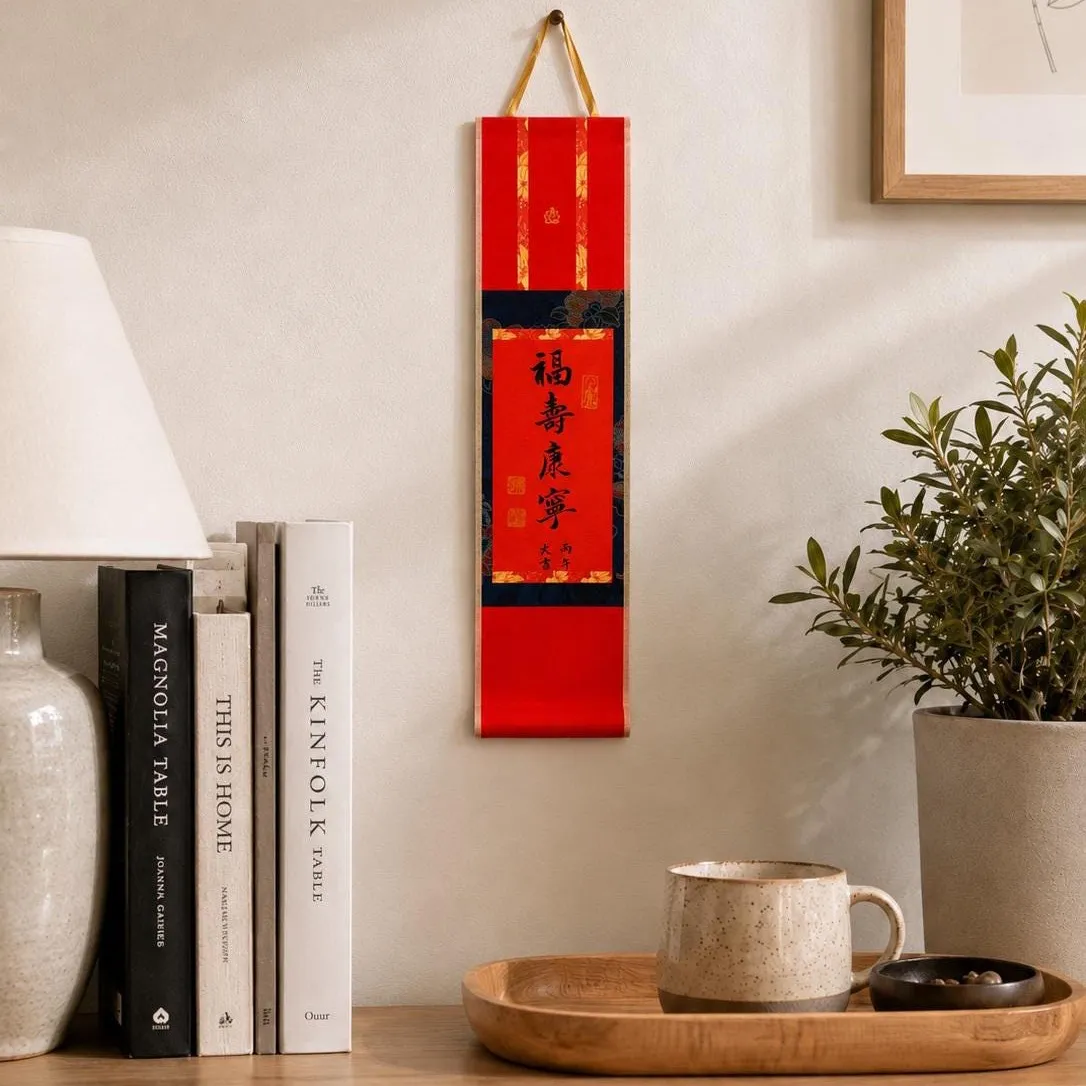
Photo shows a sample — yours will be brushed with 金玉满堂, or any character you choose.
Wall Scroll — for walls & housewarmingsfrom $38→ -
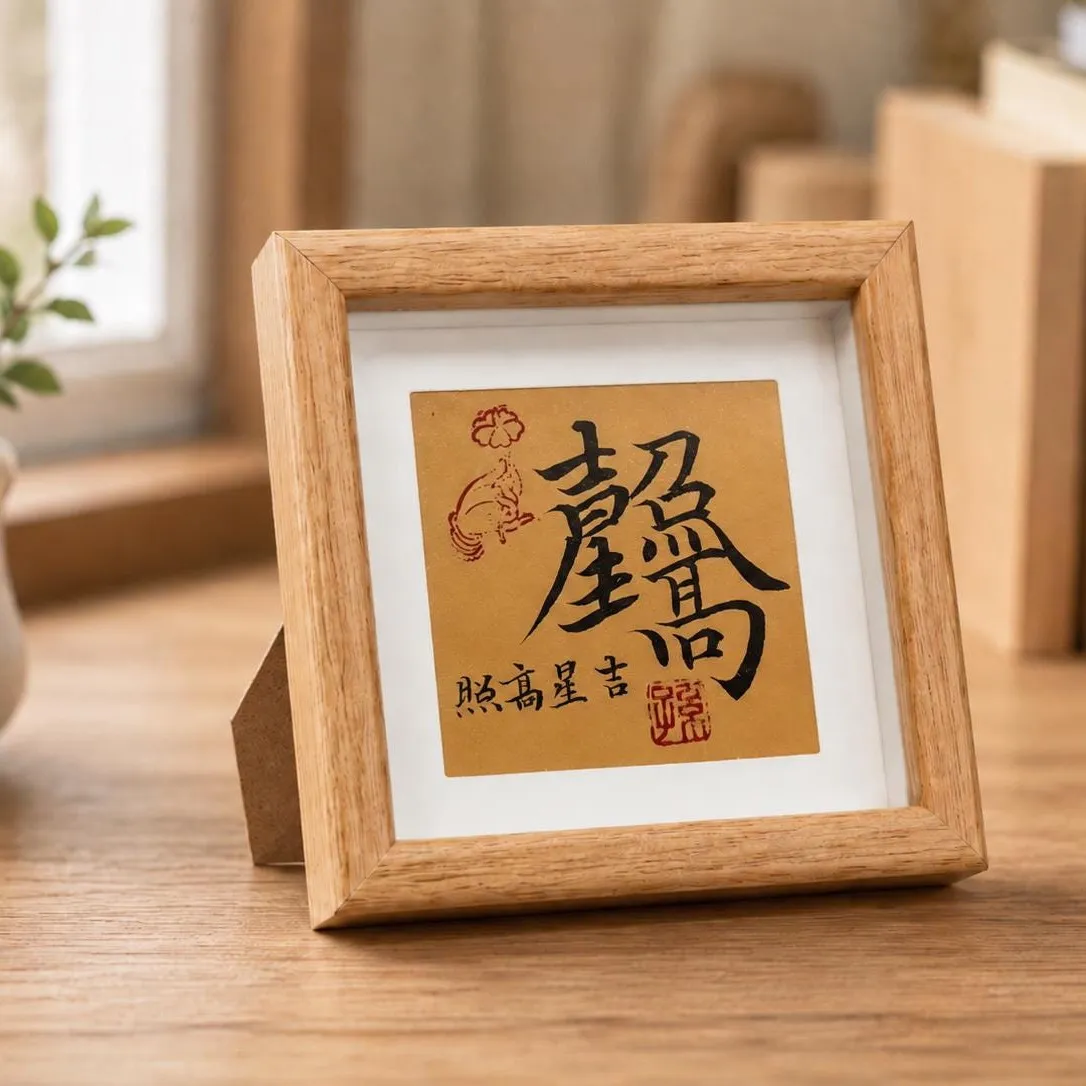
Photo shows a sample — yours will be brushed with 金玉满堂, or any character you choose.
Desk Frame — for desks, studies & studiosfrom $44→ -
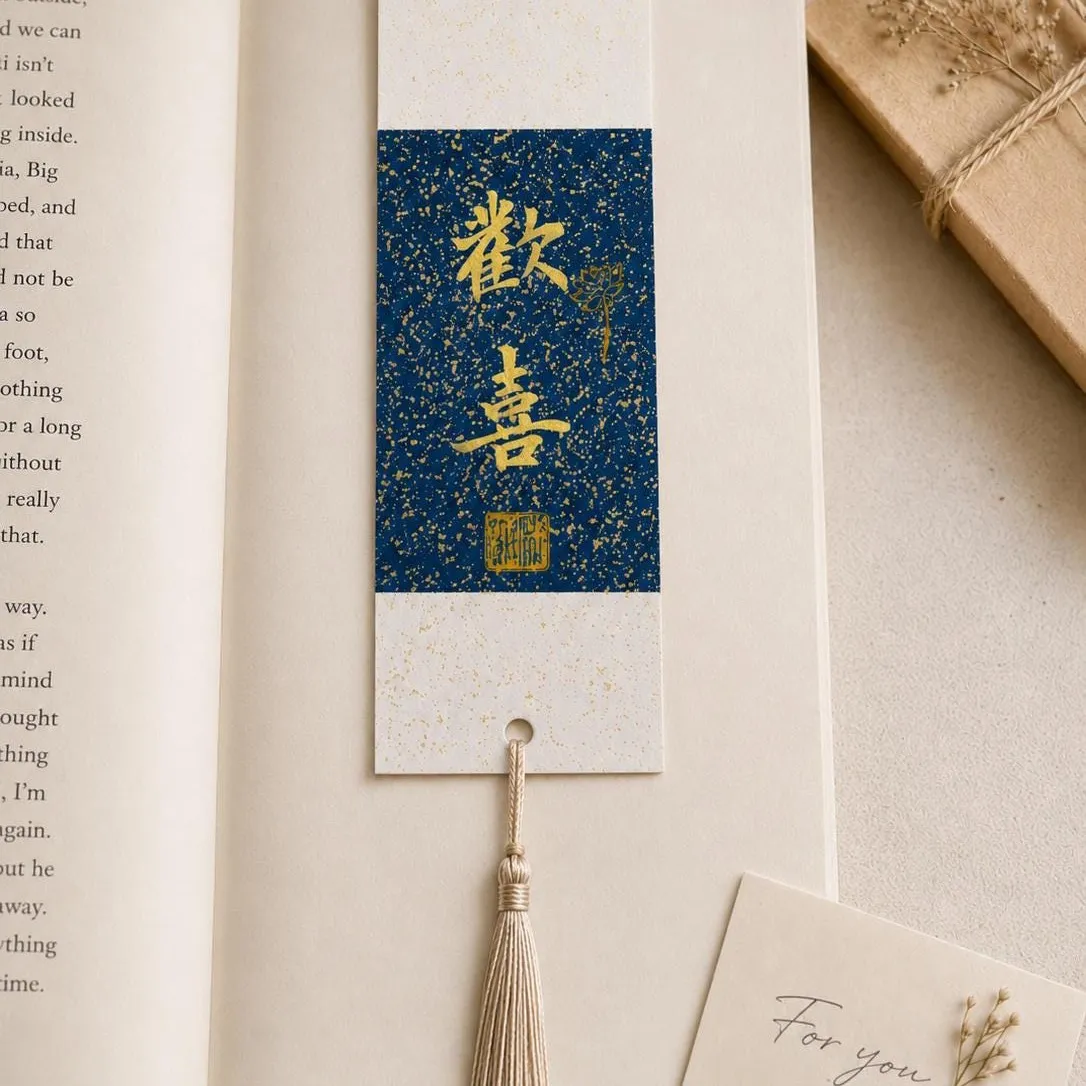
Photo shows a sample — yours will be brushed with 金玉满堂, or any character you choose.
Bookmark — for readers & small thank-yousfrom $17→
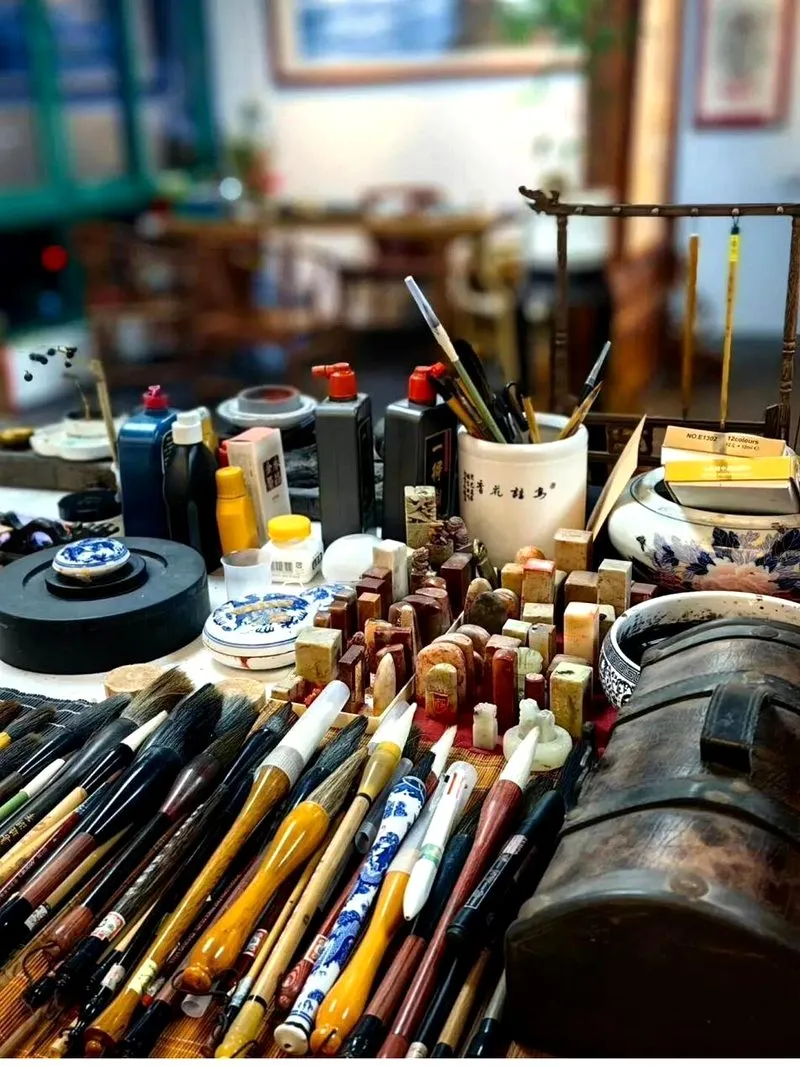
What people said after it arrived.
-
The item is fantastic. The customer service was genuine. Thanks!
— M.Verified purchase · from our Etsy shop reviews · -
They were great they gave me exactly what I asked for and then some. Thank you!!
— G.Verified purchase · from our Etsy shop reviews · -
It is well designed and customized. My daughter loves it. Amazing gift for family’s d friends
— S.Verified purchase · from our Etsy shop reviews ·
Each "金玉满堂" is hand-brushed by Artist Lina Sun on rice paper.
See 金玉满堂 (Jīn Yù Mǎn Táng) on Etsy →