年年有余 (nián nián yǒu yú) — Surplus Year After Year · A Margin That Never Runs Out
A 4-character phrase, not a single character.
Most prosperity blessings picture wealth arriving — the hall filled with gold and jade (金玉满堂), the granary high and overflowing (丰), the household fortunes climbing year on year (盛). 年年有余 pictures wealth staying. Its heart is the character 余, the modest word not for riches but for the remainder — what is still in the jar when the next harvest comes, what is still in hand when the year’s accounts are closed. To wish it is to wish someone never short: a home that ends each year a little ahead of the line, keeping a margin it can carry forward. It is the plainest and most durable of the abundance phrases, and the one least about getting rich.
The wish is acted out more literally than almost any other. At the New Year’s Eve table a whole fish is served and deliberately not finished, because 余 (surplus) and 鱼 (fish) are both yú — a fish left over is a year left with something to spare. It hangs on doorframes every spring as the couplet phrase for the household’s material floor, and it is the caption under the tradition’s most beloved image: the plump child of the 杨柳青 New Year prints clasping an oversized carp among lotus blossoms, 连年有余, the same surplus said in flowers and fish. Given to a grandparent whose long labor built a home that now simply provides, to a friend whose year you want secure rather than spectacular, or to a new couple just beginning to keep their own accounts, it names the same modest hope: that after everything is counted, there is still a remainder.
A hand-brushed “年年有余” by Artist Lina Sun carries the four characters in ink — a wish not for a fortune but for a margin, the household that closes each year with a little set by rather than spent to nothing. For the elder whose home you hope stays provided for, the friend you want never anxious about the basics, or the couple building a first household you want steady from the start, it names the quietest kind of prosperity: not wealth that arrives, but a reserve that renews, year after year.
The Story Behind the Character
At the center of the New Year's Eve table sits a whole steamed fish, head and tail intact — and the unspoken rule at many a family dinner is that it must not be finished. A portion is left in the dish overnight, carried into the first day of the year, because the phrase the fish stands for demands it: 年年有余, a surplus every year, requires that something be left over. The custom is a pun made edible. 余 (yú), surplus or remainder, is a perfect homophone of 鱼 (yú), fish, so a fish that survives the meal is a year that ends with something to spare. Few blessings in the language are acted out as literally as this one — the wish is not merely spoken but served, and deliberately not eaten to the end.
The four characters divide into a doubled subject and a plain predicate. 年年 (nián nián) is 年, year, said twice — a reduplication that means not "a year" but "year upon year, without a gap," the same unbroken repetition that gives 天天 (every day) and 人人 (everyone) their force. 有余 (yǒu yú) is the predicate: 有, to have, and 余, what is left over after need is met. The phrase's whole weight rests on that last character. 余 is not 富 (rich) and not 丰 (bumper, overflowing); it is the modest word for margin — the grain still in the jar when the next harvest comes, the coin still in hand at the year's accounting. To wish someone 年年有余 is not to wish them wealth but to wish them never short: a life lived with a cushion, closing each year a little ahead of the line rather than exactly on it.
The phrase has no single classical author; it rose from the soil of an agrarian year and the woodblock print. Its most famous visual home is the New Year print of 杨柳青 and 桃花坞 — a plump child clasping an oversized carp among lotus blossoms, a picture usually captioned 连年有余, where 莲 (lián, lotus) puns on 连 (successive) and 鱼 on 余. By the Ming and Qing these prints hung on doorframes across the country every spring, and the wish they carried settled into the fixed couplet vocabulary of the season, where it has stayed — the plainest household hope of the farming year, that after everything is counted there is still a remainder to carry forward.
Classical lines
- roughly 1,800 years
- c. 7th c. BCE 《诗经·小雅·鱼丽》
- c. 2nd–1st c. BCE 《礼记·王制》
- c. 1167 陆游《游山西村》
鱼丽于罶,鲿鲨。君子有酒,旨且多。 The fish fall thick to the wicker trap
bream and tench. The host has wine, fine and abundant. — A feast hymn celebrating a catch and a cellar both running over, its refrain (旨且多 … 多且旨 … 旨且有) turning on the word for plenty. The oldest register of the wish 年年有余 carries, and a reminder that the fish stood for abundance in the Chinese imagination a thousand years before the pun on 余 was ever brushed on a door.
三年耕,必有一年之食;九年耕,必有三年之食。 Three years of farming must yield one year's store of food; nine years, three years' store.
The classical arithmetic of the reserve: a well-run household or state was measured not by a single fat harvest but by the surplus it kept back against a lean one. This is the 余 in 年年有余 given its oldest and most practical form — prosperity defined as the margin set aside, not the year's yield alone.
莫笑农家腊酒浑,丰年留客足鸡豚。 Don't laugh at the farmhouse's cloudy year-end wine
in a good year there is fowl and pork enough to keep a guest. — Lu You arriving at a mountain village where a surplus year shows itself not as hoarded coin but as a table with enough to share. The living picture of what 年年有余 is finally for: a margin generous enough that hospitality costs the household nothing.
Why This Character Matters
The rule at the New Year's Eve table is stricter than it looks: the fish should be served whole — 有头有尾, head and tail both present — and, in much of the country, must not be eaten all the way through. Leaving the fish, or at least its head and tail, for the first day of the new year is what makes the year 有余; in some households the fish is set out for the reunion dinner and pointedly not touched at all, only admired, then saved. The direction the fish head points is fussed over too, turned toward the eldest or the honored guest. Of all the season's food symbols, 年年有余 is the one most fully enacted rather than merely eaten.
As an image, the phrase is inseparable from the 抱鱼娃娃 — the round, rosy child hugging a carp nearly as big as itself, among lotus flowers — one of the most reproduced designs in the entire tradition of Chinese New Year woodblock prints, from the workshops of 杨柳青 near Tianjin and 桃花坞 in Suzhou. The same wish surfaces on porcelain, papercuts, embroidery, and red envelopes as goldfish and carp, the fish always plump and doubled or shoaling to say the surplus is not a one-year accident but a standing condition. Where the prosperity phrases of gold and jade picture wealth arriving, 年年有余 pictures wealth staying — the quieter blessing that a home will always have a little more than it needs.
年年有余 is the fish blessing of the Spring Festival — the reason a whole steamed fish sits at the center of the New Year's Eve table and no one is allowed to finish it.
- 年年有余 is the fish blessing of the Spring Festival — the reason a whole steamed fish sits at the center of the New Year's Eve table and no one is allowed to finish it. 余 (surplus) and 鱼 (fish) are both yú, so a fish left uneaten is a year left with something over. Where 金玉满堂 pictures the hall full of gold and jade and 步步高升 wishes career ascent, 年年有余 wishes the humbler and more durable thing: that every year close with a little left in reserve, the household never running to the edge. It is one of the fixed couplet phrases at the gate, and the blessing carried by the season's carp and goldfish imagery.
- Housewarming · A New Home年年有余 wishes a new household the security that outlasts any single good year: not the overflowing table of 丰 or the rising energy of 盛, but a margin that renews itself, the home that ends each year with something set by rather than spent to nothing. For a family just beginning to keep its own accounts, it names the quietest kind of prosperity — not wealth arriving but shortfall never coming, the reserve that turns a house into a place you can weather things in.
Grandparent · Friend · New Couple · or yourself
Looking for a name? See Western names written in Chinese →
-
What does 年年有余 (nián nián yǒu yú) mean?
年年有余 (nián nián yǒu yú) is a 4-character Chinese phrase for surplus year after year, a margin that never runs out. Most prosperity blessings picture wealth arriving — the hall filled with gold and jade (金玉满堂), the granary high and overflowing (丰), the household fortunes climbing year on year (盛). 年年有余 pictures wealth staying. Its heart is the character 余, the modest word not for riches but for the remainder — what is still in the jar when the next harvest comes, what is still in hand when the year's accounts are closed. To wish it is to wish someone never short: a home that ends each year a little ahead of the line, keeping a margin it can carry forward. It is the plainest and most durable of the abundance phrases, and the one least about getting rich. The rule at the New Year's Eve table is stricter than it looks: the fish should be served whole — 有头有尾, head and tail both present — and, in much of the country, must not be eaten all the way through. Leaving the fish, or at least its head and tail, for the first day of the new year is what makes the year 有余; in some households the fish is set out for the reunion dinner and pointedly not touched at all, only admired, then saved. The direction the fish head points is fussed over too, turned toward the eldest or the honored guest. Of all the season's food symbols, 年年有余 is the one most fully enacted rather than merely eaten.
-
What occasions is 年年有余 given for?
年年有余 is traditionally given for Chinese New Year, Housewarming · A New Home. 年年有余 is the fish blessing of the Spring Festival — the reason a whole steamed fish sits at the center of the New Year's Eve table and no one is allowed to finish it. 余 (surplus) and 鱼 (fish) are both yú, so a fish left uneaten is a year left with something over. Where 金玉满堂 pictures the hall full of gold and jade and 步步高升 wishes career ascent, 年年有余 wishes the humbler and more durable thing: that every year close with a little left in reserve, the household never running to the edge. It is one of the fixed couplet phrases at the gate, and the blessing carried by the season's carp and goldfish imagery. 年年有余 wishes a new household the security that outlasts any single good year: not the overflowing table of 丰 or the rising energy of 盛, but a margin that renews itself, the home that ends each year with something set by rather than spent to nothing. For a family just beginning to keep its own accounts, it names the quietest kind of prosperity — not wealth arriving but shortfall never coming, the reserve that turns a house into a place you can weather things in.
-
Who brushes the 年年有余 calligraphy?
Each 年年有余 (Nián Nián Yǒu Yú) is hand-brushed to order by Artist Lina Sun in ink on rice paper — never printed, never repeated.
Bring 年年有余 home — choose how you'd like it brushed.
-
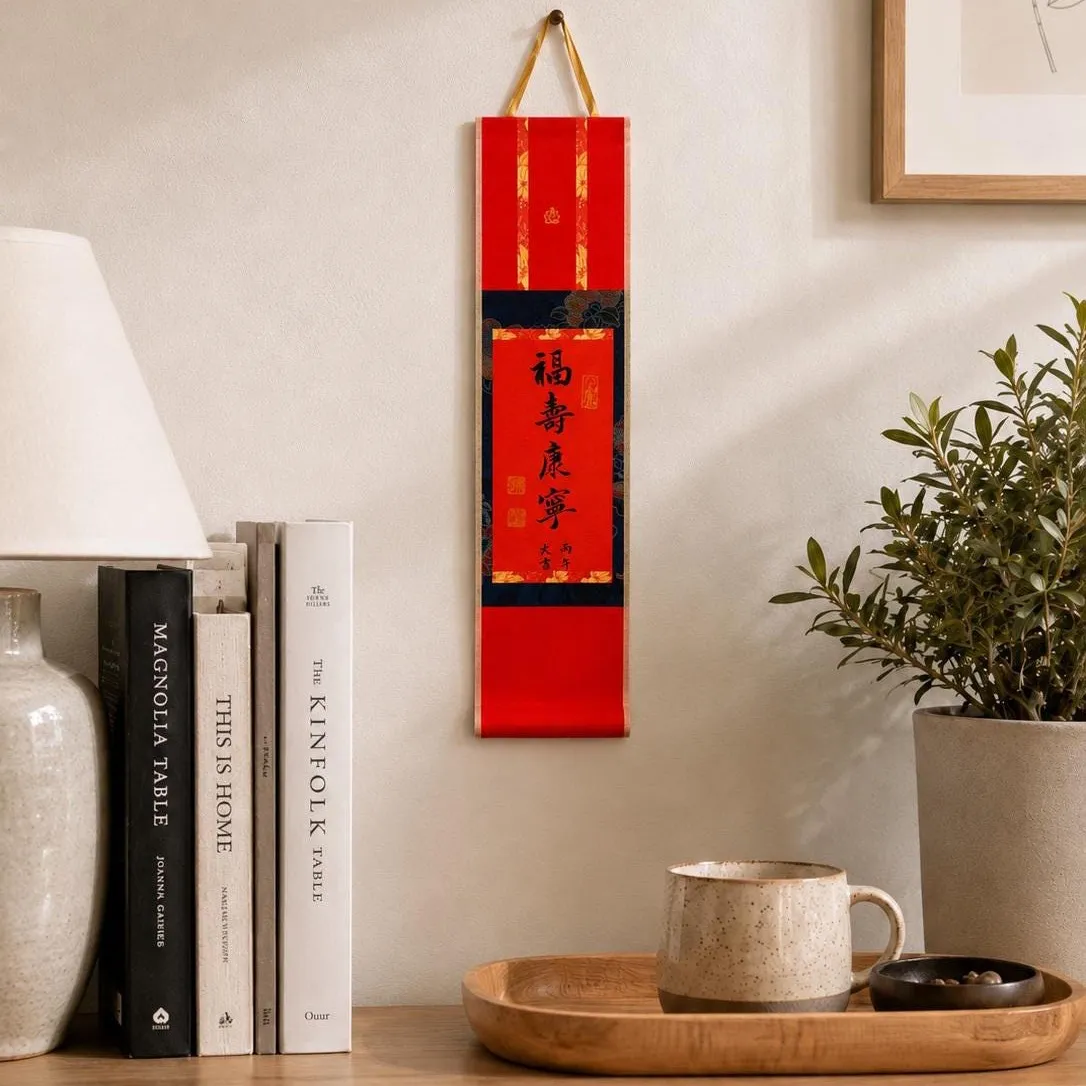
Photo shows a sample — yours will be brushed with 年年有余, or any character you choose.
Wall Scroll — for walls & housewarmingsfrom $38→ -
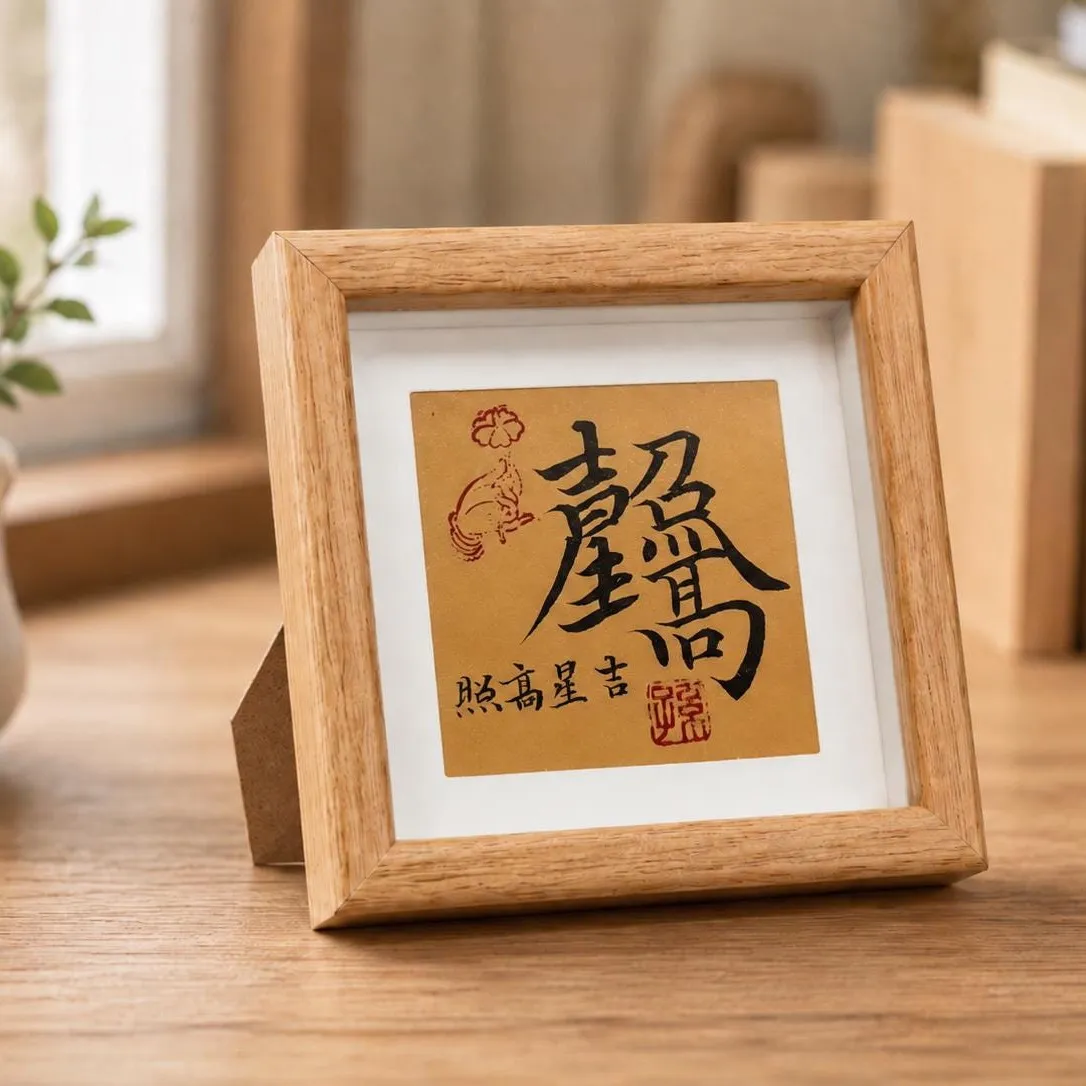
Photo shows a sample — yours will be brushed with 年年有余, or any character you choose.
Desk Frame — for desks, studies & studiosfrom $44→ -
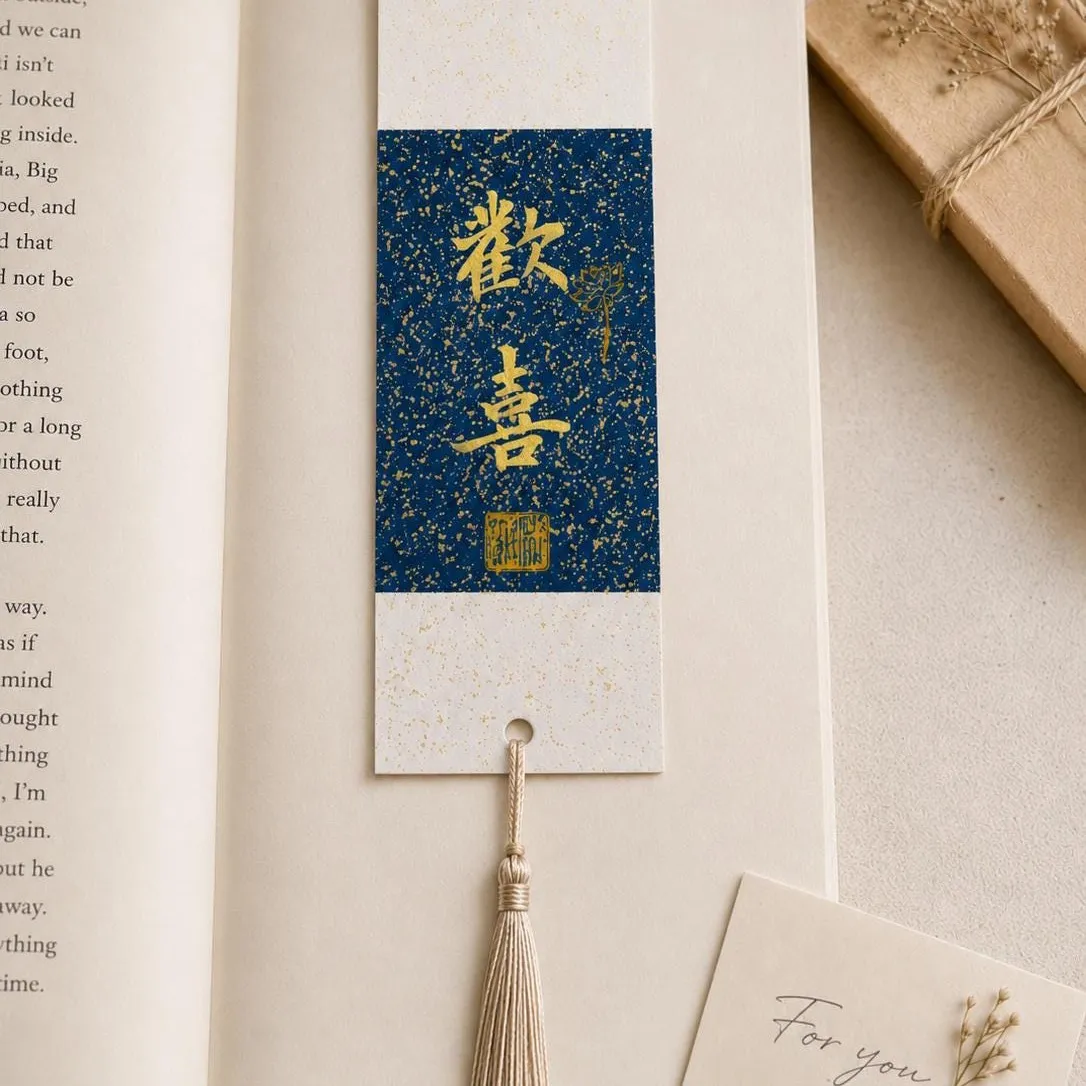
Photo shows a sample — yours will be brushed with 年年有余, or any character you choose.
Bookmark — for readers & small thank-yousfrom $17→
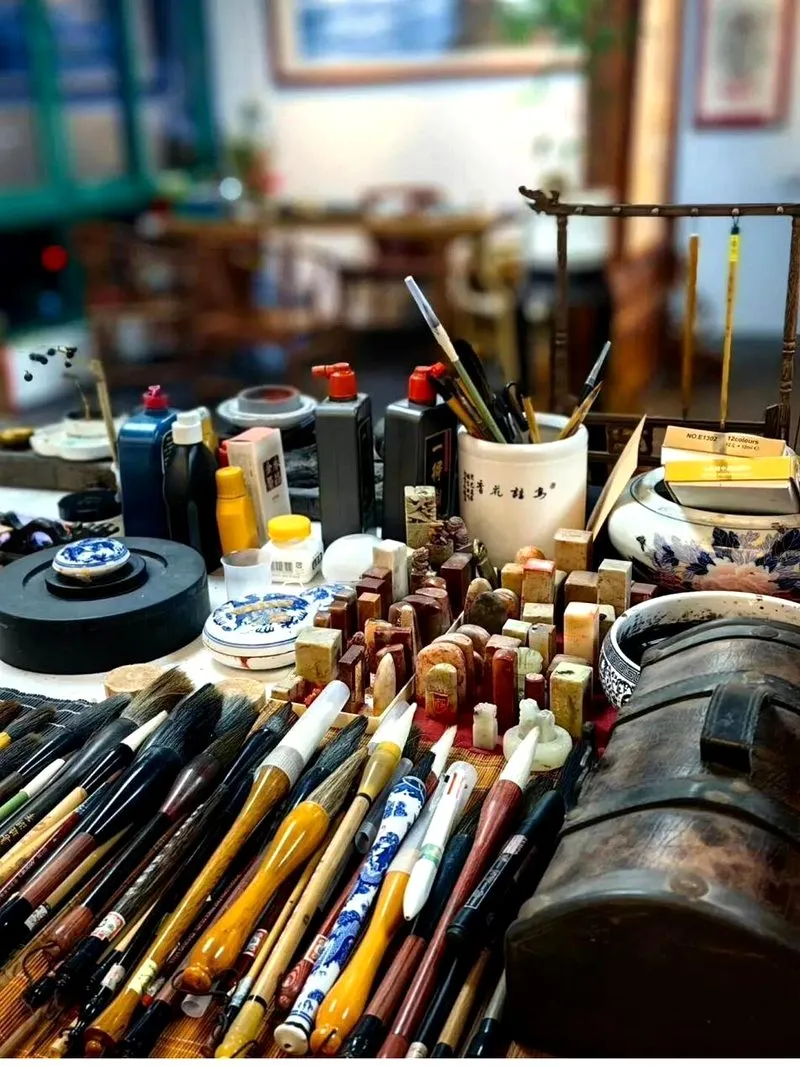
What people said after it arrived.
-
The item is fantastic. The customer service was genuine. Thanks!
— M.Verified purchase · from our Etsy shop reviews · -
They were great they gave me exactly what I asked for and then some. Thank you!!
— G.Verified purchase · from our Etsy shop reviews · -
It is well designed and customized. My daughter loves it. Amazing gift for family’s d friends
— S.Verified purchase · from our Etsy shop reviews ·
Each "年年有余" is hand-brushed by Artist Lina Sun on rice paper.
See 年年有余 (Nián Nián Yǒu Yú) on Etsy →