龙凤呈祥 (lóng fèng chéng xiáng) — Dragon and Phoenix Display Auspiciousness
A 4-character phrase, not a single character.
Among the wedding blessings in Chinese calligraphy, 龙凤呈祥 is the one that names the couple not as the recipients of a wish but as the form the wish takes. 百年好合 asks for the quality of the union across time. 花好月圆 names the wedding day as the kind of occasion the phrase has always been describing. 龙凤呈祥 names what the couple’s meeting IS: the dragon (cosmic yang, the force that moves and transforms) and the phoenix (cosmic yin, the creature that arrives when conditions are right) presenting their combined presence as the auspicious sign itself. The couple at the wedding is the dragon-phoenix conjunction — their union is the omen, not its object. See 祥 →
In Chinese wedding decoration, the dragon-and-phoenix motif has appeared continuously from the Han dynasty to contemporary ceremony — on embroidered textiles, porcelain, lacquerware, wedding banners, and the red packets given to the couple. The phrase 龙凤呈祥 is typically the inscription paired with these decorations: four characters that name what the visual argument makes. It also appears at Chinese New Year as the most cosmologically complete of the auspicious blessings — not a specific wish for a specific outcome but the full-field sign that the year’s fundamental forces are aligned. At the New Year threshold, the dragon and phoenix together name a year that has been placed in the right orientation before it has begun.
A hand-brushed “龙凤呈祥” by FuBlessings renders the phrase that carries the longest continuous history of any wedding blessing in Chinese calligraphy tradition. For the couple at their ceremony, it names their union as the occasion on which the cosmic forces display what a right pairing looks like — the dragon and phoenix, present together, presenting everything.
The Story Behind the Character
Of the Four Numinous Creatures named in the Book of Rites — dragon, phoenix, qilin, and turtle — only the turtle exists in the natural world. The other three have no prototype in nature: they are constructed creatures, organized around a principle no real animal embodies. But it is the dragon and phoenix, not the qilin, that became the standard image of cosmic complementarity in Chinese culture, because they pair as yang and yin in a way the qilin does not. The dragon (龙, lóng) represents the yang principle in its active, ascending, transformative form — the force that moves, that rises, that generates change. The phoenix (凤, fèng) represents the yin principle in its beneficent, receptive, perfected form — the creature that appears only in ages of right order, whose song resonates in the wutong tree and whose arrival signals that the world below has achieved the conditions for it. Neither creature is sufficient alone. Together, they describe the state in which nothing important is missing.
The phrase 呈祥 (chéng xiáng) names what happens when the two appear together: 呈 (to present, to display, to offer up for view) and 祥 (an auspicious sign, a propitious omen). Dragon and phoenix do not bring or generate auspiciousness — they display it. Their combined presence IS the sign: the universe's two highest cosmic forces in conjunction announce, by that fact alone, that conditions are favorable. In the Han dynasty, the dragon was the emblem of the Son of Heaven (天子) and the phoenix the emblem of the Empress (皇后) — their marriage was, at the level of ceremony, the union of the dragon and phoenix. As this imperial symbolism filtered into the folk marriage tradition over the centuries, every couple was imagined as standing, at their wedding, in the position once reserved for the emperor and empress: their union the human form of the cosmic conjunction.
By the Song dynasty, 龙凤呈祥 had become the most widespread wedding inscription in Chinese folk art, appearing on embroidered textiles, porcelain, lacquerware, and paper-cuts. The motif depicted the two creatures circling a flaming pearl (火珠, huǒ zhū) — the pearl representing the 真理 (truth) or 福泽 (grace) at the center of the cosmos, which the dragon and phoenix together attend. [See 龙 →](/library/long/) In modern Chinese weddings, 龙凤呈祥 remains one of the four or five phrases most commonly requested for calligraphy gifts, alongside 百年好合 and 永结同心 — the blessing that names what the couple's meeting is, not what it should become.
Classical lines
- roughly 500 years
- c. 800 BCE 《诗经·大雅·卷阿》
- c. 400 BCE 《周易·咸卦·彖传》
- c. 300 BCE 《礼记·礼运》
凤皇鸣矣,于彼高冈。梧桐生矣,于彼朝阳。 The phoenix sings on that high ridge. The wutong tree grows, facing the morning sun.
The oldest record in Chinese literature of the phoenix choosing where to land: the bird does not appear in any place but in the place that is ready for it — the wutong tree in the morning light, the high ridge in right order. 龙凤呈祥 draws on this logic: the dragon and phoenix arriving at a wedding threshold is their way of announcing that what is below them is worthy of their presence.
天地感而万物化生,圣人感人心而天下和平。 Heaven and earth sense each other, and the ten thousand things are transformed and born; the sage senses the human heart, and all under heaven finds peace.
The Book of Changes commentary on the Mutual Influence hexagram — specifically about the attraction between yielding and firm, yin and yang — identifying their meeting as the cosmological origin of creation itself. 龙凤呈祥 is the wedding form of this: the dragon (cosmic yang) and phoenix (cosmic yin) sensing each other at the threshold of a marriage.
麟凤龟龙,谓之四灵。 The unicorn, the phoenix, the turtle, and the dragon
these are called the Four Numinous Creatures. — The Book of Rites placing the phoenix and dragon together as two of China's four creatures of cosmological significance: beings whose appearance signals that the world is in right order. For 龙凤呈祥, this context is structural — the blessing works because both creatures belong to the register of omens, not wishes: their presence does not hope for auspiciousness but announces it.
Why This Character Matters
The dragon-phoenix motif is among the most documented continuous design traditions in Chinese decorative arts, appearing without significant interruption from Han dynasty bronzes through Song ceramics, Ming lacquerware, and contemporary wedding stationery. In the traditional iconography, the two creatures circle a central flaming pearl (火珠, huǒ zhū) — the pearl representing the cosmic source that their complementary energies together attend. The circular composition visualizes the phrase's argument: dragon and phoenix do not face each other (which would be confrontation) but move around a shared center (which is complementarity). In modern Chinese weddings, the motif appears on embroidered tablecloths, red packet envelopes, porcelain tea sets, and calligraphy scrolls hung at the ceremony.
龙凤呈祥 is one of the very few Chinese blessings that has been used continuously at both imperial and folk levels without change of meaning. In the Tang and Song courts, it appeared in the ceremony where the emperor received his empress; in the same period, folk couples used the same inscription at their weddings. The phrase did not trickle down from the palace — it was available at both levels simultaneously, because the dragon and phoenix were understood to be cosmic forces rather than specifically imperial ones, and their conjunction was auspicious at any scale where two complementary forces came together in right order.
龙凤呈祥 is the wedding blessing that names the couple as the meeting point of two complementary cosmic forces rather than asking a quality of their union or naming the occasion as perfect.
- 龙凤呈祥 is the wedding blessing that names the couple as the meeting point of two complementary cosmic forces rather than asking a quality of their union or naming the occasion as perfect. The dragon (cosmic yang) and phoenix (cosmic yin) meeting at the wedding threshold present their combined auspiciousness as the sign that this union is, cosmologically, in the right order. Where 百年好合 asks for the quality of the union across time and 花好月圆 names the wedding day itself as complete, 龙凤呈祥 names what the couple's meeting IS: the pairing of the two forces whose conjunction is auspiciousness itself.
- At the New Year threshold, 龙凤呈祥 names the full cosmic auspiciousness of a year beginning well — the dragon and phoenix together presenting not a single quality but the complete sign of a year in right order. Unlike 五福临门 (which inventories the five conditions of a complete life) or 吉祥如意 (which names lucky omen and fulfilled wish), 龙凤呈祥 names the cosmological source from which all good omens derive: the complementary forces of dragon and phoenix aligned. Most apt for a couple entering a new year together, or for a New Year gift that names the whole auspicious orientation rather than a single dimension of it.
New Couple · Husband · Wife · or yourself
Looking for a name? See Western names written in Chinese →
-
What does 龙凤呈祥 (lóng fèng chéng xiáng) mean?
龙凤呈祥 (lóng fèng chéng xiáng) is a 4-character Chinese phrase for dragon and phoenix display auspiciousness. Among the wedding blessings in Chinese calligraphy, 龙凤呈祥 is the one that names the couple not as the recipients of a wish but as the form the wish takes. 百年好合 asks for the quality of the union across time. 花好月圆 names the wedding day as the kind of occasion the phrase has always been describing. 龙凤呈祥 names what the couple's meeting IS: the dragon (cosmic yang, the force that moves and transforms) and the phoenix (cosmic yin, the creature that arrives when conditions are right) presenting their combined presence as the auspicious sign itself. The couple at the wedding is the dragon-phoenix conjunction — their union is the omen, not its object. See 祥 → The dragon-phoenix motif is among the most documented continuous design traditions in Chinese decorative arts, appearing without significant interruption from Han dynasty bronzes through Song ceramics, Ming lacquerware, and contemporary wedding stationery. In the traditional iconography, the two creatures circle a central flaming pearl (火珠, huǒ zhū) — the pearl representing the cosmic source that their complementary energies together attend. The circular composition visualizes the phrase's argument: dragon and phoenix do not face each other (which would be confrontation) but move around a shared center (which is complementarity). In modern Chinese weddings, the motif appears on embroidered tablecloths, red packet envelopes, porcelain tea sets, and calligraphy scrolls hung at the ceremony.
-
What occasions is 龙凤呈祥 given for?
龙凤呈祥 is traditionally given for Wedding, Chinese New Year. 龙凤呈祥 is the wedding blessing that names the couple as the meeting point of two complementary cosmic forces rather than asking a quality of their union or naming the occasion as perfect. The dragon (cosmic yang) and phoenix (cosmic yin) meeting at the wedding threshold present their combined auspiciousness as the sign that this union is, cosmologically, in the right order. Where 百年好合 asks for the quality of the union across time and 花好月圆 names the wedding day itself as complete, 龙凤呈祥 names what the couple's meeting IS: the pairing of the two forces whose conjunction is auspiciousness itself. At the New Year threshold, 龙凤呈祥 names the full cosmic auspiciousness of a year beginning well — the dragon and phoenix together presenting not a single quality but the complete sign of a year in right order. Unlike 五福临门 (which inventories the five conditions of a complete life) or 吉祥如意 (which names lucky omen and fulfilled wish), 龙凤呈祥 names the cosmological source from which all good omens derive: the complementary forces of dragon and phoenix aligned. Most apt for a couple entering a new year together, or for a New Year gift that names the whole auspicious orientation rather than a single dimension of it.
-
Who brushes the 龙凤呈祥 calligraphy?
FuBlessings hand-brushes each 龙凤呈祥 (Lóng Fèng Chéng Xiáng) to order, in ink on rice paper — never printed, never repeated.
Bring 龙凤呈祥 home — choose how you'd like it brushed.
-
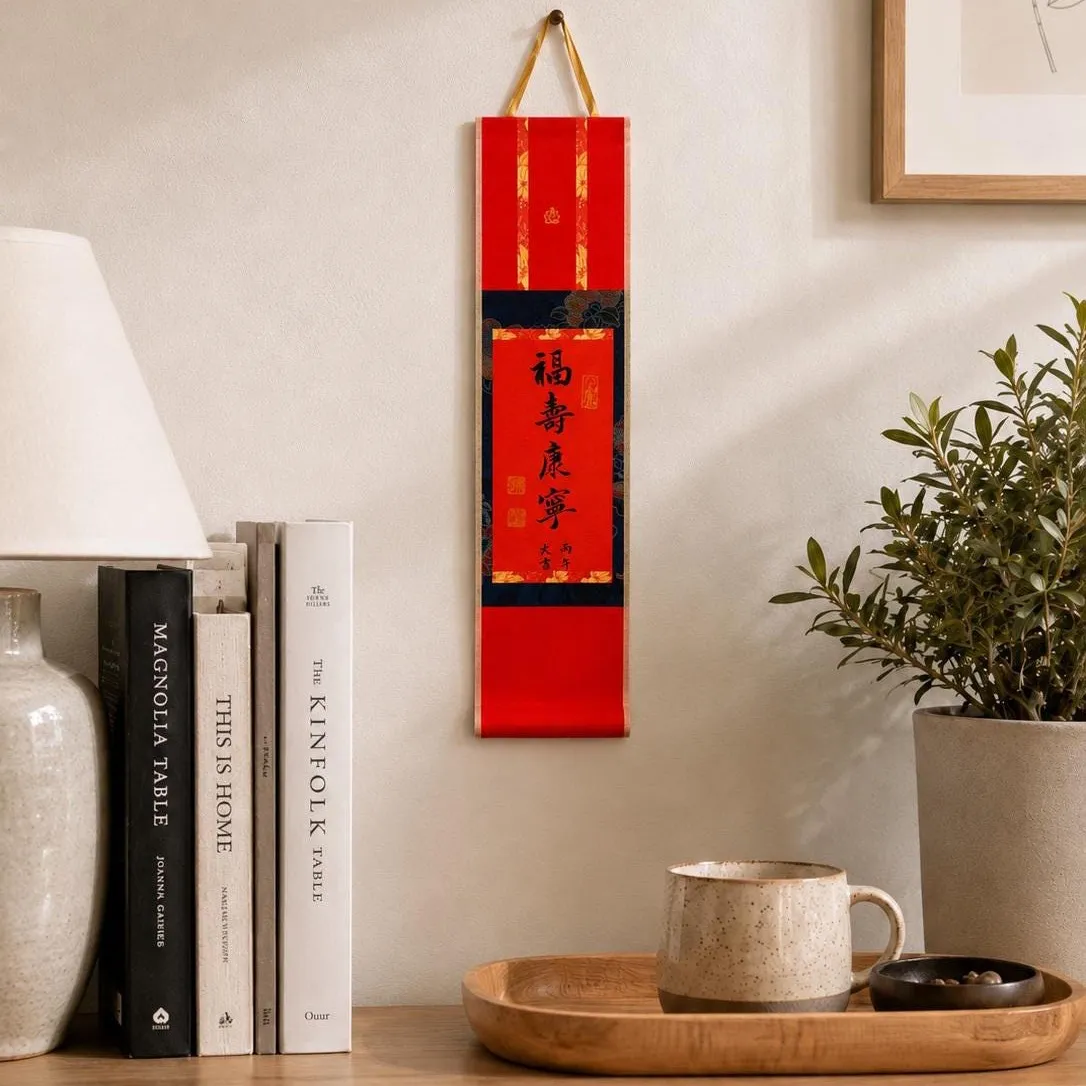
Photo shows a sample — yours will be brushed with 龙凤呈祥, or any character you choose.
Wall Scroll — for walls & housewarmingsfrom $38→ -
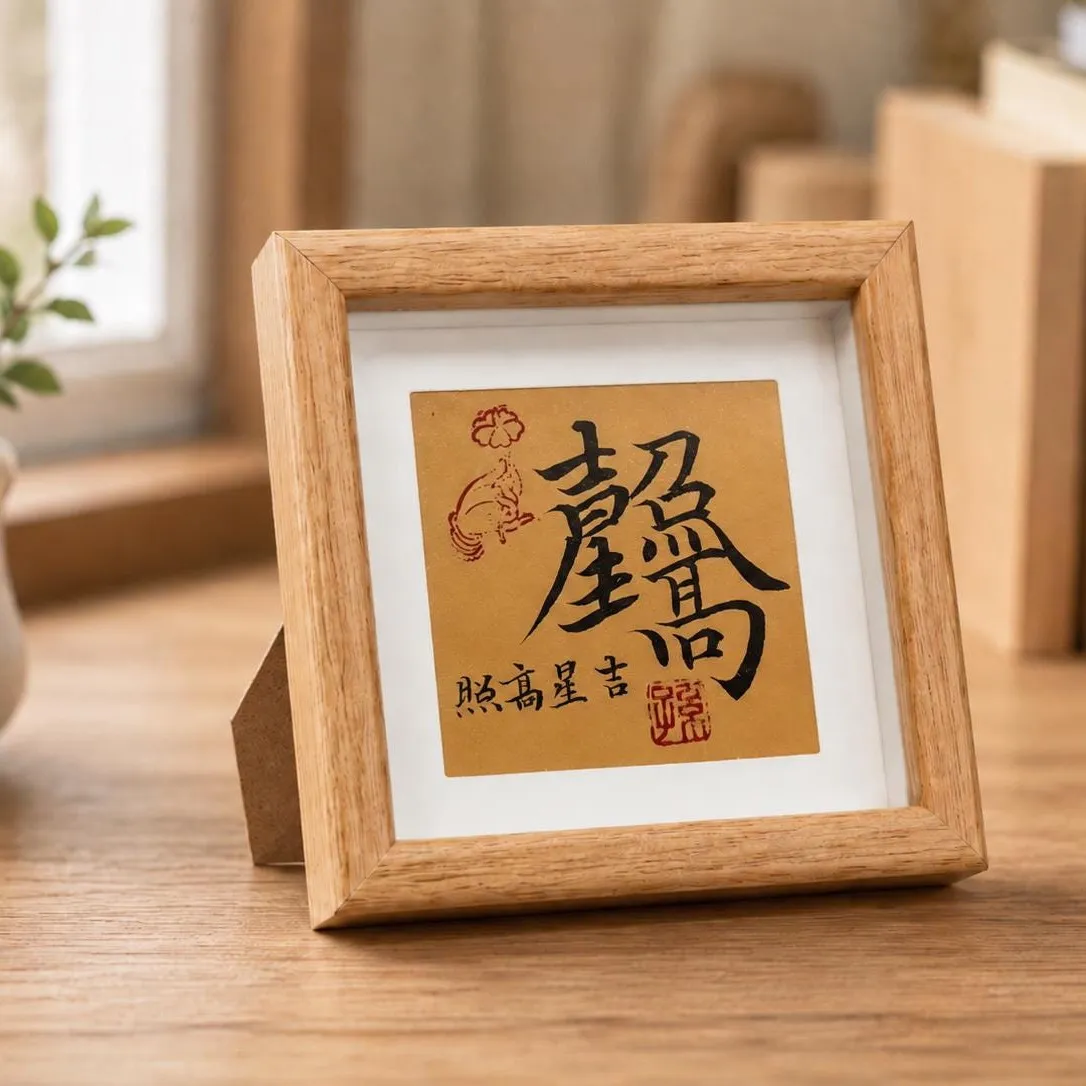
Photo shows a sample — yours will be brushed with 龙凤呈祥, or any character you choose.
Desk Frame — for desks, studies & studiosfrom $44→ -
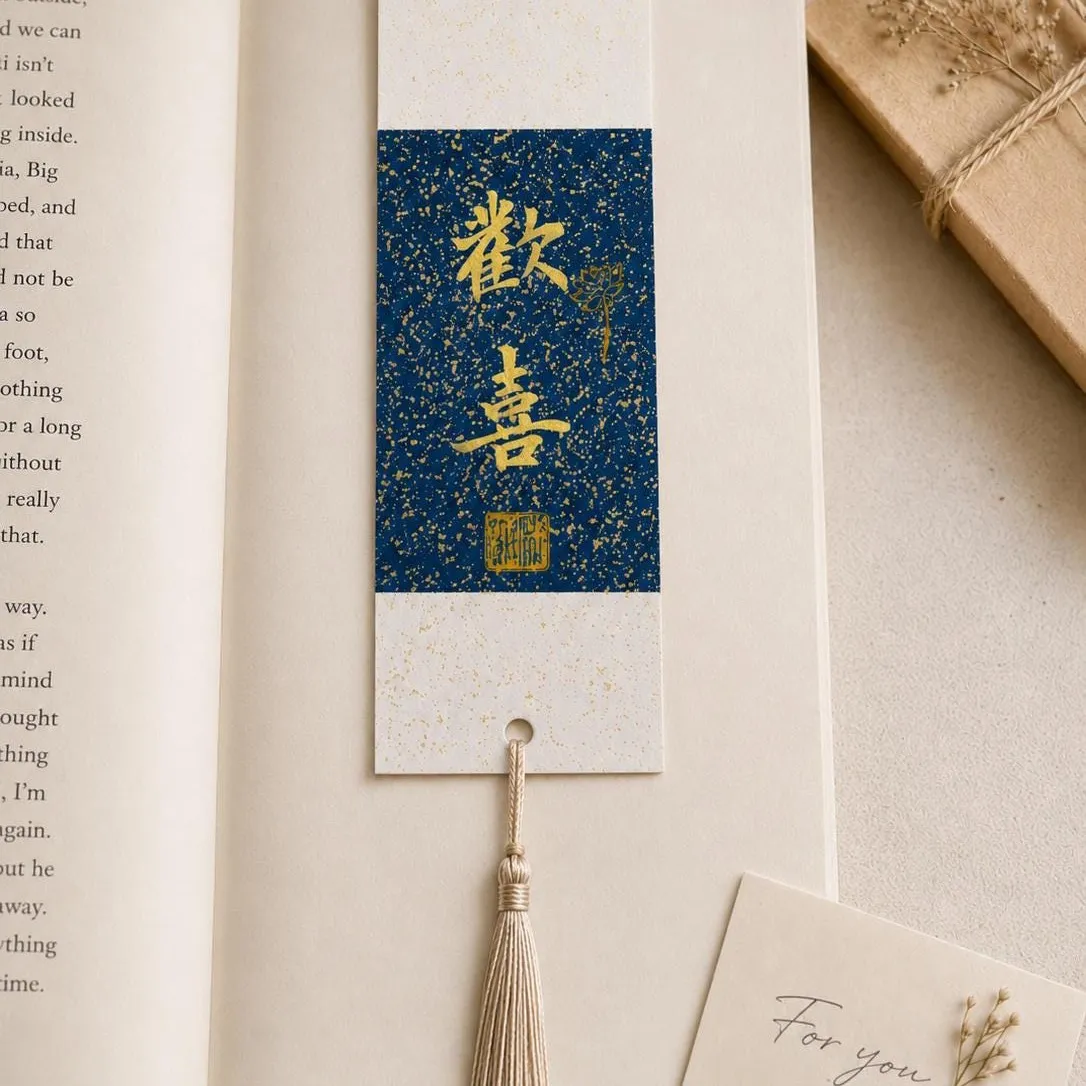
Photo shows a sample — yours will be brushed with 龙凤呈祥, or any character you choose.
Bookmark — for readers & small thank-yousfrom $14→
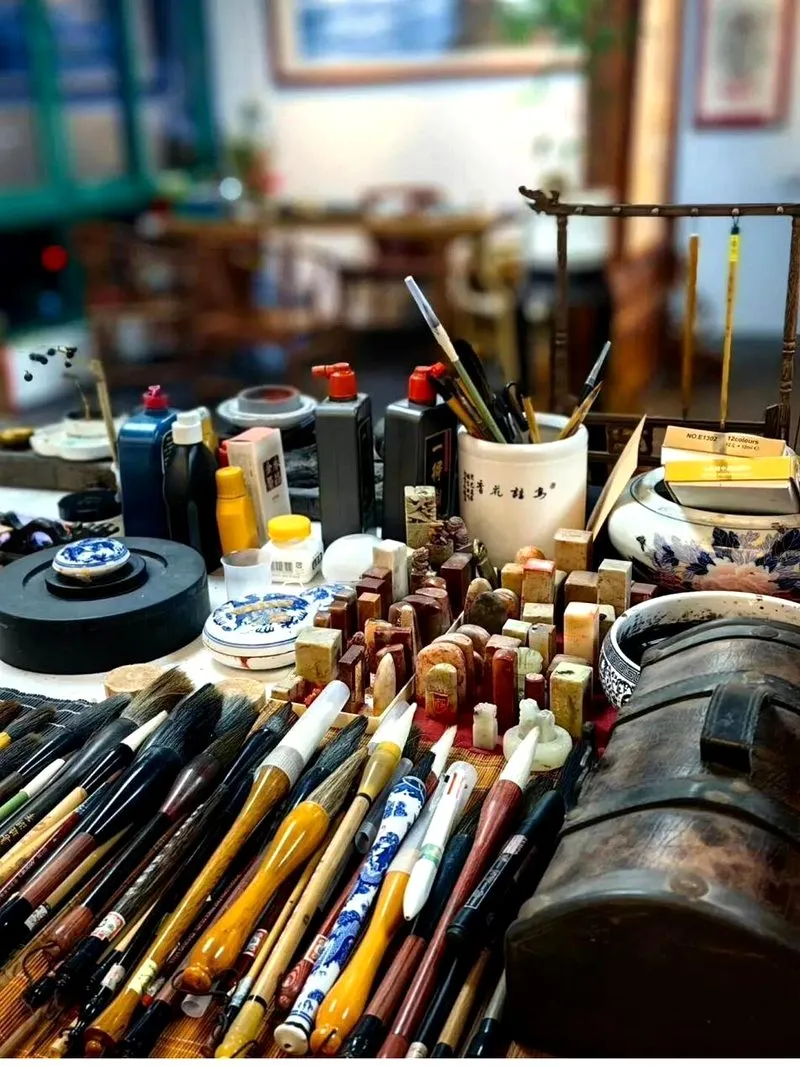
What people said after it arrived.
-
The item is fantastic. The customer service was genuine. Thanks!
— M.Verified purchase · from our Etsy shop reviews · -
They were great they gave me exactly what I asked for and then some. Thank you!!
— G.Verified purchase · from our Etsy shop reviews · -
It is well designed and customized. My daughter loves it. Amazing gift for family’s d friends
— S.Verified purchase · from our Etsy shop reviews ·
Each "龙凤呈祥" is hand-brushed by FuBlessings on rice paper.
See 龙凤呈祥 (Lóng Fèng Chéng Xiáng) on Etsy →